














![Special relativity time and length 2 [IB Physics SL/HL]](https://i.ytimg.com/vi_webp/jkjGCDhiZHs/maxresdefault.webp)





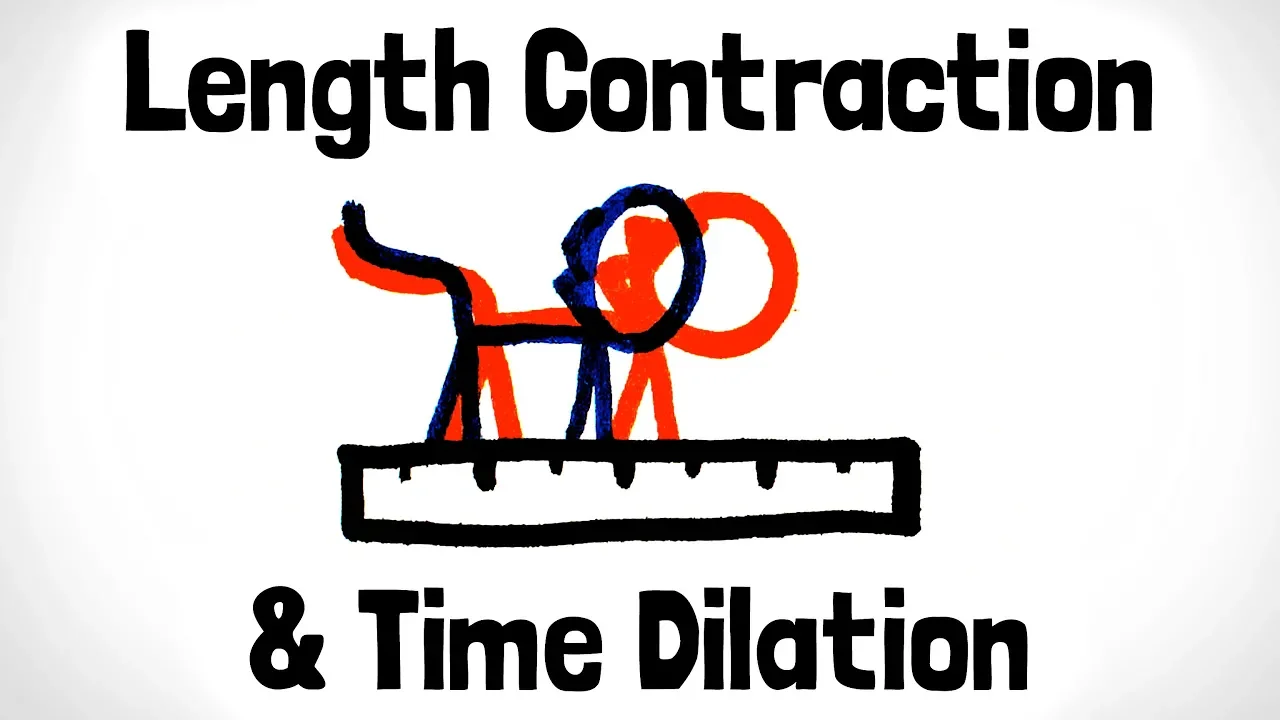
In special relativity, objects in motion are observed to be shorter than their stationary length, a phenomenon called length contraction; this occurs because different observers moving relative to each other do not agree on what events happen simultaneously, and the correct measurement requires finding the positions of both ends of an object at the same time according to the observer's frame of reference, resulting in the contracted length being the stationary length divided by the Lorentz factor gamma (L' = L/γ).
Length Contraction Explained: Space & Time in Special Relativity
Added:Einstein's two postulates of Special Relativity, particularly the constancy of the speed of light in all inertial frames.
The concept of Time Dilation, as length contraction is its direct spatial counterpart.
The definition of an inertial reference frame and how observers in relative motion measure distance and time.
Basic high school algebra to follow the mathematical derivation involving the Lorentz factor (gamma).
The Lorentz Transformations, which mathematically unify time dilation and length contraction into a single coordinate system.
Relativistic paradoxes related to length contraction, such as the Ladder Paradox (Barn-Pole Paradox).
Minkowski Spacetime Diagrams to visually conceptualize world lines and the relativity of simultaneity.
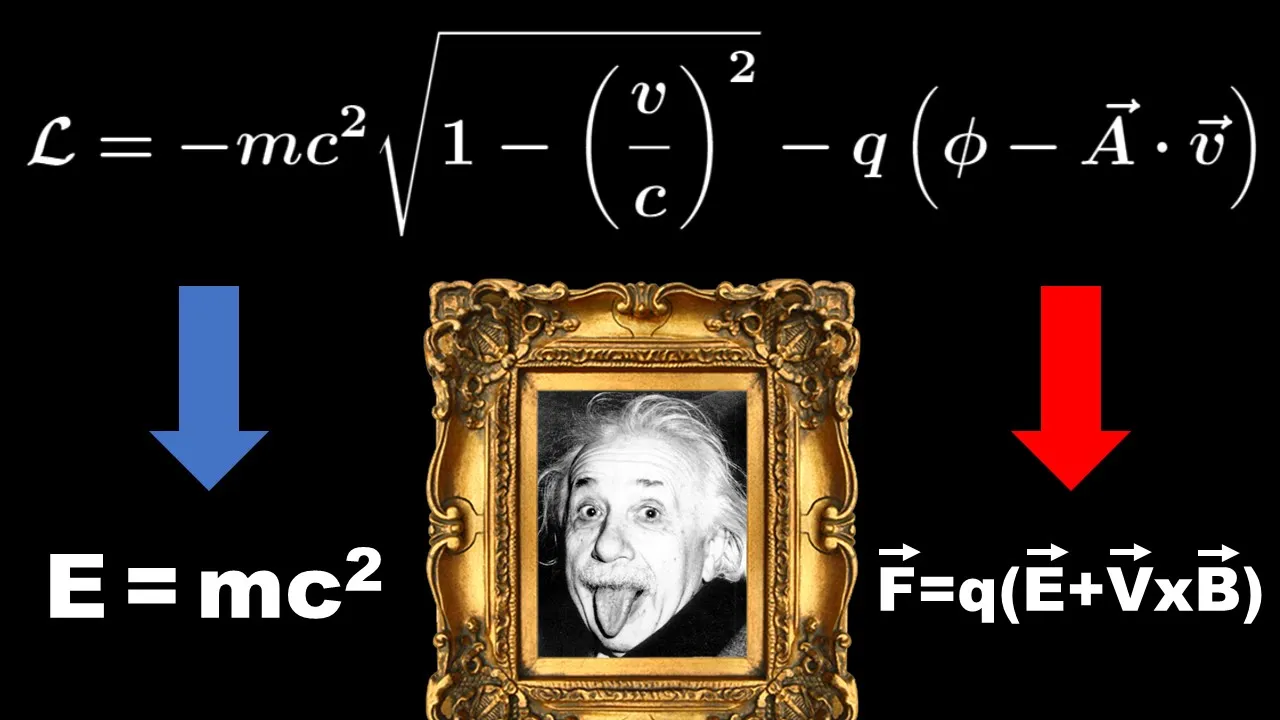
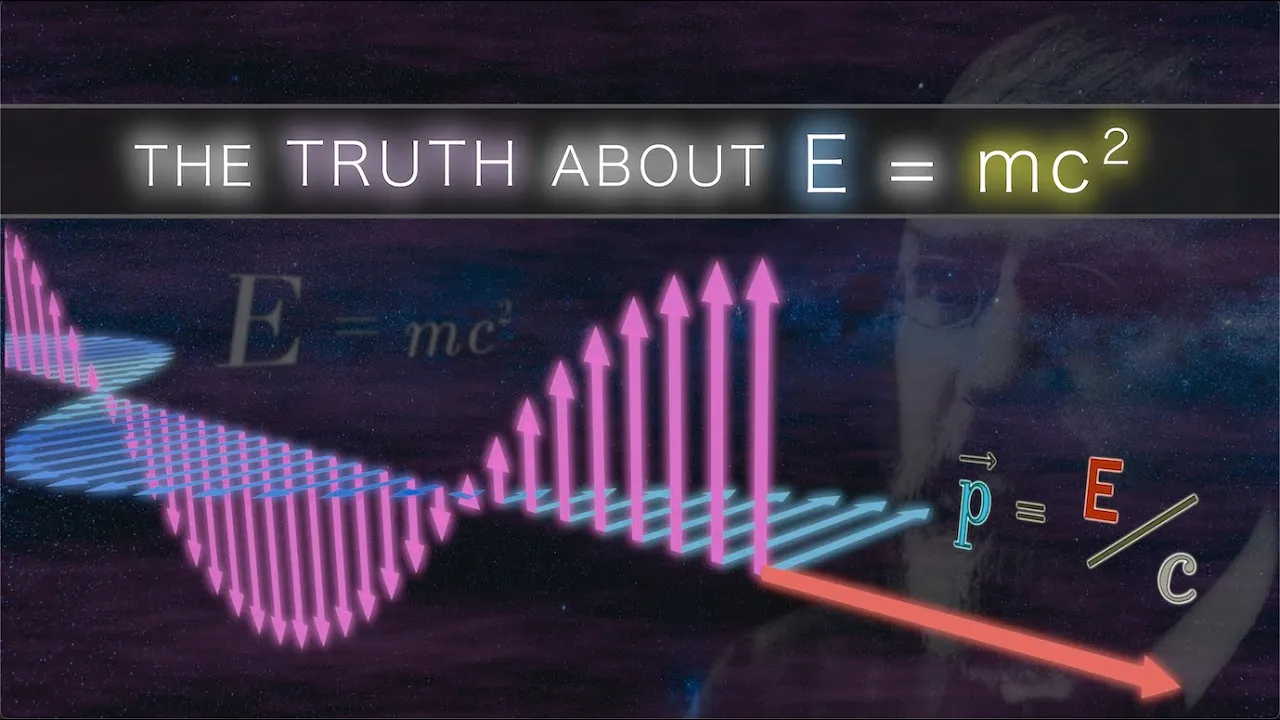
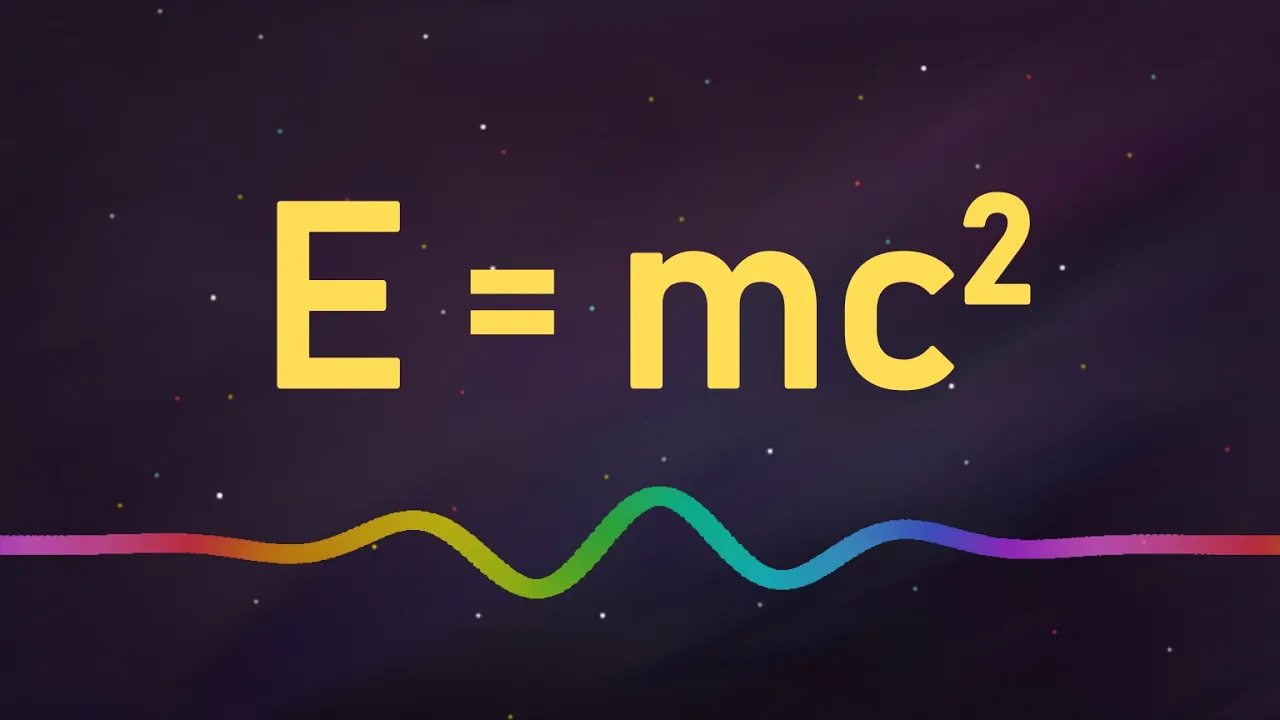
Relativistic Momentum and Energy, leading to the derivation of mass-energy equivalence (E = mc²).
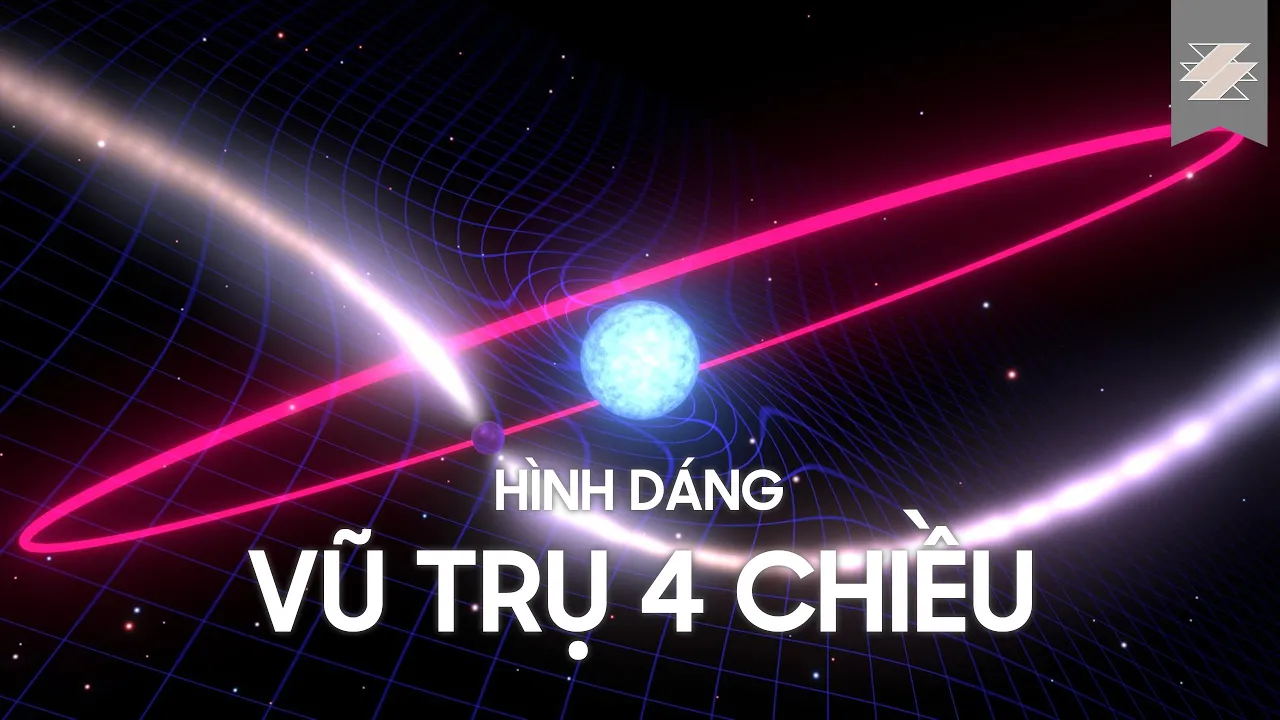
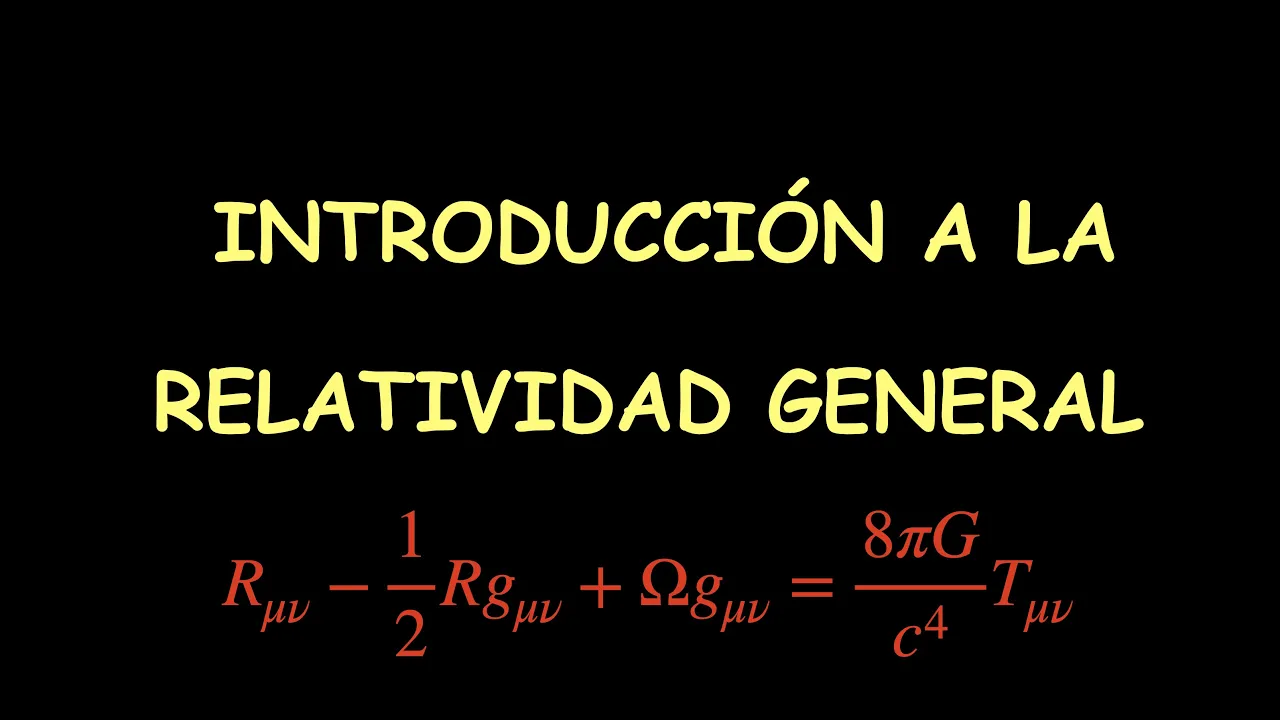
An introduction to General Relativity to understand how gravity curves the fabric of spacetime itself.
407.6K views13.3Klikes11:22Original Release: 2018-04-25
I’ve spoken about special relativity for quite a few videos and I’m going to stick with that subject matter here too.
The last handful have focused on relativity basics and how clocks tick differently for different observers, but there’s another counterintuitive consequence of relativity that confuses the heck out of people.
This is the idea that different people see lengths differently.
I mean, how can that possibly be?
I bet you know that I was going to tell you, 'cause, well- you guys are smart that way.
Before I start, I should tell you that this video has an actual derivation.
Sorry about that.
But it has something even more important.
It first uses relativity wrong, but in a way that seems right.
Then I identify the mistake and redo things properly.
This is a super important thing to see, because it’s so easy to make mistakes in relativity.
The good thing is that the math is pretty easy.
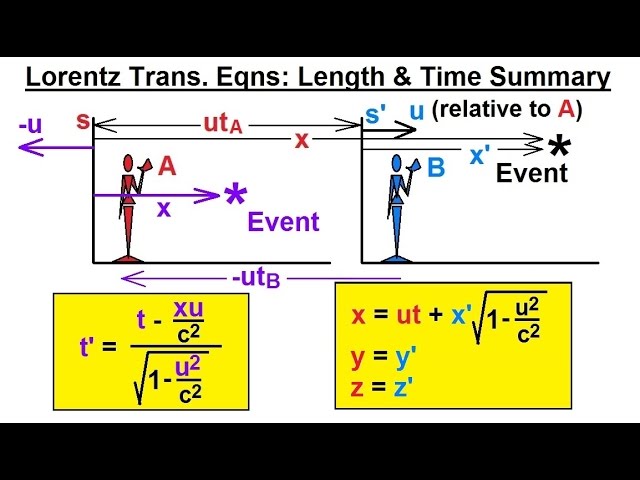
We just start out with the standard Lorentz Transform equations.
As a reminder, those are the equations you see here.
If you’ve not seen them before, I talked about them in my video on what relativity is all about.
Take a look at that video if you like, or you can just trust me and we can press on.
Remember what these two equations mean.
We have two observers looking at a situation.
For one of them, the situation isn’t moving.
For the other one, the situation is moving.
Typically, we say the person seeing the situation not moving is the unprimed observer and the moving person is the primed observer.
So in this situation, all we want to do is measure how long a stick is.
Now this just doesn’t sound all that hard.
I mean, like, there’s a stick.
And I measure how long it is.
And there you go.
I mean how hard is this?
Like, am I wasting your time or something?
Well, I hope not.
Because you have some experience measuring a thing that isn’t moving.
But you’ve probably never measured the length of something moving at an appreciable fraction of the speed of light- have you?
Well, no, of course not.
Sorry- dumb question.
But now let’s be a little careful about how you measure something.
The way you actually do this is to find the location of one end of the stick and then the other end of the stick and then subtract those two locations.
Suppose you had a meter stick and you labeled the ends A and B. You could put end A at location 1 and put the other at location 2, which we’ll call x-one and x-two.
X-one could be at position zero.
Then x-two would be at 1 meter.
Subtract the two and you find that the meter stick is, indeed, one meter long.
Now, you could have picked other locations.
X-one could have been 98.3 meters, which means that x-two would be at 99.3 meters and, if you subtract those, again, you get 1 meter.
Yeah, yeah, I know.
All of that was painfully obvious but trust me- it’s about to get a little more mind-bending.
So let’s just ask ourselves what a moving observer thinks.
And, to do that, we’re going to exploit the Lorentz Transforms.
I’ll tell you what.
Let’s make it more interesting and not use a meter stick, but rather some stick with an unknown length that we’ll call L. Let’s say that the unprimed observer- which I remind you is one who sees the stick as not moving- decides to do the measurement at time equals zero.
Suppose further that she puts one end of the stick at location zero.
Then, rather obviously, the other end of the meter stick is at location equals L. Putting this in terms of x’s and t’s, we would say x1, t1 equals zero-zero and x2, t2 equals L-zero.
So let’s put those into the Lorentz transform equations and see what the primed observer sees.
For location 1, you get the same zero-zero, but for location 2 you get x-two equals gamma L and t-two equals gamma v over c-squared times L.
Pushing ahead, you could then subtract the two x’s according to the primed observer and you’d get that the length according to the primed observer would be L prime equals gamma L. Since gamma is greater than 1, that would mean that the moving observer would see a longer length than the stationary one.
But!
Before you get that in your head, let me draw your attention to something very, very, important.
Look at t-1-prime and t-2-prime.
T-1-prime is zero and t-2-prime is gamma v over c-squared times L.
Remember that those are times.
And they’re not the same.
That means that the primed observer didn’t measure the location of both ends of the stick at the same time.
And, since the stick is moving according to the primed observer, that’s not the way to measure its length.
You’d totally not get the right answer.
It just- it doesn’t make sense.
Okay- so now we get to the very crux of the matter.
First- and this is a biggy- two events that are simultaneous to the unprimed observer- the one who doesn’t see the stick move- is not simultaneous to the primed observer.
That just sounds weird, but it’s true.
It’s also a big reason why people dallying with special relativity make so many mistakes.
So, the second thing is that if we want to measure the length according to the primed observer- the one seeing the stick move- we need to simultaneously measure the locations of both ends of the stick according to the primed observer.
There are lots of ways to do this, but I think this way might be the clearest.
Let’s start by just subtracting the two positions and two times according to the primed observer.
The length L-prime is just x-2-prime minus x-1-prime and the duration big T prime is t-2-prime minus t-1-prime.
We can write that out using the Lorentz transforms and we get what you see here.
It’s just the Lorentz equations but with positions 1 and 2 subtracted.
Okay- maybe this is getting a little mathematical, but it’s just these two equations.
So, remember what we need to do.
We need to have the primed observer find the location of the two ends at the same time.
And that means that t-2-prime equals t-1-prime, which means that the left hand side of the bottom equation is zero.
We want to get rid of the times and only have locations, so we can solve for t-2 minus t-1 and get this here.
And we can take this and put it in the top equation and we get this equation here.
So, we can factor out the gamma and x-2 minus x-1.
Now remember that gamma is one over the square root of the quantity one minus v squared over c squared.
That means that one minus v squared over c squared is equal to one over gamma squared.
So, we can substitute that in and get this equation here.
And finally, we can cancel the gammas and get this equation.
And that brings us to the answer.
We replace the differences for both the primed and unprimed variables with the L’ and L and what we find is that the length of the stick in the primed frame is the length in the unprimed frame, divided by gamma.
Since gamma is greater or equal to one, this means that the person who is moving with respect to the stick sees a shorter stick than one who is stationary to it.
And, using the fact that both observers can claim that they are stationary, this means that a moving stick is shorter than a stationary one.
Now, there’s one important thing to remember and that is that the shrinking only occurs in the direction of motion.
There is no shrinking side to side.
This means if you start with a basketball and accelerate it to high speeds, it will look like a pancake- still round in the direction perpendicular to the motion, but flat parallel to the direction of motion.
And this is real.
We see it when we do experiments smashing together the nuclei of heavy atoms in our colliders.
I made a video about the quark gluon plasma in which I mentioned this effect.
It also means something really pretty weird.
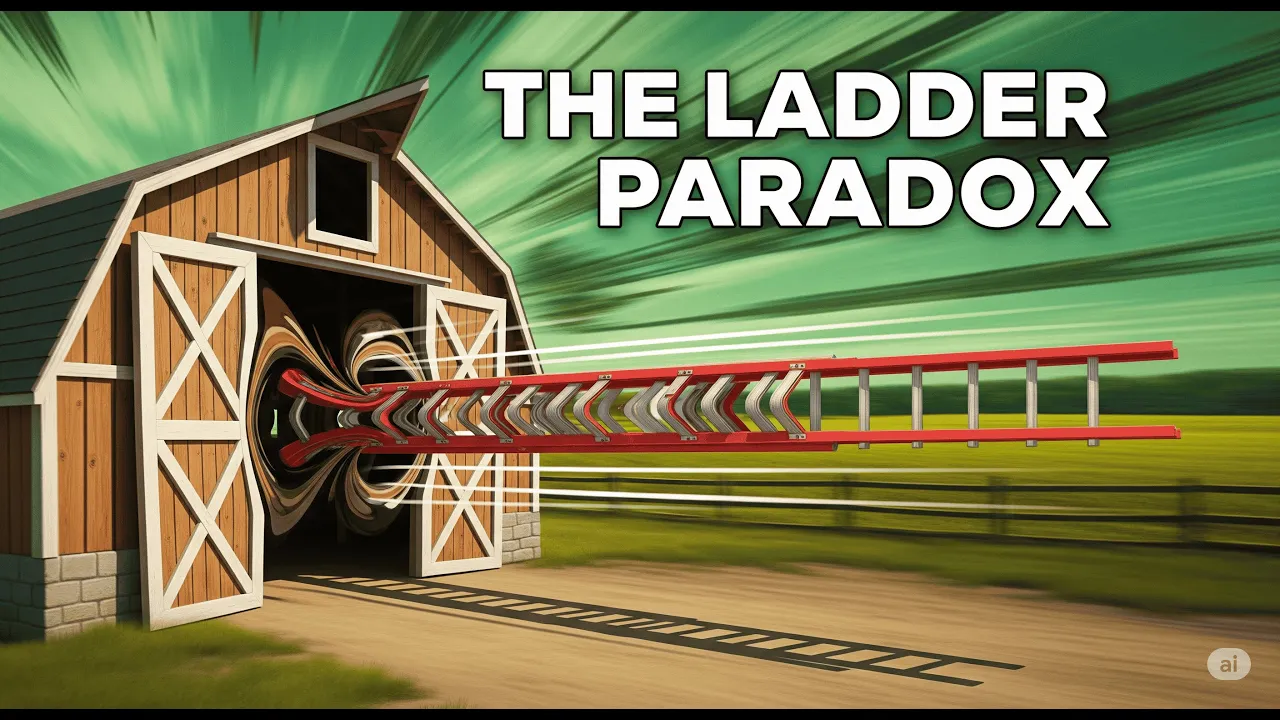
Suppose you had a barn that was 20 feet long and a stick that was 40 feet long with doors on both ends.
If you got the stick moving at a little over 86% the speed of light, then gamma is 2.
This means that the stick would be 20 feet long according to a person seeing it moving.
That means that it is possible to- for a split second- put a 40 foot long stick in a 20 foot long barn and close the doors.
Bizarre, eh?
That might sound like a paradox.
I mean, after all a person who was sitting with the stick would say that the barn had shrunk.
But remember that two observers don’t agree on when things are simultaneous.
So, while one would say that the barn doors were closed at the same time, the other wouldn’t.
There is no question that this weird effect really occurs.
But people often have misconceptions about it.
Many people accept that the stick might shrink, but they don’t think that space changes.
But that’s the wrong way to think about it.
After all, when I did the derivation, the stick didn’t come into play.
All that mattered was the x and t positions of the ends of the stick.
Take the stick away and you still have x’s and t’s.
So this length contraction, which has been measured, is a powerful reminder that relativity really does mix space and time.
What one person sees as space, the other might see as a combination of space and time.
I only there were someone who could communicate such complicated topics in such a clear and understandable way and could make a video about them.
If there only was such a person... Okay- so that’s length contraction.
People in relative motion will disagree on something as simple as the length of a stick.
That’s weird, but, you know, that’s relativity for you.
You’re probably amazed.
So now you know what you have to do.
Like the video, comment if you want, and subscribe to the channel.
And, of course, remember that physics is everything.
Up Next
4:25
Why Fringes Form in Michelson-Morley Experiment | Phase Difference
@hcverma2928
73.1K views•2019-01-10

12:53
21cm Hyperfine Transition in Neutral Hydrogen: Radio Astronomy Basics
@AaronRobertParsons
12.4K views•2011-10-13
105:22
The Dark Universe: Dark Matter & Dark Energy Explained
@fermilab
7.7M views•2016-06-06

27:14
Entropy and the Second Law of Thermodynamics Explained
@veritasium
27.5M views•2023-07-01
Related Study Plans & Knowledge Roadmaps
Structured learning paths in Physics
physics
Nuclear Physics (Decay, Fission & Reactors)
01Atomic Structure and the Binding Force
02Radioactive Decay and Half-Life
03Nuclear Fission Mechanics and Chain Reactions
+ 2 more learning modules
12h5 modules
Explore Roadmap
physics
Soft Matter (Polymers, Colloids & Rheology)
01Foundations of Soft Matter & Thermal Forces
02Polymer Physics and Macromolecules
03Colloids, Surfactants, and Self-Assembly
+ 2 more learning modules
38h5 modules
Explore Roadmap
physics
Analytical Mechanics: Lagrangian & Hamiltonian
01Mathematical Foundations: Calculus of Variations
02From Newtonian Mechanics to Constraint Dynamics
03The Principle of Least Action & Lagrangian Mechanics
+ 3 more learning modules
28h6 modules
Explore Roadmap
physics
General Relativity (Spacetime & Cosmology)
01Foundations of Relativity: Special Relativity
02The Geometry of Spacetime: Equivalence Principle & Curvature
03Einstein's Field Equations: The Mathematics of Gravity
+ 2 more learning modules
55h5 modules
Explore Roadmap