












![[3/5] Théorie des Jeux, appliquée à MtG : stratégies mixtes et stabilité évolutionnaire](https://i.ytimg.com/vi/9czNEPARh_g/maxresdefault.jpg)




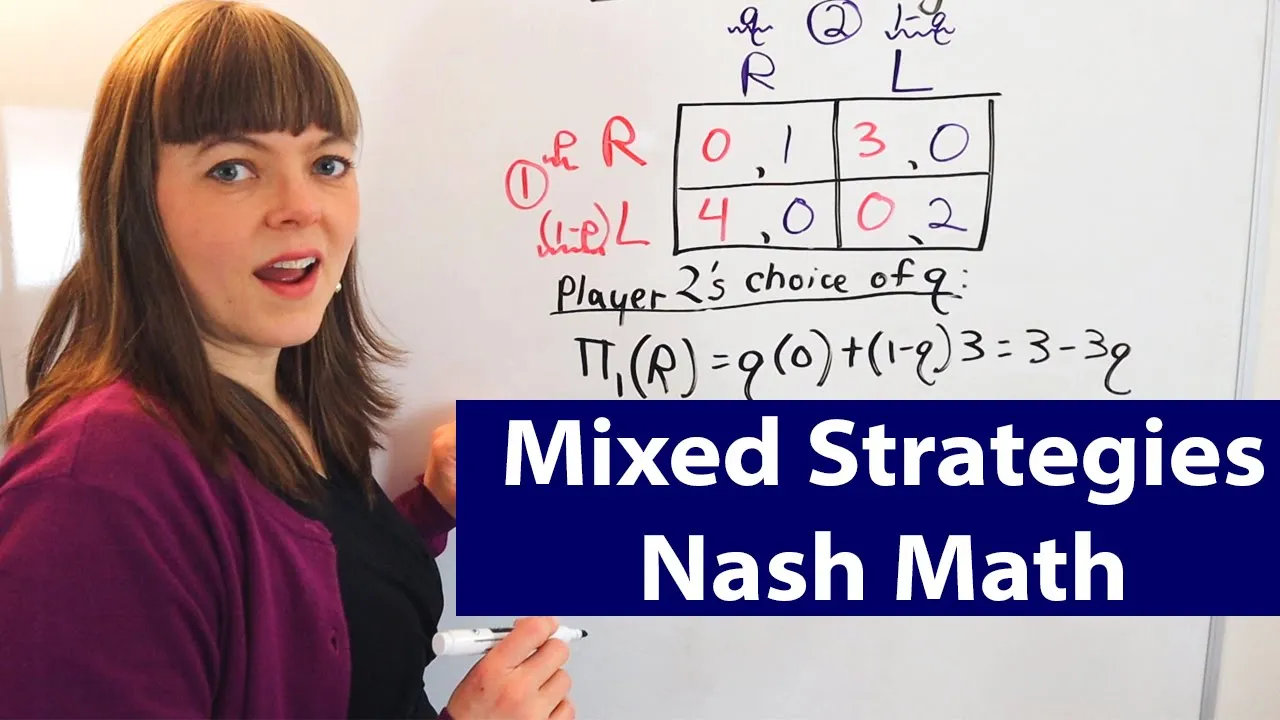
In mixed strategies Nash equilibrium, players randomize their actions (choosing probabilities rather than fixed strategies) to make their opponents indifferent between their available choices; this prevents exploitation and creates a stable equilibrium where neither player can improve their payoff by unilaterally changing their strategy.
Mixed Strategies Nash Equilibrium: Intuition & Game Theory Logic Explained
Added:Familiarity with simultaneous-move games, including components like players, payoffs, and normal-form matrices.
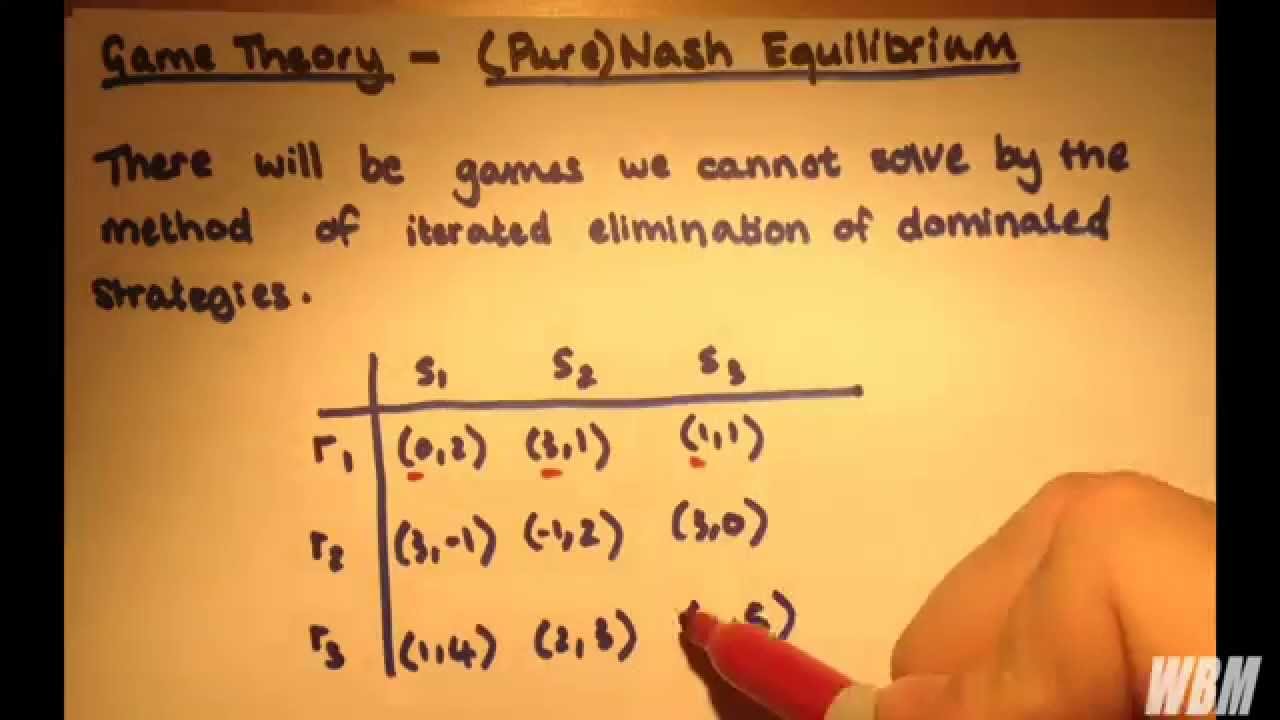
The concept of Pure Strategy Nash Equilibrium and how to find it using best-response analysis.
Basic probability concepts, specifically how to calculate the expected value of uncertain outcomes.
The distinction between dominant and dominated strategies in game theory.
Mathematical computation of Mixed Strategy Nash Equilibria in asymmetric 2x2 and larger multi-player games.
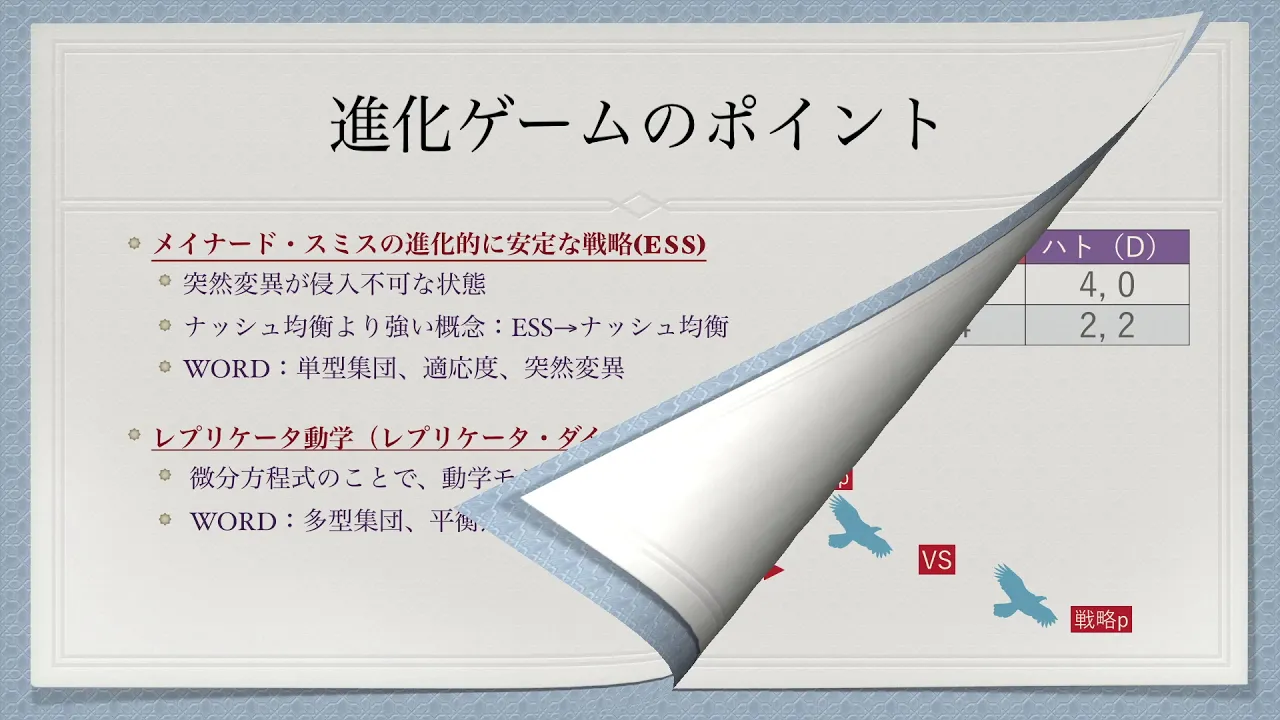
Application of mixed strategies to Evolutionary Game Theory and the concept of Evolutionarily Stable Strategies (ESS).
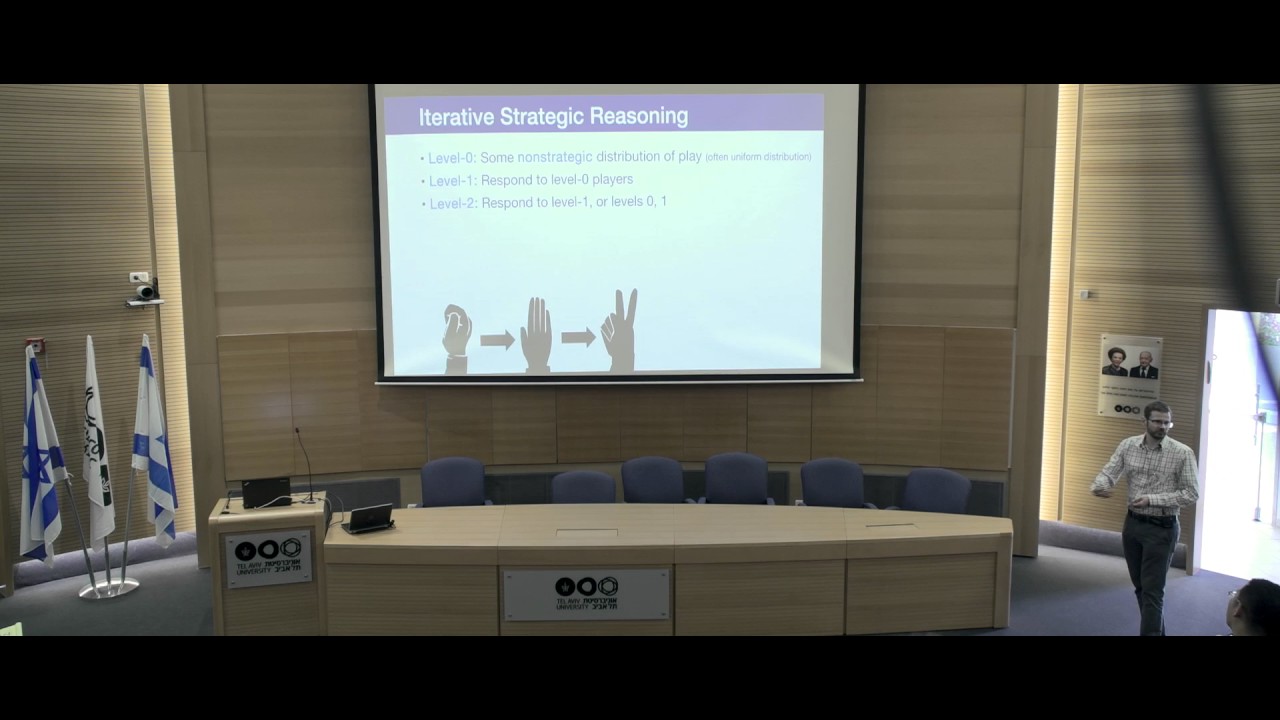
Study of Behavioral Game Theory to analyze how actual human subjects randomize choices compared to mathematical predictions.
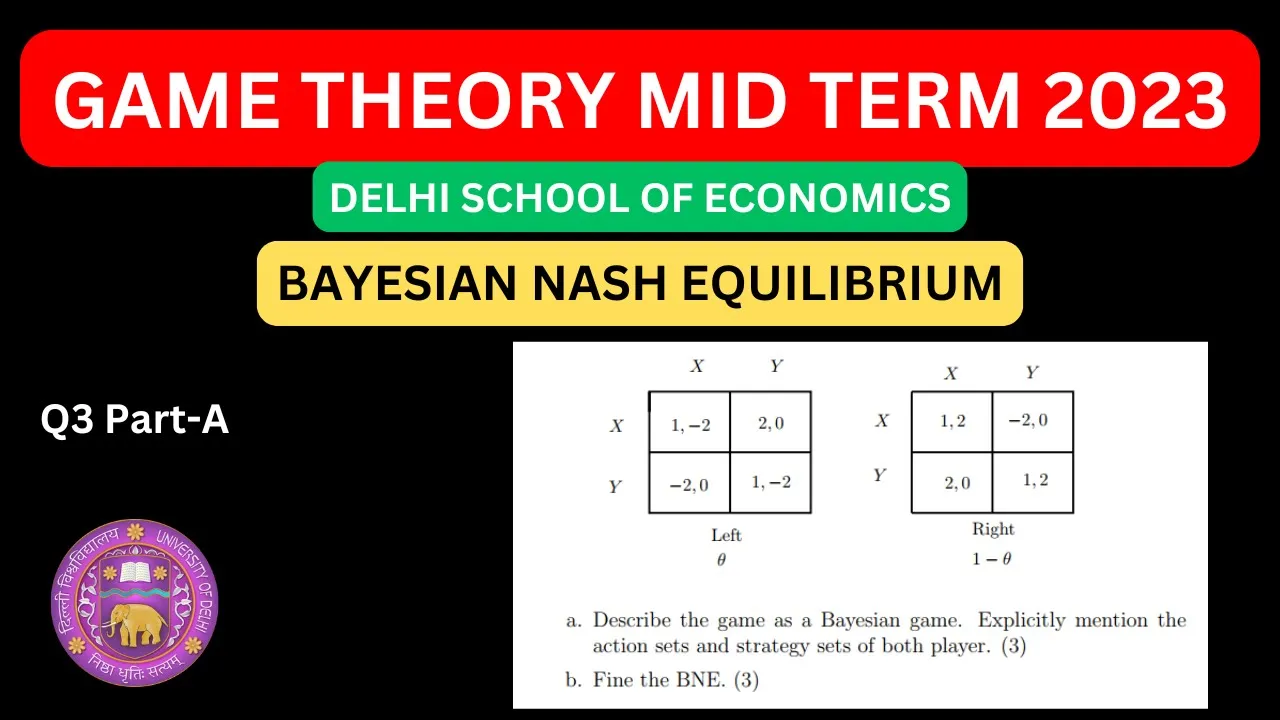
Introduction to Bayesian Nash Equilibria, where players have incomplete information about opponents' preferences and payoffs.
71.9K views1.2Klikes10:18Original Release: 2021-12-30
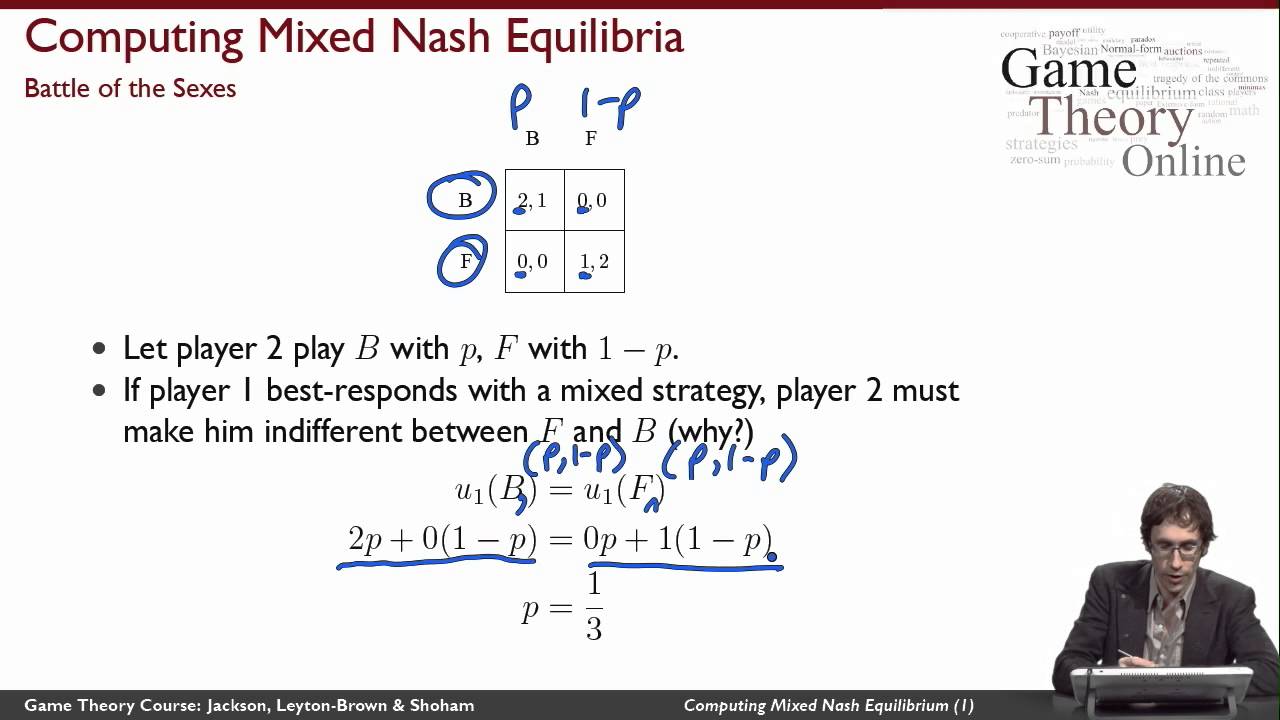
in this video i'm going to talk about mixed strategies equilibrium and specifically i'm going to try to give you some intuitions about what's going on here so here we have a game where we have two players and you might think of these as players in a game like a like a sports game of some sort where they're choosing go right or go left and different versions of this might be the goalie in a soccer game has to choose anticipate right or anticipate left based on a player kicking the ball their direction or it could be a tennis player who's having to serve right or serve left and their opponent is having to anticipate right or anticipate left so that's one version of this and the payoffs in this table are set up in a way that might perhaps match a game like that um this isn't perfect because it's not exactly zero sum but i think this is the clearest way to understand what's going on so before we get going we should remind ourselves what is nash equilibrium and nash equilibrium is a no regrets equilibrium where after everything is said and done both players can say given what the other player did i'm happy with my choice in other words i have no regrets if either of them say wait a second based on what they did i wish i would have done something else if that happens then you're not in nash equilibrium then you're going to have rejiggering of the outcome if you play this game again and again so we want to find a situation where both players are like okay this is the best i could have done given their choice that's nash equilibrium now if we solve this using the classic way of solving nash equilibrium which i'll post a link to below if you don't know how to do that but i'll do that really quickly here you solve for regular nash equilibrium what you're going to find is that there's no pure strategies nash equilibrium and in which case is there still a nash equilibrium and the answer is yes but the nash equilibrium is going to be a case where the players mix between two strategies and you have to think about this as the mix as being random so each player doesn't decide this time do i go right or this time do i go left rather each player says i'm going to decide what the probability of me going right or me going left is and if the probability is one-third then i will roll a die and if it lands on what a one or a two then that there's a one-third probability of that then i will go right if it lands on a three four five or six i'll go left and you're letting the die the random die decide for you or the way i like to picture this in my head is with a tennis match i can kind of imagine someone in the stands being the randomizer for the tennis person so if you've calculated that you should go left with a 44 chance and right with a uh with a 56 percent chance based on the strengths and weaknesses of that particular opponent and their right-handedness or left-handedness then you would have someone in the stands who would randomly make a decision right or left based on some random calculator on their phone and they would hold up red if you should go right and blue if they should go left and that's the way you serve when you serve the ball that's the way i think of it because it's not about which choice do you make it's about what's your probability of going any given choice now for these players we're going to have p is the probability that player one will go right and of course one minus p is the probability they will go left same with player two we have q is the probability player two will go right and one minus q is the probability they will go left all right so this diagram down here this little simple diagram is p the probability of going right so if we're at zero that means we're going left a hundred percent of the time if we're at a hundred percent p equals a hundred percent we're going right a hundred percent of the time if we're at seventy-five percent then we're going right 75 and left 25 so you can slide this probability up and down and that's what we're going to do in this thought experiment however i will start the thought experiment by imagining what if we only go left because we see that if we go left our payoffs are four and zero if we go right our payoffs are zero and three so your first guess might be what if you went left with a hundred percent probability or what if p equals zero what would happen in that case well if you're always going left your opponent is going to figure that out pretty quickly right they're going to be like oh it seems like they're always going left and your opponent is going to say what's my best response to that and that means their best response to that of course is to go left as well and that puts you in this box over here you as player one do not like that box because you get zero in that box so by going left all the time you know exactly how your opponent is going to respond and it is not in your favor so if we are down here the response of our opponent is going to make us sad and i like to use sad faces to map out this kind of diagram in which case you're going to say well given what they did they're always going left in response to me i wish i would have gone right a little bit more so i wish i would have been a little bit higher up on this p diagram and let's also write down the opponent's response so if p equals zero our opponent takes advantage we're not happy we wish we would have played p at a little bit higher rate than zero if that happens no the problem is we don't yet know how much over zero we should put p so we might overshoot in fact we might completely overshoot by saying well what if we let p equal a hundred percent in which case we're always choosing right in which case we have to ask ourselves if our opponent notices that what are they going to do and of course if we're always going right their best response to that is to also go right that means we're going to be in this box our payoff is zero in which case we're also not happy and our opponent is going to be taking advantage of us so we're not happy at 100 if we end up at 100 we will wish we would have had a p that would that mixed a little bit more between left and right so we've drawn arrows in between now the next thing we might do is we might take another guess we might say well what if we chose p equal to 25 well i won't do the math per se here but what what you're going to find if you do the math is that if you go right 25 chance and left 75 chance your opponent's best response to that is to always go left because most of the time you're sort of on this bottom rung they get more on the bottom rung by choosing left than they do by going right so just getting this to 75 of the time is going to be better than any other choice they can make and they'll always go left you're not going to be happy in which case because they're always going left you're going to say well i'm not happy i feel like i'm being taken advantage of and i wish i would have increased the probability of going right moving in that direction and of course you do the same exercise at 75 at 75 percent you find the same thing now i'm going to do the math in other videos but the math is going to tell us that we should set p at exactly three sevenths and what that means is if we actually check the 50 line we're going to not be happy and we're going to wish we would have moved down as a matter of fact any random point we choose for p on this map we're going to find that the other player has a best response of always going left or always going right and taking advantage of our bias in some ways and that's true of every point on the math except three-sevenths where every point above three-sevenths we're going to say man i'm pretty unhappy here i wish i would have set p lower at every point below three-sevenths they're going to say i wish i would have set p higher and 3 7 is the equilibrium now the rule of thumb for figuring out the three sevenths seems kind of counterintuitive specifically you set the three sevenths to make the other player indifferent between going left and going right and the reason for that is if the other player is always going left they're going to be taking advantage of you unless you're going in a direction that's going to cause them to switch so you're going to be in a situation if you're not in equilibrium where you're constantly moving back and forth so basically if you set your p your probability of going right at any point above three-sevenths in this diagram your opponent is going to take advantage of that by always going left and giving you that zero taking that two for themselves more often than not and that's not going to be good for you and that's going to cause you to decrease your p if you decrease it too much and you're on this side your opponent will take advantage by always going right and giving you the zero you're not going to be happy with that that happens too often so by making your opponent indifferent between going right and left that's the only way to stop this weird cycle that's going on so the rule of thumb is that you set your probability to make the other player indifferent between going right and going left and i'll show you in other videos linked to below the mathematical ways of doing that both using calculus and not using calculus
Up Next
19:14
Backward Induction & Subgame Perfect Nash Equilibrium Explained
@selcukozyurt
68.3K views•2020-10-29
4:43
Elliptic Curve Cryptography Explained: ECC, ECDSA, ECDH
@PracticalNetworking
28.5K views•2024-10-21
8:27
Backward Induction in Game Trees: Sequential Move Game Theory
@AshleyHodgson
127.8K views•2021-08-26

6:00
The Mathematical Impossibility of Accurate World Maps
@Vox
23.3M views•2016-12-02
Related Study Plans & Knowledge Roadmaps
Structured learning paths in Mathematics
mathematics
Tensor Calculus: Vectors to Riemann Curvature
01Mathematical Foundations: Linear Algebra & Calculus
02Covectors, Dual Spaces, and Tensor Basics
03The Metric Tensor and Index Gymnastics
+ 2 more learning modules
40h5 modules
Explore Roadmap
mathematics
Gödel's Incompleteness: Logic, Proofs & Limits
01Introduction to Formal Systems & Hilbert's Dream
02Set Theory, Cardinality, and Cantor's Diagonal Argument
03Arithmetization and Gödel Numbering
+ 2 more learning modules
14h5 modules
Explore Roadmap
mathematics
Galois Theory: Fields, Groups & Solvability
01Foundations of Abstract Algebra: Groups & Fields
02Polynomials & Field Extensions
03Splitting Fields & Symmetries
+ 2 more learning modules
24h5 modules
Explore Roadmap
mathematics
Non-Euclidean Geometry: Models & Geodesics
01Euclid's Fifth Postulate and the Birth of New Geometries
02Hyperbolic Space and the Poincaré Disk Model
03Geodesics: Defining Straight Lines in Curved Spaces
+ 2 more learning modules
15h5 modules
Explore Roadmap