


![Empires: Administration [AP World History Review] Unit 3, Topic 2](https://i.ytimg.com/vi_webp/Dmy4qP2lLHw/maxresdefault.webp)




![Cała Historia Imperium Hiszpańskiego - Złoto i Krew [Podcast Historyczny]](https://i.ytimg.com/vi/9XkI3YdKRqo/maxresdefault.jpg)




![The ENGLISH CIVIL WAR and GLORIOUS REVOLUTION [AP Euro Review—Unit 3 Topic 2]](https://i.ytimg.com/vi_webp/OHTsvobSnD8/maxresdefault.webp)


![[아트&릴리전15] 시민 바로크:(1/2): 위대한 네덜란드의 세기](https://i.ytimg.com/vi/1_tabJnAmNY/maxresdefault.jpg)





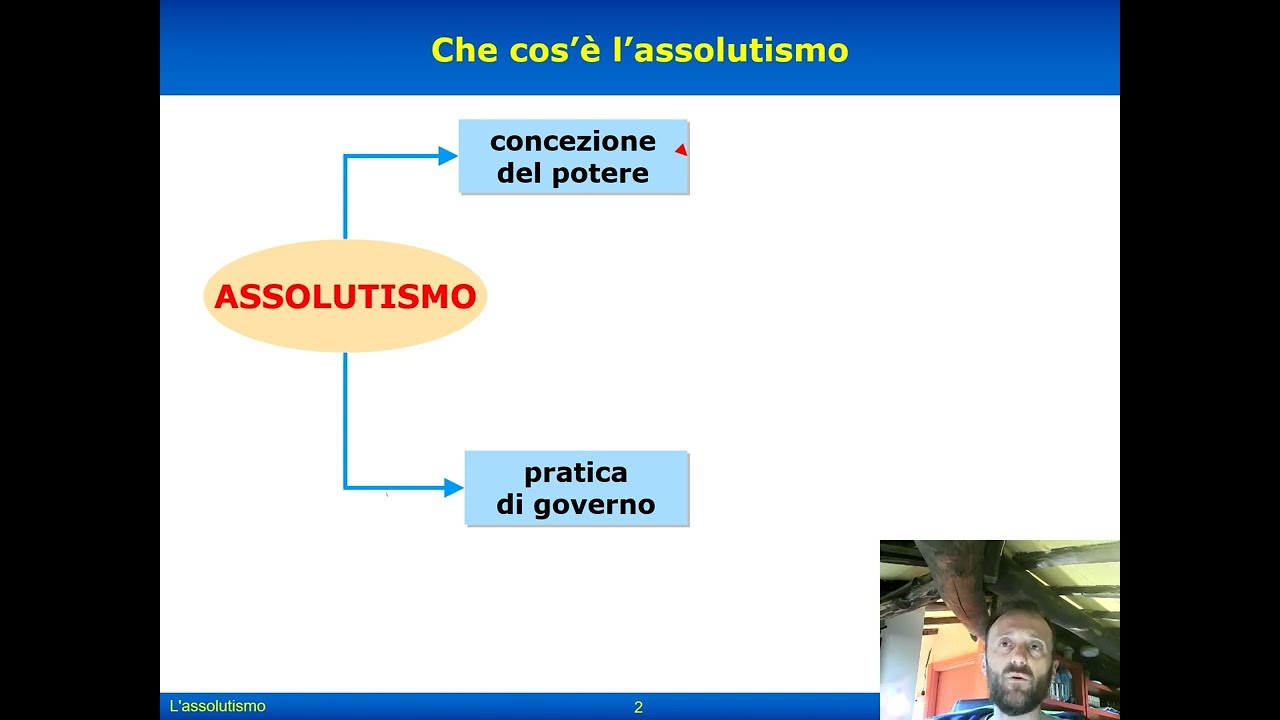



Great Britain and the Netherlands did not adopt absolutist rule like other major European powers due to their large middle classes, decentralized political structures, anti-absolutist national identities, and anti-Catholic sentiments, which distinguished them from France, Prussia, Russia, and Spain where noble elites dominated and centralized authority prevailed.
Dutch and British Exceptionalism: Why They Rejected Absolutism | European Civilization (HIST 202) (56 chars)
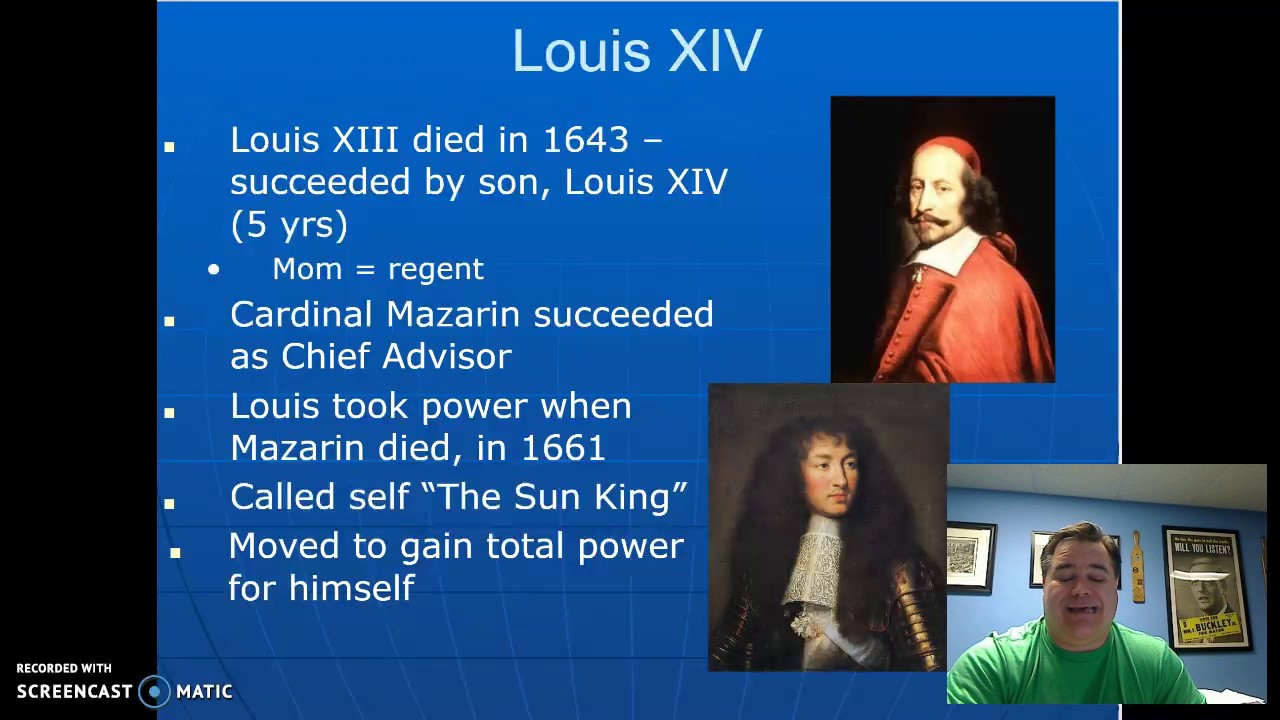
Added:The core concept of Political Absolutism and the Divine Right of Kings, particularly how it was practiced in France under Louis XIV.
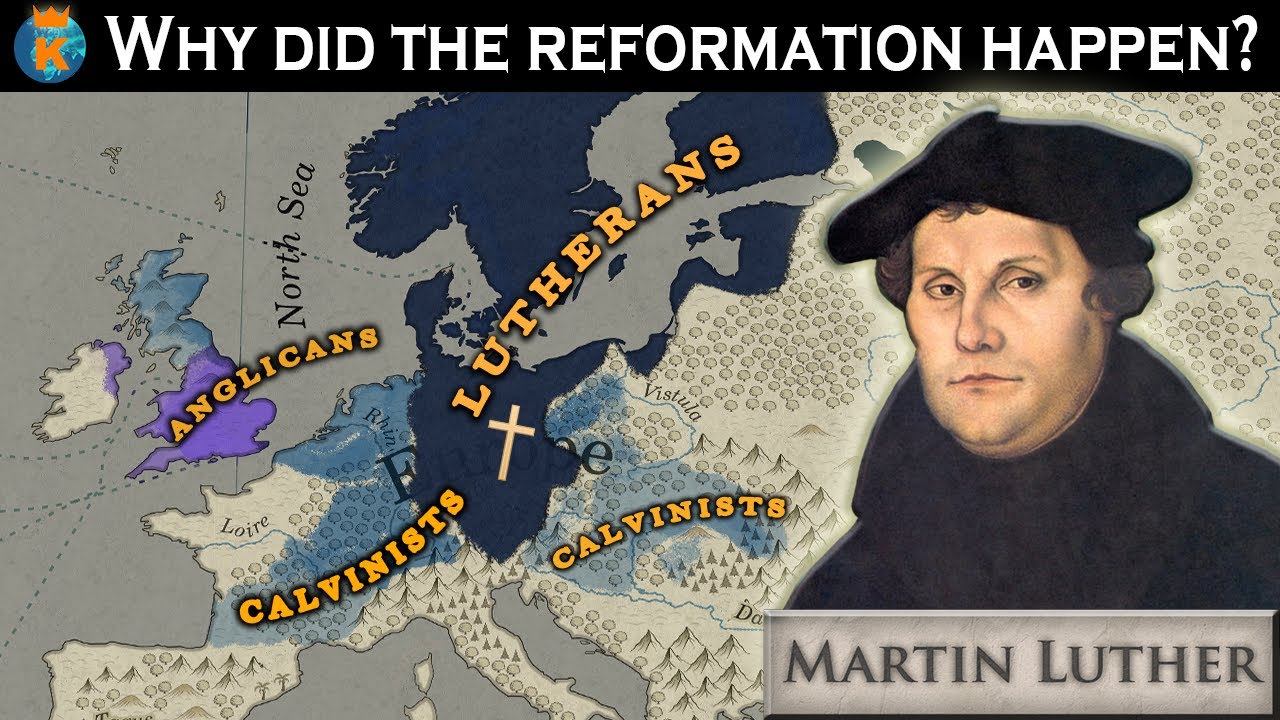
The history of the Protestant Reformation and how religious divisions (specifically Calvinism and Anglicanism) fueled political conflicts in early modern Europe.
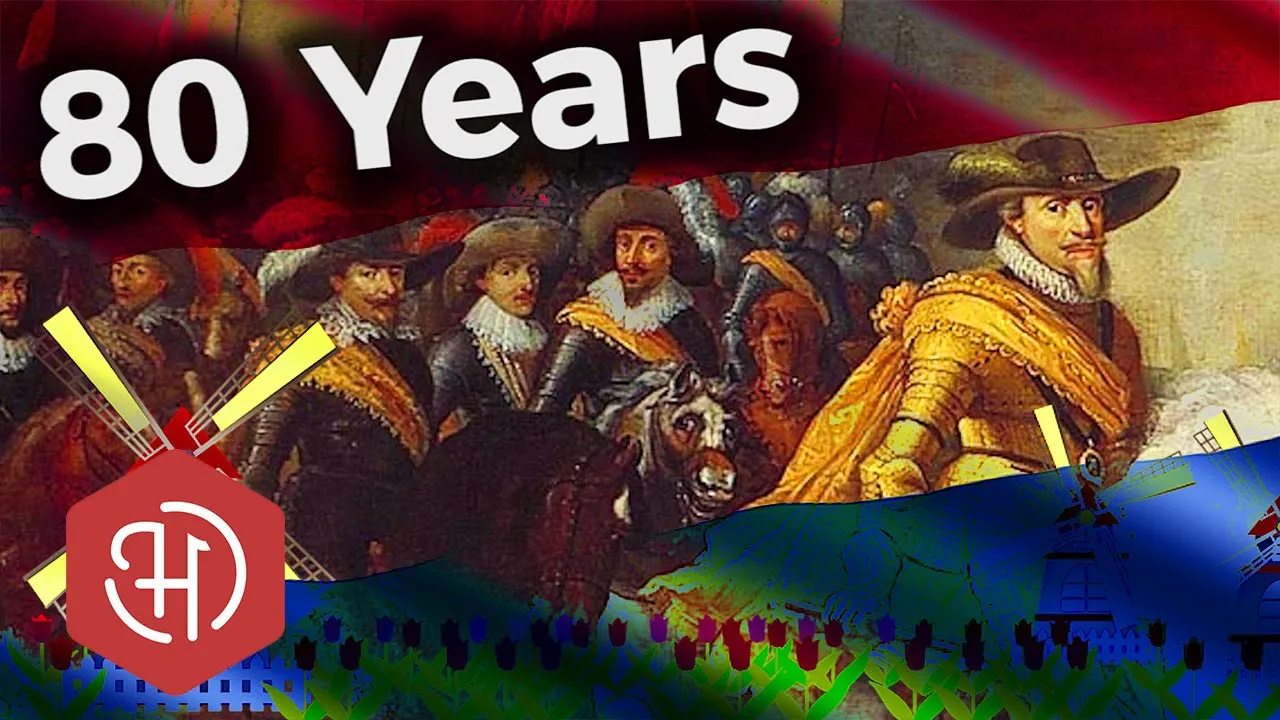
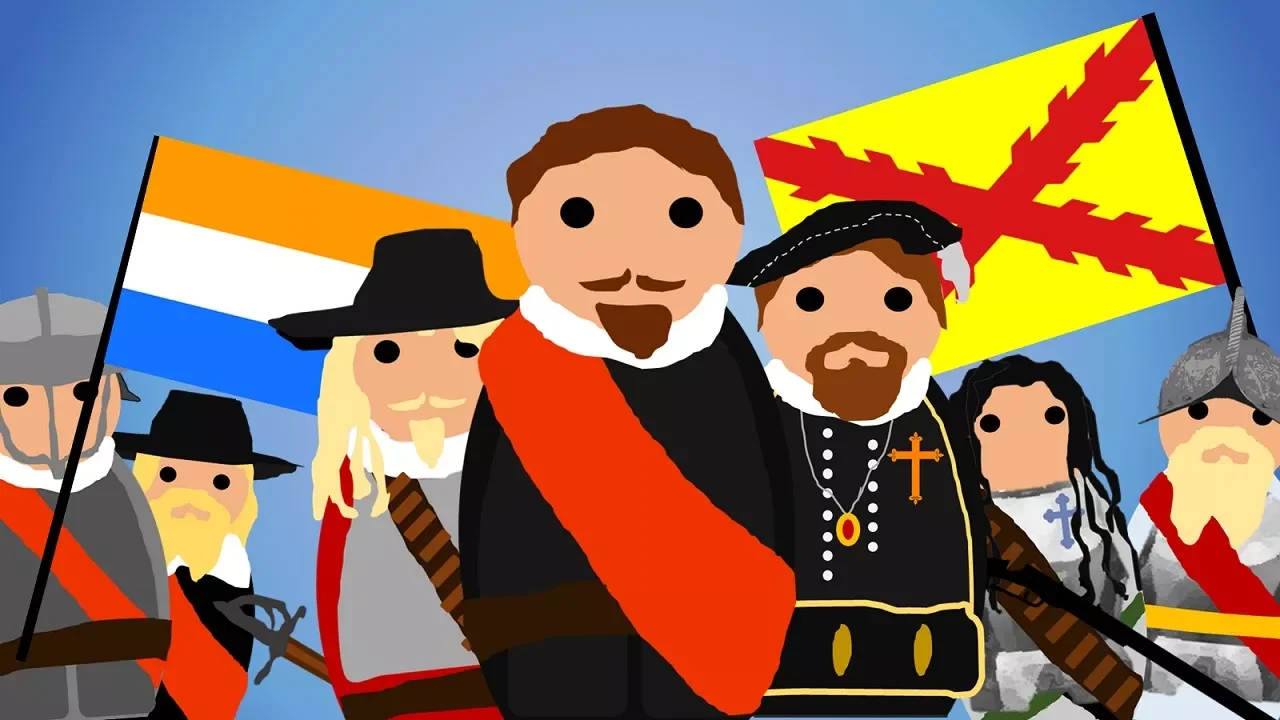
The geopolitical context of the Dutch Revolt (the Eighty Years' War) against the Catholic Spanish Habsburg Empire.
The fundamental structures of feudalism and how the rise of global maritime trade began shifting economic power to the merchant class (bourgeoisie).
The events and constitutional legacy of the English Civil War and the subsequent Glorious Revolution of 1688.
The financial and cultural developments of the Dutch Golden Age, including the creation of the first modern stock market and joint-stock companies.
The development of Enlightenment political philosophy, specifically the social contract theories of John Locke and Thomas Hobbes.
A comparative study of the long-term historical outcomes of constitutionalism in Britain/Netherlands versus the eventual decline and revolution in absolutist France and Spain.
183.7K views0likes46:32Original Release: 2009-09-02
Prof: We talked about different political outcomes.
Over the long run, Great Britain remains a constitutional monarchy; even in the nineteenth century, when Victoria had great prestige, she did not have great power.
The Netherlands also resisted absolutism, and the Dutch Republic remained the Dutch Republic; although, for reasons that we'll see later, the Dutch Republic ceases to be a great power in the eighteenth century.
Given the very different route that Prussia, Austria, Russia, Sweden, and France went with a centralization of absolute rule, why did it work out so differently for England/Britain and the Netherlands?
Again, this is the second and last of these sort of holding pattern lectures.
This parallels exactly what you are reading.
Again, until we get our class set and all that, then there will be a very different kind of lecture starting next Monday.
But let's just think out loud about what these places had in common, and what this tells you about social structure and political outcomes in early modern Europe.
Of course, the consequences are enormous for other kinds of outcomes.
Let me give you an example.
Germany is not unified until 1871.
Ironically, unification proclaimed in the Hall of Mirrors at the Château of Versailles, which we'll visit for a few seconds later on.
The fact that German unification was achieved by Prussia and that Prussia was dominated by nobles, who were called Junkers, you'll come to them later, and by an army which--the state basically was an appendage of the army--had rather enormous consequences for Europe in the late nineteenth and above all in the twentieth century.
In the 1960s and 1970s people paid a lot more attention to social structure and class analysis.
But when you look at the experience of Britain and the Dutch Republic, they do share things that, in a way, determine the kind of political economy that they would have.
What are some of these things?
I've written them on the board.
Let's just start in that order and think aloud.
Then what I'm going to do for the last twenty or twenty-five minutes is talk about the Dutch Republic.
You can skip that part in the reading, which isn't very long, and illustrate with some paintings, for which you are not responsible, but just to make the points I want to make about the nature of the Dutch Republic, and in which you'll see ways in which it was very similar to England/Great Britain and very different in terms of France.
First of all, it's not a coincidence that in both England and in the Dutch Republic you had, along with the city-states of Northern Italy, you had the largest percentage of middle-class population that you could find in Europe.
The middle class in Russia, which I'll talk about on Monday, was just absolutely miniscule.
The middle class was extremely small in Prussia.
Prussia did not include the Hanseatic League cities, such as Bremen and Hamburg and the others.
You have in the Netherlands and in England an astonishingly large middle class.
Moreover, in the case of England, there was tremendous fluidity between elites.
The percentage of the population who was noble, who had noble titles, was extremely small.
Privilege came from wealth and wealth stemmed from the land.
Yet, because of the rapid and dramatic expansion of the English role in the global economy, you had lots of very wealthy landlords, property owners investing in commerce, whereas in Spain and in France, and Prussia in particular, it was seen to be sort of slumming for nobles to participate in commerce.
Marxist analysis has given us this all too rigid picture of the nobility sort of letting their nails grow long, "they are nobles because they do nothing."
That was part of it.
Certainly there were nobles in France who bought up vineyards around Bordeaux.
There are nobles around Toulouse who have invested in commercial agriculture.
But yet the fact remains that it's really in England that you have this tremendous fluidity within the elite, and that basically commercial money talks as much as propertied money talks.
London, already by the late sixteenth century, one-sixth of all the people, I think this is E.A. Wrigley who pointed this out a long time ago--one-sixth of all the people in England went to London frequently, because London was absolutely gigantic as a city.
The only cities in Europe that were comparable--and they were smaller--were Naples, an extraordinarily poor city, and Constantinople, Istanbul, and, of course, in Japan, Edo, which would become known as Tokyo.
The percentage of the English population that would have considered themselves to be middle class is extraordinarily large.
The same is even more true in the Netherlands.
There were, to be sure, nobles in the Netherlands.
They tended to live in the eastern part in rural Netherlands and in the south.
But their lives and interests were far, far away from that economic large machine, which was Amsterdam.
Amsterdam is dominated by the middle classes.
Now, the middle class want political rights.
They want prerogatives.
They want their privileges for themselves.
It is fair to argue that non-titled people in England were at the forefront of the victorious role in the civil war that parliament played.
In the city-states of Venice, which was a major trading city already on the decline, and in Florence, and in Milan, and in Turin, and in places like that you find something very comparable, but Italy is not united until the 1860s.
Northern Italy has a large percentage of the population who are middle class.
But in talking about the political outcomes of states, that doesn't really fit into our analysis here.
Part of that is that along with Northern Italy, the Netherlands and England/Great Britain have, by far, the most urbanized population in Europe.
If you go into what now is Serbia, there basically was Belgrade, which was a small place.
Poland had very lively, important cities, Warsaw and Krakow, and Gdańsk as well.
You can't just say, "In Eastern Europe there weren't cities," but there isn't any place, including France, that had a remotely as high a percentage of the population living in cities as England and the Netherlands.
One of the great shifts in English/British history that you will become aware of is the shift of economic dynamism in England away from the south to the north.
In the time we're starting this course in the seventeenth century, besides London, which is this gigantic place, the biggest cities in England were Norwich and Exeter, and York in the north.
Of course, with large-scale industrialization, which begins in the middle of the eighteenth century, you'll see this dramatic shift up to the north.
Manchester, which was a small town, becomes this enormous city, and Liverpool becomes ever more important.
Cities are where the middle class lives.
Bourgeois and burghers, as I said last time, are urban residents who are losing their privileges on the continent to big-time absolute states.
They will defend, quite vociferously, their privileges as townspeople against absolutist pretensions of nobles, in the case of the Netherlands and also, to an extent, in England as well.
They share those things in common, which is not to say that a country like France wasn't urbanized.
Paris is already enormous.
There are about 500,000 people at the time of the French Revolution.
There are so many people you can't count, because they own nothing.
Also, we don't have accurate censuses until the nineteenth century.
The first accurate census, I think, is in Copenhagen at the end of the eighteenth century.
Most censuses were taken, by the way, as a way of counting heads, the number of people who had to be fed at the time of a siege.
We're kind of guessing on these population figures.
The fact remains that the Netherlands and England/Britain share this.
This is important in terms of political outcomes, and also important in the case of England/Britain in what we've come to call the Industrial Revolution, which I will talk about at another time.
Secondly, as I tried to suggest the other day, these places resist absolutism.
The English Civil War, it's kind of a generalization to underline that too much, but nonetheless, people living in England in the 1640s saw that there was a real threat to the idea of the freeborn Englishman that was coming from the trampling of long-assumed rights, since at least the thirteenth century, at least in the imagination of people by kings who wanted to dispense with the rights of parliament and run things as they wanted to.
In the case of the Netherlands, it's the same thing.
There isn't anything as dramatic as the English Civil War, but the important outcome is that in the end this decentralized federalist structure, which I describe in the book and we'll talk a little bit about in a while, is victorious over the pretensions of a potential dynastic ruling house, that is the Orange House, the House of Orange, who wanted to make the chief Dutch official, who was called the Stadtholder-- you can read that in the book--and wanted to turn that person into kind of a thundering, semi-absolutist monarch.
That doesn't work as well.
When you think of the origins of the Netherlands, it comes from a civil war, or a war of independence against the Spanish absolutist state, that begins in 1572 and goes on and off all the time until Dutch independence is recognized--it was a fait accompli for a long time, but until the Dutch independence was recognized in 1648 at the Treaty of Westphalia.
For the Dutch when they imagine scary things, a scary thing is an army sent by the king of Spain to extract more taxes from the wealthiest of all the Spanish provinces--that is, the Netherlands--rich because of commerce and, as we'll see in a minute, to try to force people to remain Catholics at a time when the vast majority of the Dutch population had converted to Calvinism.
Those people who believed in the Dutch Republic, which was the vast majority of the people, just as the majority of the population of England held to the rights of parliament, they have this scary scenario of their rights being violated, trampled upon, destroyed, eliminated, eradicated by big-time absolute rulers.
The other scary thing for the Dutch is, of course, the big guy down south.
Louis XIV would love to control all of the Netherlands.
His invasions at one time are turned back when they literally open the dykes and flood the French armies back.
In the mental construction of the Dutch and the English both involves one thing they don't want to be.
That is to lose their prerogatives, their rights to an absolute state.
In both cases, this becomes part of their self-identity.
That's an essential part, as my good friend, Linda Colley, who used to teach here and sadly is not here anymore.
She's at Princeton.
She made an argument in her very successful book called Britons, the construction of British identity.
I will argue later in the course, in 1848 it has to get reinvented again by imagining an other, who is perceived as sneaky and dangerous, and of course in that case it's the French, but also the point of view of the British, the Irish, who are conceived of as being capable because of their quest for--"I don't want to be trampled by the English, especially by English Protestants"-- of hooking up with France, which they tried to do in 1798, or in World War I with Germany, because there were some attempts by the Germans to stoke up Irish independence movements.
Again, the only point here is that they see themselves as anti-absolutists.
This helps them create this sense of identity, which helps determine their political origins.
You'll find nothing comparable in Russia, obviously which I'll come back and talk about, or in Prussia, or in France.
You can talk about the origins of French nationalism in the middle of the eighteenth century, but it's very closely tied to this dynasty, at least until they lop off the guy's head in 1793.
So, that's that point.
Third is decentralization.
Both of these states are decentralized states.
The British don't have a police force until 1827 or 1829, I can't remember which, when Robert Peale creates a London police force which they call the Bobbies, after, like, Robert, Bob, Bobbies.
People didn't want that.
They didn't want a large standing army.
What have they identified large standing armies with?
They always had to have a large standing navy for obvious reasons.
But they identified large standing armies with France or with the Spain of Phillip II or with Prussia or with Russia.
So, it didn't mean that the English state wasn't efficient in collecting taxes, because they were more efficient than the French were in collecting taxes.
But it does mean that this decentralization is an essential part of who they thought they were.
The local sheriff will call out the guys and restore order when there's trouble.
There is this real fear that large standing armies could ultimately compromise the rights of freeborn Englishmen.
That's in a way that they would have put it.
In the case of the Netherlands, which I'll come back to in a while, you have these provinces that--although Holland, which is the province of Amsterdam, is by far the most important and most prosperous of the Dutch provinces, such as that we often miscall the Netherlands Holland, in fact Holland is just one of the provinces, as if you called the United States New York or California, because those are the two most powerful states in the United States.
But this decentralized federalist structure is part of who they thought they were and who they continue to think they are.
This is very different than these absolute kings who can send out their armies, can run by their minions to squish whomever they want like grapes whenever there's trouble.
We can exaggerate the power of Peter the Great in this vast empire that's expanding south and already expanding toward Siberia and such distant places.
It took a long time to get the guys there.
But when they got there, there was hell to pay.
Very, very different than this federalist decentralized structure of both of these countries.
The political outcome is different.
You can also make that argument, this isn't the course to do that, but you can make that argument about the United States and the evolution of the United States, because of the prestige of local leaders and the decentralized nature of the colonies already at the time of the War of Independence--which is going to have a strong role in the political outcome, for better or for worse--in this country where you have this sort of wacko political system that still exists because of people screaming, "state's rights," and all that.
But that's another subject.
Fourth, anti-Catholicism in both cases.
Why?
Because these are major countries in the Reformation.
The English Reformation, which begins with Henry VIII wanting to divorce and kill his various wives along the way, still had an awful lot to do with the resistance to the power of Rome and the power of the Catholic Church as an institution.
In the case of the Netherlands, anti-Catholicism is endemic.
Why?
Because it's identified with the Spanish empire, with Spain, which not only wanted to extract taxes and other revenue from its most prosperous province, but wanted to force people to remain Catholic.
When they send this guy called the Duke of Alba up to the Netherlands, he burns people to the stake and all this kind of stuff.
The association of Catholicism as the dominant religion in both of the enemy countries, France and Spain, is extremely important.
This is not to say that the Dutch don't fight the English, too, because they do.
There are various wars over control of the seas.
But nonetheless, in the imagination, in the imaginaire, in the mental construction of these two countries, what we are not, that is Catholic, helps define their identity.
Of course, the particular problem of Ireland, the challenge of Ireland as I suggested earlier, has an awful lot to do with that.
And the reinvention in the nineteenth century of British identity will also have a lot to do with fear of the Irish, "the enemy within," as they were perceived.
But more about that.
I'll talk about that a lot and try to explain there was no revolution in England in 1848.
In the course of Britain, it's even clearer.
The French are "the sneaky French."
From the French point of view, it's the perfidious Albion already there.
You can go all the way up to the origins of World War I to see.
When the British get into World War I, it's because of the violation of Belgian neutrality by the Germans, because the idea of having another enemy…we've already got the French across the channel and it's not that big a channel.
You can swim across it.
I couldn't and you couldn't either but lots of people have.
They do it all the time.
But if you've got the Germans in Ostende eating moules frites, eating mussels with French fries, and you've already got the French there, this is unthinkable.
So, they go to war.
I don't want to exaggerate this too much, but the largest riots in Britain in the eighteenth century are not the riots for political reform at all.
They are the anti-Catholic riots called the Gordon Riots, which take place in London.
Anti-Catholicism is very much strongly entrenched in the British sense of who they were.
Anti-French--there we go.
Those two are already linked, along with anti-absolutism and anti-Catholicism.
Last, and all these things are linked.
You could do one of these little boxes they do in sociology or political science, and have these arrows running all over the place.
You could make it there.
Who are the biggest trading powers in Europe?
We forget about the enormous trading vitality of Asia, even sea vitality and land vitality at the same time, but they are without any question by this point--with the decline of the Spanish empire, which begins before this course--the Dutch and the English.
What this does is it increases the role of this commercial middle class.
It increases the role of cities, particularly port cities, which Amsterdam is.
And it increases the role of these economic elites or their concern with maintaining their privileges against threats to their privileges and to their prosperity no matter where they come from.
Just to amuse yourself, not for any kind of punitive think-about-the-exam exercise, but it would be fun to take these categories and think about these other countries, particularly those who were absolute states, other large important states in Europe and see to what extent you have these factors there.
Prussia, I already said, you've got your big nobles.
You've got all these guys with dueling scars, and for them to be indulging in commerce is just crass, and not terribly manly, and all this business.
You've got your flute-playing king, Frederick the Great, who could be awful.
He could lash out.
Voltaire went and hung out with Frederick the Great, and after a while he said, "Let me out of here."
But you've got Berlin, which was a very important town, but it's a very important city because it's got this huge garrison and it's got factories turning out military uniforms.
It's got Potsdam Palace and all of this.
It's not at all the same thing as Amsterdam, or London, or any of the other trading cities around.
In the case of Russia, it's even easier.
You've got a practically nonexistent middle class.
You've got all sorts of nobles.
They are involved in commerce, some of them, but mostly what they do is they serve the state.
They're called service nobility.
They're not serving the cities.
They're not serving commerce.
What they're doing is they're doing is they're serving the state.
They're serving this huge, lumbering, strange guy, Peter the Great.
Then you could take other places, like Italy and smaller cities.
But you don't yet have these big state structures.
So, if you're looking back, say, from the end of the nineteenth century, it's not easy to see, but you can see these--don't ever think that history runs on railroad tracks, and all you need is the timetable to show when modernization shows up.
That's a most ludicrous word, really, in contemporary social science or orthodox Marxist, where you just had to say, "Well, eventually the proletariat will rise up, because the bourgeoisie did this before."
But yet when you look back from the nineteenth century, these factors do count in explaining how countries turn out to be the way they are.
When you try and look at the origins of World War I, it mattered that Germany is run by this kind of madcap dufus, Wilhelm II, who was intellectually lazy and liked to break bottles of Riesling over bright, shiny battleships and didn't concentrate on things very long, and sends off provocative telegrams here and there to make everybody mad.
That has a long-run outcome, which cost the lives of millions of people.
Anyway, here we go.
It's just kind of fun to think about that, so that's what we are doing.
We're thinking about that.
Now, let's dim the lights.
Here we go.
How do we dim the lights?
I can't remember.
Is that good?
We've got to get further down than that.
So, the lecture… Okay, now paralleling what you've been reading, let's look a little bit at the Dutch Republic, because people talk about England and Britain all the time, so let me talk about the Dutch Republic.
This will kind of bring some of these factors together, along with the idea of what people thought they were.
What is their identity?
Here again, we'll look at some paintings.
You're not responsible for these paintings, but we'll illustrate ways in which the Dutch Republic, and their social structure, and what they emphasized, and who they thought they were was very different than, for example, la belle France.
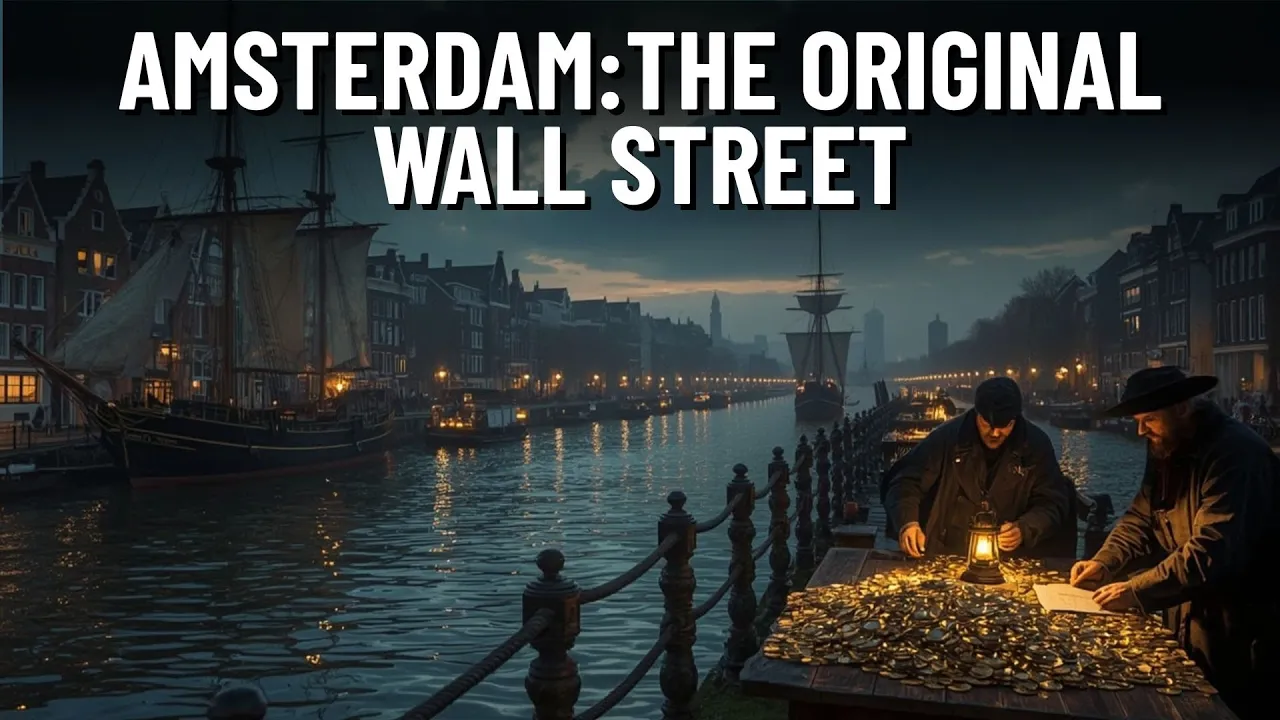
So, here we have Amsterdam.
It grows dramatically because of this global trade in the seventeenth century.
That was 1613.
I made this.
It's all a bunch of jumble.
But this is 1640, or something like that--later.
But what you have are these canals.
Many of you, or some of you have had the good fortune to go to one of Europe's most wonderful cities.
The canals were used to transport goods.
Thus, the city structure itself, the way the city was built with houses along the canals reflects the economic primacy of global trade.
At this time the Dutch are sending herrings, these long flat boats, herring ships are going all the way to Newfoundland in the seventeenth century, and Iceland, freezing off the coast of Iceland.
They control and dominate the Baltic trade, and herring is an important part of that, because herring will keep once it's salted and all that.
The city of Amsterdam grows up not only as part of this victorious struggle against the Spanish armies.
There's a wonderful book by my former colleague, Geoffrey Parker, called The Spanish Road, which talked about how difficult it was for the Spanish to get troops all the way to the Netherlands.
They had to go from Italy, because much of Italy was controlled by Spain, through the Alps all the way up along the Rhine and finally get into the Dutch Republic.
It was a losing battle.
But Amsterdam reflects this kind of primacy of the global economy, because it's such an important trading power, but also this federalist decentralized aspect that I've tried to describe.
This is the shipyard behind.
In fact, this building behind is still there.
I go to Amsterdam--not frequently, but I've been there ten or twelve times, or something.
I did a Yale trip there.
I remember we took all these alumni around to look at all this stuff.
That was mildly fun.
What the Dutch did--the Netherlands is an extraordinarily small country, and it's the most populated country in Europe, then, per square kilometer, and is now--once.
What they have to do in order to feed the population, you have to have more land.
How are you going to get more land?
One of the incredible things if you're driving, say, from Groningen, and you're going to go all the way down to Amsterdam, when you drive along the coast, you're driving along this sort of road that's out in the sea.
All the land between the water on the left side and a long, long way has been reclaimed from the sea.
This is the seventeenth century.
This isn't scuba diving now off the Great Barrier Reef, or something like that.
What they're doing is they're reclaiming the land from the sea.
What this has to do with global economy is that you have to be able to feed the population.
They have, along with the English--and these two facts are related--an agricultural revolution.
They have an agricultural revolution, investment in commercialized agriculture, and increase in the production in rural areas.
In the case of the Netherlands, it's because of this.
I'll talk about why it happened in Britain another time.
It's because they reclaimed land.
How much land do they reclaim from the sea?
Well, 36,000 acres just between 1590 and 1615.
That's a phenomenal amount, and they keep going over and over again.
The population of the Dutch Republic increases between 1550 and 1650 to almost two million people.
This is in a pretty small--it's bigger than Belgium, but this is a pretty small territory.
Amsterdam, by mid-seventeenth century, by 1650, increases to 150,000 people.
They build these three large canals and this expands the area of the city by four times.
What this means is that boats can dock outside these kind of big warehouses and can unload or, depending on the case, load goods.
You have 500 miles of canals dug just in the middle decades of the seventeenth century.
It becomes this economic dynamo because of that, and thus traders are to be found everywhere.
In the 1630s there are 2,500 trading ships.
They become the principal supplier of grain and fish in Europe.
The Dutch dominate the Baltic trade.
Cities like Gdansk, which we tend to forget about, unfortunately, which is a very important port then and still now.
It's where Solidarity began, too, as many of you know, in 1980.
It's an important port in all of this.
They reach the East Indies in the 1620s and the 1630s.
They bring back cinnamon, nutmeg, and all sorts of valuables.
It's this kind of wealth that allow them to fight this long, hard war of independence, which they finally win.
Now, why is this in here?
This is Rembrandt, as most of you know.
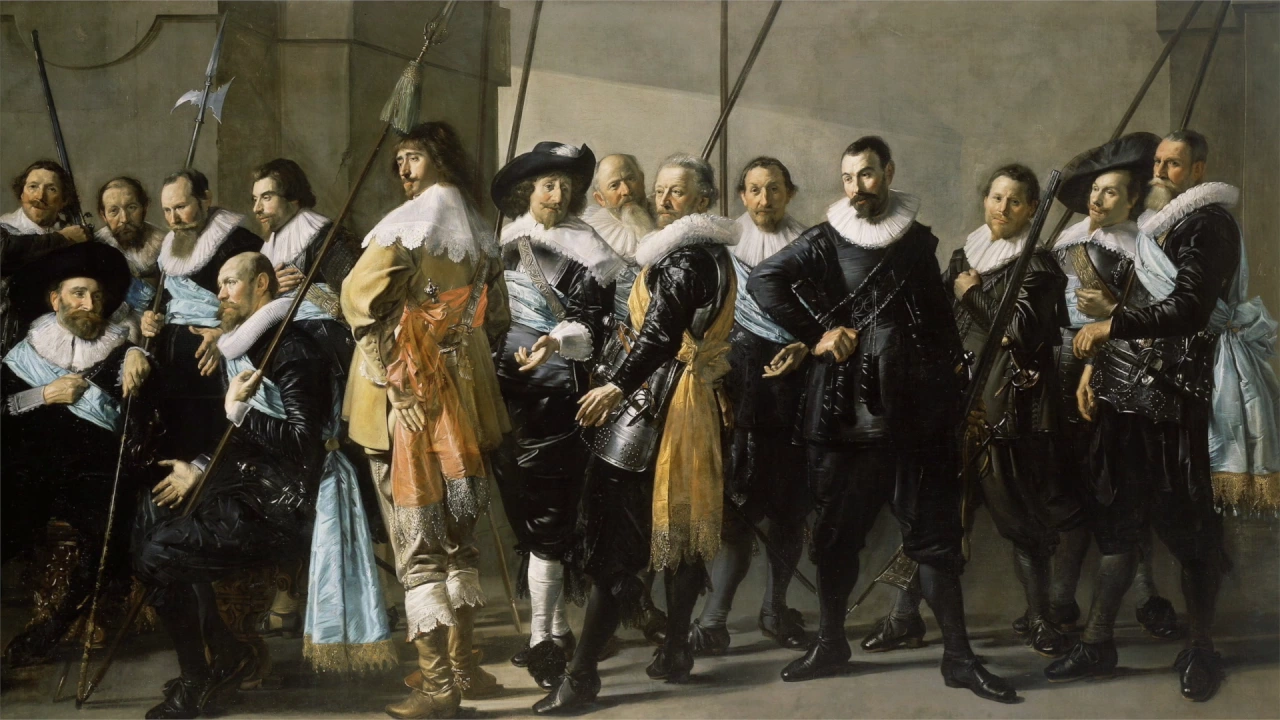
This is called The Night Watch.
The importance of this painting is who is being painted and, more than that, who is getting Rembrandt to paint this.
If you go down into France, if you go to la belle France, the painting is dominated by nobles who want pictures of themselves, or the tiresome Sun King and all his sort of miserable hangers-on, very rich, miserable hangers-on.
What the Dutch painters painted reflects in the same way that Renaissance art reflected what was important to Renaissance Italy.
Who did the commissioning of painting?
I care because my mother was a painter, she was a portrait painter.
That's how we survived in Portland, Oregon.
Who commissioned these paintings and what they painted tell you who these people thought they were.
That's pretty interesting.
Who are these?
This is The Night Watch.
These are the guys who run Amsterdam.
This is essentially the town hall of Amsterdam.
In fact, that building itself, of which I don't have a slide, is extremely modest.
It looks so terribly different than anything like the Spanish palace outside of Madrid or anything that ever had anything to do with the Prussian kings and all that.
Well, that's pretty obvious.
This is the weighing house.
Here, this is very classic.
I'm not a professor of architecture, but it's obvious this is northern European architecture that you can see in northern France, cities like Arras and other places, or Charleville-Mezieres in the Ardennes.
It's one of the most fabulous plazas anywhere.
Or in the Place des Vosges, which is by far the most beautiful plaza in Paris, you have this kind of architecture.
But this is the weighing house there.
Here's another one.
The buildings are the most important.
Buildings in the cities are not huge, over-the-top Baroque churches, such as the Gésu in Rome, for example.
They are weighing houses.
The town hall was in very modest proportions because it's Calvinist.
Calvinists weren't exactly what the French call rigolo, weren't exactly wild, fun-loving types.
Even the churches are completely denuded of the kinds of Baroque, swooning cherubs and clutter that you found in--;beautiful, I'm not knocking the Baroque--but beautiful churches--;or, in Vienna it's a good example of that, or anywhere is a good example of that.
Here's another weighing house.
This is in Gouda, as in the cheese, but the town of Gouda.
Amsterdam wasn't alone.
Now, here, these are houses that are built along the canals.
You've got these warehouses along the canals and here's where the bankers--the Dutch had the most, along with the English, sophisticated banking system in the world.
Lloyds of London, which now does things like insure quarterbacks' knees and things--but it begins in the eighteenth century when people go into the docks.
Because a lot of these ships go blub on the way back, or are taken by pirates and stuff like that, they say, "We want to insure this ship.
Will you sign up for ten percent of the value of this insurance?"
That's how Lloyds of London starts.
But you had the equivalent in Amsterdam as well.
You have access to capital by those guys, these guys who are no longer there.
The middle class guys behind the screen who are going to invest in these long treks.
You send off a ship to Newfoundland, or to Iceland, or even to the Mediterranean.
They start getting into the Mediterranean and that scares the hell out of their commercial rivals.
So, you also build these houses for people to live in.
Because there's not a lot of room between the canals, that's why they're so steep when you walk up these things.
It's almost like that.
It's an incline.
They seem to be reaching toward the sky there, but not reaching toward the sky as in the cupola of a Baroque church where you're supposed to see God at the top.
Here, they look up and they see money at the top, or whatever.
They were religious as well, but it was a different kind of religion.
Here, this is a more modern example with a little hash café next to it or something.
This is Rembrandt's house.
He had to live somewhere, and that's where he lived because he paints these people.
Rembrandt did have one time where he started painting kind of Catholic themes, but basically he's like these other guys.
They're painting--I'll tell you in a minute.
But they're painting middle-class life in the Netherlands.
They don't do big battle scenes.
You have to go to the southern Netherlands or Belgium for that, or into France.
That's what they do and that's what they look like.
That's pretty obvious.
This is an orphanage.
They had, without question, the most sophisticated charitable institutions anywhere.
In fact, we know what they ate.
It was the most prosperous country for ordinary people anywhere.
The diet here, we know what they ate in their meals.
They ate much better than poor people did almost anywhere else.
Indeed, some ordinary workers bought paintings by Steen and all sorts of these other people.
Here is a workhouse.
This is a prison, basically.
They were organized for that, too.
It was the place of toleration.
There's no doubt about that.
During the Enlightenment, the works of the philosophes that could not be published in France were published in Switzerland, more about that another time, and in the Netherlands.
But they could lash out.
They lashed out at gays sometimes.
They lashed out at Catholics sometimes.
There was an edge to them, as if the whole thing could collapse on their heads.
Simon Schama is not the only person who made that point.
Others have as well, perhaps because of the big floods.
If the dyke goes--here's the image of the Dutch boy with his finger in the dyke.
If the dyke goes, you are drowned.
There's this whole sense that the thing is precarious and you'd better kind of mind your Ps and Qs, or whatever the expression is, and be a good person or this whole thing could kind of be literally flooded away.
How different that is than this modest estate of Versailles.
I worked in the archives in Versailles in the small stables.
This is one of my least favorite palaces.
The way the Dutch thought about themselves is a little different than the way the French nobility or the Spanish nobles, at least at the higher ranks, thought about themselves as well.
I show these.
These are obvious, but just to put them in comparison with what you'll see in the middle.
A little modest bedroom there in Versailles.
This is the war room, it's called, the salon de guerre.
I don't like Versailles.
What the hell.
This is Vaux-le-Vicomte, which is much more interesting.
I just put this in because I like it.
It shows you there were chateaus in the Netherlands, but they were mostly in the east.
They were nobles that had the chateaux, and they didn't dominate; they didn't rule.
Vaux le Vicomte was fabulous.
Louis XIV was invited by his treasurer, a man called Fouquet, to go and eat there.
He was insanely jealous.
They served him on gold plates with gold silverware, and he had huge ponds stocked with not only freshwater fish but saltwater fish.
He was so jealous that he threw him in the slammer, threw him in jail and confiscated it.
But the image is just that this is very different.
The paintings you found were very different.
Here's Rembrandt himself.
That was Rembrandt.
That was quick.
Narcissism--he did something like seventy self-portraits.
He was his own favorite subject.
Anyway, my mother tried to paint me, but I'd never hold still long enough.
There's only sort of two half-finished portraits of me.
Anyway, what did people paint?
Ruysdael, don't write this down.
Well, you can if you want.
Go to the great museum in Amsterdam and see it at the Rijksmuseum.
Ruysdael painted ordinary people living and at work.
These are windmills, obviously.
Here are windmills with people.
This is different.
Generally, you wouldn't find these kinds of paintings in other places.
This is a painter called Frans Hals, H-A-L-S.
It's a family scene.
These are middle-class people commissioning paintings of themselves.
It's the equivalent of fancy patricians in Florence having paintings of themselves.
But they're from a very different social class, the patricians of Florence or Venice.
This is to set the theme.
I love still life, especially if they have food and wine.
There's some wine up there.
This is Pieter Claesz, C-L-A-E-S-Z, probably mispronounced.
This is still life.
They paint food.
They paint food, and people eating, and people having fun, not people at war, not the eighteenth-century inevitable paintings of the British nobles or land big gentry looking over all of the villages they've had knocked down so they could expand their hunting terrain, or fondling the nose of their killer hunting dogs, or something like that.
It's just a very different way of imagining oneself.
It's very attractive.
I must admit it's very attractive.
This is the village school.
They had the highest literacy rate in the world, point, period, the Dutch did.
They were very, very ordinary people.
There were poor people in the Netherlands.
Nonetheless, they were very ordinary literate poor people.
There's something to be said for that.
I like cats a lot.
I hate dogs, but anyway, this is children playing with a cat.
My cat yesterday actually undid my Yale password last night.
I saw the thing that said password.
The next I knew, she had literally typed my password.
I had to put a new one.
This has nothing to do with anyone, so you should take this out.
Anyway, cats.
There we go--boules.
This is what we do in the South of France with a little chardonnay on the side.
We play boules.
It's not quite the same thing.
That's like bocce.
We have this sort of metal ball.
That's for another lecture, ça n'a rien à voir avec… These are ordinary people having fun.
Here they are.
Here they're having fun.
But they're having too much fun.
This is part of the point.
Part of this sort of this inveterate Calvinism, and part of the fact that, "what if the dams burst?"
Or what if the British begin to outdo us in the world trade department?
Or what if the French come and squish us like grapes?
There's always this sense of vulnerability.
Behind the paintings of people eating, the theme of people eating or praying prayers at mealtime, and this sort of thing, or playing boules, pétanque, bocce, there is always this sense of the ribald family.
That's what this is called by Jan Steen, S-T-E-E-N.
If you have too much fun, things will get away from you.
These people are all drinking and leaving these poor little children to their own devices.
They may be knocking down one or two themselves there, because nobody's paying any attention.
You could go too far and then you end up like this.
How does it all end up in the long run?
How it ends up in the long run for the Dutch is that the Dutch cease to be a great power.
But there's nothing wrong with that.
They have gone on to live highly prosperous lives.
They eventually end up with a monarchy.
They eventually lose Belgium in 1831.
They basically didn't care.
The Dutch economy, the equivalent would be the decline of the Venetian economic power in the Mediterranean--and trade with the East diminishes.
The Netherlands ceases to be a great power, whereas Britain in 1707 becomes the biggest of the world powers.
But let us still remember these six or seven factors, or whatever I had up there, and remember what these two places had in common.
It has a lot to do with the global trade.
It has a lot to do with social structure.
It has a lot to do with who they thought they were, the paintings they bought, the paintings they commissioned, the way they viewed themselves.
Part of this reconstructing of national identity often has as much to do with who you're not, not absolute, not Catholic, not French, as it does with you who imagine yourself to be.
In the growth of national awareness, that itself is an important theme.
Have a great weekend.
See you on Monday.
Up Next

76:28
Feudalism to Capitalism: 30 Years War Historical Analysis
@RememberShuffle
46.6K views•2022-11-30

33:02
The Great Schism of 1054: Causes and Consequences
@SacredCathedrals
113.5K views•2026-02-19

44:02
The Carolingian Renaissance: Intellectuals of Charlemagne's Court
@YaleCourses
268.4K views•2012-04-05
17:05
Understanding the Cold War: Superpower Conflicts and the Road to Détente
@OverSimplified
46.1M views•2019-01-24
Related Study Plans & Knowledge Roadmaps
Structured learning paths in History
history
Byzantine Iconoclasm: Theology, Art & Politics
01Foundations of Byzantium and Early Christian Images
02The First Iconoclasm: Leo III and the Crisis of Images
03Empress Irene, Nicaea II, and the Second Iconoclasm
+ 2 more learning modules
9h5 modules
Explore Roadmap
history
Iranian Revolution (Causes, Events & Legacy)
01The Pahlavi Dynasty and the Roots of Discontent
02The Spark of Rebellion and the Rise of Khomeini
031979: The Fall of the Shah and the Climax of the Revolution
+ 2 more learning modules
8h5 modules
Explore Roadmap
history
Mali Empire: Mansa Musa, Trade & Timbuktu
01Foundations of the Mali Empire
02The Trans-Saharan Gold and Salt Trade
03The Reign and Pilgrimage of Mansa Musa
+ 1 more learning modules
6h4 modules
Explore Roadmap
history
1947 Partition: Politics, Borders & Legacies
01Foundations of British India and the Divide
02The Political Negotiations and the Mountbatten Plan
03Drawing the Boundary: The Radcliffe Line
+ 2 more learning modules
8h5 modules
Explore Roadmap