






![Dr. Leo Costa: A Ciência Como Filtro Para Decisão Clínica [Ep. 016]](https://i.ytimg.com/vi/SaResfDwdso/maxresdefault.jpg)








![CBT for Insomnia [CBT-I] Cognitive Behavior Therapy for Insomnia [Part 2] Efficacy of CBT I](https://i.ytimg.com/vi/64tM30fIJN0/maxresdefault.jpg)






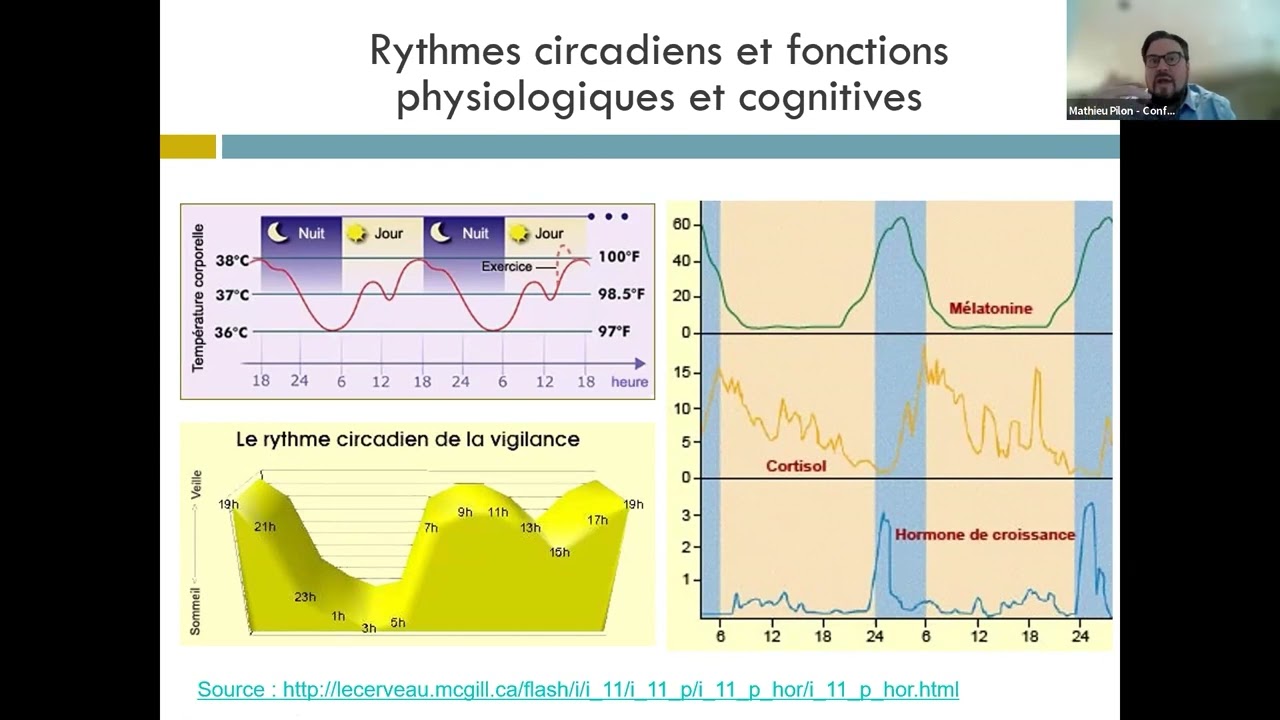



A landmark UK study (IMPACT trial) of 465 adolescents with depression found that three psychotherapies—Cognitive Behavioral Therapy, Short-term Psychodynamic Psychotherapy, and Brief Psychosocial Intervention—produced equivalent outcomes, supporting the 'dodo effect' that common therapeutic factors (relational aspects, proper assessment, collaborative formulation) matter more than specific techniques. Using network analysis, researchers discovered that fatigue and insomnia, not psychological symptoms like worthlessness, were the primary drivers of recovery, challenging traditional views of depression causation and suggesting that addressing sleep and energy levels may be more clinically important than previously recognized.
Psychotherapy for Adolescent Depression: What Works and Why
Added:Understanding the diagnostic criteria for Major Depressive Disorder (MDD) in adolescents, including key developmental differences in presentation compared to adults.
Familiarity with the primary modalities of evidence-based psychotherapy used for youth depression, specifically Cognitive Behavioral Therapy (CBT) and Interpersonal Psychotherapy (IPT).
Basic knowledge of the 'common factors' theory in psychotherapy research, which posits that shared therapeutic elements contribute significantly to patient improvement across different treatment modalities.
An understanding of the fundamental neurobiology of sleep and its bidirectional relationship with emotional regulation and mental health in developing brains.
Exploration of transdiagnostic interventions, such as Cognitive Behavioral Therapy for Insomnia (CBT-I), and their efficacy as adjunctive treatments for youth depression.
Study of personalized medicine in psychiatry, specifically how to match adolescent clinical phenotypes (such as those with high fatigue) to tailored treatment plans.
Investigation into the neurobiological pathways linking systemic inflammation, chronic fatigue, and depressive symptomatology in teenagers.
Analyzing the clinical and systemic challenges of integrating sleep hygiene monitoring and somatic symptom tracking into standard adolescent mental health protocols.
45.8K views20likes1:08:02Original Release: 2025-10-29
We are the Association for Child and Adolescent Mental Health or AAM for short and this is AAM learn.
>> Welcome to a new series of mind the kids. I'm Dr. Jane Gilmore honorary consultant clinical psychologist and child development program director at UCL >> to see a professor of psychology at the University of York focusing on children and young people's mental health and special educational needs. In each episode, we select a topic from the literature and in conversation with invited authors sift through the data dilemmas and debates to leave you with our takeaways for academics and practitioners. Today we're taking a deep dive into a really important topic.
We're discussing different types of psychotherapy, what works and why.
This episode is called rebooting the great psychotherapy debate.
Okay. So, let's talk about talking therapy. Um, so this is a really interesting conversation for me that we're going to have today because I have specific views that I've developed over time about talking therapy. So, you know, talking therapy is the um go-to approach for common mental health difficulties. So, I think and Jen, you can correct me if I'm wrong here. Um, it's the first line um approach when someone experiences mental health difficulties and they seek support. Um and so we're recording this at a time when it's um welcome week at my university and we had this session where we were talking to some students like a handful of students and I was saying why do you want to study psychology and one person said oh because I want to go into therapy. So then I started my little rant about my problem with talking therapy and I was like a lot of common mental health difficulties that we talk about on this podcast and that are established in the literature are um their origins might be social. So things like bullying, adverse childhood experiences, poverty, stuff that happens in the environment around us that then contribute to mental health difficulties. And then what we say to the individual is, "Oh, I'm sorry all that stuff has happened to you. Now let's try and talk about that." Um, but that situates the problem within the individual rather than trying to address that social structure.
>> Yes. And right you have of course and we've talked quite a lot about these environmental issues like poverty for example which has a pernicious effect on mental health and yes we also know that for depression conduct disorder anxiety trauma and so on there is an evidence base for psychotherapy in depression in particular there's a range of different psychotherapies that is very pertinent for our conversation today but I also and I I I I take your point but you could also argue that the idea of we're not situation we're not situating a problem within a person. We're giving them the opportunity to feel better.
We've given them the agency for change.
And in particular, for example, cognitive behavioral therapy changes a perception of an existing circumstance.
So the power to change uh where environmental shifts aren't feasible. We are not in charge of the economy. Oh, that we were Umar. So what you know what else are we going to do? We can make a change. And I think it's is about delivery. So for example, most of my clinical work is with young people with ticks and I would offer psychotherapy.
So habit reversal training or exposure response prevention. And I'm not giving the message I have to fix you. I'm giving a young person the opportunity to have agency over their body. And I think that has huge repercussions for a young person. So I think it's not either or. I think it's both. And I I I yeah >> I agree with you there. I think my point is more we spend a lot of resource whether that's time that we spend talking about it or research or whatever it might be on the what to do after the fact but actually there's lots of preventative stuff and you know we're not we're not in charge of economic policy but actually we do have a role in advocating for that as well.
>> Yeah. And so but I but I think I think it's not you know I think this this is not about diminishing the power of psychotherapy. I think it's about recognizing that intervention can take a variety of different roots. And I think one of the things about Ian's paper that we'll we'll go into a little bit more is it's starting this debate about different sorts of psychotherapy and whether there is specific efficacy or effectiveness. And I'm really interested in these differences between psychotherapies potentially that are raised here. Um, and it sounds to me as if you have a concern about all psychotherapies as a sort of philosophical stance. So I guess there there's slightly different things to say there.
>> Yeah. No, I mean I'm not against it.
Obviously like it's necessary. Um, I would just prefer that we weren't in the situation where we needed psychotherapy, but that's not where we are. But let's bring Ian in because I think I'm sure he has thoughts. So today we're joined by Professor Ian Goodyear from the University of Cambridge. Ian is the co-author of the paper dynamics of depression symptoms in adolescence during three types of psychotherapy and post-treatment follow-up published in the JCP. Welcome Ian. Jane, do you want to start us off with some questions?
>> Yes, because I wondered I wanted to get just to the top of the of the concept and the ideas that you've raised in your paper. I wondered if you could describe for our listeners um Walpole's great psychotherapy debate and in particular what your thoughts are. Bring us up to date in the context of your recent findings. Well, as you know, psychotherapy is not new. And what Bruce Wampold was doing after many many years of highly respectable research himself was trying to gather together a set of information probably over about 50 years of work uh his own and others and try and put to point to all of us that there were more similarities between psychotherapy schools than the psychotherapy schools themselves wished to acknowledge. So the point here is that yes they look different. Uh they have huge theoretical differences.
People have used anecdote and theories and some empirical work to try and emphasize the differences. The differences therefore influence how you train and educate people in the underlying theoretical frameworks of the mind that you need to be aware of.
trainings have got longer and longer and longer over the time. As though somehow the more time you spend in some kind of obedient form in the therapy that you're learning, the better you will be for which there's very little evidence. And he came to the conclusion that we needed to have a reset. And he wrote a number of papers, but I think everyone will probably know the book that he published I think in about 2020 or so. can't quite recall. Anyway, he had two basic premises. Uh first of all, the great debate centers around commonality and disparity between the psychotherapies.
Common didn't mean necessarily things that anyone could do, but it did mean things that therapies shared and therapists might share. And that common mechanism concept has actually been established time and time again since that book. Meta analyses by the Dutch group led by Kipers have shown that um uh probably more variance is occupied by the common mechanisms than by the specific. There are problems with that because of the nature of the level of measurement and understanding about what could be common and what could be specific. But nevertheless, this is the great kind of debate that Wample worked on and he talked about dropping the idea of specific therapies which suggested that there were modular mechanisms that each therapy uniquely had possession of that would make a difference to the patient. And he said, "No, there are contextual factors that all therapists have a view on, but they actually share." and you're all being a bit defensive about the situation. What really matters is that we understand the common features and then we ask the question well are there different specific issues that each of the therapists can bring in order to obtain a similar result. The concept of equifality has actually never been questioned that much. That is to say, you can get to the end road by different pathways, but you'll all end up doing something useful. And therefore, a measurements, utility measurements of being useful will actually show the same characteristics across therapists, cross therapy, cross therapists in order to get the right outcome.
So, that begged the question, well, what are the common features? And it was interesting listening to the two of you talk about the environment versus the internal world because the common features contain both. And for uh Wampold, what was important more important than anything it appears in his writing is the relational aspect of the therapist and the individual knowing the environmental context from which the individual comes. So I would kind of say to both of you and to anyone listening, first thing you should do if you're going to be a therapist is learn how to take a history, do a proper assessment, come to a formulation and determine what in your view might be the best way forward which you then check with the client, patient, maybe the family in order to develop a collaborative contextual framework as you set out on the journey of therapy.
I think the biggest concern I have at the moment is that we're not educating our therapists, many of whom are not academic psychologists or psychiatrists.
In fact, many of them seem to me to be young. Uh the age seems to be dropping.
They're working in difficult environments in a professional sense and they must be taught and must be helped and supported to do proper assessments.
I think that would be the first place particularly if you accept Wampold's view that context really matters context in terms of >> and I think that's that's a really sorry to interrupt you I think that's such an important point because for example if you're training well-being practitioners who are low inensity uh interventions but actually coming across by virtue of the complexity of of mental health referrals coming across quite complex cases and helping those younger or or early career practitioners to understand the contextual complexities that may be outside their prescribed uh protocol is actually one of the challenges because we don't want to stop families getting access to treatment but nor do we want well-being practitioners or early career practitioners uh intervening where in fact the presentation is more complex. So I think that's a really pertinent point.
>> I think that's a very is a very good summary. Um I think that the uh the specificity issues within therapists are not to be forgotten but it might be something that um Wol's work didn't quite get at is what would those techniques be that would distinguish people I mean if it's a conversational approach there's one underlying philosophical dilemma that you didn't mention but I I will I will suggest to you is that unlike any kind of intervention in health care whatsoever psychotherapists whatever their school and their beliefs and their own values and so forth are prescribing themselves.
There is nothing else that does that. So when you put yourself on the line in a randomized control trial, it's not the same as prescribing a tablet, a pill, a catheter, or indeed a public health outcome such as changing the environment in a school which is going to be tried more and more over the next 30 years. So it's difficult. The defensiveness that one is so explicitly sees amongst psychotherapists of any kind is because they've spent years learning things and now somebody has come along and saying well they're quite important but you know they're not the only thing and anyway you could have probably done it in 10 minutes instead of 27 and a half hours a week and so forth. So it's not surprising that it's awkward to get implementation and delivery into the places where it really matters. And I agree with you, Jane. The young well-being practitioners are a vulnerable group professionally speaking because I'm worried about what it is that we're teaching them and how they're going to be supervised in a very difficult professional environment at this time.
>> Thanks, Ian. So, moving on from that, so context relational and where do we go from there? In the paper that we're going to talk about today, you're specifically looking at three different types of talking therapies. Do you just want to talk us through what those are and maybe what their origins are?
>> Sure. So, first of all, let me acknowledge all my good friends and colleagues from UCL because this study was a combination of actually four univers half groups in the end, but it started off with uh a gentleman called Peter Figgy who Jane probably knows quite well and you've probably all heard of phoning me up and having a conversation about a randomized control trial and Peter suggested that he and I applied together with others applied for this grant. So, it was Peter that kicked this off. And of course, he wanted to study short-term psychoanalytic psychotherapy, which wasn't getting in his view, I think it's okay to say this, enough of a decent press given that there was more and more empir empirical evidence that it wasn't just CBT, which has enjoyed this being a front runner for 30 years now, uh, and that other things could be brought in. So he wanted to do a study of comparing short-term psychonalytic therapy with CBT in depressed individuals. He wanted to do this at the time that the NIHR, National Institute of Health Research, had issued a very particular call to try and understand better the talking therapies that might have effectiveness in adolescence. And there hadn't been much in this country and there had been a very large study in the United States which had involved a lot of anti-depressants and had shown anti-depressants were really valuable for some individuals.
But who and when and how and why and that one thing we weren't uh no longer needed to do was to have a control group who got nothing because it was quite clear that in that kind of standard trial of something against nothing doing nothing not a good idea which didn't surprise any of us but nevertheless had now been established.
So that's how we got to short-term psychoanalytic psychotherapy and CBT.
But I said, "Well, as you know, Peter, in our 2007 published randomized control trial, we were kind of surprised at the number of young people who did rather well who were severely depressed with an anti-depressant and what you might call good psychosocial support. And when we gave them CBT2, it didn't provide any added value." Now, this kind of fed into the idea of Wamold's contextual and common issues because here we're using two quite different methods.
Psychosocial supports pretty straightforward problem solving, empathy, trying to keep the relationship, but not adding cognition in the way that Jane described earlier for looking at cognitive rationality and the irrational thinking that can occur in depression. not adding behavioral activation in a formal way that has become a big deal in in young person's therapy in general and certainly not adding things like insight and empathy in a strong sense that you would see in the psychoanalytic pers perspectives who were trying to make interpretations about the way people were appraising themselves in the world. So what was it that was useful if CBT made no added value? And we concluded there was something about the ingredients of everyday good clinical practice that was worthwhile pulling together and dissecting out from the general corpus of I'm talking to my patient and looking after them. So we got to the third treatment which was standard clinical care but we turned it into something and we gave it a name and we called it brief psychosocial intervention. We weren't the first people to use the term BPI although that was the first time the acronym was used but we were the first people to use it in two distinct ways.
One brief psychosocial invention came from the experience of people working in the clinic. So rather than theory based is practitionerbased.
Doesn't mean there aren't theories but it was practitioner based in how we formulated what to do. And two it very much was out of the evidence the continuity of evidence from our first trial which was called the adapt study.
So then we had three treatments. We had CBT we had psychonetic psychotherapy and we had BPI. And Peter and I agreed and we got others to agree. Shirley Reynolds came on board, professor of clinical psychology at UEA and then reading that what we wanted to do was to test it in a way that people like you guys, academics and practitioners would believe the results and there we move into the more pragmatic world of saying yeah yeah great trial but but look at all this all this stuff I don't believe it. So we had to make sure that it was believable. And that's why we went for a big study, the biggest at the time, and we went to use only people who were really credited and able to practice those three things. So everyone who was a therapist in CBT met the approval of the specialist CBT committee that we set up to organize therapists for the trial. The same was true for psychoanalytic psychotherapy.
And we also set up a similar uh little committee for BPI although BPI being pragmatic and out of practice world had less as it were regulatory history to it. So we had to be a bit on the hoof about that but that's what we did.
>> Thank you. And before we move on to why they work which I think some of the mechanisms which is what the focus of the paper is what is the evidence that those three types of psychotherapy do work um for adolescence with depression?
Okay. So now you get into the thin ice that is called the evidence base for the treatment of depressed young people. Um it's thin but it's not negligible.
So actually you can trace about a 50-year history of the anecdotes of treatment. And if you take a sort of qualitative view by accumulating all the qualitative anecdotal data, you have to come to the proposition that it's reasonable to form the hypothesis that there are active elements in a professional conversation that do not exist in an over the garden fence piece of advice or a chat with your mom and dad. So first of all, let's step back and not get too clever and say look the huristic that is out there is that there's something about talking to people in a professional way that seems to be useful. I think the epifenomenal error that's been made by all of us is to think that all the theory that all of those useful people thought they knew and all the mechanisms that they thought that they were acting through their very special skills might not be true at least might not be true in full. So I do think there was evidence. What about the empirical evidence? Well, the NICE guidelines had been about for a bit, but didn't say much about child and adolescent psychiatry. Since I was on the NICE committee at the time, I'm aware of that. Um, the evidence was pretty reasonable that something about this concept called CBT and this construct called CBT therapy was doing something. The evidence was a problem.
And this is nothing to do with CBT therapists. But the trouble is CBT was the only thing that seemed to have been studied scientifically in any particular quantity.
But it seemed to be fairly clear that despite some of the grandiose claims of the great CBT godfathers, there was no doubt that CBT was doing something that was pragmatically effective.
>> And I I read that in I think it was 2019 the NICE committee were moving somewhat but very cautiously. There was a lot of couch language that uh psychonamic psychotherapy might be appropriate in some cases of childhood uh depression.
But it was very it was very cautious recommendation I would say.
>> Yeah, I think that's like a meeting of the great churches asking how they whether or not there isn't a common way of coming towards this concept of agency in God. uh they do it very cautiously, let's be honest, because they've got a congregation to worry about, not to mention their jobs. So, I think it's the same with psychotherapists that coming cautiously, it's still the case, and it's still the case in the UK, that the dominant landscape for psychotherapy is CBT in the very general sense. I think as David Clark, my good friend in Oxford, who's one of the grandfathers of CBT in this country, has said, CBT is a family of conditions, but we're not dissecting them out properly.
We don't really know which elements are good for what condition yet. So, the problem was looking at other things caused a bit of a dilemma for a committee that quite frankly contained almost all CBT therapists. One of the interesting things in the 2005 and 15 reviews was that interpersonal psychotherapy which is hardly practiced in this country and very much by the way represents a kind of fusion that Wamold was interested in developed at Yale operated through adult depression only. Jerry Clerman, MNA Weissman and a man called Gene Pel who came over back to England and and eventually to Cambridge uh worked on this and it was a brief intervention not not as brief as we really mean could be 52 weeks worth but it was very relational it was very problem solving and it went down well in America but it didn't travel as Peter Figgy said it didn't travel well over to Britain or or many other places um so that got into the nice guidelines because there were six studies and a psychologist called Laura Muffson was at the forefront with MNA Weissman back showing that interpersonal psychotherapy is quite good in schools and quite good in community mental health clinics not so hot in the child psychiatry clinics so that got into the guidelines and there was a very good review by um a good clinical psych well I say she was good she was here so I better be careful a Cambridgebased clinical psychologist who now is in Australia and very famous who said that um is a tough because 90% of the studies that were being reviewed by its scientists were CBT versus nothing and 10% of the studies of being reviewed was any other psychotherapy versus nothing. So what happened if you took up the cudel and said well how much better is a form of CBT than say psychoanalytic psychotherapy and that had not been done and that's why what we were suggesting caught a bit of attention. We didn't know but there was a very small group of studies from America again and Europe and that has suggested there was a signal in psychoanalytic psychotherapy for young people and finally the last thing was family therapy. Now unfortunately the studies on family therapy were quite good and they weren't getting much of a signal at all. So when the nice guidelines came up for review in 2015 again in 2019 I don't think family therapy was going to do very well and it kind of people wanted to acknowledge that it must be important because how can you be in a subject involving child and adolescence and not be in a subject that involves family and it seemed philosophically a problem to say oh well involving the family can't be right but direct family therapy so far has not done very well so we ended up not choosing family therapy and we argued why we ended up not choosing interpersonal therapy which wasn't difficult because there weren't any in this country and so we had our two main therapies psychoanalytic CBT and our reference treatment which was termed BPI because we hypothesized that both the specialty therapists unlike Wampold's assertion would be better than the reference treatment so we had a hypothesis that proposed there were although we didn't explicitly state this there were special mechanisms in psychoanalytic psychotherapy and CBT that were distinct from what was going on in BPI and therefore they should get a better signal in outcome than BPI did >> and then you've set you've set that really nicely so what did you find when you compare three Well, so I'll tell you, but first of all, let's get the context right since we mentioned that our study isn't about people who get to child and adolescent mental health services. We we've we've become very very community oriented in the last 10 years. This study was conceived in 2009 8 n and started in about 200 910. The paper was published in 2017 that took two years to get into the Lancet. So that's the kind of time scale the context of time and the context of the environment that we worked in was we we stuck which are now less mental health services the tier three or tertiary stage patients that probably Jane sees at great orman street that will come to your specialist services in York that I I'm aware of in the whole York area and we're coming into Cambridge and East Anglia and we chose three parts of the country we had the whole of East Anglia North London and Manchester, Chesher and a bit of Liverpool and we had 15 child and adolescent mental health services and we spent an awful lot of time in getting those services to become research sensitive and then the collection of some 470 patients of which 465 got into the study and the three arms had roughly equivalent numbers I think 155 something like that and we got about 83% of each arm through to the final uh stage where the intention to treat analysis was therefore going to be pretty valid. And >> but I think that's so it's so impressive though because having you know having just been through some recruitment and so on through some a variety of trusts and each trust is a different country you know when we are trying to to run a a systematic program throughout different clinics that's incredibly impressive but but all I would say at that you know I I think the idea of having that degree >> of getting clients through that that percentage is really impressive for anybody that hasn't done this sort of work. Uh I'm I'm impressed.
>> I mean, as you can imagine, the number of people involved in ma making sure that those clinics uh felt happy and so on. We we we were we were all over theation and deliver as you may know there is this study called the stadia study which was published by um Kappell sail and colleagues at Nottingham which is ex extremely difficult to read because in their 1,240 adolescents that they followed through services they show literally no effects of service on mental state from the beginning to the end. There is no significant difference in and you should you should probably get Kappell to talk to you about this study. It's only just come out. So um actually one of our podcasting colleagues was lucky enough to speak to professor se about the studia study. So please do check that out. Um it's from just a few weeks ago.
>> Um so back back to the plot we had good agreement. We had leaders every every clinic had a a research champion who was either a clinical psychologist, a mental health nurse or a psychiatrist. Every every champion talked to each other. We had meetings all the time. You can imagine the amount of organizational work and it emphasized to me the importance of getting your clinic in good shape. And I think it emphasized to me, we might talk about this, that what's trying to be going on in community at the moment, it has the same principles. If you're going to enter into an organization like a school, the assumptions that you can make about all schools doing the same thing are virtually nil. So the idea of not having implementation and delivery for that group strikes me as just silly. So if you go back to this the study, we got it set up right and we had 465 individuals and we randomized them to the right to each to relatively proportional groups.
They got their treatments. We got to the end. We had a 12 months follow-up post treatment which most studies most RCDs don't do because they want to stop at the point of best effect which is always short. So we followed up for 12 months and disproved that hypothesis too and I was we were all delighted. I mean I can't I can't really if you if you want to see the 2023 summary paper in the American Academy Journal it's hard to believe that all those years later we've had over three books over 60 papers people's careers have been made. I don't think anyone's career has been lost. I haven't asked that question. um you know there's professors and consultants and consulting psychologists all research fellows have all come out of this extraordinary amount of work for which everyone deserves.
>> You've given us lots of great context there. Um and I think one of the interesting parts of the study that we're going to talk about is you've taken this network approach. So um my understanding of the network approach is that rather than thinking about symptoms of mental health difficulties resulting from a a latent factor or an underlying uh psychopathology which leads to that we can't measure. So we measure the symptoms but we assume there's something latent there. The network approach suggests that these symptoms of mental health difficulties cause each other. Is that is that your understanding too?
>> I think it's I think it's good enough.
It's incredibly it's when when you get into it, it's really a very complicated theoretical framework and I think maybe the three of us will enjoy spending the rest of the afternoon talking about that. But to try and get across to people a really different way of thinking about mental state dynamics is not the easiest to to first of all I think we should get for context we should say what impact showed was no significant difference between the three treatments. So I think Bruce would have I expected Bruce to send me a a birthday card or something because I mean it was clearly obvious that and young people's RCTs were going to show the same thing as general adult RCTs. There were they've got to be some common mechanisms across these treatments. We don't know what they are. We were uh proposing this so-called dodo effect where everyone takes part and everyone has a prize. Um we had of some really good critiques. We chose some people I knew would not would not bow down to this easily and we got some great critique writing from two colleagues from America and one from here and they said well you know it's it is a fantastic start but don't believe you can walk away from this and think you've got the answers and one of the key issues in not getting the answers is that we were very fortunate I think to see that the difference between therapists in our study there were about oh I can't remember. I think it's about 65 different therapists and the what's called the interclass coefficient interclass coefficient sorry between therapists was virtually nil. So that means we're taking out the individual differences that therapists might bring to the treatment and we can truly examine the results as if there's something to do with therapy. What's very interesting about that is that also implies very strongly there are common effects because as Wamog points out in the studies individual differences can drive huge differences in treatment outcome if you don't get that right. So here we've honed down and diluted any chance of inter between therapist effects giving us perhaps a better chance of arguing there's some common factors. I must say to you both and to anyone listening, of course, when we presented this to ourselves in the group, the two camps CBT and psychoatic psychotherapy were a little bit shaken because I think everyone expected the specialist therapist to do a bit better and there was quite a few weeks when people were trying to dissect out a bit of signal that suited CBT or suited psychotherapy.
Whereas of course I was completely happy because I I thought there would be no particular difference. Was striking how similar the findings were and they also showed this curve which is why the network thing comes important. I'm getting to it.
People respond very quickly. There is a really rapid improvement. About 30% of the variance of improvement occurs within 12 weeks. We're following people up for 52 weeks. That's remarkable. And all of the therapists who all of the therapy manuals predicted twice as much therapy would probably be required as was needed, including BPI.
CBT had I think a 24 session or 20 session model. Shirley believed a 12 sessions would be about right.
STP, short-term cycle therapy. They wanted a 30 session to 28 to 30 session model. They thought that was about right.
>> That out Jane and um and um BPI we we saw 12 was the maximum probably eight. Well, we were all wrong. In BPI the median was six. In CBT the median was eight, nine, 10, depends where you drew the interquartile range cutoff. And in STPPP it was half half the therap so it was about 12 to 14. So we all got that wrong. Uh and I that really made me think too about what were we doing as therapists as researchers bringing these notions to an empirical study. Where did we get the idea that you needed to do more? That's that's a question I don't have an answer to. I think it's worth why do we do that? And that made me, as I've been doing for the past five years, when we're teaching BPI, which we do around the country a bit, um, I wanted to say to people, what do you think when you're learning whatever you're doing, >> how do you learn to know when you're going to stop?
>> Tell me tell me what what are the psychological, the psychosocial, the contextual features that going to tell me that, you know, this is the end of treatment. And you you wouldn't be surprised. Virtually no young therapist has the idea of stopping worked out in their head. So we gave people a little task when we treat teach BPI which is you're going to do two sessions with your therapist. You're coming back. We were seeing them for supervision every month. And by the second session, I want you to tell me how many sessions you think you need and how you know that you're going to stop. And they said, I can't do that. I said, yes, you can.
You're gonna you're going to work out from your assessment and your formulations and all the information you've got the predictors for stopping treatment and not for continuing the >> really interesting. Yeah. Very very you know for efficiency. So it'll be really interesting to look at that >> especially if there's no difference in outcome. Why would did we say that?
Well, if you follow the curve down then by 28 weeks in terms of the outcome measure of symptom reduction which was trans symptomatic and diagnostic. So it's depression, it's anxiety, it's obsessionality, it's well-being, it's it it there is it's antisocial behavior. We measured all of those things multi-dimensionally. And when uh when when we looked at it by 28 weeks, there were 90% uh of the people were below a quantitative threshold of 50% reduction in symptoms there or thereabouts. But thereabouts was what got the statisticians and me going. It wasn't really. We had a range in which there were still quite a lot of people with symptoms. So we followed them up for 12 months without any treatment. And when we did that, they continued to get better after treatment. So now we don't even need more treatment. What do we need? We need more time. The rehabilitation from treatment, the recovery coefficient or curve from treatment is still going on for 12 months after treatment. only 16% of the subjects relapsed towards the levels of symptoms that they had at the time of of therapy. That's a low relapse rate by standards. So what happened with treatment was that um everyone continued to get better by and large except for the 16% and by the time we get to 12 months less than 5% of this whole cohort has used health care or social care services since end of treatment.
Now it's said that we're not very good at treatment.
John Vice has done fantastic work in showing that the real effect sizes particularly in CBT but not only in CBT are much lower because we don't take into account the non-specific changes that occur in control groups in sufficient with sufficient clarity to show that yes there is something about CBT there is something about STP there is something about and everything else but there's something about time and recovery and we need to know what that is and I think that's begun to be signaled in work such as that done by Jessica Schneider who used to work with John Vice now a big wheel on her own and the Jessica Schneider equivalent in Britain who is Maria Loads who's at University of Bath and they're trying to figure out how does one session of therapy go and what Jessica Schlider shows is that psychoeducation or behavioral activation from the CBT programs are as good as each other and they're both better than doing nothing in one session. They followed up their patients for 9 months and they did not get much relapse rate, but they were mild and epidemiologists have pointed out an awful lot of people would have recovered anyway. But Jessica still got an effect size of about one and a half, which given, you know, given that they had 2,000 people online in the study, I thought was pretty good.
>> We had Professor Maria Lods on a few weeks ago. So check that out. We're really spoiling you with lots of relevant content.
>> Our problem with a symptom is that a symptom isn't really a symptom. What it is is an extension of a normative construct beyond the population range that we consider to be all right.
Everyone gets sad. Everyone can feel worthless. Everyone has poor sleep.
There isn't anyone. If anyone said to me by the time they'd got to about 16, do you know I've looked at your symptom list and you know I don't have any of those things. And I would say don't be ridiculous. Can you read? Let's just sit down for a minute. you know uh nobody's like that. We have chosen to work in a field where that kind of moving slide rule as it were across normative to non-normative to atypical to abnormal to completely wild unacceptable psychotic features is all on a continuum. Hence the latency concept. That's why epidemiologists in the 60s and 70s thought latent approaches would be reasonable because these are quantitative trait changes but we call them symptoms because we've got a descriptive categorical term with a lot of holes in it. Now in the model of symptom counts the assumption is that every symptom has an independent effect. So if you've got five symptoms and therefore get a diagnosis of depression, it's because it's assumed, not that even a lot of scientists will quite appreciate this, it's assumed that each of those symptoms not only has an independent effect, but they're equivalent because you don't have to count mood as being twice as important as poor sleep. They're just important as opposed to not. So you reach the end of the distribution threshold where it's no longer normal and you're counted as one unit of thing.
Five of those you're depressed. However, uh when we when we were working on this, it struck us all the time that none of us knew what the common elements in the symptoms were and what the specifics were. So that's when my group at the UN where I was by then I was at the University of Toronto and as well as at Cambridge and the University of Toronto group very good at statistics you and uh the person who's the first author on the paper we're talking about Madison I we we talked together and she's a clinical psychologist now director of training at York University Toronto and she said I'm quite interested in this. I said, "Great. I've got an idea, but I don't I don't have the the technical skills anymore cuz I'm getting old and can't remember the name and whether what's left or right anymore." So, we got together and she did something called a bifactor analysis. We wanted to see if we took out the common element, did we have anything left? Because if Wambol was correct and everything's common and it's all latent and all these things are independent but actually they're not because at the level of latency they all count then you know that's that's it. We don't have to do anything else. Well that wasn't true of course. So common by factor varants accounted for about 60%.
But there we were. It's published in the JCP. There were very very clear signs that there might be some precision in treatments but we don't know what they are. If we look at the more specific factors that were left from the bifactor variable the big argument um may know Jane you may know that specific factors are just redundant noise. I don't believe that and we don't we don't believe that. So we published this paper amid some statistical criticism as you can imagine and we showed there must be some specifics. So now we have the theoretical dilemma Umar because we've said there is a common feature like Wambold says but we've also got specifics.
What are we going to do with those? how how can we so that was when I started thinking there's this new guy this new paper came out in something called world psychiatry and in that paper a very very thoughtful theoretical psychologist called Danny Borsboom at Amsterdam University on anyway he he and together with his um his mathematical psychology friends started to look at something quite old there's nothing new about network analysis it's quite an ancient uh theory and quite an important um use in big subjects like sociology and psychometric work in large number even in large number things like biology. So uh I got excited but worried because what Danny was suggesting is what you said Umar. We think that psychopathology is about adding up atypical abnormal severe levels of symptoms that derive from normative behaviors, thoughts and sensations.
But what if it isn't? What if it's actually what if psychopathology doesn't exist except when things go wrong in the mind that involve those features of the mind, thoughts, feelings, and behaviors influencing each other in ways that they shouldn't.
Now the idea that one thing leads to another is hardly new in behavioral science. But the idea that one thing has some latent mechanism have to use the word that is of sufficient strength to cause another symptom or another item to turn rogue in the mind that is both alarming and exciting.
So, for example, we might now start to think that you can't get to five symptoms to make a diagnosis unless you absolutely have to have an interaction between two symptoms because there is a functional relationship between different compartments and those compartments are doing things they should not be doing in the normal mind. And that's what that's what really got me going about it to the extent that I wrote a theoretical paper that was chucked out because it was it was thought disorder like I couldn't actually create the right theoretical space to say the things that I wanted to say.
>> But but I understand sort of it's so disquing you know to to have to have the sense that this is sort of it's it feels a bit liinal.
because it's it's about to explode all over the diagnostic and and therapeutic world. I think it has huge implications.
>> Yes.
>> And and that's one of the reasons why this paper is so thoughtprovoking.
>> Well, it's very kind of you to say that because you won't be surprised to know we had an awful time trying to get it published.
>> Um and the reason for that is precisely because it goes against the orthodoxy in my view. That's we this paper was reviewed seven times by statistitians by different statisticians and I'll tell you why what's important about the paper is not doing the network analysis almost all network analytic papers are cross-sectional and that's a problem isn't it if you're going to start talking about prediction and change and so on there are two elements in the network analys in network theory that are terribly important for us or for me one is if it's true that symptom X is good enough to predict symptom Y, then it can only do so over time, you you cannot you cannot avoid a temporal feature. So you need longitudinal data.
We had longitudinal data because in the impact trial there were five time points. We're all going to think have trouble over time because we didn't design it to have lots and lots of time points which is what you really need to show trajectories over time but we had five and in theory it's the minimum of three that you need to do anything useful. So we had a longitudinal network analysis design and then it turns out there is no longitudinal network analysis statistic.
So in when we first got there and we talked to Danny Boobbor and others in the group at Amsterdam and at Leiden, nobody had yet worked out how were we going to actually analyze data over time. If you wanted to show the interaction between two items at time zero, we're going to predict a new phenomenon, not the same phenomenon, a new phenomenon at time y at a temporal distance between the two points. It didn't exist. So, we got someone to in to work on it. We had a we have a person in Cambridge who's also worked with us for a long time called Sharon Neifeld who's a statistical psychologist and she she is now welcome trust senior fellow pursuing these things um and we had um Madison who is very very competent statistically and mathematically. You had me chering away in the background and we had a Dutch um adviser who was in fact a mathematical psychologist and between us having changed a few of the algorithms and knocked around a bit with the software we came up with a longitudinal model that allowed variance and invariance estimates and that meant you could follow things over time and it wasn't just going to be an effect of time. We hoped it was going to be something meaningful. So that's how we got to the longitudinal dynamic network model which is now published not I don't mean our data the model is now published anyone who wants to do longitudinal network analysis will now find stuff out there and I'm sure it's going to get better there is an issue with sample size because network analysis is intensive and we just make it and that's the other reason it took a while to publish the JCP were very interested in publishing it and thanks to them they stuck with us because one or two other journals um gave up as it were and we got through and it is what it is and it is remarkable in its provocative findings and thank you Jane for your comments. So the thing about it is that which I really like is the intuitions that we all wrote down on a piece of paper put in an envelope and shoved them in the drawer none of them were correct. We the findings that we got were not what we expected and that really and it made us it and it came up against our own belief systems. It really did. We were it took us two years to get this paper written.
It took us another year to get it published. I mean get even close to being published. Um and it took us that time because it showed that the most important symptoms at the beginning of the study, these are the 465 depressed adolesccents randomized into these three treatments but now being treated as a cohort where treatment is now a co-variable co-actor.
The most important features were fatigue and insomnia and that nobody none of us wrote that down. We all had psychological features as the prime driver and it's not true and that's about the most robust finding that I want to get across is it's not true in moderate to severe depression the driver for the network relationships between items is fatigue and insomnia.
Now you say okay but not alone it's there you got that's Jane you're so right that's why you got to keep reminding yourself they're important because of their inter relationship at time one for predicting what happens at time two and that is a shift in the way we think about things should be a shift eventually in practice because the way we assess people should be not just oh yeah tick fatigue tick insomnia tick tick worthlessness, tick mood disorder, tick self harm. No.
What are these things doing? Can we find new ways of doing clinical interviews to say, do you think in some way that not sleeping well or sleeping more, it could be hyper or hypo and feeling tired are connected. Now, it's a really difficult thing to go to the subjectivity, isn't it? I mean asking the patients that is a in itself a real problem but it's not been done so I think we should do it although I recognize the difficulty of getting people to try and young people to describe their mental state.
Yeah, I was just going to say that I mean I am so struck by the idea as you said none of you these these these great minds were predicting what may or may not be influential and in fact one of the key findings was fatigue and uh you know I was mindful of the the Shakespeare I think it was Hamlet wasn't it who said that sleep is the bomb of her hurt hurt minds so perhaps he was way ahead of us all >> but you're absolutely right and that means means that there's a modular thing that comes here what is what is fatigue because you know we don't know I mean the study of fatigue has has never really taken off and that's there are lots of reasons for that I think the study of sleep has taken off but I don't think we've translated it yet into our kind of subject what does it mean how do we get and I I again Umar might remember I was quite preoccupied with HPA axis this research for quite some time and uh what I now realize is that we had a correlation between the loss of dional rhythm in the HP axis control center and the presence of insomnia and I never did anything with it because I didn't make any any sufficient theoretical connections and you know can I have 30 years back please because that would that that I would I would say say right you know where are the young folks let's do that To finish off, you've got to also understand that networks are dynamic and they change over time. So that means you have to understand what are the influential symptoms. And in the paper, we show how influential fatigue and insomnia are. But we also show how uninfluential symptoms we often think might be influential are not. Poor concentration is very important, but it does not produce new networks over time by itself. It does not. and social cognition. I don't see much network work in the early stages of depression, but my words by the end the biggest observable network is between the things that become important for CBT. The cognitive triad worthlessness, the future, myself, these are become these have emerged. So, I'm going to make a a prediction that might or might not be true. I'm not sure that the cognitive vulnerability hypothesis is a primary hypothesis. I think that adult depression emerges from individuals who've had episodes of mood disorder in younger years and they have as it were developed their social cognitive triad which I believe certainly do believe studied it enough myself I believe but I think it's not as primary as people thought. There's so much cont so much controversy and so much to do and so little time.
Um >> yeah, >> what an extraordinarily thought-provoking uh conversation, Ian. It is exactly what we hoped we would get from you from such an expert. It really is um something that has got us thinking very differently, reviewing our academic and our clinical work in lots of different ways or at least asking questions and that's the best position to put us all in.
>> Yeah, absolutely.
>> Well, thank you very much.
>> It it took me back to um what 2012 when we used to work together where actually these are the conversations that were the most helpful. like you think of post-doal training as the formal things that you do that are your job which is data analysis or whatever it might be but actually these conversations are also part of that experience and I hope that what we've had today is our listeners also benefiting from that because it's been absolutely fantastic.
>> Thank you so much.
>> It's been a real pleasure and thank you ever so much for being interested in the paper and inviting me to do this.
>> Thank you. like um so that was a very very fascinating conversation. I think what I really liked was when you start like a podcast or you start any conversation, you have a a view of how it's going to go and you start off with a structure, but actually when you have someone like Ian and I think that it really demonstrates when you have giants of the field like they just have so much knowledge that you're just like, okay, I just want to listen now like because this is all very relevant. Um, and what it made me think about was when you're new to research, you do some research and it's at like one level and then as you progress through your career, there are like layers underneath your thinking. The paper that Ian has just described, when I saw it, I was like, "Oh, why didn't I think of that?" Like that's a really I have the skill set. I could have done it. But actually he's done that paper and underneath what's written in that paper there's layers and layers and layers of like theory thinking experience knowledge and it comes together in that paper and if you just read the paper you think oh yeah yeah this is cool this is really nice this is challenging this is thoughtprovoking whatever but actually having that conversation with him you realize how much thought experience and knowledge and how many years of progress kids even has gone into that paper to get to that point.
>> I think I I think that's such an important point to make because it's not just the paper that's written and you can only write that paper if you've been through a variety of different experiences, ask questions, had a hypothesis that you know just didn't work out the way you thought it was going, you know, and so on and so on.
And that uh depth of thinking and that breadth of thinking is was really really interesting and exciting to hear to sort of constant out a thought process over a variety of different experiences and studies. Um and I I hope that everyone else had the sense of uh that process of thinking that is is great to be witnessed to isn't it's great to be alongside it. It's often those spaces in between that we learn so much um from as you as you say just being alongside it is great. What I thought was perhaps the most interesting was that theoretical paper that didn't quite he can't quite talked about not being able to articulate it just yet because it could be so you know it's turning the table over in so many ways in mental health um services and mental health theoretical approaches. And so it it almost feels too big but but it feels it's as I said it's liinal. It feels like it's coming into consciousness and coming into articulation and it will be very interesting uh period of time you know as we're you know there's so many levels of need and and service provision and so on. You know does it need a radical rethink? Probably it does anyway. Could the theoretical position change the rethink in a different direction?
Possibly. you know, and that's that would be that's very interesting, isn't it?
>> And I can definitely relate to what he was saying about the the theoretical bit because there's like I mean he he mentioned the problem problem with diagnosis and he was like, "Oh, let's not get into that." But actually, we're going to get into that in a few weeks.
I think that for me the the not being able to compose your theoretical position into like a coherent like argument is very like real for me because I've been thinking about diagnostic labels and all those things and I've not quite been able to like articulate it well and every time I try and write it I'm like oh I don't know and then about 2 days ago I just woke up and it just occurred to me and I was like you know what I'm just going to write this down and I wrote it down and I was like yes that articulates my position very well And actually maybe Ian will have that moment like maybe it's just when you're consciously trying to do it there's a block and it will just come to him.
>> But the power of sleep isn't interesting. we woke up and and there it was, which is and I actually want to just very briefly although I think that I think the theoretical and academic um repercussions are somewhat more powerful in some ways, but I also just want to just just underline the the importance of one of the findings about the potential power of fatigue and insomnia and how how how addressing that uh clinically may have a differential impact. um on lots of young people. So just to highlight from a clinical point of view that there are a variety of evidence-based sleep uh programs and sleep um uh usually using a cognitive behavioral model. Somewhat emerging literature looking at a mindful cognitive behavioral module looking at increasing both the quality of sleep and the length of time asleep for young people and adolescence in particular. Because of course we know adolescence are more likely to have depression and they're proportionally more likely to be vulnerable to sleep problems too. Um some of those are physiological um in terms of having high emotionality and a slight delay in sleep hormone um which means they're sleepier later but they have to get up at the same time as the rest of the world and some is environmental. You know just having a phone in the room even if it's switched off has an impact on sleep. So those, you know, those changes right there, you know, very small changes, but again, there's an evidence base to think about sleep as a really important part of your treatment plan potentially with a young person who's showing features of depression will be very important. So for lots of reasons, theoretical and um clinical uh repercussions are are are quite quite profound, I think, in that paper.
>> Yeah. And I think that the sleep finding is particularly interesting because in my department there's a whole like group of people who do research on sleep and a lot of the stuff they used to do was sleep and cognition but I think that in recent years they've shifted that focus to sleep and mental health. You know this paper demonstrates and the conversation with Ian demonstrates quite the central role of sleep here um in children young people's mental health.
So I'm hoping that through through that um body of work in my department there will be some exciting findings around sleep because they are excellent sleep researchers and now excellent mental health researchers and it just seems like the right recipe for some success in that area of some advancements. But it's interesting about fatigue. Um, are hundas like interested in this? Like is there a is a a motivation or like a a need sorry not what's the word motivation and oomph to like move that forward?
>> Well, it's a I mean I'm not the right person to ask but you know it's a question that should be asked because you know it's clearly it's not just about insomnia. It's also you know the idea of fatigue and what that what you know what that implies and what and how that can be addressed.
>> It's very interesting.
Ah, so much to do, Omar. What? So little time. What is your What's your academic takeaway, do you think?
>> My academic takeaway I don't I think like it it is that what I said just after Ian left, which is you can do the same like answer the same research questions and on paper it looks like a study that you could do and that somebody else could do. But what the thought process behind it and the theoretical underpinnings and the layers and layers and layers of knowledge that has gone into that is not always apparent and and the second takeaway and actually I've just thought of this is Ian seems to be reasonably well actually he said network modeling was an ancient approach but like he he seems this seems to be the first time he's applied it in his research and I've applied it recently in my work too. It's interesting how two people who have come to this method recently have very varying levels of understandings of what it means and how they explain it differently. So the way I explain it to people is not how Ian explained it to us, but they're both correct and they are both making sense, but it's just indicative of where we've come from and what our levels of experience and knowledge are in the field. And I wonder if it's significant that both of you have come to network approaches at the same time.
Is there something in the zeist? But again, a different question for another time. From a clinical takeaway point of view, I would say it's about the zoom out first of all thinking about these wider psychotherapy debates and we might need to and I suggest that we should revisit these age-old questions in the case of depression. Certainly, you know, when we ask what are what works for whom and why. But in terms of zooming in from our clinical takeaway, consider sleep and fatigue as an important priority area of investigation with young people who have features of depression.
>> Next week, we'll be joined by Vivian Garner about poverty and child and adolescent mental health. Lots of thoughtprovoking discussions about the times we live in, and it's a fantastic episode. So, please tune in. Don't forget to subscribe, like, and share with your friends and colleagues.
[Music]
Up Next

77:12
Brain Science of Growth Mindset and Peak Performance with Dr. Andrew Huberman
@EdMylettShow
188.4K views•2020-08-10

68:32
Cognitive Skills for Differentiated Instruction | Teacher PD
@BrainWareLearning
631 views•2017-12-17

9:55
Thinking, Fast and Slow: Daniel Kahneman Animated Book Summary
@FightMediocrity
2.3M views•2015-06-05

6:40
The Nocebo Effect: How Beliefs Can Cause Real Harm
@CGPGrey
10.4M views•2013-12-23
Related Study Plans & Knowledge Roadmaps
Structured learning paths in Psychology
psychology
Neuroscience of Creativity: Networks & Training
01Foundations of Creative Cognition
02The Cognitive Neuroscience of Insight & Fixation
03The Triple Network Model of Creativity
+ 1 more learning modules
15h4 modules
Explore Roadmap
psychology
Imposter Syndrome: Etiology & CBT Framework
01Defining the Imposter Phenomenon
02Socio-Developmental Etiologies
03CBT Fundamentals & Thought Distortions
+ 2 more learning modules
15h5 modules
Explore Roadmap
psychology
Adult ADHD: Executive Dysfunction & Scaffolding
01Neurobiology of the ADHD Brain
02The Core Triad of Executive Deficits
03Executive Dysfunction and Emotional Regulation
+ 2 more learning modules
12h5 modules
Explore Roadmap
psychology
Loneliness: Evolution, Neurobiology & CBT
01Evolutionary Origins of Human Connection and Loneliness
02The Neurobiology and Physiology of Chronic Loneliness
03Maladaptive Social Cognition: The Psychological Loop
+ 2 more learning modules
12h5 modules
Explore Roadmap