






![핵융합 전문가 직접 등판! 인공태양의 모든 것! [핵융합 1/2] (한국핵융합에너지연구원 김성국 박사)](https://i.ytimg.com/vi/6F3mO5oizaI/hqdefault.jpg)










![Stellarators - The Future of Fusion Energy [2020]](https://i.ytimg.com/vi/qKTePWmHRQw/maxresdefault.jpg)

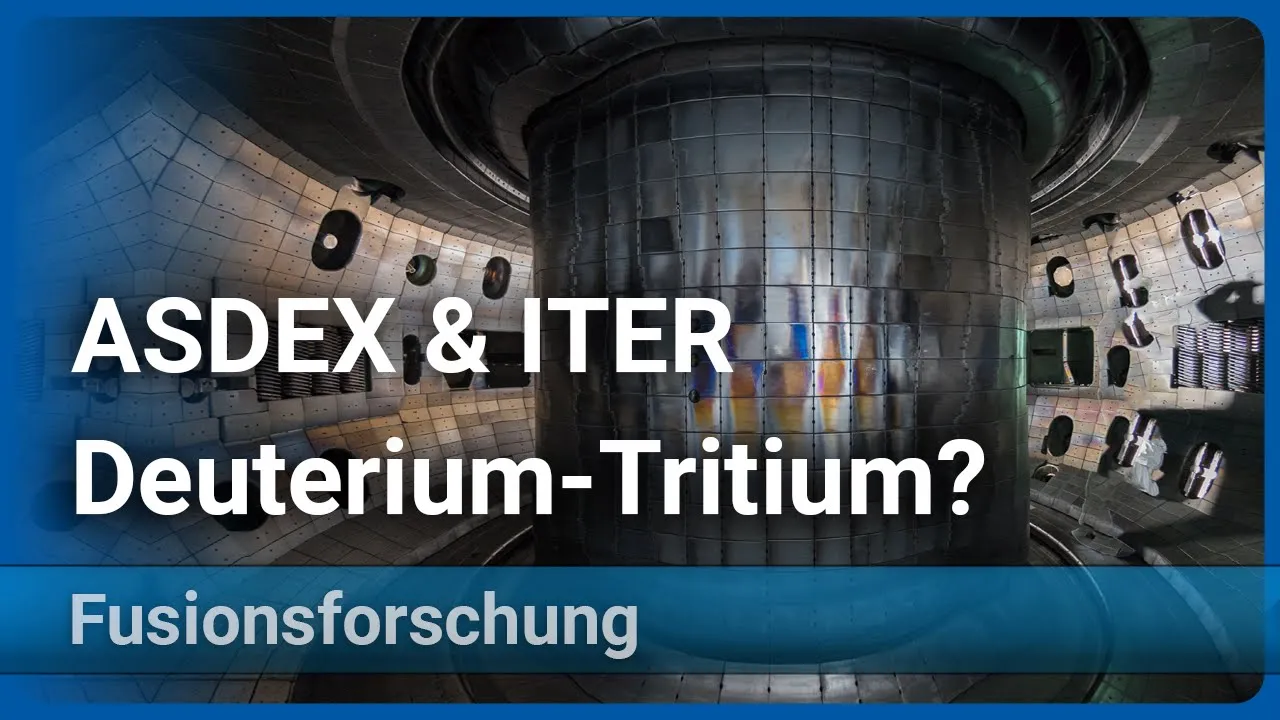



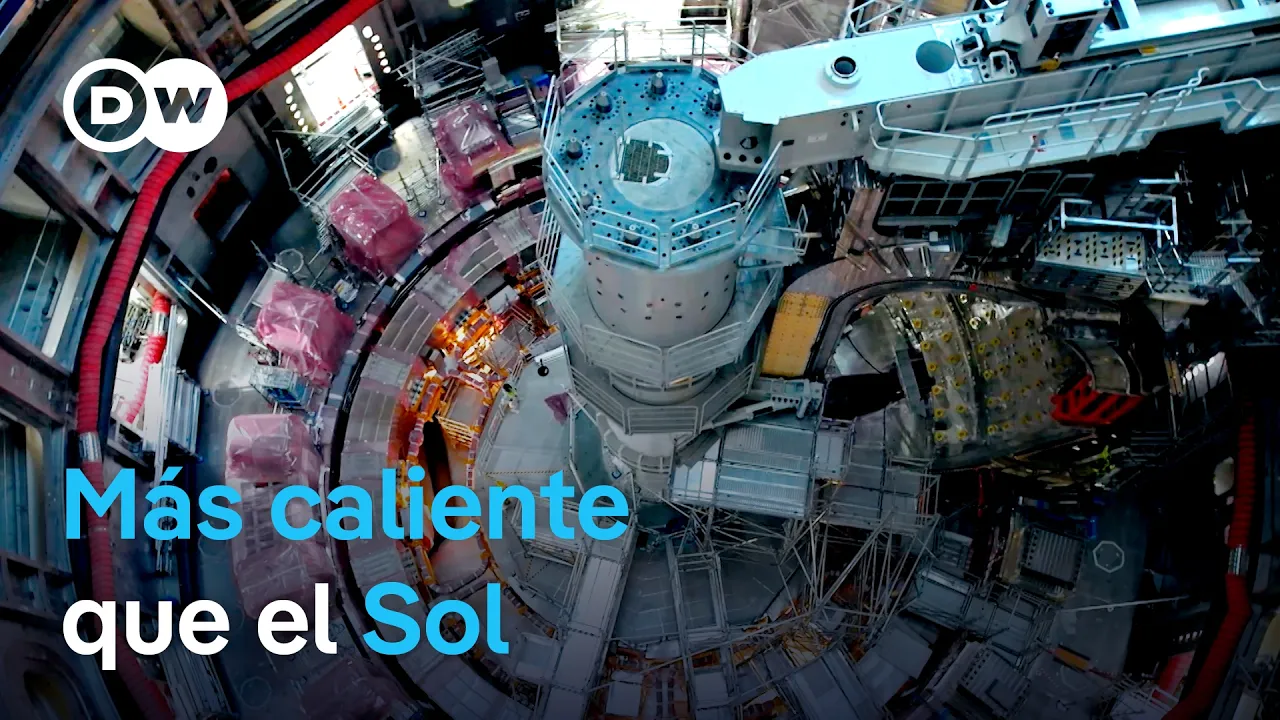
Nuclear fusion in tokamaks requires achieving extremely high temperatures (~100 million degrees Celsius) to overcome the Coulomb barrier between positively charged deuterium and tritium nuclei, creating a plasma state where particles interact via electromagnetic forces; magnetic confinement using toroidal and poloidal field coils creates helical magnetic field lines that contain the plasma, while specific plasma configurations (such as elongated and triangular shapes) optimize stability and pressure to maximize fusion power production while managing heat exhaust through divertor systems and impurity radiation.
ITER Talks: Alberto Loarte on Tokamak Physics and Fusion Plasma Confinement
Added:The fundamentals of nuclear fusion reactions, specifically the Deuterium-Tritium (D-T) reaction, and the concept of fusion energy gain (Q-factor).
Basic plasma physics, including the characteristics of the fourth state of matter, ionization, and the behavior of charged particles in electromagnetic fields (Lorentz force).
The Lawson Criterion and the fusion triple product, which dictates the temperature, density, and confinement time required to achieve a self-sustaining fusion reaction.
The basic principles of magnetic confinement, specifically how magnetic field lines can be used to guide and trap charged particles.
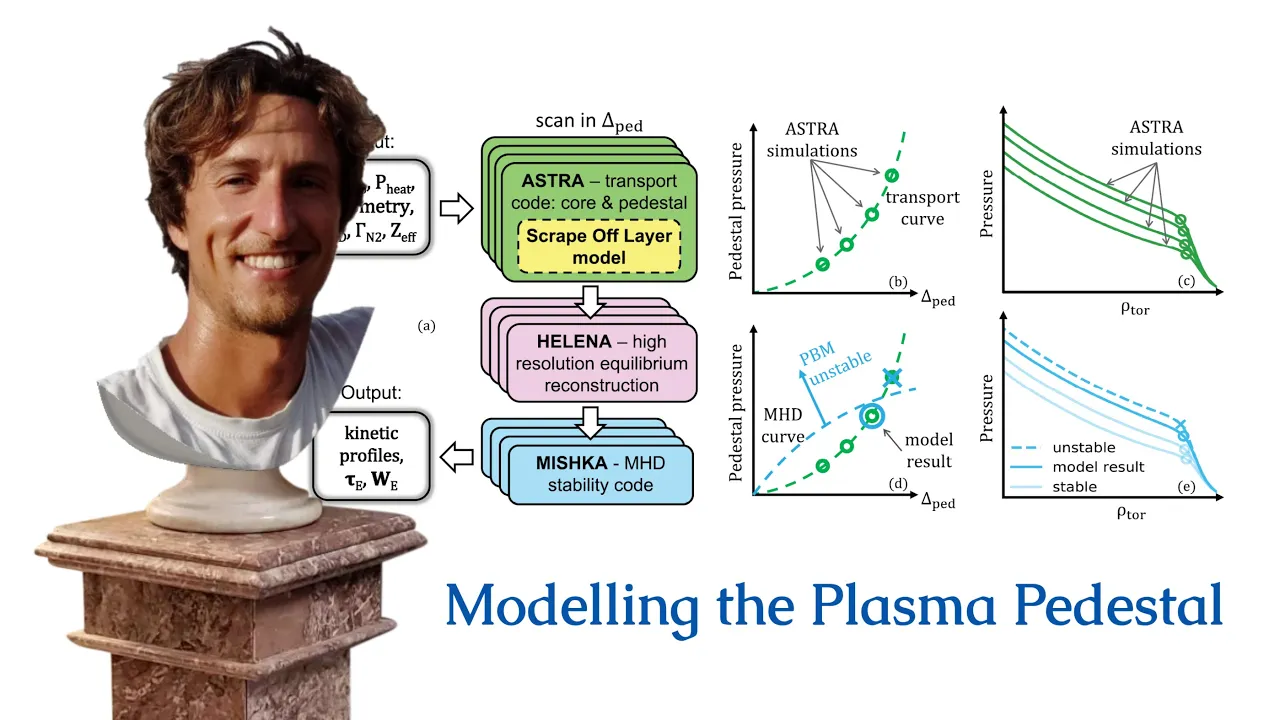
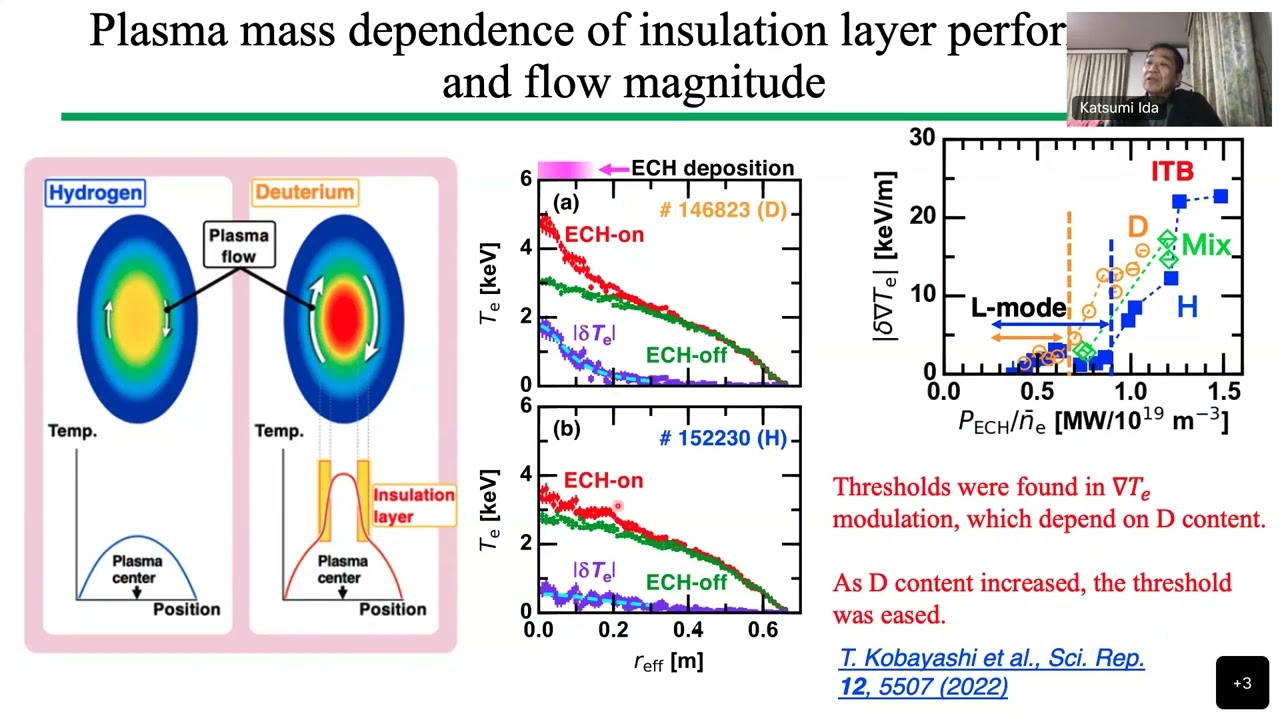
Advanced Magnetohydrodynamics (MHD) and the study of plasma instabilities, such as Edge Localized Modes (ELMs) and disruptions, including active control and mitigation techniques.
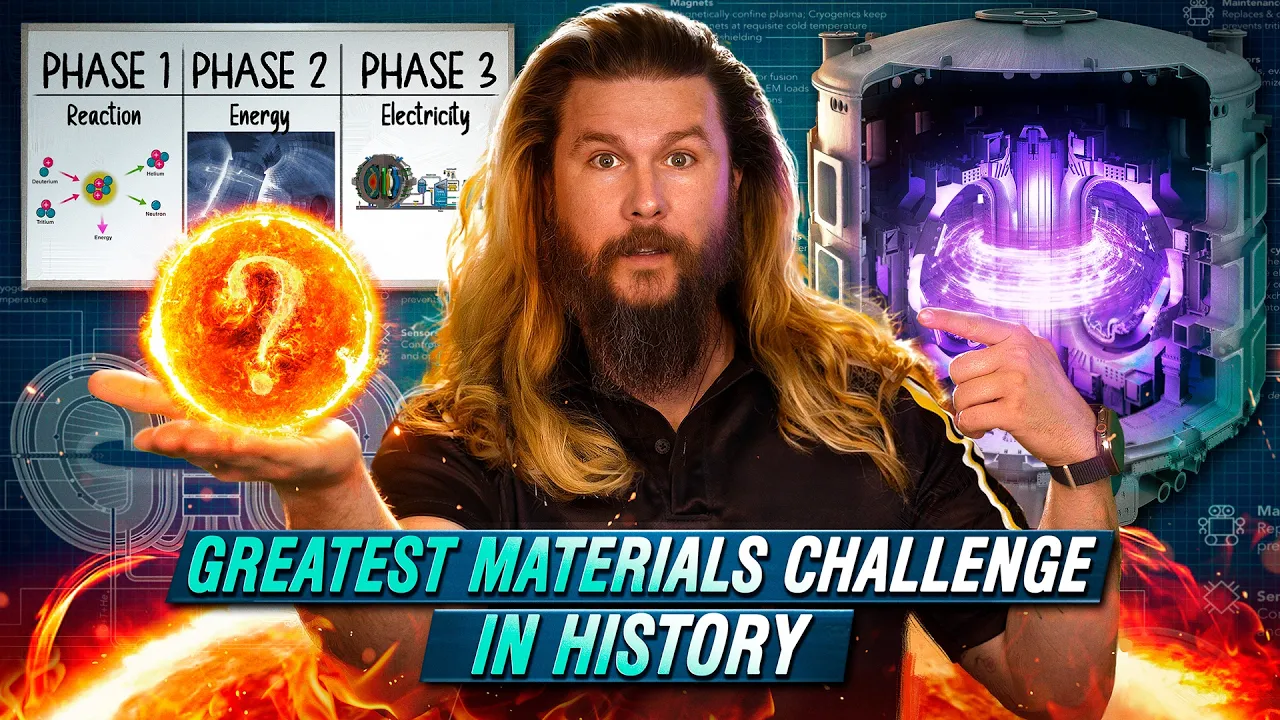
The engineering of plasma-facing components (PFCs) and divertors, focusing on materials science capable of withstanding extreme heat and neutron flux.
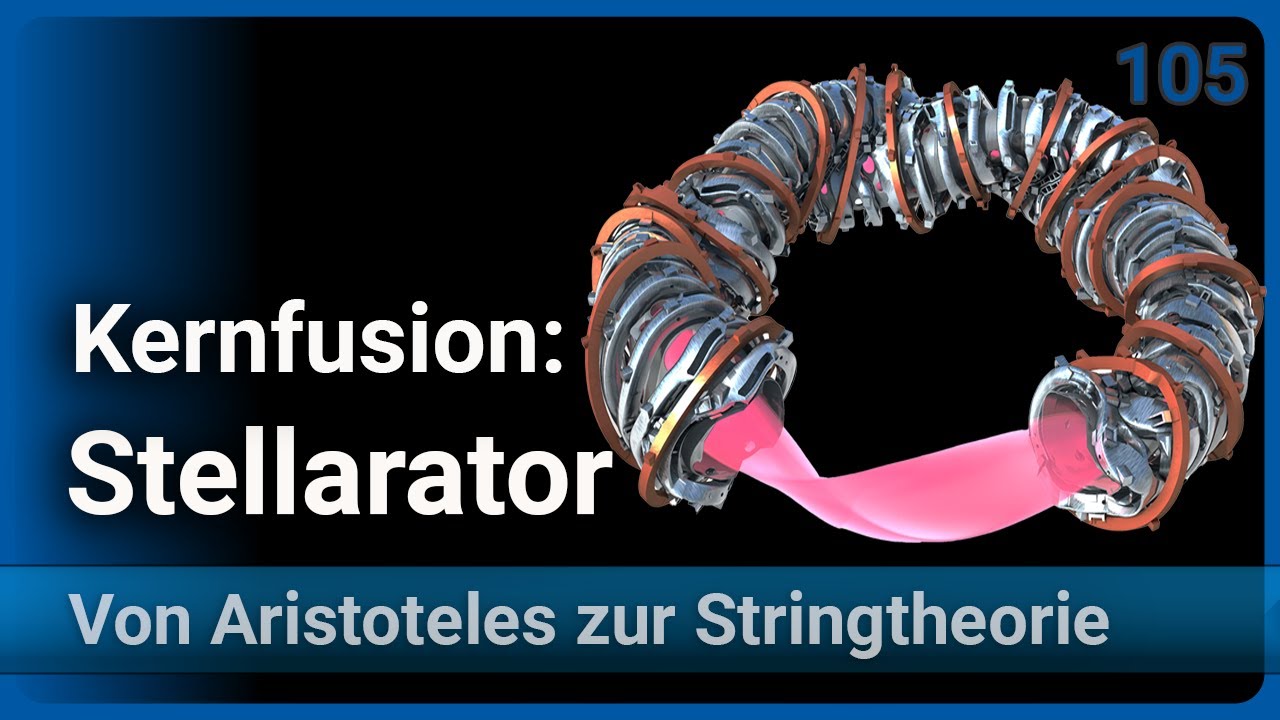
A comparative study of different magnetic confinement configurations, specifically comparing Tokamaks with Stellarators (like Wendelstein 7-X).
The transition from experimental reactors like ITER to demonstration power plants (such as DEMO) and the technological hurdles of tritium breeding and commercial grid integration.
22.6K views526likes59:20Original Release: 2022-02-28
[Music] [Applause] hello hi my name is alberto varte i am the head of the science division editor and in this talk presentation i'm going to discuss tokamak physics for nuclear fusion so this is the physics of interplasmas and also with the physics that justifies the design of intel i acknowledge the contribution of many of my colleagues in the science division the inter project an interfero scientist and collaboration to this presentation so the first thing is why do we have this talk the this talk we have because heather achi as you know is a tokamak designed to demonstrate the production of fusion power up to the level of 500 megawatts and for this we need to operate plasmas at very high temperatures with currents of up to 15 mega and heterogeneous field of 5.3 tesla so it is a tokamak and therefore what we are going to describe here what is the physics basis of this tokamak and the plasma that we are going to produce and also the the impact of this physics basis on the design of it and why it has the size that it has here as you see it there is a very large stockamp and we produce plasma with an approximate volume of almost a thousand cubic meters now first we start with an introduction in which we review the the basis for the deuterium treaty nuclear fusion process then what are the requirements that we have to meet to achieve nuclear fusion this leads to the matter to be in a particular state that is not the one more common on earth which is called a plasma and i will explain what is the characteristic of such state and particularly the interaction between the particles in this in this state of the matter and then what do we need to do to actually achieve the diffusion power production in an effective way here we have the nuclear fusion reaction the nuclear fusion reaction is the reaction between two types of hydrogen heavy hydrogen which are called deuterium and tritium these react together through a nuclear process and they produce helium and neutrons helium takes part of the energy which is produced in this reaction neutron takes most of the energy and this energy comes because the mass of the products of this reaction is actually lower than the mass of the original dt uh the original dt nuclei most of the energy headset is taken by the neutrons this is what will be used in the fusion reactor plant to produce electricity and energy taken by the helium which infusion we call alpha particle because this is the way it was called when it was discovered by rutherford this takes a part of the energy of this energy which is about one one one fifth of the of the total is used in a fusion reactor to heat up the deuterium on the treating mix as i will explain later the the main advantage of this reaction is that it has a very large production per unit mass converts so compared for instance to to fission reaction uh the the diffusion reaction per nuclei in the neutron in the in the nuclei is about four times more effective now uh what do we need to achieve in nuclear fusion what we need is that the deuterium and the tritium nuclei get together to such a close distance that the nuclear interactions can take place and because deuterium and tritium are charged they are nuclei so they have a positive charge they repel each other so this means we have to launch and deuterium and treat you nuclear against each other we sufficient speed so this is a bit like what is shown on the left side you need to the 300 lithium to go over the the top of the mountain so that they can't fall in the valley and this requires a given energy fortunately there are effects due to one two physics that actually reduce this amount of energy and this is called the tunnel effect by which particles can go through barriers without actually having to go over them and when this process takes place then a helium a nuclear alpha particle is produced and a nitro neutron is released now how do we increase the velocity of the deuterium and the tritium and this is what is illustrated in this video so you can see here this a simulation of gas particles in a box and what it shows the the dial is the temperature of the of the gas increasing and what you see is that the higher the temperature the higher speed of the particles so what we use in nuclear fusion to produce nuclear fusion in the tokamak is to increase the plasma temperature this makes the speed of the particles higher so the speed of the euterior on the nuclear of tritium nuclear higher and this actually leads to the triggering of nuclear fusion reactions so now what happens when we increase the temperature of matter that as we need as we will see to achieve a nuclear fusion what happens is we normally have a matter that changes its taste as it is subject to different temperatures for instance water typically at very low temperatures under zero degree is ice and this is the normal state of matter at cold temperatures for water then when we increase the temperature it becomes liquid and this is the normal state that we find of water in our everyday life now when we heat up water more to higher temperatures than 100 degrees c the water becomes gas and now what happens when we heat up the water even to very high temperatures what happens in this case is that the particles of water or any gas start to collide with each other to very high energy as shown in the previous slide and some of the electrons which are in the atoms of this of these molecules start to be lodged through these collisions and when this happens we obtain a new state of mother which is called a plasma which is what we use to produce a new graph usually in this state of matter you have electrons and an ions with it with the default of electrons so what we call atoms with the default of electron we call ions that are together in a interact each other and this gives the plasma specific properties which we use for nuclear fusion so as i said before the velocity of the of the of these particles in the plasma depends on the temperature and this goes with the square root of the mass of the particle and its temperature and to give an idea the the ios the euterium and tritium ions in a fusion plasma typically move at rather high velocity of the order of a thousand kilometers per second this is very high still much lower than the speed of light which is three hundred thousand kilometers per second and now what happens with these particles in this plasma which contains electrons and ions that the forces by which they interact are the coulomb force so this is the force that established between two charged particles that we know from high school physics that depends on the distance between these two particles squared and so what happens is that an electron where it approaches an ion is deflected by the by the this coulomb force this electro static force and the probability of this collision between this electron and the ions and between two electrons goes as the speed inversely as the speed of this particle so the higher the particle moves the lower the probability of collision and it actually goes as one of the square of the of the of the plasma temperature now this gives the plasma specific properties such as for instance which are unusual in normal matter which is that the resistivity of the plasma which is the resistance that the plasma puts to conduct current actually decreases with temperature the higher the temperature the plasma has the lower the the easier is to induce a current in the plasma this is very important and is using it there to actually achieve these very high plasma currents which i mentioned which are 50 mega these are typically a million more than a million times larger than the plus the current that we have in a normal wire in a socket at home now as i said this is uh i saw it in on the on the right figure the resistivity of an interplasma and the star puts a typical value of 2 microns per centimeter and this is to compare for instance with resistivity of copper which is shown here and as you can see here 2 microns per square per centimeter is actually the resistance of copper at room temperature but you also see that unlike plasmas the the temperature of the resistance of copper actually increases with the temperature and this is what allows us for instance to use electric current going through copper to heat up our houses this is the typical electric heater you make a plasma a current to run through the copper this increases temperature increases resistance and the water becomes hot and it hits you up in a plasma this is not possible because the hotter the plasma is the less it heats up because of this ohmic heating so this makes these interactions that the fact that the interactions in the plasma are governed by the electro-optic form gives you rather unusual properties that we use to achieve fusion so now what are the conditions that we need to to achieve in the plasma to get dte fusion power production these conditions are such that the energy produced by fusion power has to be larger than the losses from this hot gas which we call plasma we have to create to trigger fusion and this was a criteria developed in the in the in the 1950s by lozone that identify what are the density of the plasma the temperature of the plasma that you need to achieve and what is the time the plasma has to keep the energy to make this this balance to be positive and this is what is shown in this graph where the product of the density of the plasma and the time the energy stays in the plasma is shown versus the plasma temperature and what you see here is that there is a minimum in this in this in this criterion typically about few hundred million degrees celsius or curving at which fusion power becomes more favorable the production of fission power becomes larger than the losses of the plasma so this tells you if you want to achieve fusion in the most effective way you have to achieve temperatures typically of the order of few hundred million degrees and this is what we are doing in ether now this doesn't tell you this criteria how much power you actually produce it just tells you that you achieve more power from fusion than the plasma losses the actual level of fusion power is determined by the density that you have of deuterium and treating and the probability that they react and this is what is shown in this plot is the probability that there is a reaction in terms of reaction per cubic meter per second versus the temperature of the plasma in the region of interest so you of course see that when you are in the region of few hundred million degrees the the probability is highest but you also see that it depends on the temperature of the plasma with the square so actually at the end what you end up is that the fusion power you produce is proportional to the square of the plasma pressure and this is why when we try to achieve the scenarios leader that produce a large amount of fusion power we try to maximize the plasma pressure this is the driving driving criteria to achieve fusion power and this leads to specific instabilities that i will discuss later that we have to control in it to have effective fusion power production so now that we have gone through the basic conditions we have to achieve to get fusion power to be effective i i will describe what are the basic physics of these plasmas for magnetic confinement this is quite important because these plasmas are very hot and dense and they have to keep the energy and how do we do that and for this we use magnetic fields and the basic of magnetic confinement is based on the fact that particles which are charged like the electrons and the ions in the plasma when they interact with the magnetic field it moves it changes its movement so if we have a cylinder of gas with particles moving at a high temperature which is shown on the left side you see the particles move in all directions so the hot particle can go outside the cylinder and interact with the world that contains the plasma and loses the energy very fast when we put the magnetic field the particles are forced what is called the lorentz force which is the the caused by the velocity of the particle and the magnetic field and it makes the particle to go around in circles around the magnetic field lines so this prevents the particles to move in a freeway perpendicular to the field not along the field along the field they are completely free and in this way it impedes that the particles bring the energy from the center of the plasma where it is hot to the walls where it is called now this movement is characterized by specific parameters one is called the armor radius which is the radius of the orbit and typical values for electrons are very small so you see of the order of 50 micrometers for ions they are a bit larger a few millimeters it has to be compared to the typical dimensions of a little plasma which is this is few meters so actually this is a very small dimension disorders compressed to the overall dimension of the plasma and they they actually move at relatively high frequency so the turning around frequency of this particle is quite high so for the ions is typically 40 megahertz this is comparable to the frequency of radio fm radio emits in this type of frequency the electrons are much higher frequency because they are they are much lighter and the frequencies 150 year has this frequency is actually of the order of 50 times higher than the microwave frequency that we have in a microwave oven as i said an important observation here is that the force that affects the particles actually it only affects them in a perpendicular way not along the field line and this is quite important because this means when we apply a magnetic field the losses along the field line are similar to one in a normal in a normal gas and because of this what we do is we have to close the field lines to impede that there are two edges through which all the all the particles loses their energy in a torus well this is what we call mathematically a torus is what we call in normal life at donuts and so we close the field lines we apply if we instead of having a linear magnetic field we do a loop magnetic field crossing like a download and this makes that the ends to the the students are disappeared naturally but this doesn't actually provide the final solution because the when particles charged particles are in a magnetic field of this type because the magnetic field is higher on the inside part of the torso on the outer part it leads to the particles moving vertically up and down and the electrons and the ions move in different directions to sort with this what we create is another field along the direction the small direction of the torus and at the end what we have is a magnetic field which is a helix that winds around the torus and in this way we are actually so sick with this movement of the natural movement of the particles in the turtles and impede that the particles are lost to the world and this is the basic of all magnetic confinement in toroidal devices is the creation of a helical magnetic field with fillers that go around the torus and close on themselves eventually and keep the particles from moving to the world by this the lawrence force now the fact that the particles are in the torus make trajectories the trajectories uh to be differentiate from what you would think when particles go in the torus they have to go through a very magnetic field which is higher on the on the inside of the torus so it on the small size of the donut compared to the large size of the donuts on the whole of the donut and this means that some particles can actually not go above this magnetic field and so we have two types of trajectories one is called a passing trajectory in which the particle goes around the torus and and closes the helix and this is what is shown in blue on the right side but there are other particles that have enough energy to go above this hill and then they become trapped and these are what they are shown in red and these particles follow a trajectory as they as they go around the field line that looks a bit like a banana and they we call them banana particles and the width of this banana is several times the the radius of the of the small orbit and the explanation of what this particle doing practice is shown on the right side so the blue particles just follow from inside to outside of the toes following the fin line a bit displaced from it and the ones that are trapped they follow a banana they go up they hit some point where they cannot go about this value of the field and then they return and this is what they call and this is as you can see they look like a banana and this is the basic for the movement of the particles in a in a tokamak that has on all magnetic confinement devices based on the torus that has a direct influence on the heat losses and the particle losses that that this plasma has and this is what's explained here the way the the plasmas lose energy is through collisions so we have a plasma in a magnetic field and this is sold on the left side we have a particle orbiting in a high temperature region which is on the left side and then it has a collision with another particle it moves with its own larmo radius the green the green row and then it jumps to another field line with the low temperature and it follows its own orbit and this is the way energy is transferred from the high to the high temperature region to the low temperature region and the typical step for this change is is the the armor radius which is the orbit radius on the feed line and the collision time which we saw depends on the velocity of the of the particle at its temperature when you are in a in a in a magnetic field with a toroidal shape then the particles apart from going along the field line they also follow these banana shapes and so when they jump from one they feel like to another feed line in practice they actually make a much larger jump typically three to five times the small orbit and it has a very large effect on the on the amount of heat that the plasma can lose because the amount of heat that the plasma can lose is related to the dimensions of the plasma divided by this step square so if you make step which is five times larger because you are in a in a torus the magnetic field has heteroides shape actually the the the time for the energy to go to go out of the plasma actually decreases by a factor of 25 this is what we call neoclassical transport in tokamax and in all magnetic confinement device and is equivalent to what in fluid dynamics is called laminar flow so this is the minimum heat particle losses from a plasma in the absence of any turbulent effect so this is what you see when you see a river flowing at low speed in which all the all the the current doesn't have any eddy or any turbulent effect and this is the minimum heat loss from the plasma in the throat confinement device now this may look a bit um i would say academic in the sense that you have particles that follow field lines and they do the strange and funny movement and does it have any consequence for for for practical life in in future and actually has a lot one of them is what we call the bootstrap current this is essential property that comes out from the particles following these strange orbits in by which when you create a difference in pressure between two sides the orbits actually cause the flow of a current and this is a very important effect in tokamax because it means that by creating hot and dense plasmas we are also able to create a current in the plasma without having to induce it by external means as i will show later and actually this is an example of of the demonstration that one calculated you can calculate this current with these formulas that come from these orbits and this is measured in the jt 60 tokamak in japan and what we find as expected from theory is that the amount of current that you drive is proportional to the pressure of the plasma so having a very high pressure plasma not only is very good for fusion to produce fusion and produce more and more fusion the higher the the plasma pressure is provided the temperature is high enough it also drives current in the plasma and this is very uh important for instance for inter as it will discuss will be discussed in a follow-up presentation in this series because it allows heater to operate in a steady state form now that we have explained the basic concepts of of magnetic confinement we go to the specific disease of a tokamak the tokamak is a specific magnetic configuration and because of this has its own specific features so this is tokamak is not the only configuration that there is there are several magnetic configurations i saw here the ones that have shown better results for fusion power production one is the the tokamak the other is the accelerator and what is shown in this plot is the the values of the magnetic field in the toroidal employer components so along the the axis of the donut and across the small part the small cross-section of the torus in the tokamaki in steroids so we typically see that in both cases the toroidal field is much larger in the cross-section of this of this of these plasma and but in tokamax the poloidal field actually can be significantly higher than than typically in in a straighter both configurations are pros and cons tokamas have the ones that have achieved the best uh fusion power performance so far the stratos have the advantage that they are not really the state state and these are actually the two field lines which the two the two research lines which are more active either because stockholmers have demonstrated the plasma conditions closest to those requiring a reactor is the design that was chosen for inter so the tokama configuration is shown here in a schematic way so it's made of three key components let's say one is the toroidal field coils these are in blue on the left side and these are the ones that produce the magnetic field the main magnetic field of the of the dot that provides the the confinement as i said we need them to provide the colloidal field which is the one that closes the helix and this is produced by a central solenoid so a tokamak to zero order is like a transformer in which we have a wide in which we change the current and we get another current in the plasma the difference converts to con respect to a conventional transformer at home is that it has many wires on the two sides which is called the primary and the secondary in the case of a document the secondary is the plasma and it has a single term so this this is the blue the this is the pink region shown in this in this slide and this is what carries in the case of it up to 15 mega amp or plasma current to control the position of this big ring and to give it its safe then there are these grey coils which are we would call the colloidal field coils and these are used as i will saw later to shape the plasma to control its position etc so these are the two main ingredients of the three main ingredients of the tokama configuration the central solenoid the droidal physicals and the colloidal field coils now in practice this produces i said a helical field in a donut that has a where the feelings go around this dimension of the electrode direction of the donut and also in the colloidal direction making a helix and one of the things which is very important for the stability of a tokamak plasma is how many turns it makes in this direction to compare to how many turns it does in this direction when the turns in this direction are not sufficient then the plasma becomes unstable and this is a very key parameter for the operation of a document now in addition to this very basic concept we can use the fact that the particles follow magnetic fields to determine the way the plasma interacts with the wall in which the or the vacuum vessel in which it is contained and the most successful configuration of this type of this magnetic field configuration is what we call a colloidal field diverter this is based on the use of an external coil which in the case is shown at the bottom in in yellow that creates a magnetic field which is equal to that of the plasma and we create a null in the colloidal cross section which is shown there by basically subtracting the edge fill from the plasma with this coil and this allows us actually to divert the fill lines this is why the the configuration is called a diverter and decide on which part of the vacuum vessel the interaction between the plasma and the wall will take place and this is what is shown here with an example object on the left side is a conventional configuration what we call a limited configuration in which the plasma basically is round or ellipsoidal and it contacts the world at a given point where we the element that produces more of the world from the world the right side is a colloidal magnetic configuration in which by this diversion of field lines we actually decide which area of the world the interaction between the plasma is preferentially takes place and this is very important as we will go as i will show later has been proven to be a very good tool to achieve very hot plasma that keep the energy for very long time and this is of course part of the of the ita design either is a tokamak with a colloidal diverter now what are the the way the plasma establishes it is equilibrium tokamak the plasma is a hot gas it spawns because the pressure in the plasma in the center of the plasma is higher than in the outer part and we use magnetic fields to equilibrate this force so in fact the the the plasma is in a force-free equilibrium and the reason for this is the plasma mass actually is very small the the mass of an inter plasma is less than a gram but the forces that the magnetic field applies to the plasma through the school of interactions which have described before and the currents that circulate in the plasma are are enormous they are typically we measure them in mega newtons and a mega newton is 100 tons so actually the the forces are very very large and because of this the the plasma itself the inertia of the plasma is negligible the plasma will move wherever the equilibrium of the forces are to calculate this equilibrium we use the the force balance equation which it says on the left side that the magnetic forces applied to the plasma have to be equal to the expansion forces of the plasma this is represented with this operator which is called a gradient that basically quantifies the strength of the expansion of the force of the plasma and it determined by the difference in pressure in the two in the the center part of the plasma with respect to the edge so if we want to get very high pressures in the plasma we have to have very large magnetic fields which is b and very large plasma current which is j and this is actually the key one of the key things that design that is the design and operation of of tokamax you want to have the largest plasma current with the largest magnetic field because this gives you the higher the higher pressure and therefore the higher fusion power now not all the equilibrium that you can achieve in the tokamak are stable and this is because this balance of force may become imbalance and then the plasma will react to this and as i said because it has no inertia this reaction is extremely fast so we can have equilibrium and this mechanical analogous on the left side we can have equilibrium which are stable in which when you we basically the pressure increases a bit of the magnetic field precipitate increase a bit the system reacts and comes back to its original position it can be marginally stable well basically it doesn't matter if you make a a perturbation or not because the the system stays stable all the time then you have unstable this means that if you you are in a condition in which just by chance you have achieved equilibrium forces if you deviate from this basically the plasma will move and lose its property or you can have metastable which means that if you have a small oscillations of the magnetic field and the pressure the plasma will recover but if they are larger because for instance the plasma temperature evolves in a quick way then it can become a metastable mechanism of the magnetic field to that are stabilizing the stabilizing of the plasma current the higher the plasma current on the tire the the pressure gradient can actually trigger instabilities or the pressure gradient with the dispatching of the plasma on the on the hyphen side of the torus on the inside of the donut actually is stable but on the outer side it can lead to instabilities the fill line itself provides a stabilization the fill lines of the magnetic field because the magnetic field of course is very strong try to not to bend and so they try to stay in their original configuration so when you perturb them they try to come back and this provides stabilizing form also if the plasma moves the magnetic field and tries to compress the magnetic field the magnetic field tries to recover of course there is the compression of the plasma itself which is of course stabilizing and depending when you exceed some limits you can you can basically go from circumstances which are stable to unstable or better stable and this actually require first that you avoid avoid approaching these limits and second that when you approach you have a control scheme to recover from from these stabilities so the plasma can maintain its density and temperature and produce fusion power here we are going to see what what are instabilities that are triggering the plasma because the current in the plasma is too high this is what we call current river instabilities and they are concerned with the formation of the plasma of the plasma column that eventually basically hits the the wall of the of the of the reactor and this is what we call a kink instability and it's caused by the fact that when you have a plasma that distorts the forces on the on the distorted part here at the bottom are larger than those on the on the on the other side and then therefore the the plasma is continuous bending until it hits the world this of this was observed very early in experiments in the 50s for that is an example from the uka in which they see what happens when you have a plasma car in a current underground the the the level of plasma current excess this limit you can see that it distorts and actually hits the world this can be seen in this case because the container of the plasma was a glass a glass tube now this has practical implications for toca max because limb is the the the maximum plasma current that can be driven by by into into the plasma and of course because you limit the plasma current if it meets the plasma pressure and therefore the fusion power production of course you can optimize the design so that you for a given value of the magnetic field by playing with the geometry of the plasma you can actually create the largest plasma current so this is the factor which i mentioned before which is the the number of turns in the toroidal direction compared to the number of turns in the polygonal direction that field lines make when they go around the torus this limit of the of the current events abilities means that you have to do at least two turns in this direction for one turn in this direction but you can use the shape of the plasma to optimize the way these turns are done and this is done by by making a plasma which has a little shape so it's not a circle it is taller than wider and the radius of the lips are b and a and by maximizing this uh as much as possible you can actually make that for a given value of the of the of the dimensions of the plasma in the horizontal axis you can get the maximum current and this is why into the plasma and therefore the highest pressure and the highest use of power production and this is why the heater design when you look at it this is what is shown on the right side has a planner which is actually rather tall much smaller than and wider and this is to maximize the amount of plasma current that we can create in this plasma in a stable way and therefore maximize fusion power production another thing that happens is that as i said pressure particularly on the outer side of the donut can lead to instabilities when we exceed a given level of pressure with trigger instabilities these are shown here in this diagram in a schematic way they look like solar flares so plasma is expelled because the the force of the magnetic field the compression force given by the by the magnetic field is not enough to compensate the expansion force of the plasma this we can also optimize by changing the shape of the plasma and this is for instance what it is shown on the right side and this is why the ether plasma have this shape they are not purely ellipsoidal which was done to to improve the instabilities and to maximize the plasma current but they also have this triangular shape and this is characterized with the parameter which is called plasma triangularity so actually the interplasmas are not of the green shape but of the of the blue shape they are triangular plasmas as an example of what you can get by changing the plasma triangularity characterized by this triangularity parameter delta it is shown here for some experiments carried out at the european tokamak jet where you see that increasing the triangularity of this plasma from 0.14 to 0.5 more or less you can actually increase the pressure of the plasma or the energy of the plasma by a factor of 1.5 and therefore the fusion power by about a factor of 2. so playing with the triangularity of the plasma is a way to achieve higher pressures in a stable way and what this is why the interplasmas have this triangular shape there are other instabilities which come because we elongate the plasma which is called the vertical position instability as i said elongating the plasma is good because it allows this the highest higher plasma current for the same number of turns and therefore higher plasma pressure and fusion power production that actually makes the plasma vertically unstable and this can be explained in a simple way with the left diagram in which we have a plasma which is maintained in equilibrium by creating currents in two chords now the forces between these the plasma and these two coils is determined by the distance from the center of the plasma to the coil is the same the plasma is in equilibrium now what happens if the plasma moves up a bit for instance gets closer to the to the upper coil then what happens is the force of attraction this is ampere's law force where the force between two conductors is proportional to the currency the conductors and the distance becomes larger than the one at the bottom actually the plasma displaces and moves towards that coil so this is an unstable equilibrium clearly because any small perturbation is like we are at top of the hill and if we move in any direction we will fall and we have to control it so we remain at the top of the hill and for this one heater as i will saw later an ortho cabanas that operate with elongated plasmas have a coils which actually create a field to keep the plasma in position some stabilization comes because when the plasma moves in these currents in the in the vacuum vessel that repel the plasma but actually this is not enough when you have really elongated plasmas you need a specific coils here on the right side are in green and red are the the systems which are actually included in the interdesign to make sure the plasma remains vertically stable in addition there is a capability to further upgrade the coils of the central solenoid to also provide this functionality but this is not included in the baseline it's an appropriate possibility so it is very important in stability to control and that is why it's a key driver of the of data design and we have systems to to deal with it now there are other instabilities which are related to the way the plasma interacts with the magnetic field at the at the level of particles not as a level of just pressure or current as i saw before which are of high interest to fusion and these are instabilities that we need to learn uh how to control editor as you will be discussing in a follow-up talk these are what are called fast particle instabilities these are due to the fact that the fusion plasmas contain a large number of fast particles i said the helium which is produced by the fusion reaction actually um is produced with very high energies of the order of three and a half mega electron volts actually in in velocity this means that these particles have a typical velocity of 10 000 kilometers per second this is actually 10 times larger than the typical velocity which i mentioned for the for the for the thermal plasma and so there can be a specific mechanism which is particles can interact with the field and this is because waves can propagate in in field lines like the waves in the sea the field lines come can distort as i mentioned and the propagation speed of these waves is what we call the elephant speed which in italy is typically of the order of seven thousand kilometers per second i haven't got a nobel prize for for this discovery and and what happens is that is the same situation of a boat in a sea that if the velocity of the wave is larger than the velocity of the of the boat which is the fast particle actually the wave pushes the particle so the particle gains energy and this okay when the velocity of the particle of the boat is larger than the one of the waves actually the particle gives energy to the weight so what would happen in literally this stability is not controlled is that these particles give energy to the magnetic field the magnetic field starts to oscillate and eventually can expel these particles so this instability with specific to fusion plasmas in particular because of the large number of fast particles it also occurs in non-fusion plasma at lower energies but they are typically less of an issue and in the case of it there is an instability that we have to understand and we have to control so now that they have explained the the features of the creation of plasma and its instabilities we go to what are the characteristics of the confinement of endo particles and energy the tokamak this is important because as i said we have to heat up the plasma but the plasma has to keep the energy the plasma roots energy as very very in a very very fast way it is not possible to get conditions in which the fusion reaction will actually produce net energy so uh and this has to do with the with particle transport and energy transport in tokamak which is by itself a very broad field so i will always give very few touches here so the first thing is that as i explained particles are subject to trajectories that we can lead to a minimum loss of rate of energy which we call neoclassical but in reality the plasmas in the tokamak are not normally accepting some for some mechanisms are dominated by neoclassical transport the transport in fact is two rules and this is what we call in tokamax anomalous transport and magnetic fusion tubulin transport is triggered when we heat up the plasma or we increase its density when the magnitudes of the gradients are higher that can be sustained without turbulence and this is a typical example of this is what is called the sample model in which basically we have a a a pile of sun or a table and we add grains of sun so what we normally do because of the friction between grains you add sun the the the sun pipe grows and at some point you exceed the threshold and you have what we call an avalanche so there is a turbulent process by which the plasma or the sun pile reacts and expels they exceed the exceeding sound and this is the type of process that takes place in the tokamak we increase the plasma density we increase the plasma temperature we achieve some gradients and then the plasma releases its energy this is illustrated in the following movie then it's a simulation for a plasma in the american tokamak d3d it would you see how these turbulent plasma eddies are set up they are of course affected by flows and in this way energy is transferred from the hotter planet of the plasma in the inner side to the outer part by changing the flows in the plasma the the size of this eddy and therefore the speed at which energy is lost from the inside of the plasma to the world changes and this is what we have to control in a in a fusion device to achieve the optimum confinement now the issue is that these simulations are very complex by the way this understanding has taken place development in the last i would say decade or so to this level of predictability for it and in fact it is still a very complex matter because of this for the design of it we have used a different approach we we have not placed the design of it in evaluation of the magnitude of this turbulent transport from codes we have a new approach which is more common when you have to to address turbulent phenomena which is the one they follow in aeronautics which is called the wind tunnel so what you do is you know what are the intrinsic properties of the turbulent how it scales with the size how it scales with the velocity etc and do you do internal experiments in which you create plasmas which are in this critical dimension similar and then you see how the the the the scaling how the the properties of the plasma scale and for this week this is an example with the tokamax from the european union but there are many around the heater members that can be plotted in the scheme and you see that we have tokamas which have a similar size similar properties to one of each other but different different sizes and we have used this to develop a scaling law to predict the energy confinement of eater plasma so how long will the energy in an interplasma state this is very important because it determines the effectivity of fusion and this is what is shown on the right plot this is what it is called the inter-scaling law for referencing the inter-scaling 98 law and predicts that the plasma cylinder will be able to keep the energy for three and a half seconds and this is the basis for the design for the production of 500 hours of fusion power with a gain of 10 which is shown there now there are in principle two basic confinement modes of this turbulent transport in tokamax and also in other confinement devices they are called l-mod and h-mod confinement so the the l-mod confinement is the natural state of the plasma when the power that is applied to it the heating power which is applied to it is low what we have observed and this was discovered in the 80s in the 1980s in the other sabretok is when the heat flux to the edge of the plasma goes about a given value actually the turbulence at the edge of the plasma in the core just so that the plasma energy increases and this is what is shown here on the left side for the example for the jet tokamak in which one sees the change of this energy confinement time so how much energy how much time it takes the energy to live out of the plasma which of course we want it to be as long as possible when you have these confinement modes this means that for a given amount of heating power the energy in the plasma is a factor of twice higher when you are in this h-mod confinement they buy in this segment confinement regime and this means that the fusion power is four times higher so this actually is the operating mode of interest the h-mod confinement the plasma civilians that achieve high fusion power are all based on the achievement of this of this mode and in practice what it means is what is shown on the on the right side there is some there are some mechanisms by which the the heat flux to the edge of the plasma reduces when you access this mode and you can sustain much larger pressure gradients than in a normal helmet condition overall what it makes is that the overall plasma pressure goes up actually doubles overall and um through a reduction of mostly of the transport at the edge of the plasma and also in part in the code through in the core through the impact of this turbulent transport this comes with specific instabilities because you see towards the end of the plasma on the right plot on the right plot on the blue region the region of the edge of the plasma and you get very very large gradients of the pressure and these are actually leads to specific instabilities which are called elms that we also have to control in interest we'll be describing it in a follow-up presentation now we have been talking about getting the plasmas to high temperatures so that they can actually produce visual power and high density a little how do we do this so the first thing is that we have to heat up the plasma we have to increase its temperature and for this we have various ways one is to use the heat that the plasma producer itself because it carries a current and also because we buy external means and this is what we are going to explain now so as i said omni heating in the plasma because of the feature of the coulomb collisions is not very effective in fact in heater even at operating at maximum current the plasma temperature that we have achieved on average would be few kilo electron volts which means this is not large enough compared to the 10 kilo electron volts or 100 million degrees that we have to achieve at least to get fusion so we need other schemes to hit the plasma to these very high temperatures and what are these schemes so the basic schemes are the use of microwaves and the use of injection of fast particles so microwaves are shown on the right side consists on launching a wave that resonates with the particle trajectories and for this we have the electrons and the ions which i mentioned before go around the magnetic field at typical frequencies of 40 megahertz for like radio for the ions 150 gigahertz so much higher than the microwave oven and and we can launch frequencies ways on these frequencies which is called the ion cyclotron frequency and the electron cycle from frequency therefore the heating scheme our core electron cyclotron heating and ion cyclotron heating and these ways go in phase with the particle and actually acts accelerated and increase its energy what it means in practice is because the velocity of the particle is larger the orbits increase in radius the armor radius increases another way is to inject ions at very high energy and this is what is called uterine injection this is a bit like if i want to increase the temperature of a cold water bucket i take small amount of water i heat it up to very high temperatures and i mix it together and this is another heating scheme and that produces also very fast ions the alpha heating so the fusion heating this is alpha heating the alpha particles that are produced at high energy also produce heat into the plasma they transfer the heat from the ions to the electrons through coulomb collisions and therefore the the transfer of energy is is dictated by the difference in velocity to the fourth power and this means that even when we put hot ions for interplasma conditions we actually try to hit the electrons and then the electrons collide with the thermal ions this hot electrons protein with the thermal ions and actually actually increase the temperature of the ion so this is a very complex physics itself but very important for fusion but the basic processes are are these ones here now we also have to increase not only the temperature we have to increase the density of the plasma how do we do this in a normal way well in a normal way the way you do when you want to create the plasma is you just inject gas and ionize it now the problem is as the plasmas become hotter and they become larger the penetration of these neutrals through the edge is very inefficient this is shown on the left side on a on a for a jet example where we see the neutral trajectories at the edge of the plasma and you see that really very few actually end up going beyond this expo so the confined plasma where the energy and the fusion power production is it takes place so in the case of eater this problem because the plasma is even hotter and the dimensions are larger is even more uh is more of an issue and actually of the neutrals which are at the edge of the plasma to be ionized to create this plasma only 101 in in a thousand actually make it to the core and therefore this is not a very effective way to fuel thermonuclear plasmas so what we do to increase the plasma density which we need to do to produce fusion because the plasmas to produce fusion have to be hot and dense what we use is we inject solid deuterium and untreated so we form small cylinders of deuterium and ritu and we really shoot them in the plasma like with a pneumatic and in this way we are able to go deeper into the plasma before these particles are ionized so these particles are solid they are like a cube of ice we we make into a very hot gas so they first become solid then eventually they become gas and they are ionized and actually the dynamics of this ionization can help the particles to go deeper into the plasma and this is why in in the case of eater we inject the particles for fueling in various ways as you can see there they are on the on the right side there are the the big traces and there are some of these spin traces that go through the inner side of the torus and this is because we have learned from physics that when the particles are injected from the inner side of the torus actually the the processes that lead to ionization and plasma physics processes related to to the creation of a high pressure region where these these particles are injected actually pull the particles toward the center of the plasma and actually increase the efficiency which we can put the fuel into the core of the plasma this is a very important phenomena this is an example from there's the stockamac or the mass plug issue to plasmaphysics where you see one of the solid pellets of deuterium going into the plasma from the high fissile and actually penetrating rather deeply which is what we want to get in for fusion for for fueling of fusion plasmas now we have a plasma which is hot it's dense maintains its energy but eventually part of the energy of the plasma the one which is not produced by neutrons that goes over the whole dimensions of the vacuum vessel ends up going to the world so the alpha heating for instance goes to the world eventually so what are the processes that take place when this energy arrives at the world of the document which is of course made of solid material and how do we have to what are the issues that we have to handle these fluxes and what are the solutions that we have that we will demonstrate in inter so the first thing is that as i said part of the plasma power goes to the wall and because particles follow field line as i mentioned before when you have a colloidal diverter configuration you are actually able to carry this power to specific places so this is a bit like if we have a water tank on the left side which overflows and there is slope by by having a slope first we determine where the overflows go but also depending on the holes in this slope we can determine how much falls near the tank or how much falls farther away in the case of fusion plasmas because particles are on the field lines now the magnetic field lines move without any restriction this means that actually the the the losses are concentrated on a very small part of the of the machine so we can actually decide and choose materials for these areas which are specifically resistant to flux to these in large power fluxes from the plasma so as you have seen in the previous presentation by refresh he has described the first word of eater which is made of beryllium and most but there most of the power fluxes actually arrive at the diverter which is what is shown at the bottom and is made of tungsten so these fluxes actually i said that very large it loses typically of the 500 megawatts of fusion power we are going to produce plus 50 megawatts of additional heating we expect that 100 megawatts that go directly by plasma of the order 100 100 something go to directly to the plasma to the by plasma particles to the wall of the of the of the of the device and most of them i said arrived at the diverter which is the constant uh you just equipped with tungsten target in fact the typical area because the the particles follow the field line so quickly and they are unimpeded because there is no force on them because this lawrence force is only perpendicular to the magnetic field actually this power that is 100 megawatts will actually fall on few square meters of the wall at the diverter actually at the bottom part so this means that the typical fluxes that the diverter would be subject to elite if we don't do anything basically we would not do means to reduce it can be up to let's say 50 megawatts per square meter just to put in context the power that would go to this diverter heater would be similar to the to the heat flux on the sun so obviously we cannot design a component that can take the heat of the sun and in fact there is a lot of there has been a lot of products to design components emitted to handle very high heat fluxes and the interdirector designed 110 megawatts per square meter so it is about one-fifth of we would get there so what do we do to reduce the heat flux of the plasma that would fall on this diverter to accept the values from the engineering point of view so we have these power fluxes that we have to reduce because they are not suitable for the for the plasma facing components that we can design with the technology that we have and therefore we have to reduce them and for this we use actually plasma physics so what we do is we actually inject impurities at the edge of the plasma in it typically we will inject neon this is an example from the d3d tokamak where this is achieved by carbon and this neon radiates the energy of the plasma very much like a neon bulb so this energy that would flow to the target we make a plasma that has specific conditions at the edge so that they can radiate the power away and basically express the power of instead of concentrating this very small area or one to two square meters press the power of the over the whole world of eater which is not then leads to very large power fluxes in fact and this is what we we need a specific plasma conditions what we call technically diverter detachment and this as shown on the right side can actually help to reduce a lot of the heat flux in either so with this solution heater we expect to have a thermonuclear plasma producing this amount of power 500 megawatts so with about 100 100 something will flow to the edge and most of which we will actually radiate away without depositing directly in a small area of the world and this is the solution to the heat exhaust emitter now there is an issue which is when you put impurities in the plasma at the edge they may not stay in the diverter region they may get to the core of the plasma and then they radiate the the plasma energy from the core of the plasma itself and decrease temperature so one of the things that we have to demonstrate in italy is that we are able to have this solution and integrate a large impurity and radiation at the edge of the plasma while keeping the core very clean and producing fusion power and with this i just want to show an example this is an example of a video of a similar experiment where energy is radiated by nitrogen emission as the answer that applied tokamak what you see on the left side is a plasma with the power to this diverter is not decreased so you see the diverter gets very hot as you would expect on the right side it is the same plasma with the same power level where the radiation is produced and evacuated over the world by the whole vacuum vessel and you can see that on the right side the temperature of the diverter remains very low demonstrating that this scheme can be used to radiate to radiate the power away and also in a controlled way with this i come to the conclusion of my presentation so i think i have tried to show that tokamak fish is a very rich field we have a lot of plasma physics we have physics of atomic feces we have physics of materials of the interaction of the plasma with the world in general the basic physics process for it are well understood we have also achieved all the plasma parameters which are required for eater to have success in its mission in a separate way in different tokamak experiments what we have to do in inter is to combine or the physics process and this is actually very difficult to predict that is why we have to build it and demonstrate it we can do calculations but the calculations because the interactions are very complicated are very difficult to predict the result which is accurate enough so the intermission is to demonstrate that all the physics that we understand today can be integrated and in a way that allows the plasma to cell sustain by producing alpha heating and net fusion power and in this sense the intertokamak is the ultimate fusion experiment thank you very much for your attention [Music] you
Up Next
28:18
Solar Wind-Magnetosphere Coupling and Geomagnetic Storms | Space Environment 04
@IITKanpurNPTEL
202 views•2025-07-24

12:53
21cm Hyperfine Transition in Neutral Hydrogen: Radio Astronomy Basics
@AaronRobertParsons
12.4K views•2011-10-13

32:32
NMR Spin Physics I: Zeeman Effect, Resonance Condition & Larmor Frequency
@nptel-indianinstituteofsci8064
2.3K views•2024-01-17

27:14
Entropy and the Second Law of Thermodynamics Explained
@veritasium
27.5M views•2023-07-01
Related Study Plans & Knowledge Roadmaps
Structured learning paths in Physics
physics
Nuclear Physics (Decay, Fission & Reactors)
01Atomic Structure and the Binding Force
02Radioactive Decay and Half-Life
03Nuclear Fission Mechanics and Chain Reactions
+ 2 more learning modules
12h5 modules
Explore Roadmap
physics
Soft Matter (Polymers, Colloids & Rheology)
01Foundations of Soft Matter & Thermal Forces
02Polymer Physics and Macromolecules
03Colloids, Surfactants, and Self-Assembly
+ 2 more learning modules
38h5 modules
Explore Roadmap
physics
Analytical Mechanics: Lagrangian & Hamiltonian
01Mathematical Foundations: Calculus of Variations
02From Newtonian Mechanics to Constraint Dynamics
03The Principle of Least Action & Lagrangian Mechanics
+ 3 more learning modules
28h6 modules
Explore Roadmap
physics
General Relativity (Spacetime & Cosmology)
01Foundations of Relativity: Special Relativity
02The Geometry of Spacetime: Equivalence Principle & Curvature
03Einstein's Field Equations: The Mathematics of Gravity
+ 2 more learning modules
55h5 modules
Explore Roadmap