
















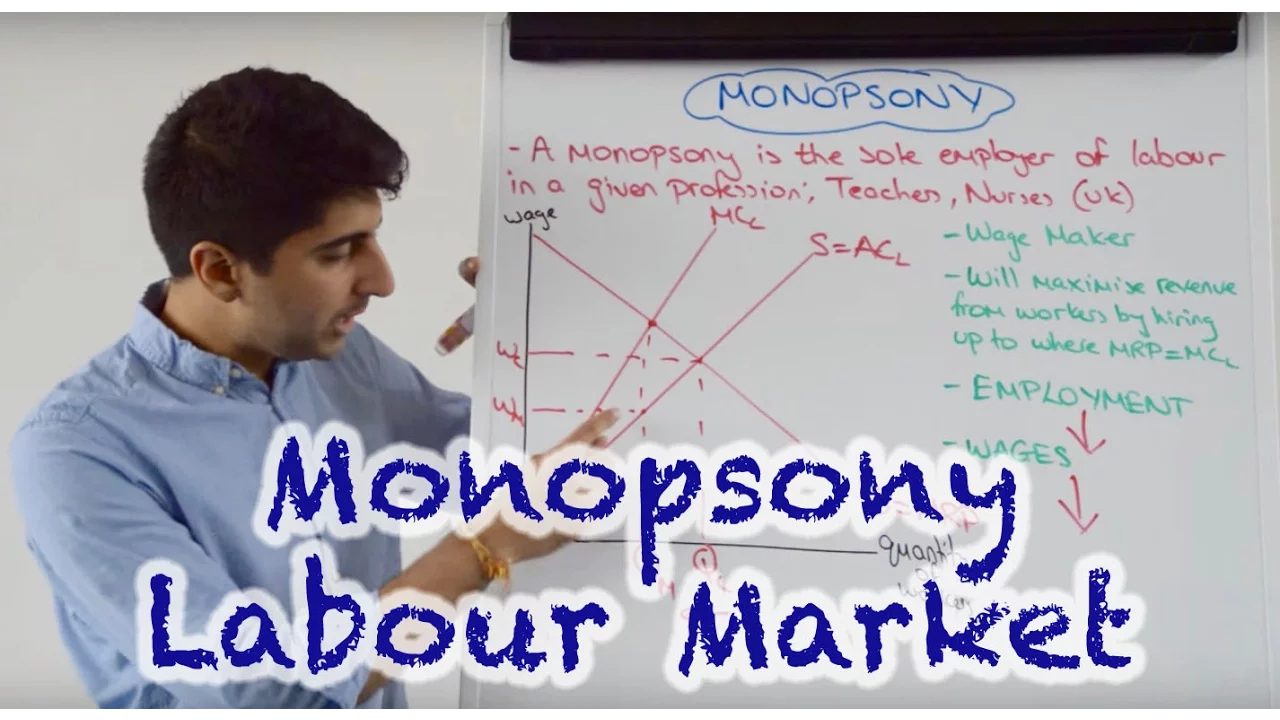





In a monopsony labor market, a single employer hires fewer workers (qm) at a lower wage (wm) compared to a competitive market (qc, wc), because the employer can restrict employment to lower wages. A minimum wage in a monopsony market can paradoxically increase employment by eliminating the rising marginal cost of labor, making it profitable to hire more workers. However, the net effect of minimum wage legislation depends on the proportion of monopsonistic versus competitive labor markets in the economy.
Monopsony Labor Markets & Minimum Wage | Microeconomics for MBAs
Added:Perfectly Competitive Labor Markets: Understanding how labor supply and labor demand determine equilibrium wages and employment levels under competitive assumptions.
Marginal Analysis in Factor Markets: Familiarity with the concepts of Marginal Revenue Product of Labor (MRPL) and Marginal Factor Cost (MFC).
The Classical Theory of Price Floors: How a minimum wage classically creates a labor surplus (unemployment) in a perfectly competitive market.
Monopoly Market Structures: Understanding monopoly power on the seller side to draw structural and analytical parallels to monopsony power on the buyer side.
Bilateral Monopoly: Analyzing labor markets where a monopsonist employer faces a unionized labor force (a monopoly supplier of labor).
Empirical Studies on Minimum Wage: Reviewing real-world economic research (e.g., Card and Krueger) to evaluate if empirical wage increases lead to employment growth as monopsony theory suggests.
Modern Monopsony and Antitrust in Labor Markets: Investigating how non-compete clauses, no-poaching agreements, and search frictions grant employers monopsony power in the modern tech and gig economies.
Alternative Policy Interventions: Comparing the efficiency of minimum wage policies with alternative social safety nets, such as the Earned Income Tax Credit (EITC) or wage subsidies.
16.7K views62likes5:38Original Release: 2007-12-20
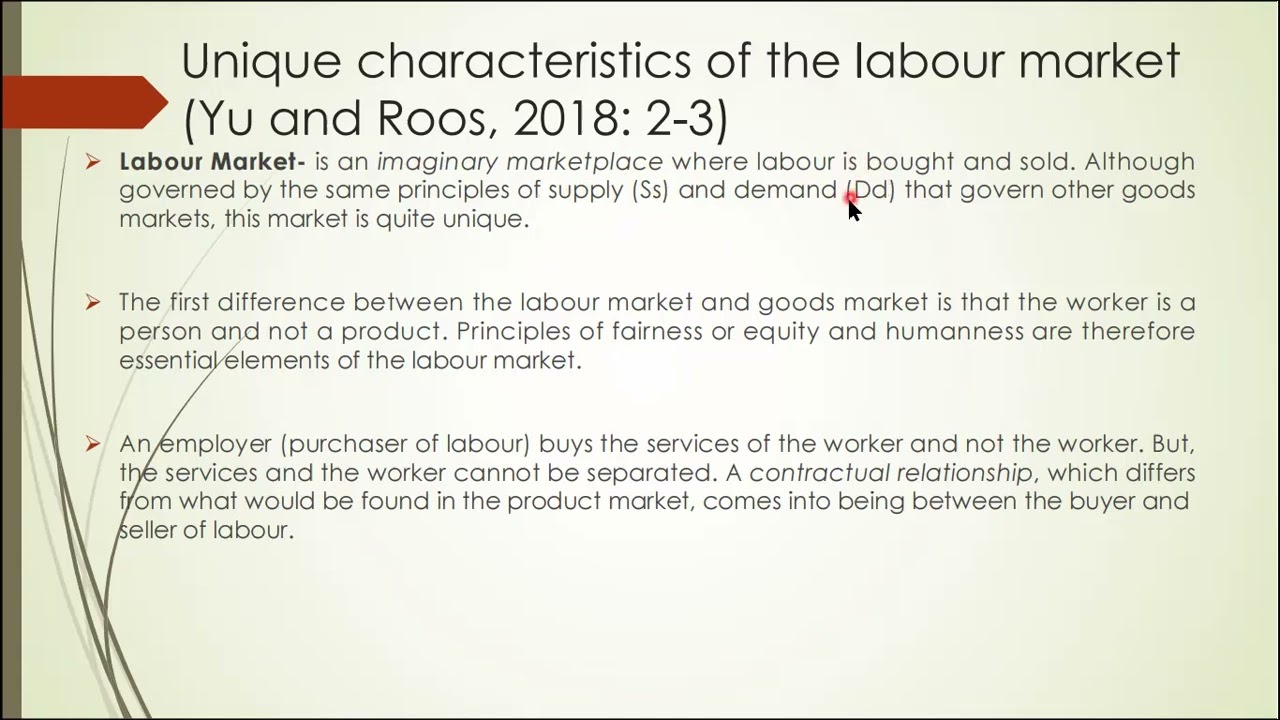
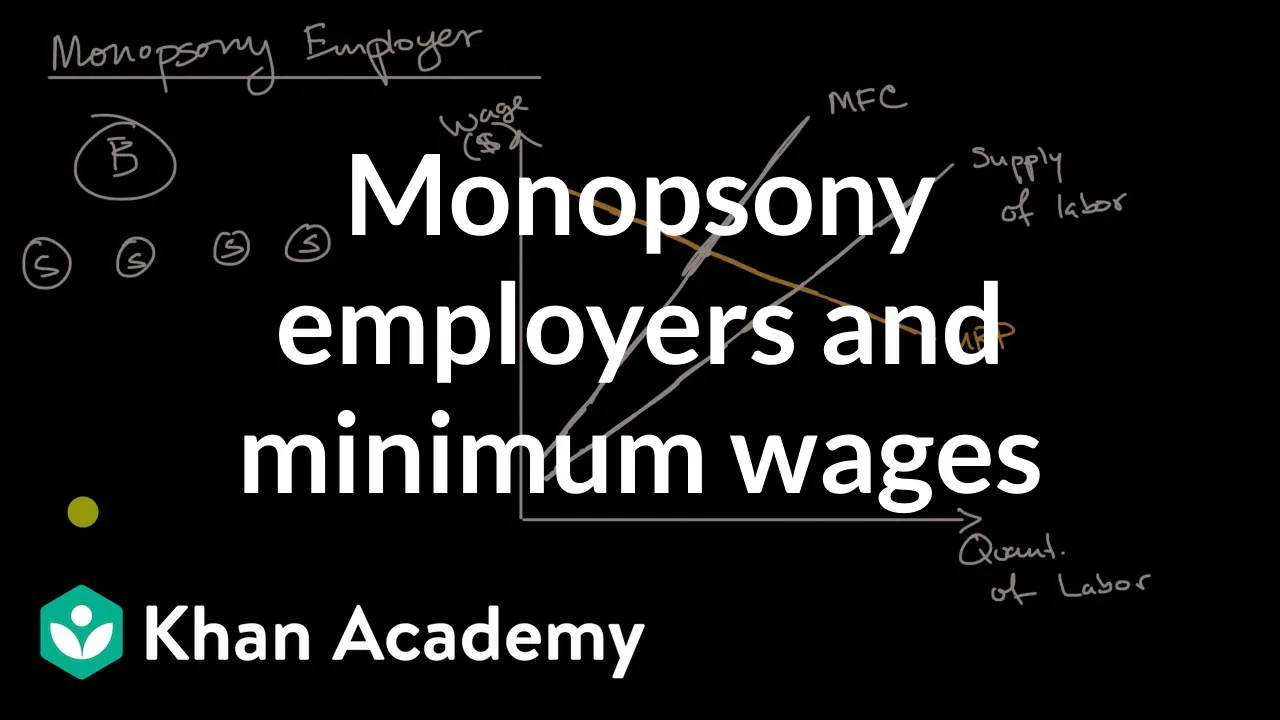
uh here is the same basic graph that we had uh before we deduced with the Messi graph that the profit maximizing employment level for man monopsony would be equal to uh qm we can note here that in a competitive labor market the wage will be determined by supply and demand which means that the quantity of Labor in in a competitive labor market will be QC it also means that the wage uh being paid in the competitive market will be uh W C note that in the case of the monopsony the monopsony chooses a quantity of Labor equal to qm Which is less than the quantity of Labor hired under a competitive labor market notice that a monopsony uh can determine the wage it has to pay in order to get qm Workers simply by going up to the supply curve at Q with an employment level qm there will be uh workers willing to work for WM or to put it in another way at a wage of WM uh qm workers will come on to the market this means that a monopsony uh can in fact um uh will in fact tend to pay a lower wage than the competitive uh Labor uh market now one can imagine that the uh uh that there are a group of of employers in a competitive labor market who are paying a wage of WC and quantity of of QC they can imagine that they can get together and um and caliz the uh labor market in so doing they can they can reason that they can in fact lower uh the demand their Collective demand for labor and if they lower their Collective demand for Labor uh the result is that they can lower the wages uh that is being paid from WC to to WM and they can in fact made a make a greater uh uh profit as as a consequence um but the problem here is that cartels have a difficult time of com uh holding together in the uh labor market as well as in the final uh product Market there will be producers out here or employers out here who would be willing uh to hire more workers as indicated here why because the marginal value of workers is greater than uh the additional cost that they would have to pay but um and as a consequence an employer cartel could in fact a break down as the wage rate is is Bid uh upward one of the more interesting uses of the monopsony model is to go back and analyze the impact of the of the minimum wage here we have the monopsony uh hiring qm workers at a wage of uh W uh WM now let's suppose that the uh government comes in and says that this is wrong WM is too low of wage uh for these workers and that the employers must pay a wage of of W1 that's the minimum wage uh how many workers will the monopsony uh hire well the interesting observation is that the marginal cost of Labor is no longer this curve why because the employers must pay a minimum of W1 and the marginal cost of the first worker is going to be here W1 the marginal value of that first worker is way up there so there's profit to be made off of that worker and as a consequence that worker will be hired what about the second worker well the second worker has a marginal value up here it has a marginal cost equal to W1 and so the second worker will be hired well since there's a gap between all of these units of Labor even beyond qm the marginal value is greater than the uh wage rate the result is that in a monopsony labor market a minimum wage can in fact uh lead to uh um greater uh employment you may recall that in a competitive labor market uh the um uh the employment always went down along with uh Fringe uh benefits now many people who argue for uh a minimum wage law will cite uh the theory of monopsony Labor markets they will point out that many labor markets are monopsonistic and as a consequence it's possible to raise the wage rate and increase uh the number of workers that are hired uh but you must also realize that there are many competitive labor markets and the net effect of the minimum wage uh will be the uh difference between the negative employment effects in the competitive labor markets versus uh the potential uh positive employment effects uh in monopsony labor market uh thank you for being with [Music] me
Up Next
8:50
How Minimum Wages Affect Monopsony Employers: Economics Explained
@khanacademy
32.4K views•2019-04-20

5:07
Impact of Yuan in Indo-Russian Trade Amid Sanctions
@WION
261.9K views•2022-07-01
10:33
Behavioral Economics Explained: Rationality, Nudges, and Risk
@crashcourse
1.1M views•2016-03-12

113:18
The Age of Easy Money: Fed & Inflation | Full Documentary
@frontline
21.2M views•2023-03-15
Related Study Plans & Knowledge Roadmaps
Structured learning paths in Economics
economics
Sovereign Debt: Defaults, IMF & Restructuring
01Introduction to Sovereign Debt & Government Bonds
02Debt Sustainability & Credit Ratings
03Anatomy and History of Debt Crises
+ 2 more learning modules
12h5 modules
Explore Roadmap
economics
Market Design: Matching Theory & Gale-Shapley
01Introduction to Market Design and Price-Free Markets
02Two-Sided Matching & The Gale-Shapley Algorithm
03School Choice Systems and Mechanism Design
+ 2 more learning modules
10h5 modules
Explore Roadmap
economics
Impossible Trinity: Forex, Capital & Policy
01Introduction to Monetary Policy and Central Banking
02Exchange Rates and International Capital Flows
03The Mundell-Fleming Model
+ 2 more learning modules
8h5 modules
Explore Roadmap
economics
Healthcare Economics: Market Failures & Systems
01Introduction to Healthcare Markets and Market Failure
02Asymmetric Information and Adverse Selection
03Moral Hazard and Insurance Design
+ 2 more learning modules
12h5 modules
Explore Roadmap