

















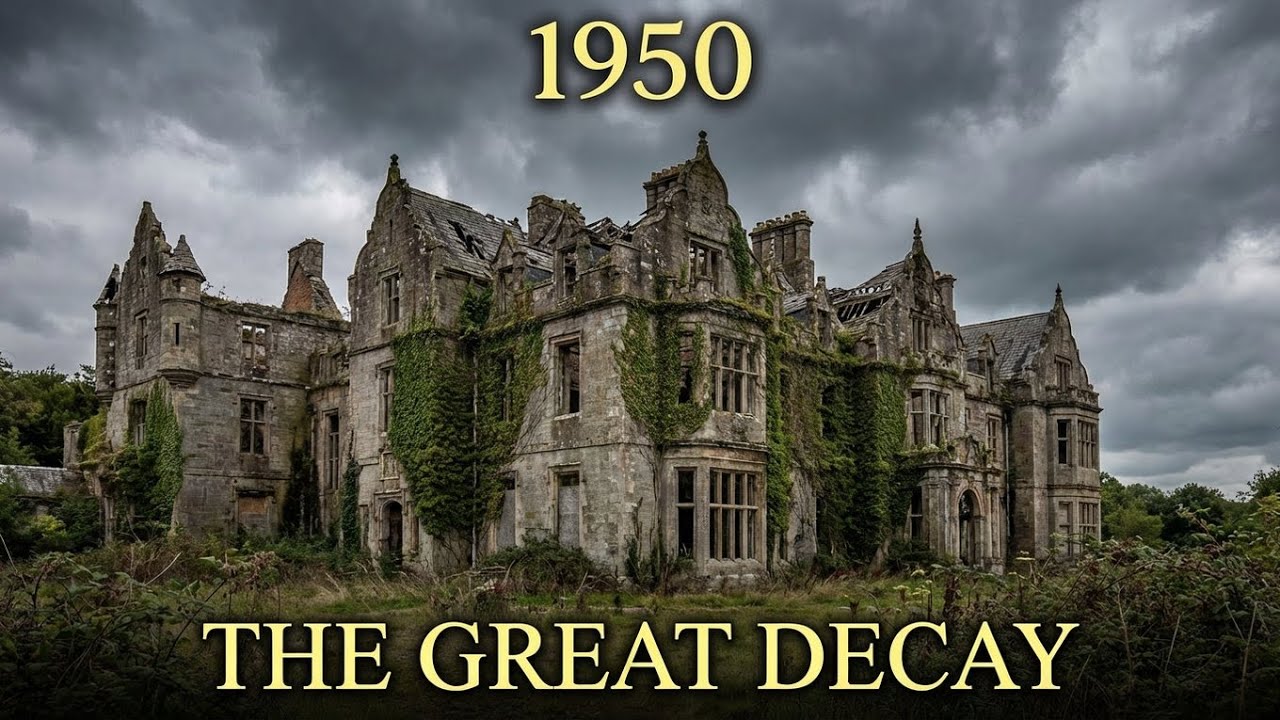

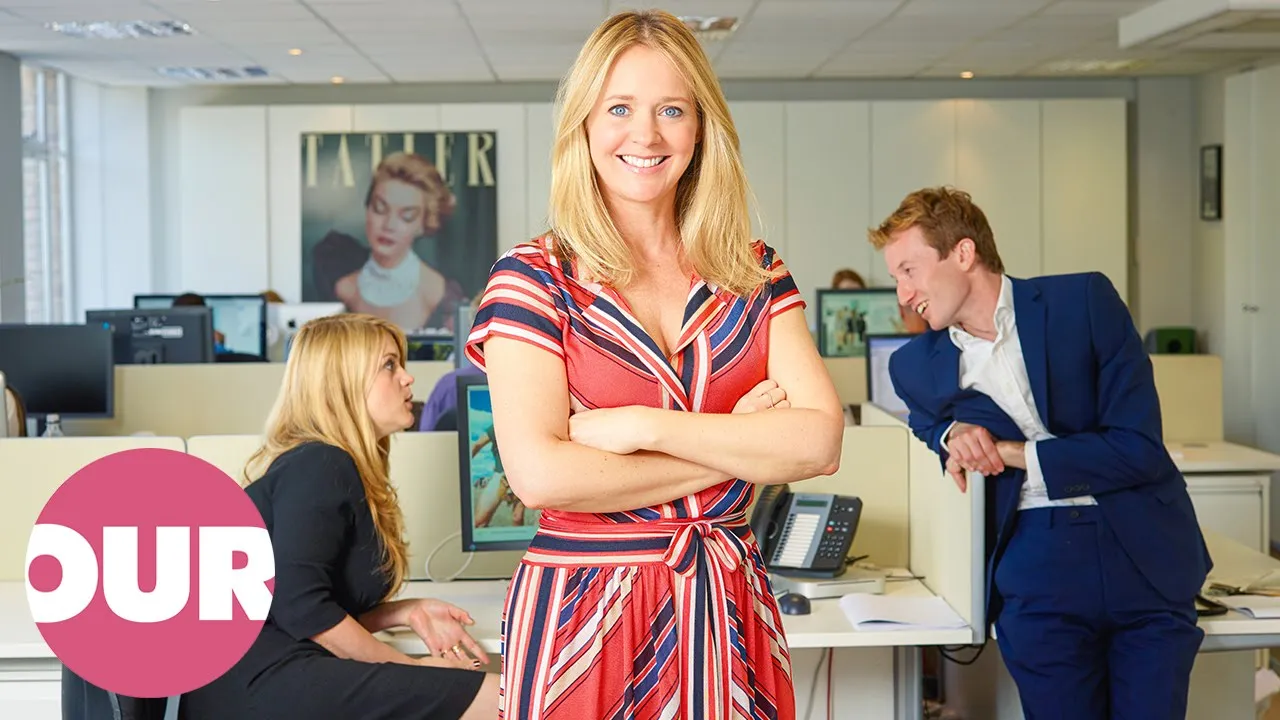





Media portrayals of the wealthy often serve as propaganda for capitalism, with shows like Downton Abbey (created by Conservative peer Julian Fellowes) depicting the rich as benevolent forces for social good, thereby obscuring the reality that income inequality is an inherent feature of capitalism that perpetuates class hierarchies and undermines democratic participation.
Downton Abbey: Aristocratic Propaganda and Income Inequality
Added:The historical structure of the British class system and the traditional role of the landed gentry and aristocracy in the early 20th century.
The concept of cultural hegemony, specifically how the values of a ruling class are normalized and consent is manufactured through cultural products.
Basic principles of capitalist ideology, socioeconomic stratification, and how systemic income inequality functions.
An introduction to media literacy and framing theory, focusing on how fictional narratives can shape, reinforce, or distort real-world political perceptions.
Applying critical discourse analysis to other contemporary historical dramas (such as 'The Crown' or 'Bridgerton') to detect patterns of class romanticization.
An exploration of the actual economic history surrounding the decline of the British aristocracy, including the rise of labor movements and post-WWI estate taxes.
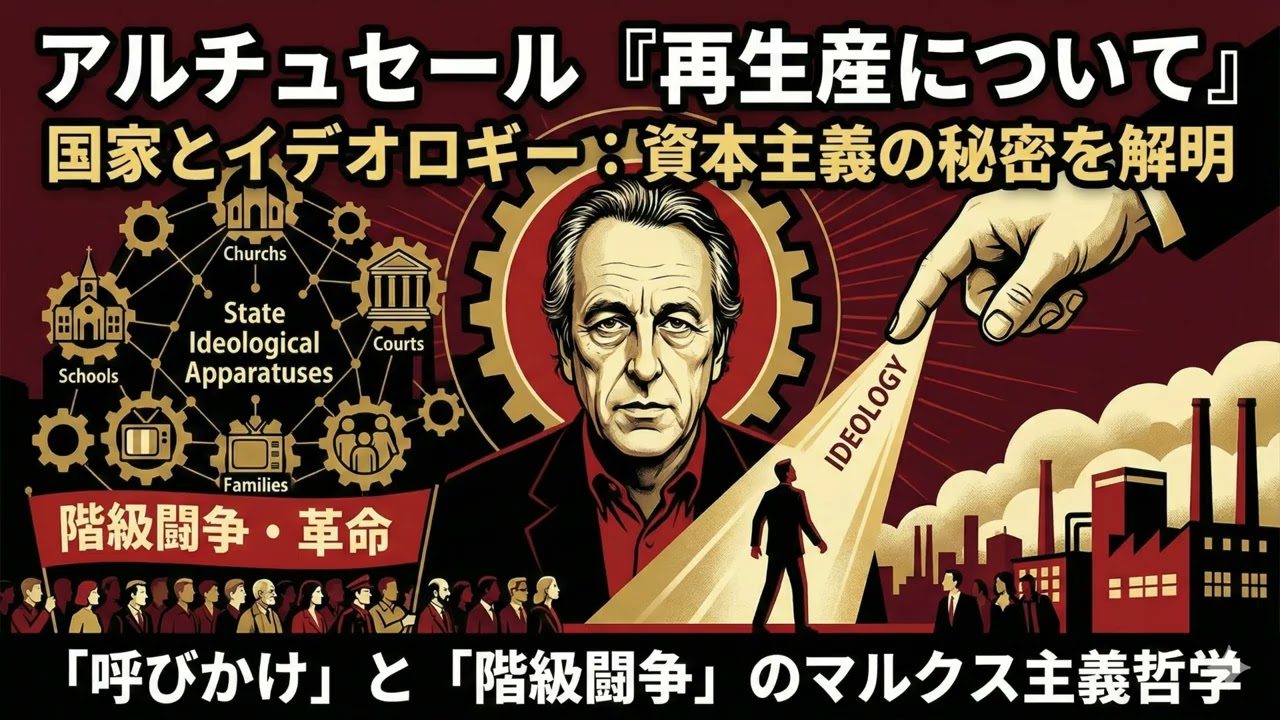
Study of Louis Althusser's concept of 'Ideological State Apparatuses' to understand how entertainment media serves to reproduce dominant class relations.
The sociology of nostalgia, analyzing how romanticized depictions of the past are utilized in modern political discourse to justify existing wealth disparities.
259.3K views13.4Klikes21:11Original Release: 2020-02-08
Weyland-Yutani from the Alien franchise.
RDA Corporation from Avatar.
Omni Consumer Products from Robocop.
Hollywood has a long history of portraying powerful corporate entities as caricatures of real world corporations.
Hollywood takes the pulse of the nation and delivers to them an antagonist that they are most likely to despise.
The film and television industry does not mind that some vestigial arm of capitalism is portrayed badly.
Corporations can profit from anything – even anti-capitalism and other radical ideas.
It's called recuperation, the process by which capital intercepts socially and politically radical ideas and images, commodifies them, and safely incorporates them back within mainstream society – in this case, popular media.
Nevertheless, the portrayals of the rich are still worth exploring, as these portrayals tell us a lot about the culture that created them.
Different from the antagonist being a faceless, nebulous corporation is the antagonist being “the rich” as a class of people.
This is nothing new – see: 1989 film Society – but there has been an uptick in the rich as a class of people being the antagonist, a rich family or a rich community.
Parasite is a fine example, but in terms of Hollywood films, there were a few released only last year.
Ready or Not tells the story of a young bride who marries into a rich family only to discover that the family has made a dark magical pact and believes that their wealth can only be maintained by sacrificing her, the implication being that the rich do not become rich through virtuous means and only maintain their wealth through more and more irresponsible and dangerous methods over time.
Knives Out is the story of a rich, greedy and deeply flawed family whose patriarch has recently passed and the fallout regarding the will.
A poor woman who took care of the old man who died is thrust into their lives more completely and finds herself in great danger.
The culture of the United States and the ever-growing disparity between the rich and poor make the frequency of the rich as antagonists acceptable or even welcome among the poor or even among the suburban middle class.
Different cultures portray the rich differently, and media from the United Kingdom tends to have a different outlook on rich families for somewhat obvious reasons.
The UK props up one of the wealthiest families in the world.
The Crown, produced by British production company Left Bank Pictures, has frequently been described as propaganda for the royal family.
It was created by Peter Morgan, a British writer perhaps most famous for writing The Queen, a movie about how the prime minister was wrong for doubting the royal family and how the real victim of the tragic death of Princess Diana was actually Queen Elizabeth II.
I hate this movie.
There are numerous other examples of this in the UK, a pattern of lifting up the wealthy and powerful as our social betters.
I call this loose sub-genre of drama Aristo-Trash: media that portrays the concentration of wealth as a public good.
There is no more famous example of this than the wildly popular British television series and later movie: Downton Abbey.
The series takes place in the titular country estate and stars its residents, the aristocratic Crawley family, and the servants who live there.
The series itself is largely conservative in its politics, portraying the family as ultimately a force for good in Yorkshire and the fictionalized, idealized relationship between the super rich and the poor as one of family and friendship.
The series was created by Julian Fellowes, a Conservative Party peer of the House of Lords.
His full name and title is actually Julian Alexander Kitchener-Fellowes, Baron Fellowes of West Stafford.
In addition to creating the series, he literally wrote every single episode.
There are fifty-two episodes of Downton Abbey, he has the sole writing credit on fifty, and a co-writing credit on two.
He is also the sole writer of the motion picture released last year.
This was entirely his baby from front to back, the only voice of the entire run.
So, just in case there are any delusions about the political leanings of Downton Abbey, its relationship with the aristocracy, its relationship with capital, its feelings toward the royal family and monarchism, and its intended messages and propaganda, let those misconceptions be washed away now.
Every single episode was written by an old Tory who literally must be addressed as Lord Fellowes.
Downton Abbey and other aristo-trash put a human face on the rich for the purpose capitalist apologetics and propaganda about how the rich are just like us and therefore would always have our best interests at heart.
Downton Abbey is filled with examples of not only capitalism being an unassailable good for society but the Crawleys in particular being essential and righteous.
They have flaws on a personal level, such as the squabbling among the sisters and the normal bickering between husband and wife, but every time the topic of economics come up, the Crawleys are shown as absolutely critical to the good of the town and the nation.
Income inequality is ignored and replaced with a paternalistic portrayal of the rich taking care of the poor.
Downton Abbey takes place in the early 20th century, but its politics are written by the British Conservative Party of the early 21st century.
There are reasons for everything the series chooses to display and everything the series chooses to ignore.
According to The Equality Trust, the UK has a very high level of income inequality compared to other developed countries.
Over the past five years, basically during the run of Downton Abbey, the top 20% of incomes has increased by 4.7%.
The rich getting richer.
The poorest 20% have seen their income fall by 1.6%.
The poor getting poorer.
This is not the full extent of the difference between the richest and the rest of society because the top 1% have significantly higher incomes than the rest of the top 20%.
Since 1980, the share of income earned by the top 1% in the UK has generally has rising, peaking at 13% in 2015.
This is almost double the corresponding figure for Belgium at 7%, Scandinavian nations like Sweden and Norway at 8% each, Australia at 9% and so forth.
This is only the UK, though.
It's worse in the US, as most things are.
And as for the whole world, the top 1% earn 20% of the total income.
Capitalists and their cheerleaders claim that the rich simply have what they “deserve” and the poor simply have what they “deserve” and that the playing field is the same for all.
But we know that's not true, as a great deal of wealth is inherited, and even if the rich “deserve” their wealth, that is of small comfort to people struggling to make ends meet, struggling to find shelter, struggling to find work, struggling to find healthcare, struggling to live.
Furthermore, income inequality has other negative effects on society, even though people dying really should be enough of a persuasive argument.
Income inequality is a threat to democracy because it allows the super rich to have more say in the government than anyone else.
In Downton Abbey, the Crawleys are seen hob-knobbing with royalty and Prime Minister Neville Chamberlain.
This is portrayed positively and a great honor instead of what it is: the combined efforts of the rich and powerful to consolidate their positions through a marriage of capitalism and the state.
Angus Deaton, a British economist and Nobel Prize winner, once said of this: “The political equality that is required by democracy is always under threat from economic inequality, and the more extreme the economic inequality, the greater the threat to democracy.
If democracy is compromised, there is a direct loss of well-being because people have good reason to value their ability to participate in political life, and the loss of that ability is instrumental in threatening other harm.
The very wealthy have little need for state-provided education or health care… They have even less reason to support health insurance for everyone, or to worry about the low quality of public schools that plagues much of the country.
They will oppose any regulation of banks that restricts profits, even if it helps those who cannot cover their mortgages or protects the public against predatory lending, deceptive advertising, or even a repetition of the financial crash.
To worry about these consequences of extreme inequality has nothing to do with being envious of the rich and everything to do with the fear that rapidly growing top incomes are a threat to the well-being of everyone else.” In Downton Abbey, the Crawleys are portrayed as charitable, the mere existence of their abbey creating employment for the town and their charitable works being an added benefit.
Downton Abbey skillfully clouds the important fact that the super rich, as a class, don't actually give that much and they get back so much from what they give.
Cheerleaders for capitalism note that men like Bill Gates and Jeff Bezos give to charity, but this illusion of generosity fades the moment we start thinking about what the super rich could be contributing.
Put it this way: stealing a million dollars from people who desperately need it, and donating a hundred dollars to those same desperate people is not an act of generosity.
What else do the super rich get from their philanthropy?
For one, tax breaks.
They give some so that they can take more.
For another, they get control over the public policy-making process.
The think tanks, institutions, and organizations the wealthy use to shape and distort our political discourse.
They define the bounds of what gets discussed and what gets ignored.
Downton Abbey plays up the myth of the benevolent billionaire, that billionaires serve the public good rather than deepen income inequality.
We see this play out every time the Crawleys are shown doing something nice for the servants, like a Christmas party or the servants ball in which the super rich dance with the servants.
“Why, they sure are lucky,” the audience is meant to say.
“What great billionaires they are.
Allowing their servants to dance sometimes!” To be clear, this is played completely straight.
It's not satire.
It's not commentary on income inequality.
It's one hundred percent sincere by Julian Alexander Kitchener-Fellowes, Baron Fellowes of West Stafford.
Income inequality is not a bug in capitalism, it's a feature.
It's the inevitable consequence of capitalism.
In order for the super rich to exist, far more people need to have far less income so that they can perform wage labor to support the super rich.
That's how it works.
Capitalists don't want poverty to be abolished.
Poverty is necessary for their continued existence.
Capitalists require a socio-economic hierarchy for their fortunes to exist.
They are not incentivized to eliminate poverty.
They are actually incentivized to maintain poverty.
[S06E04] In the middle of season six, after returning from the United States, Tom Branson remarks that his previous disdain for capitalism has been eased a bit.
In the US, he claims, workers have more rights and more of a chance of getting ahead in life.
Labor laws in the period during Downton Abbey notwithstanding, this is largely untrue today.
Perhaps the biggest difference between US employment law and UK employment law is that the US has something called “at will” employment whereas the UK does not.
In the US, employers can terminate employment without notice, for almost any reason.
There are notable exceptions like on the grounds of pregnancy, race, religion and gender.
In the UK, employment law is much more formal, whereby employment is structured through formal, written contracts.
These contracts will detail the conditions under which a UK employee’s contract can be terminated, and employers are not permitted to terminate an employee’s contract for any reason or without notice.
In the UK, there is often a requirement for notice prior to termination, and an employer will often need to show cause.
Arguably, the UK has more rights for its workers, at least on paper, but here's the problem.
Regardless of what it says on paper, the rich will always have more power in any termination – whether it's a legal termination or not.
Capitalists like the Crawley family or the creator of Downton Abbey would claim that labor laws provide equal protection for all, but income inequality under capitalism grants different powers and resources to people in different economic classes.
The capitalist will be able to afford better lawyers should a lawsuit be filed against them whereas the average worker either will only be able to afford an average lawyer, or the worker will decide that since there is little chance of a victory, the cost of any lawyer isn't worth it.
Capitalists bet on these two outcomes when terminating employees.
In other words, yes, it is illegal in both the US and UK to terminate an employee for being pregnant, but proving that was the reason for termination requires the employee having a much better lawyer than their boss.
Considering the gulf between their incomes, that is not very likely.
Laws only provide equal protection in theory, not in practice, due to the inevitable consequence of capitalism: disparate economic classes.
Throughout the course of Downton Abbey, a handful of employees are terminated, but the series never portrays these terminations as the fault of the Crawleys – the capitalists.
It's always the fault of the servants living in their meager quarters downstairs.
In fact, there are a few instances in the series in which the Crawleys are portrayed to be astonishingly forgiving of the improprieties of their servants.
For example, in the motion picture, which acts as a series finale, Barrow mouths off to Lord Crawley.
Someone mentions in passing that he could be terminated for this, but the idea is quickly dismissed due to the great love and compassion of the capitalists.
The implication is that the Crawleys – the capitalists – are always right and incredibly forgiving.
Downton Abbey always portrays social progress one of two ways.
Social progress, such as with Tom Branson's socialism, is dangerous and something to be outgrown.
Or, social progress, such as with Gwen's rise to secretary instead of house servant, is owed entirely to the capitalists.
[S06E04] In season one, Gwen, a maid, dreams of leaving Downton Abbey and becoming a secretary.
Lady Sybil encourages her.
In season six, the character returns, if only for an episode.
By this point, she and her husband promote Hillcroft College, where young women of more modest upbringing can go to better themselves.
The family congratulates Gwen for improving her station in life...for a moment.
Then, Gwen corrects them.
It was not she who should receive any credit, she insists, but Lady Sybil.
This obscures years of Gwen’s hard work.
Sybil helped a housemaid become a secretary, and then that secretary moved on to local government, and now uses her hard-earned privileges to help other young women.
Instead of recognizing Gwen’s achievement and generosity, the episode celebrates this as a win for Sybil – the woman born into wealth.
The implication by Lord Fellowes here is that it is the capitalists who are best put in charge of affecting change – what little change they decree as worthy.
Socialism is portrayed as a childish fantasy at best and dangerous at worst.
Tom Branson begins as a socialist chauffeur in the early seasons and becomes a capitalist by season six.
In the interim, his socialism is challenged not only by other characters but by the show itself.
Socialism on Downton Abbey exists only to be torn apart, much like how conservatism only exists on The West Wing for its liberal writers to argue against.
Branson always confidently assures people of his belief in socialism until someone delivers a newspaper that says “The Soviets have done it again!” and Branson sinks into his chair, defeated.
In the motion picture, his character arc is complete when he saves King George V from an assassination attempt, not only making peace with the aristocracy and the wealthy and monarchism...but embracing them.
Once Branson isn't a socialist anymore, someone else needed to be target of writer-creator Lord Fellowes.
This was assigned to Daisy, a chef's assistant who eventually starts reading Karl Marx.
Daisy is portrayed, throughout the series, as kind-hearted but silly and naive, much in the same way that capitalists think of young socialists.
This is the only change that Downton Abbey welcomes.
The kind that shields it from examining exploitation by capitalism, exploitation by the ruling class, and exploitation by the state.
Downton Abbey pays lip service to progress, but its sympathies always lie with the powerful.
In the motion picture finale to Downtown Abbey, the workers – the servants of the abbey – are absolutely thrilled that the King is visiting.
They go to great lengths, even committing a few minor crimes, in order to have the honor of serving royalty.
And that's Downton Abbey.
Apologia for the rich and powerful, sure, but also a message to the poor that they should be grateful just to be in the same room as people higher than them on the socio-economic ladder.
They have no greater goal in life than this, no greater honor in life than to serve the King.
The movie portrays their service as glorious, their poverty as nothing.
All hail Lord Crawley, and God save the King.
Once again, every episode was written by Julian Alexander Kitchener-Fellowes, Baron Fellowes of West Stafford, in case you have any doubts about what is going on here.
The world would be materially better without people like the Crawleys.
The super rich are the greatest obstacle toward solving climate change.
The rich have the resources to insulate themselves from environmental impact.
The effects of climate change for the poor are matters of life and death — shifting weather, limited water sources, increased competition for resources and the inability to buy new housing following flooding.
Remember, concentrating that much wealth leads to control over public policy.
Since the rich do not fear climate change like the rest of us do, and since many of them profit directly from the climate change, they are not incentivized to solve it.
Some, like those in the energy industry, are actually economically incentivized to worsen climate change.
This concentration of wealth – this income inequality – is literally responsible for why the planet has not fully responded to the threat of climate change.
Income inequality, particularly on this level, is objectively ruining the world.
There are no Crawleys coming to save us.
They're not the solution.
They're the problem.
Up Next
4:24
Fashion as Social Commentary: Virgil Abloh's Off-White Design Philosophy
@nytimes
2.2M views•2017-09-28

12:54
Triumph of Orthodoxy Icon: Byzantine Art & History Explained
@BenCallan
2.1K views•2024-08-06

9:49
FastAPI vs Flask vs Django: Choosing the Right Python Web Framework
@TechWithTim
302.5K views•2024-05-26

1:42
Game of Thrones Opening Credits: A Cinematic Analysis
@gameofthrones
46.3M views•2011-04-18
Related Study Plans & Knowledge Roadmaps
Structured learning paths in General & Interdisciplinary Studies
general-studies
Elevator Engineering: History, Physics & Cities
01From Hoists to Safety Brakes: The Dawn of Vertical Lift
02Hydraulic vs. Traction: The Engineering Physics of Elevators
03Modern Speed, Safety, and Algorithms
+ 2 more learning modules
12h5 modules
Explore Roadmap
general-studies
Rubber: Material Science, History & Geopolitics
01Origins of Natural Rubber & Mesoamerican History
02The Chemistry of Natural Rubber & Vulcanization
03The Geopolitics of the Rubber Boom & Colonization
+ 2 more learning modules
12h5 modules
Explore Roadmap
general-studies
Containerization: Evolution, Logistics & Trade
01Ancient Trade & Bulk Cargo: Amphorae to Barrels
02The Industrial Revolution & Cardboard Packaging
03The Containerization Revolution: Malcom McLean
+ 2 more learning modules
12h5 modules
Explore Roadmap
general-studies
Textile Tech: Evolution, Labor & Global Impact
01Pre-Industrial Textiles: Handloom & Cottage Industry
02Mechanization: The Spinning Jenny to the Power Loom
03The Factory System & Global Labor Transformation
+ 2 more learning modules
10h5 modules
Explore Roadmap