Virgil Abloh, creative director of Off-White, revolutionized luxury fashion by democratizing it through streetwear, creating a hybrid brand that combines traditional luxury manufacturing with social media-driven accessibility, allowing consumers to purchase directly from Instagram while maintaining high-end quality standards.
Fashion as Social Commentary: Virgil Abloh's Off-White Design Philosophy
Added:Deep Dive
The historical dichotomy between haute couture (high fashion) and streetwear, and how these markets traditionally operated independently.

2025ベストバイ、Cristaseya、BRAUN SK-5。#31
24.5K
In the 1990s, streetwear brands and luxury fashion brands operated in completely separate spheres with no crossover. Streetwear brands did not produce luxury items, and luxury brands did not create streetwear-style products. This separation began to change with the rise of hip-hop culture, where rappers began wearing luxury brands as promotional tools. This cultural shift led to the emergence of the 'luxury streetwear' concept, where brands like Louis Vuitton began collaborating with streetwear designers, fundamentally changing how fashion categories interacted.
Click to watch →
el ICEBERG de la MODA
5.8K
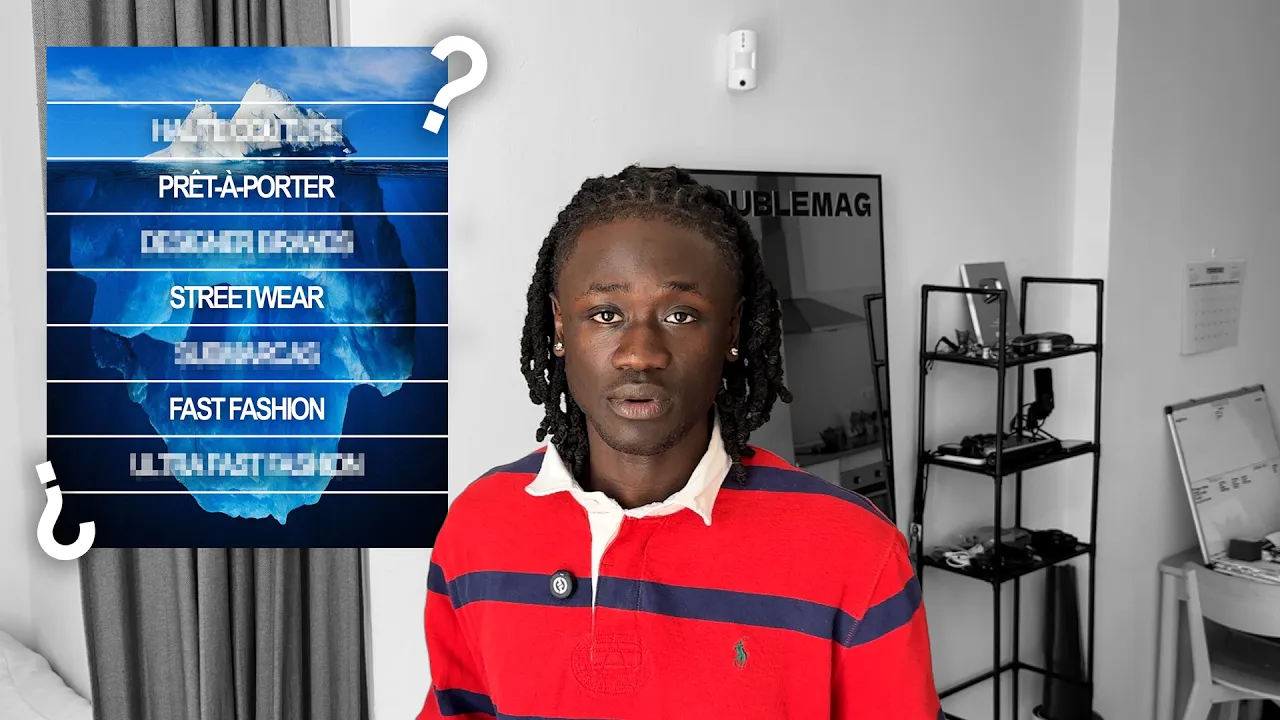
The fashion industry is organized into seven categories based on origin and production systems. High fashion (haute couture) represents the most exclusive form, featuring hand-made, custom pieces with extremely limited production and high prices, regulated by the Chambre Syndicale de la Haute Couture. Pret-a-porter (ready-to-wear) offers accessible designer clothing produced in larger quantities but still controlled, presented during fashion weeks. Designer brands emerged independently, building reputations through seasonal collections at higher price points than fast fashion but below luxury levels. Streetwear requires cultural authenticity, originating from or representing street subcultures, characterized by drops rather than seasons and strong visual identity reflecting community values.
Click to watch →
Haute Couture vs Ready to Wear: Differences #commentary #fashion #fashiontalk #fashioncritique
685
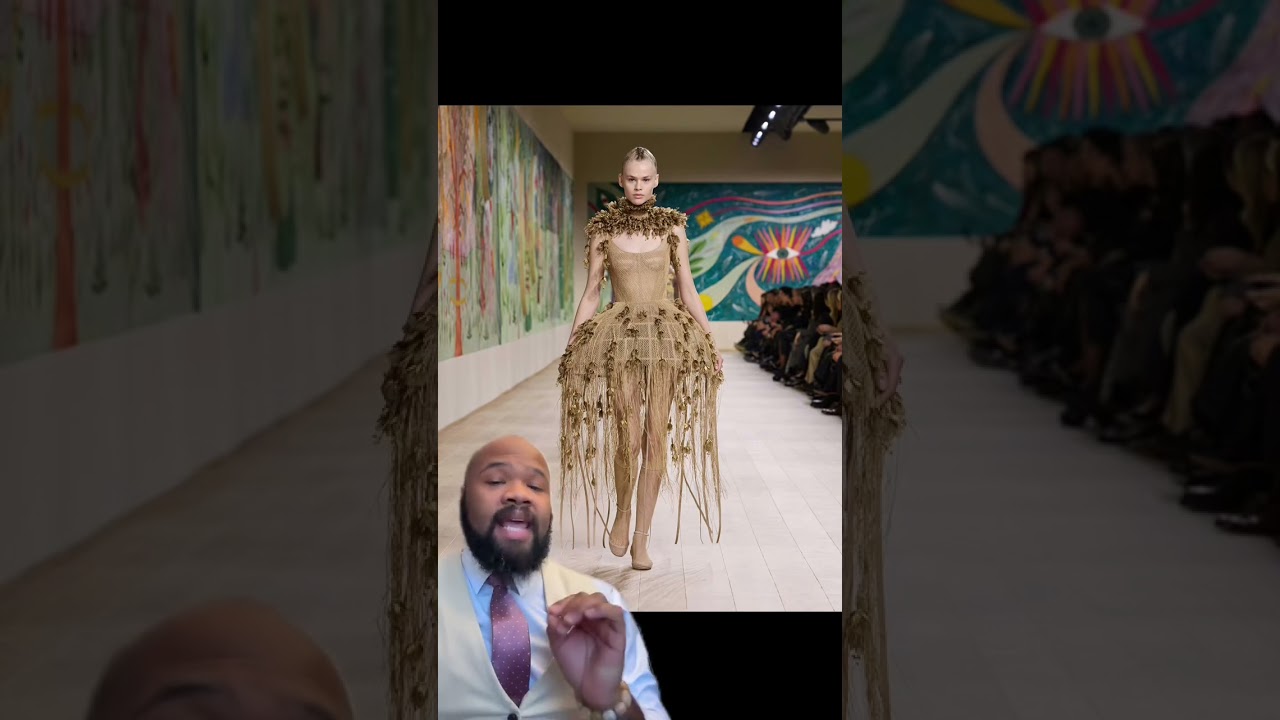
Haute couture is a legally protected designation established in 1945 by the Federation de la Haute Couture de la Mode, requiring brands to meet strict criteria including made-to-order clothing, a Paris-based atelier with at least 20 full-time and 20 technical staff members, and the presentation of at least 25 design looks twice yearly; in contrast, ready-to-wear is a market term originating from 1830s New York garment factories that mass-produces clothing with preset sizes for consumer convenience, with its market share in the US growing from 25% in 1860 to 90% by 1951.
Click to watch →

DIFERENCIAS ENTRE ALTA COSTURA, PRÊT-À-PORTER Y FAST FASHION| AMERICA BOBADILLA #MIERCOLESDEHISTORIA
8.6K
Haute couture is artisanal, custom-made luxury fashion with hand-sewn details, created for specific clients using the finest materials and skilled artisans, requiring three requirements: two prêt-à-porter collections annually with 50 original pieces, a Paris workshop with 20 full-time employees, and exclusive private client fittings; prêt-à-porter (ready-to-wear) is semi-industrialized fashion designed for broader accessibility while maintaining quality, presented at fashion weeks to showcase upcoming trends; fast fashion is mass-produced industrialized clothing created at high volumes with minimal cost, fundamentally different from both haute couture and prêt-à-porter in production methods and accessibility.
Click to watch →

«Потапенко будит!», Александр Васильев, Скромность - верный путь к неизвестность
77.3K
High fashion and mass market fashion have a bidirectional relationship where each influences the other. However, haute couture is declining as a dying concept, with only three to four houses remaining in Paris. The traditional consumer base of the monarchy has disappeared, eliminating the need for elaborate evening gowns. Meanwhile, street fashion has evolved into a lifestyle statement, with worn items representing deliberate aesthetic choices rather than poverty. The Russian fashion industry has grown with approximately 1,000 designers in Moscow, competing primarily for entertainment industry clients.
Click to watch →
Deep Dive
Marcel Duchamp's concept of the 'readymade' and how appropriation and recontextualization function in modern art and design.
Before & After Duchamp: How One Artist Changed Art History
15.6K
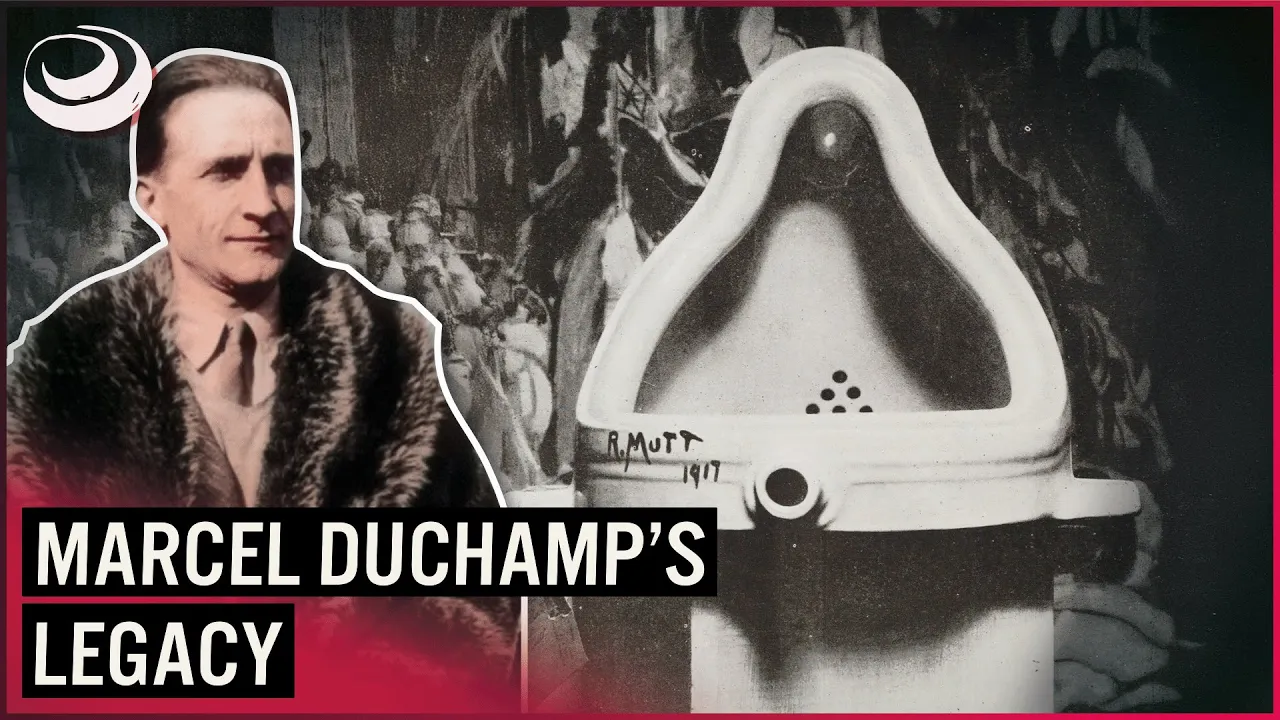
The readymade showed within modernism the escape from modernism—any object could be art without being based on form, color, history of form, or history of color used in artworks. This opened theoretical possibilities. With conceptual art, everything visual and attractive to the eye seemed eliminated from the work of art, creating a new definition. Some hailed Duchamp for liberating younger generations to access anything and call it art, while others criticized him for ushering in an 'anything goes' epoch where nothing has meaning anymore. Later in life, Duchamp found it amusing that people latched onto his theories as universal truths when his whole life was about bucking conventions and defying them. His form of conceptual art was a much more playful exchange. Duchamp was the first person to think about the relationship between copy and original. The found object, ready-made, industrial product can be as interesting as original art. In Duchamp's view, art is no longer simply about making objects or producing something—only God made something out of nothing. After that, we are in a world where things are already made, already have names. Creating is making new things out of existing things by reconfiguring them strategically or thinking about their conditions to recreate them or find entirely new ways of looking at them. With photo-mechanical reproduction, appropriating became immediately recognizable. Defiling the Mona Lisa was a broad statement that nothing from the past or tradition needed to be bowed down to.
Click to watch →
Art About Piss
26.4K
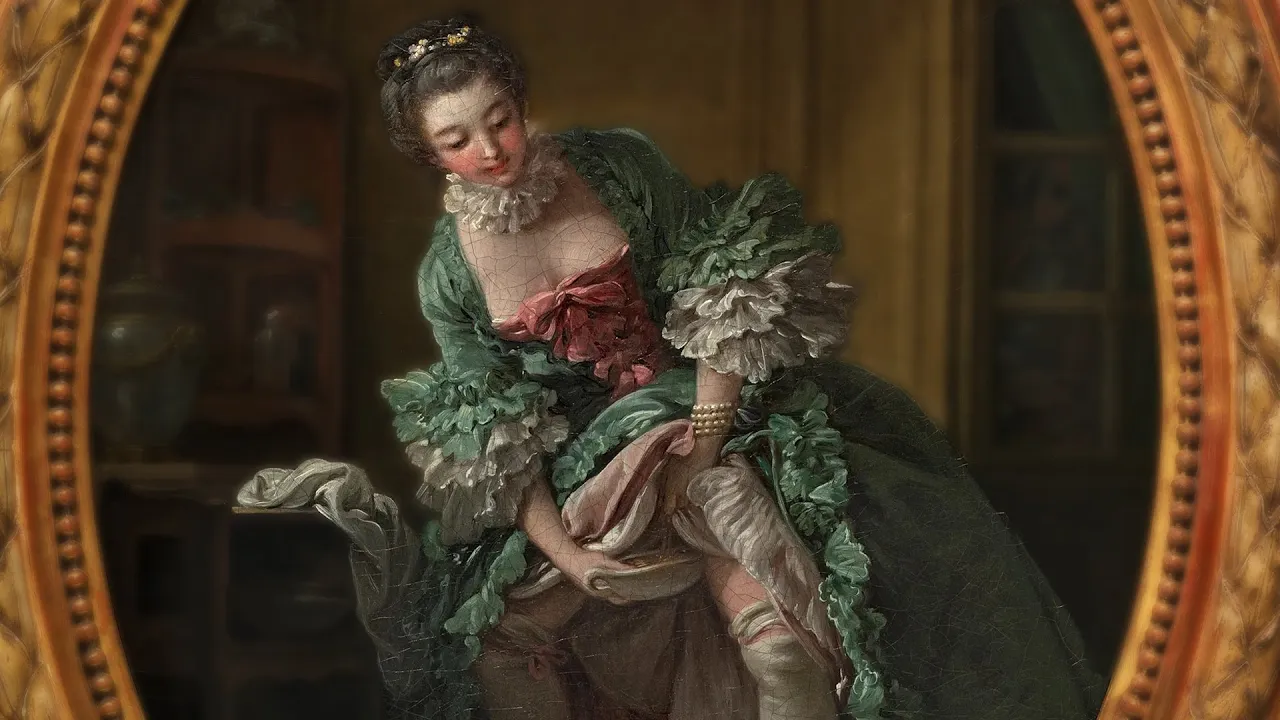
Marcel Duchamp's 'Fountain' (1917), an upside-down urinal, revolutionized art by recontextualizing everyday objects as art through placement in an artistic context. Subsequent artists like Brian Eno (1990), Pierre Ponchelli (1993), Kendall Gears (1993), Bjorn Kyotov (1999), and Yuan Chai and Yan Juji (2000) peed in it, demonstrating how viewers can recontextualize artworks back into ordinary objects through their actions, creating a dialogue between creator and interpreter.
Click to watch →
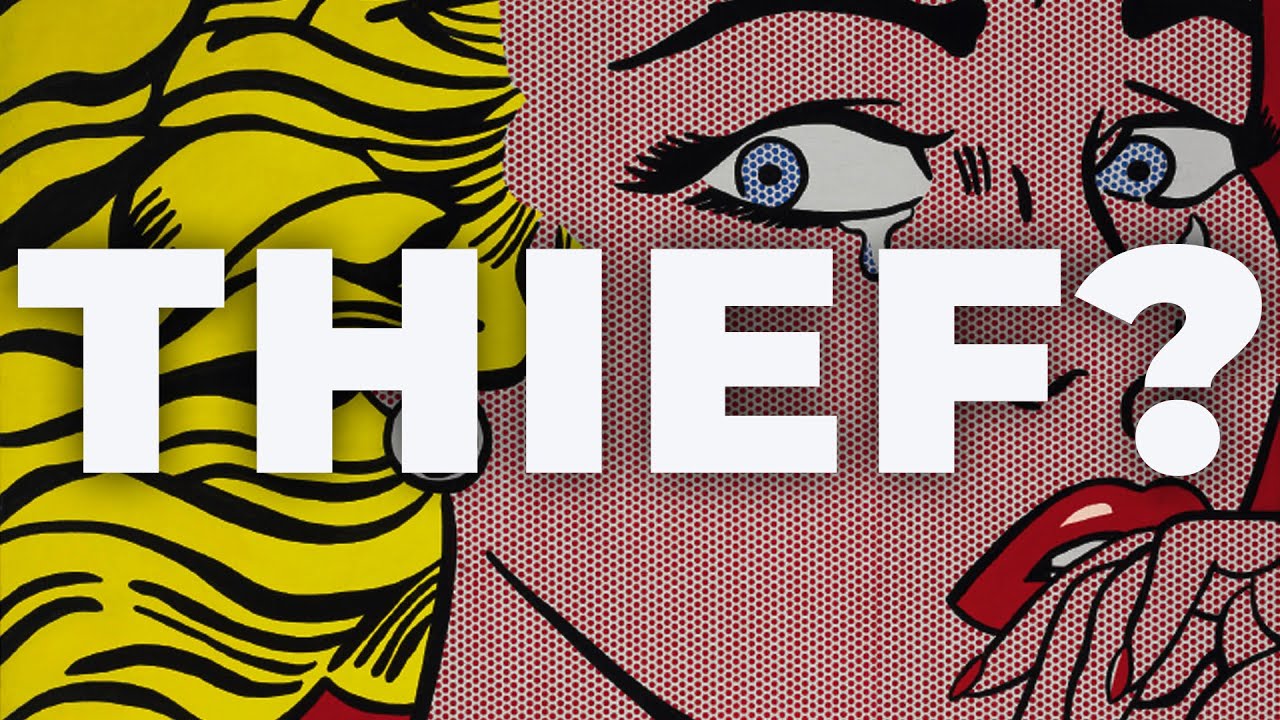
Art Theft and Appropriation in Fine Art History
72.4K
Marcel Duchamp's 1917 Fountain—a urinal signed 'R. Mutt 1917'—demonstrates that artistic value comes from recontextualization rather than creation. Louise Norton wrote that whether Mr. Mutt made it with his own hands has no importance—he chose it and placed it so its useful significance disappeared under the new title and point of view, creating a new thought for that object. Richard Prince's controversial 1989 photograph of a Marlboro cowboy ad became the first photograph to sell for over a million dollars. Prince transformed the ad through cropping, resizing, and shifting perception from commercial product to art. However, Prince also stole from Sam Abel, the original photographer, who was not credited and had lost authorship to the corporation through commercial processing.
Click to watch →

Beer, software, and Internet Art
56.4K
Jodi's www.art.medal project (1995-1997) linked pre-existing websites on a single page, awarding them virtual medals based solely on artistic appeal. By drawing hyperlinks between these sites and presenting them as singular framed artwork, this early form of internet art constitutes an act of appropriation similar to Duchamp's ready-mades. Like Duchamp's famous urinal, there is no signing or dating of these objects—the gesture is simply pointing out what exists online. This reflects Duchamp's idea that ready-mades reflect total absence of good or bad taste, as the artist merely identifies existing objects rather than creating new ones.
Click to watch →
История современного искусства: откуда оно взялось и почему оно такое?
211.1K
Marcel Duchamp revolutionized art by presenting ordinary manufactured objects as artistic works without modification. His most famous readymade, 'Fountain' (a urinal signed 'R. Mutt'), challenged the very definition of art. Duchamp argued that any object becomes art when the artist selects it and assigns it new meaning through context and title. This radical proposition—that artistic status derives from conceptual choice rather than craftsmanship—became foundational to modern art theory. The American Association of Art Historians later formalized this definition: 'Art is whatever its author says it is, and if at least one person agrees.'
Click to watch →
Deep Dive
Basic semiotics in fashion, specifically how clothing serves as a visual language to communicate social status, identity, and subcultural affiliation.

Why You Are Drawn To Certain Aesthetics Emotionally | Semiotics of Fashion Ft. HIGHENDHOMO
66.7K
Semiotics of fashion is the study of how people signify specific social and cultural positions through dress. It holds a symbolic and nonverbal communicative role with the capacity to express meanings through aesthetics, design, and symbolism. This applies not only to garments but also to fashion brands and other channels of fashion communications such as publications. The perceived meanings of clothing change over time due to societal standards and cultural values, though the fundamental meaning formed at its origin remains unaltered.
Click to watch →

5 PRENDAS QUE OTORGAN AUTORIDAD, PODER Y ELEGANCIA
164.1K
Clothing communicates meaning through semiotics—the study of signs and symbols. Straight lines, vertical cuts, and linear patterns communicate authority, elegance, and power. These visual elements create a communicative effect that influences how others perceive us, independent of our verbal communication.
Click to watch →

برنامج بصراحة : اللباس والجسد في ظل التحولات القيمية (الحلقة الكاملة)
16.6K
Clothing functions as a language with deep semiotic meaning, where garments carry symbolic significance that communicates complex messages about the wearer. This semiotic dimension allows clothing to convey information about social status, cultural belonging, religious affiliation, and personal identity in ways that words alone cannot achieve. Clothing reflects and constructs social identity, serving as a marker of one's position within society. Different social classes and economic positions are often associated with particular clothing styles and quality. Clothing also serves as a vehicle for expressing ideological and cultural affiliations, allowing individuals to communicate their political beliefs, religious convictions, and cultural values to others. This ideological function of clothing creates visible representations of abstract beliefs that can be understood by others in the social environment.
Click to watch →
Más allá de la moda: semiótica del vestir
195
Clothing functions as a visual language where colors, lines, and styles convey meaning beyond mere protection; for example, structured blazers with sharp angles communicate authority and power, while curved lines and soft colors suggest vulnerability and approachability, making fashion a powerful tool for social signaling, political expression, and identity construction throughout human history.
Click to watch →

HABLA como un ABOGADO con ELEGANCIA y GANA RESPETO | Audiolibro Completo Gratis
766
In the theater of human influence, the battle is won or lost long before the first word is spoken. There is an invisible language operating below consciousness that communicates who is the predator and who is the prey, who is the judge and who is the accused. Most people believe status is something you have. The strategist knows status is something you project. In semiotics, every detail of your presence is a message. If your posture is hunched, you're sending a signal of subordination. If your movements are rapid and spasmodic, you're screaming that your nervous system is under stress. Elegant dominance requires almost sculptural stillness. The highest status signal is economy of movement—observe great leaders who don't rub their hands, touch their face constantly, or adjust their clothes from anxiety. They move with deliberate slowness. Rush is for those who serve. Calm is for those who command. By reducing your movements, you communicate that you have no fear, possess time, and the space belongs to you. This quietude generates a power vacuum that others will try to fill with respect. Another pillar is dominant eye contact—not aggressive staring but a relaxed but unbreakable gaze. Status also communicates through proximity and space. A person of low status makes themselves small; an authority expands naturally. Even your clothing operates as a semiotic code—true power prefers silent luxury over ostentatious brands.
Click to watch →
Deep Dive
The rise of digital culture and social media platforms (like Instagram) as primary drivers for brand building, community engagement, and consumer desire.

El SEO está MUERTO en 2025: ¿Qué hacer ahora?
743
Social media has become the primary platform for brand building and generating engagement. Brands are investing heavily in creating communities and generating social buzz. This represents the new form of organic traffic that generates business value through direct brand association and user engagement.
Click to watch →

Social Media Trend | Laboratorio di informatica
140
Modern consumers have lost patience and seek immediate solutions, with 90% seeking immediate brand responses. Social media has become primary customer service channels, with 75% of Twitter users, 59% of Facebook users, and 34% of Instagram users contacting brands through these platforms. Digital advertising spending reached $521 billion in 2021, with projections reaching $876 billion by 2026. Social media advertising is projected to surpass traditional television advertising for the first time. Modern social media success requires brands to prioritize authenticity and community engagement over self-promotion, with 92% of people wanting brands to speak openly about controversial issues.
Click to watch →

Part 2 MS6105 Brand Communities 001
339
Social media platforms have become essential infrastructure for brand community building. Facebook, with 3 billion monthly active users, promotes openness and honesty beneficial for brand integration. Facebook groups build consumer self-belonging by connecting people with shared interests. Twitter enables brands to create personal connections through quick responses and direct engagement. Instagram, with 200 million users sharing 60 million photos daily, serves as both a research tool and community platform. Each platform offers unique advantages: Facebook for community building, Twitter for real-time engagement, and Instagram for visual storytelling and user-generated content campaigns.
Click to watch →
Dennis Todisco Interview | Harnessing Social Media to Grow Your Personal Brand
227
Culture encompasses both inherited family traditions and communities formed through life experiences. Social media has fundamentally transformed how culture is expressed and shared, with platforms like Twitter and Instagram creating new cultural spaces. The tipping point occurred around 2011-2012 when digital personas became genuinely important to real-life identity. This transformation created bidirectional relationships where online activities influenced real-life behaviors and vice versa. Physical spaces began adapting to accommodate digital culture, with restaurants designing lighting for photography and events emphasizing 'sharable moments.' The unlimited reach potential of social media—reaching billions versus the limited audience of physical events—makes it the most powerful branding and community building tool available, enabling organic community growth around shared interests.
Click to watch →

The Embarrassing Cult of Brand Loyalty
844
Modern brands have repurposed digital communication tools originally designed for productivity and coordination into mechanisms for community building and consumer engagement. Platforms like Discord, originally built for gaming coordination, and Slack, designed for workplace communication without office screaming, have been adapted to create 'digital chapels' for brand communities. These platforms use push notifications encouraging participation in conversations about products that lack inherent biological urgency for discussion, transforming retail purchases into lifestyle performances.
Click to watch →
Prerequisite Knowledge
- Concept 01The historical dichotomy between haute couture (high fashion) and streetwear, and how these markets traditionally operated independently.
- Concept 02Marcel Duchamp's concept of the 'readymade' and how appropriation and recontextualization function in modern art and design.
- Concept 03Basic semiotics in fashion, specifically how clothing serves as a visual language to communicate social status, identity, and subcultural affiliation.
- Concept 04The rise of digital culture and social media platforms (like Instagram) as primary drivers for brand building, community engagement, and consumer desire.
Subsequent Learning
- Step 01Deconstructivism in fashion design, comparing Abloh's methodology to pioneers like Martin Margiela and Rei Kawakubo.
- Step 02The 'New Luxury' business model, analyzing how scarcity, 'drops,' and collaborations have redefined luxury brand economics.
- Step 03Postmodernism and irony in consumer culture, exploring how self-referential design (e.g., Abloh's use of quotation marks) challenges traditional notions of authenticity.
- Step 04The cross-disciplinary legacy of Virgil Abloh, examining how his design philosophy translates into architecture, graphic design, and industrial product design.
Origin & Vision
Hybrid Model
Future Trends
Origin & Vision
0:00Playing Section
- 1
Professor's rejection fuels creative drive and resilience.
- 2
Off-White acts as a laboratory for modern luxury ideas.
- 3
Teenage subcultures like skate and rap shape the brand.
Derivative Design and the Hyper-Commodification of Subculture
Critics of Virgil Abloh’s Off-White design philosophy argue that his work represents the hyper-commodification of streetwear rather than a genuine democratization of high fashion. Opponents point to his 'three-percent rule'—where an existing design is modified by just three percent to create a 'new' product—as a justification for derivative design and intellectual theft rather than revolutionary artistic expression. From this perspective, using quotation marks and deconstruction functions as a superficial veneer of irony that masks a complicity in elite consumerism. Instead of bridging social divides, critics argue that Off-White gentrified streetwear, co-opting authentic subcultural movements born from marginalized communities and repackaging them as exorbitant luxury status symbols for the wealthy. Ultimately, this viewpoint suggests that Off-White’s social commentary is hollow, serving as a clever marketing strategy that prioritizes hype, social media engagement, and capital accumulation over genuine artistic innovation or systemic critique.
Deep Dive
Deconstructivism in fashion design, comparing Abloh's methodology to pioneers like Martin Margiela and Rei Kawakubo.

Every Fashion Designer, Explained
102.6K
Martin Margiela, Belgian designer, is the strongest part of the deconstruction tradition, though he would probably give that title to Rei Kawakubo. His career is complicated, but most notably demonstrated the process of making clothes through the final design of the clothes themselves. Margiela's work is crucial in contemporary fashion cannon because along with Alexander McQueen, he is probably one of the most referenced designers of all time. Mark Jacobs famously responded to accusations of copying Margiela by saying, 'Yeah, duh. Everyone copies Margiela.' His work includes the duvet coat, plate vest, clothing made of hair, cork necklaces, Trump Lloyd garments printed onto other garments, and always emphasizing that the most beautiful woman is the woman already in your life exactly as she is.
Click to watch →
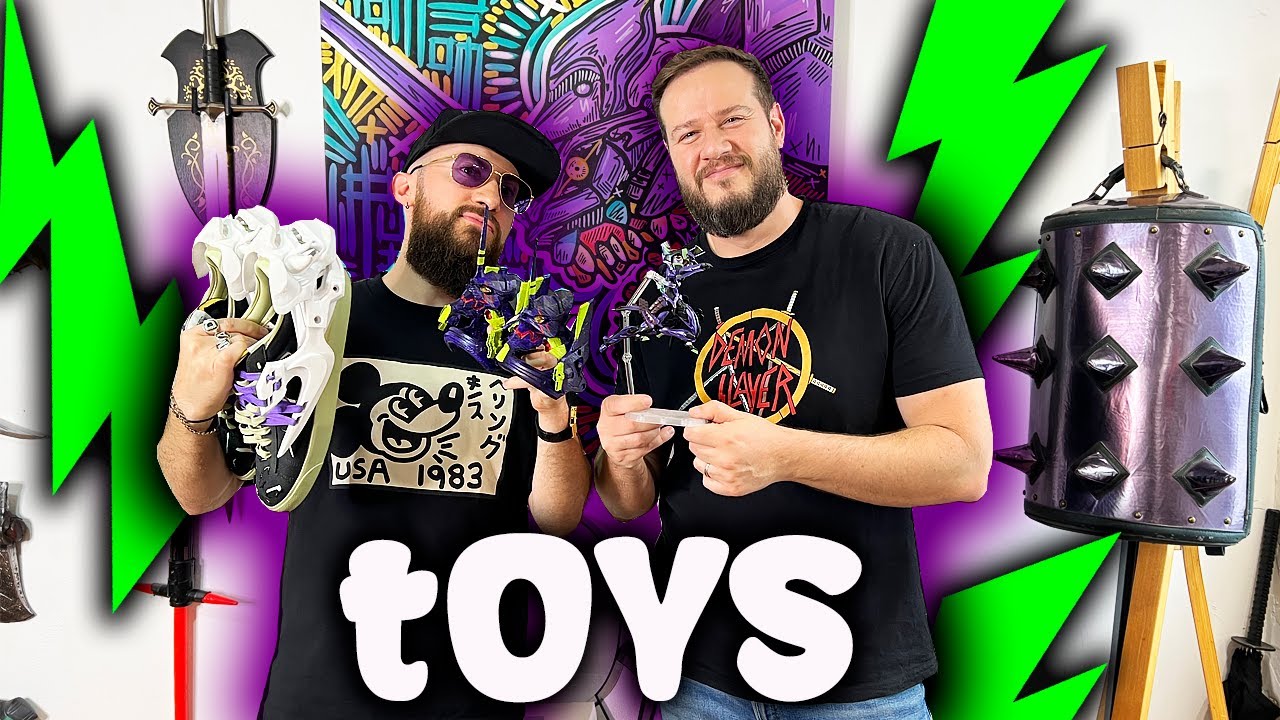
DIEGO RUZZARIN ME MUESTRA SU COLECCIÓN DE JUGUETES, SNEAKERS Y LIBROS
404.5K
Virgil Abloh, designer of Off-White, created a design philosophy based on deconstruction and improvisation. His approach reflects the historical experience of African American communities who, due to poverty, had to build with whatever materials they found rather than constructing exactly what they wanted. This philosophy manifests in shoes with mismatched details, visible seams, and an intentionally imperfect aesthetic. The speaker explains how this approach celebrates the beauty of imperfection and resourcefulness, creating a distinctive visual language that challenges traditional notions of perfection in design.
Click to watch →
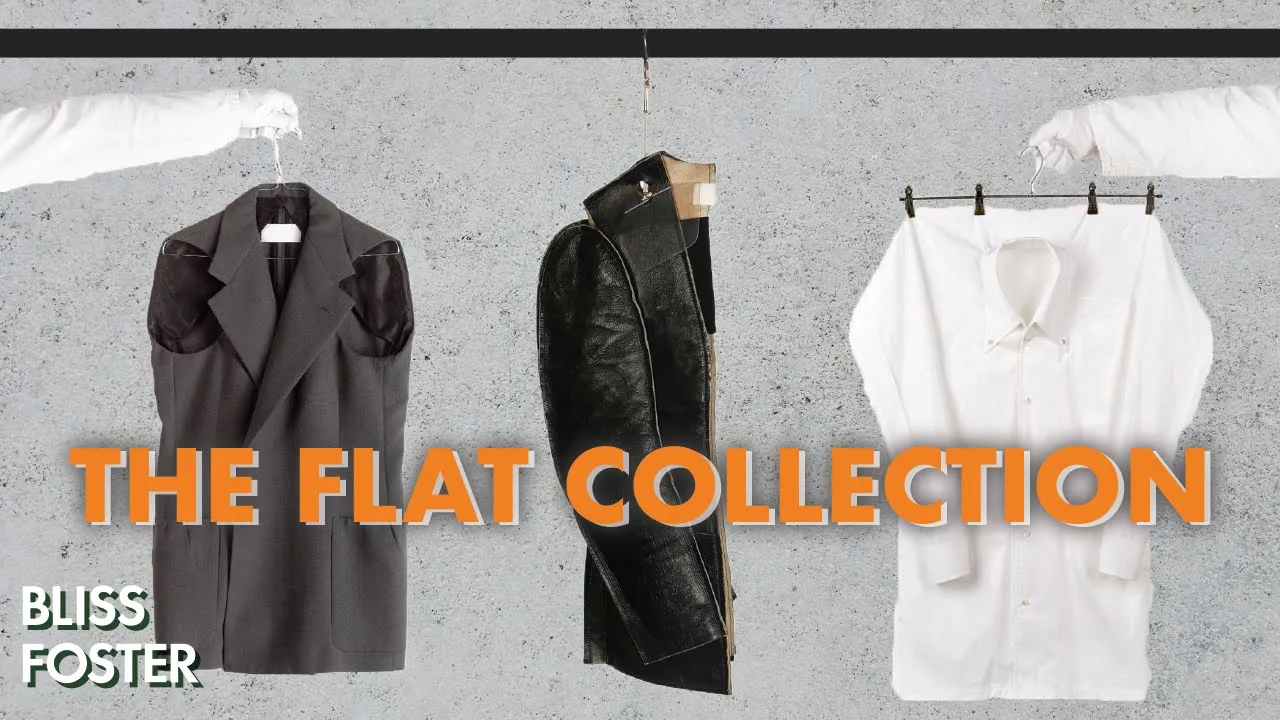
Margiela's Flat Collection - Spring 1998 Analysis
21.4K
Spring Summer 1998 marked Martin Margiela's first season at Hermes after years of negotiations. He had graduated from the Royal Academy in Antwerp in 1996 and was working at Jean-Paul Gaultier. Jenny Mirren, his business partner, opened the first Comme des Garçons store in Belgium in 1984 and sold Margiela's shoes to Rei Kawakubo in Tokyo. For 14 years, Margiela and Kawakubo 'orbited' each other professionally, with both independently creating collections with similar themes about women's bodies and clothing. Their joint showing was a business decision to share space, not a design collaboration, reflecting mutual respect for each other's work.
Click to watch →
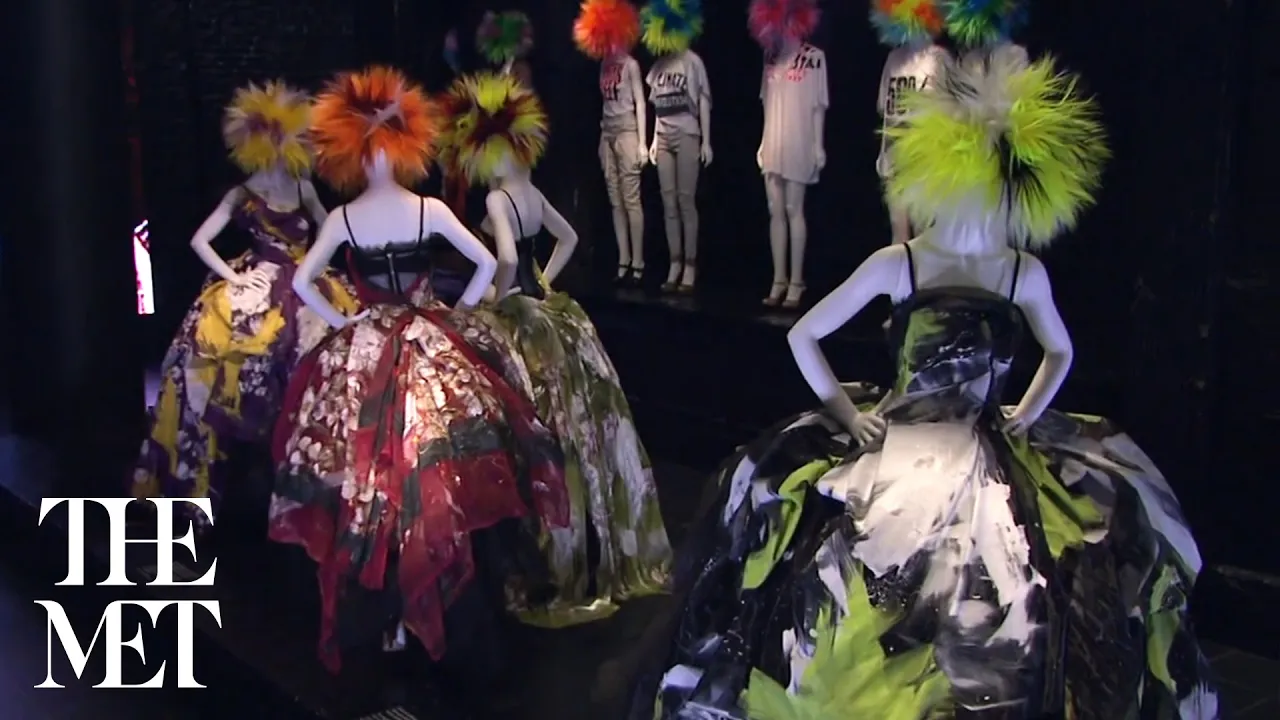
PUNK: Chaos to Couture - Gallery Views
101.9K
The punk movement's core philosophy of 'do-it-yourself' fundamentally reshaped high fashion by introducing postmodern concepts such as eclecticism, deconstruction, and mixing disparate stylistic references into single ensembles; despite seeming contradictory to the couture tradition of 'made-to-measure,' both approaches share underlying impulses of originality and individuality, with designers like John Galliano, Versace, Martin Margiela, and Rei Kawakubo drawing inspiration from punk's rebellious spirit, hardware aesthetics, bricolage (using found objects), graffiti, and deconstruction techniques to create innovative fashion statements that expanded the parameters of what fashion could be.
Click to watch →

El DISEÑADOR de MODA más MISTERIOSO de la HISTORIA | TODO acerca de MAISON MARGIELA
51.9K
Martin Margiela (1957-2023) was a Belgian fashion designer who revolutionized the industry through his philosophy of anonymity, unconventional show presentations in non-traditional venues, and innovative design techniques like deconstruction and visible stitching; he founded Maison Martin Margiela in 1988 and became known for his mysterious persona, with his white label system and refusal to give interviews creating a cult following that transformed fashion into an art form focused on the clothes rather than the designer.
Click to watch →
Deep Dive
The 'New Luxury' business model, analyzing how scarcity, 'drops,' and collaborations have redefined luxury brand economics.

7 Secretos del Lujo que Debes Saber para Ganar Más Dinero (César Val)
857.9K
Luxury brands can collaborate with mass-market brands while maintaining their luxury positioning—Dior's collaboration with Nike on Air Jordan shoes combined Dior's luxury status with Nike's performance and youth appeal, with only 8,500 pairs produced to create scarcity. Luxury brands use scarcity and strategic pricing to maintain value. When Dior x Nike shoes were priced at $2,000 with only 8,500 pairs produced, 5 million people wanted them. Luxury brands grow by strategically increasing prices while maintaining demand, as consumers have already paid premium prices for previous products. Luxury brands create value through consistent application of luxury principles—storytelling, distribution, pricing, and customer experience. This consistency builds brand equity and justifies premium pricing over time.
Click to watch →

The Luxury Bag Market Is COLLAPSING! Major Brands REVEAL Their Struggles!
287
The declines of luxury brands are symptoms of one massive shift: the death of manufactured scarcity. Social media killed the curtain, global overproduction killed the illusion, and transparent resale pricing killed the myth. This is why heritage houses, logo giants, and trend kings are all losing mystique simultaneously. The new era of luxury requires quiet craftsmanship, limited production, authentic scarcity, and hero silhouettes built to last. The houses that survive won't be the loudest—they'll be the ones that make restraint aspirational again. Luxury doesn't die; it evolves.
Click to watch →

😏 THE LOUIS VUITTON MURAKAMI SCAM - DON'T WORRY IF YOU MISSED OUT!
17.2K
Luxury brands employ scarcity tactics to drive demand for collaborations, including limiting initial stock allocation and creating artificial shortages. Brands may release fewer items than expected, then drip-feed remaining stock through second drops and sales associate communications. This strategy creates urgency and exclusivity, encouraging consumers to act quickly. The Murakami collaboration demonstrated this strategy when Louis Vuitton reduced initial stock from 10,000 to 5,000 bags. Luxury consumers demonstrated willingness to spend significant amounts on high-profile collaborations, often purchasing premium items despite high price points, challenging assumptions about consumer price sensitivity.
Click to watch →

Supreme Week 15 Droplist - GOODENOUGH Collab is FIRE! #SS25
2K
Limited edition products with small production runs create scarcity that drives consumer demand and resale value. The Supreme OAS speakers, with only a small number produced, are expected to either sell out instantly or sit unsold for a period before eventually selling out. This demonstrates how scarcity marketing works in luxury and streetwear markets. The Swiss Tools screwdriver at $58 represents a practical item with brand value, while the Nike Air Force One collaboration at premium pricing demonstrates how brand partnerships create value through limited availability and unique design elements.
Click to watch →

Why “Safe” Marketing Is Killing Your Brand
156
The speaker explains that brands do these collaborations intentionally to create scarcity, which allows them to sell out and then be sold after on the aftermarket. This becomes a novelty collection piece and allows buzz and dialogue within the industry. The speaker notes that this is an earned media value play because it's not really about price point. The key insight is that much of the watch industry is based on storyline and lore, and the collaboration taps into that.
Click to watch →
Deep Dive
Postmodernism and irony in consumer culture, exploring how self-referential design (e.g., Abloh's use of quotation marks) challenges traditional notions of authenticity.

Graphic Designe History
67.8K
By the 1970s, modernism seemed exhausted, and designers explored decoration, pop culture, and historical classical forms. Postmodernism rejected modernist tenets: form doesn't follow function, design can be expressive, elements can be appropriated from anywhere, and typography can be self-referential with alternative meanings. Irony was a large component—borrowing forms and treating them satirically. Robert Venturi and Denise Scott Brown introduced vernacular design in 'Learning from Las Vegas,' referring to common design language. Tibor Kalman's work borrowed from carwash signs and street typography as relevant as refined Caslon. Michael van der Bey's posters contrasted stylized classical columns with modern grids. The line of runners communicated values of pre-modernist classical harmony. Words could be reconstructed to change meaning or broken apart to highlight meaning—the representation of a word mattered more than information content.
Click to watch →
Style & Blitz Club – D. Diederichsen, New Models, Sophie Parkin, John Maybury, D. Ridgers, N. Coates
313
The postmodern shift added an extra step between signifier and signified, allowing subcultures to authentically express themselves while remaining inscrutable to hegemonic forces. The quote-based identity construction emerged as an alternative: presenting oneself not as sovereign decision-maker but as product of cultural influences carried as quotes. This acknowledged subjectivity as culturally constructed. However, quoting meant taking from sources with established meanings, requiring investment in those sources. White British artists quoting black musicians created different gestures than black artists—'look this is my history' versus 'I can own everything by quoting it.' When this distinction became obvious, quotes transformed from references into statements for which one could be held responsible, marking the end of postmodernism. The postmodern generation discovered that the old subcultural order of dressing down was itself unmarked, reflecting patriarchal panic. With new queer aesthetics emerging in the early 1980s, disadvantage became advantage—a statement in itself. Being pro-fashion became a queer negation of patriarchal capitalism, lasting only as long as consumer goods could genuinely serve that purpose.
Click to watch →

АННА ВИЛЕНСКАЯ - МОДЕРН, ПОСТМОДЕРН, МЕТАМОДЕРН
85.9K
Postmodern music is characterized by quotation, irony, and self-awareness. Composers use quotation as a primary strategy for dealing with the impossibility of originality, engaging with musical tradition while acknowledging they are not creating something entirely new. Postmodern music features disruption of traditional tonal relationships and a defensive stance protecting composers from harsh realities through artistic irony. Metamodern composers accept that classical harmony has been exhausted and that everything has been written, but they embrace this situation rather than being anxious about it. They freely use traditional elements without the postmodern anxiety about originality. The digital age has created an unprecedented saturation of music, prompting metamodern composers to explore silence and minimalism. Metamodern music creates a unique listening experience where listeners gradually become accustomed to repetitive patterns and eventually find them natural and comfortable. Metamodern music often achieves its effect through simplicity and directness rather than complex techniques, creating a sense of authenticity and naturalness that contrasts with the artificiality of postmodern quotation.
Click to watch →
![[SIC] Talks #108: Eugene Rabkin (Style Zeitgeist)](https://i.ytimg.com/vi/S53kGbLpv-c/maxresdefault.jpg)
[SIC] Talks #108: Eugene Rabkin (Style Zeitgeist)
346
Postmodernism has created a 'lazy mode of stuckness' in fashion through aesthetic relativism, democratization of taste, and culture of pastiche. The industry has broken down existing codes without substituting new ones, leading to navel-gazing about the past rather than genuine innovation. Virgil Abloh represents how postmodernist prestige has led to creative stagnation - his work reflected what's current rather than what's new. Eugene argues that everything should be called by its own name rather than using 'fashion' as a catch-all, distinguishing between 'Capital F Fashion' (designer fashion with conceptuality, innovation, and craft) and 'fast fashion' (commodity clothing). This destruction of meaning allows brands to recreate meaning in the service of marketing rather than being honest about what they produce.
Click to watch →
The 1975 "Sincerity Is Scary" Official Lyrics & Meaning | Verified
1.1M
Postmodernism in pop culture is characterized by irony, self-reference, and self-awareness within the form—such as characters who recognize they are part of a movie or narrative. These acknowledgments within art represent postmodern ideas where creators consciously reference the artificial nature of their work, creating layers of meaning that challenge traditional distinctions between reality and representation.
Click to watch →
Deep Dive
The cross-disciplinary legacy of Virgil Abloh, examining how his design philosophy translates into architecture, graphic design, and industrial product design.
Virgil Abloh's 2017 Masterclass: The Philosophy Behind Off-White & Fashion Innovation alvinsgallery
22.7K
Virgil Abloh, founder of Off-White and architect-turned-fashion designer, shares his creative philosophy emphasizing cross-disciplinary thinking, where design principles from architecture, engineering, and art can be applied universally across all creative fields. His seven core principles include: discovering your creative DNA through early memories, using quotes as a design tool for precision, editing only 3% from originals, embracing work-in-progress over perfectionism, questioning whether outputs need to exist, balancing tourist and purist perspectives, and maintaining openness to collaboration. Abloh argues that designers should not be constrained by traditional boundaries between disciplines but should instead use their foundational training to solve problems creatively in any domain, from furniture to music videos to fashion shows.
Click to watch →
OFF WHITE die GEHYPTESTE brand 2018?!
14.4K
Virgil Abloh, born in 1980 to Ghanaian immigrants and raised near Chicago, earned his architecture master's from Illinois Institute of Technology before joining Kanye West's creative team in 2003. He founded Off-White in 2013, drawing inspiration from designers like Kim Jones, Robert Klemm, and Fendi. His core philosophy involves modifying existing concepts by only 3-5%, creating familiar yet innovative designs. He employs provocation and irony, challenging gender norms by mixing formal and casual wear. His approach includes sampling and referencing from hip-hop culture, which critics question as originality but Abloh defends as legitimate creative practice. He maintains constant team communication via iPhone and has collaborated with brands like Levis, Champion, and Jimmy Choo.
Click to watch →
What is OFF-WHITE and is it Worth the Money??
401.9K
Off-white is an Italian brand founded by American fashion designer Virgil Abloh, who also serves as artistic director of Louis Vuitton men's collection. Abloh graduated with an engineering degree before pursuing fashion design. He worked with Kanye West designing merchandise and album covers while earning his master's degree in architecture. A notable aspect of his creative process is that he claims to think of most designs within just 10 minutes.
Click to watch →

Everybody Loves Virgil
84K
The Walter controversy prompted examination of Virgil's history of design plagiarism. Ryder Ripps, a designer who worked with Virgil since 2013, documented a 22-page PDF showing Virgil borrowed designs from his 2015 installation 'Alone Together,' including a jacket with 'pocket on the pocket' and a scarf with 'get this scarf very insightful stuff.' Virgil allegedly borrowed Ryder's logo concept for Off-White items and the Chrome Rose concept for the Pop Smoke album cover. Before 2015, Virgil was not associated with 'conceptual art,' but after 2017, he became linked to the term. Ryder Ripps stated Virgil took his Chrome Rose concept, ruined it with careless graphic design, and wrote about it. Despite the controversy, Ryder and Virgil reportedly sorted things out.
Click to watch →

Architecture and Fashion Overlap in So Many Ways
68.8K
Virgil Abloh, born in Rockford, Illinois and educated at IIT in Chicago, consistently brought fashion and architecture together in innovative ways throughout his career. For Louis Vuitton's men's fall/winter 2021 fashion show, he designed a space directly referencing Mies van der Rohe's motifs, including Barcelona stools, green marble, travertine floors, chrome cross-shaped columns, and gridded ceilings. He also created skyline jackets engulfed in 3D buildings, such as Paris-themed pieces featuring Notre Dame Cathedral and the Eiffel Tower, and Chicago-themed pieces including the Hancock Tower. These collaborations demonstrate how architectural concepts translate into wearable art.
Click to watch →
Origin & Vision
Hybrid Model
Future Trends
Origin & Vision
0:00- 1
Professor's rejection fuels creative drive and resilience.
- 2
Off-White acts as a laboratory for modern luxury ideas.
- 3
Teenage subcultures like skate and rap shape the brand.
Derivative Design and the Hyper-Commodification of Subculture
Critics of Virgil Abloh’s Off-White design philosophy argue that his work represents the hyper-commodification of streetwear rather than a genuine democratization of high fashion. Opponents point to his 'three-percent rule'—where an existing design is modified by just three percent to create a 'new' product—as a justification for derivative design and intellectual theft rather than revolutionary artistic expression. From this perspective, using quotation marks and deconstruction functions as a superficial veneer of irony that masks a complicity in elite consumerism. Instead of bridging social divides, critics argue that Off-White gentrified streetwear, co-opting authentic subcultural movements born from marginalized communities and repackaging them as exorbitant luxury status symbols for the wealthy. Ultimately, this viewpoint suggests that Off-White’s social commentary is hollow, serving as a clever marketing strategy that prioritizes hype, social media engagement, and capital accumulation over genuine artistic innovation or systemic critique.
The historical dichotomy between haute couture (high fashion) and streetwear, and how these markets traditionally operated independently.
Marcel Duchamp's concept of the 'readymade' and how appropriation and recontextualization function in modern art and design.
Basic semiotics in fashion, specifically how clothing serves as a visual language to communicate social status, identity, and subcultural affiliation.
The rise of digital culture and social media platforms (like Instagram) as primary drivers for brand building, community engagement, and consumer desire.
Deconstructivism in fashion design, comparing Abloh's methodology to pioneers like Martin Margiela and Rei Kawakubo.
The 'New Luxury' business model, analyzing how scarcity, 'drops,' and collaborations have redefined luxury brand economics.
Postmodernism and irony in consumer culture, exploring how self-referential design (e.g., Abloh's use of quotation marks) challenges traditional notions of authenticity.
The cross-disciplinary legacy of Virgil Abloh, examining how his design philosophy translates into architecture, graphic design, and industrial product design.
2.2M views48.8Klikes4:24@nytimesOriginal Release: 2017-09-28
As an architecture student, I had a professor that said I didn't have the pedigree or ideas or skill set to sort of work in any sort of important context.
So every no is perfect for me.
I thrive off a no.
Off-White is sort of my resume and mood board for an actual idea that I have for like the modern luxury brand.
It's almost like a laboratory.
For me, it's like my teenage years is the foundation for everything that I've sort of done afterward.
I was like an average, sort of, suburban kid that was skateboarding, listening to Nirvana, Beastie Boys, rap, Wu-Tang.
Like you say the music, you can think of a look.
And so as I started thinking about clothing, I was always like drawn to what my initial interest was, and that was T-shirts.
For Off-White, my contribution was I would take a young idea of streetwear, this idea that T-shirts and hoodies are important, but making that in the same factories as luxury houses.
So that's why we're in Italy.
This is men's team working on pre-collection next season.
Shoes are happening in the back.
This is the women's room.
I just moved to this newer space because the concept is growing.
How's it going?
New office, it's nice in here.
But I have no desk in the world.
[LAUGHS] I travel probably, like, 320 days a year, eight flights a week-- Chicago, Frankfurt, Milan, London, Berlin, Stockholm, Rotterdam, Amsterdam, Vegas, and LA.
It's a lot.
I work on the street literally, like phone in hand.
I feel like Off-White be one of the truly first, sort of, like, a luxury brand that's been just built from social media.
It behaves in this sort of hybrid, in between a traditional system and a new system less than streetwear, that clothes just come out at different times.
They're posted on Instagram, and consumers can buy them.
And I'm interested in that hybrid in between them both.
I'm directly pointed at this generation that hasn't been messaged luxury to yet.
As an Off-White sort of look, I'm looking to put this with like a T-shirt and jeans perhaps.
This Millennial young person, they love to covet things.
They're sort of waiting for a designer that sort of faced to them.
I want to make a modern version of her wedding dress.
I like this.
I like seeing the shoulder.
I love this idea that Off-White can go from like a study graphic T-shirts all the way to a wedding dress under this sort of muse that I've dictated for the season.
This current collection that I'm developing, choosing Princess Diana, the muse, is sort of this resonance.
It's super like young Diana.
Yeah, I couldn't be happier.
It looks like the sketch.
Can you walk?
This is always what I wanted to do.
And no one does it, haute couture meets street.
But people say it all the time.
I've had the fortunate ability to sort of craft my own path.
People ask me all the time, do you feel some sense of like achievement or fulfillment?
And the answer's zero.
I have no-- there's no feedback loop that's like, yes.
I'm only interested in my making new things, like getting to this place of the next idea.
I think bell bottoms are going to come back because everyone has in their closet skinny jeans, boyfriend jeans.
I also like for women, let's buy dickies, girls in dickies pants, cropped.
Up Next

11:08
Commercial Propaganda Analysis: 2014 TV Ads (Media Literacy)
@RussellBrand
209.6K views•2014-07-10

12:54
Triumph of Orthodoxy Icon: Byzantine Art & History Explained
@BenCallan
2.1K views•2024-08-06

9:49
FastAPI vs Flask vs Django: Choosing the Right Python Web Framework
@TechWithTim
302.5K views•2024-05-26

1:42
Game of Thrones Opening Credits: A Cinematic Analysis
@gameofthrones
46.3M views•2011-04-18
Related Study Plans & Knowledge Roadmaps
Structured learning paths in General & Interdisciplinary Studies
general-studies
Elevator Engineering: History, Physics & Cities
01From Hoists to Safety Brakes: The Dawn of Vertical Lift
02Hydraulic vs. Traction: The Engineering Physics of Elevators
03Modern Speed, Safety, and Algorithms
+ 2 more learning modules
12h5 modules
Explore Roadmap
general-studies
Rubber: Material Science, History & Geopolitics
01Origins of Natural Rubber & Mesoamerican History
02The Chemistry of Natural Rubber & Vulcanization
03The Geopolitics of the Rubber Boom & Colonization
+ 2 more learning modules
12h5 modules
Explore Roadmap
general-studies
Containerization: Evolution, Logistics & Trade
01Ancient Trade & Bulk Cargo: Amphorae to Barrels
02The Industrial Revolution & Cardboard Packaging
03The Containerization Revolution: Malcom McLean
+ 2 more learning modules
12h5 modules
Explore Roadmap
general-studies
Textile Tech: Evolution, Labor & Global Impact
01Pre-Industrial Textiles: Handloom & Cottage Industry
02Mechanization: The Spinning Jenny to the Power Loom
03The Factory System & Global Labor Transformation
+ 2 more learning modules
10h5 modules
Explore Roadmap