





![사실주의, 자연주의, 인상주의 미술- 19세기 근대미술에 대해 알아보자! [배워볼까 서양미술사 #08]](https://i.ytimg.com/vi/d4EoZuPAKvE/hqdefault.jpg)














![[RDVI-9] André Gunthert - Images, luttes sociales et stratégies de visibilité.](https://i.ytimg.com/vi_webp/8X1hLaSvre8/maxresdefault.webp)


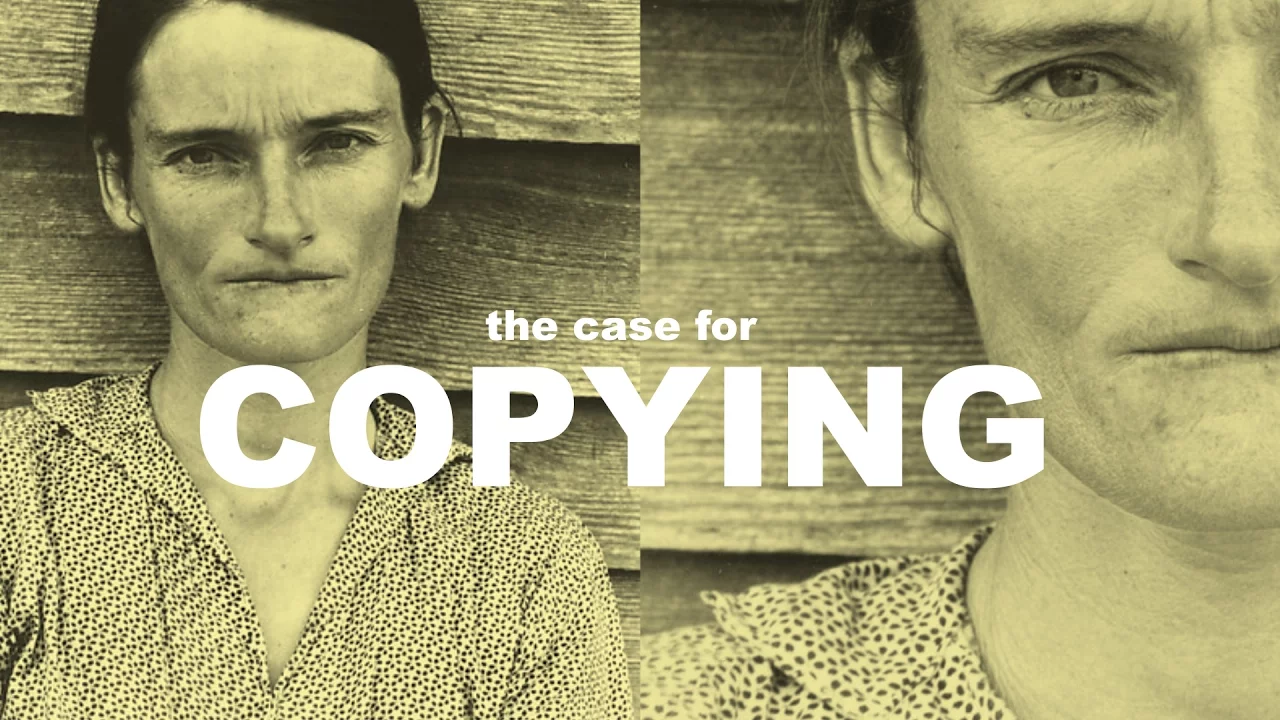
Artistic appropriation—where artists borrow, copy, or transform existing works—is a long-standing practice in art history, with its ethical value determined by transformative use rather than mere reproduction; while artists like Roy Lichtenstein faced accusations of theft for reproducing comic book images, their work can be justified when it adds new meaning, challenges hierarchies between high and low art, or enables critical conversations about authorship and artistic boundaries, as demonstrated by historical precedents from Marcel Duchamp's Fountain to Jasper Johns' Flags.
Art Theft and Appropriation in Fine Art History
Added:The traditional Western concepts of artistic authorship, originality, and the historical 'genius' archetype of the artist.
A foundational understanding of modern art movements, specifically 19th-century Realism (Manet), Dadaism (Duchamp), and Pop Art (Lichtenstein).
The academic tradition of copying masterworks as a standard historical method of artistic training and pedagogy.
Basic distinction between artistic inspiration, homage, replication, and plagiarism in visual culture.
Landmark legal battles over fair use and copyright infringement in modern and contemporary art, such as cases involving Richard Prince, Jeff Koons, or Shepard Fairey.
Postmodern art theory, specifically ideas surrounding pastiche, simulation, and Roland Barthes' concept of 'The Death of the Author'.
The use of appropriation as a tool for institutional, feminist, and post-colonial critique by artists like Sherrie Levine, Barbara Kruger, and Kehinde Wiley.
The ethics and implications of appropriation in the digital age, including internet remix culture, meme propagation, and AI-generated imagery.
72.4K views3.2Klikes35:08Original Release: 2023-06-03
foreign do you want to know how to steal art in this video I want to look at the art of stealing or the stealing of art or the art of stealing art not the sneaking in a museum and taking art kind of theft but that taking a picture of an artwork in a museum and reproducing it kind of theft I want to look at artists who were inspired who borrowed who even stole from other artists I want to ask questions about the history the relevance and the ethics of this theft also I'm stealing a lot of the ideas and examples for this video from this book beg steal and borrow Artists Against originality by Robert Shore by the way I'm only posting a video a month now because I'm trying to make these videos more quality a bit longer than they used to be and that's taking a lot of time and also means Less ad Revenue because that means less videos so if you want to really help out this Channel and keep these long-form videos coming check out patreon.com forward slash the canvas it really really helps out and it gives us security that allows me to make these videos without stressing too much about Revenue it'll be really really appreciated thank you so much the hand though it's so much harder than I thought it would be is that pretty good oh yeah let's add the yellow Bob Ross I am Bob yeah I'm like a modern Bob Ross except I don't I don't have a palette so I'm just putting the paint straight on the on the paintbrush you just do it very gently how does he how does he say it [Music] oh yeah we got some uh we got a lot of happy accidents it's a happy disaster wow that's beautiful or to say that hands are really hard to paint I can't even Trace hands look at that all right now we're going for the white a little touch of white to lighten things up still trying to be Bob Ross here all right so if you want to see the final result you have to watch the whole video I want to start this journey by looking at Roy Lichtenstein and in many ways I want to Center this journey around him or around this question is Roy Lichtenstein a thief he's extremely known for copying he's not the first nor the last to copy he's not even the best copier he reproduced images with minor changes take his most popular 1963 wam for example his version is quite different than the original comic book panel taken in DC Comics All-American Men of War number 89. he took out the speech bubble shifted the caption erased some planes out of the composition changed the colors and changed some motifs on the plane the motifs on the plane actually came from All American Men of War number 90.
his 1963 drowning girl is a cropped reproduction of Run For Love from Sacred Hearts number 83. in here the speech bubble is shifted and the waves are slightly changed his 1964 crying girl is also cropped and the background is completely removed a year before that his 1963 crying girl you know what we'll keep that one for later keep it in my background is so scary it went from like let's make a video about appropriation and pop art and this is what you get now many have accused Lichtenstein of plagiarism or theft for reproducing almost identical images to the ones he found in comic books the man took images created by comic book illustrators reproduced them hung them in Galleries and made a fortune out of it you can see how that can be controversial but is it theft when I'm asking her if it's theft I'm not asking if it fits the definition of theft but if his copying is ethical valuable or justifiable when we look at the history of art it's obvious that copying has been an essential part of the practice I could go on and on showing you examples of artists copying from Van Gogh copying Japanese prints to Michelangelo who got his first Patron in Rome by getting caught selling fake Antiquities he had forged he was such a great copier or Thief that Cardinal riario the buyer of the fake started supporting Michelangelo I think perhaps the most important instance of copying in art history can be seen in Engravings obviously Mac Antonio rymandi is probably one of the most famous engravers and printmakers of the Renaissance being the only printmaker in visari's lives of the artists raymondi was considered to vasari at least an artist though raymondi made his entire career on copying he copied Albrecht juror which led to some of the first legal battles about copyright he printed pornographic content which led him to do some prison time and he famously copied Rafael though it could be relevant to the discussion I don't want to look at the evolution of copyright through juror and raimondi and because I don't want to get demonetized I won't do the same mistake as raymondi and show lewd Engravings but I do want to look into Raphael's the Judgment of Paris Raphael drew the Judgment of Paris for raimandi to copy in this case it would be more of a collaboration than appropriation however if you've seen my video on or know anything about additionist then you know where I'm going with this if you don't know we're about to zoom in all the way here this is not entirely original is it it's been speculated that Raphael took inspiration from his rival Michelangelo for this figure in any case however this copy of Raphael would be copied later on in one of the most influential modern paintings some would say the first modern painting or the luncheon on the grass by eduard Mane is an 1862 painting which was scandalous for various different reasons won its provocative subject matter being a contemporary nude woman looking at the viewer in broad daylight to its imposing size breaking with the tradition of large paintings being reserved for historical or religious paintings three it's poor execution at least when compared to academic paintings the bather in the background looks huge the skin tones on the nude are flat and you see brush Strokes all over the composition this scandalous painting alongside Olympia two years later symbolized a complete break from the Traditional Academy and opened up the possibility for further exploration experimentation and expression now the reason why I'm bringing up religious is because this painting arguably the first modern painting is mostly copied from raymondi's own copy of a Raphael drawing Olympia by trading the loyal dog with a cat which apparently represents prostitution was mostly copied from titian's 1534 Venus of verbino which is guess what copied from the dressed in Venus by Joe Joni though Titian might have worked on it too but it doesn't stop there the dressed in Venus might have itself been copied from an illustration by Francesco Colonna in his 1499 book polyphily and to go back to religion isoleb it's also been copied again and again notably by Pablo Picasso but also Claude Monet did Picasso Monet and manes still you may argue that it's a bit of a stretch to say that monesto from manes de Jane soleb and I'd agree it might even be a stretch to say that manes de Janae is a copy of raymondi's Engraving though it would be fine to say that raymondi's engraving is indeed a copy of ravel's drawing even if we haven't seen the original drawing perhaps it's not stealing or copying but taking inspiration or even applying your own style to an established artwork image or idea in order to emphasize that style foreign I pledge allegiance to the flag of the United States of America this is where we uh we actually sing it oh say can you see take for example Jasper John's Flags I love these flags and trust me it's not because I'm a patriot I'm not even American thankfully if you don't know anything about these flags you may not care about them they're just reproductions of the American flag probably one of the most common symbols to any American but they're absolutely fascinating let me explain why in the mid 50s Jasper Johns a 24 year old artist painted this using this design took care of a great deal for me because I didn't have to design it that gave me room to work on other levels see in the mid 50s with notably Jackson Pollock the subject of paintings instead of being figurative as it has always been became the paint itself the drips the brush Strokes the colors Johns was able to camouflage the brushstrokes his encaustic painting behind the representation of a subject a subject so mundane that to appreciate it you need to look at the technique with which it was made in a way John's made a painting which isn't only about the gesture as Pollock was but also not only about the symbol but a perfect mix of both the painting of a flag is always about a flag but it is no more about a flag than about a brush stroke or about the physicality of paint so John's copied the design of the flag to concentrate on and give emphasis to his own style perhaps a lot of the copying done in art history has been made with this in mind to hone in your style to focus on your Technique and be able to compare your version of a painting with its original and see what you've done and what you can do differently did Jasper Johns steal well he stole or borrowed the icon of the American flag to concentrate on his own visual language a process repeated all throughout history John's however did it with the Nikon that seemingly has no author or whose author is kind of irrelevant at this point I'm sorry Francis Hopkinson at this point I don't know if we can call this theft at all it is copying but John's didn't steal a composition from another artist as Manet did for example by the way is this stolen from Jasper John's or is it just a painting of a flag did I steal from Jasper John's did I steal from America perhaps to look at the ultimate form of theft and art we'd have to look at the whole idea of De tournament comes from the 50s letterist International and situationist international these were anti-capitalist movements who through ART revolted against the status quo the situationist international was founded by the very popular philosopher gidobar and his friend the artist Oscar Yorn in the first 1958 situationist Journal they defined as the integration of present or past artistic Productions into a superior construction of amelior in this sense there can be no situationist painting or music but only a situationist use of those means in a more Elementary sense within the old cultural spheres is a method of propaganda a method which reveals the wearing out and loss of importance of those spheres the purpose of the tournament is to use present or past artistic Productions against themselves to use them to reveal their own irrelevance to reveal the weakness of the Spheres which they reinforce thus they denounced the current state of culture and thus they are propaganda propaganda in the sense of conveying a political message by the way not of deceiving you now to look at the tournament I want to look at asgarjorn a Danish artist Yorn a communist was involved in the resistance movement against the Nazis in Denmark he was the first to translate Kafka in Danish co-founded the situationist international with kidabar and co-wrote books with DeBarge and to understand situationism Yorn and titolium you have to understand its social critiques and its rebelliousness which can be perfectly captured when in 1964 Yorn was sent a large sum of money after being awarded the Guggenheim award Yorn sent a telegram in return to Harry F Guggenheim the president of the Guggenheim and it's it's pretty funny go to hell with your money bastard by the way it's in all caps refuse price never asked for it against all decency mix artists against his will in your publicity I want public confirmation not to have participated in your ridiculous game yarn now let's look at yorn's De tonyma or as he called it his modifications [Music] Yorn would modify paintings he found in flea markets and this one is my favorite the disquieting duckling made in 1959.
a giant Duck floats on a lake in front of a cozy rural cabin that's it in terms of what it depicts but how it depicts it is what gives it value there's a disquieting contrast between the landscape and the duckling the landscape is probably a mass fabricated Decor painting the kind that's sold in a department store the kind where the artist Singularity is dulled out during the mass production process the dark in all its boldness colors and textures breaks the passive Serenity of the landscape it's ugly obviously but in its ugliness it's singular in one composition you have the singular the unique clashing with the banal and the ordinary yarn through this composition gives a great example of the objective behindama by painting the disquieting duckling he's establishing a visual critique of Decor paintings did asgar Yorn steal he definitely used someone else's painting vandalized it and claimed it all as his own it does help that the original paintings were often made by invisible artists or artists working on a production chain for a retailer if it is theft it's less problematic when put in that light earlier in the same decade the dadaists were also appropriating bits of Media newspapers and pictures to construct new images Hannah hoax 1919 cut with the dotta kitchen knife through the last five are beer belly cultural Epoch in Germany is a great example of it what better way to represent a cultural Epoch than to use cultural elements from that epoch did Hannah Hoke steal well sure but she stole by cutting different cultural elements portraits pictures Wards out of their context and combining them all together to create a new image one representing a cultural Epoch through the artist's eyes we've been looking at different types of borrowing copying or stealing to determine if Lichtenstein stole a lot of the justification for copying or taking inspiration from someone else's work comes from its transformative use Titian Jasper Johns asgarjorn Hannah Hoke as we saw all of them stole but they transformed what they stole gave it a second life infused the stolen image with their Artistry with their creativity in every case their theft is Justified because they transformed every image that was given to them adapted them to their style to their art to their vision of the world they used what they stole not as an end in itself but as means to an end but many of you may think that Lichtenstein wasn't transformative enough in his art to justify its theft he barely changed the composition from the images he found is a great example of how just a little change can be enough to make the use of a stolen image transformative however there have been times in art history where some artists stole an image or an object claimed it as their own without doing anything to it these cases perhaps can help us better understand if Lichtenstein stole or not all right time baby all right so this is um it's pepiamashi I did my best I did for you so you better appreciate it I forgot I have to write our mutt so [Music] R is there a DOT hold on okay there is a DOT there is a DOT right here looks like it was made by a child [Music] all right and there's a little date under all right they write 1917.
we're going 2023. should I put 1917 to copy and be faithful to the copy or adapt it to my own to 2023.
[Music] there you go all right I already said it but I'll say it again it's urinal time baby I feel like every time I talk even if just briefly about art history I always bring up Fountain by Marcel dushan in 1917 massage sent an upside down urinal with the signature R mutt 1917 on it to an exhibition which supposedly accepted any art any except Fountain it sparked a discussion on what is art what makes an object art and the artist's role in the making of an artwork Louise Norton would greatly summarize the situation in the data magazine the blind man whether Mr mutt with his own hands made the fountain or not has no importance he chose it he took an ordinary article of Life placed it so that its useful significance disappeared under the new title and point of view created a new thought for that object the artistic process was not to create a new object or to modify an old one but to create a new thought for that object with Fountain zusha didn't create anything at least materially arguably there is a signature but the transformative use if there was one was in the recontextualization and the reconceptualization of the urinal by placing the urinal in an art exhibition by placing this specific object in this specific context zusha created a new artwork for us to engage with an object with which we would have never engaged with was it not for his intervention this intervention though it wasn't material was still art but did Marcel steal desha bought a urinal and didn't do anything to it he doesn't have the justification of transforming the initial object into a new one the urinal before and the urinal after the exhibition is the same but dusha by appropriating or stealing this object transformed its meaning unlike most artists he didn't need to create the object to make it art he created the concept which is all he needed to make art added to that the urinal was mass produced without an author per se when we say that an artist steals or plagiarizes we usually mean that they're taking a work idea style or composition from another artist in this case the original urinal was never art to begin with it was never the product of an artist but what if it was what if an artist took another artist's work to make it their own we're not talking about appropriate creating a found object but appropriating someone else's art and not transforming it over two years ago I made a video on Cowboys capitalism and appropriation probably my most underrated video in which I present the work of Richard Prince the first photograph to be sold for over a million dollars is by Prince and it's his 1989 photo of a cowboy but this is a controversial picture because it was stolen it's a picture of a picture it's a picture of a picture but produced thousands of times as a Marlboro commercial did Richard Prince steal were probably the closest we've ever been so far in this video to an artist stealing however one can argue that Richard Prince was transformative in many ways first he cropped the picture creating a new composition from the original second he made it much larger creating a new way of engaging with it and creating a new context through which to engage with it third this new context isn't only given by the shift in size but the shift in the way Prince makes us perceive this work as an ad it's easy to overlook the beauty of an image we see ads every day and don't consciously pay attention to them most of the time Prince cropped out the propagandistic elements of the image to give us an image not about cigarettes but about cowboys he's showing us how easy it can be to overlook art in our day-to-day lives once it's been co-opted for propagandistic uses but what about Sam Abel Sam who you may ask and that question is a problem see when zusha used a urinal to make it art he didn't steal it from an author or an artist but when Prince took a Marlboro ad and made it art he stole from Marlboro yes who cares but he also stole from Sam Abel the original photographer of the Cowboys but Abel wasn't credited for the Marlboro ad either he arguably lost his authorship to the corporation he was invisibilized already through the commercial processing of his images there are many questions stemming from Prince's work and perhaps his appropriation or his theft has value because it's forcing us to ask these questions to talk about them to have conversations about artists art commercialism capitalism Etc all right the sun is acting funky so I'm going to start reading like this I shouldn't all right it's it's for the light is it looking good perfect finally I want to look at the most thieving of Thieves the queen of copying but before we do I want to go back to lichtenstein's 1963 crying girl well this isn't exactly the lichtenstein's 1963 crying girl or maybe it is it could also be a 1966 painting by Elaine Sturtevant I'm gonna finish this painting I'm going to put some paint in my palm like this my hand is the palate this is making me really appreciate the talent that is required to copy [Music] oh actually her eyelashes are not the right [ __ ] they're here [Music] lines in her hair as well [Music] you know how Bob Ross talked about um happy accidents and stuff like that I'm just gonna say oh it's expressionistic I wanted to do this this is what I wanted to do it's just my style [Music] oh and the eyes this is the uh fine Finishing Touch ta-da this is how you steal Lichtenstein [Music] as Sturdivant did it Sturdivant made Lichtenstein frightened girl in 1966 an almost perfect copy of lichtenstein's 1963 crying girl it's not forgery though or maybe it is but it's what Sturdivant was known and praised for during her entire career she sold this work for 710 500 it's a fake Liechtenstein an original Sturdivant she didn't only copy or repeat Lichtenstein who made this if you answered Andy Warhol you'd be wrong it's Sturdivant who made this flag if you answer Jasper John's you'd be wrong it's Sturdivant who made this painting if you answered Goya you'd be right Sturdivant didn't copy Goya in any case you might think artists despised her for copying their style but they didn't Andy Warhol famously gave her the silk screen so she could reproduce his flowers Warhol would even say when asked about his technique I don't know ask Elaine when Robert rauschenberg's combined painting featuring a fly by Jasper Johns was stolen John's asked Sturdivant to recreate it for him did Elaine Sturdivant steal I think in this case it would be hard to argue that she didn't now did Roy Lichtenstein steal let me present to you the strongest case I can find to defend him from there I guess you can decide alright so is lichtenstein's work transformative in its use as it is in the works of Mane Monet Picasso or Yorn no it isn't Lichtenstein isn't adding much to the original images there's little to no transformation when there is it's extremely minor not enough to call it transformative what about it being transformative not in its material but in its context as jashon did with fountain Lichtenstein made the paintings incredibly larger giving A New Perspective that you might not necessarily have in a comic book he also turned it from a commodity to be casually bought in a comic book store to a rarefied unique and engaging artwork as Duchess Fountain made us think about what art is Lichtenstein is making us think about what art isn't by making us interact with a blown up comic we are faced with the fact that we don't give as much time and consideration to books which not only have this type of image but which are filled with hundreds of these images also I think it's really important to note that Liechtenstein wasn't reproducing these images and saying he made them from scratch now that would be proper theft and objectionable but look at the first ever painting he did in this style in 1961.
in look Mickey Lichtenstein isn't claiming he created Mickey Mouse Donald Duck or even the joke he's not hiding the fact that he's reproducing the scene he's not lying to anyone there's no deception here also like in Jasper John's work there's also the argument that by replicating these already existing images Lichtenstein was able to focus on his style he would reproduce large bende dots a printing process invented by Benjamin Henry day to mimic the mass production process of Prince but there's something incredibly different between Jasper John's flag Masa Duchess Fountain Andy warhol's Campbell Soup cans and Roy lichtenstein's Comics I think the reason why you might feel uneasy with lichtenstein's work more than any other is because of the authorship of the original work we don't really care about the person who made or designed the urinal nor do we care for the person who made the design of the Campbell Soup can or the American flag well who cares about its author anyway however the artist behind each drawing reproduced by Lichtenstein are perhaps more significant and isn't that interesting Lichtenstein is often criticized for his own art being labeled High art and the Art of the comic being labeled low art but the distinction between the comic book artist the soup can designer the Euro lawmaker and the fine arts artist isn't about the degrees of art but if it's considered art at all but to go back to lichtenstein's appropriation of low art and how much we care for the artists he stole from one thing we must reconsider is who cares about the designer of the Campbell Soup can who cares about Francis Hopkinson who cares about the designer of the urinal used for Fountain which original artist we care about probably depends on how much artistic worth we give them and I think here lies our issue with Liechtenstein when we're producing a flag Johns was undermining in a way the authorship of the original but the American flag came to represent so much more than its design so we don't really care for Francis Hopkinson when appropriating a urinal desha was undermining the authorship of whoever designed and made it but we're willing to drop the claims of authorship from whoever designed the urinal because well it's a urinal it's not art when we're producing Campbell Soup cans Warhol was undermining the authorship of whoever designed the original Soup cans but were also willing to drop the claims of authorship from whoever designed it because it's as we commonly assume done purely for its function it has little to no artistic worth when we're producing Liechtenstein Sturdivant was also undermining the authorship or the claim to that image from Lichtenstein but were willing to let it slide because she stole from prom established artists who we couldn't mistake as being the original authors of the work but when we're producing a comic book image Lichtenstein is undermining the authorship of the artist who made that comic book image but these artists are undeniably artists at least to today's standards we're willing to give the comic book artist the authorship that we aren't really willing to give to the soup can designer Lichtenstein reveals I believe not only the hierarchy between low and high art but also between who we're willing to give the status of artist 2 and the simple worker whose authorship is erased by the market utility of their design so did Roy Lichtenstein steal yes yes he did as did many many artists before and after him was his theft harmful I don't think he did particularly any harm to the artists he copied from because had he not done it nothing would have changed for them but I think there might have been a harm done in the sense of undermining their authorship an authorship that they need to fight for that is not automatically given to them as it is for fine art artists that being said there's value to Lichtenstein being able to steal and being successful with it from it he enabled this conversation which is what art to me is all about he's making possible the super constructive and totally not mean comment section below and he enabled the possibility for me to make this video which you might have liked so much that you'd subscribe to the channel you liked this video and you decide to support me on patreon.com for Slash the canvas to help me continue making more videos by doing that you join Mike wax Roman Brando Russell chinchilla and every other Patron who make these videos possible these videos are taking longer and longer to make meaning less videos meaning Less ad revenue and I can't understate the importance of all my patrons thank you to all of you and see you in tomorrow's live stream goodbye
Up Next

41:47
How to Paint Roy Lichtenstein Ben Day Dots: Art Technique Tutorial
@neilmiddleton2146
16.3K views•2021-07-25

114:18
Christian Iconography: History, Theology, and Meaning | Fr. Panayiotis Papageorgiou
@Trisagionfilms
58.8K views•2020-02-21
11:42
Abstract Expressionism: The Irascible 18 Explained
@Shawn.Grenier
134.2K views•2020-01-31

16:34
Earliest Depictions of Jesus in Art: 10 Ancient Images Explained
@UsefulCharts
5.9M views•2022-06-03
Related Study Plans & Knowledge Roadmaps
Structured learning paths in Art History
art-history
Gothic Cathedrals: Engineering, Light & Society
01The Birth of the Gothic: Romanesque to Suger's Vision
02The Structural Triad: Pointed Arches, Ribbed Vaults, and Flying Buttresses
03Theology of Light: Lux Nova and Sacred Geometry
+ 2 more learning modules
14h5 modules
Explore Roadmap
art-history
Pre-Raphaelites: Realism, Symbolism & Critique
01The Victorian Art Establishment and Academic Formula
02The Founding of the PRB and Radical Realism
03Medieval Revivalism and Literary Symbolism
+ 1 more learning modules
8h4 modules
Explore Roadmap
art-history
Street Art: From Subways to Art Market
01Subcultural Origins in Philadelphia and New York (1970s)
02The Subway Era and Style Wars (Late 1970s - 1980s)
03The East Village Scene and Early Gallery Crossover
+ 2 more learning modules
10h5 modules
Explore Roadmap
art-history
Classic Maya Art: Iconography, Glyphs & Ritual
01Foundations of Classic Maya Visual Culture
02Deciphering Maya Hieroglyphs & Text-Image Integration
03Sacred Geography and Cosmological Architecture
+ 2 more learning modules
14h5 modules
Explore Roadmap