Traveling to authoritarian regimes like North Korea raises ethical concerns because tourists may be financially supporting oppressive governments, experiencing only staged versions of reality rather than authentic culture, and potentially normalizing authoritarian behavior through social media content.
The Ethics and Realities of Traveling to North Korea
Added:Deep Dive
The political structure of the DPRK, including the Juche ideology and the authoritarian rule of the Kim dynasty.
Северная Корея - Реальная Жизнь и Вся Правда о Самой Закрытой Стране в Мире
1.2M
North Korea is officially a one-party socialist republic but functions as a hereditary absolute monarchy with the Kim family ruling for 70 years. The official ideology is Juche (self-reliance), represented by the Juche Tower built from 25,500 concrete blocks symbolizing each day of Kim Il-sung's life. Leadership succession: Kim Il-sung (1948-1994, 46 years), Kim Jong-il (1994-2011, declared almost divine), and Kim Jong-un (2011-present, took power at 28). The country developed nuclear weapons to protect its rule.
Click to watch →

Северная Корея открыла границы! Пхеньян, Вонсан, горнолыжный курорт Масикрён.
1.9M
North Korea, officially the Democratic People's Republic of Korea (DPRK), is a socialist state formed in 1948 after the Korean Peninsula's division. The country adopted socialism with the local ideology of Juche (self-reliance). Unlike democratic South Korea, North Korea does not recognize the South's legitimacy, viewing it as an illegally occupied territory. The nation is ruled by the Kim dynasty: Kim Il-sung (founder), his son Kim Jong-il, and grandson Kim Jong-un. This hereditary leadership structure is unique in modern political history. The country is characterized by strict control, propaganda, and isolation, making it one of the most closed nations globally.
Click to watch →

COREIA DO NORTE: ENTENDA TUDO PARA O VESTIBULAR | DOSE DE ATUALIDADES
55.2K
North Korea operates under a unique political system based on Juche ideology, which emphasizes self-reliance and the supremacy of the leader. The country is ruled by the Kim dynasty across three generations: Kim Il-sung (founder), Kim Jong-il (son), and Kim Jong-un (grandson). The ideology has been elevated to constitutional status, making the leader's word essentially law. A key feature is the concept of the 'eternal leader,' where Kim Il-sung was declared immortal two years after his death, creating a dual leadership structure that maintains the Kim family's power across generations.
Click to watch →

90 de zile în Coreea de Nord: incursiune în inima teocrației comuniste
14.9K
This segment explains Juche, North Korea's official state ideology first articulated by Kim Il-sung in 1955 and adopted as official state ideology in 1972. Juche is based on three principles: economic self-sufficiency, political independence, and self-defense capability. The core concept is that the Korean people are masters of their own destiny. The segment explains that Juche was developed partly to justify North Korea's separation from the Soviet Union and to establish the legitimacy of the Kim dynasty. The ideology combines elements of nationalism, self-reliance, and anti-imperialism, providing the philosophical foundation for the regime's isolationist policies.
Click to watch →
Kim Il-Sung: «Presidente Eterno» de Corea del Norte
50.2K
This concluding section examines North Korea's distinctive political and economic development. It covers the formalization of Juche philosophy in 1955, emphasizing self-reliance and state control over all aspects of life. The narrative traces the economic challenges facing an isolated nation, the devastating famine of the late 1990s that killed an estimated 2 million people, and the hereditary succession model that transferred power from Kim Il-sung to his son Kim Jong-il in 1994, and subsequently to Kim Jong-un in 2011, establishing a unique political dynasty.
Click to watch →
Deep Dive
The history of the Korean War, the division of the peninsula, and the ongoing geopolitical tensions between North and South Korea.
#90 COREIAS À BEIRA DE UMA GUERRA (Kim Jong Un ameaça aniquilar Coreia do Sul e Estados Unidos)
201.9K
The Korean peninsula was divided after World War II when Allied powers and the Soviet Union split the region. The US supported the capitalist faction (South Korea), while China and the USSR backed the communist faction (North Korea). The Korean War ended with an armistice rather than a peace treaty, meaning both nations remain technically at war across the Demilitarized Zone for over 50 years. This historical context explains why North Korea and South Korea maintain such intense hostility despite being geographically connected.
Click to watch →

l'histoire de la Corée - 1/4 d'heure historique
3K
The Korean Peninsula was divided into two separate states in 1945 following World War II, with the North becoming a communist dictatorship and the South a capitalist republic, leading to the Korean War (1950-1953) which ended in an armistice but not a peace treaty, leaving the two nations technically still at war today; this division resulted from Cold War tensions, with the North supported by communist powers and the South by the United States, creating one of the world's most volatile geopolitical situations.
Click to watch →
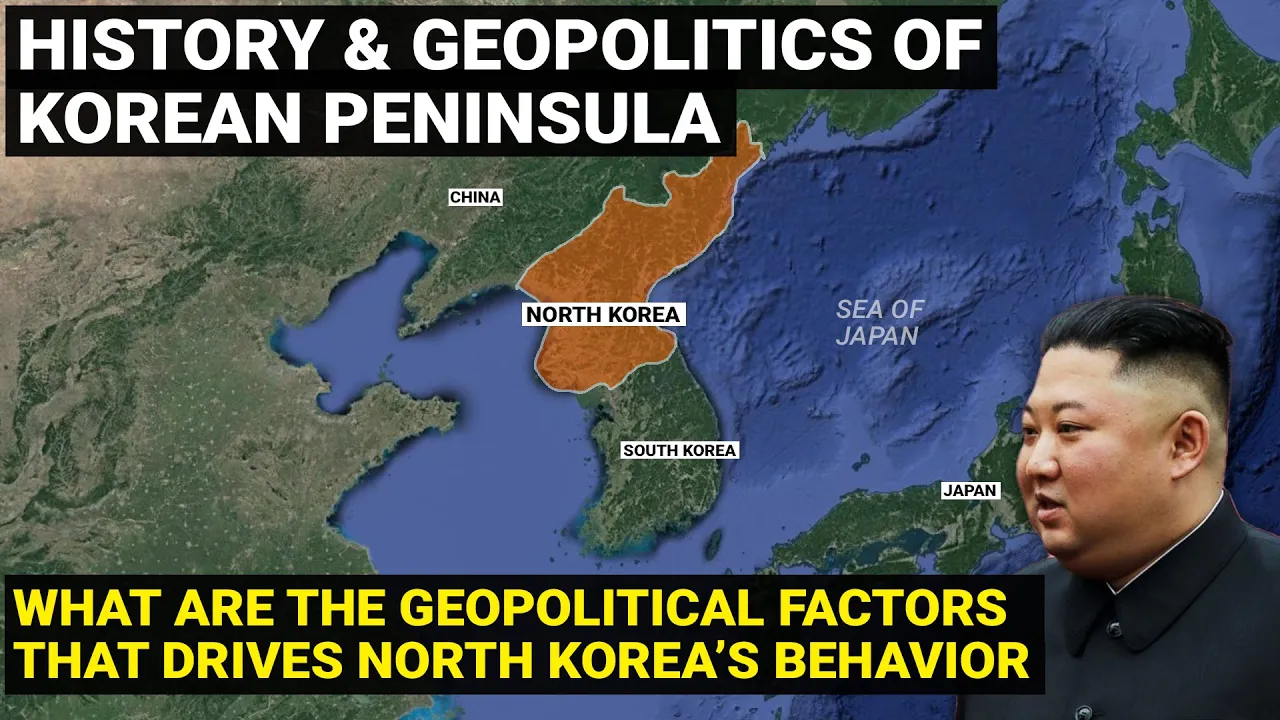
History & Geopolitics of Korean Peninsula | Geopolitical factors that drives North Korea's behavior
119.6K
The Korean Peninsula, comprising North Korea (Pyongyang) and South Korea (Seoul), is surrounded by the Yellow Sea, Sea of Japan, and East China Sea. Before 1945, Korea was unified under Emperor Sunjong. After Japan's WWII defeat, the U.S. and Soviet Union divided Korea at the 38th parallel, with the Soviets occupying the north and Americans the south. This division was meant to be temporary but became permanent due to Cold War tensions. In 1950, communist North Korea invaded South Korea, sparking the Korean War (1950-1953) supported by China and the Soviet Union against U.S.-backed South Korea. A ceasefire was reached in 1953 without a peace treaty, leaving both Koreas technically at war.
Click to watch →
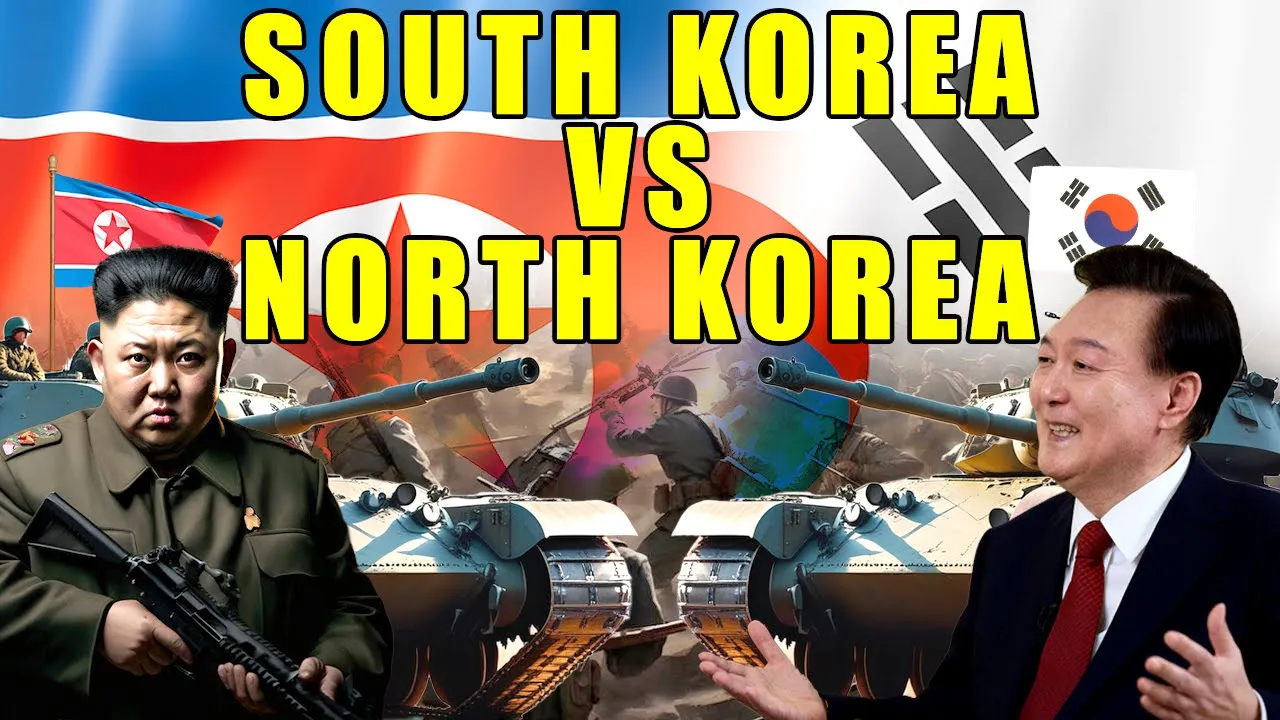
கொரியா ஏன் இரண்டாகப் பிரிந்தது? | How North & South Korea Break into 2 Countries? | Thatz It Channel
150K
The Korean Peninsula, once a unified nation ruled by the Gwangjong dynasty until 1910, was annexed by Japan for 35 years, during which Japanese colonial rule suppressed Korean culture and treated the population harshly. After World War II, Korea was divided along the 38th parallel, with the south under American and the north under Soviet control. In 1950, North Korea launched a surprise attack, initiating the Korean War. UN and US forces intervened, but China entered with 200,000 soldiers. The war, lasting 20 months, resulted in approximately 3 million deaths. The 1953 Armistice Agreement was a temporary ceasefire, not a peace treaty. Since then, tensions have persisted through incidents like the 1968 assassination attempt, 1999 naval collision, and ongoing nuclear tensions. Despite peace talks in 2000 and 2018, the peninsula remains divided into two hostile nations.
Click to watch →
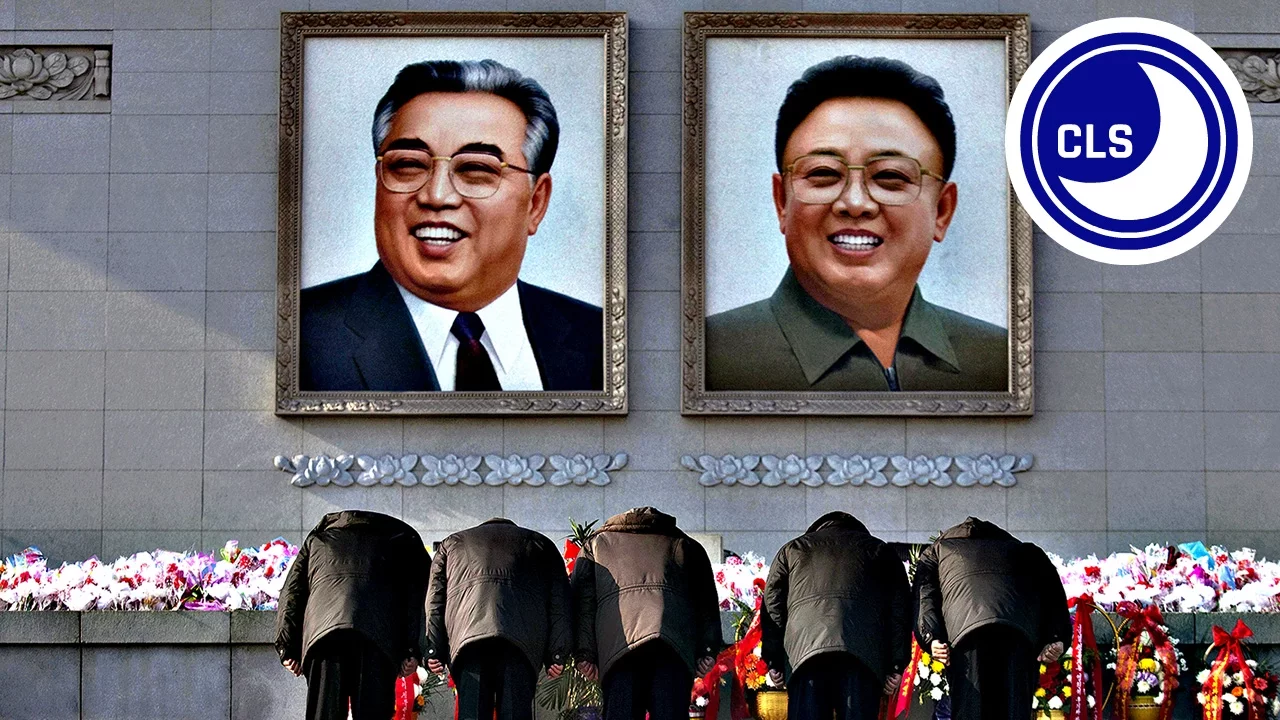
The Rise and (Hopeful) Fall of North Korea -- Colin's Last Stand (Episode 5)
105K
Following WWII, the Korean Peninsula was divided along the 38th parallel, with the Soviet Union controlling the north (communist sphere) and the US controlling the south (capitalist sphere). This division mirrored broader Cold War tensions. The Korean War (1950-1953) emerged as a proxy conflict between North and South Korea, with the Soviets and Chinese backing North Korea while the US and allies supported South Korea. An armistice in 1953 technically froze the war rather than ending it, leaving the Korean Peninsula officially at war to this day. This historical context established the ongoing division and hostility that continues to shape the region.
Click to watch →
Deep Dive
The concept of a command economy and how state-run enterprises, including national tourism agencies, operate under government control.

IB ACIO 2023 Economics | Complete Economy in one video | General Studies Course for IB ACIO|
14.6K
A command economy is completely under government control. The government handles all planning and resource allocation without competition. The government operates companies directly and manages the entire economy. Examples include the Soviet Union during World War II and the Cold War period, as well as North Korea.
Click to watch →

Вся экономика для ОГЭ по обществознанию
25.6K
A command economy (also called planned or administrative economy) is characterized by: (1) Centralized government control over all economic decisions; (5) State ownership of all factors of production; (6) Centralized planning and distribution of resources; (7) Government-determined prices; (8) No private enterprise or competition. The Soviet Union is the classic example of a command economy, where the state owned all factories, farms, and businesses and made all production decisions.
Click to watch →
Day 1: Economics Revision Class
366
A command economy (also called socialist economy, control economy, or planned economy) is characterized by government control over all economic activities. All economic activities are run by the central government. Key features include: (1) All economic activities are carried out by the government or state, (2) No private property exists as all resources are owned by the state, (3) Consumer freedom is limited as the government controls how income is distributed, (4) Social welfare is the primary goal rather than profit maximization, (5) Market mechanism does not exist as the government determines prices and production quantities, and (6) Government has absolute control over all economic decisions. Examples include North Korea, China, and the former Soviet Union.
Click to watch →

Basic concepts of Economy || stand up academy || By Raghavandra shidlagatte || Economics classes ||
183
A Command Economy imposes maximum government restrictions on production criteria. The government controls investment levels, production quality, and industrial reservations. License systems control business operations. This system is closely related to Socialism, where the government controls economic planning and resource allocation through central planning.
Click to watch →

Як КНДР купує блогерів: правда, яку вам не покажуть на YouTube
63.8K
North Korea uses state-run tourism as a sophisticated propaganda mechanism, where tourists are shown only a carefully curated version of the country through pre-planned routes, constant surveillance by state guides, and staged scenes, while the actual reality in provincial areas remains one of extreme poverty and control; this system generates significant revenue (150-175 million dollars annually) that sustains the regime while creating a misleading positive image that even returning tourists genuinely believe they witnessed authentic experiences.
Click to watch →
Deep Dive
The role of international sanctions and why global bodies (like the UN) attempt to restrict foreign currency flow into North Korea.
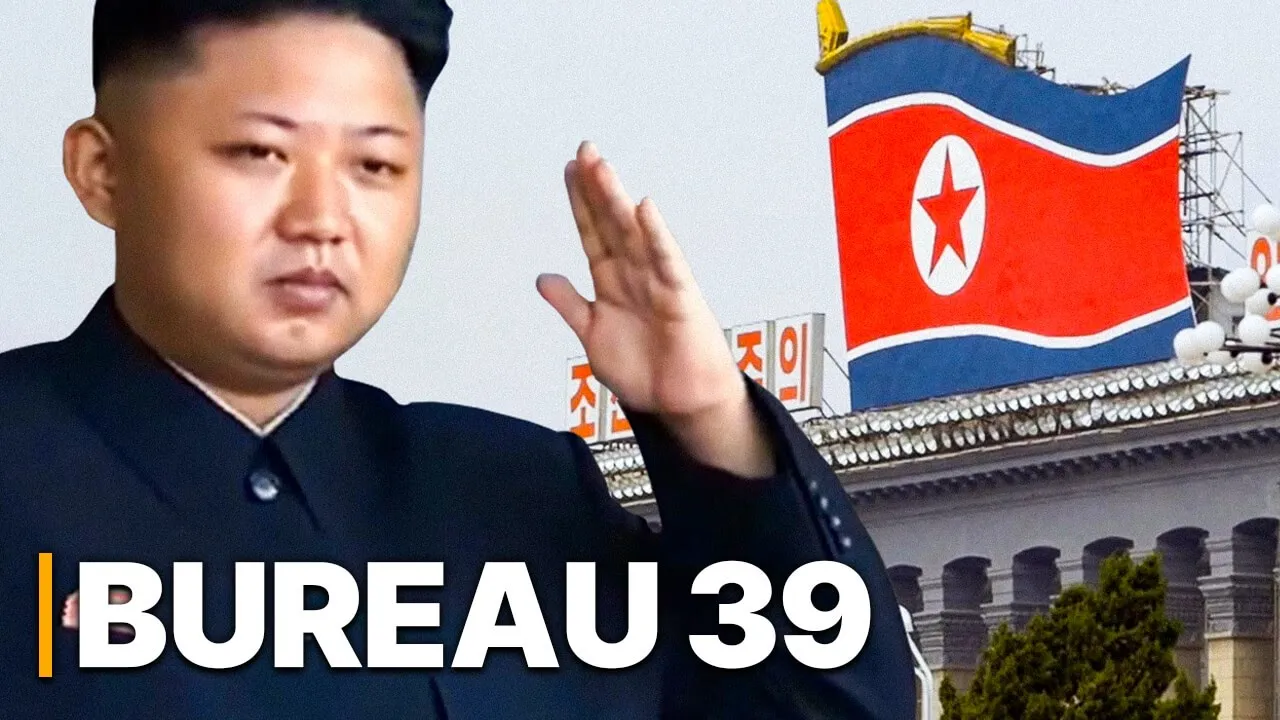
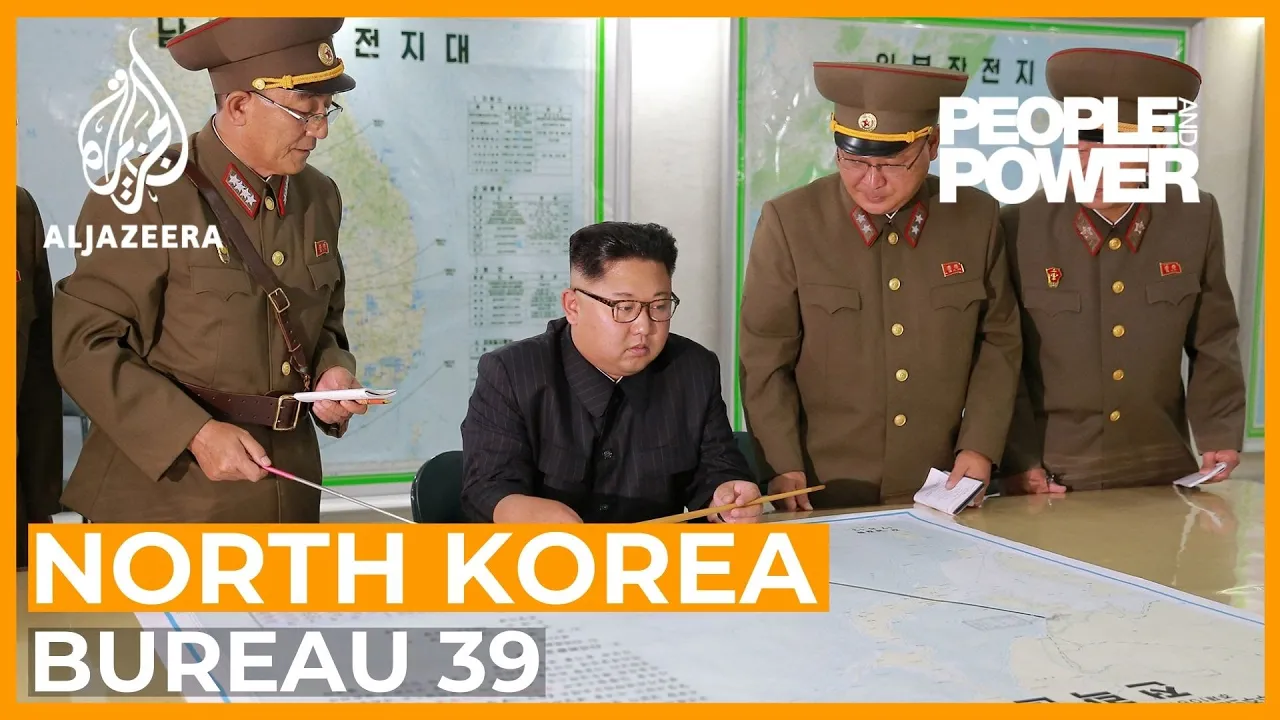
Bureau 39: Kim's Cash Machine | Crime Documentary
56.7K
Since 2006, the UN has imposed nine rounds of sanctions against North Korea. These sanctions prevent the country from legally exporting commodities like coal, iron ore, and zinc. Foreign currency is essential for any country, even autarkic ones, because it enables the purchase of goods necessary for the population or elite group. Without foreign currency, North Korea cannot sustain its economy or leadership's lifestyle.
Click to watch →
Bureau 39: Cash for Kim (Part 1) | People and Power
423.7K
Since 2006, the United Nations has imposed nine rounds of sanctions against North Korea, monitored by an International Panel of experts consisting of eight members including ex-intelligence, military, and financial experts who work in secret for their safety. These sanctions severely restrict North Korea's economy by preventing legitimate shipping of coal and iron ore, making foreign currency essential for the country's survival.
Click to watch →

🇰🇵 Todo sobre Corea Del Norte. Entrevista a Alejandro Cao Benos
43.8K
North Korea faces the most comprehensive set of international sanctions imposed by the United Nations, European Union, and United States. These sanctions prohibit virtually all international financial transfers, meaning individuals cannot send money to North Korea through any electronic means, and no foreign entities can transfer funds to North Korean citizens. The only permitted method of transferring money is carrying cash physically across borders.
Click to watch →

China, Russia urges UNSC to lift sanctions on North Korea
1.3K
The proposed resolution aims to lift sanctions specifically designed to cut off foreign currency flowing into North Korea. This foreign currency is believed to be used to support the country's nuclear weapons and missile programs. The sanctions target key export items (seafood and textiles) and overseas worker remittances as primary mechanisms for restricting financial resources to the regime.
Click to watch →
¿Vivirías en Corea del Norte? Así es como viven según Alejandro Cao de Benós
185K
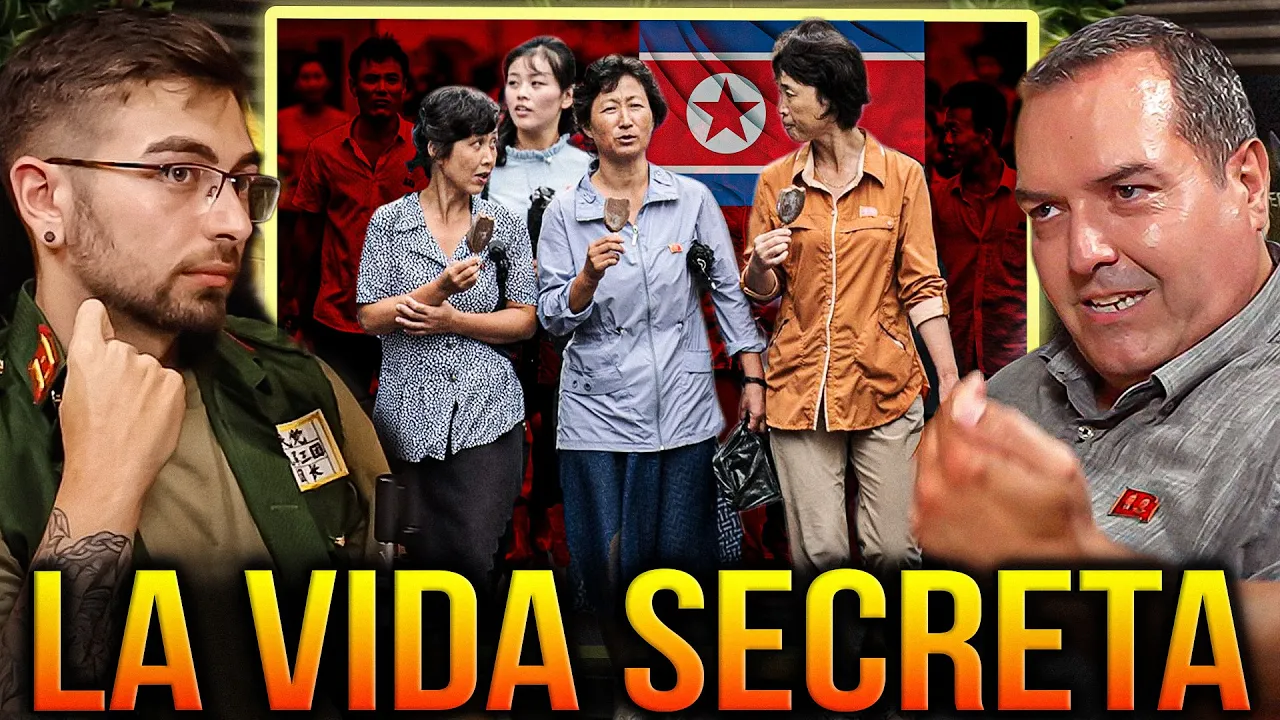
North Korea faces severe international sanctions primarily imposed by the United States, which controls the global financial system. These sanctions prevent North Korean banks from conducting international transactions, prohibit the use of credit cards and major payment systems, and restrict trade. The sanctions prevent North Korea from earning foreign currency needed to purchase essential goods. China plays a crucial role in determining whether sanctions are enforced, as it must approve them through its participation in the UN Security Council. China has historically supported sanctions partly due to pressure from the United States, which threatens to impose trade restrictions on Chinese products if China does not comply. A specialized UN department was established to monitor and enforce sanctions against North Korea, funded primarily by the United States and operating with support from Russia and China.
Click to watch →
Prerequisite Knowledge
- Concept 01The political structure of the DPRK, including the Juche ideology and the authoritarian rule of the Kim dynasty.
- Concept 02The history of the Korean War, the division of the peninsula, and the ongoing geopolitical tensions between North and South Korea.
- Concept 03The concept of a command economy and how state-run enterprises, including national tourism agencies, operate under government control.
- Concept 04The role of international sanctions and why global bodies (like the UN) attempt to restrict foreign currency flow into North Korea.
Subsequent Learning
- Step 01The broader ethical debate surrounding 'dark tourism' and travel to other authoritarian or highly repressive regimes.
- Step 02An in-depth analysis of alternative funding mechanisms for the DPRK, such as cyberwarfare, cryptocurrency theft, and overseas labor.
- Step 03The geopolitical impact of citizen diplomacy versus isolationism in international relations theory.
- Step 04The study of human rights advocacy efforts, defector testimonies, and the work of NGOs operating along the North Korean border.
Visit Warning
Visit Warning
0:00Playing Section
- 1
Avoid travel due to regime support and staged experiences.
- 2
Tourism normalizes oppression; encounters are pre-arranged.
- 3
Authentic culture is inaccessible; all is controlled by state.
Engagement and Grassroots Diplomacy Through Tourism
While many experts warn against visiting North Korea due to ethical concerns, proponents of travel to the DPRK advocate for a strategy of critical engagement over total isolation. This perspective argues that tourism serves as one of the few channels for cultural exchange and citizen diplomacy in a highly closed society. By interacting with foreign visitors, ordinary North Koreans—who are otherwise exposed only to state-sponsored propaganda—can gain a more nuanced and humanized view of the outside world. Furthermore, proponents argue that complete isolationism only strengthens the regime's control by eliminating external influences. From this viewpoint, responsible tourism can act as a soft-power tool, fostering mutual understanding and subtly challenging state narratives through peaceful, face-to-face contact, rather than leaving the population entirely cut off from the global community.
Deep Dive
The broader ethical debate surrounding 'dark tourism' and travel to other authoritarian or highly repressive regimes.

C1 English Listening Practice | Movies, Music & TV Shows | Advanced Learner Studio
808
Dark tourism is travel to places associated with death, tragedy, or suffering (concentration camps, genocide memorials, Pompeii ruins). The ethics focus on intent - the line between respectful remembrance and morbid curiosity. Bearing witness implies going with intention to learn, feel the gravity of history, and respect victims' memory, requiring silence and reflection. Voyeurism treats tragedy as spectacle, like taking selfies at tragic sites, which commodifies suffering.
Click to watch →

Dark tourism
341
Dark tourism raises significant ethical questions about exploitation versus education. Whether attractions are exploitative depends on operators and visitors; greedy operators may 'milk the macabra' while tourists may desecrate sacred spaces. T-capitalism theory frames death as a commodity reinforcing social Darwinist hierarchies where witnessing others' suffering reinforces superiority. Examples span castles and battlefields (Coden, Bran Castle), former prisons (B Mara's prison), crime exhibitions (Jack the Ripper), disaster sites (Chernobyl, Ground Zero), and genocide memorials (Auschwitz, Tuol Sleng). These diverse destinations reflect how societies commodify death and tragedy for tourism revenue while navigating complex ethical boundaries between remembrance and exploitation.
Click to watch →

The Cult of Dark Tourism
715
Dark tourism represents a disturbing trend where human suffering is packaged as an experience that can be purchased and consumed. The term was formally coined in 1996 by Scottish professors John Lennon and Malcolm Foley, though the practice has existed as long as tourism itself, from watching death at the Roman Colosseum to attending public executions. Dark tourism encompasses visits to sites associated with death, disaster, and atrocity, including war zones, active natural disasters, and locations of historical tragedies like Auschwitz, Pompeii, and Salem. The global dark tourism market was worth approximately 31.9 billion in 2023, with continued growth projected. The industry is driven primarily by moneyed individuals from the UK and US who travel to destinations in the Middle East, Africa, Asia, and Central and South America. A key characteristic is that people's ethical and moral values often go out the window as they chase the thrill of seeing something they may not mean to see. In extreme cases like McKamey Manor, participants pay to experience what is essentially torture under the guise of a haunted attraction. The operator assumes a cult leader role, with participants going in with a sense of forgetfulness about the danger, believing they will ascend and beat the experience. A key ethical boundary involves the treatment of human remains, as displaying identifiable bodies raises concerns about dehumanization. The Aokigahara forest in Japan exemplifies problematic dark tourism where the forest gained notoriety through popular culture and became a bucket list destination. The Logan Paul controversy in 2018, where he filmed and joked about a suicide victim's body, highlighted how influencers can turn real human tragedy into content.
Click to watch →

DARK TOURISM (Working Title) - PILOT
3.9K
Dark tourism involves visiting places associated with death, tragedy, or crime, raising ethical questions about profiting from tragedy and the impact on local communities, as demonstrated by a Bridgend man organizing tours to suicide sites and the demolition of the West house to prevent public curiosity.
Click to watch →
Tourism and death- the rise of the dark tourism industry | Hayley Stainton | TEDxMaviliSquare
6.1K
Dark tourism raises significant ethical questions about appropriate behavior at sensitive sites. Key considerations include: (1) Timing - sites become acceptable for tourism only after sufficient time has passed to allow sensitivity to diminish; (2) Respect for victims and survivors - acknowledging the real human impact of tragedies rather than treating them as entertainment; (3) Cultural and religious connections - understanding why certain sites hold particular significance to communities.
Click to watch →
Deep Dive
An in-depth analysis of alternative funding mechanisms for the DPRK, such as cyberwarfare, cryptocurrency theft, and overseas labor.
Skąd Kim Dzong Un bierze pieniądze? Tak utrzymuje Korea Północna
488
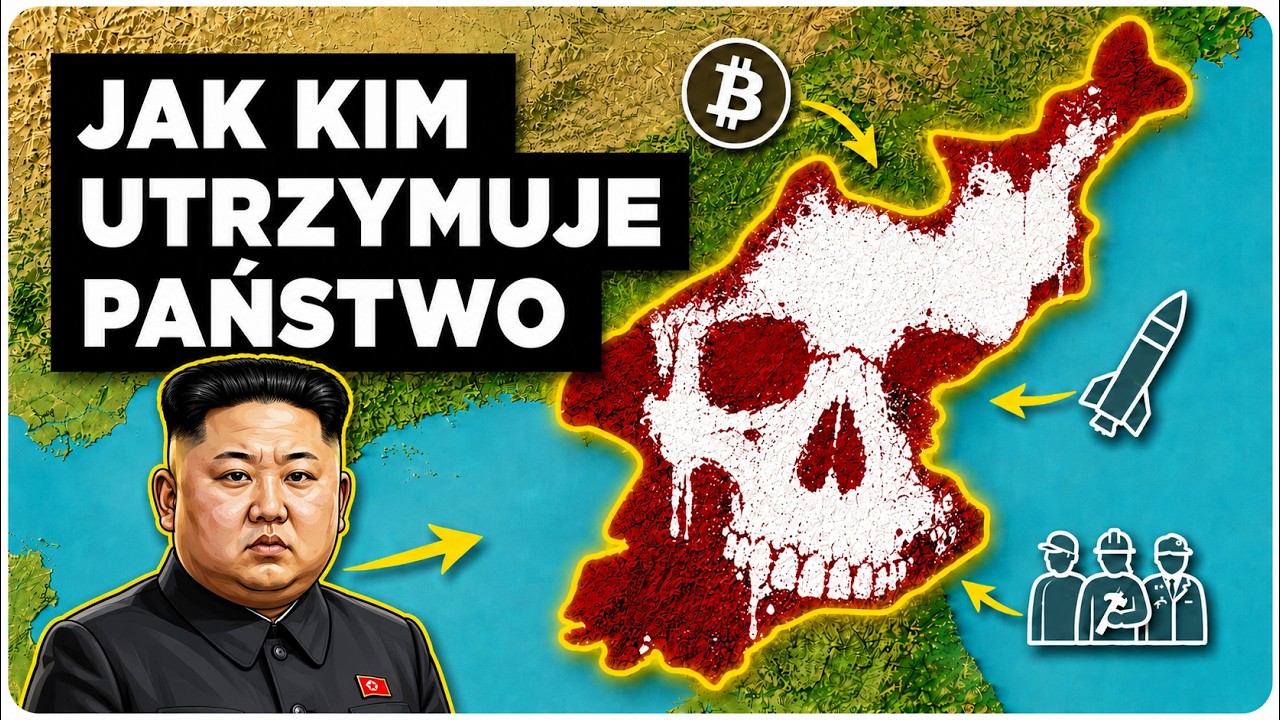
North Korea has developed sophisticated cybercrime operations and a forced labor system to generate revenue. The Lazarus hacker group, connected to state intelligence, has stolen over $3 billion in three years, primarily through cryptocurrency thefts including $620 million from the Ronin network and $1.5 billion from Bybit exchange in 2025. The Blue Norov group (APT38) has targeted banks and financial institutions. Simultaneously, North Korea maintains an extensive network of political prison camps where prisoners and ordinary citizens are forced to work in mines, quarries, and factories. This forced labor system generates goods that flow to China and Russia while foreign currency returns to the regime, creating a dual economy of cybercrime and human exploitation.
Click to watch →

What North Korea Sells to Survive
50.5K
North Korea has developed a sophisticated cyber economy to fund its weapons programs. The regime trains 'IT warriors' at army schools, sending them to Asian tech training schools where they can earn up to $300,000 annually. In 2014, they hacked Sony and extorted executives; in 2016, they drained $950 million from the Bangladeshi central bank. By 2024, crypto heists generated over $1.3 billion, with 60% of all stolen cryptocurrency attributed to North Korean agents. A UN report indicates 40% of their nuclear weapons program is now funded by illicit cyber means. This represents a fundamental shift from traditional money laundering to decentralized digital theft.
Click to watch →
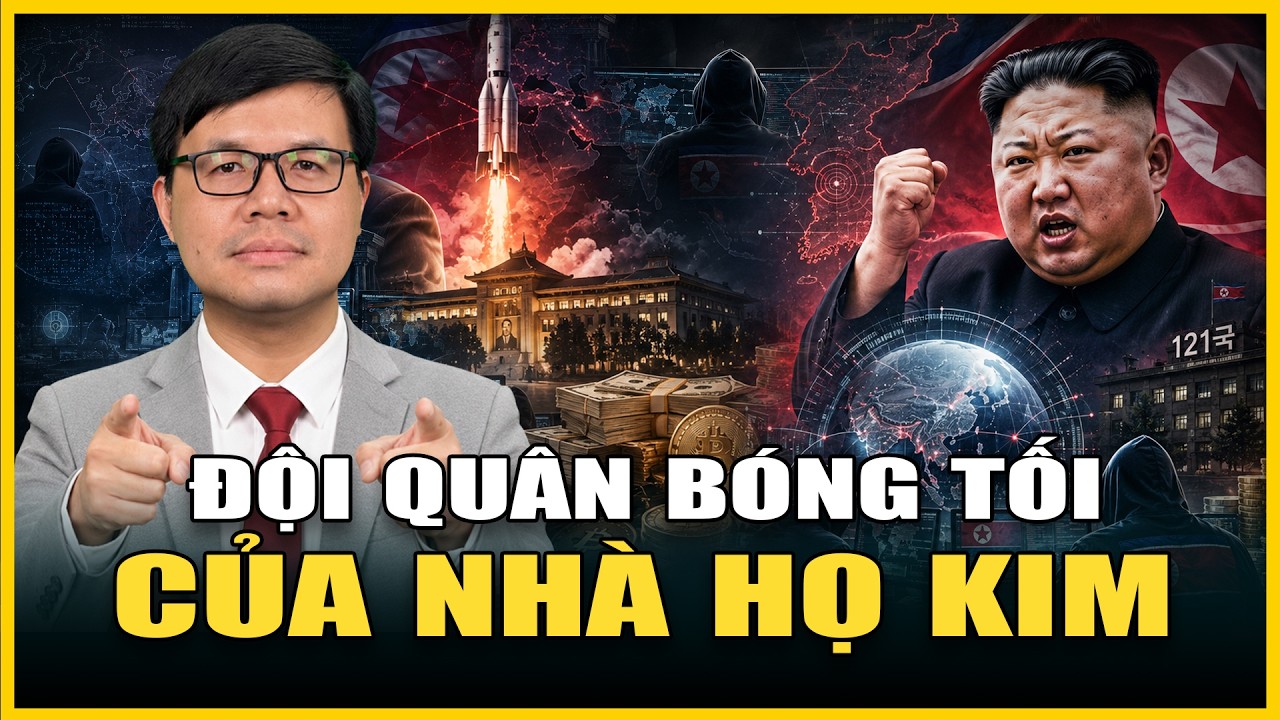
Bí Ẩn Cục 121 Triều Tiên: Kim Jong Un Đang Biến Hacker Thành “Mỏ Vàng” Nuôi Cả Chế Độ
8K
Despite being a poor, isolated country facing decades of sanctions, North Korea maintains a massive military including nuclear weapons and ballistic missiles. While China provides some support through food and essential goods, this assistance alone is insufficient to fund such expensive military programs. The true source of funding lies in cyber warfare. North Korea has built a sophisticated cyber military force organized like a regular army, including Bureau 121 and Lazarus Group. In 2023, these groups stole $1.7 billion in cryptocurrency—nearly one-sixth of North Korea's GDP. By 2024, they stole an additional $1.34 billion, representing 61% of all global crypto theft. This cyber economy has become North Korea's secret lifeline, generating more revenue than legitimate trade and enabling the continuation of its military machine despite comprehensive international isolation.
Click to watch →
北노동자들 행방불명! 충격이유! 북한 아수라장!
75.3K
North Korea maintains strict control over its citizens working abroad through comprehensive surveillance, including tracking laborers through trade companies, confiscating mobile phones to prevent access to foreign information and defector contacts, and punishing family members of defectors; this system is reinforced by intensified cooperation with host countries like Russia, where security personnel guard work sites and coordinate with local authorities to prevent escape attempts.
Click to watch →
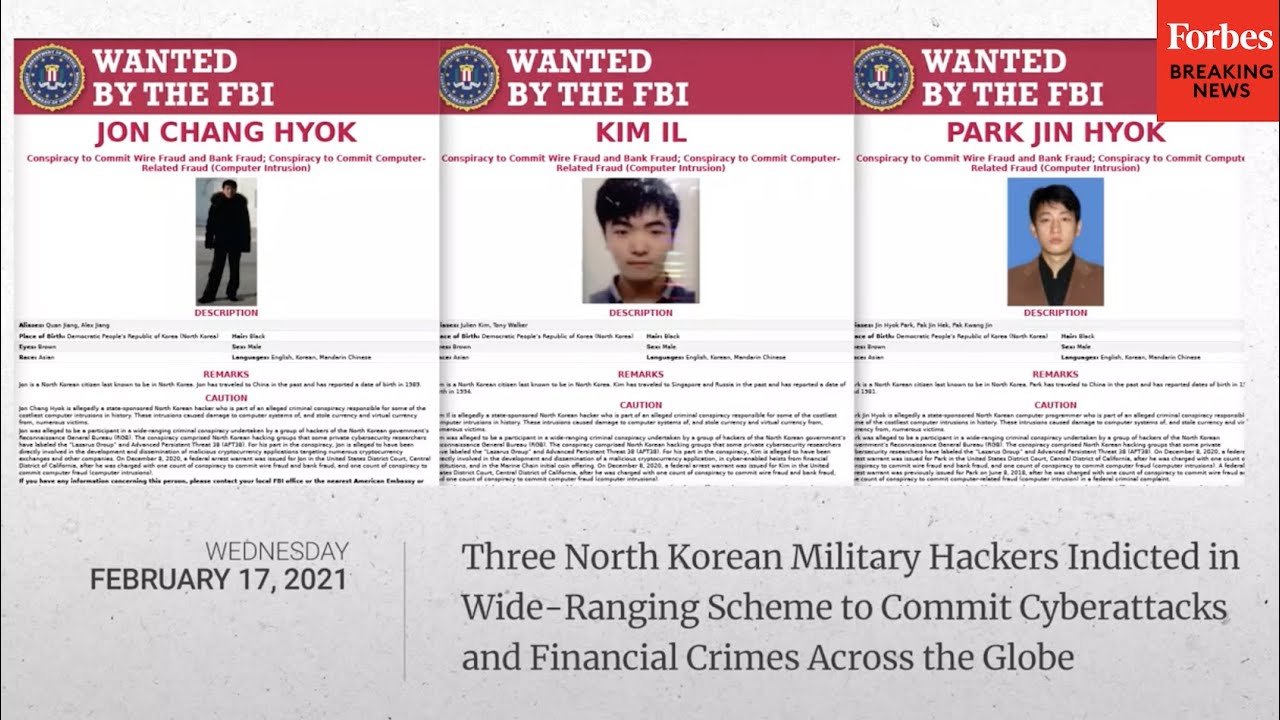
‘World’s Leading Bank Robbers’: 3 North Koreans Charged In Massive Hacking Scheme
1.8K
North Korea is uniquely focused on raising funds through illegal cyber activity to support its regime, including theft of cryptocurrency, theft of traditional currencies, extortion schemes, and fraudulent digital tokens. This need for currency stems from the country's economic system and sanctions placed on it, differing from actors in China, Russia, and Iran who focus on intellectual property, export-controlled technology, or election disruption. Russia and China provide safe harbor for cyber criminals and nation-state actors due to their authoritarian nature. The indictment proves allegations in open court beyond a reasonable doubt using only unclassified admissible evidence, representing the only way the Department speaks about such activities.
Click to watch →
Deep Dive
The geopolitical impact of citizen diplomacy versus isolationism in international relations theory.

Kevin O’Leary and the 51st state | Front Burner
337.3K
Individual citizens possess legitimate rights to engage in diplomatic discussions without governmental authorization. As citizens with passports, individuals have the right to participate in conversations about international relations, including discussions with foreign leaders. This form of citizen diplomacy allows private citizens to advocate for positions they believe benefit their country, even when official government representatives hold different views. Additionally, collective bargaining power typically produces better outcomes than individual negotiations. When provinces or states negotiate separately, they may be forced to accept unfavorable terms individually. Maintaining unified front during negotiations preserves bargaining power and prevents exploitation by counterparties seeking to divide and conquer.
Click to watch →
Reppin Home: The Power of Citizen Diplomacy | Kendra Tse | TEDxYouth@PWHS
1.4K
Citizen diplomacy is the concept that ordinary individuals, such as a high school student and a go-jek driver, have the power to influence relations between nations at the citizen-to-citizen level. Through daily interactions like sitting in traffic together, people can learn new languages and cultures while simultaneously expanding each other's worldviews and changing biases. Travel helps people recognize both the things that divide humans (race, religion, age, nationality) and the things that connect them (food, laughter, smiles). When travelers share their experiences, they create ripple effects that can inspire others to learn about different countries, try local foods, or even visit, creating a cycle of continued cultural exchange.
Click to watch →

Present! - Citizen Diplomacy: Ideas for 2016
122
Citizen diplomacy emerged as a response to deteriorating official diplomatic relations. The speaker describes how early participants in uncertain programs can create disproportionate influence, growing programs like mushrooms in spring. When official channels fail, citizen-level exchanges become essential for rebuilding relationships. The Soviets Meet Middle America program (1980s) exemplified this approach, bringing Soviet citizens to American communities for short-term visits involving home stays, meals, and interactions with officials and media. This comprehensive exposure created an explosion of goodwill across 264 cities, demonstrating that citizen diplomacy can achieve what official channels cannot.
Click to watch →

CD_PlenaryLunch_20101118.mp4
217
Citizen diplomacy represents a post-public diplomacy approach that goes beyond public relations and branding. It is characterized by citizen initiatives that governments have an interest in supporting without changing their character. The government's involvement can vary by country - some maintain arms-length distance while others provide more direct support. The key is finding ways to support citizen initiatives while preserving their authentic, grassroots nature.
Click to watch →
![[인터뷰 | 최광진 국민외교센터장]](https://i.ytimg.com/vi/FMO_bsa6j4I/maxresdefault.jpg)
[인터뷰 | 최광진 국민외교센터장]
437
Citizen diplomacy combines 'citizen' and 'diplomacy' to create a process where citizens directly participate in diplomatic decision-making. This concept emerged after World War I when public opinion began influencing diplomatic decisions, as noted by British diplomat Lord Halifax in 1934. The Moon Jae-in government declared 2018 as the 'Year of Citizen Diplomacy,' reflecting strong governmental commitment. Globally, countries like Australia and Germany have implemented similar approaches. Dutch scholar Jan Keesing termed this 'democratic diplomacy.' Diplomacy has evolved through stages: traditional diplomacy (government-to-government), public diplomacy (government-to-people, formalized in 1965), and private diplomacy (non-governmental actors). Citizen diplomacy represents the latest evolution, characterized by a unique 'bottom-up' approach where citizens actively participate in policy decision-making rather than receiving information from governments. This distinguishes it from the traditional 'top-down' model and reflects broader democratic trends in international relations.
Click to watch →
Deep Dive
The study of human rights advocacy efforts, defector testimonies, and the work of NGOs operating along the North Korean border.
![북한 고위 간부 일가족 탈북, 국정원도 깜짝 놀란 충격적인 탈북 루트 [해외감동사연]](https://i.ytimg.com/vi/1jVv0oyvMq4/maxresdefault.jpg)
북한 고위 간부 일가족 탈북, 국정원도 깜짝 놀란 충격적인 탈북 루트 [해외감동사연]
89.7K
The speaker describes how he initially struggled with speech patterns and accents, and was sometimes suspected of being a spy. However, he eventually found work as a consultant at a North Korean policy research institute, where his unique experience became an invaluable asset. The speaker describes how South Korea's merit-based system, where hard work leads to rewards, was fundamentally different from North Korea's system where one's parents' status determined one's future. He began working with North Korean human rights organizations, giving testimony at international conferences about the realities of political prison camps and the Arduous March famine. He describes how his trembling voice as he spoke caused tears in the audience, and how his testimony helped many people understand the true conditions in North Korea. Standing at the Unification Monument in Paju, the speaker reflected on the North Korean people still suffering under oppression and prayed that they would one day experience freedom and a dignified life.
Click to watch →
脱北者が告白-公開処刑・餓死・監視社会…隠された地獄 北朝鮮の真相【NoBorder#23】
702.8K
North Korea systematically violates human rights, particularly regarding women. Women can be denied access to education based on arbitrary decisions, must wear specific hairstyles, and cannot dye their hair or wear bangs. The video describes how a woman was executed for copying and selling Korean dramas, with the execution witnessed by approximately 1,500 people. Most defectors cite poverty and hunger as their primary motivation for leaving, with approximately 80% of defectors motivated by economic hardship. The video also describes how defectors' families who remain in North Korea face persecution, with some being sent to remote areas or facing execution.
Click to watch →
![[엄영남_7부] 북한 건설 부대 군인이 한국의 터널 뚫는 대형 장비 보고 경악!](https://i.ytimg.com/vi/7NAY49KpThU/maxresdefault.jpg)
[엄영남_7부] 북한 건설 부대 군인이 한국의 터널 뚫는 대형 장비 보고 경악!
516.3K
The speaker shares their experience learning English through practical application rather than formal education, eventually giving lectures at Harvard University and the British Parliament about North Korean human rights issues. They have written a book addressed to North Korean citizens, particularly former military comrades, with the central message urging them to survive and consider defectoring to South Korea. The speaker encourages North Korean citizens currently serving in the military to avoid sacrificing their lives in meaningless conflicts like the Russia-Ukraine war. The book's cover features a photo taken during the speaker's time in North Korea, and they apologize for using it without permission, requesting that any former friends who have defected contact them.
Click to watch →
![[脱北者的故事] 속보! 북한 ‘30대 핵 총책’ 가족 전원 탈북…순안 봉쇄, 국정원도 경악](https://i.ytimg.com/vi/PJvK9N5IPSU/maxresdefault.jpg)
[脱北者的故事] 속보! 북한 ‘30대 핵 총책’ 가족 전원 탈북…순안 봉쇄, 국정원도 경악
535.2K
The video describes the protagonist's testimony at a National Assembly Security Committee hearing about North Korean nuclear weapons. He stated that 12 nuclear warheads were deployed on 23 mobile launchers with a 3-stage authentication system requiring Kim Jong-un's final approval. He warned that if Kim Jong-un were mentally unstable, the launch system could be activated without proper authorization. This testimony was recorded and broadcast worldwide, providing credible insider information about North Korea's nuclear capabilities. The protagonist also testified at a UN Human Rights Council meeting in Geneva about North Korean conditions, revealing that North Korea spends billions on nuclear weapons while citizens suffer from starvation and collapsed healthcare. The protagonist reflected that while he remained technically a North Korean by birth, he was now a free person, emphasizing that freedom matters more than nationality.
Click to watch →

Church in the Crossfire | Christian World News - June 21, 2024
146.5K
North Korean defectors face extreme persecution, with approximately 34,000 having made the dangerous journey to South Korea. One defector, Sonho, escaped at age 24 with no leg and no left hand, swimming the Tuman River and walking 10,000 km to reach freedom. He became a Christian in China and now serves as an advocate for human rights and the 34,000 defectors in South Korea. North Korea has named him their number one target. He believes reunification is possible because dictatorships cannot last forever, and that the gospel entering North Korea depends on God's hand rather than human efforts. This illustrates how individual stories of escape and advocacy can raise awareness about systemic human rights violations.
Click to watch →
Visit Warning
Visit Warning
0:00- 1
Avoid travel due to regime support and staged experiences.
- 2
Tourism normalizes oppression; encounters are pre-arranged.
- 3
Authentic culture is inaccessible; all is controlled by state.
Engagement and Grassroots Diplomacy Through Tourism
While many experts warn against visiting North Korea due to ethical concerns, proponents of travel to the DPRK advocate for a strategy of critical engagement over total isolation. This perspective argues that tourism serves as one of the few channels for cultural exchange and citizen diplomacy in a highly closed society. By interacting with foreign visitors, ordinary North Koreans—who are otherwise exposed only to state-sponsored propaganda—can gain a more nuanced and humanized view of the outside world. Furthermore, proponents argue that complete isolationism only strengthens the regime's control by eliminating external influences. From this viewpoint, responsible tourism can act as a soft-power tool, fostering mutual understanding and subtly challenging state narratives through peaceful, face-to-face contact, rather than leaving the population entirely cut off from the global community.
The political structure of the DPRK, including the Juche ideology and the authoritarian rule of the Kim dynasty.
The history of the Korean War, the division of the peninsula, and the ongoing geopolitical tensions between North and South Korea.
The concept of a command economy and how state-run enterprises, including national tourism agencies, operate under government control.
The role of international sanctions and why global bodies (like the UN) attempt to restrict foreign currency flow into North Korea.
The broader ethical debate surrounding 'dark tourism' and travel to other authoritarian or highly repressive regimes.
An in-depth analysis of alternative funding mechanisms for the DPRK, such as cyberwarfare, cryptocurrency theft, and overseas labor.
The geopolitical impact of citizen diplomacy versus isolationism in international relations theory.
The study of human rights advocacy efforts, defector testimonies, and the work of NGOs operating along the North Korean border.
98.4K views4.1Klikes1:09@charlesnorthkoreaOriginal Release: 2025-09-19
What would you say is your biggest advice for someone that wants to visit North Korea?
>> Um, my immediate thought is don't.
>> Three reasons. Number one, you're paying money for the regime that oppressing their own people.
>> Second reason, you're not seeing the authenticity of North Korea. You're seeing what North Korean regime want you to see. So what's the point in that, right? Cuz you are going there to like support oppressive regime or are you going there to experience a true culture?
>> Okay.
>> Right. Third reason you are probably going to make a video about it about how >> usually happens influencers that goes >> exactly it kind normalizes the behavior of North Korean regime who oppresses its people. I've seen this video where this guy talks about look at this propaganda postcards. I can send you postcards from North Korea guys. Like what are you doing?
>> Yeah. Yeah.
>> You are basically trying to normalize.
They're not like that.
>> I don't advise you going, but if you really want to, I would, you know, say everything is staged. Whoever you're talking to, they have been practicing months on
Up Next
23:42
North Korea Travel Insights: An American's 2017 Pyongyang Experience
@InTheClutchEnt
42.7K views•2024-02-28

12:54
Triumph of Orthodoxy Icon: Byzantine Art & History Explained
@BenCallan
2.1K views•2024-08-06

9:49
FastAPI vs Flask vs Django: Choosing the Right Python Web Framework
@TechWithTim
302.5K views•2024-05-26

1:42
Game of Thrones Opening Credits: A Cinematic Analysis
@gameofthrones
46.3M views•2011-04-18
Related Study Plans & Knowledge Roadmaps
Structured learning paths in General & Interdisciplinary Studies
general-studies
Elevator Engineering: History, Physics & Cities
01From Hoists to Safety Brakes: The Dawn of Vertical Lift
02Hydraulic vs. Traction: The Engineering Physics of Elevators
03Modern Speed, Safety, and Algorithms
+ 2 more learning modules
12h5 modules
Explore Roadmap
general-studies
Rubber: Material Science, History & Geopolitics
01Origins of Natural Rubber & Mesoamerican History
02The Chemistry of Natural Rubber & Vulcanization
03The Geopolitics of the Rubber Boom & Colonization
+ 2 more learning modules
12h5 modules
Explore Roadmap
general-studies
Containerization: Evolution, Logistics & Trade
01Ancient Trade & Bulk Cargo: Amphorae to Barrels
02The Industrial Revolution & Cardboard Packaging
03The Containerization Revolution: Malcom McLean
+ 2 more learning modules
12h5 modules
Explore Roadmap
general-studies
Textile Tech: Evolution, Labor & Global Impact
01Pre-Industrial Textiles: Handloom & Cottage Industry
02Mechanization: The Spinning Jenny to the Power Loom
03The Factory System & Global Labor Transformation
+ 2 more learning modules
10h5 modules
Explore Roadmap