





![তাপ গতিবিদ্যা class 11 Semester-2 | Full Concept+Numericals | Thermodynamics [ Part-2] | SOE Bangla](https://i.ytimg.com/vi/W2o9U4F5BDY/maxresdefault.jpg)











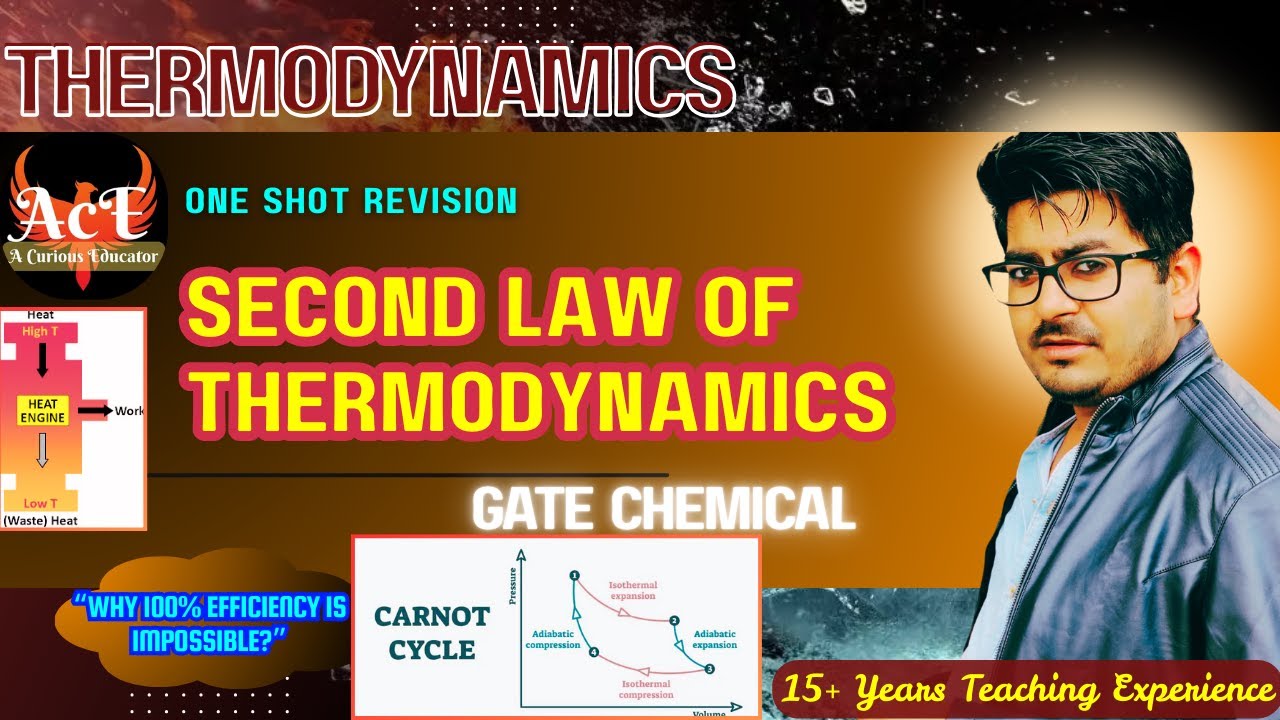







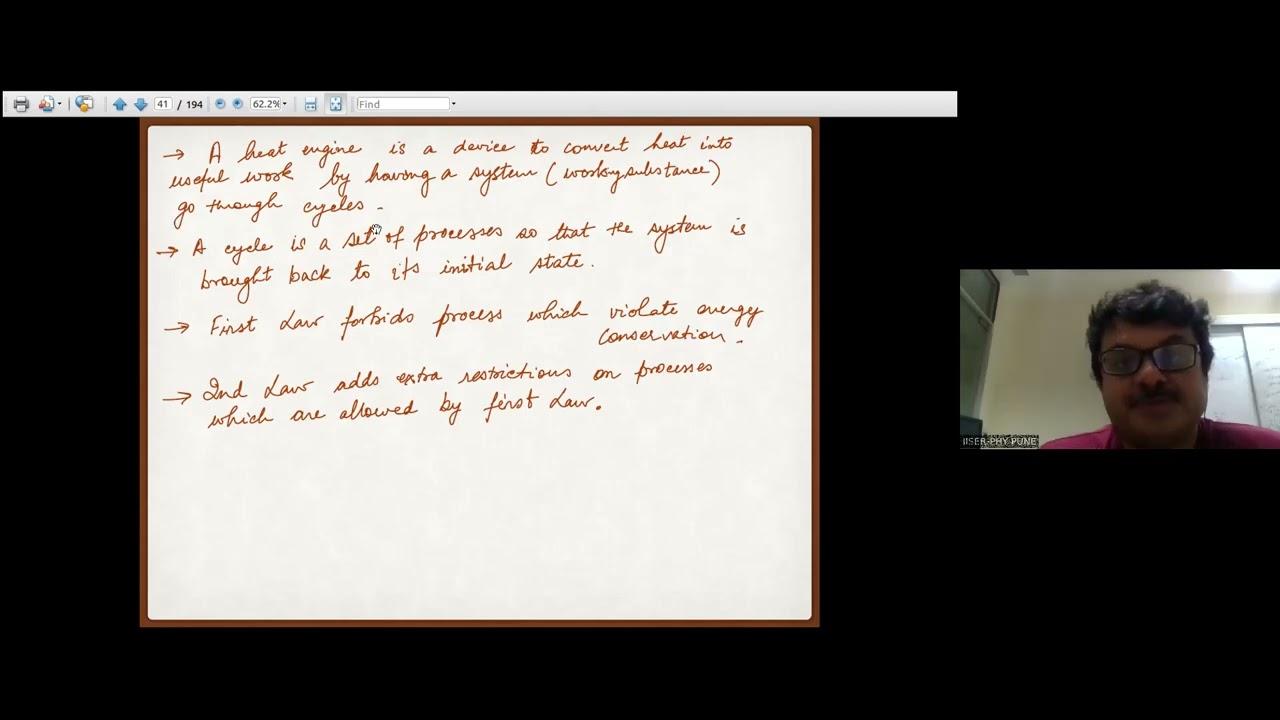
The Carnot cycle, proposed by French engineer Sadi Carnot, represents the most efficient reversible heat engine cycle consisting of four processes: reversible isothermal expansion, reversible adiabatic expansion, reversible isothermal compression, and reversible adiabatic compression. The Carnot efficiency equation η = 1 - (TL/TH) demonstrates that the maximum possible efficiency of a heat engine depends only on the absolute temperatures of the heat source (TH) and heat sink (TL), with temperatures measured in Kelvin. This theoretical maximum efficiency serves as a benchmark for comparing real heat engines, where irreversible processes always result in lower efficiency than the Carnot limit.
Understanding the Carnot Cycle: Maximum Heat Engine Efficiency Explained
Added:The First and Second Laws of Thermodynamics, specifically the concepts of heat, work, internal energy, and the direction of spontaneous heat flow.
Fundamental thermodynamic processes, focusing on the differences between isothermal (constant temperature) and adiabatic (no heat transfer) processes.
The Ideal Gas Law and how pressure, volume, and temperature interact during gas expansion and compression.
The basic concept of a heat engine, including the definition of thermal efficiency, heat sources, and heat sinks.
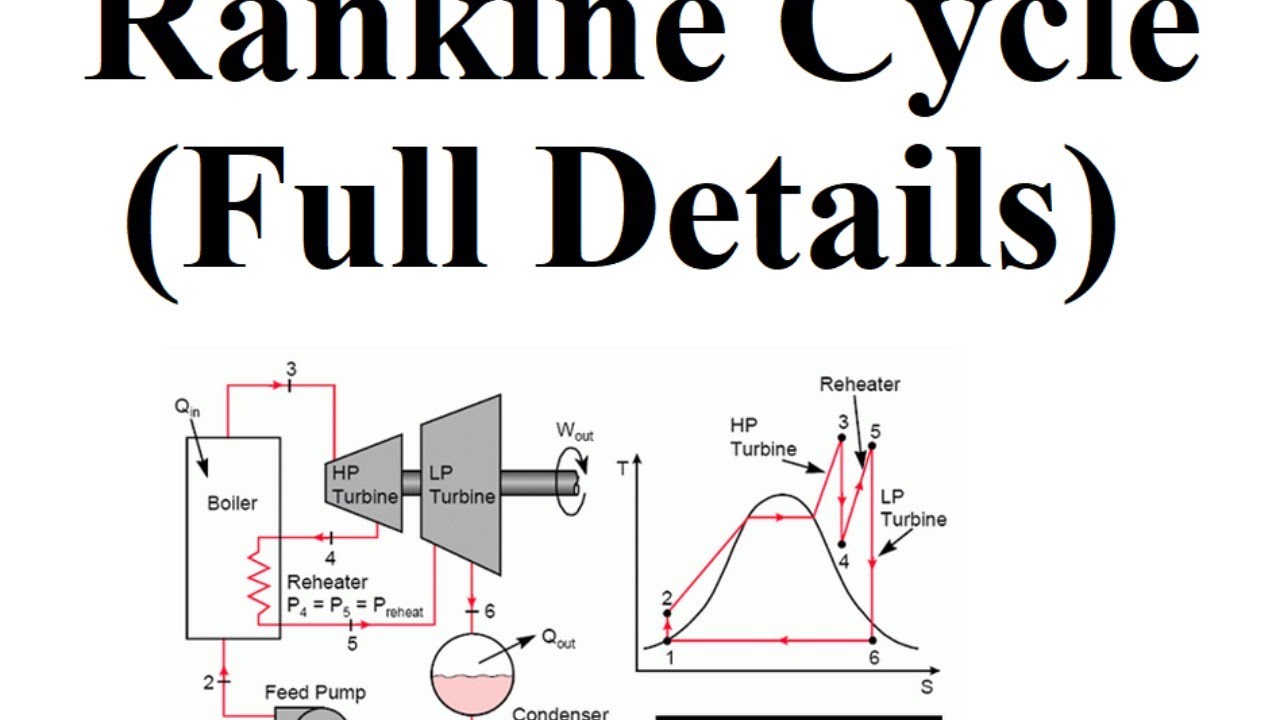
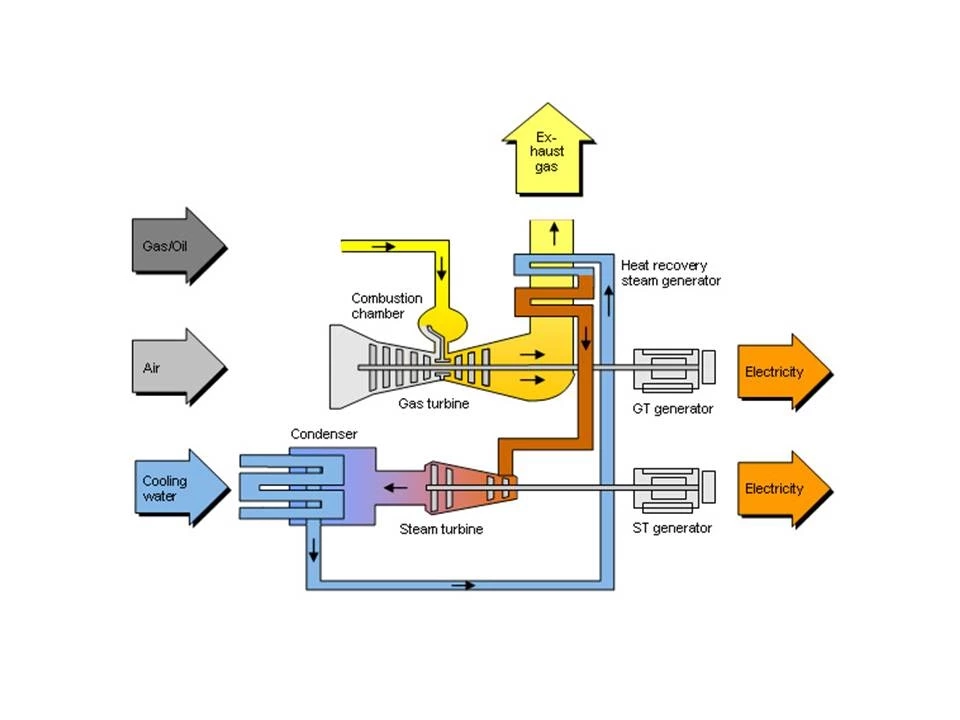
Practical power cycles, such as the Rankine cycle (for steam power plants) and the Otto/Diesel cycles (for internal combustion engines), and why they cannot achieve Carnot efficiency.
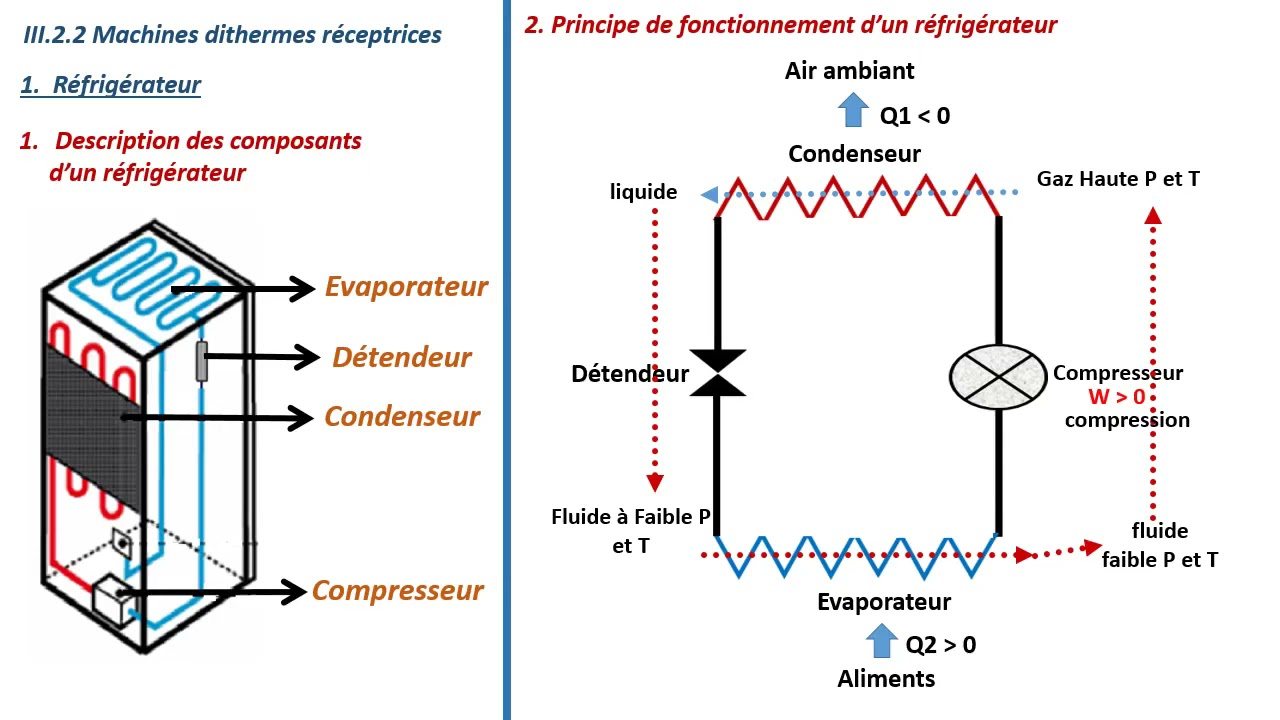
The Reversed Carnot Cycle, which forms the theoretical foundation for the operation of refrigerators, air conditioners, and heat pumps.
The rigorous thermodynamic definition of Entropy and how it relates to reversibility, irreversibility, and the arrow of time.
Exergy analysis (Second Law efficiency), which quantifies the maximum useful work potential of a system relative to its environment.
131.1K views2.9Klikes11:51Original Release: 2023-12-14
A lot of the time, a key question that comes up for engineers is how efficient something is. Thinking about just heat engines, what is the maximum efficiency a heat engine can have? We know it can’t be 100 percent from the second law of thermodynamics, so what is the maximum we can get out of one? To figure that out, we need to think about reversable and irreversible processes. If we have a process that can be reversed, in other words, back to the original state, without leaving any trace on the surroundings, then that’s a reversible process. In simple terms, the system and the surroundings must come back to their initial states for a process to be reversible. Anything that doesn’t check off both of those requirements are irreversible processes. Interesting to note that every single process that happens in nature are irreversible processes. This is due to a bunch of factors called irreversibilities. A few of them include friction, electric resistance, chemical reactions, inelastic deformations and more. Any single irreversibility factor will cause a process to be irreversible. Be careful to not misunderstand that a system can come back to its original state whether a process is irreversible or reversible, it’s just in irreversible processes, surroundings will do some work on the system to bring it back to its original state. By thinking about idealized reversible processes, we can figure out the theoretical maximums for different systems.
Remember that for a heat-engine cycle, the net work can be maximized by processes that require the least amount of work and deliver the most. This can be done by using a reversible process.
In fact, the most efficient cycles are always reversible cycles. Now we know we can’t actually achieve a reversible cycle in practice due to irreversibilities, but we can compare our existing heat engines to this hypothetical reversible heat engine. One such reversible cycle is called the Carnot cycle proposed by a French engineer named Sadi Carnot.
A heat engine that operates on the Carnot cycle is called a Carnot heat engine. It has four reversible processes and it can work in closed or steady flow systems. Let’s go through this cycle.
Imagine we have a closed system with a gas inside a piston cylinder device.
The first step of the cycle is the reversible Isothermal expansion.
Let’s label the temperature of the gas TH. The cylinder head, which is this part right here, is close in contact with an energy source. This source also has a temperature of TH. So, in simple terms, the temperature of the gas and the energy source temperature is the same. Now the gas inside is allowed to expand. When the gas expands, it does work on the surroundings, so here, the piston moves to the right. As the gas is expanding, the temperature of the gas begins to decrease but heat is transferred from our energy source back into the gas. This means the gas temperature stays constant at TH. Because the temperature difference between our energy source and the gas never changes more than an infinitesimal amount, this is a reversible heat transfer process. The total amount of heat transferred during this step; we can label QH.
The second step is called the Reversible Adiabatic Expansion. At this step, we remove the energy source and replace it with insulation. The system then becomes adiabatic. Adiabatic just means there is no heat transfer to or from the system to the surroundings. The gas still expands and drops in temperature. We will label the new temperature TL. In this hypothetical cycle, there is no friction between the piston and cylinder, so the process is reversible.
The third step is called the Reversible Isothermal Compression. Now the insulation is removed and the cylinder is now in contact with an energy sink at temperature TL. In simple terms, the sink we place is at the same temperature as the gas. Now an external force pushes on the piston, moving it to the left. This causes the gas to compress, and the temperature begins to rise, but as soon as it’s rising, the heat is transferred to the energy sink. So the temperature of the gas remains constant at TL. Because the temperature difference between our energy sink and the gas never changes more than an infinitesimal amount, this is a reversible heat transfer process. The total amount of heat rejected from the gas during this step, we can label QL.
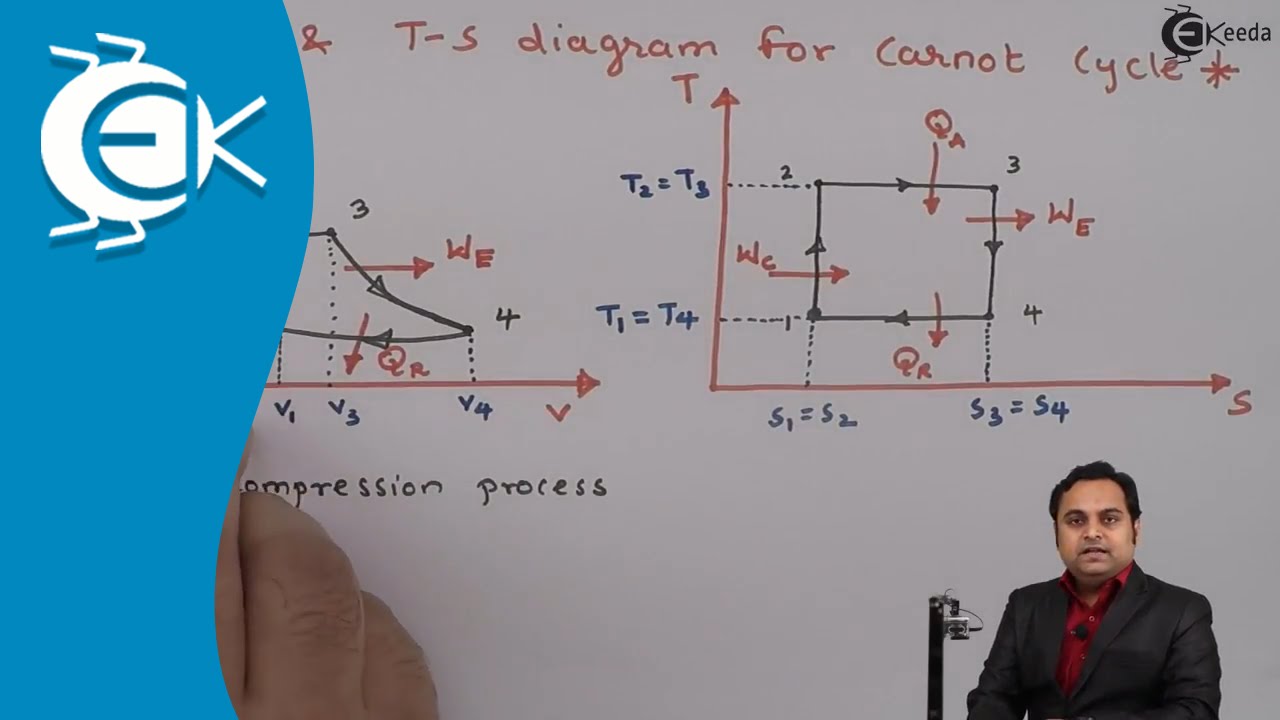
The fourth and last step is called the Reversible Adiabatic Compression. Now the low energy sink is removed and insulation is placed back on the cylinder head. The gas continues to be compressed and it goes back to its initial state. In other words, the temperature rises from TL to TH which means the cycle is now complete. Let’s look at a pressure volume diagram of a Carnot cycle. Starting from step one to two, the pressure drops and volume increases as the gas expands. The temperature stays constant at TH. For the temperature to stay constant at TH, heat needs to be transferred so we have QH which is the heat transferred from our energy source.
From step 2 to 3, the pressure drops more and the volume continues to increase. Because our cylinder is now insulated, the temperature drops to TL. From step 3 to 4, the piston is pushed inwards, so the gas is compressed. The pressure increases and volume decreases. There is an energy sink so the temperature is kept constant at TL. For that to happen, heat needs to be rejected into the energy sink, so that’s QL. From step 4 to step 1, we insulate the cylinder while the piston keeps pushing inwards. The pressure continues to increase and volume continues to decrease arriving at the same state as step 1 and the temperature rises to TH. The area inside the path 1,2,3,4,1 shows us the net work done during the cycle. Keep in mind that the Carnot heat-engine cycle is a reversible cycle, so every step can be reversed, which would result in the Carnot refrigeration cycle. Here is the pressure volume diagram for a reversed Carnot cycle.
The biggest difference lies in the direction along with QL being the heat absorbed from a low-temperature reservoir and QH being the heat rejected to a high-temperature reservoir.
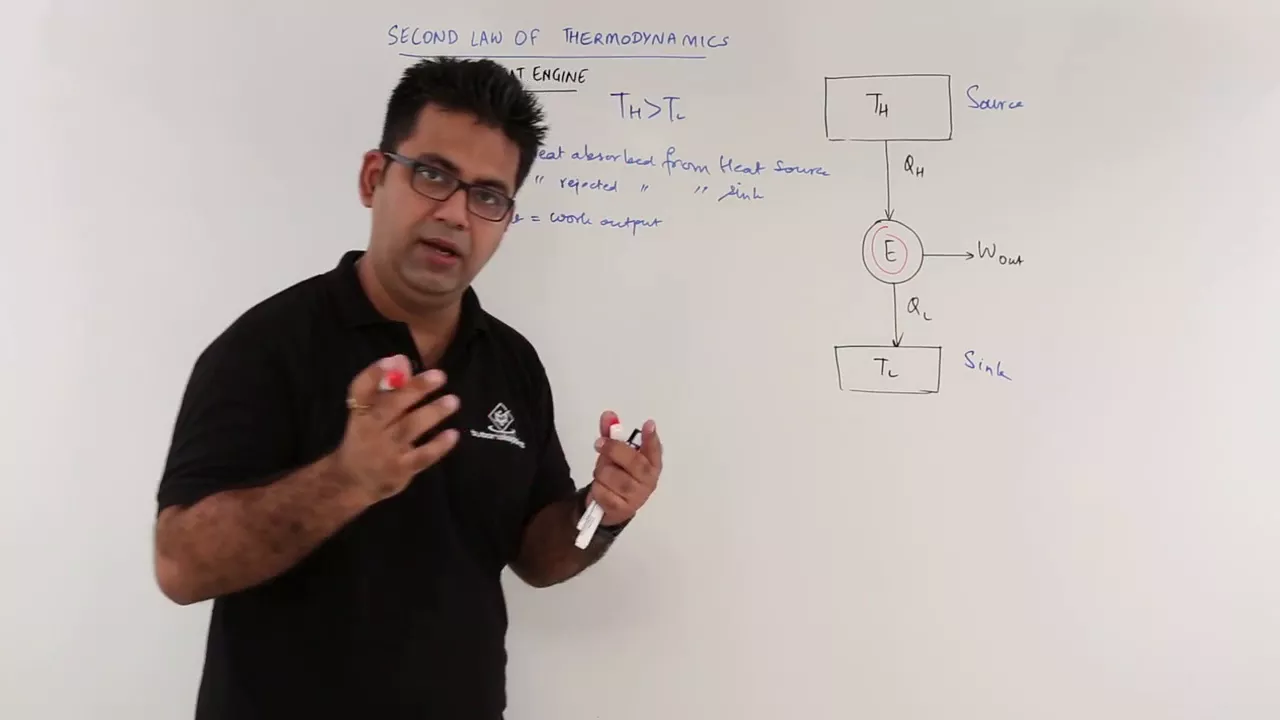
Now let’s dive into the efficiency of a Carnot engine. In the previous heat engines video, we talked about this equation which gives us the efficiency of any heat engine. Here, QH is the heat transferred to the engine from a high temperature reservoir and QL is the heat rejected to a low temperature reservoir. When it comes to reversible heat engines, like the Carnot engine, we can go one step further and write our efficiency equation like this.
Remember that TH is the temperature of the high temperature energy source and TL is the temperature of the energy sink. This relation is called the Carnot efficiency. In simple terms, this equation says the efficiency of reversible engines is a function of reservoir temperature only. You should note that TL and TH must be in kelvin for this equation to work because they are absolute temperatures. Do not use Celsius or Fahrenheit when solving problems, or you will end up with incorrect answers. A relationship between our Carnot efficiency equation and the normal efficiency equation can be written like this for reversible heat engines. Again, the values must be in kelvin for this equation to work. If we compare the thermal efficiency equation to the Carnot efficiency equation, we can determine what type of heat engine it is.
If the thermal efficiency is less than the Carnot efficiency, then it’s an irreversible heat engine.
If it’s equal to the Carnot efficiency, then it’s a reversible heat engine, and if it’s greater, then it’s an impossible heat engine. Now let’s go through some problems to see how we can apply what we learned. Let’s take a look at this question where we have a Carnot heat engine that receives heat from a source where we don’t know the temperature. We need to figure out the temperature of the source and the thermal efficiency of the heat engine. Let’s start by writing down what we know. The engine receives 650 kJ of energy, and rejects 250 kJ. So that’s our QH and QL. The sink where heat is rejected to is at a temperature of 24 degrees Celsius. We can use this equation to figure out the temperature of the energy source since this is a Carnot engine. Let’s plug in the values we know. Solving gives us the temperature of the energy source.
We can find the efficiency using the Carnot efficiency equation. And those are our answers.
In this problem, we have a heat engine with heat supplied to it at a steady rate. We need to figure out the maximum power output. Let’s write down what we know. The source temperature is 477 degrees Celsius and the sink temperature is 25 degrees Celsius.
Heat is supplied at a rate of 65000 kJ/min. We have TH and TL, so we can figure out the efficiency using the Carnot efficiency equation. To figure out the maximum power output, we need to use this equation. You should remember this from the heat engines video. Here, our Qin is the heat supplied. Let’s rearrange the equation and write it in time rate form. Now we can plug our values in and solving tells us the maximum power output. Let’s take a look at this problem where we have a heat engine that does maximum work equal to 500 kJ. We need to figure out the heat supplied, the heat rejected, and the temperature of the heat sink. Let’s start by writing down what we know. The heat engine receives heat from a source at 1200 degrees Celsius. The efficiency of the engine is 40 percent. The maximum work the heat engine does is 500 kJ.
We can first figure out the heat supplied using this equation. Qin is our QH, which is the heat supplied. To figure out QL, remember that net work is equal to QH minus QL. Solving gives us the heat rejected.
To figure out the temperature of the heat sink, so that’s TL, we can use this equation. Let’s plug in our values. Solving gives us our answers. That should cover the types of problems you will face when it comes to Carnot heat engines. Thanks for watching and best wishes with your studies.
Up Next

27:14
Entropy and the Second Law of Thermodynamics Explained
@veritasium
27.5M views•2023-07-01

12:53
21cm Hyperfine Transition in Neutral Hydrogen: Radio Astronomy Basics
@AaronRobertParsons
12.4K views•2011-10-13

32:32
NMR Spin Physics I: Zeeman Effect, Resonance Condition & Larmor Frequency
@nptel-indianinstituteofsci8064
2.3K views•2024-01-17

4:59
How Do Solar Panels Work? | Solar Energy Explained
@TEDEd
26.5M views•2016-01-05
Related Study Plans & Knowledge Roadmaps
Structured learning paths in Physics
physics
Nuclear Physics (Decay, Fission & Reactors)
01Atomic Structure and the Binding Force
02Radioactive Decay and Half-Life
03Nuclear Fission Mechanics and Chain Reactions
+ 2 more learning modules
12h5 modules
Explore Roadmap
physics
Soft Matter (Polymers, Colloids & Rheology)
01Foundations of Soft Matter & Thermal Forces
02Polymer Physics and Macromolecules
03Colloids, Surfactants, and Self-Assembly
+ 2 more learning modules
38h5 modules
Explore Roadmap
physics
Analytical Mechanics: Lagrangian & Hamiltonian
01Mathematical Foundations: Calculus of Variations
02From Newtonian Mechanics to Constraint Dynamics
03The Principle of Least Action & Lagrangian Mechanics
+ 3 more learning modules
28h6 modules
Explore Roadmap
physics
General Relativity (Spacetime & Cosmology)
01Foundations of Relativity: Special Relativity
02The Geometry of Spacetime: Equivalence Principle & Curvature
03Einstein's Field Equations: The Mathematics of Gravity
+ 2 more learning modules
55h5 modules
Explore Roadmap