









![First and Second Language Acquisition | Marjo Mitsutomi, Minna Kirjavainen [ACLL2014]](https://i.ytimg.com/vi_webp/ZqDt2isALig/maxresdefault.webp)








![[Summary] The Language Instinct: How the Mind Creates Language – Steven Pinker [Book Review]](https://i.ytimg.com/vi/CjpwRmvWCSE/maxresdefault.jpg)




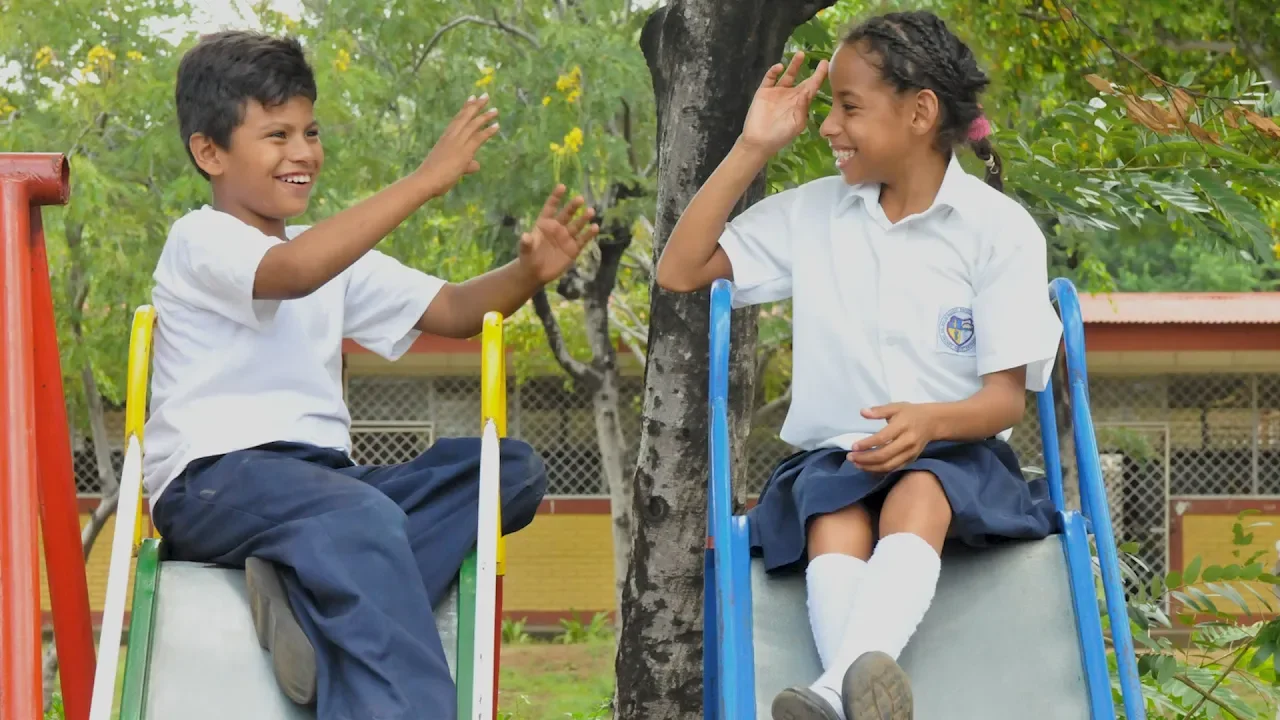
The Language Bio Program Hypothesis, proposed by Derek Bickerton, posits that humans possess an innate language system (bio program) that activates when linguistic input is limited, enabling children to create creole languages or home signs that share structural similarities with other languages, as demonstrated by studies of Hawaiian Creole and congenitally deaf children who invented gestural communication systems.
Psycholinguistics: The Language Bioprogram Hypothesis | ENG511 Lecture 20
Added:The fundamental distinction between pidgins (simplified contact languages with no native speakers) and creoles (fully developed, natural languages).
Noam Chomsky's theory of Universal Grammar (UG) and the concept of an innate Language Acquisition Device (LAD).
The basics of first language acquisition, specifically how children process and structure linguistic input.
The Critical Period Hypothesis, which argues that there is a biologically determined biological window for acquiring a first language.
Alternative theories of creolization, such as the Substrate Hypothesis, which emphasizes the grammatical influence of the speakers' original native languages.
The historical case study of Nicaraguan Sign Language (NSL) as a real-world demonstration of rapid, child-driven language creation.
Advanced debates in cognitive science regarding domain-specific modular language faculties versus domain-general cognitive systems.
Comparative linguistics analyzing whether grammatically distinct creoles across the globe share a universal structural core.
718 views4likes6:44Original Release: 2019-05-06
we will now look at in language by programs in continuation of what we have just discussed which is the language buyer program hypothesis now this hypothesis has been introduced by Derek Bickerton according to which we have seen that the idea is to look at the creation of creole languages and similarities that they have and also the comparison of the first or child's language acquisition with the creole languages so these all these factors contribute towards the understanding of this hypothesis the key is to understand that according to bcurtin in the absence of input from the environment the children have process have a system which is the bio program language system which everybody or every child is born with it is the innate language system which he refers to as the bio program language system unlike pigeons the Creoles resembled the structural rules of other languages from these observation basically bcurtin has proposed the concept of language bio program childrens Creoles was based on their access to English and this again as we have seen that because since major work has been with regard to Hawaiian natives so we will continue our discussion with reference to that study in which children scrolls were based on their access to English the language of plantation honors because it's point out however that contact between immigrants and their families and honors was limited and that the Hawaiian Creole differed in several respect from English another possibility is that linguistic feature not attributable to English could be derived from original native languages of the parents for example children whose parents were Portuguese might incorporate some Portuguese elements in their Creoles again the evidence provided by Bickerton suggests otherwise he found that Hawaiian Creole was strikingly similar to Creoles created by children in very different parts of the world the language by program hypothesis has been further supported by the studies of language development in congenitally deaf children by a goldin-meadow so these studies were basically the studies of language development in congenitally deaf children again were supported by a golden the children are between 13 months and four years at the start of the study and were studied every two to four months so in this study we see that they subjects were studied every two to four months for about a year and a half none of these children were exposed to conventional sign language most weren't educated by the oral method which emphasizes lip-reading and some are not in any educational program nevertheless the children invented a form of gestural language called home sign that was similar in many respects to the language of children with normal hearing they used gestures that was similar morphologically to sign language and signs that refer to information specially and temporarily displaced from the speakers and listeners thus when linguistic input is minimal deaf children may create a gestural language that is similar in many respects to no well children's language now the question is how the proposed bhaiyya Graham might operate in the absence of ordinary linguistic stimulation what happens if children are given appropriate linguistic input the curtain suggests that under these similar circumstances the by program is forced to be or is suppressed and children learn the native language in particular he claims that children use what he calls the preemption principle that is if you hear people using a form different from the one you are using and do not hear anyone using your form abundant yours and use theirs this principle is based on assumptions found elsewhere in language development the assumption that there is one unique form for a given function and that is what Pinker proposed in 1984 the assumption that alternative candidates for that form are in competition with one another Chomsky and other proponents of net ism have emphasized the task-specific all modular nature of our language capacity and meat curtains hypothesis is consistent with this emphasis but it is more than that basically task specificity refers to the notion that cognitive processes associated with language use are not general purpose problem solving processes but are instead restricted to language only to conclude studies of creole language suggests that we have a linguistic backup system the language by program which springs into action when language input is limited
Up Next

29:26
Creole Languages: Origins, Evolution, and Linguistic Significance
@WikiWikiup
135 views•2016-08-09
36:52
Constraint Interaction in Optimality Theory: Epenthesis & Deletion
@Vidyamitra
180 views•2018-08-20
6:54
Pidgins & Creoles: Theories of Origin | World Englishes
@thevirtualuniversityofpakistan
2.3K views•2019-01-18

21:32
Accent Expert Explains U.S. Regional Dialects | Part 1
@WIRED
9.3M views•2021-01-21
Related Study Plans & Knowledge Roadmaps
Structured learning paths in Linguistics
linguistics
Optimality Theory: Tableaux & Constraints
01Phonological Basics: Sounds, Syllables & Rules
02Foundations of Optimality Theory: GEN, CON, and EVAL
03The Constraint Inventory: Markedness vs. Faithfulness
+ 2 more learning modules
15h5 modules
Explore Roadmap
linguistics
Morphosyntactic Alignment: S, A & P Systems
01Foundations of Syntax: Transitivity and Arguments
02The Linguistic Variables: Mapping S, A, and P
03Nominative-Accusative Alignment
+ 3 more learning modules
12h6 modules
Explore Roadmap
linguistics
Analyzing Sign Language: Phonology & Syntax
01Foundations of Sign Language Linguistics
02Phonology: The Five Parameters of a Sign
03Morphology: Word Formation and Classifiers
+ 2 more learning modules
14h5 modules
Explore Roadmap
linguistics
Pragmatics: Speech Acts, Grice & Politeness
01Introduction to Pragmatics: Meaning in Context
02Grice’s Cooperative Principle & Implicature
03Speech Act Theory
+ 2 more learning modules
14h5 modules
Explore Roadmap