
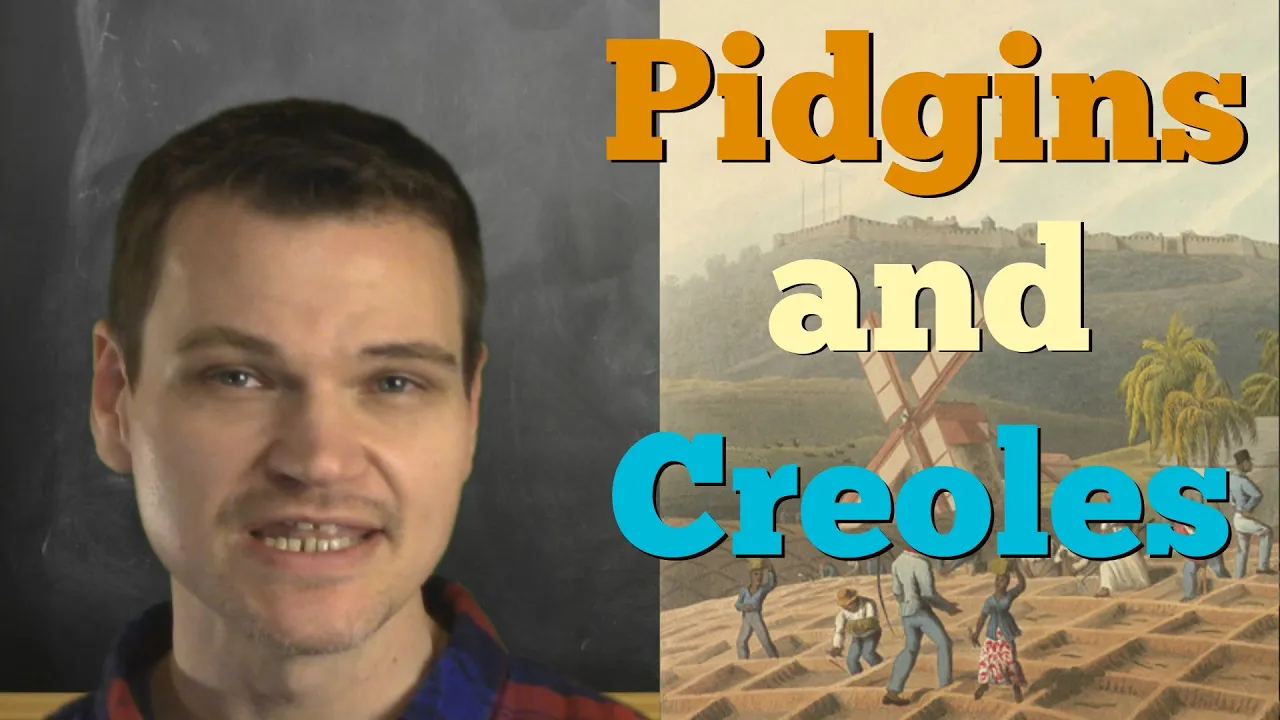


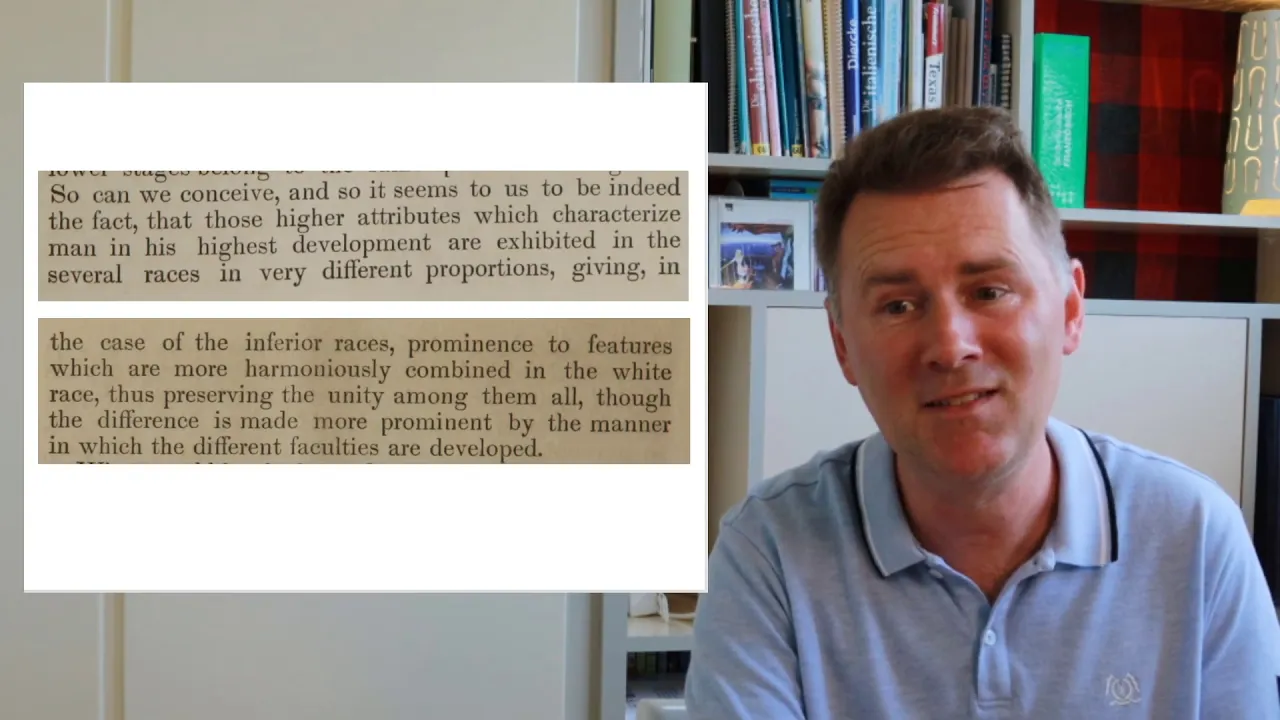





















Pidgins and creoles exhibit remarkable structural similarities across different world regions despite being based on different languages, which has led linguists to develop theories explaining their origins. The deficiency theory, which claimed that speakers of 'primitive' languages were intellectually inferior and unable to learn standard languages, has been rejected by most linguists as racist. Modern theories categorize origins into three groups: polygenesis (independent development in different places), monogenesis (single source), and universal strategies (common language learning processes). The independent parallel development theory explains similarities through shared circumstances including trade communication needs, shared superstrate languages (often English), common simplification processes (dropping inflections, simpler sounds), and similar social contexts such as slave trade communication.
Pidgins & Creoles: Theories of Origin | World Englishes
Added:there are remarkable similarities in the structure of pidgins and creoles which are found in different parts of the world these similarities exist even when these pigeons are based on languages which are very different from each other this has gotten linguists interested in the origins of pidgins and creoles many theories have been put forth regarding their origin one of these theories which is considered one of the earliest theories claims that witches and Creoles emerged among the people among those people who were not capable of learning the standard languages with which these pigeons are associated another view which is associated with this idea is that European languages are better than other languages of the world and that many languages in the world speak primitive languages by primitive languages they mean languages which are deficient in certain ways this idea of a certain languages being deficient in certain ways is then linked with the idea that people who use these languages are themselves deficient that is in failure in certain ways that is intellectually and therefore they are unable to learn more advanced languages this theory has been rejected by majority of linguists what do you think about such a theory of course it deserves to be rejected because it's largely racists other theories of the origin of pidgins and creoles are divided into three groups depending on whether a pidgin arose from a variety of sources that is arose in different places this group is called polygenesis and then the second group is called mono genesis which means the pigeons rose all the pigeons rose emerge from a single source and the third group is universal strategies which claims that all the pigeons arrived from universal strategies of language learning let's take a look at some of these theories one of these theories which is poly genetic is the independent parallel development theory according to this theory pidgins and creoles developed independently from each other in different parts of the world at the same time and any similarities that we find in the structure of these pidgins and creoles are because of the shared circumstances of their origin now what is meant by the sheer circumstances of their origin one factor which makes these circumstances similar is the Nitra communication for the purposes of trade European traders has have been doing trade with Asia and African countries for a long time when they reach these countries they of course need you to communicate with the people they regularly did business with but they spoke different languages so out of this need for communication for trade purposes our language emerged or different languages emerge which we call pidgins and creoles now another factor which creates similarities among these languages is the shared superstrate language in most of the cases it is English but not always before we go any further let's discuss what we mean by a superstrate language in linguistics stratum or Strait is a language which influences or and is also influenced by another language of the two languages the language which is superior and has more prestige is called the superstrate language and the language which is considered inferior or has less prestige because it belong to the people who are less powerful is called a substrate language in case of pigeons the European languages in many cases English were the superstrate language is so often these pidgins and creoles share the same superstrate language that is English but in cases when the superstrate language was not English example when it was Spanish or Dutch or French even then these languages belong to the same group as English does that is indo-european language family the there were still similarities in their structure then another reason which is given for the similarities in these pidgins and creoles is that the simplification process for any language is the same which means that all the languages go through the same process for simplification which includes use of simpler set of sounds dropping of inflections for example people will not use s to indicate plurality will not use IDI to indicate a past tense etc so all the languages when they undergoing a process in a simplification they follow these practices then they were shared social contacts example if a pidgin originated as a result of communication between traders from different countries the social context was the same in different places even later when pigeons originated of pigeons different pitches arise as a result of a slave trade or the African slaves who were used on sugar plantations in Caribbean the then social context remained very similar for example there was a need for communication between the slave masters and the slaves and then the need included very simple functions for example making a complaint making a request giving instructions etc so this need for communication was the same and the social context was also the same and then another reason which is considered most plausible is the sheer substrate in many cases it was African but in case of Pacific real pigeons it was again a common language which was found in this part of the world
Up Next

Decreolization Explained: Definition, Process & Examples | Sociolinguistics
@practicallearning5585
2.1K views•2023-12-17
Constraint Interaction in Optimality Theory: Epenthesis & Deletion
@Vidyamitra
180 views•2018-08-20

Psycholinguistics: The Language Bioprogram Hypothesis | ENG511 Lecture 20
@thevirtualuniversityofpakistan
718 views•2019-05-06

Accent Expert Explains U.S. Regional Dialects | Part 1
@WIRED
9.3M views•2021-01-21
Related Study Plans & Knowledge Roadmaps
Structured learning paths in Linguistics