

















A creole language is a stable, natural language that develops from a pidgin when it becomes the native first language of children, acquiring a fully developed vocabulary and grammar system; approximately 100 creole languages have emerged since 1500, predominantly based on European languages due to colonial trade and the Atlantic slave trade, and they share more grammatical similarities with each other than with their parent languages despite having simpler and less sophisticated grammatical structures compared to older established languages.
Creole Languages: Origins, Evolution, and Linguistic Significance
Added:Basic understanding of sociolinguistics and how historical events, such as colonialism and global trade, facilitate language contact.
The fundamental definition of a 'pidgin' as a simplified, auxiliary contact language with no native speakers.
The distinction between a superstrate (or lexifier) language and substrate languages in contact scenarios.
Familiarity with basic linguistic terminology, specifically syntax, morphology, and lexicon.
The 'Language Bioprogram Hypothesis' and theories regarding Universal Grammar's role in rapid creole genesis.
The concept of the post-creole continuum, exploring decreolization, acrolects, mesolects, and basilects.
Sociolinguistic issues of creole languages, including language standardization, official status, and educational policies in post-colonial nations.
Comparative analysis of specific creoles, such as Haitian Creole, Tok Pisin, Papiamento, and Gullah Geechee.
135 views2likes29:26Original Release: 2016-08-09
in contrast to specific languages that have Creo in the name a Creo language or simply a Creo is a type of classification of language in particular a creole is a stable natural language that has developed from a pigeon that over time has become nativized by children as the first language with the accompanying effect of a fully developed vocabulary and system of grammar the precise number of Creo Lang languages is not known particularly as many are poorly attested or documented but the list of cre languages shows that Crees exist around the world about 100 Creo languages have Arisen since 1500 these are predominantly based on European languages due to the age of Discovery and the Atlantic slave trade that arose at the time with the improvements in ship building and navigation Traders had to learn to communicate with people around the world and the quickest way to do this was to develop a pigeon or simplified language suited to the purpose in turn full Creo language is developed from these pigeons in addition to Creoles that have European languages as the base there are for example Crees based on Arabic Chinese and Malay the Creole with the largest number of speakers is Haitian Creole with about 10 million native speakers the lexican of a cre language is largely supplied by the parent languages particularly that of the most dominant group in the social context of the Creoles construction however there are often clear phenetic and semantic shifts on the other hand the grammar that has evolved often has newer unique features that differ substantially from those of the parent languages overview a Crea hole is believed to arise when a pit developed by adults for uses of second language becomes the native and primary language of their children a process known as nativization the pigeon Creole life cycle was studied by Hall in the 1960s Crees share more grammatical similarities with each other than with the languages from which they are Pho genetically derived however there is no widely accepted theory that would account for those perceived similarities moreover no grammatical feature has been shown to be specific to Crees although it is generally acknowledged that Creoles have simpler and less sophisticated grammar than longer established languages many of the Crees known today arose in the last 500 years as a result of the worldwide expansion of European Maritime power and trade in the age of discovery which led to extensive European and colonial empires like most non-official and minority languages Crees have generally been regarded in popular opinion as degenerate variance or dialects of the parent languages because of that prejudice many of the Creoles that arose in the European colonies having been stigmatized have become extinct however political and academic changes in recent decades have improved the status of Creoles both as living languages and as object of linguistic study some proles have even been granted the status of official semiofficial languages of particular political territories linguists now recognize that Creo formation is a universal phenomenon not limited to the European Colonial period and an important aspect of language Evolution for example in 1933 Sigman Feist postulated a cre origin for the Germanic languages other Scholars such as Sally coko malan argue that pigeons and Crees arise independently under different circumstances and that a pigeon need not always pred a creel nor a cre hole evolved from a pigeon pigeons according to M emerged in trade colonies among uses who preserved the native vernaculars for the daytoday interactions Crees meanwhile the veloped in settlement colonies in which speakers of a European language often indentured servants whose language would be far from the standard in the first place interacted extensively with non-european slaves absorbing certain words and features from the slaves non-european native languages resulting in a heavily basalz version of the original language these servants and slaves would come to use the Creo as an everyday a vernacular rather than merely in situations in which contact with a speaker of the super Strait was necessary history origin the English term creol comes from French crayo which is cognate with the Spanish term Creo and Portuguese kulo all descending from the verb C all coming from a Latin Korea the specific sense of the term was coined in the 16th and 17th century during the Great expansion in European Maritime power and trade that led to the establishment of European colonies in other continents the terms Creo and culo were originally qualifiers used throughout the Spanish and Portuguese colonies to distinguish the members of an ethnic group who were born and raised locally from those who immigrated as adults they were most commonly applied to Nationals of the colonial power e g to distinguish ESP ol's Creos from espanol's Peninsula however in Brazil the term was also used to distinguish between negro Kus and negro africanos over time the term and its derivatives lost the generic meaning and became the proper name of many distinct ethnic groups that developed locally from immigrant communities originally therefore the term Creo language meant the speech of any of those Creo old peoples geographic distribution as a consequence of colonial European trade patterns most of the known european-based cre languages arose in coastal areas in the equatorial belt around the world including the Americas western Africa go along the west of India and along southeast Asia up to Indonesia Singapore maau Hong Kong the Philippines Malaysia SE shells and oania many of those Crees are now extinct but others still survive in the Caribbean the north and east coasts of South America western Africa Australia and in the Indian Ocean Atlantic Creole languages are based on European languages with elements from African and possibly Amar Indian languages Indian Ocean Creole languages are based on European languages with elements from malasi and possibly other Asian langu languages there are however Crees like nubi and Sango that are derived solely from non-european languages social and political status because of the generally low status of the cre peoples in the eyes of Prior European Colonial Powers Creo languages have generally been regarded as degenerate languages or at best as rudimentary dialects of the politically dominant parent languages because of this word creal was generally used by linguists in opposition to language rather than as a qualifier for it another factor that may have contributed to the relative neglect of cre languages in linguistics is that they do not fit the 19th century neog Garian tree model for the evolution of languages and its postulated regularity of sound changes this controversy of the late 19th century profoundly shaped modern approaches to the comparative method in historical Linguistics and in calistic because of social political and academic changes brought on by decolonization in the second half of the 20th century cre languages have experienced revivals in the past few decades they are increasingly being used in print and film and in many cases the community Prestige has improved dramatically in fact some have been standardized and are used in local schools and universities around the world at the same time linguists have begun to come to the realization that Creo languages are in no way inferior to other languages they now use the term creel or Creo language for any language suspected to have undergone calization terms that now imply no Geographic restrictions nor ethnic udes classification of Creoles historic classification according to their external history four types of Crees have been distinguished Plantation Creoles Fort Creoles maroon Creoles and creolized pigeons by the very nature of a creole language the pho genetic classification of a particular Creole usually is a matter of dispute especially when the pigeon precursor and its parent tongues have disappeared before they could be documented Pho genetic classification traditionally relies on inheritance of the Lexicon especially of core terms and of the grammar structure however in Crees the cor xan often has mixed origin and the grammar is largely original for these reasons the issue of which language is the parent of a Creo that is whether a language should be classified demonstrated by the fate of many replaced European languages the influence of the substrate on the official speech is often limited to pronunciation and a modest number of Lone words the substrate might even disappear altogether without leaving any Trace however there is dispute over the extent to which the terms substrate and superstrate are applicable to the Genesis of the description of Creole languages the language replacement model may not be appropriate in cre formation contexts where the emerging language is derived from multiple languages without any one of them being imposed as a replacement for any other the substratum superstratum distinction becomes awkward when multiple superstratum must be assumed when the substratum cannot be identified or when the presence of the survival of substratal evidence is inferred from mere typological analogies on the other hand the distinction may be meaningful when the contributions of each parent language to the resulting Creole can be shown to be very unequal in a scientifically meaningful way in the literature on Atlantic Creoles superate usually means European and substrate non-european or African the creolization since cre languages ready attain official state us the speakers of a fully formed cre may eventually feel compelled to conform the speech to one of the parent languages this decreolization process typically brings about a postre speech Continuum characterized by large scale variation and hypercorrection in the language it is generally acknowledged that Crees have a simpler grammar and more internal variability than older more established languages however these Notions are occasionally challenged Pho genetic typological comparisons of Creole languages have led to Divergent conclusions similarities are usually higher among Crees derived from related languages such as the languages of Europe than among broader groups that include also Crees based on non indoeuropean languages french-based Crees in turn are more similar to to each other than to other European based Creoles it was observed in particular that definite articles are mostly prenominal in english-based Creole languages and English whereas they are generally postnominal in French Creoles and in the variety of French that was exported to the colonies in the 17th and 18th century moreover the European languages which gave rise to the Creo languages of European colonies all belong to the same subgroup of Western indoeuropean and have highly convergent grammars to the point that HF joined them into a single standard average European language group French and English are particularly close since English through extensive borrowing is typologically closer to French than to other Germanic languages thus the claimed similarities between Creoles may be mere consequences of similar paring AG rather than characteristic features of all Creoles Creo Genesis there are a variety of theories on the origin of cre languages all of which attempt to explain the similarities among them aons muis can and amp Smith outline a fourfold classification of explanations regarding Creo Genesis theories focusing on European input theorist focusing on non-european input gradualist and developmental hypothesis Universalist approaches theories focusing on European input monogenetic theory of pigeons and Creoles the monogenetic theory of pigeons and Creoles hypothesizes that they are all derived from a single Mediterranean lingua franka ver West African pigeon Portuguese of the 17th century reified in the soall slave factories of Western Africa that that were the source of the Atlantic slave trade this theory was originally formulated by Hugo shush in the late 19th century and popularized in the late 1950s and early 1960s by Taylor winam Thompson and Stewart however this hypothesis is no longer actively investigated and Crees such as the hedo language obviously have nothing to do with the Mediterranean lingua Franco Dom IC origin hypothesis proposed by Hancock for the origin of english-based Crees of the West Indies the domestic origin hypothesis argues that towards the end of the 16th century English-speaking Traders began to settle in The Gambia and Sierra Leon Rivers as well as in neighboring areas such as the bulam and sherro ghosts these settlers intermarried with the local population leading to mixed population and as a result of this intermarriage an English pigeon was created this pigeon was learned by slaves enslave depos who later on took it to the West Indies and formed one component of the emerging English Crees European dialect origin hypothesis the French Crees of the foremost candidates to being the outcomer of normal linguistic change in the cess to be sociohistoric in nature and relative to the Colonial origin within this theoretical framework a French Creole is a language Pho genetically based on the French language more specifically on a 17th century con French extant in Paris the French Atlantic harbors and The Naz and French colonies supporters of this hypothesis suggest that the nonre French dialect still spoken in many parts of the americaas share Mutual descent from this single con these dialects are found in Canada the Prairies Louisiana St baramy and is isolates in other parts of the Americas approaches under this hypothesis are compatible with gradualism in change and models of imperfect language Transmission in con Genesis Foreigner talk and baby talk The Foreigner talk hypothesis argues that a pigeon a creal language forms when native speakers attempt to simplify their language in order to address speakers who do not know the language at all because of the similarities found in this type of speech and speech directed to a small child it is also sometimes called Baby talk aand muis can and amp Smith suggest that four different processes are involved in creating Foreigner talk accommodation imitation telegraphic condensation conventions this could explain why Creole languages have much in common while avoiding a monogenetic model however hang camp in analyzing German Foreigner talk claims that it is too inconsistent and unpredictable to provide any model for language learning while the simplification of input was supposed to account for kol's simple grammar commentators have raised a number of criticisms of this explanation there are great many grammatical similarities amongst pigeons and Crees despite having very different lexify languages grammatical simplification can be explained by other processes i e the innate grammar of boton's language bi program Theory speakers of a creel's lexifier language often fail to understand without learning the language the grammar of a pigeon a creole pigeons are more often used amongst speakers of different substrate languages than between such speakers and those of the lexifier language dot another problem with the FD explanation is its potential circularity Bloomfield points out that FD is often based on the imitation of the incorrect speech of the non-natives that is the pigeon therefore one may be mistaken in assuming that the former gave rise to the latter imperfect L2 learning the the imperfect L2 learning hypothesis claims that pigeons are primarily the result of the imperfect L2 learning of the dominant lexifier language by the slaves research on naturalistic H2 processes has revealed a number of features of inter language systems that are also seen in pigeons and Creoles invariant verb forms derived from the infinitive the least marked finite verb form loss of determiners us as determiners of demonstrative pronouns adjectives or adverbs placement of a negative particle in preverbal position use of adverbs to express modality fixed single word order with no inversion in questions reduced or absent nominal plural marking dot imperfect L2 learning is compatible with other approaches notably the European dialect origin hypothesis and the Universalist models of language transmission theories focusing on non-european input theories focusing on the substrate or non-european languages attribute similarities amongst Crees to the similarities of African substrate languages these features are often assumed to be transferred from the substrate language to the creola to be preserved in variant from the substrate language in the creal through process of relexification the substrate language replaces the native lexical items with lexical material from the super straight language while retaining the native grammatical categories the problem with this explanation is that the postulated substrate languages differ amongst themselves and with Creoles in meaningful ways Boton argues that the number and diversity of African languages and the pocity of a historical record on Creole Genesis makes determining lexical corresponden is a matter of chance Dillard coined the term cafeteria principle to refer to the practice of arbitrarily attributing features of Crees to the influence of substrate African languages or assorted substandard dialects of European languages for a representative debate on this issue see the contributions to m for a more recent view pville because of the sociohistoric similarities amongst many of the Creoles the Atlantic slave trade and the plantation system of the European colonies have been emphasized as factors by linguists such as mcarter gradualist and developmental hypotheses one class of Crees might start as pigeons rudimentary second languages improvised for use between speakers of two or more non-intelligent need three languages to form with one being clearly dominant over the others the Lexicon of a pigeon is usually small and drawn from the vocabularies of its speakers in varying proportions morphological details like word inflections which usually take years to learn are emitted the syntax is kept very simple usually based on strict word order in this initial stage all aspects of the speech syntax lexicon and pronunciation tend to be quite variable especially with regard to the speaker's background if a pigeon manages to be learned by the children of a community as a native language it may become fixed and acquire a more complex Grammar with fixed phenology syntax morphology and syntactic embedding pigeons can become full languages in only a single generation calization is this second stage where the pigeon language develops into a fully developed native language the vocabulary 2 will develop to contain more and more items according to a rationale of lexical enrichment Universalist approaches Universalist models stress the intervention of specific General processes during the transmission of language from generation to generation and from speaker to speaker the process invoked varies a general tendency towards semantic transparency first language learning driven by Universal process or general process of discourse organization the main Universalist theory is still boton's language bioprogram theory proposed in the 1980s bigoton claims that Creoles are inventions of the children growing up on newly founded plantations around them they only heard pigeons spoken without enough structure to function as natural languages and the children used their own innate linguistic capacities to transform the pigeon input into a full-fledged language the alleged common features of all Crees would then be the consequence of those anate abilities being Universal recent study the last decade has seen emergence of some new questions about the nature of Creoles in particular the question of how complex Creoles are in the question of whether Creoles are indeed exceptional languages Creo prototype some features that distinguish Creole languages from non- Creoles have been proposed John mcord has proposed the following list of features to indicate a cre whole prototype a lack of inflectional morphology a lack of tone on mono slabic words stand a lack of semantically opaque word formation dot mord hypothesizes that these three properties exactly characterize a creole however the Creo prototype hypothesis has been disputed Henry whitmann and David Gil argue that languages such as manding sinki muua French and Ry Indonesian have all these three features show none of the sociohistoric traits of Creo languages others have demonstrated Crees that serve as counter examples to MC's hypothesis the existence of inflectional morphology in burish Dutch Creole for example orone in Pap menu exceptionalism building up on this discussion MC proposed that the world's simplest grammars are cre grammar claiming that every non- Creo languages grammar is at least as complex as any Creole languages grammar Gil has replied that Ry Indonesian has a simpler grammar than saraan the language mcord uses is a showcase for his theory the same objections were raised by Whitman in his 1999 debate with mcarter the lack of progress made in defining Crees in terms of the morphology and syntax has led Scholars such as Robert shenson Sally Coco malan Michelle degriff and Henry Witman to question the value of Creo as her typological class they argue that Creoles are structurally no different from any other language and that Creole is a sociohistoric concept not a linguistic one encompassing displaced populations and slavery Thomason and amp calman spell out the idea of cre exceptionalism claiming that cre languages are an instance of non- gentic language change due to language shift with abnormal transmission gradualists question the abnormal transmission of languages in a creal setting and argue that the processes which created today's Creo languages are no different from Universal patterns of language change given these objections to cre as a concept articles such as against exceptionalism byph and texts like deconstructing Creole Balo and Matthews have Arisen which question the idea that Crees are exceptional in any meaningful way additionally Maran argues that some romance languages are potential Creoles but that they are not considered as such by linguists because of a historical bias against such a view
Up Next

23:46
Are Creoles Just Hybrid Languages? A Critical Analysis
@johnmcwhorter4280
6.4K views•2017-09-18
36:52
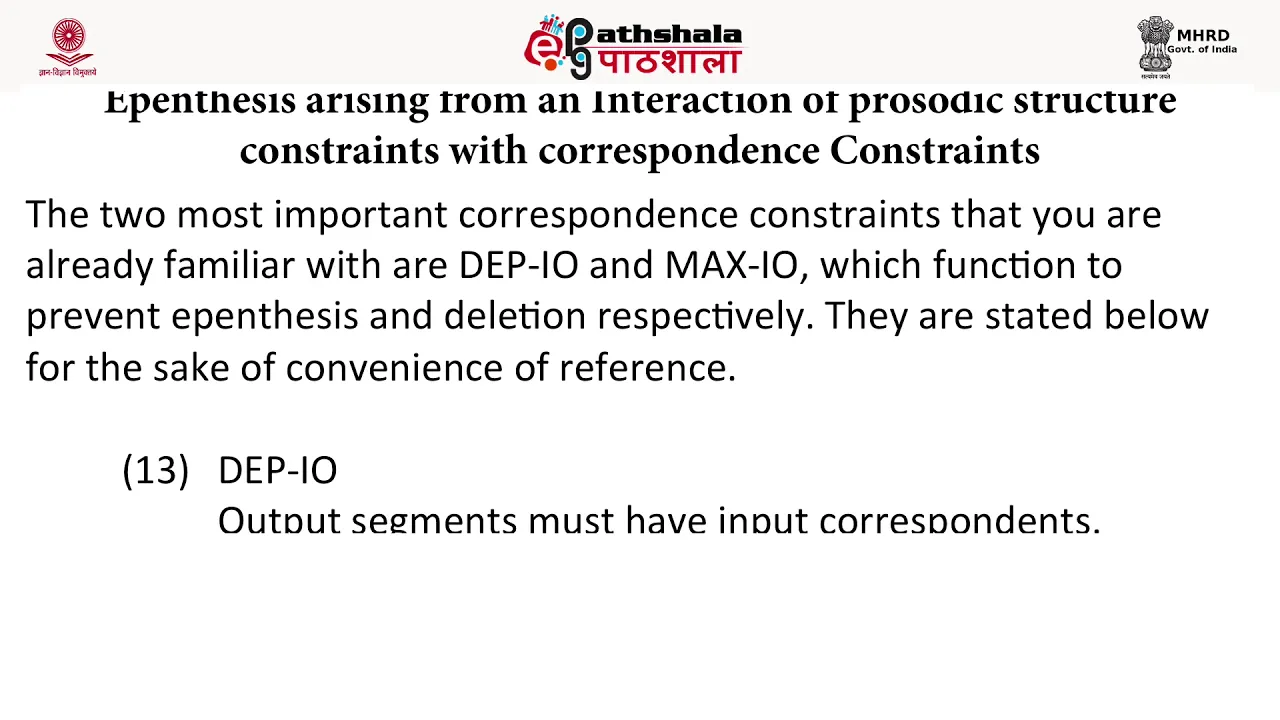
Constraint Interaction in Optimality Theory: Epenthesis & Deletion
@Vidyamitra
180 views•2018-08-20

8:59
Forensic Linguistics: How Language Solves Crimes | PBS
@pbsstoried
1M views•2024-01-25

21:32
Accent Expert Explains U.S. Regional Dialects | Part 1
@WIRED
9.3M views•2021-01-21
Related Study Plans & Knowledge Roadmaps
Structured learning paths in Linguistics
linguistics
Optimality Theory: Tableaux & Constraints
01Phonological Basics: Sounds, Syllables & Rules
02Foundations of Optimality Theory: GEN, CON, and EVAL
03The Constraint Inventory: Markedness vs. Faithfulness
+ 2 more learning modules
15h5 modules
Explore Roadmap
linguistics
Morphosyntactic Alignment: S, A & P Systems
01Foundations of Syntax: Transitivity and Arguments
02The Linguistic Variables: Mapping S, A, and P
03Nominative-Accusative Alignment
+ 3 more learning modules
12h6 modules
Explore Roadmap
linguistics
Analyzing Sign Language: Phonology & Syntax
01Foundations of Sign Language Linguistics
02Phonology: The Five Parameters of a Sign
03Morphology: Word Formation and Classifiers
+ 2 more learning modules
14h5 modules
Explore Roadmap
linguistics
Pragmatics: Speech Acts, Grice & Politeness
01Introduction to Pragmatics: Meaning in Context
02Grice’s Cooperative Principle & Implicature
03Speech Act Theory
+ 2 more learning modules
14h5 modules
Explore Roadmap