
























Creoles are stable languages that emerge from pidgins through a four-stage process: (1) Restricted Pidgin develops from marginal contact between speech communities with no common language, featuring simplified grammar and limited vocabulary; (2) Extended Pidgin emerges when communication functions expand and grammatical rules become regularized; (3) Nativization occurs when subsequent generations acquire the variety as their first language; (4) Creole emerges with elaborate social functions and a cohesive speech community. This process, driven by colonial trade and slavery, produced over 100 creoles in the last 500 years, predominantly in coastal regions of America, Africa, and Asia, with vocabularies primarily derived from European superstrate languages like English, French, and Portuguese. Despite initial colonial stigma treating creoles as degenerate languages, modern academic interest has elevated their status, though many have become extinct due to decreolization pressures.
Creolization Process and Birth of a New Language | Linguistics
Added:Welcome to class. Today we are going to talk about the process of creolization and how a new language emerges out of this process. It is a very productive phenomenon and it happens within less span of time compared to other natural languages. Before going to creole, we need to understand the socio-political and historical background of such developments. So post Trinessa, and the European navigation that took the entire world into stride by exploring new places, going to new places, opening of new frontiers because of good navigation system developed in the 16th century, and the European powers went to different coastal areas of Asia, Africa, Americas, and established trade and business relations. Now that period also saw growth in slavery and slave extraditions people and large populations moved from one place to another, settling in a new area where they did not find any language common between the indigenous population and the newly arrived group of traders. And the communication need forced them to develop a minimal shared code for carrying out everyday business, routine businesses. If you look at this Creole or Creole languages, they are the result of the last 500 years in human history, and in 500 years more than 100 creoles emerged all over the world, specifically, in coastal areas, and some of them have become instinct, some of them still survive with certain changes in a changed form. So, we will look at the process of creolization and how a new code, a new variety emerged. This is what we are going to do today in our class.
So, when you look at Creole is a consequence of Pidgin. Now, what is Pidgin? So Pidgin is a language or a variety a hybrid variety which is minimally expanded it has very simple grammar a limited number of words, and no stable grammatical rules but it helps it help them carry out their everyday business. That is a very restricted code Pidgin a mix of two languages, language A and language B, the language of the community and the language of the newly arrived traders, and this Pidgin over a period of time gets established, gets expanded, rules get regularized and then it is expanded to an extent where the structures become stable and over a period of time coming generations acquire this newly emerged variety as mother tongue and it becomes a Creole. So, essentially a creole is a stable language variety that develops from the simplifying and mixing of different languages into a new one within a brief period of time that is the beauty of it because other natural languages have taken hundreds of years to emerge but creole is relatively quick development. And we can say, a creole is a neutralized and naturalized stable language that comes into existence through mixed parent languages. And mixed parent languages mean languages of the community and languages of the newly settled population and because no code was common Pidgin emerged out of these two courts and that established variety of Pidgin, a developed variety of Pidgin, expanded variety of Pidgin, extended variety of Pidgin ultimately becomes creole. So, it is a consequence of the Pidgin that evolves into a full-fledged language. So in that sense, we can say that creoles are characterized by number one, a tendency to systematize their inherited grammar by eliminating irregularities or regularizing the conjugation of otherwise irregular verbs or so on and so forth the entire morphological process right making plural, so they stabilize the rules these rules are established and then it becomes a stabilized stable variety. Like any other language creoles are characterized by a consistent system of grammar, so mind you Pidgin, Pidgin had a very simplified restricted grammar and grammatical rules but creole has expanded and extended grammatical rules which are naturalized and established. And the third characteristic of creole is that this extended Pidginized variety becomes stable and emerges into a creole, it emerges into creole when the coming generations acquire this variety as their first language. And this is how it is nativized, and once it is nativized it is called a creole. So, creole is an extended Pidgin with elaborate social functions and native speakers of the variety who constitute a speech community. So you understand the development of creole from having no language, and no code in common to the emergence of a common code with restricted grammar and limited vocabulary simplified grammar and limited vocabulary that is called Pidgin, over a period of time when this Pidgin is extended it expands rules are established new words have added the word forms are regularized and it becomes a stable grammar with a natural variety. And then it is acquired as a mother tongue by coming generations, and this is nativized and this is how a new speech community emerges with this newly immersed language.
So, moving on, so it has a grammatically structured form and many of its vocabularies are derived from superstate language. So, when you say super straight language that means we are talking about linguistic hierarchy. So, when you talk about linguistic hierarchy superset language refers to the language spoken by the immigrants or the other newly settled population of traders, they are basically Europeans, English, French, and Portuguese. So, the majority of creoles that we have today or that emerged during 500 years of last 500 years have their English origin or French origin or Portuguese origin and of course, the resources were controlled by these newly emerged settled traders, their language like English, like French, like Portuguese, they tend to be super straight language. So, the majority of vocabulary comes from there that is what it means here when we say it has a grammatically structured form and many of its vocabularies are derived from the superstate language. So, the superstate language becomes a lexifier for this new variety, so words are drawn from there lexifier means words so words are done from there the mother or the parent language becomes electrified for it the superstate language. Thus, a creole is a consequent development out of a Pidgin that becomes stable and learned by the next generation. This much is clear I guess now, so, this is how from no language in common to a restricted code for everyday communication and carrying out everyday business with restricted grammar and limited vocabulary called Pidgin to established, naturalized, and extended variety acquired by the coming generations next generations as mother tongue and finally nativized is called creole.
And in the last 500 years because of many political and historical incidents and factors, the slave trade was one of the big…biggest factors, around more than 100 creoles emerged, And, if you look at a few examples of such creoles based on their parent language, look at a few of them like, Arabic based creoles. One creole you find also in India and is Nagamese, Assamese based creole Chinese based Tang-Wang a creole language, Dutch-based creole languages, English-based creole languages, French-based creole languages, German-based cruel languages, Hindi basically language one in Andaman Creole Hindi. Japanese-based Yilan creole, Japanese Kanbun Kundoku, Kongo based Kituba, Malay based creole languages. Ngbandi based Sango, Portuguese-based creole languages, Spanish-based creole languages, Sinhala based Vedda languages. So, these languages have emerged in the last 500 years, and if you look at human history 500 years are nothing. So, within a very short span of time a new language, and a range of new languages were born.
But creoles do not enjoy the linguistic super messy as other natural languages enjoy, because of multiple socio-political factors. As these creoles are the consequence of colonialism, the process of colonization and the colonial powers looked at these languages and treated them as inferior languages, degenerate languages, bastard languages, a hybrid language. So they could not enjoy these languages, could not enjoy the kind of prestige attached to English or let us say French or let us say Portuguese, German, or other languages.
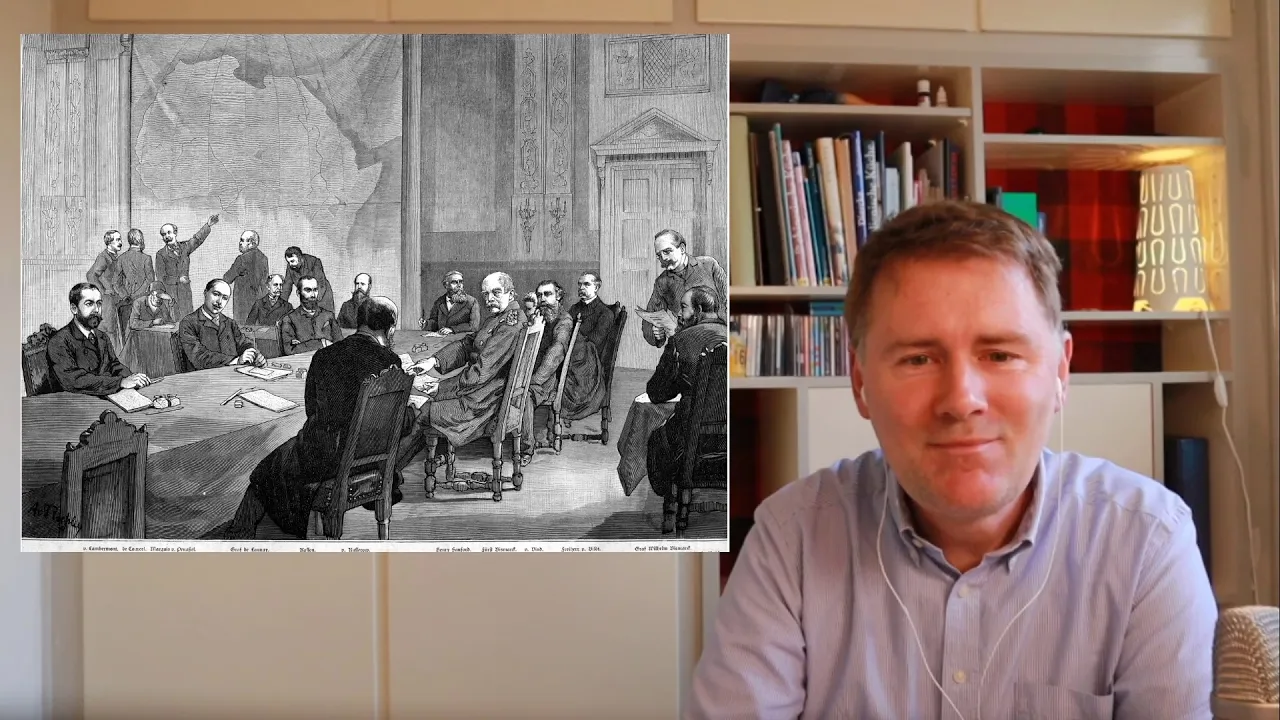
So, if you look at this some historical factors like more than 100 creole languages have developed since 1500. These varieties are predominantly based on European languages such as English, Portugese, and French. And they are the development of the post-renaissance European age of discovery, and the slave trade is primarily responsible which allowed huge mobility of the population to unknown territories and they were forced to settle there. Traders had to learn to communicate with communities across the world which led to the emergence of a Pidgin and later extended, simplified, extended, enriched, and stabilized an emergence of creole that suited their purpose. Most of the known European creole languages emerged in the coastal areas around the world such as America, Africa, Goa which is the western part of India, along Southeast Asia up to Indonesia, Singapore, Macau, Hong Kong, Philippines, Malaysia, et cetera. So that is the historical background of the creoles.
But if you look at the process of how a Pidgin develops into a creole, the developmental stages of Pidgin and creole are categorized into four, which usually appear in two contexts, social situation and linguistic correlation. So, if you look at the social situation and their linguistic correlates. So, when you have a social contract that is marginal in nature that means limited contact, so two speech communities that have no language in common and have a very limited marginal contact then there develops a common restricted Pidgin, and that Pidgin or that variety which is developed out of a dire need to communicate where no language is common this restricted code has a very simplified grammatical system and a very limited set of words. And that is why we call it restricted Pidgin which is the linguistic correlate. So social situation is marginal contact and linguistic correlated restricted Pidgin then when this contact sustains for a longer period of time and the functions are extended, communication functions are extended then you have extended Pidgin, and this extended Pidgin and naturalizes the grammatical system complex sentences are added, a new set of vocabulary are added, new sets, new words. And enriched with it with this regularized established grammatical form and a wide range of vocabulary the restricted paging emerges into an extended Pidgin. And this extended Pidgin is established and nativized. So, when we say nativize what does it mean? Nativization means the next generations acquire this variety as their mother tongue. So, from languages A and B, a new language emerges C which is restricted in its natural stage, the early stage is extended and established, and then it is nativized. So, it is acquired by the next generations and this nativization leads to it becoming a creole. And then once it is established as a creole over a period of time functions are extended social functions are extended. So, it is not merely a language to carry out everyday business but we see extended use of this creole in that speech community, the emergence of a solid cohesive speech community, which put across put intact by this language newly emerged language called creole. They are used in different works of life so it is not only limited to business trade and business and restricted use but it expands into literature, and experiences narratives and then we find a well-developed speech community for that and this is how this creole language becomes a distinct unique variety like any natural language. And then later on there started a movement for making it standard. So when we say the process of standardization that means quantification, and elaboration, so grammar rules are written, thesaurus are created, dictionaries are created, texts are created, printed, they adopt some writing system and this is how this is standardized and usually the parent language which is a superstate dominant language emerges as lexifier. So, what is that lexifier? Which supplies lexicons that mean supplies words. So standard words are drawn from that language and this process is called decreolization, and it becomes a distinct separate new language. So, Pidgin has a life cycle and generally, it is generally agreed that it is characterized into restricted and extended it is obvious that Pidgin starts as a restricted variety of language which used which is used in a contact situation for the purpose of trading but later on when it extended established and nativized it becomes a creole. And this is how a new language is born.
But like most non-official and minority languages, creoles have generally been regarded as degenerate variants or dialects of their parent language. So we have a social linguistic attitude attached to these creoles, a social attitude attached to these creoles did not enjoy prestige. And why, because the colonial powers looked at these creoles as degenerate bastard languages, and the prejudice associated with this variety made it stigmatized and distinct. Many of the creoles are no more spoken. There is no speaker that they have become extinct some of them survive. However, in the last 50, 60 years, or 70 years, changes in political and academic interests, have improved the status of creoles, both as living languages and as objects of linguistic study. And you see that in the last after the 1960s you see suddenly a lot of these studies emerging, and lots of theories, lots of explanations, lots of historical accounts of the emergence of these creoles emerged post 1960s. And that attitude towards these languages also changed. So today in Africa in other parts also there are some creoles that have been announced as official languages, and they have got extended political and social functions but most of them have become extinct. So, there is a process called derealization so since creole languages rarely attain official status the speakers of a fully formed creole may eventually feel compelled to confirm their speech into one of the parent languages. That is the pressure of identity linguistic identity that the speakers need to conform to a well-established prestige variety of these parent languages from where these creoles have emerged. There is a deliberate attempt to lexify and heavily borrow rules linguistic items from the parent language to make this creole look like a very close dialect of the parent language and this is a social pressure, identity pressure that compels the speaker to draw heavily from the parent language, and it becomes like a dialect of the lexifier parent language. This process is called decreolization, and decreolization is a movement or a tendency or a process of bringing this newly emerged creole close to super straight parent language, and this is how it is.
So let us summarize the whole idea. So, we say that creoles are the extended version of Pidgin and they are established naturalized and they have extended social function. The developments of creoles have taken place in the last 500 years, because of the extended navigation by European powers and undertaking a lot of other world territories as their colonies. So, they established colonies there, and the urgent need to communicate with the local community where there was no language common the situation forced them to develop a restricted code this restricted code is called Pidgin over a period of time gets extended and elaborated in terms of both linguistically and socially, they are elaborated, their functions are liberated and then they become established, regularized and naturalized and finally nativized. When we say nativized. Nativized means, this variety is acquired by the coming generations as a mother tongue and it becomes a creole. And when it becomes creole social functions are extended, so it is no more merely a limited code for a limited social function but it becomes an extended social function with extended linguistic roles and then the whole speech community emerges. And this language becomes the language of that speech community. But when you look at the social aspect of the sociology of this newly emerged variety because it developed out of compulsion and a compulsive need to communicate this is considered or this was considered by the colonial powers as a degenerate, bastard language so because low prestige value was attached to it it did not emerge as official or prestigious language. But in the last 50, or 60 years the situation had changed. The stigma attached to creoles led to the extinction of creoles, and very few creoles are survived today…they survived today. Interestingly, they all have developed along the coastal areas of the world America, Africa, Southeast Asia, Singapore, Malaysia, Hong Kong, Philippines, and Macau, so all these areas, Africa, Americ, or that matter so because of this stigma they could not acquire prestige but the situation has changed and what we see after the 1960s in the late 20th century we see a new interest emerging and political support and a political movement as well academic interest that made this new variety, a very important object of study and we see a lot of studies emerging during this period. And in some parts, some of the creoles have attained the status of official language, but again the process of decreolization made them become almost close to the parent language and one of the varieties of it because the identity pressure on the speakers of creoles compel them to draw heavily from the superstate parent language and parent language becomes lexifier for this variety and ultimately it emerges as one of the dialects in the demoralized version it images as one of the dialects of the parent language. In India, you have Nagamese and Assamese-based creole on the border areas of Nagaland and Assam. Some creoles now have become extinct in Goa, west part of India and you find a sort of Hindi-based creole in Andaman apart from other creoles like English, Spanish-based creoles, French-based creoles, Portuguese-based creoles, Arabic-based creoles in other parts of the world. So, this is how the process of creolization has led to the emergence of over 100 varieties in the last 500 years and the process of decreolization has changed the form they were earlier and it is continuing. Some of the creoles have become extinct and some of them still survive. So, this is the story of the birth of a new language through the process of creolization. Thank you.
Up Next

Pidgin Languages in Sociolinguistics | Contact Vernaculars
@AzeLinguistics
9.4K views•2022-07-20
Constraint Interaction in Optimality Theory: Epenthesis & Deletion
@Vidyamitra
180 views•2018-08-20

Pidgin and Creole: Key Concepts in Language Contact
@nptel-nociitm9240
1.1K views•2022-10-11

Accent Expert Explains U.S. Regional Dialects | Part 1
@WIRED
9.3M views•2021-01-21
Related Study Plans & Knowledge Roadmaps
Structured learning paths in Linguistics