

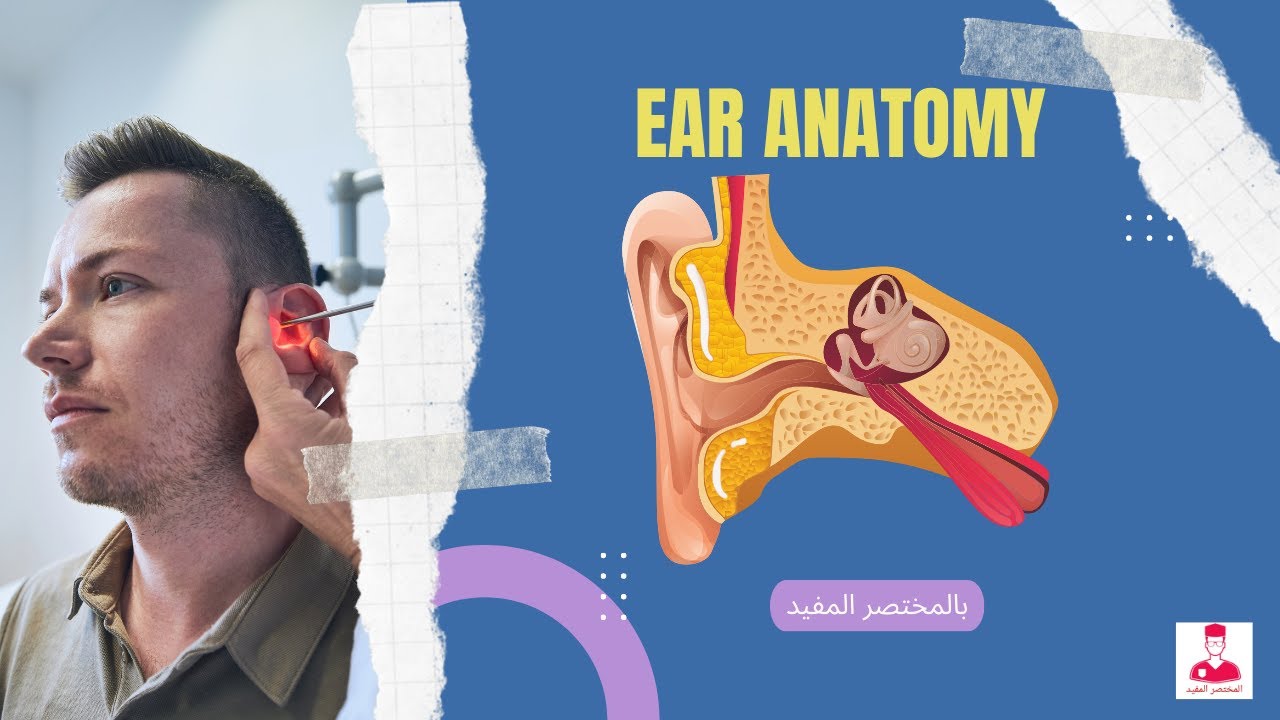
![[Anatomia] Orelha](https://i.ytimg.com/vi/k9K7qe4w6x0/hqdefault.jpg)








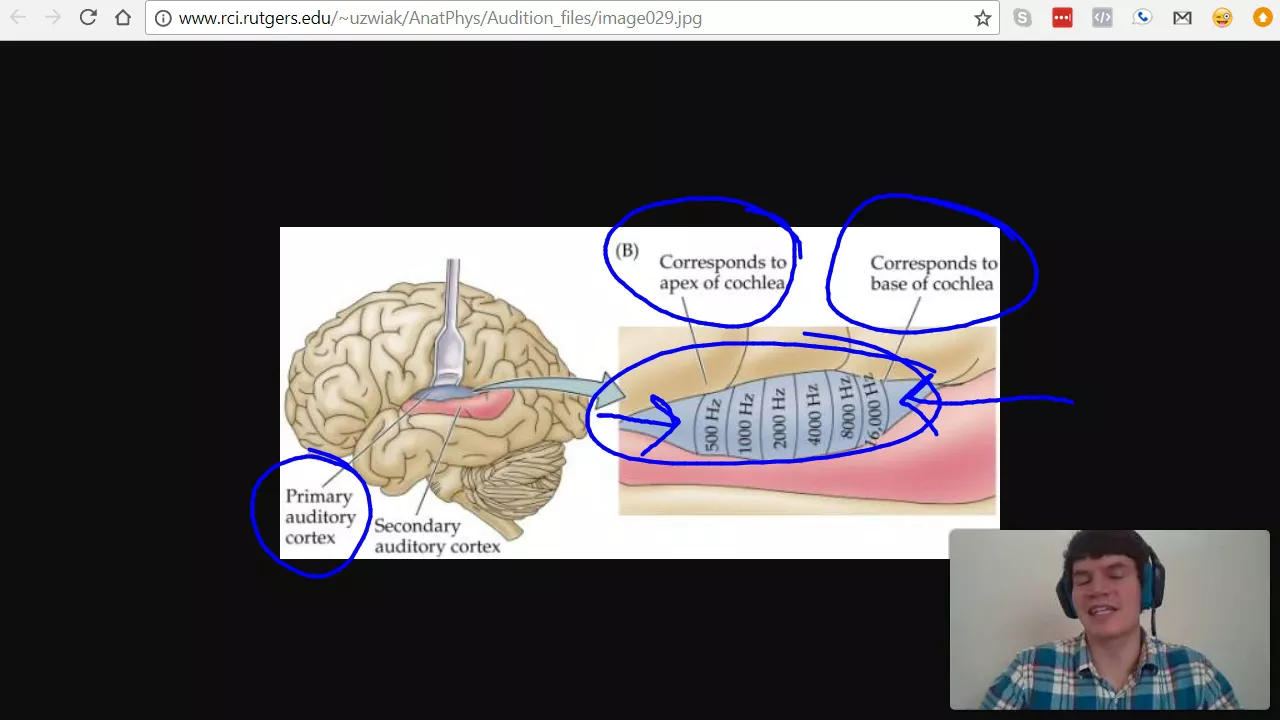




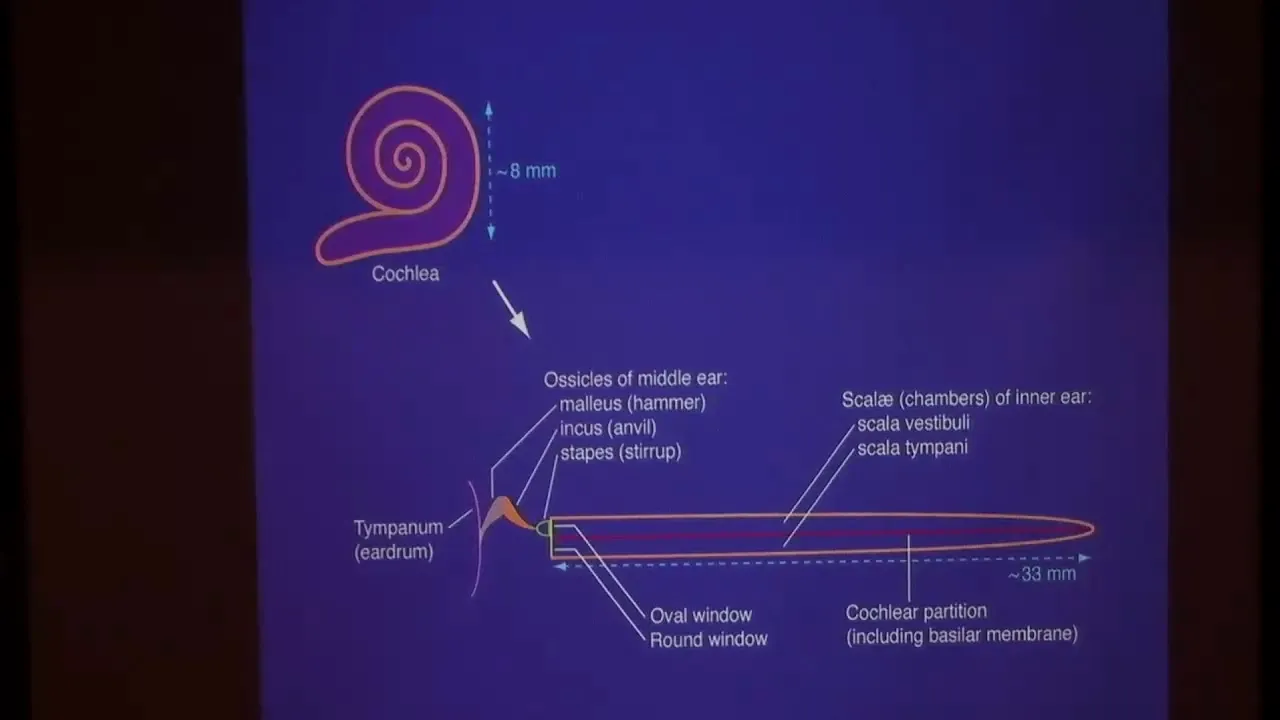


The Organ of Corti, located in the cochlea's Scala media, contains approximately 16,000 hair cells (inner and outer) that convert sound vibrations into neural signals through mechanotransduction; inner hair cells (95% of afferent connections) transmit auditory information to the brain via cranial nerve VIII, while outer hair cells receive efferent input from the superior olivary complex, and the tonotopic organization along the basilar membrane enables frequency-specific hearing where high frequencies are encoded at the base and low frequencies at the apex.
Organ of Corti: Inner Ear Hearing Mechanism Explained
Added:Basic physics of sound waves, including how frequency determines pitch and amplitude determines volume.
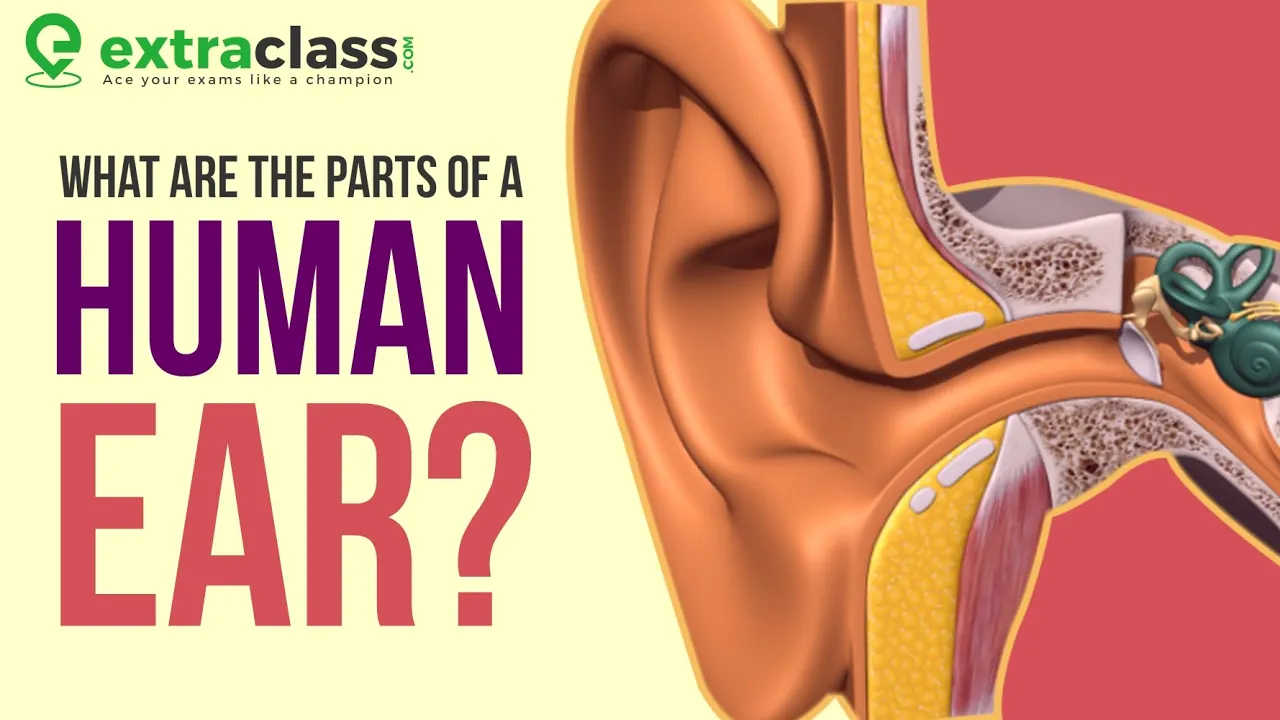
General anatomy of the human ear, specifically the division into outer, middle, and inner ear, and how sound is mechanically conducted to the cochlea.
Fundamental neurobiology concepts, such as membrane potential, ion channels (especially potassium and calcium), and how action potentials are generated.
The general concept of sensory transduction—how physical stimuli from the environment are converted into electrical signals by the nervous system.
The central auditory pathway, tracing how neural signals travel from the auditory nerve (CN VIII) through the brainstem to the primary auditory cortex.
The concept of tonotopic mapping, analyzing how different sound frequencies are spatially organized along the basilar membrane and preserved in the brain.
Pathophysiology of sensorineural hearing loss, focusing on how loud noises, aging, and ototoxic drugs damage hair cells in the Organ of Corti.
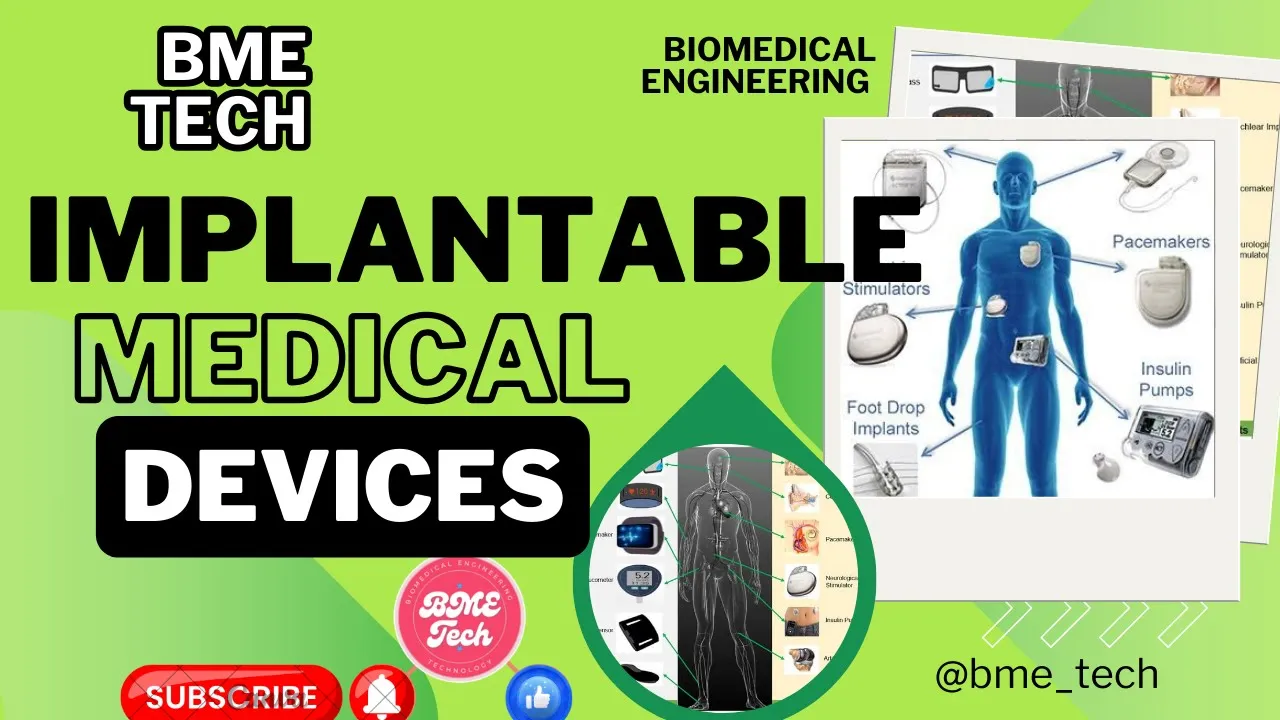
The biomedical engineering of cochlear implants, exploring how these devices bypass damaged hair cells to electrically stimulate the auditory nerve directly.
860.5K views9.9Klikes6:05Original Release: 2010-08-04
to hear our ears must capture sound transmit it to the organ of CTE and translate it into neural impulses to be delivered to the brain the organ of Cy is located in the CIA a spiral three chambered snail-like structure 10 mm wide within a bony Matrix the organ of Cy extends from the anterior part of the vestibule and coils for about 2 and a half turns around a bony pillar called the modus in cross-section the uppermost chamber is called the Scala vestibuli the oval window is situated at the base of this chamber the lowermost chamber is called the Scala Tony at the base of this chamber is where the round window is located both the Scala vestibuli and Scala tempany contain Peril lymph between the Scala vestibuli and Scala Tony is the Scala media this houses the organ of CTI which is referred to as the receptor organ of hearing the Scala media is filled with endolymph the Scala media includes structures from the tectorial membrane basilar membrane and hair cells which sense the mechanical forces the hair cells are located between the tectorial and basell membranes approximately 16,000 hair cells are within the CIA there are two kinds of hair cells inner and outer hair cells 95% of the afferent fibers are from the inner hair cells the sensory receptors that communicate with neurons from cranial nerve 8 outer hair cells receive mostly efferent input from the superior ol complex the filamentous structures that connect the tips of adjacent stereocilia are known as tip links these are thought to amplify the forces in the area of the molecular Sensors how does sound enter the CIA compression hits the tanic membrane causing the stapes to transfer Force to the oval window the sound travels down the scull of a stimuli around the heloa to the sculla Tony allowing its fluid parm to mix from there sound moves to to the round window high frequencies are encoded at the base and low frequencies at the Apex it is this property that leads to the tonotopic map along the basil [Music] membrane the manner in which the basell membrane vibrates in response to sound is the key to understanding clear function the hair cells are located between the tectorial and basil membranes and are stimulated by the shearing force between the two caused by the pivot point of the two membranes the pivot point of the basil membrane becomes displaced the tectorial membrane moves across the tops of the hair cells causing the stereocilia to bend the ionic environment of the compartment ments plays a critical role in Signal transduction the apical portion of the hair cell is based in high potassium solution and the base of the hair cell is bathed in potassium pore solution this causes the opening of mechanosensitive channels allowing potassium to flow into the cell leading to depolarization this in turn opens calcium channels at the basal end of the cell leading to vesicular transmitter release to stimulate the nerve because the relative voltage and potassium levels are low at the base of the hair cell potassium flows out of the cell this establishes the pottassium flow through the cell is used for both depolarization potassium in at the Apex and repolarization potassium out at the base of the hair cell
Up Next
13:48
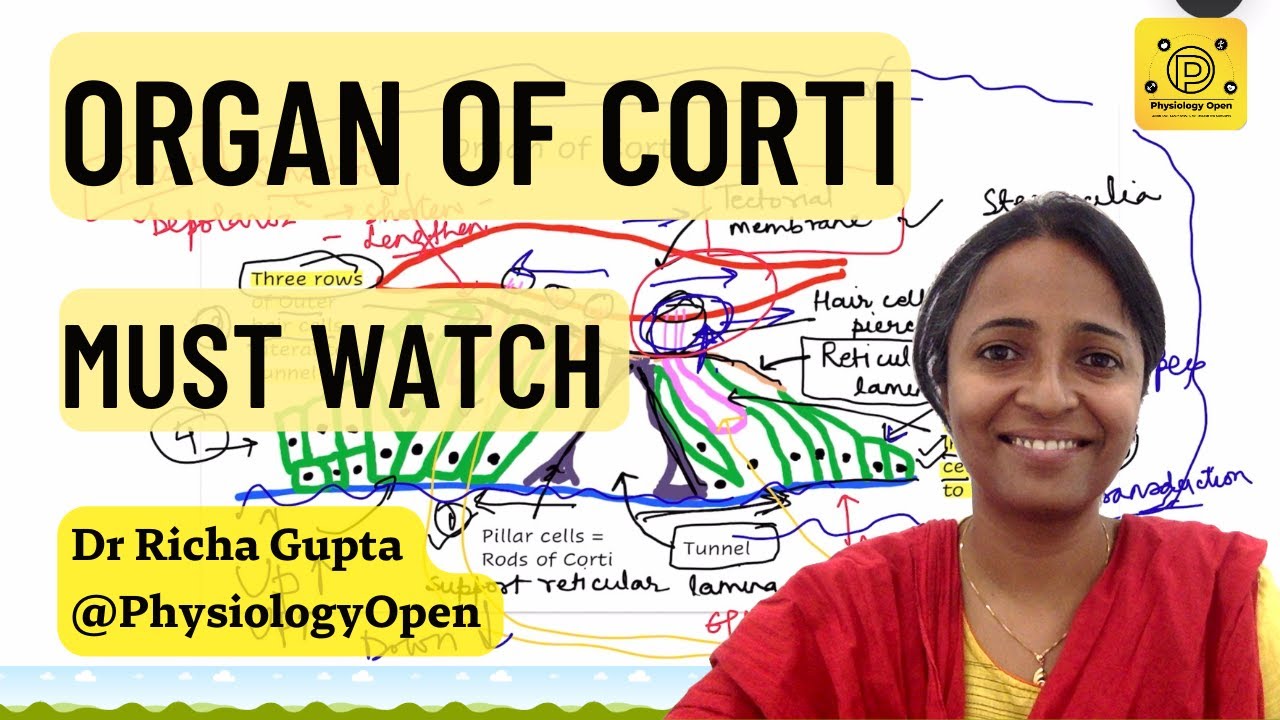
Organ of Corti Diagram: Physiology of Hearing Explained
@PhysiologyOpen
42.8K views•2023-07-30

50:12
Bacterial Communication: Quorum Sensing and Biofilm Formation Explained
@JHUAAP
12.6K views•2011-06-28

5:35
Enteric Nervous System Explained: The Gut's Brain | Neurobiology Lecture
@alumniu6029
438 views•2018-09-12

7:08
Bacteriophages: Earth's Deadliest Killers and Future Antibiotics
@kurzgesagt
34.6M views•2018-05-13
Related Study Plans & Knowledge Roadmaps
Structured learning paths in Biology
biology
RNAi: Biogenesis, RISC & Gene Silencing
01Molecular Biology Foundations: DNA to Protein
02Introduction to RNA Interference (RNAi)
03Molecular Biogenesis of miRNA and siRNA
+ 2 more learning modules
10h5 modules
Explore Roadmap
biology
Mycorrhizae: Signaling, Biophysics & Ecology
01Foundations of Mycorrhizal Symbiosis
02Molecular Signaling and Root Colonization
03Biophysics and Bioenergetics of Nutrient Exchange
+ 1 more learning modules
11h4 modules
Explore Roadmap
biology
Circadian Clocks: TTFL, SCN & Periphery
01Foundations of Molecular Biology & Gene Expression
02Introduction to Chronobiology and Actograms
03The Core TTFL: Molecular Architecture of the Clock
+ 3 more learning modules
14h6 modules
Explore Roadmap
biology
Population Genetics: Math, Drift & Selection
01Genetic & Probability Foundations
02The Hardy-Weinberg Principle and Baseline Models
03Mathematical Modeling of Natural Selection
+ 3 more learning modules
18h6 modules
Explore Roadmap