


![[Anatomia] Orelha](https://i.ytimg.com/vi/k9K7qe4w6x0/hqdefault.jpg)














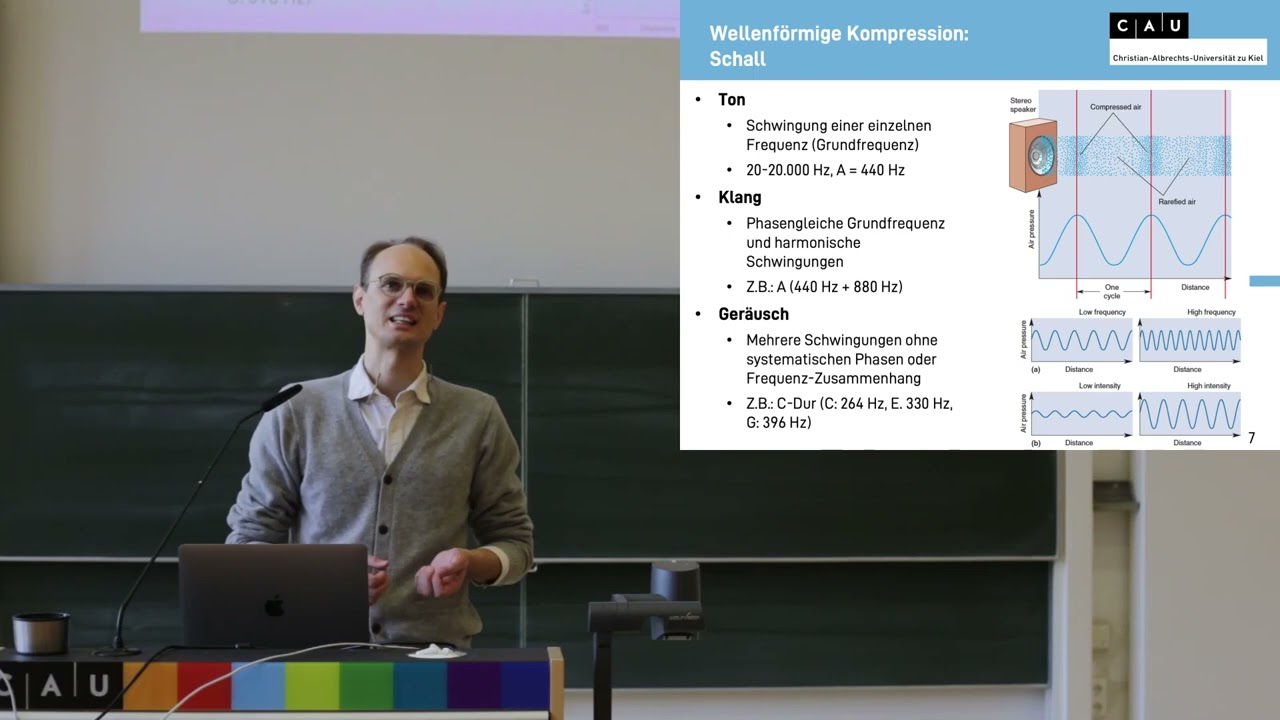



The cochlea's basilar membrane has a gradient structure where it is thinner near the oval window and thicker toward the apex, creating a tonotopic organization where different frequencies cause different sections to vibrate—low frequencies (25 Hz) cause the thicker base region to vibrate, while high frequencies (up to 20 kHz) cause the thinner apical region to vibrate, and the brain interprets the location of this vibration to distinguish between different pitches.
How We Hear Different Pitches: Sound Frequency and the Cochlea
Added:The physics of sound waves, specifically the definition of frequency (measured in Hertz) and its relationship to perceived pitch.
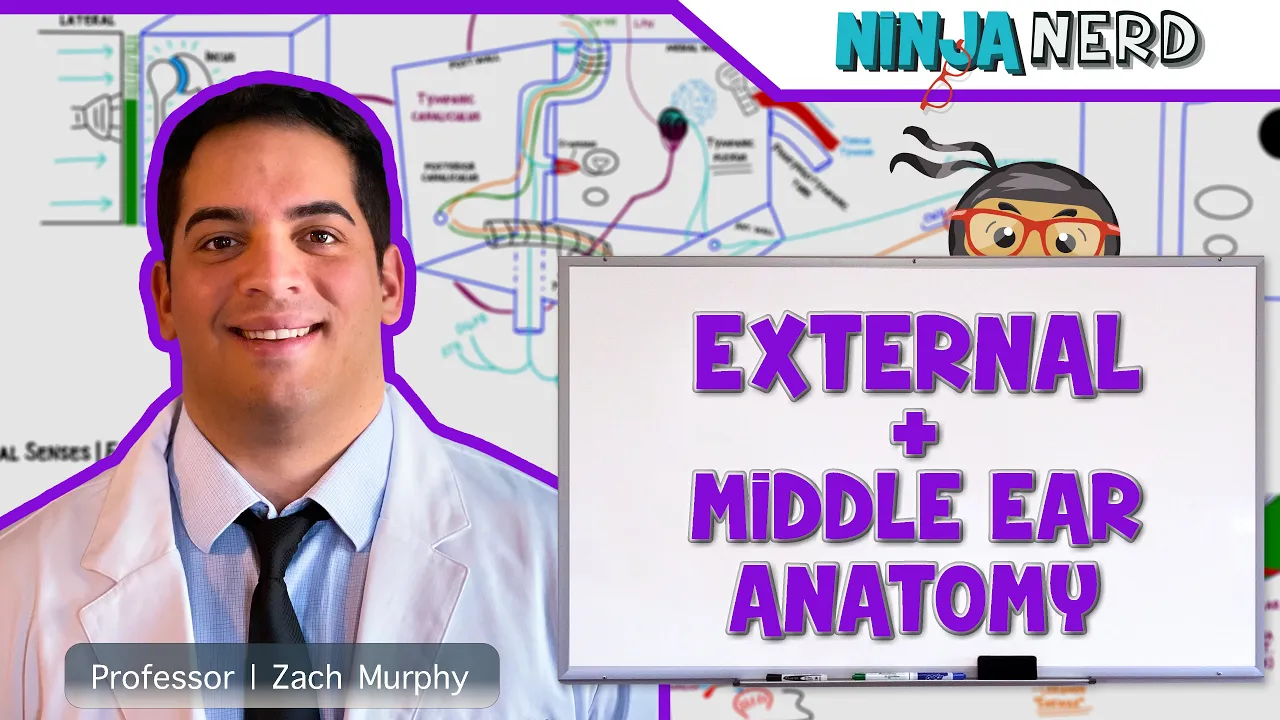
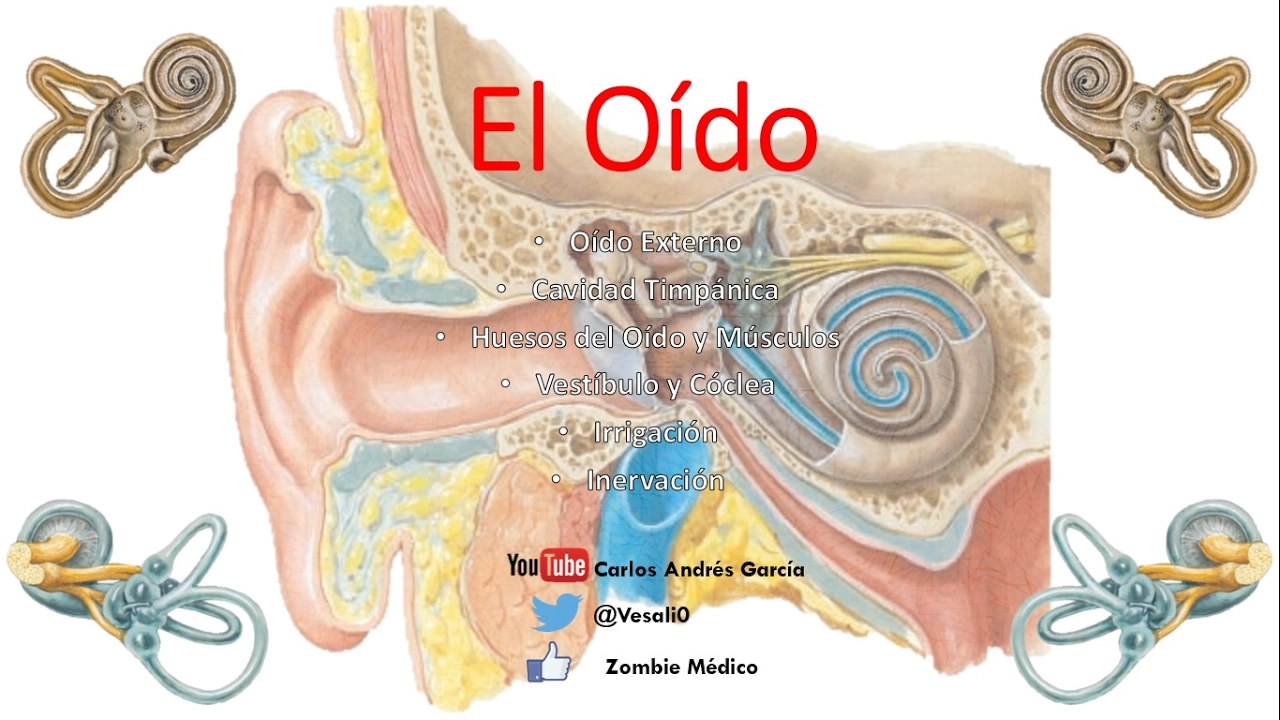
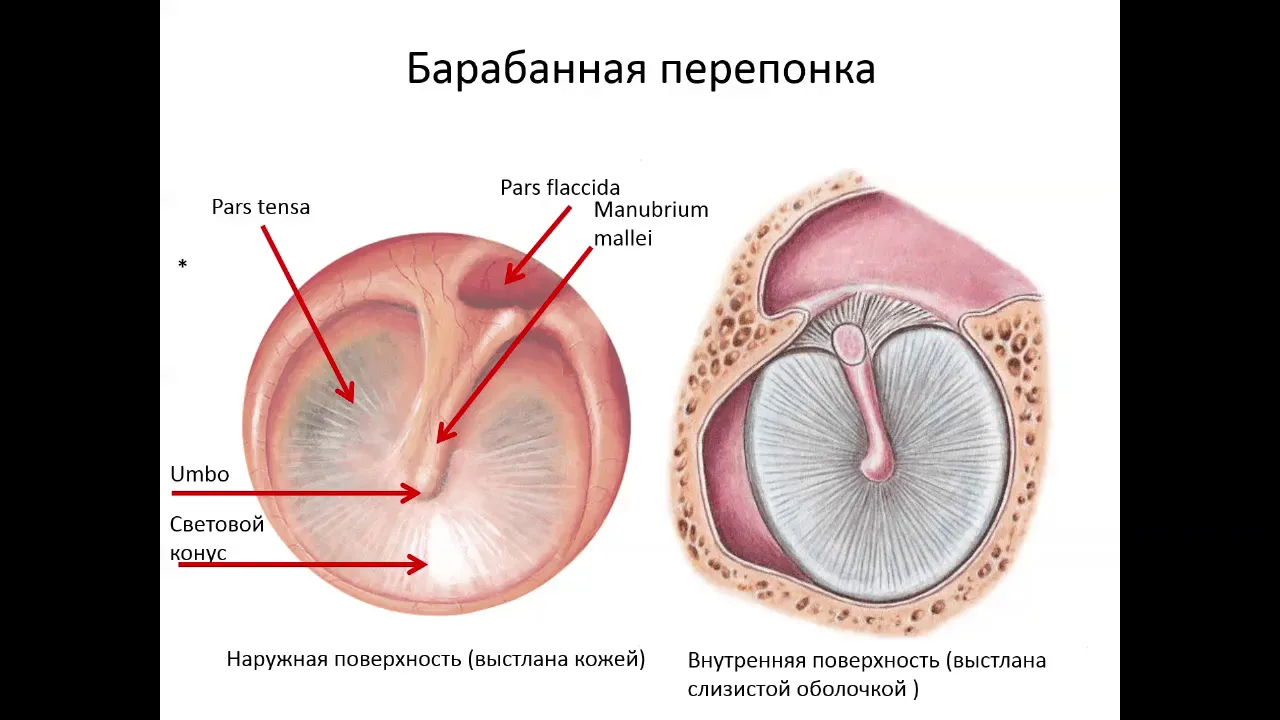
The anatomy of the outer and middle ear, including the roles of the tympanic membrane and the ossicles (malleus, incus, and stapes) in conducting vibrations.
The general concept of sensory transduction, which is how physical stimuli (like mechanical vibrations) are converted into electrical neural signals.
Basic wave mechanics, particularly how waves travel through fluid mediums and the concept of resonance.
The comparison between Place Theory and Temporal (Frequency) Theory in explaining how we perceive low versus high-frequency sounds.
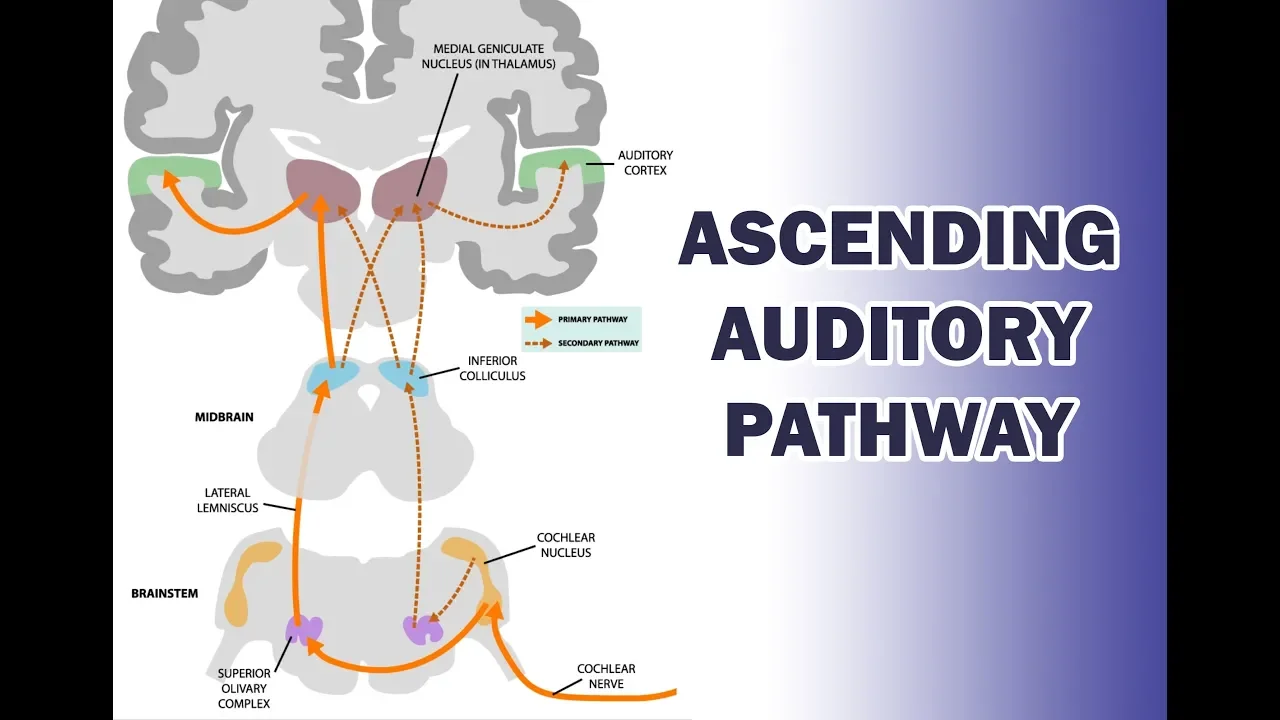
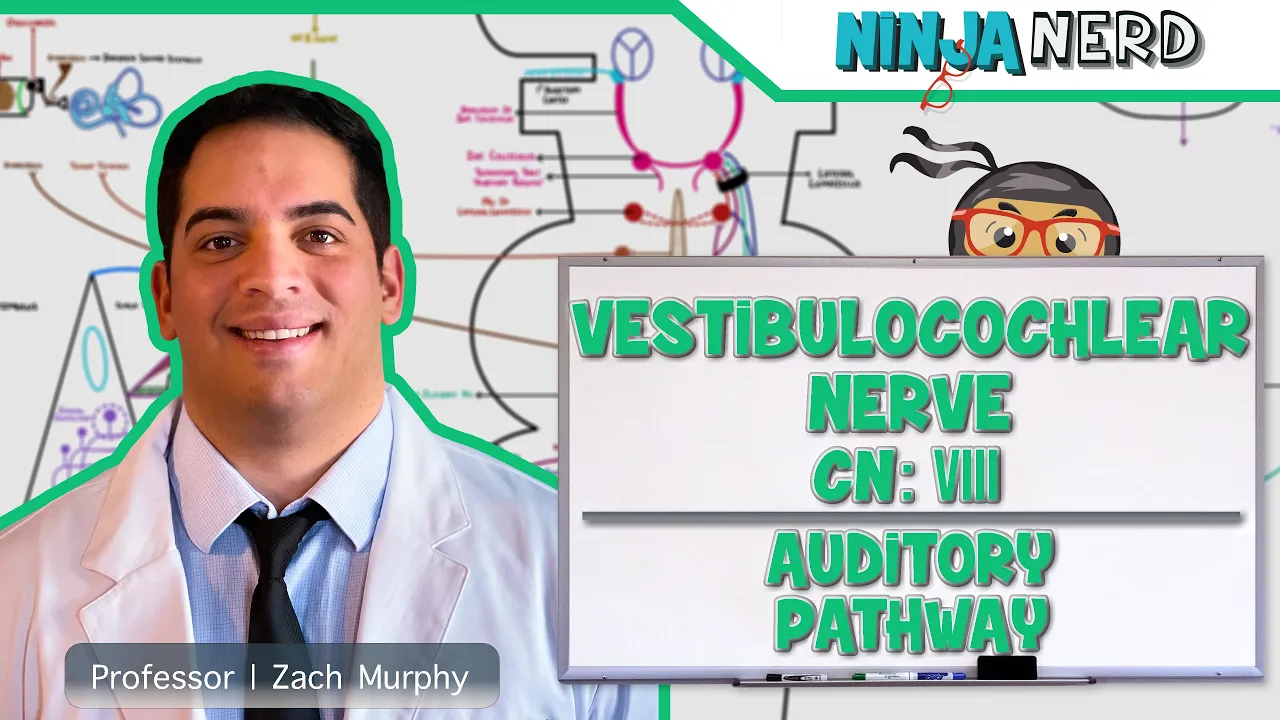
The ascending auditory pathway, detailing how signals travel from the cochlear nerve through the brainstem to the primary auditory cortex in the temporal lobe.
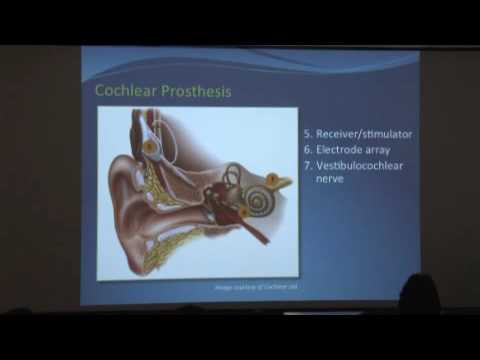
The engineering and physiological principles behind cochlear implants, which bypass damaged hair cells to stimulate the auditory nerve directly based on frequency mapping.
The biological basis of sensorineural hearing loss, specifically how intense sound frequencies can damage localized hair cells on the basilar membrane.
113.3K views1.2Klikes8:51Original Release: 2011-02-22
hello and welcome to another episode of interactive biology TV where we're making biology fun my name is lesie Samuel and I apologize for what you had to listen to at the beginning of this episode but in this episode episode 38 I'm going to talk about how we hear different pitches and what do I mean by different pitches well I'm glad you ask I mean I'm sorry I apologize I shouldn't be putting you through that but that is exactly what we're going to be talking about today I just made a few different sounds and they were different pitches and we want to look at how your brain is able to distinguish the different pitches based on what is happening inside the are here so let's continue let's continue okay so I'm sorry here we're looking at the air and we've looked at this figure in the last episode and we looked at one that was similar to it in the episode before that and where we ended off last time we had a signal coming in and we spoke about how the malas Incas and stapes are involved in transferring that signal to the cleus and what I'm going to do now is I'm going to take this CA and I'm going to roll it out and just kind of extend it so we're not going to look at it like how it looks here kind of like a snail we're going to look at it as if it were just rolled out so let's go to the next picture and here we have it so we have the Clea that we unrolled and now it extends right here here and what you'll see is here we have a membrane that we call the Basel membrane and that here is the writing for that right here so this is the basill membrane and what you're going to notice about the bassell membrane is it's thinner over here than it is over here so at this end it's significantly thinner and as it goes away from the oval window where the malus Incas and stapes connects as it goes away from that section it gets thicker and thicker and thicker until it's thickest right here at this end and what you're going to see here is we have a number of different frequencies that are associated with these different sections here we have a 25 Hertz which is a low frequency and as we come over to the thinner section we have higher frequencies up here to 1600 htz and it goes all the way up here to about 20 kilohertz okay so we go as low as 25 Hertz and as high as 20 khz now if you've taken a physics class you know that higher pitches are the result of higher frequencies forgive my writing there again okay so higher pitches are the result of higher frequencies and lower pitches are a result of lower frequencies and we're talking about sound waves the frequency of the sound wave now if a certain sound comes into the air causes the tanic membrane to vibrates the malus Incas and stapes vibrate and that causes the oval window to vibrate that's going to cause fluid inside the Clea to vibrate now depending on the frequency it's going to cause a different section of the Basel membrane to vibrate now is it easier to move a thinner piece of membrane or a thicker piece of membrane the answer to that question should be quite obvious it's much easier to move a thinner piece of membrane than it is to move a thicker piece of membrane so in order for it to vibrate down here we need more force and you're going to get a greater force from lower frequencies now just think about it if you're in front of a a huge speaker I mean massive speaker and there's sounds coming out of that speaker you're playing some music and you're playing music that has a lot of high frequencies for example something like [Music] this now if you're standing in front of that huge speaker that's playing that nice little soft High fre quency music it's not going to have a huge effect on you but if you start playing something with a lot of Bas something like [Music] this that's going to cause you to move you might even feel the wind of the speaker vibrating and causing the air to uh be pushed and you might actually feel that that's because as you have lower frequencies the lower the frequency the greater the force that comes along with that frequency so here in order to cause this to vibrate we're going to have a lower frequency sound which makes sense and that's why we're showing 25 khz here and the closer up we go where we have the thinner membrane we can cause that to vibrate with a higher frequency tone now if the frequency is low enough that might actually cause this entire basill membrane to vibrate the take-home message is depending on the frequency we're going to get different regions of the Basel membrane vibrating this then sends a signal to the brain and depending on where that signal is coming from if that signal comes from here and it goes to to the brain that is going to tell the brain it's coming from a low frequency and the brain is going to interpret that as a lower pitch if it's coming from over here it's going to the brain and that's going to tell the brain that it's coming from this region which is associated with a higher frequency and the brain is going to interpret that as a higher pitch so there is a direct relationship ship between where it vibrates and where in the brain is being stimulated and depending on where it's stimulated and where the signal comes from the brain is going to be able to distinguish between the different pitches now you're hearing me speak and me speaking right now is a result of a number of different frequencies combining together and so there's going to be a complex interaction here and different parts are going to be vibrating in different ways and the brain is going to take all of that and paint the picture of the sound that's coming from my voice well that's coming from the speakers that you're listening to this video on and you can easily distinguish between my and my I hope that wasn't too painful and I hope it makes sense that's really all for this video if you have any questions go ahead and leave them in the comments below and of course you can always always visit the website at www.active.com for more biology videos and other resources that's it for this video and I'll see you in the next one
Up Next

6:05
Organ of Corti: Inner Ear Hearing Mechanism Explained
@animacionesplus
860.5K views•2010-08-04
50:12
Bacterial Communication: Quorum Sensing and Biofilm Formation Explained
@JHUAAP
12.6K views•2011-06-28

5:35
Enteric Nervous System Explained: The Gut's Brain | Neurobiology Lecture
@alumniu6029
438 views•2018-09-12

7:08
Bacteriophages: Earth's Deadliest Killers and Future Antibiotics
@kurzgesagt
34.6M views•2018-05-13
Related Study Plans & Knowledge Roadmaps
Structured learning paths in Biology
biology
RNAi: Biogenesis, RISC & Gene Silencing
01Molecular Biology Foundations: DNA to Protein
02Introduction to RNA Interference (RNAi)
03Molecular Biogenesis of miRNA and siRNA
+ 2 more learning modules
10h5 modules
Explore Roadmap
biology
Mycorrhizae: Signaling, Biophysics & Ecology
01Foundations of Mycorrhizal Symbiosis
02Molecular Signaling and Root Colonization
03Biophysics and Bioenergetics of Nutrient Exchange
+ 1 more learning modules
11h4 modules
Explore Roadmap
biology
Circadian Clocks: TTFL, SCN & Periphery
01Foundations of Molecular Biology & Gene Expression
02Introduction to Chronobiology and Actograms
03The Core TTFL: Molecular Architecture of the Clock
+ 3 more learning modules
14h6 modules
Explore Roadmap
biology
Population Genetics: Math, Drift & Selection
01Genetic & Probability Foundations
02The Hardy-Weinberg Principle and Baseline Models
03Mathematical Modeling of Natural Selection
+ 3 more learning modules
18h6 modules
Explore Roadmap