









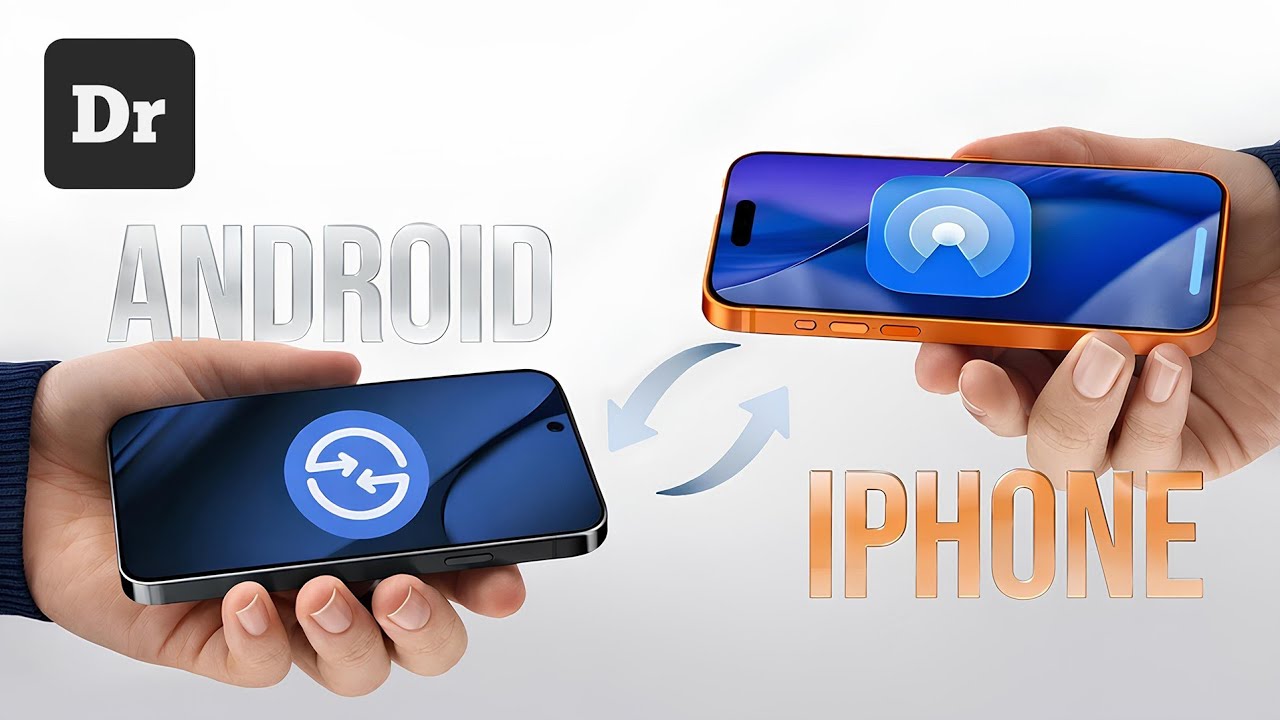



This video explores how Apple's ecosystem integration creates a cohesive user experience across devices, where features like AirDrop, Find My, and shared services require all devices to be within the Apple ecosystem to function optimally. The challenge demonstrates that while individual devices may offer specific advantages, the true value of an ecosystem lies in the seamless connectivity and shared functionality between devices, which can influence user decisions when switching platforms.
Evaluating the iPhone Ecosystem: A Comparative Case Study of Android Migrants
Added:Fundamental architectural differences between iOS (closed-source, tightly controlled) and Android (open-source, highly customizable) operating systems.
The technological and economic concept of 'vendor lock-in' and how hardware-software integration creates digital ecosystem stickiness.
Basic principles of Human-Computer Interaction (HCI), specifically how user mental models are formed and the cognitive friction associated with interface transitions.
An understanding of data synchronization mechanisms, cloud infrastructure differences (iCloud vs. Google Play Services), and cross-platform data portability.
Advanced methodologies in User Experience (UX) Research, including how to design longitudinal user studies and measure adaptation qualitatively.
The business and product management strategies behind customer acquisition costs (CAC) and customer retention within proprietary tech ecosystems.
The legal and regulatory landscapes surrounding mobile platform interoperability, such as the EU's Digital Markets Act (DMA) and antitrust cases.
Technical analysis of cross-platform app development (e.g., Flutter, React Native) and how developers design for divergent OS design paradigms.
2.4M views73.9Klikes27:37Original Release: 2025-07-08
Recently, we enticed three members of the cult of Apple to just try using Android for one whole month. And not only did they all find things that they enjoyed about the Android experience, but one of them even made the switch.
I do want to stay with this phone.
Of course, that's just another way of saying that the glass is 2/3 empty. So, is the walled garden really that great?
Would it still be great if you'd never used an iPhone? I need to know. Which is why this time I found three Android users who have never daily driven a modern iPhone.
Oh, I get it. I take the blue pill, I forget everything. I take the red pill and I have to give up my Android for a month.
Well, you could take pills, but I've always found, my dear, that an apple a day is far better at keeping the doctor away.
Did we really set all this up for this one shot?
Here's the deal. Each of our participants gets $1,400, the price of an almost maxed out iPhone 16 Pro. And they have to buy an iPhone, obviously. But it doesn't have to be that one. They can buy any iPhone they wish, and if they have any money left over, they can spend it on any other Apple items that they feel might enhance their experience. And like last time, the pressures on to choose wisely because there might be a little bonus at the end of the month. So, what will they pick? Will they prioritize a topsp spec phone or will they immerse themselves in the ecosystem? They might even prioritize this message from our sponsor, Dbrand. Pair a ghost case with a glow circuit skin for the ultimate protective and stylish combo for your phone. You don't even have to deal with getting pranked by some robots on the internet like we do. Go to mybossisvershort.com to check them out.
It's almost lime day. For one week only, starting on July 9th, we're squeezing the heck out of our margins to bring you some real sweet deals. But if you're an LTT float plane subscriber, we're giving you access to all of our weeklong deals today. Save $20 on a mystery screwdriver and get one of five exclusive Lime Day colorways. Buy a precision bit set and screwdriver bundle, and we'll throw in a free Jerryrig knife. Snag our brand new WAN backpack and we'll load it up with either a Corsair Thunderbolt 3 doc or K70 Core TKL keyboard for free. And best of all, you get free shipping on every order over $175 if you're shopping from the US and every order over $250 Canadian if you're shopping from anywhere else. Subscribe now at lmg.gg/flowplane to get early access to these deals. Or just come tomorrow. There'll be something for you. Now, it's time for our minimum wage employee from last time to level up to genius and guide our androids through their choices and answer any questions they may have.
Let's see what they pick. Well, welcome.
You've won a $1,400 shopping spree to the Apple store. You have to buy an iPhone.
It's at the Apple store.
It is at the Apple store. Hey, it's free money. You do have to buy a phone. Okay, we're going to start with phones and then we're going to actually work our way into looking at other Apple devices because we want you to have the best Apple experience in the whole ecosystem, not just one phone. Have you ever used an iPhone? What are your thoughts on iPhone? Has anything ever interested you from them?
I've not used an iPhone. Does iPod touch count? Like Sure, we'll count that phone.
Years ago, iPod touch five. About 5 years ago, I tried to switch to iPhone and I think within a week I switched back immediately cuz I have this app on my phone that I have to use to coordinate my life and it didn't work.
Got it. What's the app's name?
Business Calendar.
The last time I used a Apple like mobile device was my iPod touch second gen on iOS 4.
So, it's been a couple years.
In comparison, what I have right now is a Galaxy S21. Um, it has three lenses.
The bottom line for Apple is like they only get two lenses. like it kind of seems kind of Oh, you're going to be shocked cuz the bottom one actually only has one lens now.
Okay.
Well, okay, that's fine. Let's start with that phone first, okay? Cuz this is going to be our more budget phone if you were more interested in allocating budget elsewhere. Okay, it's the iPhone 16e.
I like the hold of it. Like the shape of it. It's really nice.
My immediate first thought is I hate 60 Hz.
Yes. So, any of the budget ones, so the 16E, 16, or the Plus are all going to be 60 Hz. If you want 120, you're going to have to go for at least the Pro.
At least the Pro model. Yeah.
It's a tiny bit smaller.
The bezels are kind of thick.
Yeah. Especially that compared to your whole punch. You got the big notch right here now.
Cuz like my screen will go all the way to the edge on this. I don't know. I don't like how thick the bezels are, right?
It's got one camera.
This one's out.
Wow. That was very fast. This phone is considerably lighter than my current phone, which is Wow. Yours is a chonker.
It is a beast. So, any one of these phones is actually going to be kind of nice for me because the one thing I don't like about this thing is how much of a brick it is.
Wow. It's like with the case, it's like bigger than the Pro Max. Curious to see what you think about the screen. Maybe we can watch a video or take a photo.
Yeah, cuz it's one camera.
Take a photo. So, okay. This is I know it's like opposite of Okay, let me just clear all this cuz I know it's opposite of Android in terms of like this. Oh, wait. No, it's the same. The top is the setting. It's only if you swipe from the top right. That's how you get to that control panel, right? So, if you swipe from the very top right, that's where you get all your quick access. If you just swipe down, that's where you would get your apps.
The E. I'm already not really feeling it. It feels too light for what I'm used to.
The E already. Okay.
Yeah, I'm not I'm not feeling it. So, I think I can already kind of just Wow. Already. Just like Avon. You She also just ruled it out like almost right away. Let's move up to the next one then, which is the 16.
It feels really small.
Really? What size phone do you have currently? Oh, wow. Okay. Holy. You're closer to like the 16 Pro Max than I think so. But this this one is slightly too big. So, we'll see.
This was the base model entry before the 16e came out.
Oh, it has two lenses.
Has two cameras. And one thing you'll notice as well is it actually has the shutter button.
I kind of found that stupid when it first came out.
Andy actually, one of the things he didn't like about the camera shutter button when he was talking to me is he almost feels like it's too far over.
Yeah.
He almost wants it like more on the edge when you're taking a photo.
It's more ergonomic that way if it's on more on the edge. And I never noticed that until he pointed out, but I like totally agree with him.
So, it's that it's like a physical button, but it's also got some swipe features on it.
And then, yeah, you can change the selfie or Oh, wow. Selfie cam is so much clearer on this thing. Wow.
It is handy to have the.5. Sometimes I like to do like nice wide shots like of like the scenery and stuff.
Well, you go biking a lot too, right?
Yeah, I do. Sometimes that wide shot makes the photo look better.
Yeah, it does have dynamic island, which is one thing to keep in mind. The reason I mentioned that right after you mentioned the camera is if you decide to interact with the dynamic island a bunch, you might end up like tapping over your lens which could smudge your camera. That's definitely something people have brought up.
I'm already kind of used to it cuz this has the underscreen camera so it's constantly blurry. Anyways, is that a button button? It's a touch.
It is a button to take the photo or you can kind of tap it and you could slide your fingers across it and that's how you could adjust some zoom. See, my finger is in an awkward position right now where it's like trying to slide, but it's like you're like reaching all the way over.
It looks like really awkward.
Okay, so what's special about this one compared to this one?
So, the biggest difference between the 16 and the Pro is you actually get more battery. It's got more cameras, better cameras, and it also is a bigger phone.
This is like the base and then the step up to the next level.
Oh, yeah. Okay, I can see that.
And these ones are also made of titanium.
So, durability, a little bit more durable.
Wow. I you are eliminating them so much faster than our Android users.
I I drop my phone at least once a day on concrete on like whatever outside my car when I'm getting out. Like it just it just happens. Okay. I I need durability and I like that it has the better camera cuz I'm taking photos all the time.
Well, let's try the Pro and Pro Max. Get your feeling for them. These are going to be again your top dogs. They're made of titanium so a little bit more durable. Uh Dbrand again is sponsoring this video so you don't have to worry about protecting it. We'll get you a case.
Oh yeah. Yeah. Yeah. It's immediately better. the 120 Hz. Immediately better.
Immediately better. Yeah, these ones have always on display. These ones do not have always on display.
That's what I like to like about my Android.
And you might notice the refresh rate on this one because it's it's 120.
Yeah. Yeah. It's a lot smoother, but it doesn't bother me that it's not okay.
Like 120. Like I don't see too big of a difference.
I understand what it's saying about like, oh, this is how much milliamp hours there are. But how long will that last me in a day? Will I get through an entire day? I would say that with a fresh iPhone, you will be able to get through one day.
Okay.
I do take a lot of pictures with my phone. And whether it's for is it for work or just personal?
Personal. I just like taking pictures.
I asked that because sometimes that can impact people's decisions whether they need like Lisa in our last challenge.
We can zoom all the way in, see all the details.
Yeah. Sorry. God. Oops.
I was going to say I didn't want to say anything.
I was looking at the fabric. I was looking at the resol. I was looking at the resolution.
I'm curious on your impressions of like the screen and camera though. We should take some pictures and maybe look at like some YouTube videos or something.
See if you can get in. Yeah, that's the camera.
Okay, there.
I wanted to see how long it took her to get the swipe cuz I personally struggle with swiping into an iPhone.
You know what? Why do I struggle with that? I don't know.
Do you have face unlock on that one?
Uh, no. I usually use my thumb print.
So, that's that's probably why then that's one thing I'm immediately upset about.
Oh, what?
They don't have the fun little switch anymore.
It is an action button now. So you can bind that to whatever tool you want.
Okay, that's kind of cool.
Intel's more power.
Speakers sound pretty good.
Very loud. Yeah, nice and clear. Okay, no complaints there.
I watch the clip channel all the time cuz I never know what Linus is going to say.
You have to figure out what has to be in the Monday morning meeting email. So here they are side by side. That way you can get an impression of the screen.
What's your initial impressions? You don't sound like um your your tone makes it sound like you're not quite impressed. I I would say that if you notice something obviously bad right away, that is an immediate red flag. But if you're kind of like, you know, you're not sure, I think that's a good sign.
Oh, what is that?
Oh, okay. That's you're actually the first person to do that. That's just part of like the AirDrop features where you can like share contacts to each other, which now that you're going to be doing this with two other people, I would encourage you trying it.
But sometimes you can open up a contact on this phone, hold it up to your friend who has an iPhone, and you can share contacts that way, you can share photos that way. It's part of the Apple ecosystem. Cameras are a little bit better as well. You actually get another camera on the back.
Three. Let's go.
Wow.
Don't act so shocked.
Do you have a screen protector on this one?
No, I don't.
Okay. I was going to say I see a little bit more like gloss and reflection.
Oil and dirt.
I Hey, I was I You said it, not me.
The color seems a little bit better on this one.
I was going to say I'm I'm more impressed right now with this phone at this glance. Again, like I said, with the angle, I feel like I can see a lot more reflections off of this phone. Out of your gut instinct, which one has interested you the most?
I would say the Pro just because I do like that third lens.
Mhm. Interesting. I say that because of what the other people chose. So, I'm just curious.
Okay. One thing that I do use though with these cameras is I like to zoom in to take photos. And this one is actually pretty good at that. Like when I'm at a kids concert and I'm sitting in the fifth row or whatever and I can't get their face, it's really nice to be able to zoom in and actually see.
That's 2x. That's 5x.
Oh, that's not bad. Wait, where's 10x?
You might have to pinch zoom.
Look at that. Look at him. There you go.
Actually, can I compare?
Yeah, let's compare it.
I like that this one has a 10 immediately, though.
I mean, right away I This one makes him look very pale is what my my gut instinct says.
Yeah, he doesn't look some of the details in the background though. Like I can see all the Oh, yeah. You're more background cuz on this it almost just looks like it's just pixelated. Whereas this I can actually kind of see the leaves, the shape of the leaves. It just depends on if you want the bigger screen.
I guess it's just coming down to Yeah, if I want the bigger screen.
It eats a lot of your budget, though.
The starting one is $1,200 for that. How about we go look at the other Apple stuff because depending on what those might be, you might be willing to compromise on this if you want something else to purchase.
Gotcha.
So, let's go to the watches. There's three different watches here.
There's the base model, the SE, which is a couple years older at this point.
That's why it's 2022. You do get only the base amount of sensors, so like an accelerometer, some heart rate, which honestly for what I need out of a watch, basically I just need to be like, "Oh, I got a notification."
You got the Series 10, which comes in two different sizes, or the flagship, the Ultra 2. This thing is kind of a chunky beast.
Yeah, it's again made of the titanium material. It's topofthe line. It's supposed to be everything you ever want.
Look at this.
It is literally the size of your I think this one's out, Elijah. It doesn't matter how much I like it or like the features. I just cannot wear that. Let me take that.
Oh, you currently use a watch.
I do.
Which watch do you use?
I don't remember the number or is it a Samsung one?
Yeah, it is a Samsung.
Okay, that's fine.
And how often do you use it? I I wear it every day.
Okay.
I don't use it for anything particular.
Um I used to try tracking like water like how many cups of water I do. Got it.
Like I drink it a day. Um other than that, I just look at the time and notifications sometimes. I literally don't use my watch for anything else except for like mostly I guess looks, you know? Okay, I got a watch on.
Damn, you're really going for that flex status.
I used to wear my watch on my right hand, even though I was right-handed.
And I didn't know until like years after that I was supposed to be wearing it on the other hand. So, is that a thing? You're supposed to wear it on your non-dominant.
If you're right-handed and you're writing something, your watch would be Well, when you were in school, I assumed you went to school, right?
Wow. Damn. So, we have the smallest one here with this wristband. You should just try putting it on and seeing how you like it. It still looks quite quite a big size for your wrists. So, it's got lots of sensors. You got your heart rate sensor for all your health tracking. You've got gyros, accelerometers, so you can track other just health things if you whether you go for a run. What you described you use yours for currently. I feel like the SE is probably going to be right up your alley. Like notifications and maybe tracking your steps.
Like that's it.
Steps. Yeah. Yeah. Like when we went to Disneyland, I definitely You did a lot of steps. 33,000 steps.
That's crazy.
Rope drop to close.
It feels lighter than my Pixel Watch, which is nice. Uh cuz that's one thing I was noticing. It was giving me a bit of like wrist strain wearing it.
In terms of functionality, this is realistically probably all I'm going to need out of a watch. Yep.
Um however, I do want to look at the bigger size.
So, yeah, let's try the 42. So, this is slightly bigger, but this one also gets you more sensors such as body temperature, water temperature, and because we're in Canada, we actually get oxygen sensors, which is kind of cool for your blood oxygen. If you go scuba diving, do you go scuba diving?
Nope.
Kate, thought I'd mention it. Maybe you want to get into scuba diving this month.
Maybe. Probably not.
I do like having the extra features. I don't know that I'll actually use them.
I feel like it might be a gimmick thing.
Like, oh, I can do this, but I never actually look at it on a day-to-day basis. Can I answer phone calls on this?
Can I Can I actually read text messages on this? Can I reply on this?
Yep. The keyboard is small, but it also still has like text to speech, so you could just say what you want to reply with and it would reply.
I am tempted by the watch, even though it's massive on my wrist.
I think this is going to be another good example of just the Apple continuity for you if you're going to go all the way with a phone and a watch. How they connect and how they pair together both again with your AirPods as well will be really, really nice. One of the other features that's great about the watches is with your phone, you can use the Find My Network to actually find your phone or your watch. If you get the SE, you're allowed to ping your phone, so it'll make an audible like chime, but it doesn't actually have like the arrow tracking to tell you where you're going.
That happened to Lionus on our trip to Bali. He left his phone on the beach.
Okay.
And then we were like walking back and forth, back and forth trying to find it.
And he must have had a series 10 then because we were following the the arrow to find it. And guess where we found it?
It was in uh one of those like cabanas that was locked inside the rafters.
Yeah. So, somebody had obviously found it and hid it to take later or something like that.
Or maybe they hid it for you to go find later because that could have been the other way, too. So, no one steals it.
They just like hide it. I'm going to go with that. Let's hope there's good hearts out there. Part of the Apple ecosystem. You can actually share your location with your friends who are also part of the Apple ecosystem. And you could like find each other at like a concert or whatever. Yeah. Or track your kids. Just tie it to their ankles like a police monitor.
I mean, I can track my kid now using the family app. Okay.
With his phone.
What family app is it?
It's just the Google family app.
I don't know if it works on iPhone. So, we'll have to find out.
Oh, yeah. See, that is a problem is everyone has to buy into this ecosystem for this ecosystem to work properly.
So, then convert. You need to convert to the ecosystem.
No, but see, it's not just about converting me. Now, I have to convert everyone else. This is why we're doing this video apparently.
Yeah, we're converting everyone at the company to use Apple. This is so that we can track them all. Elijah, you're Whoa, whoa, whoa. You're the You're the owner.
you approve these videos.
Comfort line is first.
Realistically, it's going to come down to the 40 or the 42. It's just do I want the features? Do I care that much?
I'll probably go for the smaller one just cuz it's more practical. Like I don't need the like cool features.
Yeah. Now we're on to our iPads.
Basically just bigger phones if that's how you want to look at it. We have two here. There is technically the Pro and the Mini. The Mini I have a size comparison. This is the older style mini, but we don't actually have one in inventory. So, gives you a rough idea of what the size is like.
This one's too small.
It's too small.
Yeah. If I want to go to browser or like read notes and stuff like this, if I'm like using it as a laptop, I see. Okay.
It's too small.
The iPad Air has two sizes. 11 in, which is this one, or 13 in. And then this is your base of base iPad. You can compare the two of them. See if you feel the need to have an iPad.
Well, okay. Um, why do people use this?
Like is this in place of having a laptop or something like that or I would say that the Pro would be more in line for people who are trying to replace a laptop, but these would be for some people who want to get into maybe some drawing, grandparents that like to FaceTime.
Got it.
Not saying you're old. I'm Editor. Cut that, please.
I'm just curious if they interest you at all. Do you have you ever had a tablet?
Whether it's been an iPad or an Android tablet?
I use a tablet. Yes. As like a laptop.
Like I have the keyboard and everything.
I use that as my main. Do you know what tablet it is?
Windows.
Current thoughts on iPads are I did actually buy a Red Magic Nova tablet as well too.
Interesting. Okay.
And I bought it with the keyboard attachment and the pen.
Okay. How often do you use that thing?
I don't. So, correction. I use the tablet a lot itself. Primarily, it's a Netflix machine. I watch movies on it in bed or at my desk here at work. Got it.
The pen I've probably used about five times since I've gotten it thinking I would use it more. I don't. And I don't know if that's because the Android ecosystem sucks for anything pen and tablet related, like there's no good apps.
I think that's a very fair criticism. I think Apple really knows their users and if someone is getting an iPad with an Apple Pencil, they really do try to design their apps to at least feature and have something that's worthwhile.
My partner has an iPad Pro at home and they use it for drawing and stuff like that. And so like Procreate, really good for drawing, amazing drawing app on the iPad, as well as if you're doing 3D modeling. They have Shaper 3D, which is basically like a full-blown CAD program for your iPad. And there's just nothing equivalent to that on Android. So that would be one of the reasons I might go for one of these.
I don't know what I would use this for on a daily basis, to be honest. Um, well, you mentioned you like watching movies in bed.
I do, but this is massive. Imagine just like laying in bed and holding this up here.
Yeah, if you drop that on your face, that would be Have you seen the footage of me dropping my phone on my face? No, I have a scar on my eyebrow from doing that.
How does this work? Okay, so we got two volume buttons. Oh, okay. It's on the top there.
Yeah, your power buttons at the top there.
All right. And if I wanted to orientate it. Oh, okay. Automatically does that.
Okay.
They're very similar screens.
This one can actually get a little bit brighter.
Are they both 11 in?
These are both 11 in. But again, this one can go up to 13.
Based off what I'm looking at here, I don't You don't think you're going to need a tablet?
I don't think I'm going to need a tablet.
Well, just based off of how little I use mine already. thought we'd try at least bring it into the ecosystem.
Yeah, I would much rather just like go ham on my daily drive device rather than have multiple devices.
Interesting. It's good to just at least get you the hands- on with it to see what you think of it cuz you never know if your mind would have changed if you saw something on here or whatever. What about a firetr?
Okay. Why is my budget 1,400 and he gets to buy a firetr?
Technically, you approved the budget for the firetruck.
I didn't approve anything.
I'm curious if any of these are even remotely of interest to you or if it's probably colors.
I like how it looks.
But you probably won't pick one of these up, do you think?
Probably not.
Okay. Well, we run through all of our stuff that we have in store here. We're actually going to bring out the laptop.
We want to fill up your cart to $1,400.
Okay.
And see what you're going to buy today.
Actually, now that we've kind of gone through about through all this, I'm actually a lot more excited to switch over than I originally was.
Really? Why?
It's exciting. It's new.
Okay. I was curious if anything had changed your mind or something, but not really.
It's just more seeing it in person.
seeing it and actually using it now cuz like you got to remember I'm coming back from the iPod touch second gen days.
Got it. Yeah, the hardware's changed a lot.
It has changed a lot. Yes.
I'm honestly I'm leaning either towards the titanium, the white titanium or the black titanium. Either way, both look really good in my opinion.
So, it'll either be $1,000 for the Pro or it looks like it starts at $1,200 for the Pro Max.
I think I'm just going to go for the 128 GB Pro.
Okay, cool.
And do what?
Let's add it to our cart then so that way we can make sure we have our total and everything.
You know what? My current phone is white, so let's let's go black.
All right, we've got it added. So, you have about 400 bucks left.
Okay, which would give you enough room for the cheapest watch and then I believe some Air Tags if that's the route you wanted to go.
Well, actually, first let's add a watch cuz I I definitely want a watch. Okay, let's go with a black and orange theme.
Tangerine.
Keep it LT.
There you go. Cool. Let's double check exactly how much we have.
So, you have about 150 bucks left.
Okay. I'm actually kind of interested in these Beat Solos.
The Beat Buds. I did not expect this at all. Okay.
Uh I mean I I had Beats back in the day back when they were still owned by Monster and Monster owned them.
Like not the energy drink, but Monster Audio.
Got it. Okay. I I was very confused for a second.
And the solid sound quality was great back then. I don't know how things have changed since Apple purchasing them, but I was definitely interested in checking these out. And the price is right.
You know what? Screw it.
Okay.
I'm into trying something new.
Adding some beats. Okay. You have $60 left.
What can we do for 60 bucks?
I don't know if you're going to be able to get much with 60. You can get Oh, I can get a singular Air Tag.
You can get a singular Air Tag. Okay, there you go.
Just to try one out.
Wait, can you get another Air Tag?
Managed to sneak another Air Tag in a budget. Okay, so your final list. You're going to get two Air Tags. You're going to get the Beat Solo Buds, the Apple Watch SE 40mm, and then the 16 Pro.
It's a pretty solid haul.
You actually got a pretty good haul for 1,400 bucks. It was a pretty good haul. I was actually more than I was expecting to get for 1,400 bucks. Are you locking this in?
I'm locking it in.
Cool. We'll see you in a month.
See you in a month.
One thing I didn't actually ask you is how much storage do you have on your current phone?
Uh 126 or whatever.
128 is probably the base one. Okay, that's good cuz they start at 128. I was worried if maybe you used I would go higher. Um I think over the years things get bigger. Like the files get bigger and like every time I've had a new phone it's always been bigger and I've always like used up like almost all of it.
Almost all of it. Okay.
Well, if you want to up the storage size, you're going to probably have to pay for it. Fine. That's expected.
I'll alter the deal. So 128 is the base for,000. You'd have to pay $100 more dollars for twice the amount for twice the storage.
Pretty pretty value. I'll just do one for now.
Yeah, we can put it at that and then we can again look at all our other stuff and you can choose to compromise if you want to or whatever. You currently have $1,100 in there.
So you have about 300 bucks left to spend.
That would be enough to get you that base watch if you wanted.
I don't like this touch pad.
I don't like the touchpad either. I think it's Don't long press. Don't long press.
Yeah, just tap.
Oh, like don't click it. See, it's not just me.
Oh, there you go. See, it wasn't just me, though.
No, it was me. It was you.
What?
What?
What?
So, this will be your final choice then?
Yeah.
This watch and this phone.
Yeah.
Okay, we'll lock it in. We'll get it ordered and then we'll see you in a month.
I actually do need a new laptop, but you said it's out of budget.
It sadly is out of budget. The cheapest MacBook would not even fit in our $1,400 budget. at least leaving room for a phone cuz you are required to get a phone for this challenge.
So, we should start with purchasing that. So, we have our three options which was again the 16E, the 16 or the 16 Pro. Plus, you get all the fancy colors with the new 16.
I mean, all the good that's going to do me when I cover it.
With a great quality Dbrand skin. Thanks for sponsoring this video, Dbrand.
No, we'll go with the smaller one.
Okay. Y let's add it to our cart then so we can keep tally.
So, it starts at the 128. So, if you wanted to match your current storage, you'll need to pay an extra hundred bucks.
I do. I do need that. Oh, I've used almost all of my budget.
So, you got 300 bucks left.
Okay.
I believe that would give you enough budget for a watch for the lowest end watch, but we can double check here.
Oh, I I do want to try the watch.
Then you're going to have to make a decision if you're willing to compromise with the older one or if you want to lower your storage.
Let's lower the storage cuz I want the performance. I'll just have to back up my photos more often or whatever the case may be. So, we've got you locked in with this watch.
No trade in.
We'll do no trade in. And we're going to have to downgrade the phone, but at least you got two things. You'll get to explore kind of a bit more of the Apple ecosystem. Okay, great.
There's your total. You have $2 to spare, but that you can't buy anything on the Apple store for $2, not even their cloth. So, there you go. That's going to be your Apple ecosystem for the next month.
Oh, man. Am I going to hate my life?
I hope not, cuz that would make me feel really sad. But again, I will be here to support you throughout the month. If you have any issues, you can just message me. I will do my best to help you with them.
Okay, sounds good.
That way, whether it's transferring, setting up, or an app or something.
I think it's going to be all about the apps and just being able to actually use it. I'm sure if like setting up you do once, so even if you run into problems, it's not like a daily problem unless you're constantly setting things up. But I don't think that'll be me.
It'll be fun to see how it goes.
I'm worried about the notifications.
It'll be fun to see how it goes.
And now we play the waiting game. Is the grass really greener on Apple's side of the garden wall? I'm going to go out on a limb here and I'm going to say no. One of Ivon's killer apps is one called Business Calendar. It has extremely high data density, which flies completely in the face of Apple's design, and I think that's going to be a major impediment for her. As for Justin, he's such a tinkerer at heart that I just don't see him being enticed. Natalie is my wild card here a little bit because most of what I know about her is that she's way better than me at Overwatch and that she's pretty practical and numbers driven. So, I could see her going for it just because her new phone costs more than her old one. But I guess we'll see.
Just like we'll see this message from our sponsor Dbrand.
Wait, what's this? Looks like Dbrand wrote us a poem. Roses are red, glow circuit is neat. Glow-in-the-dark skins.
They just can't be beat. Paired with a Ghost case, your phone will look great.
It'll stay protected without all the weight. And unlike Lionus, when he's feeling mellow, the Ghost Case is designed never to yellow. Wow, that was beautiful. Thanks, Dbrand. Check them out at my boss's very short.com. Comment down below how you think our three victims are going to do over the next month. And if you enjoyed this concept, go back and watch part one of switching to Android. They only had to pick phones then.
Up Next

44:48
Support Vector Machines in Python: Complete Tutorial
@statquest
155K views•2020-06-30

26:22
Walking in the City: Urban Rituals and the Flâneur in Contemporary India
@PSBTIndia
1.9K views•2016-08-02
8:20
Radiator Stacking in Water Cooling: A Comparative Test
@LinusTechTips
2.2M views•2020-05-13

1:42
Game of Thrones Opening Credits: A Cinematic Analysis
@gameofthrones
46.3M views•2011-04-18
Related Study Plans & Knowledge Roadmaps
Structured learning paths in General & Interdisciplinary Studies
general-studies
Artificial Light: History, Tech & Human Impact
01The Pre-Electric Era: Fire, Oil, and Gas Lighting
02The Incandescent Revolution and Grid Electrification
03Gas Discharge and Fluorescent Illumination
+ 3 more learning modules
14h6 modules
Explore Roadmap
general-studies
Elevator Engineering: History, Physics & Cities
01From Hoists to Safety Brakes: The Dawn of Vertical Lift
02Hydraulic vs. Traction: The Engineering Physics of Elevators
03Modern Speed, Safety, and Algorithms
+ 2 more learning modules
12h5 modules
Explore Roadmap
general-studies
Rubber: Material Science, History & Geopolitics
01Origins of Natural Rubber & Mesoamerican History
02The Chemistry of Natural Rubber & Vulcanization
03The Geopolitics of the Rubber Boom & Colonization
+ 2 more learning modules
12h5 modules
Explore Roadmap
general-studies
Containerization: Evolution, Logistics & Trade
01Ancient Trade & Bulk Cargo: Amphorae to Barrels
02The Industrial Revolution & Cardboard Packaging
03The Containerization Revolution: Malcom McLean
+ 2 more learning modules
12h5 modules
Explore Roadmap