






























Early globalization, beginning around 500 years ago with the sustained colonization of the Americas and continuing with Australasia and the Pacific, fundamentally transformed collective learning by connecting previously isolated world zones (Afro-Eurasia, the Americas, Australasia, and Pacific Island Societies), with three key elements—printing, potatoes, and plagues—demonstrating both the positive acceleration of human innovation and the devastating negative consequences that accompanied this interconnectedness.
Globalization's Early Impact: Printing, Potatoes, and Plagues
Added:The basic concept of early globalization, specifically how trade networks began connecting different world zones before the modern era.
The definition of 'collective learning' and how human societies store, share, and build upon information over generations.
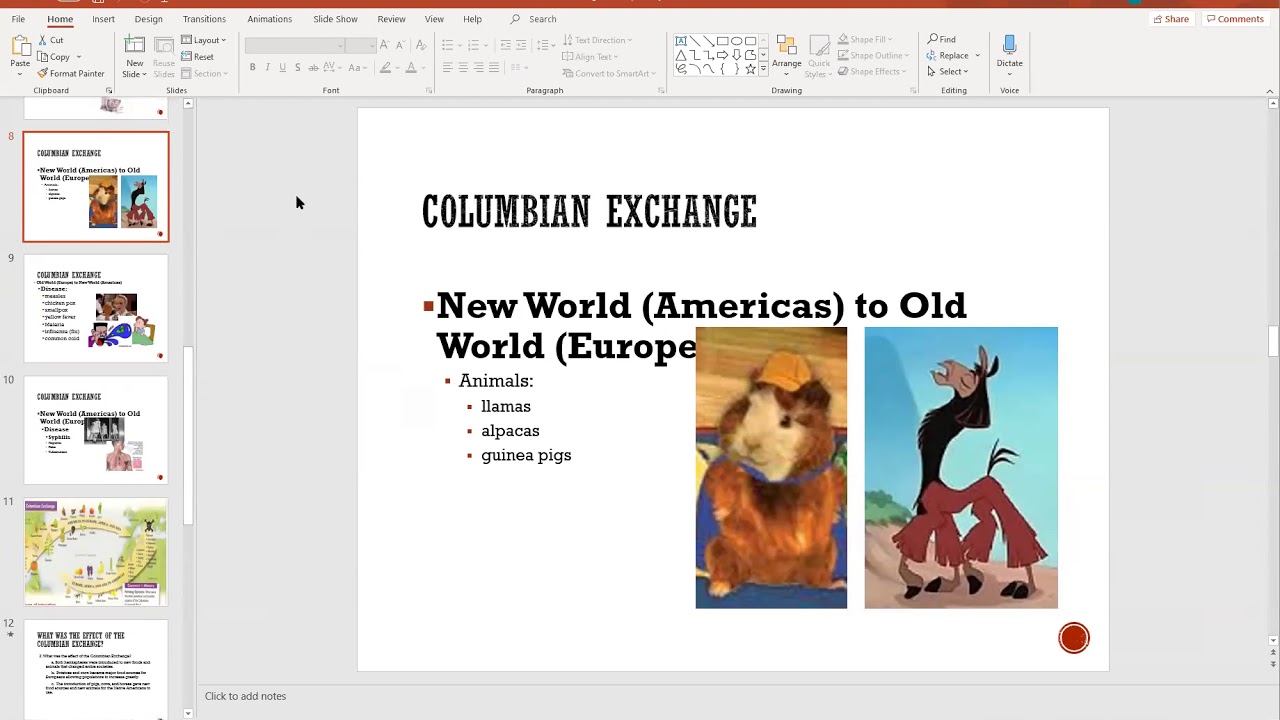
The Columbian Exchange, including the ecological and agricultural transfers between the Old and New Worlds.
The historical context of the European printing revolution, particularly the introduction of movable type by Johannes Gutenberg.
The rise of the Scientific Revolution and the Enlightenment as direct consequences of accelerated collective learning and print culture.
The demographic and economic shifts in Europe and Asia resulting from the adoption of New World crops like the potato.
The historical relationship between trade routes and epidemiology, examining how pandemics have historically reshaped empires and labor systems.
A comparative analysis of early globalization (15th-17th centuries) versus modern globalization in the digital age.
250.4K views4.9Klikes12:16Original Release: 2017-07-12
Hi, I’m Emily Graslie and this is Crash Course Big History, and today we’re talking about globalization - a process that goes back hundreds of years, and deeply impacted the collective learning of humanity.
As we’ve discussed in previous episodes, collective learning is the process that has raised the complexity of human societies for all 250,000 years of our history.
It’s the accumulation of more innovation with each generation than is lost by the next.
It allowed us to get better at foraging, spread out across the world and adapt to the harshest of environments.
It gave birth to agriculture, industry, and every other revolutionary technology.
But collective learning has its vital ingredients with the number of potential innovators and the connectivity of information flows between them.
Globalization, in its broadest possible sense, brought the previously separate world zones of Afro-Eurasia, the Americas, Australasia, and the Pacific Island Societies together, with both positive andv negative impacts.
Today we’ll look at how three things were shaped in the earliest waves of globalization and how they revolutionised our pool of collective learning, for better or for worse: printing, potatoes, and plagues.
Previously in Crash Course Big History, we looked at how humans spread out of Africa 64,000 years ago.
We expanded across Asia over the next 20,000 years and even accomplished the astounding feat of settling Australia.
We entered Europe and Siberia 40,000 to 25,000 years ago, and hunted animals across the Bering Strait and down into North and South America.
These migrations weren’t so rapid in human terms- they took thousands and thousands of years.
Even though humans inhabited almost every region of the globe, we didn’t maintain regular contacts between the major world zones.
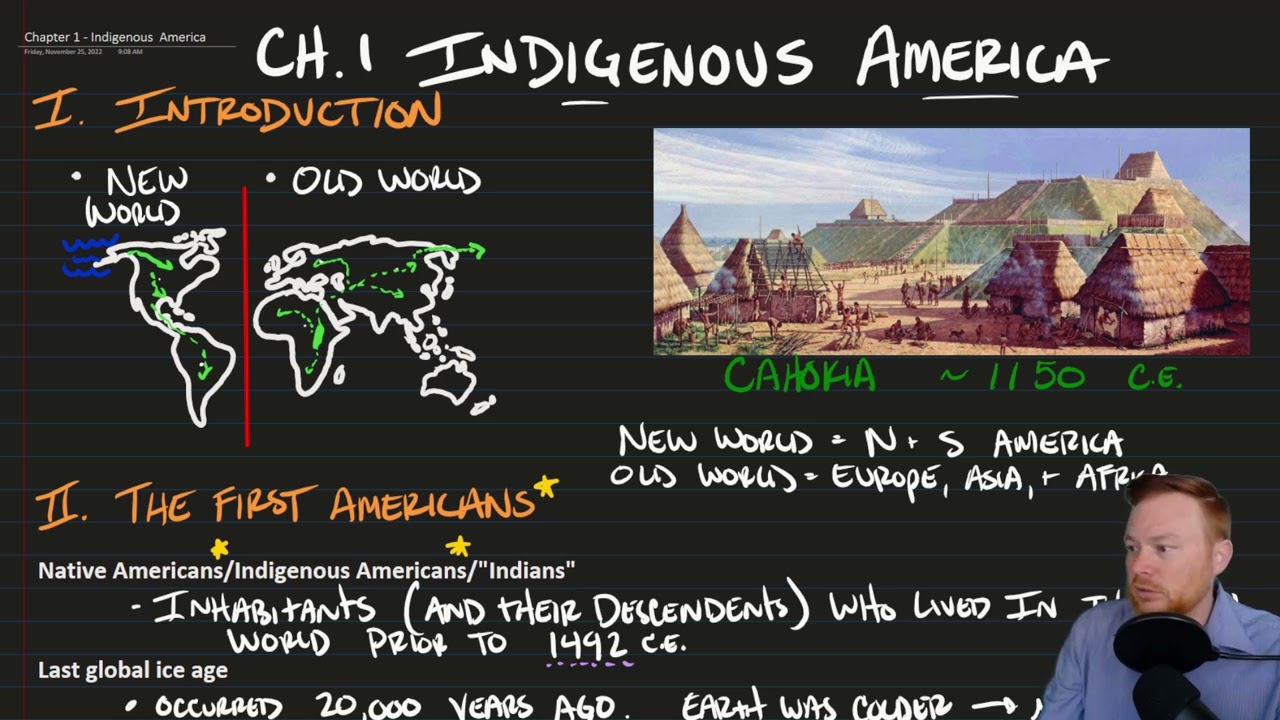
The Americas were isolated in many ways, and for over 10,000 years, they developed and diversified into lots of different cultures, eventually giving rise to agrarian states in Mesoamerica.
Before Columbus, before the Vikings, and, as some historians assert, before the Chinese sailed off the coasts of America, there were thousands of years where the collective learning of the Americas was done entirely by the Americas.
And we see surprisingly similar results in the rest of the world.
The origin of agriculture, the beginning of states and empires, and the development of monumental architecture including pyramid building happened independently.
In Australasia and the Pacific, environments were largely rich enough in resources for populations to thrive without agriculture.
For instance, in Australia, humans engaged in a practice called “fire-stick farming” which isn’t the plant and animal domestication we usually refer to as agriculture.
Instead it was foraging through the use of setting large forest fires that would clear new pathways through the brush, kill and cook a large amount of game, and take advantage of the round of rejuvenation that naturally follows a forest fire.
Early agriculture usually leads to a decline in the living standards of the foragers who adopt it, in terms of malnutrition, back-breaking labour, and the resulting diseases and famines.
Humans only give up foraging when they are trapped by a lack of new ecosystems or by population pressure.
Or both.
Australasia only developed agriculture in Papua New Guinea.
The largest world zone, Afro-Eurasia, had a lot of advantages from the start in many ways.
We group Africa, Europe, and Asia into one world zone because there was transference of collective learning - even if it was halting and rarely traversed long distances.
For instance, the silk roads enabled trade right from China to the West of Africa and to Europe for thousands of years.
Most individual traders didn’t travel the entire silk road, but piece by piece and trader by trader, goods and information would travel the entire route.
It wasn’t exactly a brimming information super-highway but it was something!
In the past 10,000 years, agriculture independently arose in Afro-Eurasia several times: in the Fertile Crescent, in East Asia, and in West Africa.
Agricultural surplus gave rise to agrarian states, which then slowly grew in size.
So, now we’ve reached the first wave of globalization.
Starting with the sustained colonization of the Americas over 500 years ago, continuing with the colonization of Australasia and the Pacific 200 to 300 years ago, humanity once again united into a single global system.
This had a profound effect on the pace of collective learning.
Unsurprisingly, the modern revolution soon followed.
Like globalization today, the impacts took many forms.
Some of them were positive and some of them catastrophically negative and that brings us to those three P’s, printing, potatoes, and plagues.
Firstly, printing.
While humanity has had collective learning for 250,000 years, orally passing along knowledge from generation to generation, I think we can agree it’s a major step forward to write something down.
Sort of like a giant post it note for humanity, we can capture things in text to remind ourselves of something in case we ever forget.
Writing also allowed for the communication of more complex and sometimes abstract ideas.
Even with writing, the greatest limitation on collective learning is the circulation of written works.
Most information was still passed on orally.
Literacy was relatively rare until the modern era.
The books that were produced had to be copied out by hand which was a process that took a long time and could include numerous mistakes, and it made books so expensive that they were essentially luxury goods.
Printing first emerged in China around 200 BCE.
Blocks of wood were carved with the imprint the printer wanted to make on the page.
It did mean, however, that each page had to be skillfully carved, which ate up a lot of time when trying to compile a full book.
Every page had a unique woodblock.
Around 1050 CE, the Chinese invented movable type, where different characters on clay tablets could be rearranged to create a new imprint.
But the thousands of unique characters made the process impractical for most printers.
And until the 20th century, printing in China was still dominated by the woodblock.
In the 1200s, the Koreans developed their own metal moveable type which was more efficient than clay tablets.
There was no printing press of any kind, but instead the paper was pressed onto the inked type with a wooden spatula.
These methods allowed East Asia to circulate way more copies of books than ever before, at a rate that was much more efficient than manuscripts copied by hand.
In the meantime, paper and printing filtered down the silk roads into the Arab world and by 900 CE, book production had advanced dramatically.
The Middle East mostly had hand-written books, but printing undeniably played a role, copying and disseminating knowledge wider and faster, even in its woodblock form.
The Middle East widely used woodblock techniques to stamp amulets and playing cards.
This stamping practice eventually reached Europe via the Crusades.
In Europe, printing became more rapid thanks to the combination of stamping an imprint on a page via moveable type and a press inspired by the wine press.
This had a profound impact on collective learning.
When Gutenberg developed the printing press around 1450, the largest library in Europe was in the Vatican, and it was around 2000 books.
A few centuries later in the 1800s a well-to-do middle class lawyer could easily compile a similarly sized collection.
Book printing went into overdrive.
In just the short span of 50 years, between 1450 and 1500, there were more books printed in Europe than had been hand-copied in the past 600 years.
Printing presses grew more and more efficient.
By the 19th century when roller presses got involved, book production was quick and cheap.
Written knowledge became available to more people.
This fueled the scientific revolution, allowed for rapid exchange of extremely complex ideas, and greatly enhanced the connectivity of information between millions and millions of potential innovators.
OK, onto the potato.
Let’s go to the Thought Bubble.
The potato, humble hero of collective learning, is a root vegetable first domesticated in Mesoamerica when farming was first getting started.
It has many important advantages for agrarian societies that literally live and die by the harvest.
(1) Potatoes can grow in all sorts of climates and environments.
(2) They enrich the soil rather than completely draining its nutrients.
They’re a cheap source of energy for humans, and unlike wheat, don’t take as much work to prepare.
In fact, the potato gained the nickname, “ready-made bread” for its miraculous properties in a world before TV dinners.
Potatoes fostered and fed the agrarian societies of Peru and Bolivia for thousands of years.
In these environments it wasn’t possible to grow that other American crop – maize.
But I’ll stick to one side of the grocery aisle for now.
The potato was established in Europe in the 1500s, due to Spanish and other European sailors packing them to eat on their trips back from the Americas.
Its yields played a big role in the agricultural revolution in the seventeenth and eighteenth centuries, which was a vital pre-cursor for the industrial revolution.
What is less well known is how the potato was also introduced into East Asia in the 1600s, where it was gradually adopted along with other American crops like yams and maize, and helped to raise the carrying capacity of the growing population.
Some historians assert that the introduction of the potato helped delay some of the worst famines in Asia by a century.
And the potato raising the carrying capacity of East Asia brings us back to collective learning.
Printing may have enhanced connectivity, but the potato led to a clear increase in the number of potential innovators.
Thanks, Thought Bubble.
But when talking about the history of potatoes it’s important to mention the Irish Potato Famine, where reliance on mostly one vulnerable kind of potato and government inaction led to the starvation or migration of millions of people.
Or its introduction into Africa where for generations it was viewed as a symbol of colonial oppression.
These are definitely negative impacts of early globalization And on that cheerful note, let’s go onto the last of our three P’s, which is definitely the least fun.
Plagues.
Afro-Eurasia, with its teeming populations and domestication of animals again had the lead - this time, in disease.
It’s thought that the plague of Justinian in the 6th century CE and the Black Death in the 14th century CE both arose out of the agrarian lifestyles of humans.
And with higher population densities, these diseases can spread rapidly.
It didn’t help that Afro-Eurasia was united by the silk roads which carried the Black Death across long distances.
Starting in 14th century East Asia, it killed an estimated 25 million people.
It then may have been spread by Mongol armies across the super-continent, where most famously the Mongols besieging the Crimean city of Kaffa reportedly flung plague-ridden corpses over the city walls.
Somehow plague eventually got picked up by traders from Europe, where it killed one third to one half of the population.
While Afro-Eurasia’s large populations may have been great in terms of potential innovators, it also produced a greater number of deadly diseases.
And when those diseases were introduced to the Americas, where people had not built up resistances over previous generations, the results were horrific.
Measles, smallpox, and other illnesses struck the Americas, for which they had no natural immunity.
And the diseases spread with such lightning speed that illness sometimes swept through American populations faster than Europeans moved inland.
We can’t understate this catastrophe.
While it is difficult to know for sure what the pre-Columbian population of the Americas was, the mid-range estimate is that these diseases killed about 50 million people within a hundred years.
This tragedy had a clear impact on collective learning.
The tremendous loss of human life wiped out a massive number of potential innovators for several generations.
The loss of population that came with the Columbian Exchange devastated the cultures of America, and crippled their ability to contribute to humanity as a whole.
As a result, European ideas came to dominate in the Americas.
This homogenisation of culture is a familiar aspect of globalization, and it doesn’t always benefit the pace of collective learning.
The loss of 50 million people is an overwhelming tragedy not just for the Americas, but for humanity as a whole, and its repercussions continue to be felt today.
The process of early globalization, uniting all the world zones, is not just important for human history, it’s also a crucial moment for the unifying theme of 13.8 billion years of change.
The acceleration of collective learning by linking together the globe into a vibrant and rapidly expanding pool of knowledge was vital to the continued transformation of complexity in our Universe.
And globalization is a process that has not stopped.
It’s intensifying, with all the positive and negative impacts involved.
But with luck, and a lot of wisdom, hopefully the continued story of globalization will avoid the horrific human costs of the past and continue to weave us together in a world of 7 billion, increasingly well-informed and interconnected innovators.
It is, after all, what will determine our future, and the outcome of the cosmic tale in our little corner of the Universe.
Thanks for watching.
Up Next

35:53
Who Was Really to Blame for the Black Death? | Medieval History Expert Analysis
@HistoryHit
149.8K views•2025-08-21

12:54
Triumph of Orthodoxy Icon: Byzantine Art & History Explained
@BenCallan
2.1K views•2024-08-06

12:44
Healthcare Systems Explained: Models & Building Blocks
@crashcourse
130K views•2022-09-15

1:42
Game of Thrones Opening Credits: A Cinematic Analysis
@gameofthrones
46.3M views•2011-04-18
Related Study Plans & Knowledge Roadmaps
Structured learning paths in General & Interdisciplinary Studies
general-studies
Elevator Engineering: History, Physics & Cities
01From Hoists to Safety Brakes: The Dawn of Vertical Lift
02Hydraulic vs. Traction: The Engineering Physics of Elevators
03Modern Speed, Safety, and Algorithms
+ 2 more learning modules
12h5 modules
Explore Roadmap
general-studies
Rubber: Material Science, History & Geopolitics
01Origins of Natural Rubber & Mesoamerican History
02The Chemistry of Natural Rubber & Vulcanization
03The Geopolitics of the Rubber Boom & Colonization
+ 2 more learning modules
12h5 modules
Explore Roadmap
general-studies
Containerization: Evolution, Logistics & Trade
01Ancient Trade & Bulk Cargo: Amphorae to Barrels
02The Industrial Revolution & Cardboard Packaging
03The Containerization Revolution: Malcom McLean
+ 2 more learning modules
12h5 modules
Explore Roadmap
general-studies
Textile Tech: Evolution, Labor & Global Impact
01Pre-Industrial Textiles: Handloom & Cottage Industry
02Mechanization: The Spinning Jenny to the Power Loom
03The Factory System & Global Labor Transformation
+ 2 more learning modules
10h5 modules
Explore Roadmap