

























Bryan Caplan argues that much of the economic value of education comes not from learning useful job skills (the human capital model), but from signaling conformity and desirable traits to employers; this 'signaling model' explains why diplomas pay disproportionately high returns, as employers use educational credentials as rough sorting mechanisms when they cannot evaluate each candidate individually, leading to credential inflation where more education becomes required for the same jobs over time.
Education: Why Government Spending Trillions May Be a Waste | Bryan Caplan
Added:Human Capital Theory: The economic theory that education increases productivity and wages by directly teaching useful, transferable skills.
Signaling Theory (Spence's Model): The concept that academic credentials serve primarily as a credible signal of pre-existing traits—such as intelligence, conformity, and work ethic—to potential employers.
The Concept of Externalities in Economics: How public funding of education is traditionally justified by the belief that it creates positive spillover benefits for society as a whole.
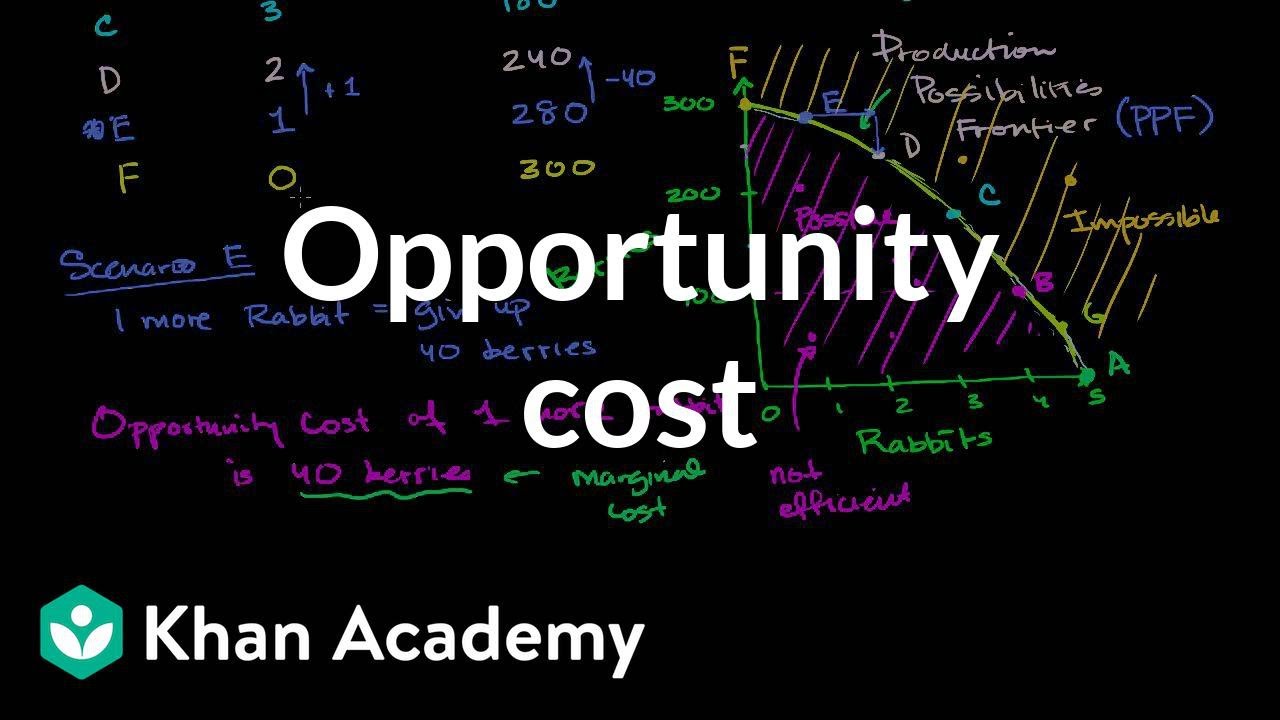
Opportunity Cost: Understanding how the time and financial resources spent on formal education represent lost opportunities for immediate labor market experience and economic output.
Credential Inflation (Degree Inflation): Investigating how the rising requirement of college degrees for historically non-degree jobs impacts the labor market and exacerbates inequality.
Alternative Educational Pathways: Exploring the economics and efficacy of vocational training, apprenticeships, and competency-based micro-credentials as substitutes for traditional degrees.
Policy Debates on Higher Education Subsidies: Analyzing the economic arguments for and against reducing government funding for universities to curb rising tuition costs.
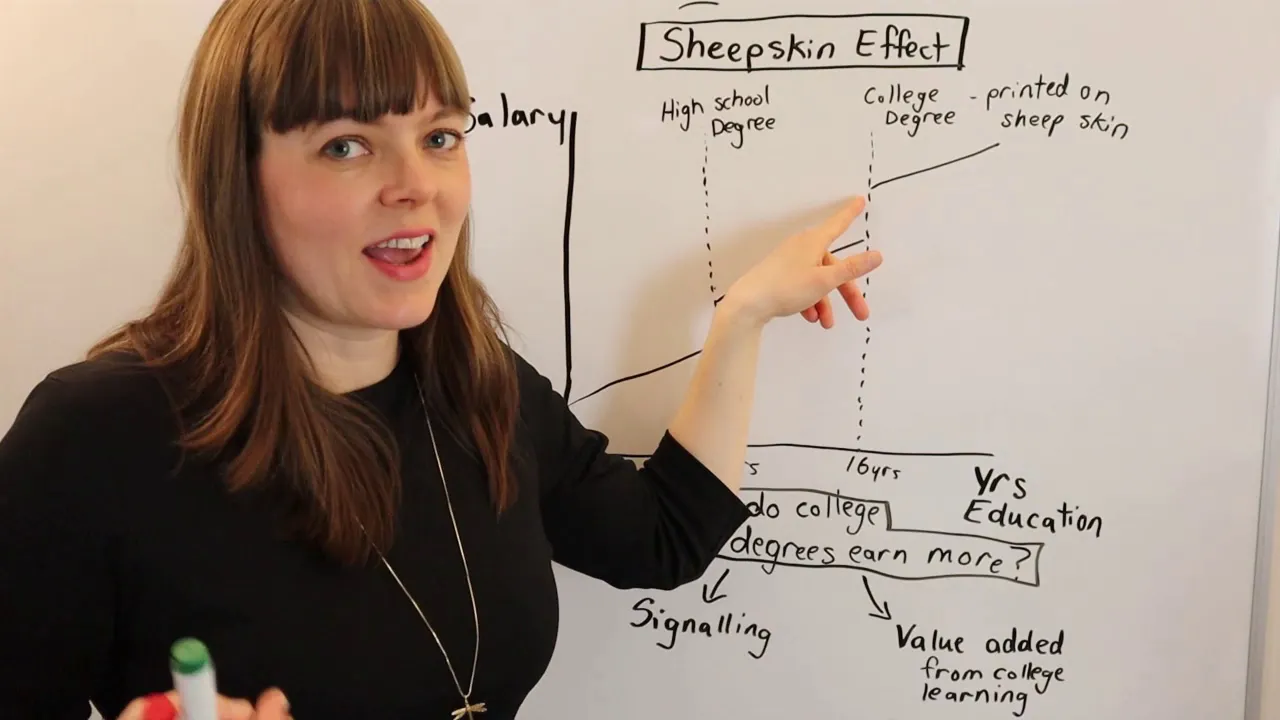
The 'Sheepskin Effect' in Labor Economics: Studying empirical methods used to isolate the wage premium of obtaining a diploma versus the marginal benefit of an additional year of study without graduating.
176.6K views5.9Klikes21:07Original Release: 2018-01-22
It's absolutely true that school makes people show up, sit down, shut up and that these are useful skills for people to have in adulthood.
So the real question is if all we're trying to do is prepare people for a job, why not prepare them with a job?
I'm Nick Gillespie for Reason and today we are talking with the author of what is almost certainly going to be the most controversial book of the year.
Bryan Caplan is an economics professor at George Mason University, and his new book is The Case Against Education.
Bryan, thanks for talking with Reason.
Thanks for such an exciting introduction.
Well, let's get right to it.
Early on you say flatly, you write flatly, "This book argues that our education system is a big waste of time and money."
And now you're not simply saying that our schools are overpriced and uneven in quality, you are actually making the case that much of our traditional education system, especially higher ed, is literally a waste of time, right?
Absolutely.
What do you mean by that?
What I mean is that people are going there to get a higher income, but they're actually not getting much in the way of job skills, which raises a big puzzle for an economist.
How can they be getting a higher income if they're not getting much in the way of job skills?
And my answer comes down to something called the signaling model of education that says that a lot of the reason why education pays isn't that you learn useful skills, but that you distinguish yourself.
That you're getting stamped or labeled.
You're getting a sticker on your forehead, Grade A worker.
So it's kind of like you come out as a piece of steak.
You're USDA prime, but you haven't been cooked yet.
Precisely.
And the the key thing about this is, selfishly speaking, it doesn't really matter why you're getting more money.
But from a social point of view, from the point of view of is this a good use of taxpayer dollars, it matters tremendously because everybody just gets more years in education and all you're doing is showing off.
Then you're just raising the bar for how much school you need in order to get a job in the first place.
So let's talk about the magnitude of wasted time and money.
I guess for most people, if you go from kindergarten through a B.A.
you're talking about 17 years roughly.
So that's a lot of time, but how much money do we spend as a society on education?
Yeah, so government funding is about a trillion dollars a year when you add up all levels.
Our economy is about 20 trillion dollars, so that's a large chunk of change.
Yeah, so you're talking about something like 5 percent of all GDP.
And then of course private spending tops it up a bit further, so it's something over a trillion.
And by the way, the one thing that's interesting about this is you don't really make a distinction between private and public education, because this isn't a book about how the public school system is failing kids.
It's just how education is useless.
I mean, I know libertarians want to hear a different story, but I'm telling the story that I think is true rather than the story that I would even find ideologically most congenial.
For me, the main thing is I've gone to public school.
I've gone to private school.
I don't really see very much difference.
And in both cases it seems to me that most of what's going on is showing off in order to look better for the labor market.
Which, again, individually makes perfect sense, but socially speaking, everyone can't be above average.
So this is kind of like a private vice is actually becomes a public vice because- Or rather a private virtue becomes a public vice because- Yeah.
I mean, I think of education as being a lot like football stadiums, where like the main libertarian complaint about football stadiums isn't that we're not making the right kind of football stadiums.
It's that government is pouring a ton of money on something, and really what we need is to have fewer worse football stadiums.
But more money left to for people to spend in a meaningful way.
Yeah.
But possibly not on football stadiums.
Possibly on totally different things.
Before we go into the signaling model per se, talk a little bit about the human capital model of education because these are the two big competing explanations.
What is the human capital education model?
Yeah, the human capital model is a fancy phrase for what your teachers and politicians and your parents have been telling you, which is you go to school to get smart and to learn all kinds of useful stuff which you're then going to apply in the real world.
You're investing in yourself.
Yeah, you're investing in yourself.
So you're transforming unskilled laborer into a skilled, talented adult.
It’s most associated with Gary Becker.
You know, a famous Nobel prize winning economist.
But really he was just putting an academic veneer on something that is widely propagandized in favor of the idea of school as a skills factory.
It's not simply... I mean, very few people, and I mean, you point this out continuously in the book and I think accurately, nobody if you go to take a shop class, you're not going to go and learn how to cut ninja stars out of sheets of metal and that's the job you're going to have in a factory.
But the idea is that you learn skills.
That you learn how to show up on time.
You learn how to listen and follow instructions.
You learn how to self-learn.
And you're saying that this is actually not a very- Like how do you know that that's not an accurate model.
Right, that's one of the best arguments in favor of the education we have.
It's one by the way that people usually have to be forced into after a series of intellectual retreats.
But, you know, here's the main thing that I say about that.
It's absolutely true that school makes people show up, sit down, shut up and that these are useful skills for people to have in adulthood.
So the real question is if all we're trying to do is prepare people for a job, why not prepare them with a job instead of with school where the overlap- There is a partial overlap in skills, but there of course is a lot of stuff that you're taught in school that is dysfunctional in the real world, like it's very important for everything to be fair.
Jobs aren't fair, but school, everything has to be fair.
Talk about the sheepskin effect, because for me, this is the thing that totally whatever affection I had for the human capital model of education, this really kind of kicked that to the curb.
So diplomas used to be written on the skins of sheep and the sheepskin effect refers to the fact that a lot of the payoff from education comes from crossing the finish line, from graduation, a disproportionate amount.
So like in the book, I just average over a whole lot of studies.
So as for college, finishing senior year pays something like seven times as much as a regular year.
Seven times as much.
Now either we save almost all the useful job skills for graduation year, which sounds really implausible.
You know, your senior year is goof-off year, not finally-learn-some-job-skills year.
Or there's something going on in the rewards for education that's not about skills that you're learning.
And I say, like the main thing that we're getting is it's a signal of conformity.
In our society, you are expected to graduate.
Everyone tells you to graduate.
If you fail to do so despite all of this social pressure, you're saying something very bad about yourself and the labor market responds negatively to you.
Although one of the things that I think is really interesting about the book is that you do steer clear of extremes because there are- Immediately you can hear people saying, "Well, what about Steve Jobs?
What about Bill Gates?"
Of course.
"What about Michael Dell?"
There's the list of- Or Andrew Carnegie for that matter.
So I mean, you're not saying that all of these things are infinite extremely perfectly, right?
Yeah, no, of course.
So I have two chapters that are the most quantitative part where I sit around trying to crunch the numbers and say what fraction of the payoff for education comes from human capital, what fraction comes from signaling.
Of course, you learn reading, and writing, and math in school to some degree.
And of course those are useful job skills.
But what fraction of the time that you're in school is really learning anything you're ever going to use again?
What fraction of the payoff comes from what you've learned rather than what you've demonstrated you can do?
What do you do with the arguments that, well, school maybe or education and particularly K-12 education is not for job skills, but it's for citizenship.
And this is- You know, it's- The progressive era talked a lot about that, like we need to make good citizens, especially out of increased numbers of immigrants who had no understanding of American history.
Where does that fall in the human capital model?
Right.
So I mean that would actually be totally outside of it.
Again, like human capital versus signaling are trying to figure out why do employers pay you more for it.
Now this other stuff, I have a full chapter on it as well, and it just begins with saying, look, the argument in principle is sound, but we have to look empirically to see whether it's really true.
You know, I have a big section where I just go over how much civics do American adults even know?
And the answer is next to nothing.
Next to nothing.
Yeah, I mean, you note that if people who were born here or were citizens had to pass the citizenship test of immigrants I think was something like 70 percent would fail.
I'm glad you remember that.
I don't.
So what we can see is that like even the most basic stuff, like how many senators does each state have, maybe half of American adults know this.
And this is not after a one-week course in civics.
So, you know, like you say, well, American high school students on average will do three years of civics and history.
So three years and yet what do we have to show for it?
Next to nothing.
Well, we have football stadiums.
Yes, we have football stadiums.
So talk about the signaling model.
How does the signaling model work?
You say partly it shows that you're willing to conform to certain basic norms that are going to make you appealing to employers, but there's more to it than that, right?
Yeah so I mean, there's a lot of different desirable traits that you are signaling with educational accomplishment.
So there's the obvious ones.
You're signaling that you're smart.
Smart people do better in school.
If you've done well in school, natural inference is the person's probably smart.
Not necessarily, but generally.
You're signaling work ethic because even the smartest person in the world can't do well in school if they don't show up and do a bit of work.
And then finally, the most subtle one that I talk about a lot is conformity, signaling you're willing to submit to social norms.
And the conformity one is where we really get things like the sheepskin effect.
Because if we were just signaling intelligence and work ethic, there still isn't really a good story, well, why does the last year pay so much?
Once you accept that a lot of it is about, yes, master, I will conform to what our society demands of me, that's where graduation is so important.
That's why in a country where college lasts three years, it's the third year that's crucial.
In a country where it lasts four years the fourth year is crucial.
Just like in a country where suits are the standard thing you wear to an interview, you better wear a suit or else you look like a weirdo and people don't want to hire you.
Libertarianism is about individualism, but then is there a sliding scale of when you get too conformist, because then you're also not a good worker, right, in many ways?
Like you're an economics professor.
If you were simply doing what everybody else was doing, that would be a problem.
A line that I quote in the book roughly is what employers want is intelligent conformism.
They want people who apply their full intellectual power to the task that is given to them.
Now sometimes there are creative occupations where they're told be creative on this task.
Well, even there, almost no employer wants you to be so creative that you say, "Hey, maybe this project isn't even worth doing, maybe I should be the boss."
So there's always that.
And then again of course most jobs are not really very creative and there's a tendency in the information age to focus on the small share of jobs where we do want people shooting basketball while they shoot the breeze.
But I mean, most jobs are not like that.
Vast majority of jobs are not like that.
It's about there's a customer.
He wants a definite product, give him that product or else I don't want you around.
Talk about one of the ways that this system gets enforced is through social desirability bias.
What is that and how does that inform the larger education network?
Social desirability bias is the concept in psychology that is barely known by either economists or libertarians and yet should be the single most cited concept in psychology, social desirability bias.
You know, a simple version is people like to say what sounds good.
They like to say things that will make people think that they are a kind and- A kind, respectful, and respectable person, right?
So you can see this in things like what is the socially desirable answer to, "Am I fat?"
Of course the socially desirable answer is, "I'm not fat."
Now of course some people aren't fat and then you just tell them the truth, but on the other hand, we know that if someone is in fact fat, our strong temptation is to say something that sounds good but isn't true.
This is something where of course we see it in daily life, but also has clear political roles.
You know, just think about any time a politician says, "And we need to put more resources into education, health care, and the environment."
Now these are all things that sound good.
And if you could imagine a politician saying, "We have now done enough for education, and health care, and the environment.
We know they're important, but enough is enough."
That's nothing that a politician would ever want to stick their neck out and say because it sounds bad.
It sounds like you're not a caring person, you're not a respectable person.
What I say is a lot of the support for education is social desirability bias in a sense that if we- The only thing that a good person would say is more and better, never less and worse.
There are obviously entrenched interests in a kind of education industry as well as it helps employers, right?
Because employers, even if we're not learning the skills, they're going to train us on the job for whatever we need to do, but they benefit in a way, right, from the signaling process because it makes it- You at one point you say that employers can't look at every individual applicant closely, so they use these as rough sorts.
Yeah, I mean, employers benefit from there being some signal.
But I don't think employers benefit from the college degree being the signal of quality rather than the high school degree.
So something where like in 1950 like about something like 25 percent of American adults would have finished high school at that point, and then an employer could say, "Well, they're a high school graduate. Great. Perfect.
They're managerial material."
Now it's a college degree.
As to why employers benefit from pulling four years worth of labor off the job market, I don't think that they do actually.
Can we talk about that?
What is the historical, the kind of material basis for this?
You know, again, schools became at least up through sixth grade or eighth grade for most kids, sort of became mandatory in the early 19th century.
By the end of the century it was everywhere.
Is part of this, is part of the growth of education as being so important and central to our identity, is it simply we need to warehouse kids now that we don't need them to be chimney sweeps or to do like things, you know, kids have little hands.
They can work on machines with little hands, things like that, or hawk newspapers.
We don't need them to do that labor anymore.
Are we just warehousing kids?
Like what's the sociology or the genealogy of why we have so much education?
Going 100 years back, there is this popular story that employers wanted kids trained to be cogs in the corporate machine.
And I would say like if you really wanted to train cogs in your corporate machine, you would not design anything like the public school system we have.
It would be like military school.
You would whip kids into shape, get them to say, "Yes, sir."
Give them a lot of propaganda about how great their corporate pay masters are.
That's not the way that education looked 100 years ago, and it's certainly not the way that it looks today.
This is not a system that really seems to be designed to prepare people to be useful employees.
You'd never have the everyone's a beautiful unique snowflake kind of propaganda, the touchy-feeliness.
That's not what employers want.
Employers want someone that will follow orders, do what they're told, and accept criticism, which is of course crucial for learning.
So I don't think that it really makes much sense to think of the current system as something that has been molded for the interest of corporate America.
I mean, I think, you know, so if corporate America of course if they can tweak it a little bit in their favored direction they will, but it's- But what else would we do with kids?
Yeah, so there's kids and kids, right?
Young kids, of course, they need to be warehoused.
So give them day care.
Well, even there, as to why kids can't go to school and then learn reading, writing, and math for a few hours and then get to play for the rest of the day within a supervised facility, I've got no clue about why you couldn't just do that rather than boring them to death and making them study stuff they don't care about.
But even for older kids, like 13-year-olds, 14-year-olds, 15-year-olds, as to why they can't actually be out in the real world as apprentices.
There are countries that do this.
Germany and Switzerland do this.
No reason why American kids could not do this as well, right?
And say like they can't do anything.
Sure they can do stuff.
Say, well, we don't need them.
Well, the economy's not based upon what we need.
It's based upon what we got, right?
What do we need?
We need like a few bowls of rice a day.
But what we've got, however, is enough to go and produce vastly more and like I don't see any reason why teenagers could not be part of the labor market at a much earlier age than they are right now, right?
And, you know, of course if we're always worried that any kid who's working is being distracted from his much more important studies, this isn't going to fly.
But if we realize these studies are not really that socially valuable anyway and it would be better to get kids in the labor force— especially, by the way, kids that are not very academically inclined anyway where they get shoved and prodded to go and succeed and go to college, which is almost certainly never going to happen for them.
And by the time that they drop out, they're so bitter about the whole system that they are not suited for really any job.
I've got a chapter in the book called One is Greater Than Zero.
It's like it'd be better just to train people to do one job rather than zero, which is what a lot of kids leave high school or drop out of high school, are able to do.
So what is to be done?
And you write in the concluding chapter of the book, "Slash government subsidies.
This won't make classes relevant, but will lead students to spend fewer years sitting in classrooms.
Since they're not learning much of use, the overarching effect will not be de-skilling, but credential deflation."
Talk about that.
Yeah, so credential inflation is what we've seen over the last century.
The amount of education that you need to get one and the same job has increased dramatically.
So basically since World War II it'd be about a four-year increase in the amount of education you need to get a job.
This is why we see college graduates doing things like waiting tables, bartending, where we're driving taxis.
These are not just ultra rare examples that make it onto the news.
These are common jobs for college graduates to have these days, and it does seem like even in these jobs, a college degree does pay.
It helps you get promoted and get a position in the better restaurants or the better bars.
But the reason is there's so many people with these degrees that employers can afford to be picky and say, "Well, fine. I want college graduates tending my fancy bar."
You know, like I say this is the function of the proliferation of credentials.
And if education were more expensive and the subsidies were lower, fewer people would go.
Now when you're talking about subsidies here, I mean, you have 90 percent plus of K-12 spending is spent on public schools.
There's so much federal money and state money going into colleges, as well even private colleges.
You're saying cut that?
Absolutely.
So cut government spending. Cut the subsidies.
This is the one of the most egregious cases of industrial policy that we see all over the world, and it's one that's almost totally uncontroversial even though if you go into a classroom and say, "Well, wait, why are we going and teaching these kids this stuff?
They're going to forget it anyway, and it's not really relevant to what they're going to do in real life, so why?"
And to save you from a charge of philistinism, you're not saying in the book, "Well, don't read novels, don't study art, don't study music."
You're simply saying that as part of the curriculum, most of what we learn other than basic mathematics and literacy, including English skills, is kind of useless.
Yeah, so useless in the labor market.
Now, so you said I'm a professor and I am a high culture kind of person and German upright, Shakespeare.
This is the stuff that I like.
But I still recognize that there's something twisted about ramming it down a kid's throat.
A key part of appreciating this kind of stuff is coming to it in your own good time, actually being curious and ready.
So like if you go and actually inspire a sincere affection for Shakespeare or opera, that's great.
I see this happening almost never in school.
The kids are there.
They go and pay lip service to it, and then as soon as they're done, they walk away and say, "Well, I never want to have to hear that garbage again.
I hated that stuff."
This is where I say that while I'm not very optimistic about the potential of online education to really compete with brick and mortar schools, it's already doing a tremendous job in terms of quenching the human thirst for enlightenment.
Right, and you need a course, and what's great about the Internet is that you don't have to concentrate all your fire power on kids that are between 15 and 22.
You can wait around for adults to say, "I'm 30.
Now I'm curious about Shakespeare.
It seemed really boring when I was young, but now maybe I would like to go and learn something about it."
So, you know, to say that while I'm all on board with the noble goals of enlightening the human spirit, a key part of this is you've got to have volunteers that want to learn.
Just trying to ram this down the throat of conscripts, which is what education normally does, is an insult to everything that enlightenment stands for.
You know what?
I'm hearing Pink Floyd's The Wall playing in the background.
Yes, yes.
And this is the soundtrack of the book.
Bryan Caplan's latest book The Case Against Education.
He's a George Mason economics professor.
Also you wrote a few years ago The Myth of the Rational Voter.
I think this book is going to be just as controversial and hopefully as widely read.
Bryan, thanks for talking to Reason.
Alright, thanks so much, always great talking to you, Nick.
For Reason, I'm Nick Gillespie.
Up Next

62:19
Affirmative Action in Higher Education: Glenn Loury & John McWhorter Debate
@Nonzero
26.5K views•2018-03-29

12:54
Triumph of Orthodoxy Icon: Byzantine Art & History Explained
@BenCallan
2.1K views•2024-08-06

9:49
FastAPI vs Flask vs Django: Choosing the Right Python Web Framework
@TechWithTim
302.5K views•2024-05-26

1:42
Game of Thrones Opening Credits: A Cinematic Analysis
@gameofthrones
46.3M views•2011-04-18
Related Study Plans & Knowledge Roadmaps
Structured learning paths in General & Interdisciplinary Studies
general-studies
Elevator Engineering: History, Physics & Cities
01From Hoists to Safety Brakes: The Dawn of Vertical Lift
02Hydraulic vs. Traction: The Engineering Physics of Elevators
03Modern Speed, Safety, and Algorithms
+ 2 more learning modules
12h5 modules
Explore Roadmap
general-studies
Rubber: Material Science, History & Geopolitics
01Origins of Natural Rubber & Mesoamerican History
02The Chemistry of Natural Rubber & Vulcanization
03The Geopolitics of the Rubber Boom & Colonization
+ 2 more learning modules
12h5 modules
Explore Roadmap
general-studies
Containerization: Evolution, Logistics & Trade
01Ancient Trade & Bulk Cargo: Amphorae to Barrels
02The Industrial Revolution & Cardboard Packaging
03The Containerization Revolution: Malcom McLean
+ 2 more learning modules
12h5 modules
Explore Roadmap
general-studies
Textile Tech: Evolution, Labor & Global Impact
01Pre-Industrial Textiles: Handloom & Cottage Industry
02Mechanization: The Spinning Jenny to the Power Loom
03The Factory System & Global Labor Transformation
+ 2 more learning modules
10h5 modules
Explore Roadmap