




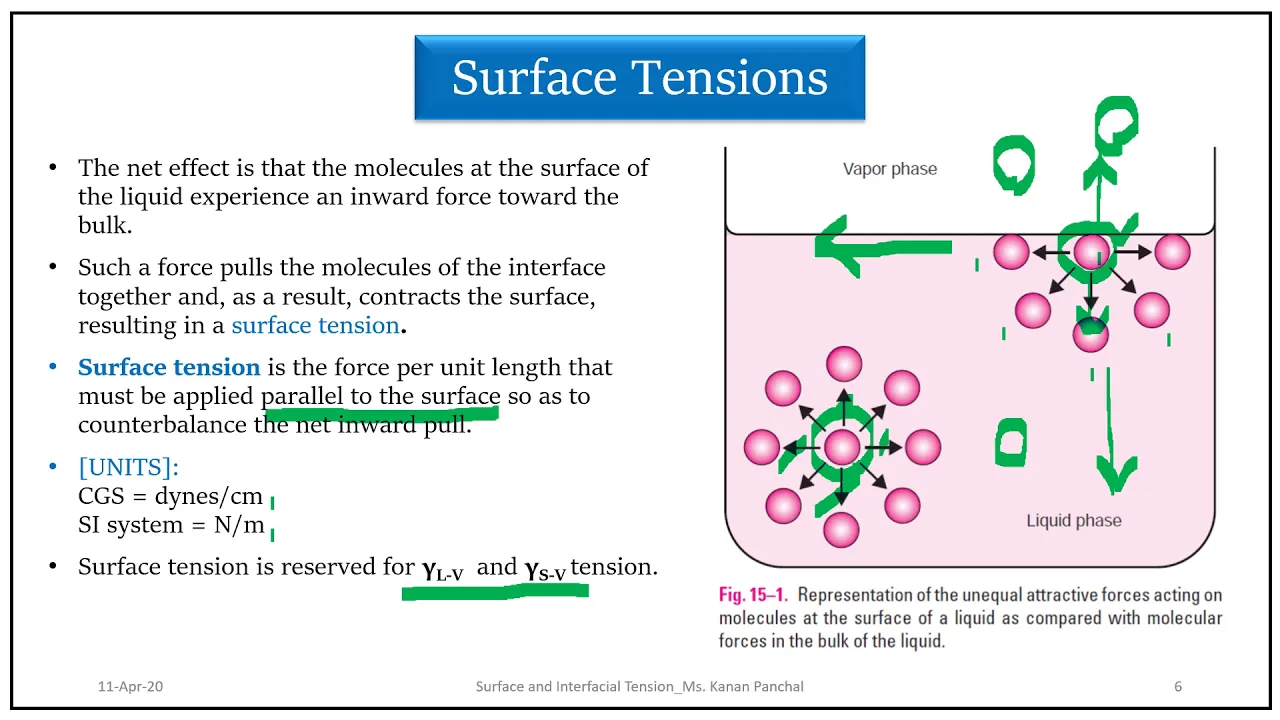
























Interfacial rheology studies the mechanical behavior of interfaces between fluids (such as air-water or oil-water boundaries), which are mobile and deformable unlike solid-fluid interfaces. Key concepts include surface tension (energy per unit area at interfaces), surface pressure (difference between clean and film-covered surface tensions), and the viscoelastic properties of interfacial materials. Measurement techniques like the Wilhelmy plate method determine surface tension, while specialized devices such as double-wall ring geometries convert rotational rheometers into interfacial rheometers to measure surface viscosity and elasticity. Applications span biology (cell membranes, tear films, biofilms), industry (foam and emulsion stabilization in foods and cosmetics), and environmental science (oil-water emulsions). Understanding these interfacial properties is essential for designing stable products, controlling bacterial biofilm formation, and developing treatments for conditions like dry eye syndrome.
Interfacial Rheology Explained: Theory, Measurements, and Applications
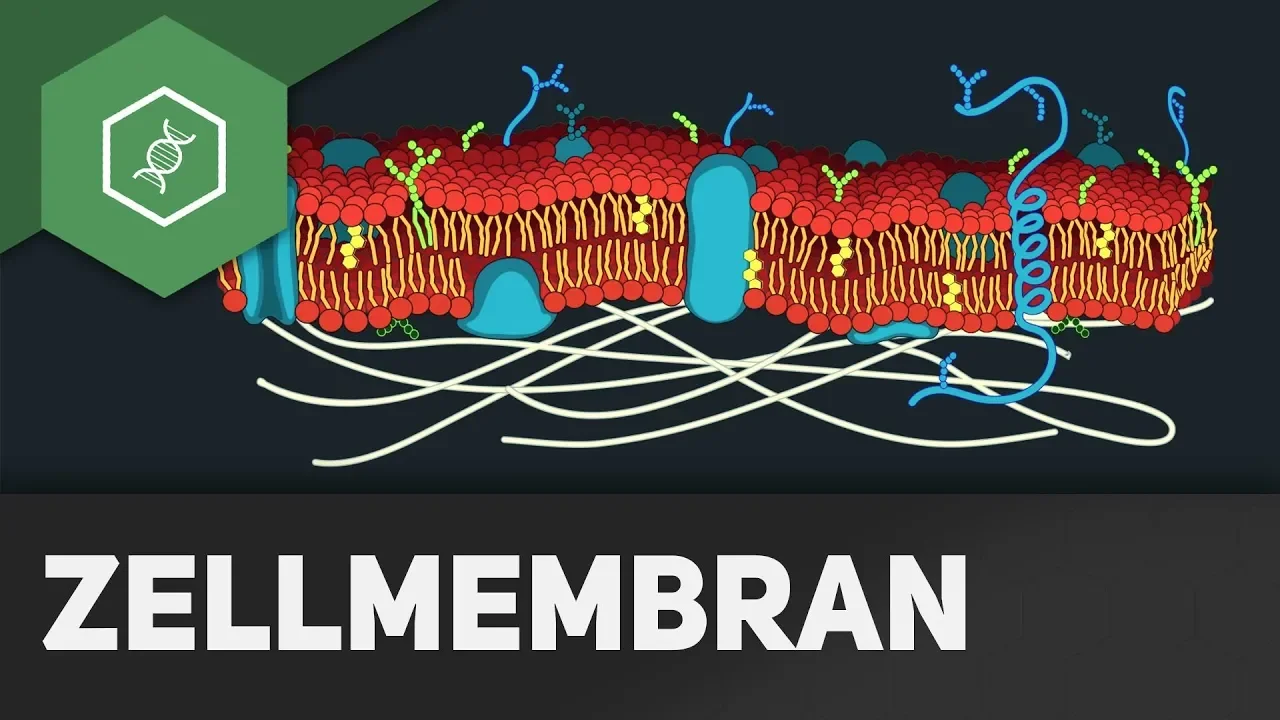
Added:[Music] [Music] hi my name is Russ Alber I'm a product manager here at TA and I'd like to welcome everybody and thank everybody for attending today's webinar before we get started be aware that you can customize and arrange windows on your screen if at any time you lose one of the windows or if you'd like to access add additional information such as the speakers bio or social media sites you can do so by pressing the widgets at the bottom of the screen if at any time you get disconnected please just follow the instructions you received to log back in you can submit questions at any time during the presentation and we'll be happy to answer those at the end our guest speaker today is Dr Gerald for Dr Fuller is the Fletcher Jones professor at Stanford University since joining Stanford in 1980 he's conducted research in the area of optical retry and interfacial retry Dr Fuller is a leader in his field authoring and co-authoring over 220 papers he's also authored a book titled Optical retry published by Oxford University press he has served as president of the side of rology and he received the bigam medal from the society in 1997 in 2005 he was elected to the National Academy of engineering we're very happy to have Dr Fuller speaking with us today the title of his talk is interfacial rology Dr Fuller well Russ thank you and it's my pleasure to be here today to tell you about interfacial rology there are many reasons why this topic is important most of of rology concerns bulk liquid materials but here we're dealing with the interface between fluids so the these interfaces are themselves mobile and deformable as opposed to the interface between a solid and a liquid here we have the interface between two fluids it could be air and water or oil and water those interfaces are what concern Us in this presentation I'll start off with some some Concepts on on uh complex fluid interfaces and the and the rology of those materials and then I'll explain how you can measure these interfacial rological properties how you can actually turn your rotational uh riometer into a measurement device for interfacial rology and then I've constructed a number of examples that will reveal how these techniques can be used to solve real problems but let's start with uh some some short motivations first from biology from living systems Liv living systems are composed of complex fluid interfaces the cell wall for example as you can see here in this cartoon is a bilayer of phospholipids and and interact interacting with proteins and other biological molecules together these molecules form a complex interface that when asked to deform such as it has to do in something like cell division must do so and in response to a complex relationship between stress and strain and that defines rology now not only do we have B layers in our body but you've got monol layers such as the tear film of our eyes here we have a complex surfactant lipid mixture that stabilizes the tear film in a special way and that turns out to be a rological problem as is the the lining of the alviola in our lungs another example of a complex fluid interface that is rically very interesting now in addition we have examples from industry and the environment in in many of the products that we consume and and use we have interfaces such as Foams and emulsions and it's important to stabilize these so we have here on the on the top two images we have micrographs from a foam ice cream and ice cream is a foam consisting of of um of cream and and other ingredients whipped up and and uh processed into a foam so you have air pockets and that's what you see on the on the right here is an air pocket and what's lining that interface between air and the the uh the the the the cream product it are are small globules of fat and other other constituents and those those fat particles that have a tendency to migrate to the interface and Lodge there help stabilize ice cream so that it doesn't collapse in your refrigerator there is a tendency for all uh Foams and mions to coars in over time this is a a a a a process that we want to arrest in stabilization of of many of the products that we use in food and and personal products well as a foam collapses in this case ice cream those fat particles will start to come together and ultimately ultimately interlock and form a viso elastic shell that that arrests that that collapse process so measuring the interfacial mechanical properties between between uh air and in this case a a u a a a a Milky mixture is very important for stabilizing um ice cream and you can think of many other examples salad dressings um mayonnaise these are are food products that have to be stabilized now on the on the bottom we have two micrographs from from a an environmental problem where you have oil and and sea waterer whipped together to form a very stable Emulsion and this has to be broken or alternatively if you are producing oil in a reservoir there is unavoidably an interface between oil and water and as you push the oil out you'll create an Emulsion you'll track WAP water inside the oil constituents in heavy oil will stabilize those water droplets so they're hard to break apart and and that's that's it's necessary to overcome that somehow now what's happening at that interface is that that asphaltenes and other high molecular weight components migrate to the surface and they form a viso elastic skin to understand how to break that that stabilization it's it's interesting to measure the interfacial rology and to then look at the addition of surfactant or other other additives you might think to to include into your process to to break that Emulsion so those are two two examples uh from the industry and and and the environment now we've learned something from our our uh our science and engineering classes about fluid interfaces and one important concept that you've encountered is interfacial tension or surface tension it's also called surface energy uh as well so what you have in in in this in this cartoon is an interface in this case between a liquid and air and in the liquid a molecule will be surrounded by like molecules and can interact with them there's an interaction potential called U capital u here and what happens when it molecule finds itself as the interface it's lost half of its neighbors and it doesn't have it doesn't enjoy those interactions anymore and so there's an excess surface energy energy per per unit area that exists at such an interface and you can estim estimate that as roughly the thermal energy KT divide by two because you've lost half of them and then we'll divide by the mean area of a molecule so let's say the molecule has a length scale D we'll square that to to come up with its area divide by that and you get an estimate for GMA which is the surface energy now surface energy energy per area has the same units as Force per length and so this is also called a surface tension and and we we we've measured that uh many times and and we we we know that water has a very high surface energy or surface tension 72 D per per centimeter why is it so high because it has a very strong interaction potential because of hydrogen bonding oils have a lower surface tension because they lack that specific interaction well how can we measure well there are many techniques that you can purchase for this purpose and here's one showing here it's called the wilh helmy plate and it's a very simple idea you take a plate you can even use paper a porous material what you want is you insert that that uh that that plate through the interface and the interface will come up and grab it now you want it to grab at what at a what's called a contact angle that's very close to0 degre so that comes up almost parallel that's why pores material like paper is often used but but uh whatever you're using it could be platinum it should be clean and and and you want a surface uh contact angle it's about zero that surface tension will pull down on that plate and you want to measure that Force take that force and divide by the perimeter uh of contact and you get the surface tension now surface tension is a thermodynamic quantity like pressure in fact in surface science you construct the analog analogous property to pressure called surface pressure by simply taking the surface tension of a clean surface and subtract that from the surface tension of a of the surface that it has a film on it that gives you a positive difference that's called the surface pressure surface pressure is a thermodynamic property and you want to measure that as a function of temperature for example or concentration of of the molecules at the surface now generally speaking there are two kinds of interfaces complex interfaces when you add something to a a um a solvent such as a surfactant a Sut molecule there you you you have a situation where you have a soluble material that's dissolved inside this the the bulk subface and that's shown here in this cartoon where where you have where you have soap molecules which are also called amphophilic materials these are special materials that have one part of the molecule that really enjoys water and then you've got a long aliphatic tail that doesn't particularly like water it enjoys a hydrophobic environment such as air and so what happens is that there is an equilibrium that's established and and there will be a a relationship between the concentration of the soap molecules in the in the water and the concentration the surface concentration of those same molecules at the air water interface that film that's created is called a Gibbs monolayer because W Ward Gibbs established their relationship between the concentration of the soap molecules in the water and that surface concentration now there are other molecules that exist that are insoluble they are also amphophilic in that they have a hydrophilic head and a hydrophobic portion but in this case the hydrophobic portion is so large and and and and and and and dominant that that the molecule as a whole cannot dissolve into the subphase so it Bobs on the on the surface with the tail into the hydrophobic uh environment could be air or an oil and the hydrophilic head group buried in the water again an amphophilic material but in this case the molecules themselves are insoluble so they are forced to only reside at the interface these are called langere monolayers after Irving langmere who did a lot of work on these materials now they these are important because they they are found in biology and are the building blocks for the cell membrane for example I talked about the a by layer of phospholipids well phospholipids are examples of insoluble material materals they form an insoluble uh layer between oil and air for example or oil and water but when you bring two phospholipid molecules together at a high enough concentration you'll actually get a situation where you form a Bayer where the hydrophobic Tails point to themselves with the hydrophilic heads on the outside you can create a by layer this way so phospholipids are one example of a of an insoluble material others are are fatty acids and fatty alcohols again a hydrophilic head group but the tail is too long um cholesterol is a is another another uh material that is in this category as are many polymers if you have a long high molecular weight polymer you can have side groups on it that are Hydro philic the tail itself might be hydrophobic so in that case a molecule such as po poly tributal methacrylate will lie flat on the air water interface and form a very stable molecule uh molecular film other examples are are block copolymers where one block could be uh hydrophobic and the other block could be hydrophilic now when you have a lang mirr film one important tool that's used to study it is called the langre trough or more accurately the poac langere trough because these two people uh were very important in the the history of this device what you have is really a tub a square tub usually made of Teflon because you want something that you can clean uh absolutely uh scrupulously in fact it's important to emphasize that in making surface uh rological measurements surface measurements in general that you you clean your surfaces very well otherwise small amounts of contaminants can can alter your measurements now the Langer trough then has uh usually a Teflon um uh uh container rectangular and you fill it with water up to the brim and at both ends of the Lang mirre trough are two barriers that sit right at the interface you then spread your insoluble material usually in a a um a volatile solvent let that evaporate and you're left behind with these insoluble materials that are stuck there nowhere to go and then when you bring the barriers together they're compressed now in the middle of the trough you've got your your wilhelmy plate to measure surface tension which is converted into surface pressure so at a constant temperature you vary the area measure the surface pressure and you can produce what's called a an isotherm much in the same way that in three dimensions you would you would measure a pressure volume temperature relationship in two Dimensions you you you determine a surface area area temperature me uh relationship isotherm that's how you establish the thermodynamics of your material so this device is very important in in um analyzing the uh the thermodynamic state of your insoluble material but you can do rology within this within this trough and I'll show you how to do that now what you have here is a phase diagram just as in the case of a a three-dimensional bulk material where you have a pvt diagram again you can have a surface pressure area diagram and what you see here then on the left in the vertical axis you've got surface pressure on the horizontal axis you've got area per molecule and you have an example here of one isotherm it's just a schematic where a molecule has been compressed in a langar trough and you can see that as you it's compression the area goes down the pressure goes up and the system goes through a number of phase transitions just as as you go from from gas to liquid to solid in in three dimensions you can do something similar in two dimensions and you can map that out on the phase diagram on the on the right and this is shown for a a uh a a fatty uh alcohol system and you can see that these simple molecules produce a very rich phase Behavior why because the molecules these head groups remember these hydrophilic head groups can self assemble into crystallin patterns and you can use X defraction to measure those those patterns sometimes they're they're hexagonal in in in nature sometimes they're they're square lattices but furthermore remember you have these hydrophobic tails and they stick out into the air well they don't necessarily stick straight up they go at they can go at an angle called the Tilt angle and you can measure that as well but now the molecule has a decision to make my head group is on a lattice which way do I tilt do I tilt towards my nearest neighbor do I tilt towards my next near next nearest neighbor or some inter immediate tilt Direction all this is important and that's why you have so many different phases and you'll see that in one of the examples that I will uh I'll offer you to to you in this this lecture now that is something about the thermodynamics surface pressure area temperature you have micr structure all that's very important but as realists we are interested in deformation and flow now you can imagine that every one of those phases in that complex phase diagram of a fatty alcohol or a fatty acid will respond differently to flow and that's certainly true some of them are flowing like liquid crystals some of them are more like amorphous liquids how can we appreciate that well the first thing to remember is that that um that there are a collection of things that that that need to be measured and in this in this uh slide we have a a a um a list of of uh such such quantities in the laboratory and the the top we have the thermodynamic properties the surface tension or surface area and as I mentioned you can combine uh the surface tension for a clean liquid subtract from it the surface tension for that same interface with a um with a film you get a positive difference called Capital Pi that's the surface pressure that's the thermodynamics but what about deformation well there are two ways to broadly to deform an interface you can deform an interface at constant area or you can deform it where the area is changing the latter is called expansion and dilation we don't worry about dilation so much for for for bulk liquids because they're usually so incompressible so hard to to uh compress that you usually neglect that but for for interfaces that's not necessarily true for example in our lungs when I breathe I am dilating expanding and Contracting the alvioli so that's clearly an important process now what we have here then on on on on uh on this on this row are viscous responses you can sheer an interface at constant area and that and then you would be concerned with the surface sheer viscosity just like in the liquid you've got the viscosity the sheer viscosity well there's a analogous quantity called the called the surface sheer viscosity different units than the bulk viscosity because remember in three dimensions pressure or stress is force per area in two Dimensions it's Force per length so the dimensions are going to be different but that's all figured out in the software that is supplied with your with your riometer now as I mentioned just below that you you can have dilation and if you do that at a certain rate there'll be a viscosity that's associated with that deformation that's called the dilational viscosity and then you can also have interfaces that are more elastic than they are viscus like a rubber balloon you can Shear a rubber balloon that membrane and and um and if you do it at a uh with a certain strain there'll there'll be an elastic response a stress well simil ilar thing can happen with a fluid interface that has elasticity to it you can you you can deform it at constant area and there will be a a an elastic modulus elastic sheer modulus associated with that process or likewise you can take that interface and and stretch it and increase its area or compress it and decrease its area and there would be a dilational elastic module so there are analogous uh uh Concepts to think about here between bulk materials and and surface uh two-dimensional materials now as rist we recognize that nothing is purely viscous or purely elastic but there's a Continuum of responses between those two limits and this is true for interfacial uh materials they can be visco elastic one one limit they may respond more in a more more in a purely viscous way and that means that when you apply a a uh a strain the stress goes with the The Strain rate so that it's out of phase with the with the strain on the other limit you've got an elastic interface if you strain it the stress will be in Phase as an elastic material would be in between that phase relationship becomes more complex so uh you you you want to you want to be able to to measure those properties now if you have an interface that is purely viscous then you can describe it as shown in this equation um as a Newtonian uh interface the first part of uh the relationship between the Surface stress Sigma and the deoration has to do with dilation capital D in this in this equation is the rate of strain tensor and uh by taking the double dot product with I the the unit tensor that captures dilation if you've got it then you get a interfacial itational viscosity which is which is the which is the uh the link between that rate rate of De rate of dilation and stress remember for a Newtonian material the relationship between stress and the rate of deformation is simply proportional and the viscosities are proportionality constants the second term involves mu Subs which is the surface sheer viscosity and and um it's the proportional between the rate of strain and the surface uh stress and finally the the last term is the pressure term but in reality the the types of interfaces that we most often encounter are not simply Newtonian but as I said are viso elastic so you can have every everything from a purely VIs material that we just described previously to a perfectly elastic material at the surface for that reason it's very often in rology to apply a sinusal deformation because in rology time becomes an essential variable in the experiment so you oscillate you that strain at a certain frequency Omega GA and if that strain is being oscillated as Sin Omega t with a with a magnitude gamma Subzero we put a superscript s to remind us that we're dealing with a surface property you'll get a you'll get a certain surface stress response that we want to measure if it's purely viscous because the stress is is proportional to to the rate you have to take that s Omega T and and differentiate with respect to time that gives you a cosine and so what you have here is on the on the right is the purely viscous part of that response proportional to the cosine and what you see is a Surface viscous modulus capital g superscript s and then and then um double primed the elastic part is captured by the the the first term on the right hand side and that's the the term that's proportional to sin Omega T and that's the elastic surface modulus g superscript s single Prime and as I mentioned most of the the interfaces that we're dealing with will have both so you see this plot here on the left is a a plot where we're we're plotting both the surface elastic and surface viscous modulus as a as a function of of frequency Omega and this was accomplished for a a um a monolayer of colloidal particles sitting between water and decking these were polystyrene spheres and you can see that that that that's that that um two-dimensional suspension has both a viscous and an elastic surface module now when you make a measurement of of U surface rology it's very important to realize that the machine that you're working with is going to measure a response to a deoration in the form of a stress but it it's giving you that that the total response and when you def when you deform the interface you unavoidably will deform the the the the the two subf that that establish that interface so it could be water in the bottom and oil in the top you shear the interface well you're going to you're going to Shear those those uh those bulk phases as well and they are going to respond with their own stresses so the measurement has got a superposition of the surface stress that we want and those bulk stresses so it's important to to uh try to operate in a condition where the interfacial uh stress response dominates and that's captured by something called the busines number this is a dimensionless uh grouping of terms that that allow you to to appreciate the relative importance of the surface stress to the bulk stress and you can see it here in this equation B subo is equal to the the surface sheer viscosity Ms divided by the bulk viscosity Ada but remember those two viscosities have a different have different dimensions so you need a link scale down at the bottom to form that dimensionist group capital L is the perimeter length that is associated with your stress measurement and I'll I'll get into get into that uh in the next slide because that's that's very important so let's talk about how we can measure uh the the stresses and how we can determine that our boo ands number is large enough and we typically like to operate rate in excess of a of 100 for the spu nest number so what we have uh available to us uh this has been developed over the last 10 years or so and now available uh for your rotational riometer are are um uh accessories that you can acquire so what I'm holding in my hand is the the uh double wall ring kuet and this allows you to turn your rotational riometer into a surface interfacial riometer what we have then is a cup and it's fashioned from um from delen so this is a a plastic that is easy to clean and you can see that the way this has been machined is that there there are two um there there there are two cylinders that are concentric to each other so you have a double wall you have the inner inner diameter and the outer diameter the the interface is contained in the annulus partway down there's a small step in the walls on both sides that's where the interface resides this this ring then descends down onto that interface and you can rotate that ring and as you do you'll Shear the interface on both sides of the ring and you can measure that torque which you can ultimately um um uh from which you can ultimately determine a uh a surface stress now the way this would work then that in the laboratory is you would take your cup and you would fill it with your bottom subphase it's normally water if you're interested in an oil water interface then you would you would first have your ring descend down so that it coincides with the interface and then you would pour your top subphase and oil on top of it now there's another configuration which is also also available um using a a smaller ring it's just a a smaller version of the same thing I showed you you have your cup with a step inside and here's a what's called a denoi ring it's a platinum ring and and these rings are easy to clean in fact you can use a a small torch at the end to uh to burn burn off any organic materials that you might be worried about uh residing on there and then this would be inserted um into the middle as before and the the the advantage uh with uh the the reters that that that we have available is that they have such sensitive transducers that you can measure these very delicate stresses that exist at the interfaces now this cup would reside on a um on a Peltier so you can control the temperature that's very important and there are ports in these cups that'll allow you to do chemistry and this is very interesting you can bring material into the subphase and out and and you can then for example you you might have and I'll show you this later on you might have a biological film at the surface and you can inject surfactant in and out into the subphase and look at the interaction of the surfactant with that biological film so it's a very versal instrument now in this case that perimeter length that was in the previous slide is simply the width of this ring and this these rings are very slender so we have the opportunity to make that length very small and that naturally elev Ates the uh the the magnitude of the booin s number and that's critical to this design now there are uh ways uh to then control the surface pressure remember that's very important for insoluble materials and you can attach a lang mirr trough to this instrument so that you can look at insol materials as well as soluble materials if it's a soluble material then you of course just have that solution in this in the in the the bottom phase but for an insoluble material you you can you can uh attach a langere trough to this instrument and and do surface pressure uh variations as you measure the rology now there there are a number of devices that are available commercially for you to consider but you you have to think about a a couple of uh important uh important aspects of of each device foremost is the Boost n number how large can I can I uh make this this dimensionist group we we know that the that the link scale uh for the ring is simply it's its thickness and that's quite thin as you see in the upper right uh corner here is a uh an alternative it's called the B cone and instead of instead of being a ring you have a solid a solid disc and in that case instead of the link scale being the the width of this very slender ring you've got the entire diameter much larger of the of the Bic cone so so unfortunately for the Bic cone you will always have a a much lower uh possibility for for a Boost andest number everything else being constant another commercial device uh shown here is a magnetic needle riometer which also can produce very high buess numbers um it's uh more delicate to to operate because you have to control the the flotation of that needle and that it relies on surface tension propping it up and as you compress a an insoluble W layer or add more more surfa to the subphase you're going to decrease the surface tension and there's always the possibility that the surface tension becomes so low that the needle sinks so that's a a complication with that device but the point is that uh you have the opportunity to to convert your rotational riometer into a a riometer to measure surface viscosity and um uh that uh that's a an important Advantage now when you make uh interfacial rology measurements as you see in this next slide it's important to consider this uh Poss possible problem it's called the marangoni effect after an Italian uh scientist and I have a demonstration of this right here it's it's it refers to the simple fact that if you have gradients of surface tension on your surface those gradients can can cause uh gradients in stress that will drive an unwanted flow you want to minimize the possibility of marangoni stresses in your experiment so in this demonstration you can see here I've got a a uh a a a flat dish and I filled it with milk an aquous material solely for the purpose of of giving contrast and now I'm going to add to that uh milk some some dye so here's a droplet of red dye a droplet of green dye and some blue and these dyes are are water soluble now I'm going to take this swab and I'm going to immerse it in this uh this so this is a surfactant it's going to lower the surface tension so pop it in the middle and you can see what happens is that immediately the the the the die spots move away and why is that because when I add the surfactant to the center I'm decreasing this the surface tension at that point and and the higher surface tension from Elsewhere on the surface pulls it away You're creating an a marangoni stress a marangoni flow you want to eliminate that in your experiments now what's also important and brought up in this slide here is that as rist we're making measurements of stress and strain or strain rate the reason you're getting nonlinear rological effects is because of the micr structure of the interface for that purpose it's often interesting if you have the if you have the equipment to make measurements of micr structure at the surface and these are often Optical techniques because you you can make measurements of the structure of the surface without interfering with with the surface itself if you do it optically the the the top uh row shows something called dichroism which is a means of measuring an isotropy and how light is absorbed by molecules according to their orientation you send polarized light through the interface and if you've got a molecule in the interface that it strongly absorbs that wavelength the effect can often be large enough that that you can measure that the dichroism the degree of orientation uh even if you only have a monay of material another interesting device is this uh microscope called the booster angle microscope you simply reflect light off of the interface at a special angle called the broster angle every interface has a rooster angle for water and air it's about 53° so from the vertical you would have an angle of 53° the incoming light you would rotate and have only a single polarization which is vertical at that Brewster angle condition no light is reflected that's why polarized sunglasses are effective polarized sunglasses um have the polarizers vertical so that you cut glare why because most of the light that's reflected is the is are polarizing that are horizontal this polarization is not strongly reflected so you've you you you we take advantage of that in in many products that we use so you put a a polarizer in your camera to get rid of glare and you have to rotate it correctly though now you set this this microscope up so that you've got the bru triangle condition now when you spread a film on the surface some light will be reflected and that light contains with it information about the morphology of that surface now you can see an example here we spread on top of of of water and under air a a uh a molecule that U is liquid crystalline it's called HCB forms a monolayer and you can then compress it with a langere trough so that the molecules that were initially in a in a monolayer state go up into a bilayer state so you have Islands you can see them here they're two-dimensional droplets a bilayer around them are monolayer materials then you can deform that interface with a flow field and you can stretch those two-dimensional droplets as shown uh on the on the right micrograph you stretched them out another technique that's used optically fluoresence microscopy you can add fluorescent dyes to molecules to make them light up with certain with certain uh frequencies of light this is very popular with DNA you can add add uh DNA probes to DNA and i' we've done that here here the interface is a Bayer of phospholipids very fluid but it's attached to a surface very fluid interface and we've we've we've uh used a cionic phospholipid so it's positively charged and then we have have attached to that interface that by layer DNA which is a negatively charged molecule so electrostatics hold it there and it it's a snake on the surface but it's got dyes on it so when you do fuorescence microscopy it lights up like like like a u a Christmas tree um uh light string now when we apply an electric field across the bay you'll see that DNA molecule walk on the interface so these Optical IC techniques are for the purpose of of measuring structure along with your rology this slide reminds us that just as in the case of bulk materials there are so many different varieties of interfaces if you go to rology meeting one session will be on melts the other one will be on polymer Solutions you got another one on suspensions liquid Crystals at the same can hap can happen if you had a whole meeting on interfacial rology you might go to uh uh sessions just on on fatty acids fatty acids are one class of very complex um uh interfacial materials or uh down in the on the lower left we have two-dimensional polymer melts remember polymers can be amphophilic and and and and lie flat in an interface in some cases in other cases if they're they're uh die blocks they they'll they'll extend u in the vertical direction or polymer chains can be rigid rodlike and amphophilic and then you can ask the question well can you go from an isotropic to a nomatic state in two Dimensions other examples are from biology proteins are one y amphophilic but they they um assemble them their structure into a state that allows them to bury hydrophobic portions in the interior so that they can they can be soluble in water but if they see an interface of air that's hydrophobic they'll denat and unpack to present that hydrophobicity to the air and then you can get um a two-dimensional gelation occurring and this is how you can stabilize something like like uh like mayonnaise because you've got you've got these biological molecules in the egg egg yolk that uh can can denature and stabilize droplets of oil um uh uh in in in um in in water okay another one are particles small colloidal part particles these can pin get pinned to the interface because of differences in surface tension and once lodged there they they're they're they're there uh for uh long periods of time it's hard to remove them and they can stabilize Foams and emulsions you saw that example of fat particles in a in in ice cream doing just that so let's look at some examp examples so we've gone through some concepts of interfacial rology surface tension we talked about how to make measurements of these of these properties and now we're going to look at some examples um that that I've put together the first one has to do with fatty acid very simple molecule this is docosanoic acid it has a a a uh an acid head group hydrophilic and then a long tail of 22 carbons that's hydrophobic so it's insoluble it it creates a langmere film with a very complex phase diagram and it's shown here on the the diagram on the the upper right there are many different phases and that room temperature 20° centigrade you've got an L2 phase an L2 Prime phase and an S phase each of those phases will respond to flow in different ways let's let's uh look at the flow field we're going to use you can insert into the interface any number of different flow devices this is something called a four roll Mill it's a way to generate extensional flow flows that don't have rotation but they just stretching and um so you put four rollers in the surface and you rotate them in in the way shown here where the the interface will come in from the from the top and bottom and then out on the sides so you get you get orientation along the horizontal axis or you can reverse the direction of the rollers and have the the uh the stretching Direction vertical at the center you've got something called a stagnation point where we can use a a a um booster angle microscope I'm going to reflect it right off of that Center stagnation point and we're going to look at two phases the lower pressure phase that's called the L2 phase in that phase the molecules are are on a hexagonal lattice but they're tilted towards their nearest neighbor is showing in that in this uh cartoon on the upper upper left so we're down here in that red dot in the lower lower surface pressure below that is a Brewster angle microscope image and you see a a multi- doain patchy structure everything's in the same phase but one domain will have the molecules tilted in a certain direction the adjacent domain in some other direction because the light reflection depends on orientation you'll get these different patterns now let's induce this flow and Watch What Happens so we're going to stretch the molecule first horizontally the the the molecular surface horizontally you see that's happening now and then we're going to deform it vertically and you can see the shape of the domains changes but not the contrast the contrast depends on orientation so it EV evidently a domain is stretching but the molecules inside that domain don't change their orientation now let's go to the higher pressure phase where the molecules are still in hexagonal latice but oriented towards their next nearest neighbor and now you'll see something very different now when I stretched it first first uh vertically the domain pattern disappeared when I went horizontal they come back vertical they go away so now you're not only deforming the domains but also you're rotating the molecules by 90° every time you change the direction of that stretch on the left you have a response that's more liquid like on the right it's more Liquid Crystal one but it's rology that really helps to um to understand that so using uh a double wall coet with a langr trop attached you can measure that surface viscosity it's plotted here as a function of surface pressure and you can see when you're down at that low pressure phase where it's nearest neighbor tilt the viscosity is very low and then at that phase transition it jumps up almost an order of magnitude then discos you can see it and that's that liquid crystallinity that's setting in then finally at a very high pressure around 27 millons per meter actually remove the Tilt Direction Al together you get a solid like response and the and viscosity really goes up after that this is an example of combining rology using one of these double wall ring devices with a structural measurement it's always a good idea to do that when you you can now this next example has to do with polymers poly octad desile methacrylate is a is a long polymer with with a octad desal side group on it which is hydrophilic you can see it showing here you got the main chain with a methacrylate it's insoluble and then you've got these side groups that really enjoy water when presented to an air water interface you'll get a molecule that says flat in the interface like a snake now I'm going to show you some measurements where we compare a a film of this this polymer which is viso elastic with a very simple molecule a fatty alcohol called aadil alcohol showing here it's got an alcohol head group in 20 carbons it's it turns out it's it doesn't have any elasticity it's purely Newtonian let's look at the difference the measurement that we're going to do is with this device use something call something called a creep measurement that is you would apply a constant surface shear stress and measuring measure the resulting strain as a function of time so plotted on the vertical axis here is something called the compliance which is simply The Strain divided by that constant surface stretch as a function of time the Newtonian response of that fatty alcohol is linear and that slope is inversely proportional to the viscosity but look at the polymer the polymer gives you this classic nonlinear response from which you can determine the modulus of the material and the viscosity of the material at the interface very interesting um result now something else you can do then is is a steady Shear experiment you can then take the the ring and rotate it at a steady uh in a steady direction for different Shear rates and plot the surface viscosity of the same polymer as a function of sheer rate and you get sheer thinning and we've plotted here in a log log format so it looks like a power law very similar to what you see in three dimensions you're seeing in two dimensions here now this non- neonian rology is very important to studying something like a droplet that you stabilize with polymer for the purpose of making a nice stable Emulsion and now you're processing that Emulsion so you're deforming the droplets while the fact that it has a non- neonian surface changes everything and you can see that with this simple experiment we have a langar trough we spread our film inside the langr trop we have a complicated flow geometry it's called a it's called a um uh um a contraction flow we're going to push the monol layer through this 4:1 contraction so the so we're we're we're pushing just the interface through this 4 to1 contraction we seated this surface with little particles and we image the the the streamlines formed by those particles with a camera and and let's take a look at the difference you'll see it's quite remarkable what we're going to look for is something at the corner and the question is do we see Corner vortices and indeed for the araco alcohol which is nutonian you see there are no Corner bices streamlines simply uh are execute uh nice um um uh curval linear lines into into the uh into the ENT but look at the polymer because of its elasticity this is just at the surface you get these big Corner vortices so understanding the rology the surface rology of these of these complex materials is essential to understanding how an emolion stabilized by polymers behaves here's another example particles particles Lodge at interfaces and there's a lot of interest in understanding how particles can stabilize an Emulsion you can use surfactants but particles are very effective and many products that we uh we enjoy are stabilized actually with particles um per champoo is an example that I I often use it's a it's a combination of conditioner droplets inside of of a of a soap shampoo how do they stabilize the conditioner well they they they they coat it with part droplets with particles make an eggshell around the particles the droplets excuse me so that one two droplets come together those eggshells don't necessarily break and allow coalescence but when you apply the shampoo you you you you you crack the eggs and release the conditioner and uh and en enjoy that that combination now particles stick at an interface because of the difference in surface tensions between the particle surface the the and the the the two phases making up your your your your fluid fluid interface and you can control the interactions between the particles and get all sorts of different structures so here on the right we have on the top we have a percolated um uh uh structure of a network structure of particles that are are pinned together because the interactions are strong enough you can overcome electrostatic repulsion you get little chains of particles or if the the repulsion is strong enough you can get a two-dimensional Crystal and you can see these particles in the in the center movie here are in a hexagonal lattice and jostling around because they have browni motion uh and you can get other curious structure as shown in the bottom micrograph all as a function of interparticle forces manipulating those now what we've shown here are some movies that you can make with large polystyrene particles these are two microns in diameter and we place them at the interface between water and decane so they're pinned there they're not going anywhere and we can Shear it and make a movie and at low concentration you can see uh you get a hexagonal lattice and as we Shear it the shearing deformation produces rows of particles that simply Glide past each other we would expect this to have a very low surface viscosity if you go to a higher concentration now the particles are much closer to each other as we try to Shear this well they're going to interfere and instead of nice Widing of rows what you get are clusters of particles that have to grind past each other we expect the viscosity here to go up dramatically well let's do the rology on this and determine um what actually happened so here we're using a device and we've now placed particles at the surface we measure the viscosity as a function of particle coverage so this is surface viscosity on the vertical particle coverage on the on the uh on the horizontal as we bring the particles together you can see there's a critical transition from a very fluid surface viscosity very low to an abrupt change when you start to get that cluster formation so you can see that and obviously to stabilize a an Emulsion you're going to want to want to be over in the regime where you're getting very high viscosities that eggshell effect now with these romet you can also do oscillatory measurements and measure the moduli remember there are two of them there's a surface elastic and a surface viscous modulus and these are plotted here for these uh polystyrene particles in this case they're they're three microns in diameter between water and decking and as a function of frequency you can we're plotting here the surface viscous modulus the the filled symbols on the top and the surface elastic modulus the open symbols in the bottom this is a nice example how how you can use these instruments to get very analogous properties to what we're used to doing with bulk materials here's a a nice example of uh of stabilizing an Emulsion with particles here I've stabilized an oil water mixture with particles that are magnetic they're paramagnetic so here you can see a vial of of water of excuse me this would be decking again these droplets are are decae they're coated with iron oxide particles so they look black but the particles are only on the surface and then you've got water on the outside and you can see you get these large droplets and they're very stable these are stable for months and months but what if I bring a magnet From Below what happens then we're going to play this movie you see the blue magnet coming what the magnet does it's strong enough to pull the particles off the surface and now those droplets have no stabilization mechanism they immediately coales and you can see here what's forming is an interface between water on the bottom and the decking on the top see that here and now now uh This was done by Sonia Mela now a professor in Spain now she's going to shake the the the vial and reestablish this stable oil water Emulsion see how that's been reestablished and then you can repeat the measurement again bring a magnet up and strip it so you have the possibility of making a a uh an Emulsion that that has stability that you can control with some external Force the stabilization is through rology so it's important to measure that property in order to design this correctly here's another example now this one's coming from a biological problem we have infectious diseases that uh we have to deal with this is now flu season in the United States so we're worried about flu but there are other infections that are caused by not by viruses but by bacteria and they can they can they can uh uh occur in our bodies so for example a bladder infection what happens is that these colonies in our bodies attach to interfaces sometimes to Cellular tissue but also to also to air water interfaces so for example if you have have an infection in your your your your lungs um uh or or or um in your sinuses those are those those colonies need to protect themselves against the the water air interface and bacteria colonies protect themselves by producing biofilms well it turns out that these rological tools are wonderful for analyzing these biofilms so let's look at this problem so here is uh schematic of the human body you can see there are many opportunities for bacteria to uh to to uh to set up home and and and we would like to we would like to uh make it more difficult for them to do that so here is a micrograph and and a cartoon rendering of some some bacteria these bacteria that we're dealing with this ecoli they exude something called a curly these are amalo fibers that that that are produced and and what you get is is that at the interface because these amalo fibers are so Hydro phobic they love the interface you get an interpenetrating Network that's formed very and and and that has a rology an elastic response to it so we should be able to use interfacial rology to look at that that that development so I'm going to show you uh experiments where we're we're dealing with an ecoi a certain strain that's known to be related to infectious disease it forms biofilm by this this cly this amalo fiber production we also have available this mutant that actually can't produce the amalo fiber so it's our control and we'll we'll look at uh how this thing grows this Colony grows in a um a food Bath called Yesa got yeast extracting some some amino acids and so that's what it gobbles up and we'll look at how it responds to some common solvents such as DMSO and uh ethanol these actually promote amalo fiber production so they actually help the uh encourage the the bacteria produce this bofilm so here's how you can use the the uh uh these attachments and now I'm we're using instead uh this smaller device with the denoi ring you so you'd put your your bacteria BR uh um colony in the lower phase and then you up to up to the interface and this would then descend onto it the nice thing about the design here is that we have ports that allow us to inject material in and and bring it out and keep the con the the interface at at a stationary location so we can bring in these these um these solvents see what happens or surfactant we can bring that in as well you can see on the top here the the Deno ring is descended onto the onto the B the bacteria Colony if you wait many days you can actually see these biofilms um by that time it's fully established what what the rology allows us to do is track the develop of these these biofilms before you can see them because the techniques are so sensitive well this is what you see after many days you can pluck them off and make uh microscope images of them on the left is the is the uh The Colony without the addition of any of these upregulating solvents uh the middle you see the top the air surface of the of the film if you look at the the water surface you can see it's smoother as you you add DMSO or ethanol you can see these um these films become thicker and and more robust but you can quantify that with the rology so here we're plotting the surface elastic modulus against time you can see this takes a very long time to develop look at the green curve this is the bacteria growing in this yeast extract there are two growth spurts the first one is just the arrival of the bacteria to the surface and that's enough to elevate the surface elasticity the biofoam has not yet formed that's the second stage you can see it starts at around uh 30 hours and then it's complete at about 50 to 60 hours you get another order of magnitude increase in the surface elastic modulus so it's very interesting you can see how this Colony produces the film which otherwise has has not uh not not been appreciated previously then you can start to play uh some interesting um um uh strategies if you look at the mutant you see that the the red curve there's an absence of that second growth because it can't produce the amalo fiber if you add ethanol at 2% you see there's an upregulation it happens earlier and and the modulus is a little bit higher DMSO is even is even more potent as an upper regulator we've also looked at some food additives it's interesting that circumin which is a common uh element in Indian spices actually eliminates uh bofilm formation you can also look at at at the addition of surfactant so you can inject surfactant into the subphase and look at that that effect so you'd use this port for example to accomplish that we've looked at polysorbate which is a commonly used PO U uh uh uh surfactant material the particular one we're using is called tween 20 here's a schematic of its structure if you add it you get this very interesting effect here is the surface elastic modulus again again Against Time the green curve is what we saw before this double uh grow spurt if you add surfactant you delay that what's happening is that surfactant populates the surface quicker but ultimately if the surface concentration of the surfacant isn't large enough cells will get there but it takes them longer to F to to form a network so that whole process occurs but it's postponed and that happens to a greater extent as you increase the concentration of the surfactant as you approach approach the CMC the critical myol concentration of this polysorbate which is uh in the vicinity of 0.1 per uh percent uh you start to see a noticeable dimunition and here I'm plotting the surface El lasting modulus of the bofilm is a function of surface concentration of the excuse me the ball concentration of the of the uh polysorbate you can see that as you get you approach you you exceed the CMC the uh you actually can eliminate the bofilm formation so this would help a formulator come up with a strategy to concoct a some intervention perhaps to to eliminate bofilm formation here's the another example again from the human body this is the ti film of your eyes this is wonderful very thin liquid layer that protects your eyes why is it so stable well it turns out interfacial orology is really essential uh to understanding this mechanism this is this uh this um tier film is a composite structure you have an aquous solution of protein Lyme and muin above that and this is this is the produced every time we blink there's a thin film of insoluble phospholipids called the mayone every time we blink we spread it across unfortunately some people produce an a myum that U is is insufficient to stabilize the tiar film it's called Moman gland dysfunction and um you can see that this when we image that person's eyes the tear film is broken and they have what's called dry eye disease so how can you formulate what you need to to think about when you formulate something to help someone with this condition you can you can uh extract this material you can actually remove it from your eyelids and my student is doing that here and then you can spread it at the surface and you can make uh measurements and this is an instrument that we built in my laboratory to look at dewetting now the question we're asking is if I spread something at the surface of a very thin layer what is the influence of that material's interfacial rology on controlling dewetting that's the question so we need a riometer you need to you you you need to measure the interfacial properties and then relate that to a d weding event so here's how we we uh look at the D weding event we have a a lir trough separate experiment we spread a material of Interest it could be mayum on the surface we take it up to a surface pressure of Interest and then we have our surface come through the interface and it traps a little drop on top but that drop has on top of it the material of interest mayum for example this surface could be a contact lens so a company making contact lenses that is interested in this dewetting and how surface properties affect it uh would be interested in this question the then you can there's a little a little drain hole in the in the bottom that allows us to make this droplet thinner and thinner and thinner until de wetting happens but first we look at different materials a radil alcohol dppc which is a phospholipid in the mayum and then mayum itself so first we measure the thermodynamics the surface pressure as a function of area we do that with a lameer trough but really importantly is the surface viscosity the surface rology we we we take those materials and as a function of surface pressure we measure this the elastic surface modulus and the viscous surface modulus so on the top plot you have the moduli plotted against surface pressure for AA is a radil alcohol only have open symbols because it only has a viscous modulus there is no elastic modulus dppc is slightly visal elastic you can see there are two moduli plotted for it both the viscous modulus the open symbols and the solid symbols the elastic modulus if you squeeze on it you start to get elasticity mayum is shown in the bottom in in red it has it's very viso elastic it has both a a surface Vis uh elastic modulus that's bigger than the the viscous modulus so it's it's very viso elastic so let's look at those three um elements and how they stabilize a thin film so here we have four movies here we have water a water droplet nothing uh coated coating it you can see the little drain hole underneath that droplet then we have radil alcohol purely Newtonian dppc slightly visal elastic and mayum very visal elastic so we have some movies to play so playing the one on the upper left we have a water droplet and you can see the drain hole in the center you can see we've diminished the thickness of the drop so you get spontaneous de wetting and that is indeed what you see here you can see this receding contact line as a result of the D weding moving over to the upper right we have radil alcohol now coating the surface of the drop at 50 millons per meter we look at its de weding event it proceeds essentially at the same rate as pure water because remember it is purely viscous it has no elasticity on the lower left we have dppc which is slightly viso elastic we start that movie and you'll see there's a delay before de weding occurs so that's the influence of this even though it's quite minor it's efficient enough El surface elasticity to slow down the process mayum at that same surface pressure is substantially more viso elastic and the delay is even longer it stabilizes the this droplet against dewetting uh in a uh much more substantially you can see that not only does it postponed to a greater degree but the actual d wedding event is uh slowed down that's at 15 millons per meter let's go to the next slide where we have the uh this information now at 25 millons per meter and we're now quantifying this by plotting the wet area on that drop divided by the total area as a function of time so starts out at unity and the the the lower curve is for aadil alcohol that's purely viscous it's it dewets the most rapidly above that is the dppc covered droplet at 25 millons per meter it's more more more slowly dewets but look at mayam it's it's a completely horizontal line indicating at that that surface pressure the the droplet is perfectly stabilized by mayum and this is the benefit that mayum because of of its surface viscal elasticity offers to our tier film it stabilizes it unfor fortunately people with myomi and gland dysfunction produce the wrong kind of myom and and uh and do not get that benefit now you can measure the shape of the droplets um just prior to dewetting using an interferometer and we're plotting here the height is a function of the base of the drop just before dewetting the top curve is is um is uh for a retal alcohol at 50 millons per meter before deting get down to about 17 microns and then it dewets dppc is a little bit better but look at mayum mayum you get this undulation in the surface that's because this so elastic that this surface can actually wrinkle before before dwting at 25 millons per meter you can see that even more dramatically in the upper right is a reconstruction of the shape of a mayum cover drop droplet before de weding you see how wrinkled that surface is so let me conclude we started off with with a description of complex fluid interfaces and there's so many of them we talked about simple Concepts such as surface tension surface pressure the fact that these materials often have very complicated phase diagrams and Fa and very complicated structures but what's now available are some simple methods that are that allow you to convert your rotational riometer into a device to measure surface rology so now you can appreciate the interfacial rology of these materials and with those measurements you can start to apply them to any number of materials fatty acids polymers two-dimensional suspensions and and and uh which are used to stabilize uh emulsions and Foams we looked at biofilms and how interfacial rology can track the growth of that how you can track the influence of of materials you might add to the subway to interfere with that growth and then finally interface rology and how it can explain uh the process of tier film stability but there are a host of other applications that you can think of and uh I invite you to uh to consider those and to engage in the measurement of interfacial rology that concludes my presentation be happy to answer questions thank you thank you very much Dr Fuller before we go on I'd like to make everybody aware that there will be a recorded version of the webinar available through the TA website we'd like to move on now with our question and answer session if you haven't submitted your question yet please do so now we'll try to do our best to get to everyone's question
Up Next

Introduction to Cosmology: Lecture 1 by Laura Covi | GR Basis & FRW Metric
@mainzinstitutefortheoretic1604
11.2K views•2019-08-22

21cm Hyperfine Transition in Neutral Hydrogen: Radio Astronomy Basics
@AaronRobertParsons
12.4K views•2011-10-13

NMR Spin Physics I: Zeeman Effect, Resonance Condition & Larmor Frequency
@nptel-indianinstituteofsci8064
2.3K views•2024-01-17

Entropy and the Second Law of Thermodynamics Explained
@veritasium
27.5M views•2023-07-01
Related Study Plans & Knowledge Roadmaps
Structured learning paths in Physics