
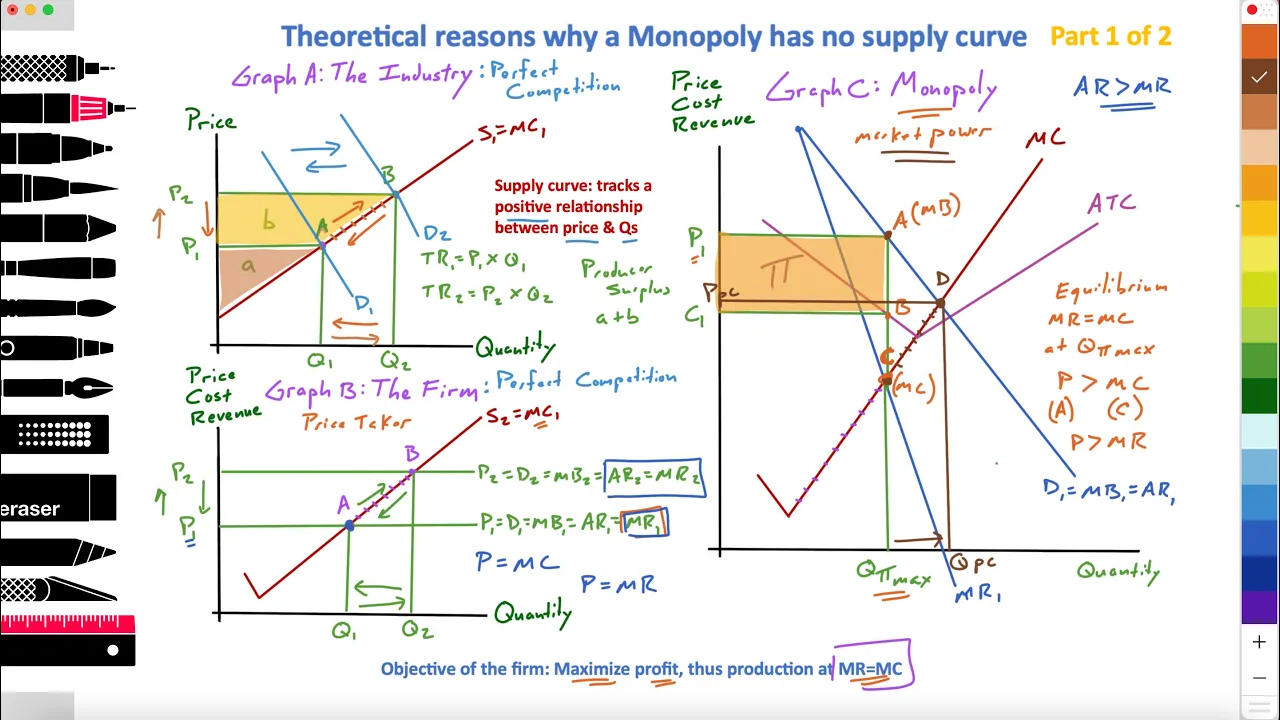
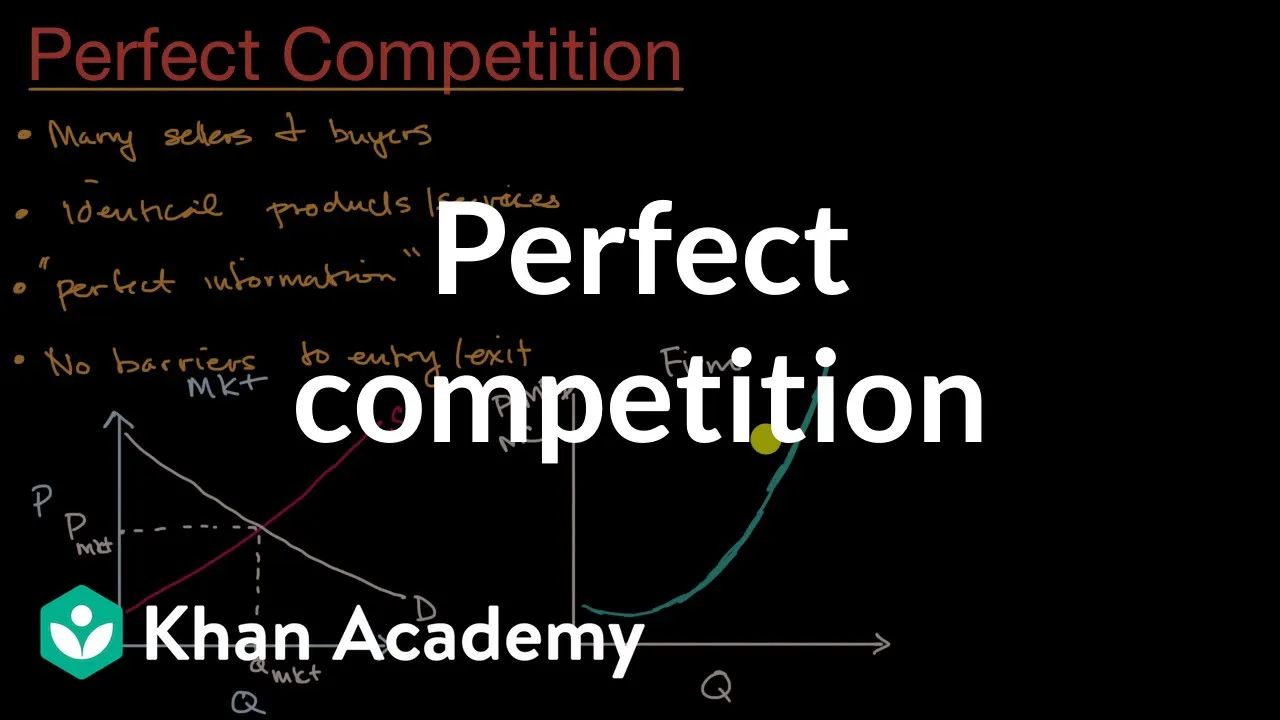






















A monopoly is a firm that is the sole seller of its product with no close substitutes, arising from barriers to entry such as patents, control of key resources, government regulation, or natural monopoly characteristics where a single firm can supply an entire market at lower average costs than multiple firms. Unlike competitive firms that are price takers (P=MC), monopolies are price makers who maximize profits by producing where marginal revenue equals marginal cost but charge prices above marginal cost, resulting in reduced output and higher prices that create a deadweight loss - a welfare reduction where some mutually beneficial trades no longer occur. Price discrimination can mitigate this welfare loss by charging different prices to different consumers based on their willingness to pay. Public policy responses to monopolies include antitrust laws to increase competition, price regulation for natural monopolies, public ownership, or doing nothing, with economists debating whether government intervention or market forces better serve societal welfare.
Monopoly Explained | Mankiw Ch.15 | Principles of Economics
Added:welcome everybody to this new video Monopoly chapter for 15 Gregory monu principal of Economics 7eventh Edition so basically uh when we think about monopo uh actually is like kind of a common word that we can think when we talk with another person and immediately if we think about kind of examples we can uh go immediately so for example Microsoft so it's kind of a monopoly because actually you can verify that once uh in a moment in a peri period of time this was the unique uh provider or at least the most representative provider of uh operative system so definitely Monopoly could be considered someone uh just one uh producer in a large market so actually in the previous chapter in the chapter 14 we actually noticed that uh there was a lower power Market of the firms we see a huge amount of companies of Enterprises that they compete in the same scenario with the other ones in the same conditions and they didn't didn't have any incidence in the price is what we called before the price takers the the idea is like a monopolist does not have close competitors so it comes from the idea of price taker which was in the competitive market to price maker then remember from the previous chapter that uh for a company inside in a competitive market the price was equal to marginal cost so this is the concept for perfect competition but here remember that a monopolis they have a power in the market so this power provides to these uh companies to charge more than the marginal cost so then there's going to be a difference between that is not going to be as before price equal to marginal revenue equal to marginal cost it was a competitive situation competitive perfect competitive situation here we are in situation where the marginal cost is effectively equal to the marginal revenue but different to the price then the Monopoly as the previous situation they aim to maximize profit so the idea is like in a competitive market uh obviously they were self-interested uh consumers and producers and they reach an equilibrium that at the end of the day that promotes a general economic well-being and how we can identify that it was like a a maximization of that basically go through the consumer and producer shplus so you can notice how the consumer they have the maximum possible throughout the consumer surplus and analog analogously The Producers they have the the same part then in the outcome of Monopoly well is often not is the best interest of society and basically why basically because when um you have in the market a higher price it immediately implies that the consumers they need to pay more so because of they need to pay more the the quantities inside the market they will be definitely lower than the quantity and the competitive market so then the consumer suppose is going to be uh less and maybe uh the increase in producer shace compareed with the competive market uh it doesn't compensate the the reduction of the quantities then um it's here when one of the 10 principles of economics they uh it takes relevance uh basically because the government could take a role here in this market as a player in order to change move the figures when they move the figures maybe the outcome could be like a little bit better uh the welfare in the total Society with the monop Monopoly so basically the question now that we have is why a monopoly or why monopolies rise basically the idea is like a firm is a monopoly basically as we said before it is the sole seller of its product and if its produ product doesn't have close substitutes so this is the main idea this is the when a monopoly Rises maybe because it's such a market that maybe kind of totally new that there is no another another Market that can provide that so here because there is just one producer there are different uh possible Parts why this one uh there are like there is a monopoly as a matter of fact and one of them is the barer to entry okay it means like maybe you cannot go there okay because some company this company has a patent or something in order to to produce that idea for two three years exclusively then no one can enter there so these are B to enter even if you want if you have the money you cannot go inside to this market so when other firms cannot enter the market maybe it could be uh devoted because of Monopoly resources so basically for example a key uh resource required for production is owned by a single firm so it doesn't matter you want to go into the market you cannot uh you you cannot get access to this input it's kind of hard to find that but actually there is kind of example of diamonds in South Africa so the mind there is just it just belong to one firm this firm has the right to explode this mine it doesn't matter if you can't go inside of this Market because you cannot get access to this source which is uh a monopoly from the very beginning just the access to the um to the resources maybe another another situation of where where there are barriers to entry uh we can think about the government regulation so the is like it gives a single firm the exclusive right to produce some good of service so government says okay you're going to be the unique the only water supply in town so it is a law you cannot go inside this is something that is already provided by the government or maybe just about the production process so maybe a single firm can produce output at a lower cost than a larger number of firms so it could be the case uh even um could be the case we can think about a water uh Supply as well imagine all the pipes that they are um uh buried in on the ground so it can be now logic that there are another companies and each they put all the pipe um on the ground so it could be possible it's better to have just one producer then if we think about Monopoly resources as we said before uh just one firm owns the uh key resource uh so for example imagine that there is just one well in town so it doesn't matter that you can uh or you want to get into the market because there is just one world so it's impossible so the that time what we can think about it the monopolis has much uh greater uh greater Market power so actually there are not too many monopolies for this reason because uh there are a bunch of resources around the world at least until now still so for this reason maybe it's not like really clear that the other one as we said the government created monopolies so for example at that time as we said the government provides you the right to one firm or person to produce that uh good or service so for example when we um think about um kind of the um uh kind of the centuries before maybe we think about the Kings they granted exclusive business licenses the friend and all Li so you say okay you're going to run uh this uh this kind of good maybe you you're the unique person that can import these Goods so by by then then you going you are going to be just the one person to provide that to the country and you will be a monopoly so this one is because it was provided by the Kings so for example uh the idea is like for example uh in order to generate ideas so government need to incentivate that so maybe if there is a music so for example but if you create a nice music but then the other day someone copy and sell that and just record that and is going to take this person is going to take profit for that maybe m Ians they have like they don't have like really good incentives in order to create music so for this reason the government need to provide something to um to kind of defend them so the idea could be like copyright okay so for example with copyright law you guarantee you can guarantee the other uh the musician they can create music and they are going to receive the profits for that so maybe you can think of patent without patents a lot of things that we have right now in the world they wouldn't be created so basically that is because the government provides something the exclusivity to produce something during a period of time in order to incentive like or to encourage in some way the Innovation so um this one is like as I said before so for example we we think about medicine for example um the government provides uh the exclusive right to manufacture a set product for a certain period of time for example pharmaceutical firms so with copyright uh the government a guarantees that no one for example can print and sell the work without the author's permission so the copyright uh makes uh a monopolist then uh obviously it will provide higher prices allowing this uh monopo quity producers to charge uh higher prices and earn higher profits but they guarantee at the same time the new products and new kind of services you can people have access for that so then uh definitely it encourages research and authors write better books musician uh produce better music uh pharmaceutic pharmaceutical firms they produce better prod better medicine then we are going to talk about particular Monopoly a particular Monopoly is a natural monopoly uh so for example is this idea when a single firm can supply a good of service to an entire Market at a lower cost than two or more firms so it means that it's better just one in the market even if we have more firms and why the idea is that we are talking about economies of scale so remember the economies of scals when we are talking about the average total cost is just the uh decreasing part so this is this econ economies of scale when we face this economies of scale we are in the increasing part of the average total cost so remember natural monopoly it implies immediately average total cost decreasing so this um is is over a relevant uh range of output so here is the image and why this surprise this can surprise you here we have the cost of the y axis in the X we have the quantity of output and basically this is decreasing for uh like over relevant range of output different from uh the other curves that we Face a U-shaped uh u-shaped average total cost so this is the main difference it's just like decreasing it decreases all all the time then we can think about uh distribution of water so imagine it is necessary the Corr the construction of pipes throughout the town so it doesn't make any sense if we have more than one company and you have a bunch of pipes in in the ground then uh the idea is like just like more firms they should make a huge investment them high fixed cost okay okay so then is going to be a really uh important barware to entry in the market so here is an example in order to understand maybe natural monopoly so for example if you have a bridge uh a bridge with a toll then you can think that it's excludable and no no uh rival uh basically what is the point of that H is because it's excludable because you need to pay at all right if you don't pay you cannot use it this is the main of excludable and this one nonrival is because the part that you're using that bridge it doesn't mean that the other person cannot use at the same time obviously these have like a determined quantity because if there is a lot of cars that they are going through the bridge definitely is not going to be easy to go uh the same time to this bridge so for this reason um we can consider not braal not drival so here uh the average total cost is decreasing why because uh at that time you already have the bridge and because is not rival the time that you go another car there okay and you divide it by the total cost with the time that you increase the number of cars cross cross in the bridge the average total cost will decrease you don't need to do anything absolutely anything when there are more cars the bridge is already there you you just need to charge for the toll so this could be considered in a small town where there aren't uh another uh when there is like there is not possibility for another Bridge definitely is a natural monopoly so even with high profits fixed costs make them an attractive because it's so uh you have a lot of cost just to enter so maybe it's not okay to to go into the market then how monopolies make production and pricing decisions so first in order to clarify we go to the main differences between Monopoly versus competition so here we have the left part Monopoly and the right part competitive market market so basically you need to be really confident with that the first thing is like Monopoly has the influence to change the price in the market competitive they don't okay let me see here uh competitive market each firm is too small to influence the market price the other important thing is like the demand of a firm is the same demand of the market and how since um there is no other competitors the demand that you face is going to be exactly the demand of the market in the other side we have the competitive market if you remember the price is established a horizontal line because it doesn't matter how much is going to be your production your price that you will receive is going to be exactly the same and basically basically because you're are price taker then if you the price for example of one little of little um little of milk it cost $1 if you charge more than this $1 no one is going to buy and it doesn't make any sense to charge to 8 80 cents because you can sell that to $1 so for this reason the price is established at hor horizontal line and the firm can sell as much or as little as that price so for this reason horizontal demand the other part by law of demand it is down down one shaped okay so it means like higher prices you will sell less lower prices you will sell more then the other one remember we have a curve perfectly elastic because there is a multiple substitutes if you don't offer if you charge a higher price no one is going to buy you okay so this is perfectly elastic and then uh the other one it cannot produce as much as as they want because uh they are not going to sell anything if they charge a really high price and the other one remember that you can produce what whatever they want just they will sell at the same level price okay then uh here we have uh the first figure we have here the price and the yaxis and we have the quantity output so this is uh the competive firms demand curve this one should be here in the in the right and this one should be in the left so here as the for the Monopoly so the price is downward shape uh and this is because they have a power in the market so they can change the prices then here we have the like kind of summary of the situation with numbers so here we have a water okay at that time of water supply here we have the quantity produced and sold uh from 0 to8 measure in gallons and here we have the price measure in dollar here is the first difference if you just visualize that and they ask you is this a competitive firm no why basically because the price remember that in the previous chapter it doesn't matter the quantity the price was exactly the same here as you notice when the quantity increases the price decreases okay this is the inverse relationship so we are talking about here basically the demand okay this is the demand so basically if we don't produce a if we um we have a price of 11 we don't have any incentive and we are not going to produce any water any water gallon any gallon of water the other one when we immediately um have a lower price 10 so we say okay I'm going to sell just one and here that's the idea with the with the price is really uh low so definitely the quantity will be sold more because people will uh we will will buy more so that's the idea with higher prices no one is going to buy but with lower price a lot of people they're going to so here we have the first one the total revenue so remember total revenue is defined by the price that you charge times the quantity you sell so here we have 11 * 0 0 10 * 1 10 so on so forth uh here until 8 * 3 24 here we have the average revenue so remember the average revenue is what is going to be the typical um cost of each unit produced the typical sorry typical Revenue that each unit will represent so here we have the average revenue is equal to total revenue over Q so we have total revenue here is going to be zero over q0 is going to is not going to be defined but from here yes we have total revenue 10 over one is going to be 10 so on so four and here 24 over 8 which is going to be three immediately you you can notice how the price is exactly here as the uh average revenue okay so here is exactly and why because total revenue is equal to price times Q so Q you can cancel with q and it lies um in the uh average revenue equal to the price then we have the marginal revenue marginal revenue is going to be which is going to be the additional revenue of one additional unit produced or sold better so here we have Delta total revenue over Delta Q so here we have the first one we are going to as the previous chapter we're going to put this in the middle so it's going to be total revenue it's going to be the change which is going to be 10 minus 0 over Q which is going to be one all the time so this one the denominator is going to be just one so basically it's going to be just a change in the average reeven in um in revenue is going to be 10 going to be8 then this one going to be minus 4 okay why this minus four it means that if you um pass from the seven to 8 unit you will receive minus 4 so actually you can see here you have this one the total revenue at that time but when you produce one additional unit you total uh your marginal your total revenue even it's positive going to decrease so then uh the monopolis marginal revenue is always less than the price of the good so I have a look here so the marginal revenue this one is lower uh than the price of the good so why is that so important characteristic because here you produce this one to be 10 so they exact they start from the same point so this one is like the demand but then when you uh start with the other one is going to be this one eight when the price is going to be nine right then this one is going to be six when the price is going to be eight so for this reason the marginal revenue is always less than the price of its good so then uh marginal revenue behaves like uh like that because Monopoly faces a downward sloping demand curve I remember the marginal uh Revenue before was in the competitive uh in competitive scenario was exactly the same as the price because you charge one uh you sell like one unit additional unit and you uh charge as uh with uh the same price so this going to be the price equal to margin Revenue but in this case due to you have a this downward demand uh when you receive that is going to be less than the price so this one for example you have like 24 okay then uh the next one you will receive if you charge a price of seven a lower price you will receive eight F4 right additional Revenue but this one the at that time the price was was seven so this one is going to be uh lower then when a a monopo increases the amount it sells it has two effects so they increases here the amount they sell basically has two effects so first we can think about the output effect so this is what this is like more output sold qes higher and it tends to increase total revenue and we can see here this this is an output effect when the total revenue increases right then we have the other part which is price effect the price Falls p is lower so it tends to decrease the total revenue so this one is like to the price effect because the price is lower they tends to decrease the total revenue so we are for example here so the price Falls so even the quantity increases at that time this is total revenue so here we in the price effect and here we are in the output effect then here we're going to uh graph the previous table so remember they start together uh from from from 11 and then they start to change this one remember this is all the time the middle of this one okay so then uh sorry this is the middle of this one so here we have the marginal revenue which is lower than demand and even here is like negative so here and here is the demand of the of these monopolies uh then a competitive firm sells all each producer they do not have price effect what does it mean basically it means that the competitive firm they don't have any change in the price effect because as all the time the total revenue is going to be exactly as the price so then doesn't matter if you sell one unit or you sell 100 unit your price is going to be exactly the same but here is different because if you charge uh the output effect you charge you have like more quantities so you will have more Char Revenue but maybe you will have the the price effect because you will charge uh maybe going to be a lower price your total revenue is going to decrease as this part from the the this one from the six unit so then uh when the Monopoly increas in the production in one unit the price is smaller then the marginal revenue is lower than the price okay then the demand and the margin of Revenue start at the same point we can visualize here because the margin of Revenue at the first unit is the same as the price okay so this one is okay they are already they are all but both there the same so the margin revenue is negative when the price effect on revenue is greater than the output effect because remember the price that you're charging is lower and is not compensated by the quantities additional that you are selling so then the idea like we here we recall one of the principle of Economics people think at the margin is the same as we thought before because previously we thought the about the price uh is equal to margin cost and here uh we are thinking about the margin cost exactly the same of the margin of Revenue and actually both decision they were the same or they are the same from competitive market and monopolies so the idea like the maximization is determined by the intersection if the marginal revenue is exactly equal to marginal cost so here both are the the cores that we represented the demand margin Revenue that they are totally different from a competitive market because the demand is going to be like this one exactly is the marginal revenue here we are in the order situation downward shaped situation and here this is the TR here we have the average total cost as usual kind of u-shaped um this one uh that we have here is the marginal cost remember the characteristic marginal cost that it cut it cut uh the minimum point of the average total cost and then when the marginal cost is exactly the same of marginal revenue then this is going to be the maximum that you are going to produce and this is not going to be your price why because at this quantity the demand will be the point B so this one is the Monopoly price and this one is going to be the quantity so remember all the time you first identify marginal revenue then identify marginal cost when the intersection you made dot here and this spot is going to be is going to determine the quantity and this same quantity is going to determining the price okay this one is going to be the price so here we are this is the the main idea of that and um actually we're going to see ahead how does it work and is to be this point and not this point and not this point so here we are uh imagine that we are thinking about this point so the quantity one what does it represent basically represent like this one is going to be your marginal cost and this one is going to be your marginal revenue it means that by this quantity one you still have a lot of benefits for this one so you can still still produce more so from the next one if all the time that you have marginal revenue higher than the marginal cost it means that this additional unit is still making profits to you but if you are in Q2 where the margin of Revenue is lower than the marginal uh cost here is going to be cost Prime basically the cost of this additional unit that you producer is larger than your Revenue so it doesn't make any sense that you're producing Quant to so for this reason this is going to be uh in this one the maximum is going to be in a so then competitive firm we have price equal marginal revenue equal marginal cost here we have Monopoly firm the price naturally is higher to the marginal because this one is not the the price going to be this one so price is going to be larger than the marginal revenue and marginal revenue is going to be equal to marginal cost then the profit profits uh of Monopoly they come from the same idea so we have total revenue not total cost sorry total revenue minus total cost then we can uh divide both by q but at the same time we can multiply by Q so we are not making any difference here then we have total revenue definition is going to be price time Q over q and total cost over Q is going to be average total cost and Q it remain the same then Q over Q you can cancel out and then you uh you can be here so remember the idea of the competitive markets like the price exactly to average total cost which uh immediately you arrive to a result of zero benefits at least in the long run here because the price is higher to the average total cost this one is going a bit of benefit so uh this also the competitive firm but the difference going to be that this difference is going to be zero in competitive firms but in modol it's going to be higher than zero so this is going to be the difference so here we have the custom Revenue so here we have the quantity we have the demand the Monopoly they face and here we have the marginal revenue which is usually um this is like lower than the demand so automatically when you have this one you can think about a monopoly here we have the marginal cost and here we have the average total cost so then we which is going to be the quantity that this monopo is going to choose basically it's going to be this point where the margin cost is exactly the same as margin and revenue then this going to be quantity Max that maximizes the profits and this one is going to be the price charge uh by the Monopoly monopolist then here is going to be the average total cost then price minus ATC is going to be this High and the weight is going to be the quantity X is going to be the quantity so this one square is this one so those are the profits of this F that they are huge because they have all this staff where the this one the margin cost equal to margin Revenue this one is going to be the profits of a monopoly then we are going to move uh through the welfare cost of monopolies actually as we said before uh the competitive firm is like the ideal situation for for the welfare of of a society because basically the consumers uh Surplus from both sides consumer and producers is the maximum possible so here if we think about stand point of consumers this High pricing is undesirable because you need to pay more so no one wants to do that but from the producer side heer profit is Will desable so you have two forces one party that is better one other one that is worse so then think about uh the concept chapter 7 so this about welfare so this is basically the sum of total Surplus which it comes from the producers and consumers then here remember about the invisible handy concept that Adam Smith uh developed in the 18th century were basically says don't touch the market at all make that all forces uh interact between them and definitely you will arrive to an efficient and Maxim one pointed maximizes the welfare and the uh from the part of the market that time consumers and producers so this one um we can think that invisible hand is not only natural outcome but also theable one and then the Monopoly leads to allocation of resources is different from that in a competitive market so the outcome in some way failed to maximize total economic wellbeing because the quantity desired is lower and because the price is higher basically that's old story so then if that's the case we can think about there is a dead weight loss what's that remember the dead weight loss is like part of the Surplus that it was before it belongs to one party maybe consumers or producers but due to a change it doesn't belong to anyone more so it should be the case of a monopoly because if you are going to charge a higher price and you're are going to produce less quantities there are going to be several transactions several consumers that they are not going to pay for that because before they did because the price was lower but now due to the price is higher the consumers they are not going to buy that so this one is going to be part of the Dead weight loss so then the idea is like we can imagine that Monopoly firm is rued imagine that there is a benevolent social planner so someone that is going to do the best possible for the society so it takes into account not only profit side but also the consumer help us so here we can think the demand as the willingness to pay so just when you have a higher price and we have lower quantities definitely there are people that they don't have the same willingness to pay to that price so they are not going to buy then here is the idea so here we have marginal cost okay we can think this one remember as the supply and this one is going to be as the GMA so here it's going to be the efficient one right when this one is exactly the same Supply exactly the same as as demand but remember this one is the time with price is equal to marginal cost as the time of competitive firms but here is the situation Monopoly because the cost Monopoly monopolies is lower than the Val buyers so this is imbalance because the buyers they have a they have to pay like for this difference the cost are kind of divided and here we are in the other part of the other side of the coin where the C monopolist is going to be higher to this one because the price is going to be lower than that so those uh like forces they are not equilibrated so they're like fighting over here until they arrive to this point so this one is the efficient one but every time the result is not efficient so this one we are in this side they're going to be uh the Poss the the creation of the Dead weight loss then uh we will say that which is the the social cost so then the idea is like the the quantity is inefficiently low and the price is higher as we said before so then the Monopoly prevents from social mutually uh beneficial trades because they're going to gener still profits in some way and some uh some consumers they still can't consume that so then in efficiency we can be measured with the dead weight loss High the higher the worse then uh we can think about a similar impact of attacks just with a difference which is going to be the the party that is going to collect the tax it's going to be the government right in this time that time or this time the monopolist is going to be who is going to collect that but this one the collection is not going to be naturally taxes this is going to be called profits then here is the debt weight loss why here is the situation here the situation of competitive market lower price and Monopoly price and higher than the Monopoly quantity so due due to this distortion what we are creating here is this one this triangle because it was before part of the consumers and part of The Producers but now due to this change it's going to be loss no one is going to take it anymore then this is a kind of a social cause so the idea like even when there is a market power we cannot like immediately says okay this is a problem of society we cannot say we cannot declare that because we we can think about that from one side each OD dollar charged is transferred from consumer suppose to producer side in some way so the idea the problem here is like this one maybe the the money is not going to be Sav by the consumer just is going to be paid for the for the monopolies the problem are this inefficient quantity produce because they are the were like kind of tradeable or kind of transaction that there aren't going to be anymore so this is the main problem the inefficient quantitive so it could be the case that maybe uh a monopoly should pay for lobbyist to maintain the market power it could be the case that maybe dead weight loss includes uh this kind of cost so maybe uh sometimes if if for example the Monopoly need to pay for a stay in the market to kind of uh have steal that possibility maybe it could be even the lobby they need to pay for that so it's going to be represented this kind of dead we loss in order to keep the cont of the market so here is a concept where uh maybe the dead weight loss is not going to exist anymore so remember we are talking about first differences between competitive market and Monopoly right then we move to the maximization which is different from compe Mar competitive market because they have like price higher to the marginal um marginal revenue and then we automatically identify that even they are the producers they are better consumer are worse and the total welfare is going to be worse because the sum of a consumer suplus plus producer suplus is lower than in the competitive world so for this reason we have this New Concept this New Concept price discrimination at the end of the day it's trying to capture this dead weight loss okay try to disappear that and to make uh as a total welfare at least as the same as a competitive market so here um we saw before that the panopolis they charge the same price to all people okay it doesn't matter if you have money if you don't but you need to pay the same for that good of service so the price discrimination exceeds when you sell the same product with different prices to different consumers so maybe uh this is really important the price discrimination is not possible at all in a competitive market because many firms sell the good in the market so then it necessary so Market power if I'm going to say okay I'm going to charge to this group different price it doesn't have any it doesn't make any sense because another producer is going to sell to them at the same price you cannot discriminate you cannot have any Market power so remember without Market power you cannot discriminate people go to another place then uh we can we can think about a parable uh about pricing so imagine in order to understand better this price discrimination how how it works we can think about a publishing company so remember uh have a look that for example an author receives a flat 2 million for the exclusive right to publish the book so this is the the money that this person receive but uh think take into account that we are assuming that the pr cost is zero is zero okay so it doesn't make like any any any additional cost if you need to sell another book because it's going to be maybe an ebook so you just like provide by the license password whatever so here the profits of the publishing company is basically the revenue so the quantity of the books times the price that they are going to charge and minus the flat payment that they need to pay uh for the exclusive right to publish the book then the idea here or the question that we need to figure out is about how to decide the price the good so then first you you need to estimate the demand of the book so imagine that the marketing department decides that this book will attract two types of readers so we're going to sell this book to two groups so here we have 100,000 fans so they will pay $30 for this one and you have this one this four 400,000 people that they don't they don't care too much about this book so they have a willingness to pay of five so immediately we visualize here that is a possible discrimination uh here because you have one of them that they will pay 30 and order that they will pay five so if you sell at 30 naturally just the fans they will buy that but if you sell at five you will sell not only for the fans but also for the other people the problem is like fans they have the willingness to pay for $30 but they will pay five so I need to I I need to make something that it can differentiate that and funds will pay 30 and the other one they will pay five so here imagine that there is 30 so with 30 automatically I'm going to sell 100,000 uh books and then we arrive to 3 million okay uh dollars so the profit is going to be 1 million so those 400,000 that they eventually they will pay $5 they didn't do it because of the higher price then imagine that now the price is five so if the price is five is going to be five times uh uh this one 500,000 why because this price is going to be bought by the fence plus the other one so it's going to be 500,000 so when we arve to 2.5 million minus the the 2 million is going to be 500 so you will say okay it's better to charge at $30 what about if I charge 30 to this one to the funds and five to the other one definitely the idea will be different because if the decision for 30 makes people uh with willingness to pay a five out then uh the marginal cost remember is zero so here we can say okay five uh I can sell to 400,000 it's going to be 2 million uh um so this one this going to be the de weight loss right because this one with a price of 30 these people they are out of the market okay so this is the dead weight loss but maybe I can chart different groups so then at the end it should be this 130 to these funds they will pay more and five to this one to be two so at the end is going to be 5 minus two is going to be three million it's going to be definit more because what what's that because basically we are capturing D some way the dead weight loss it just kind of uh we have already that we have already these uh these profits okay so that's M the main idea so the mor of the story three important lesson from about price discrimination first this is a rational strategy for a profit maximizing monopolist this is obtained because we are charging different prices to different consumers then charging according to their willingness to pay so I need to be smart enough to discover which is going to be the willing to pay for anyone second it requires the ability to divide consumers by the ability of the willing to pay so for example sometimes you can think about location so for example our example I didn't say but maybe because one of them they are in Australia and the other one they are in the US okay okay so this one I can I can uh divide that or maybe sometimes because of age or income so you know like age children they are not interested in order to pay that so they maybe uh they will have a lower price okay and retired people as well and income okay the same staff people with more income naturally um they will pay more so we suppose that there is no possible Arbitrage what's that it means that you cannot buy to the US a price of f five or sorry Australia maybe a five and then you return to the US and you can you can charge $20 so not possible to make that so I need to make something that people canot do that that stuff and the third one price discrimination can raise economic welfare so then the Monopoly takes all the de weight loss there is no consumer plus just producers are plus consumer subplus here so then this is so interesting because we are maybe in the same welfare situation uh of competitive market just like in competitive market was a split between two parties here it it just belongs to the producer then the analytics of price discrimination so if we we can assume that a monopolist discriminate perfectly he knows each willingness to pay and char charge uh this value to each consumer here is the story remember demand margin revenue and here we assume a marginal cost um flat because equal to zero then here what's the idea you have uh this one is the dead weight loss but the idea here is the with a single price you have marginal revenue equal to marginal cost you charge this one and the price minus uh this one um this is going to be exactly your profits right this this Square the other situation is the perfect price discrimination I'm going to charge to each one the willingness to pay so I'm going to capture all these uh consumer suplus and all this big triangle is going to be the profit then going to the real life you can you can you already notice that this like kind of impossible I mean it's so hard to identify each one which is the real willingness to pay so maybe for this reason we can just not identify obviously just one single consumer and the Willing willingness to pay but at least it can identify some groups with the willingness to pay so for this reason they can they can charge so the only certain conclusion that price discrimination raises the monopolis profit okay this is what uh the the end of the day the moral story if maybe one person is going to buy something and I'm going to have some profit for that I'm going to try I'm going to make efforts in order to receive that money to have some benefits from this guy from each single person so we can think about example of PR discrimination so for example movie tickets so for example you can think about Wednesdays Monday here in Colombia for example Wednesday is can of sheep so the at the end of the day what I'm trying to do with that is like people that they they don't have money too much to pay for another um for another day they will pay for that so definitely this could be kind of discrimination or maybe about children and senior citizens so they have uh they have another another price another willingness to pay at airline prices so you know uh for example this is a great uh stuff for example when you have different prices when you stay Saturday night a business business person uh most of the times will go for example Saturday during the day and this person will return the same day night so this price is going to be larger or higher than one person that is a tourist a tourist definitely should want this person want to stay more uh time in the in the place so definitely they can stay more time and they will pay less for that even discount coupons maybe you can think that people that they go go to the newspaper and they K the staff uh the other people they are Executives that they don't have money sorry they don't have time to do that so they pay they pay the price okay but the other ones they have uh they price lower because they just buy if they have a discount so if I don't provide discount to that people or that group of people they they won't buy and this a problem because uh I have some money that I can earn from them but I'm not going to do it so I can make some way that I can offer a lower price to them uh for example even a financial aid in a good University uh for example some people they pay uh all the semester all the year of the university and there is another people they have less money so they need to have access to scholarships to maybe another kind of plan of financial aid then we can think about how the public po go towards uh Monopoly so the idea is like we already notied that monopolies they produce less than theable so maybe uh we we already know that they charge above margin cost so maybe the policy public policy they can uh try to respond in four ways so they say okay maybe we can uh try to make this monopolized Industries more competitive or maybe we can regulate the behavior of uh of the monopolies or maybe we can turn some private monopolies into public Enterprises what at the end of the day doing nothing at all okay so the first one think about uh the they make the monopolized markets made more competitive this is what was because uh it was why was created the an antitrust law basically imagine for example uh that there is a merge between Coca-Cola and Pepsi definitely the market of the soda of the sugar these kind of beverages this going to be uh definitely less competitive so the idea is like these kind of antitrust laws they try to avoid too much Market power when there is a limit they say hey uh let's have a look here watch out maybe it's not okay that you are still concentrate more power in the market so I'm going to do something so this is a comprehensive comprehensive charger of economic Liberty aimed at preserving free and unfettered uh competition as the rule of trade so then for example when actually uh the the the the this time the public policy had to be kind of smart because sometimes they the companies they don't merge just for having a higher micro Market power sometimes when they merge they reduce cost and this is called synergies and when there is a Synergy it maybe you need to think twice be before uh before um like before prohibiting that because maybe it will um at the end of the day it will have more benefits even for consumers because they will pay low lower lower prices then uh they need to determine if the merch can be better for social welfare or not the other one is regulation so some natural monopolies as electricity water they cannot charge the price they want so for this reason the regulation should be there should put the eye there and they think that the price um we can think like price equal to Marginal CA but maybe uh uh the point here is that because we're thinking about natural monopoly remember that the main characteristic of that is the average shter CLA is is declining so then the graph is going to be something like that this is going to be the average total cost going to be the demand and this one is going to be the marginal cost which is automatic is almost flat as as we said the toll sorry the bridge with the toll so it doesn't matter if you need to provide to some more cars you need to charge the same so here the marginal cost is going to be uh this one exactly equal to the price so that's the c a competive market and this going to be uh reflected to the average to cost so this one cost is larger than the revenue so there therefore it's going to be a loss so for this reason um maybe it could be a problem if the the government says okay you need to charge the price equal to the to the marginal cost so then the idea is like maybe the government they can make some intervention to improve loose Lo losses uh so then the monopolist receive subsidy uh maybe uh the point is like they don't try to reduce cost and even it's going to be worse okay then maybe uh that could be the problem so maybe regulation that case maybe is not a bad solution because maybe they they don't work at the same at the same like level as before because they have already subsidi so the other one is the public ownership so maybe you can turn something that is private uh into public for example telephone water electricity postal office so then uh sometimes um actually Economist we say that it may be sometimes it's better private natural monopoly because they really want to minimize cost unfortunately public natural monopoly they don't care to matter about cost so for this reason uh maybe uh they can be less efficient than the other one and here is the deal if there is a private scenario imagine that you have the directors of this company and they have losses then uh they will be fired and they will find another people that they can really um achieve the results with profits uh and with cost res reasonable cost and with making that profitable instead of a public uh natural monopoly unfortunately that time no one's going to fire them and the losers we are going to be um the customers and the taxpayers bad service and the taxpayers we are going to pay too much taxes for a service that is um is not well done um then the last one is doing nothing so maybe uh it's so hard to understand this one but maybe sometime any movement from government side can produce drawbacks actually there is an interesting novel price statement uh of Mr George Stigler that actually he says okay a famous theorem in economics states that a competitive enterprise economy will produce the largest possible income from a given stock of resource so this is the idea of an Enterprise and then no real economy meets the exact condition of the theorem and all real economies will fall short of the real economy a difference called market failure where all the resources they are not efficient one okay as the externalities as we saw in the previous chapter as Monopoly as this chapter here she says in my will however the degree of market failure for the American economy is much smaller than the political failure rising from the imperfection of economic policies from in real political systems the idea is like is like the famous le le like just let it be the market go that they they do uh that and don't get into the market because the result is going to be even worse so for this reason sometimes the solution is like doing nothing then the conclusion of all these videos like uh the prevalence of monopol that is like uh we already uh visualized about the verification of companies that they have control over prices they charge so they have a market power and here is the table summarize everything so competition and Monopoly so here we have goal of firms both they want to maximize profits which is the rule of maximizing marginal revenue equal to marginal cost can earn economic profits the short run absolutely both the same the differences number of firms competition many just one marginal revenue is equal to price this one remember is lower than price because you have the demand we have the margin Revenue the price is equal to margin cost here the price is high T margin cost the produces well for maximiz level output yes this is the efficient one this is not efficient this is lower quantities higher price entry in the long run yes you can entry in the long run competition Monopoly is not there barriers to entry because otherwise they're not going to be just one then can earn economic profit in the long r no it's going to be exactly zero and the Monopoly yes they going to be they're going to still have um positive profits and price discrimination is possible not because they don't have Market power yes they have okay that was all this video thank you for having a look to out see you to next video and have a great day great night great week great weekend okay bye-bye
Up Next
Understanding Monopolies: Market Structure & Economic Impact
@stlouisfed
32.9K views•2025-03-11

Globalisation and the 21st Century Enlightenment | Joseph Stiglitz
@EdinburghUniversity
44.8K views•2009-02-10
Behavioral Economics Explained: Rationality, Nudges, and Risk
@crashcourse
1.1M views•2016-03-12

The Age of Easy Money: Fed & Inflation | Full Documentary
@frontline
21.2M views•2023-03-15
Related Study Plans & Knowledge Roadmaps
Structured learning paths in Economics