













![Meaning & Types of Markets | [ ICSE Economics Class 10 Chapter 5] | One Shot](https://i.ytimg.com/vi/emRYQZKzc1o/maxresdefault.jpg)




![[공무원행정학] 2019년도 9급공무원 행정학 -18강 행정학의 기초이론2(행정의 의의) (7~ 18page) [김일]](https://i.ytimg.com/vi/9kg2_Kfr-Bw/maxresdefault.jpg)


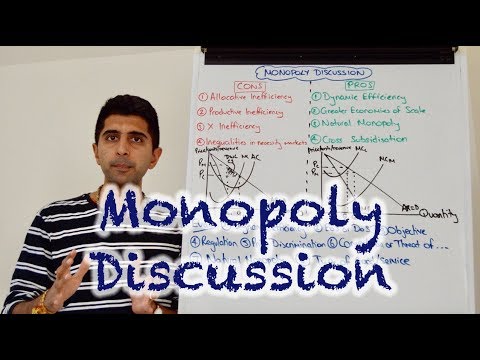


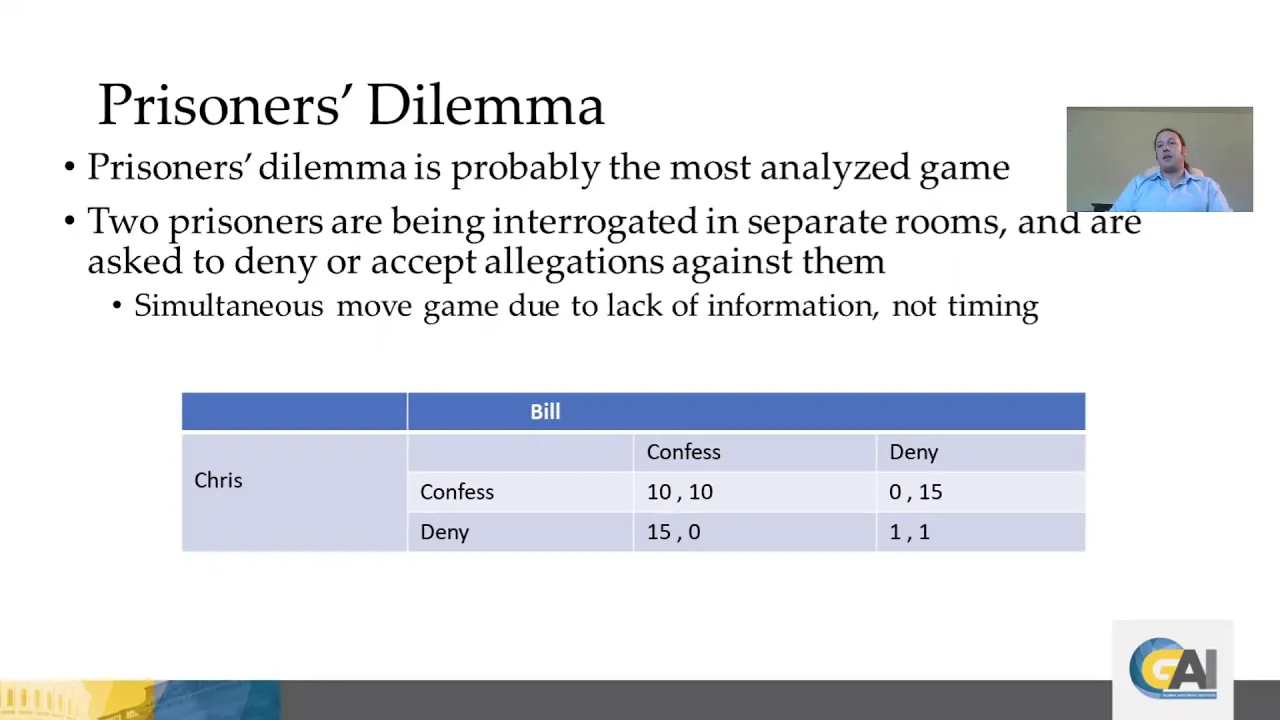
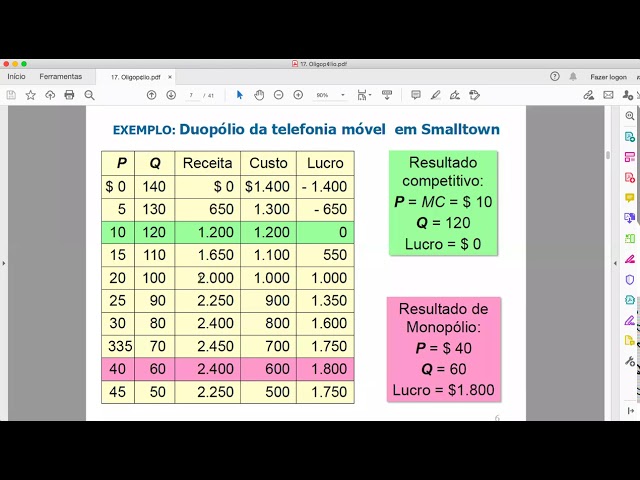


A monopoly is a market structure where a single firm controls the entire supply of a good or service with no close substitutes, allowing it to set prices above competitive levels and earn higher profits; monopolies arise from three main sources: government-granted exclusives like patents and copyrights, control over essential resources, or natural monopoly conditions where one firm can produce more efficiently than multiple competitors due to economies of scale, though such market power often leads to reduced output, higher prices, and diminished incentives for innovation and quality improvement.
Understanding Monopolies: Market Structure & Economic Impact
Added:The fundamental laws of demand and supply, including how market equilibrium is determined.
The concept of Perfect Competition, which serves as the theoretical benchmark for comparing market structures.
Key microeconomic cost and revenue concepts, specifically Marginal Cost (MC) and Marginal Revenue (MR).
Price elasticity of demand and how it influences consumer responsiveness to price changes.
Other imperfectly competitive market structures, such as Oligopolies and Monopolistic Competition.
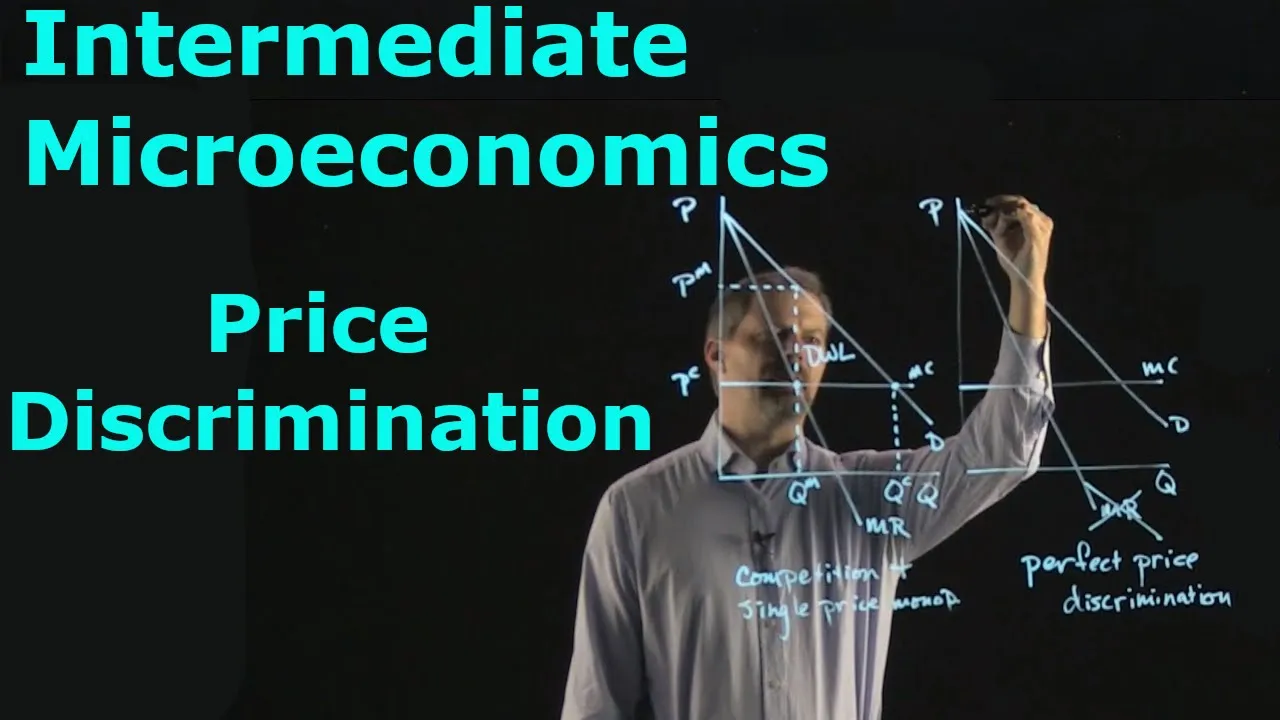
The mechanisms and economic impacts of Price Discrimination, exploring how firms with market power charge different prices to different consumers.
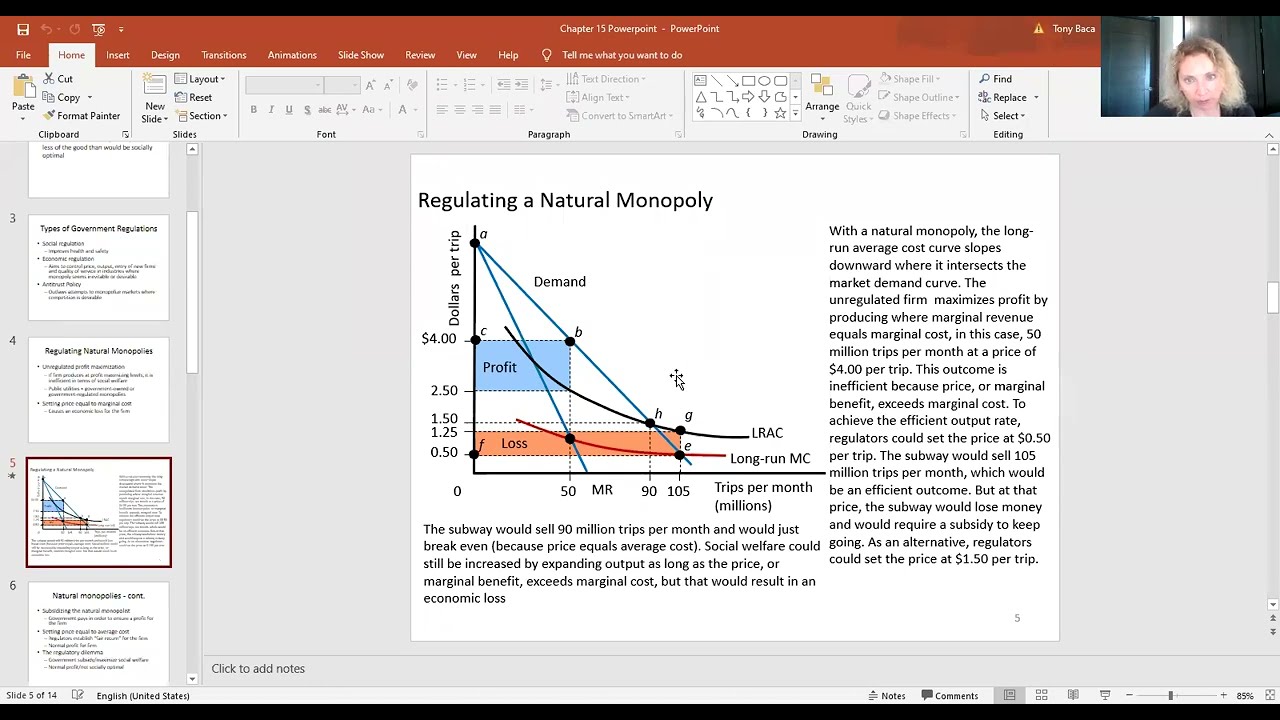
Antitrust policy, government intervention, and the regulation of natural monopolies (e.g., public utilities).
The concept of Deadweight Loss and how monopoly power leads to allocative and productive inefficiencies.
An introduction to Game Theory to understand strategic behavior and collusion in highly concentrated markets.
32.9K views545likes7:18Original Release: 2025-03-11
Imagine showing up for a tennis match, and your opponent just never shows.
You don't have to compete.
You didn't have to bring your "A" game.
You just showed up and won.
That's kind of like what happens when a business has a monopoly in a certain industry.
A monopoly is a market for a good or service where there is only one supplier; it faces no competition and there are no near substitutes for the good or service it is offering.
Economists consider monopolies to be the most extreme form of imperfect competition.
Afterall, most businesses face some type of competition.
If you think about the Market Structure Continuum, a Monopoly is on the opposite end from a Perfect Competition, which is where many sellers are selling near identical products.
Businesses with monopoly power have more freedom when choosing what price to charge: And unsurprisingly, they'll charge more and sell less than in competitive markets, but they'll earn higher profits.
So why wouldn't other businesses compete with this one and lower prices?
Well, usually there is something that makes it difficult or impossible for other businesses to enter that market.
Here are three of the most common reasons: One, the government grants the business a monopoly, two, the business has a monopoly on a key resource, or three the structure of the market lends itself to one business.
FIRST UP: The government creates a monopoly.
In this case, the government grants a patent, copyright, or license blocking other businesses from entering the market.
Governments grant businesses the legal right to a monopoly for various reasons, but often it's to encourage and reward individuals for creativity and innovation.
For example, if a company invested a lot of energy and money into researching, testing, and ultimately discovering a cure for some ailment but others could just copy the formula and compete with it, this would discourage the company from trying to do so.
The government grants this medical company a patent so that no one else can sell its miracle cure.
The government has patents and copyrights to incentivize individuals to create interesting things.
THE SECOND REASON: A business has control of a key input or resource, creating a monopoly.
If one business owns a key input to a good or service, then that business will be the only one who can sell the good or service.
This does not occur very often.
Natural diamonds are an example of a scarce resource, and if one company owns all the natural diamond mines, well then, that company has a monopoly on natural diamond rings.
Another way to be the sole owner of an important input is through innovation: If you create something that no one else knows how to create, then you have a monopoly.
AND THE THIRD REASON: A business has a monopoly when the structure of the industry lends itself to one business.
An example of a natural monopoly is an electric company.
This usually occurs because it's cheaper for one business to produce the good or service than it would be for many small businesses.
This is also called a natural monopoly.
In other words, the cost to produce a good or service falls as the number of units sold increases.
A business with this production process exhibits economies of scale or increasing returns to scale.
The infrastructure it takes to connect your neighborhood with electricity costs a lot, but once the infrastructure is in place, providing electricity is fairly cheap.
It would be inefficient and likely unprofitable for two businesses to invest in the enormous upfront infrastructure costs so that you had a choice between two (or more) electric companies.
The natural monopoly is arguably the most important type of monopoly because it is the hardest to overcome.
Therefore, businesses with natural monopolies usually do not feel as threatened by the possibility of competition.
A special type of natural monopoly is a network good or a network monopoly.
This is where the value of the good or service grows as more people join.
And once the network good is adopted by enough people, it's very hard for other businesses to compete because people want to be using the site or the same good that everyone else is using.
However, there is a lot of competition to secure the network monopoly.
But what happens when businesses don't have competition?
They can charge a price well above what it costs to make a product.
Note that a monopoly will not charge some insanely high price like a million dollars, because no one would purchase the product at that price.
It chooses the price/quantity combination that maximizes total profit.
A higher price means that some buyers who would like to buy the good at a cheaper price will choose not to buy the product.
This is inefficient.
And depending on the market, they may or may not choose to advertise.
Another downside of monopolies is the potential for quality to suffer.
Monopolists don't have the threat of competitors stealing their business, which means they don't have incentives to be innovative, create new features, or respond to customer feedback.
Think back to the tennis match where your opponent just didn't show.
If week after week your opponent didn't show, would you continue to practice those long hours and stay in peak fitness, if you knew that regardless of all your efforts you were still going to win?
As mentioned, government sometimes creates monopolies, as in the case of offering patents or copyrights for certain ideas to encourage innovation.
And governments might protect consumers from excessive prices by regulating or even owning a natural monopoly if it's worried about a business having too much market power.
Imagine if the electric company that serves your home decided to charge 10 times what it currently charges for electricity.
You'd probably still pay for some electricity, because you had no other choice, but you'd use much less.
However, this would be an immense hardship for you and many others!
In fact, at this new price some would not be able to afford it!
So, to recap, monopolies are businesses that face no competition- there's only one seller in the market.
A monopoly exists because there are significant barriers to entry- either regulatory or structural.
This means it is by definition offering a unique product that no one else is offering and gives the monopolist significant control over prices.
A monopolist will charge higher prices and sell fewer items than if it were in a competitive market.
And it will choose to advertise in certain circumstances.
Of course, monopolies are not very common.
Most businesses fall somewhere in between what economists consider pure perfect competition and pure monopoly, but it helps to look at the extremes to understand how competition affects businesses.
Up Next
69:05
Alex Tabarrok on Innovation Barriers and Policies | EconTalk
@econtalkwithruss
164 views•2019-11-11

67:20
Globalisation and the 21st Century Enlightenment | Joseph Stiglitz
@EdinburghUniversity
44.8K views•2009-02-10

7:20
Understanding Unemployment: Types and Measurement
@stlouisfed
176K views•2018-05-03

113:18
The Age of Easy Money: Fed & Inflation | Full Documentary
@frontline
21.2M views•2023-03-15
Related Study Plans & Knowledge Roadmaps
Structured learning paths in Economics
economics
Intellectual Property: Innovation vs Monopoly
01Foundations of Market Power: Monopolies & Deadweight Loss
02The Economic Trade-Off of Intellectual Property
03Patents: R&D Incentives vs. Market Monopolization
+ 3 more learning modules
12h6 modules
Explore Roadmap
economics
Sovereign Debt: Defaults, IMF & Restructuring
01Introduction to Sovereign Debt & Government Bonds
02Debt Sustainability & Credit Ratings
03Anatomy and History of Debt Crises
+ 2 more learning modules
12h5 modules
Explore Roadmap
economics
Market Design: Matching Theory & Gale-Shapley
01Introduction to Market Design and Price-Free Markets
02Two-Sided Matching & The Gale-Shapley Algorithm
03School Choice Systems and Mechanism Design
+ 2 more learning modules
10h5 modules
Explore Roadmap
economics
Impossible Trinity: Forex, Capital & Policy
01Introduction to Monetary Policy and Central Banking
02Exchange Rates and International Capital Flows
03The Mundell-Fleming Model
+ 2 more learning modules
8h5 modules
Explore Roadmap