









![Criminal Law: Introduction (Burdens of Production & Persuasion) [LEAP Preview]](https://i.ytimg.com/vi_webp/qpthxkNQmbc/maxresdefault.webp)




![[사탐영역 허꽃별선생님] 2026년 3학년 3월 생활과윤리 해설강의](https://i.ytimg.com/vi/i4eKNwU2GJM/maxresdefault.jpg)
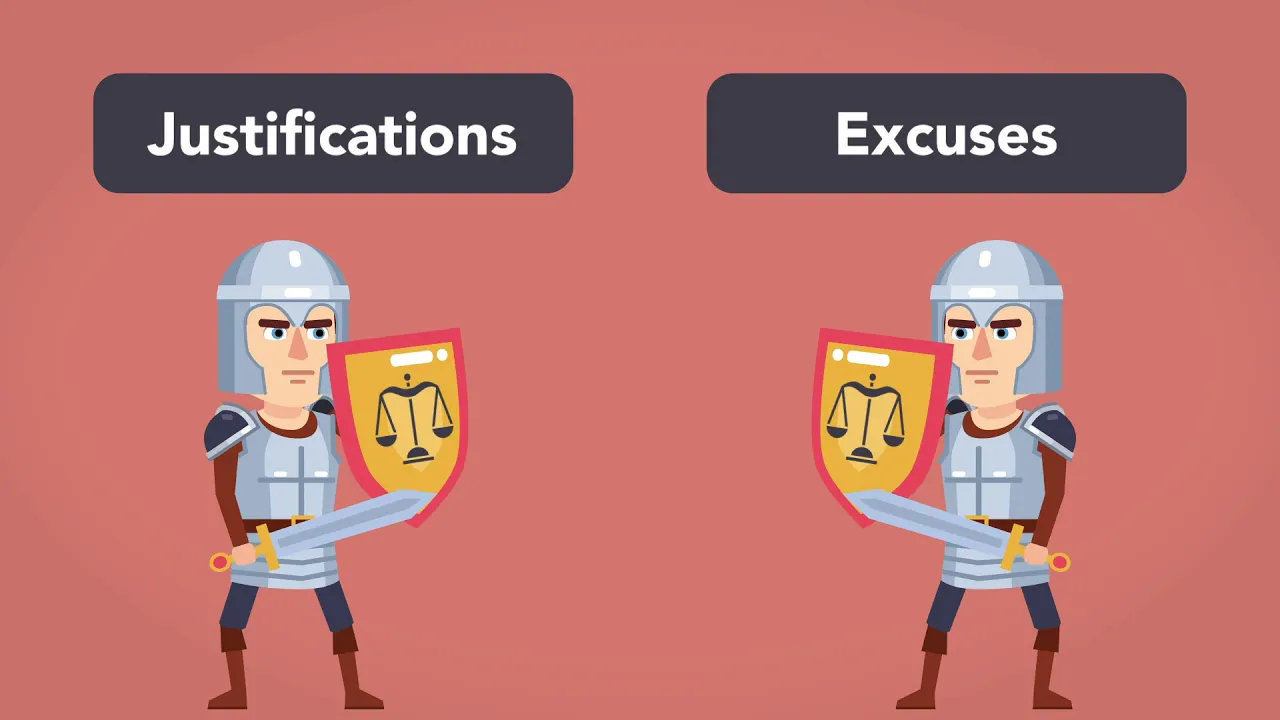
In criminal law, defenses are categorized into two main types: 'no I didn't' defenses that challenge the prosecution's failure to prove elements of the crime, and 'yes but' defenses that acknowledge the prosecution proved the elements but claim innocence through justifications (conduct that society approves of, like self-defense) or excuses (conduct that cannot be blamed due to circumstances, like insanity); additionally, affirmative defenses shift the burden of proof to the defendant, with justifications typically being more detailed in statutes and transferable to third parties, while excuses are more vague and non-transferable.
General Defenses in Criminal Law: Justifications vs Excuses
Added:The fundamental elements of a crime, specifically the concepts of actus reus (the physical act) and mens rea (the mental state).
The standard burden of proof in criminal prosecution, particularly the concept of proving guilt 'beyond a reasonable doubt'.
The basic structure of a criminal trial and the general roles of the prosecution, defense, and jury.
The distinction between a failure-of-proof defense and an affirmative defense.
Detailed study of specific justification defenses, including self-defense, defense of others, defense of property, and necessity.
Detailed study of specific excuse defenses, such as insanity, duress, involuntary intoxication, and infancy.
The procedural mechanics of affirmative defenses, specifically how the burden of production and the burden of persuasion shift between parties.
The theoretical and philosophical foundations of punishment, examining how justifications and excuses align with retributive and utilitarian theories of justice.
3.1K views13likes7:30Original Release: 2015-01-14
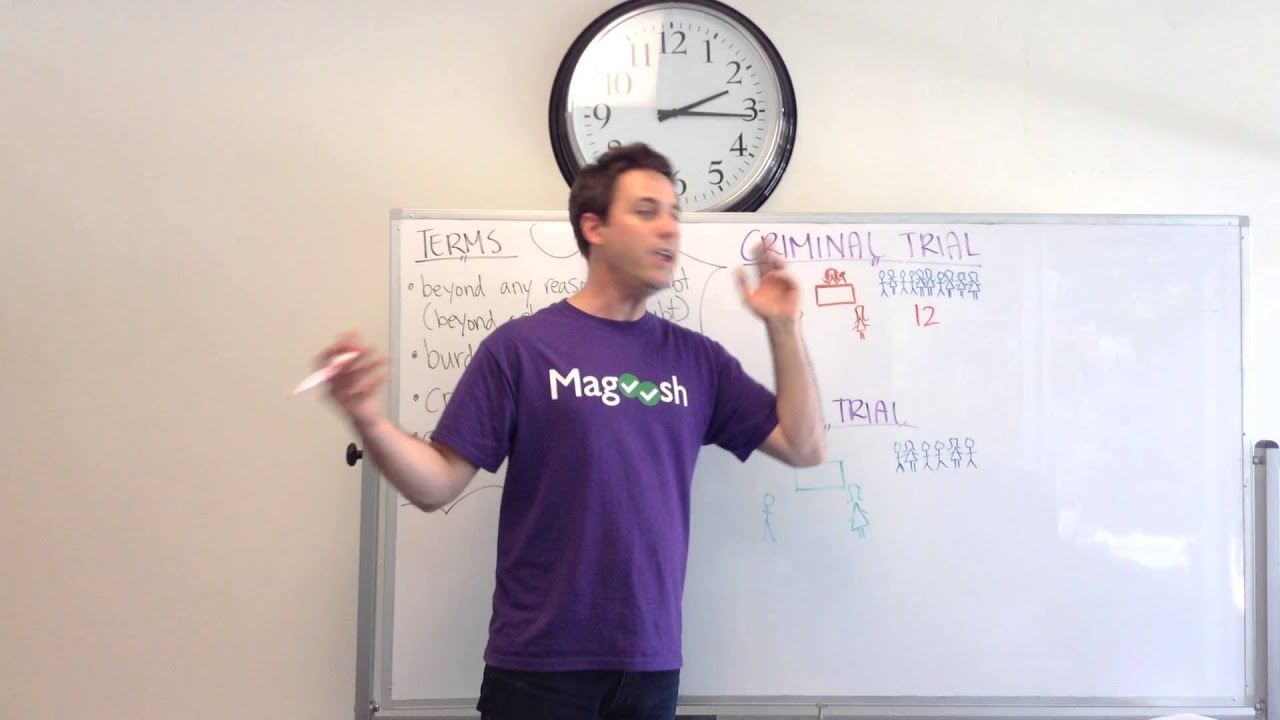
okay folks let's get started in this video topic we're going to talk about a few different categories of Defense's now the defense attorney is setting things all along the way and it's all designed to defend against the charges but there are different conceptual categories here they arise in different points in the criminal trial or in the criminal proceedings and these different categories have slightly different legal effects so the way we go now while the prosecution case is proceeding the defendant might be trying to establish a defense all along the way we'll call these the no I didn't defenses you're basically saying that the prosecution has failed to demonstrate the to the objective element you didn't show that result or that conduct or that attended circumstance or perhaps the prosecution failed to show one of the culpability elements you didn't show that my client knew about that element or what had a purpose as to that element whatever the statute requires so you're saying no I didn't know I didn't do that or no I didn't have that state of mind you can establish that by way of cross-examination of the prosecution witnesses or you could bring in your own but the basic idea is prosecution you fail to prove the elements now we're moving to a different category of defendants these are the yesBut defenses in these situations the defendant will say okay prosecution yes you proved all the element nevertheless I'm not guilty so yes you proved those elements but I'm still not guilty because then there are a couple of different kinds here first of all they're a crime specific yes but defenses for instance renunciation of an attempt or withdrawal from a conspiracy and then a second type of yes but defense would be what we call a general defense that is it's not specific to conspiracy or to attempt but it applies across lots perhaps all of the different types of substantive crimes for instance lesser evils or perhaps insanity for these general defenses cutting across different crimes again you are admitting yes the prosecution proved the elements of the offense but because of this other thing going on I'm not guilty of the of the crime now for these general defenses they also fall into subcategories so they could be justifications that could be excuses or they could be non exculpatory defenses like the statute of limitations let's talk about the first two of those justifications and excuses now for a justification defense what we're saying to the defendant is good for you we're glad you did that if you get in that situation again next time do it the same way that excuses whatever you did so for instance with self defense we say it's not a great thing that a person is dead but still they were threatening you they were threatening other people in in that situation you did the right thing and we would encourage you to do that again next time so that's a justification an excuse on the other hand we say wish you hadn't done that we should happen to come out that way if you ever get in that situation again I hope you don't do that same thing but given what was going on at the time we really can't blame you in a criminal sense here so the insanity defense would be a classic example there we we're not crazy about what you did but we also really can't blame you given the mental disease or disability going on at the time and by the way here's one of the most famous excuse defenses in comedy history at any rate I'm sorry I'm pissed I'm sorry by the way another term that you'll sometimes hear in this setting is affirmative defense and what we mean by that is that the that the legislature has given the defense the obligation to prove the rest of the necessary facts so you have shifted the burden of proof normally of course due process requires that the prosecution carry the burden of proving each of the elements of the offense but there are certain defenses we call them affirmative defenses where the defense has the obligation to put into evidence the facts that would you know support a jury in thinking yeah that's not a crime there was a defense proven there now this idea of an affirmative defense becomes relevant as we sort of figure out whether it matters whether a defense is called a justification or an excuse on one level it doesn't really matter it's the same basic result not guilty is not guilty and these both operate as complete defenses if the jury accepts the factual propositions of the defense but on another level it does matter whether we call it a justification or an excuse for one thing the law is more than just the results it's also a statement of what kinds of behaviors are right or wrong price worthy or not so for example there's a lot of debate in the context of what's called battered women's syndrome asking should it be called a justification or an excuse that's part of asking should we think of this as blameworthy conduct apart from whether it is effective as a defense to criminal charges another practical reason why it matters whether a crime is called a justification or an excuse is the burden of proof as I've mentioned the legislature can call certain defenses affirmative defenses and shift the burden over to the defense and they tend to do that more often for excuses rather than for justifications it's also true that legislators tend to phrase the excuses more vaguely in the in the statutory codes and they require some kind of discretionary application justifications are normally built into the code with more detail for instance you see a great deal of detail in the typical code when it comes to the use of defensive force self-defense finally the difference between justification and excuse matters when it comes to the actions of third parties if we're talking about justifications if I could do this and it would be a justification then somebody else can come along and do it as well for instance if I could get out my gun and defend myself from the attacker somebody else could come along with their gun and defend me from the attacker so justifications are transferable to third parties whereas the excuses tend not to be transferable to third parties so I hope these categories are helpful as we go forward from this point probably the most important one to remember is the difference between the no I didn't defenses that is the failure of proof defenses versus the yes but defenses including these just these general defenses like justifications and excuses so we'll talk about this the next time we get together see you then
Up Next

48:59
Criminal Law: Self-Defense and Reasonableness Explained
@USCGouldLaw
23.1K views•2007-09-05

4:27
US Secondary Sanctions Impact on EU Businesses and Blocking Legislation
@Bureauvandijk
1.6K views•2019-03-20

5:27
Forensic Phonetics: Speaker Identification in Legal Cases
@nptel-nociitm9240
539 views•2025-03-19

24:42
Police Interrogation Tactics: False Confessions & Legal Reform
@LastWeekTonight
7M views•2022-04-18
Related Study Plans & Knowledge Roadmaps
Structured learning paths in Law
law
Self-Defense Law: Imminence & Castle Doctrine
01Foundations of Self-Defense Law
02Imminent Threat & Reasonable Belief
03The Principle of Proportionality
+ 3 more learning modules
12h6 modules
Explore Roadmap
law
Defamation Law: First Amendment & Actual Malice
01Introduction to civil torts and the First Amendment
02Elements of Defamation: Libel and Slander
03Public Figures vs. Private Individuals
+ 2 more learning modules
8h5 modules
Explore Roadmap
law
Hearsay Rule: Trial Evidence & Exceptions
01Introduction to Trial Evidence & Courtroom Basics
02Demystifying Hearsay: The Core Definition
03Non-Hearsay: Exclusions Under FRE 801(d)
+ 3 more learning modules
14h6 modules
Explore Roadmap
law
Medical Malpractice: Law, Liability & Care
01Foundations of Tort Law and Civil Liability
02The Four Elements of Medical Malpractice
03Defining and Proving the Standard of Care
+ 2 more learning modules
12h5 modules
Explore Roadmap