




![SNK, la HISTORIA [Parte 1] - 1973-1990](https://i.ytimg.com/vi/OF74TA3LJmE/maxresdefault.jpg)


![[Vinesauce] Vinny - EDUTAINMENT Games (part 1)](https://i.ytimg.com/vi_webp/JJfoaiiHpBc/maxresdefault.webp)


![The Co-Optional Podcast Ep. 165 ft. Ashens [strong language] - April 6th, 2017](https://i.ytimg.com/vi/Z5hylhSJG_0/maxresdefault.jpg)
















Metafiction in video games involves breaking the fourth wall to comment on the nature of games themselves, using techniques like fourth-wall-breaking humor (characters addressing players directly), self-referential gameplay mechanics, and subverting player expectations to create emotional impact and deeper engagement with the medium.
Metafiction in Video Games: Frog Fractions Analysis
Added:Understanding of the literary concept of metafiction and self-reference (e.g., breaking the fourth wall).
Familiarity with classic video game genres, mechanics, and design tropes, particularly 1980s and 1990s arcade and edutainment games.
Basic knowledge of game design theory, specifically how designers use tutorials, user interfaces, and feedback loops to guide player behavior.
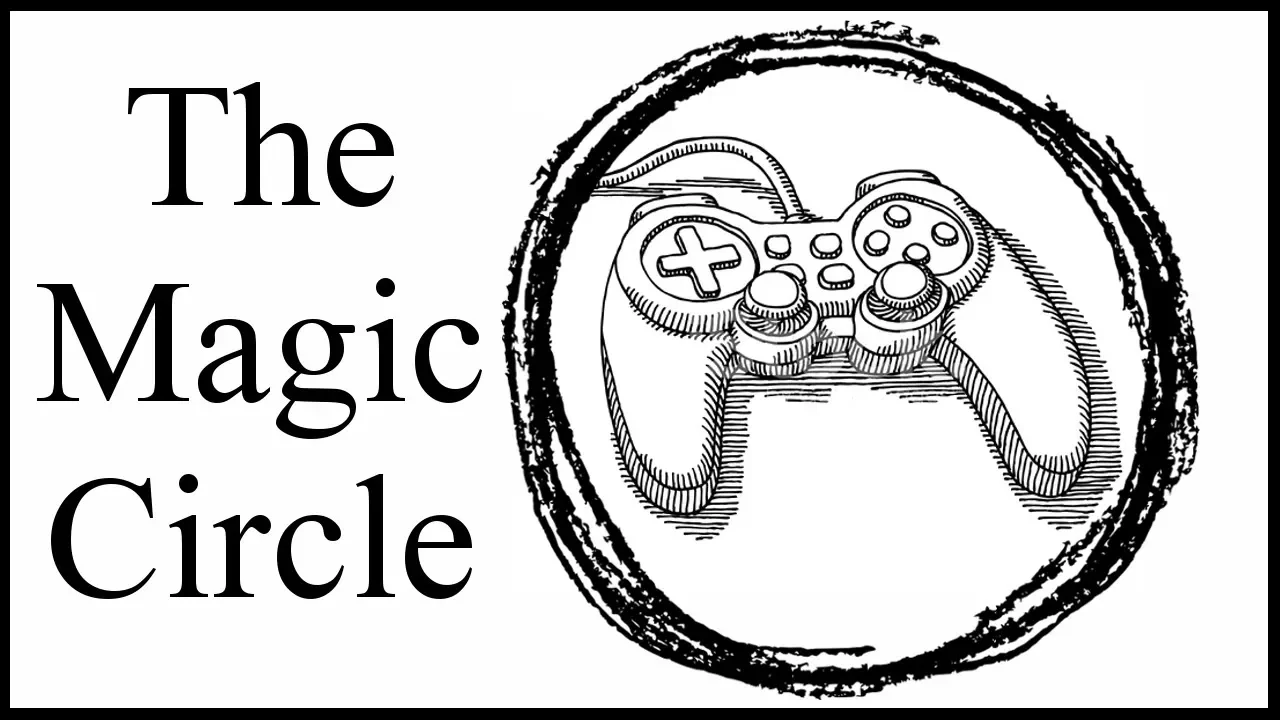
An introduction to the concept of 'the magic circle' in game studies, which defines the psychological boundary between the game world and reality.
Comparative analysis of other prominent metafictional video games, such as *The Stanley Parable*, *Undertale*, *Pony Island*, and *Doki Doki Literature Club*.
Advanced study of Alternate Reality Games (ARGs) and transmedia storytelling, focusing on how developers blur the line between game and reality.
Exploration of 'anti-design' or subversive UX/UI design, examining how frustration and confusion can be utilized as deliberate artistic tools.
Practical exercise in prototyping a short game that intentionally subverts player expectations or parodies a specific gaming convention.
255.5K views12.8Klikes18:18Original Release: 2020-09-05
Frog Fractions is a game about fractions. You play as a frog, who’s trying to defend his fruit from an army of invading bugs,taking the form of a space invaders style oldschool shmup, it’s a classic setup, particularly for flash games. But the really interesting part of Frog Fractions, and what I want to talk about today, is the fantastic way that it makes maths fun and teaches you everything there is to know about fractions using cutting edge early 80s game mechanics.
But first, a bit of a spoiler warning, I am going to be spoiling all the sums in frog fractions, yes even the optional topheavy polynomials, so if you haven’t played it, please stop the video, play frog fractions all the way through, and then come back - there’s a link in the description, because we’re about to get into some pretty tricky maths, okay? Right, see you in a bit.
Are they gone? Okay, let’s start the real video.
As you ought to have figured out by now, frog fractions is not, in fact a game about fractions, but a beloved genre-bending masterpiece that turns from a shoot em up into a visual novel, into a walking sim, then a text adventure and so on. The game is nuts in the best possible way, and has earned a bunch of awards and acclaim for good reason. But why am I talking about this eight year old game now? Well, Frog Fraction’s Game of The Decade Edition plus it’s brand new hat DLC came out just a few weeks ago so I thought it’d be a good idea to look back at frog fractions and consider what made it so great in the first place - because if I’m completely honest it sure as hell isn’t the gameplay.
Frog fractions is trivially easy, it controls awkwardly, it has entire systems like bug erotica creation mechanic that are entirely pointless - and don’t even get me started on the text adventure bit. But the thing to note is that whilst frog fractions is weird, clunky and at times just plain badly designed, that’s all part of it’s charm. All of the things I just mentioned are either deliberate jokes at the player’s expense or subversions of our expectations. Done so as to highlighting the fundamental weirdness of videogames that we often forget or make a commentary on the way we play them.
So what, right? Frog fractions is a joke game, why are we still talking about it? Well that’s because frog fractions is actually a part of a much larger cultural trend, that being metafiction, drawing from the ancient Greek word “meta” meaning beyond or to transcend, and the english word fiction meaning, you know, stories. Metafiction, and by extension meta games like frog fractions are games that transcend the usual limits of video games by directly interacting with the player, or commenting on the nature of games themselves.You might’ve heard the term metagame be used to refer to the balance of strategies and options in a competitive sense, and whilst a competitive metagame is all about decisions that take place outside the normal scope of the mechanics, it’s not quite what I’m on about here. It’s a bit confusing but I just wanted to outline the distinction.
Not only is metafiction an incredibly powerful tool to create extremes of emotion in the minds of Jacob from new york, Emily from London, but it’s also a crucial milestone in the development of video games as a medium as they mature into something more than simple entertainment. But how can that be the case, how can making dumb jokes about princesses getting captured and gamers always doing what they’re told push the medium forwards? Well, I’m glad you asked, because that’s what I’m here to explain today, I’m going to give you a crash course on a few of the ways metafiction can be used in games before explaining why it’s so important to the medium at large. Sound good? Wait, why am I asking you this?
I wrote this at least a week before you’ll ever get to see it, you don’t have a say at all.
If you haven’t heard of metafiction before, you probably have heard of breaking the fourth wall, which is sort of the game thing. Fourth wall breaking is something that comes from theatre See, In a traditional stage play, there are three closed walls and one transparent one through which we observe the action, and so when the actors run into the stands or interact with the audience in any way, they’re breaking the barrier of this fourth wall.
So, when a piece of media acknowledges it’s not real, by breaking the fourth wall of the stage, screen or pit can be a great source of comedy one of my favourite examples of fourth wall breaking is in the movie spaceballs, where in order to work out what’s going to happen next, the bad guys watch a VHS copy… of spaceballs… the movie they are currently in.
Video games can break the fourth wall too, and it’s no wonder that so many metafictional games choose to take things in a comedic direction, by bursting through the fourth wall, meta games can create jokes that take us completely by surprise and also make fun of the responsibilities we as players are expected to have to ensure the game is played properly. In Paper Mario the Thousand Year Door, characters directly address the player, yell at them to pay attention or in one memorable segment, ask the player not to rat them out to mario. Similarly, in the borderlands games, characters often make glib references to the fact that what’s happening right now could only make sense within the context of a video game and in banjo kazooie, characters will get angry at you for messing around during their tutorial.
Fourth wall breaks aren;t the only kind of metahumor though, games can also make jokes of themselves by using a metafictional perspective to question game design tropes and expose the inherent absurdity of the medium. This is exactly what Frog Fractions does, realising you have zero control over the VN segment invites you to mess around and say dumb stuff, like you wish you could in every other visual novel. The cast of constantly rotating friend characters who spout obvious information and won’t shut up sairises silly video game companions and the walking simulator segment is funny because even though it’s mocking “introspective” arty games, and is comprised entirely of lies it manages to be one of the most engaging and and entertaining parts of the game.
But amphibian arithmetic isn’t alone here, poking fun at and satirising game design through metaficiton is also done by quite a few other games, such as the recently released There Is No Game, a non-game which doesn’t exist. The second level of there is no game is a big sendup of lucasarts style point and clicks which are infamous for their horribly convoluted puzzle design. In there is no game, however, your aim is to cheat your way around those very same puzzles by manipulating the CRT monitor the game is plugged into, going behind the scenes of the game and destroying the UI. You see this hand that’s clearly meant to be used for the pick up command? Well now I’m going knock it out of place and then use it smash stuff, sorry game. There is something amazingly cathartic about seeing a classic moon logic puzzle and bypassing it with an even weirder solution that somehow makes more sense in context, like when a ritual calls for a bucket of snow, meaning you need to steal some icecream from the game’s internal dictionary of all the assets, and use the cone to scoop up some TV static or snow, by tuning it to the wrong frequency.
Undertale would be a great example of both forms of metaficional comedy at once - exemplified by Sans and Papyrus the skeletons, two classic video game baddies, who defy this role in interesting ways. Sans is clearly aware of the player’s existence and is constantly turning to the camera and breaking the fourth wall when he cracks jokes, or messing with you by giving you classic tutorial advice in the least helpful way possible. Papyrus on the other hand satirises video game villainy, presenting you with mazes, puzzles and platforming gauntlets ripped straight out of other games, only for them to literally blow up in his face. The best example is when he spends ages reading out the incredibly complex rules for his impossible to solve randomised puzzle maze of doom... only for it to generate a trivial solution.
Broadly speaking meta humor works because it deconstructs video games and allows us to look at the parts that make them up from a new perspective. In MMOs we never question the lives of the questgivers standing around giving you chores because they’re just a part of the game, but when you become one in the quest Welcome to The Machine you’re given a glimpse into how awful and stupid most players are, and have a good chuckle in the process.
Making players laugh is only one half of an analogy I’ll get around to writing in the next draft, it can also be a fantastic avenue for freaking the player out. Just as metafictional and fourth wall breaking humor destabilises our understanding of games and exposes the inherent weirdness, meta games can also terrify us by making us feel like we can’t trust what we’re seeing, and removing the comfort that comes from knowing how the game is going to react to our actions.
To continue the undertale theme, Toby Foxes opus does this brilliantly as well. Spoilers for the first thirty minutes of the game, skip here to avoid them. When most players face off against Toriel, the first boss of the game, they want to try and beat her nonviolently, but often can’t find the solution. So, they try to get her to low health and trigger the option to spare her that way, as they’ve been taught to do by torieel herself on regular enemies. Unfortunately as you gradually chip toriel down to half health, your next hit.... Kills her instantly. It’s a total moment of surprise that leads players to reload their save and try again out of panic. However, even if they do successfully spare toriel the second time around, Flowey the flower, the main villain, is still there to call you out not only for your weakness, but also for cheating. The realisation that undertale remembers your attempts to reset it. challenges several core assumptions about how games work and freaks you out by removing the safety net that is you being able to reload a save and try again with no consequences.
Whilst we don’t often realise it, the existence of the fourth wall between the fictional world and the real world can be an immense source of comfort as it completely defines the terms of our relationship with video games. We get to exert control upon them by mashing buttons and pressing keys, but video games don’t get the same sort of access to us. So, when this idea is challenged by games acknowledging the fourth wall, or even giving the illusion of having power over us for a change, it can be deeply unsettling.
One of the most iconic examples of this is in the Batman Arkham Games, where Scarecrow’s fear toxin doesn’t just mess with batman, it messes with you as well. In Asylum, the fear toxin segments screw with your understanding of the map, taunt you with character deaths that never actually happen and in one memorable scene, trick you into thinking the game has crashed making you think you’ve lost all your save data. When the game stops glitching, it freaks you out even more by replaying the opening sequence, only with joker and batman swapped. In Arkham knight, it goes even further, replacing various character models and decorations with jokerfied versions for a moment, lying about the controls and even temporarily booting you into an entirely different genre.
Pony Island by the lovely daniel mullins is more directly metafictional and sees you playing a game within a game that may or may not be controlled by the devil. Pony island will pull really creepy stunts like taking control of your keyboard and mouse, playing tricks on you by screwing the UI around and even sending you fake steam messages, amongst other stuff that happens later in the game which I won’t spoil. These kinds of scares are so effective because they break the unwritten rules of game design that we’ve learned after however many years of playing them. Mario, zelda, call of duty, ect would never try to fuck with us like this so when a game does, it takes us off guard. By removing the sense of security we get from understanding the underlying rules of the game, we feel powerless and vulnerable. Even frog Fractions does this towards the end of the game. After sleeping in the cryo pod, you’re thrust into a nightmarish version of the first level, but instead of a frog, you’re a pathetic tiny-tongued human! Having an absurdly easy game be suddenly inverted into something that’s totally impossible is weirdly unsettling, and it only works because of how easy you remember the regular game being.
Metahumor and metahorror could be standalone video topics in their own right, and far better youtube video essay people have done just that, but as I promised you errr… onetwothreefour one thousand six hundred and forty six words ago, I’m going to explain why metafiction is more important than simply making us laugh or scaring us.
Hey! No Spoilers!
By delving into how games work at their most fundamental level, we can better understand not just what goes into making them, but how to improve our experience with them as well, and no game does this better than one of my all time favorites, The Stanley Parable.
In the stanley parable, you control a man named stanley, who finds his usual office completely deserted and with an overly british narrator constantly talking in his ear. The narrator will guide you on a “adventure” where you deactivate a horrible mind control device by pushing a button, earning your freedom forever. This is all a fairly simple meta joke on the surface, stanley never really has any control, he’s a thoughtless automaton controlled by the player - but when you think about it, neither do you, as you were just blindly following the narrator’s instructions. This is where things get interesting. Instead of the game just ending, the stanley parable lets you play again, and this time, your mind has been opened to the possibility of defying the narrator. Instead of blocking you with an invisible wall or just funnelling you back to the critical path, the game continues regardless of what choice you made, frustrating the narrator and unlocking a bunch of different endings.
In one, the explosion ending, the narrator gets upset you’re trying to ruin his lovely story and kills you in a massive explosion, in another where you defy all of his instructions, he comes to the conclusion that you aren’t enjoying the game and makes a new one for you to play, and if you can glitch out the progression by backing out through a door when you’re not supposed to, you can even disable the narrator entirely and quote and quote “break” the game.
Of course, all this stuff is intentional - but the purpose is to highlight the inherent conflict between player and designer. Unlike in almost every other form of media, where whoever’s telling the story has total control and can expect the audience to shut up and listen, in video games, the player has a certain capacity to change how the story unfolds. For example, in event 0, a game centering around the AI chatbot Kaizen, players managed to manipulate his AI into creating a brand new fourth ending the developers never intended and in Breath of the Wild, players can abuse the physics system and push it waaay beyond its intended limits with the stasis ability or well timed shield bounces to soar all the way to the final boss in a matter of minutes, completely bypassing 95% of the game.
One thing that metafictive works like the stanley parable remind us of, is that basically all media is meta to an extent. Even something as simple as an introduction, a credits sequence or even a tutorial is breaking the fourth wall and addressing the world outside of the story - and that’s not even mentioning the fact that videogames literally don’t function without a player to drive the story forwards.
Metafiction allows us to explore the way videogames, designers and players work in the same way we’d be able to explore ideas or emotions in other kinds of stories. Dr Langescov, The Tiger and the Incredibly Cursed Emerald gives us a fascinating insight into the backend of gamedev as you try to keep a complicated heist game running behind the scenes so the person actually playing has a nice time, and in One Shot, an adeventure/puzzle game, we’re reminded by cute cat child Niko that whilst video games aren’t real our actions within their virtual worlds are a reflection of how we view reality, By unpacking the way games work, metafictional games can also criticise and challenge game design norms. Without Bioshock, we’d be much less conscious of the fact that games can subtly condition the player into thinking and acting a certain way. Moon, a fantastic rpg for the playstation, points out that RPG protagonists do some pretty horrible things, and that violence shouldn’t be the only form of conflict that games portray.
Metafiction is one of those things that seems very high-minded and artsy, and whilst that is absolutely true, it can also create some truly fantastic experiences as well as get us to appreciate media in a different light.
This is why Frog Fractions is such a great introduction to the subject. The entire frog fractions franchise serves as a way to remind us that the form of games isn’t nearly as rigid and static as we think. Frog fractions defies the limits of genre and expectation by constantly changing what type of game it is - frog fractions 2 was both an ARG that took place inside other indie games and a minigame compilation hidden inside glittermitten grove and frog fractions 3 was… you’ll figure it out, put your thinking cap on. Games can be so much more than what they are right now, and the first step to realising that potential is to break down the format to see how it works, and most importantly, how it can be expanded upon and improved.
Which is why after watching this video, you should be able to realise that everything I make is terrible and that I should’ve been banned from the internet years ago - getting rid of jokers like me is the natural path to improve the video essay format, I don’t make the rules.
Hi! I’m not gone, that was what we in the biz call, a Joke - I’m not going anywhere fuckers. First of all, welcome to all the new subs who joined as a result of the Longing video, that one did better than expected, didn’t it? And second of all, if you’d like to support my continuing nonsense, please give me some cash on Patreon, if you do - you’ll get access to a very special thing, my university dissertation on Metafiction in games! Yep, it’s right there for you if you pledge even one dollar, it’s bad and out of date but if you want to read it, go right ahead.
If you pledge 10 dollars, on the other hand, you join the illustrious and ever growing list of my Mysterious Benefactors who are: Alex Deloach Aseran Ausicav Baxter Heal Big Chess Bodhi Branlab Brian Notarianni Chill Chloe Long Constantin Apunkt Daniel Mettjes David Setser Derk-Jan Karrenbeld Eugene Bulkin Evie Filip Magnus George Sears Grétar Hannesson Items To Astound on DM's Guild Jacob Dylan Riddle Jordan Gear Joshua Binswanger János Fekete Kai Gillespie Lee Berman Lucas Slack LunarEagle1996 Macewindow54 Max Philippov NWDD Patrick Rhomberg Philby The Bilby RegalRegex ReysDad Samuel VanDer Plaats Sheldon Hearn Steve Riley Strategia in Ultima Chao Okay that’s it that’s all see you in the next video, I promise it won’t be a pretentious one this time around. Maybe. Bye!
Up Next

3:41
H-1B Beneficiary Qualifications: Degrees and Evaluations
@ReddyNeumannPC
6.7K views•2019-02-11

12:54
Triumph of Orthodoxy Icon: Byzantine Art & History Explained
@BenCallan
2.1K views•2024-08-06

9:49
FastAPI vs Flask vs Django: Choosing the Right Python Web Framework
@TechWithTim
302.5K views•2024-05-26

1:42
Game of Thrones Opening Credits: A Cinematic Analysis
@gameofthrones
46.3M views•2011-04-18
Related Study Plans & Knowledge Roadmaps
Structured learning paths in General & Interdisciplinary Studies
general-studies
Elevator Engineering: History, Physics & Cities
01From Hoists to Safety Brakes: The Dawn of Vertical Lift
02Hydraulic vs. Traction: The Engineering Physics of Elevators
03Modern Speed, Safety, and Algorithms
+ 2 more learning modules
12h5 modules
Explore Roadmap
general-studies
Rubber: Material Science, History & Geopolitics
01Origins of Natural Rubber & Mesoamerican History
02The Chemistry of Natural Rubber & Vulcanization
03The Geopolitics of the Rubber Boom & Colonization
+ 2 more learning modules
12h5 modules
Explore Roadmap
general-studies
Containerization: Evolution, Logistics & Trade
01Ancient Trade & Bulk Cargo: Amphorae to Barrels
02The Industrial Revolution & Cardboard Packaging
03The Containerization Revolution: Malcom McLean
+ 2 more learning modules
12h5 modules
Explore Roadmap
general-studies
Textile Tech: Evolution, Labor & Global Impact
01Pre-Industrial Textiles: Handloom & Cottage Industry
02Mechanization: The Spinning Jenny to the Power Loom
03The Factory System & Global Labor Transformation
+ 2 more learning modules
10h5 modules
Explore Roadmap