





![비트겐슈타인 강독 - [논리-철학논고] 9 언어가 사고의 총체다 (Tractatus Logico-Philosophicus 9)](https://i.ytimg.com/vi/20t6DfkdeRw/maxresdefault.jpg)


![Russell | Curso Introductorio a la Filosofía Analítica del Lenguaje (Bloque I: Semántica) [UNED]](https://i.ytimg.com/vi/tezhohHMkSQ/maxresdefault.jpg)
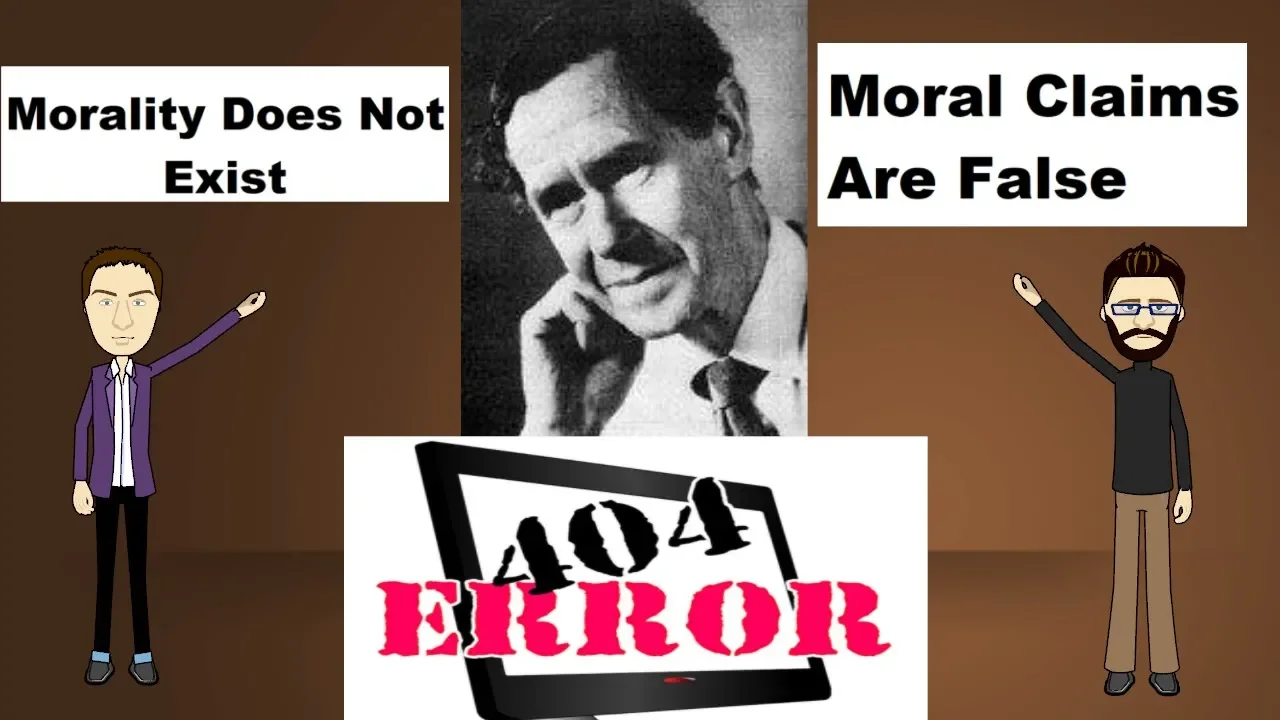










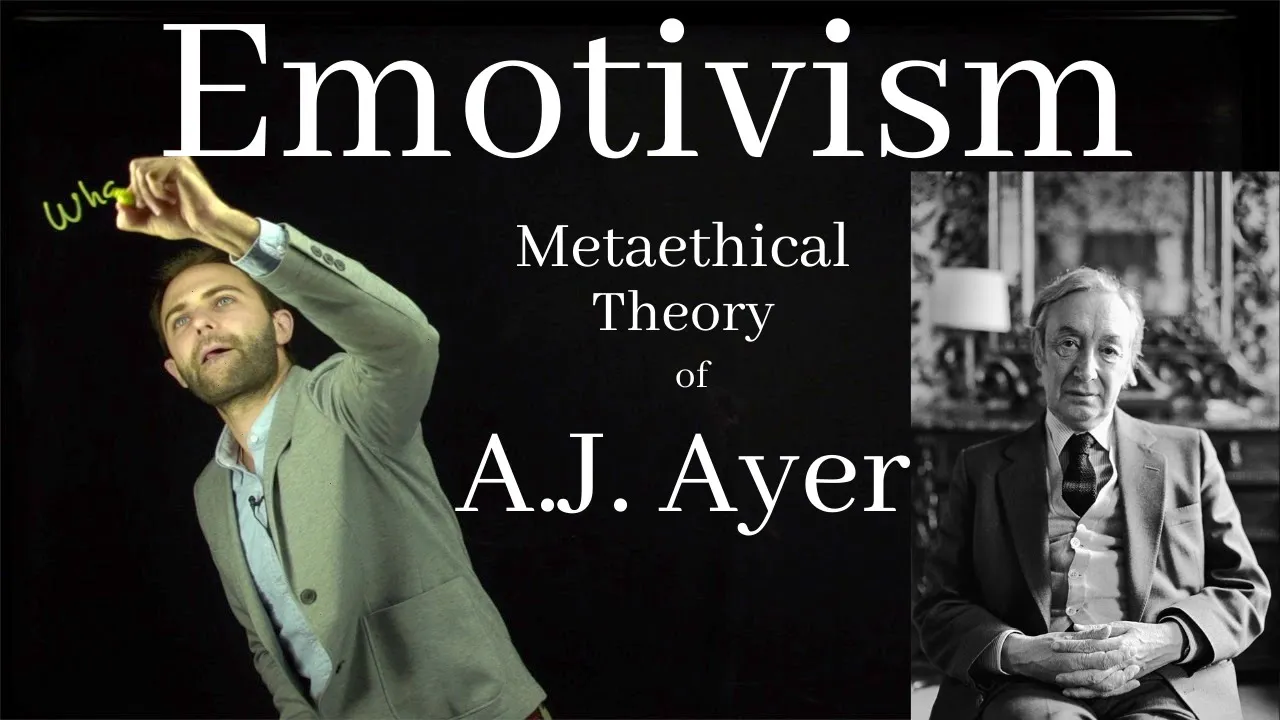

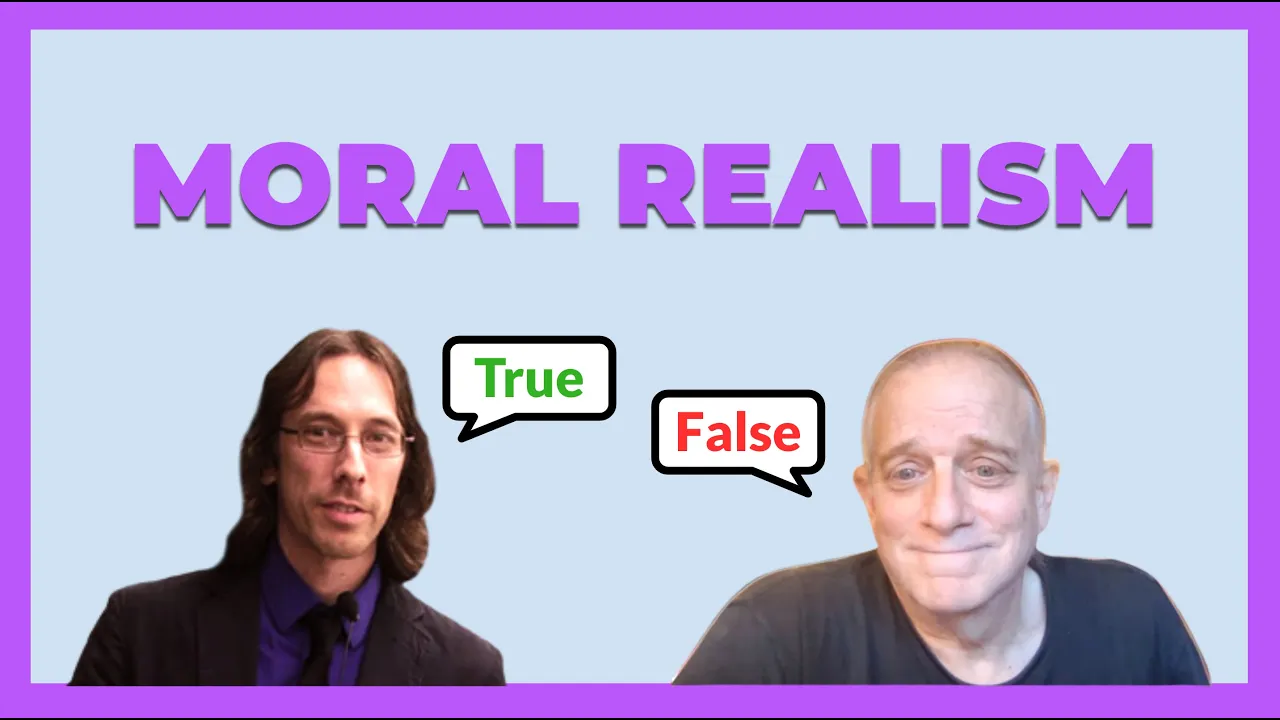
Meta-ethics examines the fundamental nature of morality by asking whether moral properties like good and bad exist mind-independently (moral realism vs. anti-realism) and whether moral judgments are truth-apt descriptions or non-cognitive expressions (cognitivism vs. non-cognitivism). Moral realism holds that moral properties exist objectively, with moral naturalism reducing them to natural properties like pleasure/pain (as in utilitarianism) and moral non-naturalism treating them as simple, irreducible properties requiring a priori intuition to know. Moral anti-realism rejects the existence of mind-independent moral properties, encompassing error theory (which accepts moral judgments are truth-apt but always false) and non-cognitivism (which treats moral judgments as emotional expressions or prescriptions). Key arguments include Moore's naturalistic fallacy, Hume's fork, Ayer's verification principle, and Mackie's arguments from queerness, while objections to anti-realism include the inability to account for moral progress and concerns about moral nihilism.
Meta-Ethics Explained: Realism & Anti-Realism (Philosophy)
Added:So today we're talking about meta ethics. Now meta ethics differs from normative ethics uh like the previous videos because normative e normative ethics uh kind of just takes it for granted that good and bad exist and then tries to come up with definitions that fit our intuitions about what's good and bad. you know, you just take it for granted that, you know, beating up a child for no reason is a bad thing to do. And then you want a theory that fits your intuitions that that's a bad thing to do. But metaeththics kind of zooms out and questions what, if anything, good and bad actually are. So there's kind of two broad questions to this topic. The first question, the psychological question is what do people mean when they say moral judgments like stealing is wrong? Are they literally describing the world like how someone would describe grass as being green? Or are they instead expressing perhaps a feeling of emotion that's neither true or false? And this is the debate between cognitivism and non-cognitivism.
Then the second question is the metaphysical question of whether good and bad and right and wrong whether these properties are real mind independent objective properties that exist out there in the world are good and bad. So these two questions give rise to two broad categories. You've got realism versus anti-realism on the metaphysical question and then you've got cognitivism versus non-cognitivism on the psychological question. But it gets a bit more complicated than that because you've also got a bunch of uh more specific theories that fall within these categories. And so yeah, it's another one of those topics that has a lot of definitions. But I do think once you get over the dry terminology, it is perhaps the more interesting question in moral philosophy because the question is, you know, does morality even exist or is it all just a madeup lie?
[Music] Right. So like I mentioned at a high level meta ethics has two main questions. So the metaphysical question is about whether mind independent moral properties and facts exist. So this is the debate between moral realism and moral anti-realism. If you watch the uh knowledge from perception video, realism in the context of moral realism means the same thing as it did in that video.
Direct realism is as the name implies a realist theory. In other words, direct realists believe that objects such as tables and chairs and the road exist independently of our mind. And similarly, moral realists agree that moral properties exist mind independently objectively out there in the world. So according to moral realism uh stealing has the property of wrongness similar to how the Eiffel Tower has the property of being 330 m tall. The moral properties are real objective properties of the world like height or squareness or I don't know being jagged. When I've defined moral realism before as the belief that mind independent moral properties and facts exist, people in the comments often like to correct me and say, "You mean stance independent rather than mind independent, but we'll get to that." So, basically, moral realism is the view that good and bad are objective properties of the world, like being 10 m tall or whatever. And moral anti-realism is just the rejection of this claim. But it gets more complicated than that because within moral realism, you've also got the debate about what kind of properties moral properties are. But we'll get to that. Anyway, that's the metaphysical question, but you've also got the psychological question of uh what people mean when they make moral judgments such as stealing is wrong. And this is the debate between cognitivism and non-cognitivism.
So, cognitivism says a moral judgment like stealing is wrong is literally true or false. It's a description or a belief in the same way that grass is green or grass is red. Grass is green is a true belief. Grass is green, red is a false belief, but they're both descriptions or beliefs that are capable of being true or false. And that's how cognitivism analyzes stealing is wrong. It's a description like you know this water is wet truth apt is what I'm saying. Then the opposing view is non-cognitivism. So non-cognitivism says that moral judgments are not truth that they're not descriptions or beliefs and so are neither true or false.
Uh I'll talk more perhaps about some specific examples, but perhaps the most obvious form of non-cognitivism is emotivism. So if you think about when the referee gives a bad decision in a game of football or whatever and the crowd all starts booing, that expression is neither true or false. And so equality emotivism, stealing is wrong means something more like that. Again, boo, not true or false. So, you can think of these as two separate debates. You've got realism versus anti-realism on the metaphysical debate, and then you've got cognitivism versus non-cognitivism on the psychological debate. But there is a bit of overlap between these various debates. For example, if non-cognitivism is true, then anti-realism is true.
But it doesn't always overlap perfectly because if anti-realism is true, that doesn't necessarily mean non-cognitivism is true. And as if that wasn't complicated enough, you've also got more specific theories that fall under these various categories. So you've got naturalism, non-naturalism, error theory, prescriptivism, emotivism.
So, like I said, there's a lot of terminology, but I'll put on the screen a table, which I think is the easiest way to represent this information. Anyway, that's a highlevel overview of the topic. Cognitivism versus non-cognitivism is about what people mean when they say stealing is wrong. And realism versus anti-realism, which is where we're going to start, is about whether moral properties like good and bad exist mind independently, objectively out there in the world. So again, moral realism is the view that mind independent moral properties and facts exist. that good and bad are real objective properties of things in the same way that being blue or being 10 meters tall are real objective properties of things out there in the world that good and bad are every bit as objective and real as these other properties.
And all moral realist theories are also cognitivist theories. Because if good and bad are real properties that actions can have, then stealing is wrong for example is true if the act of stealing has this objective property of wrongness. But let's not worry too much about cognitivism for the time being. So all moral realists agree that moral properties exist mind independently.
that good and bad are just as real as properties like height or shape or color. But within moral realism, there's a disagreement about what kind of properties moral properties are. Moral naturalism says that moral properties are natural properties, whereas moral non-naturalism says that moral properties are non-natural properties.
The exact definition of natural properties uh like all definitions in meta ethics and philosophy is contentious but GE Moore characterizes natural properties as observable measurable um quantifiable properties that you can touch.
So the roundness of this tennis ball or its you know bounciness uh these are natural properties because you can observe them and measure them.
And so moral naturalism says that moral properties are like the properties of the tennis ball that good and bad are physical observable natural properties.
Basically, probably the most obvious example of moral naturalism would be utilitarianism. So, if you watch the utilitarianism video, you'll remember that hedonistic utilitarianism reduces the moral property of good to pleasure and it reduces the moral property of bad to. In other words, that what good and bad are are happiness or unhappiness, pleasure and pain.
And there's nothing spooky or supernatural about pleasure and pain.
You know, you experience these uh sensations or emotions all the time. And so if good and bad reduced to pleasure and pain as hedonistic utilitarianism claims, then naturalism is correct because good is a natural property of happiness and bad is the natural property of unhappiness. if that makes sense. Uh just in case you were thinking this, I think utilitarianism is maybe the reason why people always correct me and say moral realism says that moral properties are stance independent rather than mind independent because I guess pleasure and pain are not mind independent properties strictly speaking, but they're stance independent. But whatever. Anyway, utilitarianism, it's typically understood metaethically as a naturalist theory because if good reduces to pleasure, then good reduces to a natural property because pleasure is at least in theory a measurable and quantifiable, observable thing. There's nothing spooky or non-natural about pleasure. And Mill, John Stewart Mill, gives a kind of metaethical argument for utilitarianism in his essay, utilitarianism. But the exact metaethical interpretation of Mill's argument here is a bit contentious. But as always, I'll link the uh original essay down below for you to read it yourself. But the gist of Mill's proof of utilitarianism is that the only proof that something is desirable is that people desire it in the same way that the only proof that something is visible is that people can see it. And so the general happiness is desirable because each person desires their own happiness.
And this desiraability of the general happiness is all the proof the case of that happiness is a good thing. other things we might assign value to like truth, virtue, money, fame, or dignity.
We value these things because they make us happy. They're part of what happiness is to us. And so, not only is happiness a good thing, it is the only good thing. So, basically, questions about what's good can be boiled down to questions about happiness. And so if Mill's proof of utilitarianism here is successful, then he's proved that moral naturalism is correct because happiness is a natural property. It's observable, you know, to some extent measurable.
It's not spooky or supernatural like a ghost for example. And so yeah, if Mill's argument here succeeds, then he succeeded in proving moral naturalism is correct. But I'm not 100% sure that Mill was arguing metaethically for moral naturalism because I don't think the term moral naturalism even existed in Mill's day.
But this is certainly how GE Moore interprets Mill's argument here. Moore interprets Mill as uh making a kind of reduction of good to the natural property of happiness or pleasure. A bit like perhaps how water can be reduced to H2O. And Moore rejects Mill's reductive approach here. Moore rejects the notion that moral properties like good and bad can be reduced to natural properties.
And so Moore instead argues for moral non-naturalism.
So moral naturalism says that moral properties like good and bad can be reduced to simpler natural properties like pleasure and pain in the case of utilitarianism. That moral properties are natural properties like yellowess or roundness. But non-naturalism disagrees.
So non-naturalism is still a realist theory. Non-naturalism still agrees that moral properties like good and bad exist and they exist objectively mind independently. But non-naturalism says that moral properties can't be reduced to anything simpler. That non that moral properties are simple and unanalyzable.
And so this is how G Moore characterizes moral properties. He says they are simple unanalyzable that good and bad can't be reduced to anything simpler. So Moore gives the example of a horse to illustrate the difference. You can break the idea of a horse down into simpler properties and qualities. It might have brown fur, a tail, four legs, and so on.
But eventually you'll reach a point where these qualities like color can't be reduced to anything simpler. So he gives the example of the color yellow to illustrate what happens once you reach these basic properties. Although this example maybe confuses things a bit because yellow is a natural property. Um, but anyway, uh, Moore's point here is that you can't explain what yellow is by reducing it to something simpler. Like if somebody doesn't already know what yellow is, you can't explain to them what yellow is by reducing the color yellow down into something simpler.
You know, you could talk about uh wavelengths of light, for example, and these are definitely correlated with our experience of seeing yellow, but if somebody doesn't know, if someone doesn't have the concept of the experience of yellow, then this isn't going to do anything to help them understand what yellow is. So yellow is a basic property like you can't reduce it to anything simpler. And Moore says it's a similar thing with good. So it may be true says more that all things which are good are also something else just as it is true that all things which are yellow produce a certain kind of vibration in the light but this doesn't prove that good is the same thing as the effect it produces. In the same way it doesn't prove that yellow is the same thing as the wavelengths of light. In other words, even if it's true that everything that's good produces happiness and everything that produces happiness is good, that doesn't prove that goodness and happiness are the same thing. To think otherwise says more. To think that we can provide a definition of good by appealing to what's common to all good things commits the naturalistic fallacy according to Moore. So Moore says that any attempt to reduce moral properties to simpler properties like this to simpler properties like pleasure for example in the case of utilitarianism commits this naturalistic fallacy that even if moral properties like goodness are correlated with natural properties like pleasure it's a fallacy to think that this proves that the goodness the moral properties are the same things as these natural properties. There's a lot more to Moore's argument than I've talked about here, but we'll be here all day if I uh carry on down the Principia ethic avenue. So perhaps we'll talk about the open question argument and concepts and properties another day. But Moore's point is essentially that moral properties again can't be reduced to anything simpler. That moral properties like good and bad are real, but they are basic. Uh they can't be reduced to anything simpler.
But Moore's non-naturalism potentially raises an epistemological issue. If you remember, we defined natural properties as properties that are observable, detectable by the senses, measurable, and so on. But if moral properties are non-natural, so they're not empirically observable, then we might ask, well, how do we know about these moral properties?
How do we know stealing is wrong, for example, if wrongness isn't a natural property that can be observed and measured? So, Moore's response to this epistemological question is intuitionism. Moore says, we have this a priori, if you remember that term from the rationalism versus empiricism video, a priori knowledge is knowledge that can be gained without any experience of the world outside of our minds. If you need help remembering this term, the clue is kind of in the name, a priori means prior to experience. We have this a priori faculty of moral intuition that enables us to grasp intuitively uh for example that stealing is wrong. So moral intuitions like this are not something that can be proved by evidence or even proved deductively via reason. They're just recognized as self-evidently true by this faculty of moral intuition.
Moore says there is no proper evidence or reason that can be provided for moral facts except the fact itself. It is untrue because it is untrue and there is no other reason. But I declare it untrue because its untruth is evident to me and I hold that this is sufficient reason for my assertion. So that was moral realism.
The view that mind independent moral properties and facts exist and both moral naturalism and moral non-naturalism agree on moral realism.
They agree that moral properties and facts exist, that good and bad are real properties and that there are moral facts like stealing is bad. They just disagree about the nature of these properties. Moral naturalism says bad is a can be reduced to a natural property.
Whereas moral non-naturalism says that bad or good cannot be reduced to anything simpler. So both naturalism and non-naturalism agree on moral realism.
They agree that mind independent moral properties exist. And so the opposing view is moral anti-realism. And this is the view that mind independent moral properties don't exist.
So moral anti-realism is just the rejection of moral realism. So where moral realism says that good and bad exist, moral anti-realism says these properties don't exist, at least not mind independently. So moral anti-realism is the view that mind independent moral properties and facts don't exist. Now, there's a lot of different theories that fall under the umbrella of anti-realism, but I think the most important distinction is between error theory and non-cognitivism. So, so far we've assumed a cognitivist interpretation of moral language. We've assumed that moral judgments like stealing is wrong are literal descriptions or beliefs that are capable of being true or false. So both moral naturalism and moral non-naturalism agreed on this. They just disagree about the kind of properties that make this uh description true or false. For naturalism, stealing is wrong is true if wrongness uh if stealing has this natural property of wrongness.
Whereas for non-naturalism, stealing is wrong is true if it has this non-natural property of wrongness. So both non-naturalism and naturalism agree on cognitivism.
But non-cognitivism says that moral judgments like stealing is wrong are not descriptions or beliefs. And so they're neither true or false. Now on the face of it, this can be quite counterintuitive because if you look at the grammatical structure of the sentence uh stealing is wrong, it has the same structure as uh other descriptions like grass is green or water is wet. But non-cognitivism says uh this similarity is only superficial and that what moral judgments really mean is something non-cognitive that stealing is wrong is not a description or a belief and so it's neither true or false. So you might be wondering well what does a sentence that's neither true or false look like? So let me give you some examples. In fact, I already gave the example, didn't I, of when the crowd booze at a football match, that sentence boo is, it's not even a sentence, but you know what I'm saying. That's that utterance boo is neither true or false.
Likewise, uh when the team scores a goal and the crowd shouts hooray, hurray is is not true or false either. It's just an expression of positive emotion.
Likewise, uh, shut the door or go over there or do your homework. These are instructions. You know, it's not like shut the door is either true or false.
So, these are you can think of these as like non-cognitive expressions. Boo, hooray, shut the door, go over there.
These sentences are neither true or false. So there's different types of non-cognitivism such as emotivism and prescriptivism. So prescriptivism for example says that what stealing is wrong really means is something more like the shut the door example. The stealing is wrong means something like don't steal.
It's an instruction. And this instruction again it's neither true or false. It's not like shut the door or don't steal or go over there. These kinds of sentences are just instructions. they're neither true or false. And so this is how prescriptivism, which is a form of non-cognitivism, analyzes moral judgments. But perhaps the most obvious form of non-cognitivism is emotivism. So I think emotivism is sometimes called boo theory. And I think this is a good way of summarizing the theory. So according to emotivism, uh stealing is wrong is like saying boo.
It's expressing emotional disapproval at the act of stealing or you know giving money to charity is good is like the crowd shouting hoay when their team scores. And so boo and hurray these expressions of uh negative and positive emotions respectively. These expressions are neither true or false. And so if stealing is wrong just means boo stealing, then stealing is wrong is not a description or a belief. And so it's neither true or false. Anyway, I don't want to get too bogged down in the specific forms of non-cognitivism. But the point is that all forms of non-cognitivism say that stealing is wrong, is not a description or a belief, and so is neither true or false. And this makes non-cognitivism a form of anti-realism. Because if you're not describing properties in the external world, then you don't need a property of wrongness to make this description true or false because it's not a description in the first place, if that makes sense.
So, David Hume was an emotivist or at least he would have been an emotivist if the term emotivism existed back in his day. Because in treaties of human nature, Hume says morality is not an object of reason. Take any action allowed to be vicious. Willful murder for example. Examine it in all its lights and see if you can find that matter of fact or real existence which you call vice. In whichever way you take it, you find only certain passions, motives, valitions, and thoughts. There is no other matter of fact in the case.
The vice entirely escapes you as long as you consider the object. You never can find it till you turn your affection into your own breast and find a sentiment of disapprobation which arises in you towards this action. Here is a matter of fact, but is the object of feeling, not of reason. It lies in yourself and not in the object. Vice and virtue, therefore, may be compared to sounds, colors, heat, and cold, which according to modern philosophy are not qualities of objects, but perceptions in the mind. In other words, there's nothing in the act of murder itself that we can identify as wrongness. The vice entirely escapes you as long as you consider the objects, I assume. Instead, the only wrongness we can find is a subjective feeling. uh this feeling of disapproval and not something mind independent. So one way you can argue for emotivism or non-cognitivism is with Hume's fork if you remember that from the rationalism versus empiricism video.
But rather than talk about Hume's fork, I'm instead going to talk about AJA's verification principle which is basically exactly the same argument but with different terms.
So where Hume says there are two judgments of reason i.e. two types of cognitive judgments relations of ideas and matters of fact as says there are only two meaningful and in this context there's only two cognitive types of sentence. They are analytic truths. So analytic propositions are propositions that are true in virtue of what the words mean.
true by definition. So another example of an analytic proposition would be something like all triangles have three sides because that's just what the word triangle means. Three-sided shape and propositions that are empirically verifiable and this is known as vera's verification principle. So if we apply the verification principle to a moral judgment like stealing is wrong. It's not like stealing is wrong. Firstly, stealing is wrong is not an analytic truth. It's not true by definition.
There's no logical contradiction in the idea of stealing is not wrong. It's not like a four-sided triangle or a married bachelor. And so moral judgments are not analytic truths in a terminology or relations of ideas in Hume's terminology.
So the next prong of the fork or prong of the verification principle depending on which one you go with says uh our moral judgments. So the other option is empirically verifiable and a says that uh stealing is wrong and other moral judgments are not empirically verifiable either. It's not like you can do an experiment to measure the wrongness or quantify it. Uh and Hume would say stealing is wrong is not a matter of fact either for the reasons mentioned previously. There's no objective fact of the matter only an internal feeling. So the long and short of it is a verification principle says there's only two types of cognitive/meful statements. analytic truths and truths that are empirically verifiable. And given that moral judgments are not analytic truths, nor are they empirically verifiable, it follows that according to the verification principle, moral judgments are not cognitive statements at all.
They are neither true or false. They're, you know what I'm saying? Humeachi gives a bunch of other arguments for emotivism which are quite interesting but again I think this video is already complicated enough with all the definitions. So uh perhaps I'll do a further video on the is or gap the moral judgments motivate action argument. I think there's probably some more as well. But yeah, that was emotivism. So, as mentioned, non-cognitivism is anti-realist because if moral judgments are not trying to describe uh properties in the external world in the first place, then you don't need these properties to make these descriptions true or false. And maybe this non-cognitivist interpretation of moral judgments works if you look at stealing is wrong in isolation. But as an argument against non-cognitivism, we can point to examples where moral judgments are embedded in contexts like uh arguments.
So this is probably one of those ones.
If I show it on screen, it'll probably be more clear. So according to emotivism, eating animals is wrong means boo eating animals. But this analysis kind of doesn't make sense if you look at a situation where the same moral judgment is embedded in an argument like if eating animals is wrong then you should be a vegetarian. There's nothing kind of weird about these statements.
People make arguments like this all the time. But that sentence kind of only makes sense if the moral judgment is intended as the kind of uh proposition that can be true or false. I'm saying if it is true that eating animals is wrong then you should be a vegetarian. Or if we take the emotivist interpretation the argument kind of loses all meaning like if boo eating animals then you should be a vegetarian. That doesn't make sense.
And so moral reasoning arguments like this when moral judgments are embedded in conditional statements only seem to make sense if moral judgments are intended as truth at descriptions or beliefs. Basically, if you look at situations where people embed moral judgments in arguments or moral disagreement, when people are having debates about what's right or wrong, emotivism and non-cognitivism makes a lot less sense. It's like if it was just ultimately a subjective, you know, morality was all just about subjective feelings, then why would people bother to write, you know, why would Kant write page after page trying to convince you that the categorical imperative was correct if it was ultimately just, you know, boo for telling lies or whatever the example is. So non-cognitivism makes a lot less sense when you look at moral reasoning, moral arguments like this. So that argument where moral judgments are embedded in conditional statements as an argument for cognitivism is known as the frager ge embedding problem. And JL Mackey who's the error theory guy gives his own examples uh arguing for cognitivism in ethics inventing right and wrong. So uh Macki Mackey gives the example I think of somebody who's been offered a job engaging in research to do with chemical weapons.
So Mackey says if you're kind of ethically conflicted on whether you should take this job, you don't kind of search like how do I feel about chemical weapons. You want to know is it objectively right to engage in research to do with chemical weapons. So not only in the philosophical context with K but also in the ordinary context it seems that we do use moral judgments um we see them as truth apt descriptions or beliefs and we want to know whether you know stealing is wrong is literally true or false. So what's all this got to do with moral anti-realism? Well JL Mackey is still an anti-realist. He believes that mind independent moral properties and facts don't exist. But he's also a cognitivist. So he believes that stealing is wrong is a description or a belief. It's truth. But and this is what error theory says because wrongness and all these other moral properties don't exist because anti-realism is true. Then although stealing is wrong is truth apt.
It's supposed to be a description or a belief. it's always going to be a false belief because the property of wrongness doesn't exist. So, the other day I thought of what I think is a good analogy to illustrate what error theory says. So, I was thinking about um I've been watching a lot of videos on psychic powers and I think there might be something to it, but for the sake of argument, let's say that psychic powers don't exist. So if the property of being psychic doesn't exist, that there's no such thing as psychic powers, then any statement like Jenny is a psychic or John is a psychic, these sentences are always going to be false because the property of being psychic doesn't exist.
And so similarly, if wrongness and rightness and goodness and badness, if these mind independent moral properties don't exist, then any sentence that uh attributes these properties to actions like stealing is wrong. These sentences are always going to be false because the property contained within that sentence doesn't exist. If that makes sense. So error theory is cognitivism plus moral anti-realism. And Mackey gives a bunch of again really good arguments for moral anti-realism in ethics inventing right and wrong. But the main one I'm going to focus on is Mackey's arguments from queerness.
Come on, stop being so childish. So Mackey's argument from queerness has two parts. There's the metaphysical queerness and the epistemic queerness. So metaphysical querness means Mackey says that moral properties would be completely unlike any other uh properties we know of. So Mackey says moral properties would be metaphysically queer because you know goodness if something had the property of goodness it would be like the object itself would be telling you to do this thing. He says, "An objective good would be sought by anyone who is acquainted with it. Not because of any contingent fact that this person or every person is so constituted that he desires this end, but just because the end has to be pursuedness somehow built into it. Similarly, if there were objective principles of right and wrong, any wrong possible course of action would have not to be done this somehow built into it." So what I think Mackey is getting at here is that if you know stealing for stealing to have the property of wrongness for wrongness to be this mind independent property that exists objectively then there'd be kind of something within the physical act of stealing that's like saying don't do this. And if that doesn't make sense as an idea if that sounds weird then that's kind of Macky's whole point. Like it's not clear how a physical action or you know the atoms could be like saying you know don't do this thing like a person can say don't do that but it's not like a objective property could tell you that you shouldn't do something. So Mackey says that moral properties like wrongness, rightness, goodness and badness. They would be very strange.
It'd be very hard to make sense of how these properties would work metaphysically because it would be like the object or the physical stuff itself would be saying do this and do that. And that's generally not how physical, you know, it's just a weird idea basically, isn't it? It's metaphysically queer.
So that's metaphysical queerness that if moral properties were to exist then you know the world would constantly be telling you do this and do that and that's just a weird idea. Then the second part of the argument from queerness is the epistemic queerness. So Mackey says that even if we were to accept that metaphysically these moral properties of good and bad could exist, it'd be a complete mystery how we would know about them. It'd be a complete mystery how we would know that stealing is wrong, for example, or stealing is bad. So the epistemic queerness argument kind of relates back to Moore's intuitionism, if you remember from a few moments ago. The problem there was if moral properties like goodness and badness are these non-natural properties that can't be detected by the senses and can't be empirically observed then how do we know that stealing is wrong for example if wrongness is this non-natural property well mo's answer is that we have this a priori faculty of intuition but Mackey calls this a lame answer I think that's a direct quote that doesn't really explain anything. So because of this metaphysical and epistemic queerness, Mackey says we should reject the existence of mind independent moral properties. In other words, we should reject moral realism and accept moral anti-realism as the correct metaphysical picture of morality.
So that was error theory and non-cognitivism. And while they disagree on the psychological question of whether moral judgments like stealing is wrong are truth, they both agree on moral anti-realism. The view that mind independent moral properties and facts don't exist. So we're next going to discuss a few potential issues for moral anti-realism, whether it be non-cognitivism or error theory.
So these issues for anti-realism are effectively arguments for moral realism because if anti-realism is false then realism is true and vice versa if realism is false then anti-realism is true. So the first potential issue for moral anti-realism is that it can't account for moral progress. So moral progress is the improvement in our moral standards and values over time. So for example, the moral realist might argue that the improvement in our values since the time of Plato, for example, where keeping slaves was considered morally acceptable versus the present day where keeping slaves is considered morally wrong. The moral realist might argue that that's an example of moral progress. But of course, if anti-realism is true, then there can't be any moral progress because there's no such thing as objective values. There's no objective standard by which we could say the standards of Plato's day are any worse than the standards of the modern day. And so to summarize the argument, the realist might argue that if anti-realism is true, then there can't be moral progress. But there has been moral progress, the realist says. And so anti-realism must be false. However, I think this argument commits the fallacy of begging the question. And I think this is how anti-realism would respond. So begging the question is also known as circular reasoning. And it's when you assume the conclusion in your premises. So the anti-realist could say in assuming that there has been moral progress, the realist is assuming that moral properties and facts exist. It's assuming that there is an objective standard against which we can say there has been moral progress. But of course this is the very thing we're trying to argue for. This is the very thing that's up for debate. And so to assume there's been moral progress is to assume that mind independent moral properties and facts exist. In other words, to assume that moral progress exists is to assume that moral realism is true. But again, that's the very thing that we're trying to prove. It's like assuming moral realism is true. To prove moral realism is true. And that is a facious argument.
Again, it commits this fallacy of begging the question. Perhaps a stronger argument against moral anti-realism is that it leads to moral nihilism. It leads us to rejecting all moral values whatsoever. Because again, if moral anti-realism is true and there's no such thing as objective moral properties, then there's nothing objectively wrong with stealing, lying, and killing.
And so if anti-realism is true, then there's no real reason, you know, why you shouldn't go on a murderous rampage or whatever, steal from everybody because there's no moral values. There's no objective moral values. And so there's no standard by which you can say that behavior is wrong. And yeah, this issue maybe is kind of hard for moral anti-realism to respond to. Like I don't think it's I can't imagine how anti-realism could defend saying that stealing and killing and so on are objectively wrong given that the whole point of the theory is that there are no such thing as objective moral properties and facts.
But whether it really would lead to, you know, GTA in real life is maybe up for debate because I was thinking if, you know, if I could convince you right now that moral anti-realism is true and there's no such thing as mind independent moral properties and facts, would you be like, "Oh, great. Finally, I can do all the stealing and killing I've secretly always wanted to do. Like, I don't know about you, but yeah, if I was convinced of moral anti-realism, I'd probably just carry on as I always have done because, you know, I don't want to steal or kill people or whatever. But the problem perhaps still remains that it is very hard to defend any sort of behavior over the other if anti-realism is true. And so yeah, maybe it does lead to moral nihilism. But yeah, maybe the anti-realist could just bite the bullet and be like, "Yeah, deal with it.
There's no objective moral values." Like just because you don't want just because you want there to be objective moral values, it doesn't prove that anti-realism is false. That's just wishful thinking. So yeah, I don't really see any way how anti-realism could really defend one course of action over the other.
But that doesn't necessarily prove that anti-realism is false, I suppose.
Anyway, so meta ethics is a huge topic with uh far more to it than we discussed today. Not only more theories but also a load more arguments. But hopefully that gave you a general overview of the topic. So to summarize what we talked about. So the most important question is whether mind independent moral properties and facts exist. And this is the metaphysical debate between moral realism and moral anti-realism. So moral realism says that moral properties like good and bad do exist objectively mind independently out there in the world.
Whereas moral anti-realism says these properties don't exist. But within moral realism you've got the debate between moral naturalism and moral non-naturalism. And this is the debate about what kind of properties these mind independent moral properties are. So moral naturalism says that moral properties are natural properties that something like good or bad could be reduced to a simpler property that can be observed and measured. In contrast, moral non-naturalism says that moral properties like good and bad, while they're still real and mind independent, can't be reduced to anything simpler. So those are the two moral realist theories. However, the moral anti-realists say that mind independent moral properties don't exist. And within moral anti-realism, you've got the debate between error theory and non-cognitivism. So error theory, like the two realist theories, is a cognitivist theory. In other words, error theory says that moral judgments like stealing is wrong are literal descriptions or beliefs. And so they are truth apt. In other words, stealing is wrong is capable of being true or false.
However, where moral naturalism and moral non-naturalism agree that stealing is wrong can be true, in the case of naturalism, it's true if it has this natural property of wrongness, whereas non-naturalism says stealing is wrong is true if it has this non-natural property of wrongness. Error theory says moral properties don't exist. And so although stealing is wrong is intended as a truth apt description or belief, it's always going to be a false belief because the moral properties don't exist. That stealing is wrong is false because wrongness doesn't exist or stealing is good is false because goodness doesn't exist. However, non-cognitivist theories reject this interpretation of moral language. Non-cognitivism says stealing is wrong and these other moral judgments are never intended to be truth apt descriptions or beliefs. So for example, emotivism says that what people really mean when they say stealing is wrong is something like boo stealing. It's an expression of emotion and this expression is neither true or false. or prescriptivism, which is another form of non-cognitivism, says that stealing is wrong. Really means something like don't steal. It's an instruction. And don't steal is neither true or false. As well, we also went over a few arguments for and against these various theories, but it gets complicated really quickly because of how the various theories and categories relate to each other. Like you can argue for moral anti-realism by using Hume's fork to prove that non-cognitivism is correct. But if you argue for cognitivism, that doesn't prove realism is correct. If that makes sense. Or if you could prove that moral naturalism is correct, then you'd prove that moral realism is correct. But if you prove that moral naturalism is false, that doesn't necessarily prove that realism is false because there's still non-naturalism.
So that's about it for meta ethics and with it the moral philosophy topic.
So the next few videos we're going to be moving on to the metaphysics of God. So this is uh arguments for God's existence, arguments against God's existence, um the concept of God, religious language, stuff like that. So all that remains for this video is the books and references.
So as always, you can get my book. It contains uh the meta ethics topic broken down as we did it today. realism and anti-realism, cognitivism and non-cognitivism, as well as these five specific theories of naturalism, non-naturalism, error theory, emotivism, and prescriptivism. So, I do think if you are new to meta ethics, an overview is probably the place to start because there's just so much to this topic. And if you start by reading, you know, Principia Ethica, then you're going to be kind of lost at sea. You need to have the kind of big picture before you fill in the details. So, you can get my book and I'll also link the page on my website that talks about meta ethics because um that covers all the arguments we went over today plus a bunch more. But if you did want to engage with some primary sources, then John Stewart Mill's essay utilitarianism. Um, this is more an argument for utilitarianism as a normative ethical theory. But this essay does contain Mills proof of utilitarianism which they always put proof in inverted commas. But uh like I said Mills proof of utilitarianism is often interpreted as a sort of metaethical argument for utilitarianism and so by extension moral naturalism. So you can get utilitarianism by John Stewart Mill.
Then for non-naturalism you can get G. E Moore's Principia Ethica the groundbreaking classic of 20th century ethical theory. And this book contains the naturalistic fallacy argument. We talked about uh Moore's intuitionism, the epistemological part of non-naturalism. Um and also a bunch of other stuff we didn't talk about today such as the open question argument. So you can get Principia Ethica. Then for emotivism we've got language, truth and logic by AJ Aya. Um this is a everyone who studied philosophy has read this book. Um it's a classic of logical positivism and the verification principle comes up all the time. Not particularly long, somewhat accessible, covers a lot of topics.
Um, so you can get that for emotivism. And then I also mentioned in the emotivism bit David Hume's treaties of human nature. Now uh although the term emotivism didn't exist in Hume's day like I said Hume does provide a bunch of arguments that could be used to support emotivism. So you've got Hume's fork as we talked about a bit today but you've also got the isort gap. um Hume's argument that moral judgments motivate action, which we didn't talk about today. And then for error theory, you've got Mackey's ethics inventing right and wrong. Um this is where the argument from queerness comes from. And uh a bunch of other good arguments like he talks a bit about cognitivism, which again is half of error theory. and also his argument from relativity which is on my website but we didn't talk it about it today and it's uh another interesting argument for anti-realism. So ethics inventing right and wrong by JL Mackey. They all get a thumbs up. I'm in a I'm in a generous mood today. All these books get a a thumbs up from me. But yeah, that's about it for this video. So uh thank you so much as always for watching. I hope you enjoyed it and I will see you in the next one.
Up Next
Logic Explained: Key Concepts, Validity, Soundness, and More
@CosmicSkeptic
442.7K views•2025-08-24

John of Damascus on Holy Images: A Theological Defense
@BannedBooks
139 views•2026-04-25

Should We Destroy the Machines? Big Tech Surveillance Critique
@TheStoriesWeTell303
167.9K views•2025-11-30
The Myth of Sisyphus: A Greek Legend of Eternal Punishment
@TEDEd
8.6M views•2018-11-13
Related Study Plans & Knowledge Roadmaps
Structured learning paths in Philosophy