

























Effective coming out stories in television require character-driven authenticity, showing the ongoing process of coming out to different people at different times, depicting realistic mixed reactions from family and friends, and incorporating themes of chosen family and intergenerational queer support, rather than treating coming out as a single dramatic moment.
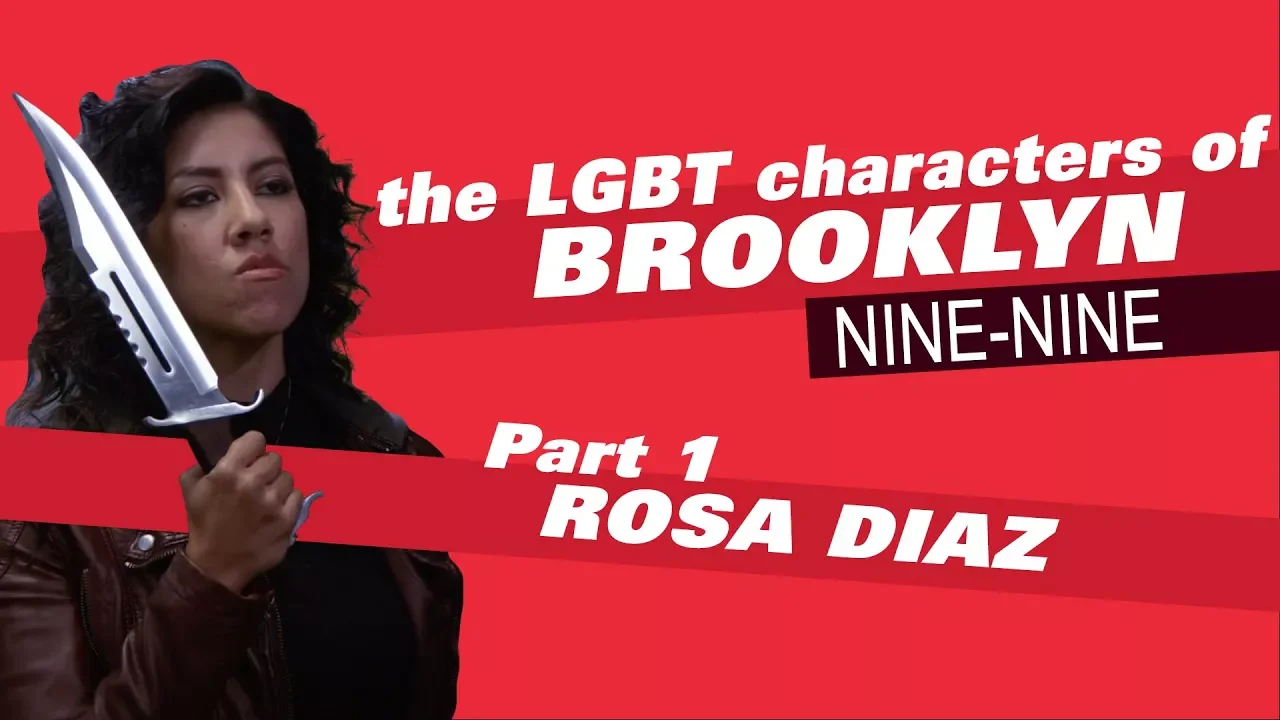
Rosa Diaz's Coming Out Story in Brooklyn Nine-Nine: A Case Study of Authentic Bisexual Representation
Added:Basic terminology and concepts of LGBTQ+ media studies, specifically the definition of bisexuality and the historical context of bisexual erasure in television.
The sociological concept of 'chosen family' and its historical significance within the queer community, particularly in response to familial rejection.
Familiarity with the narrative structure of modern workplace sitcoms, specifically how 'Brooklyn Nine-Nine' balances comedic elements with serious social issues.
An understanding of the traditional 'coming out' narrative trope in media and how it has evolved over the past few decades.
Conducting a comparative analysis of bisexual representation across different television genres (e.g., drama vs. comedy) to identify evolving tropes.
Exploring the intersectionality of race, gender, and sexual orientation by analyzing how Rosa Diaz's identity as a Latina impacts her coming out experience.
Investigating the role of LGBTQ+ actors and writers (such as Stephanie Beatriz) in shaping authentic scripts and character development in Hollywood.
Studying the psychological and social impacts of positive media representation on queer youth and the reduction of bi-phobia in broader society.
357K views15.4Klikes12:22Original Release: 2019-09-04
“What’s going on?” “Family Game Night!” “Don’t worry, I brought Twister!” “Hey!” “Hey, Rosa!” This scene makes me cry every time I watch it.
Without any context, it’s just some friends coming over to Rosa’s house for a game night, which isn’t that emotional.
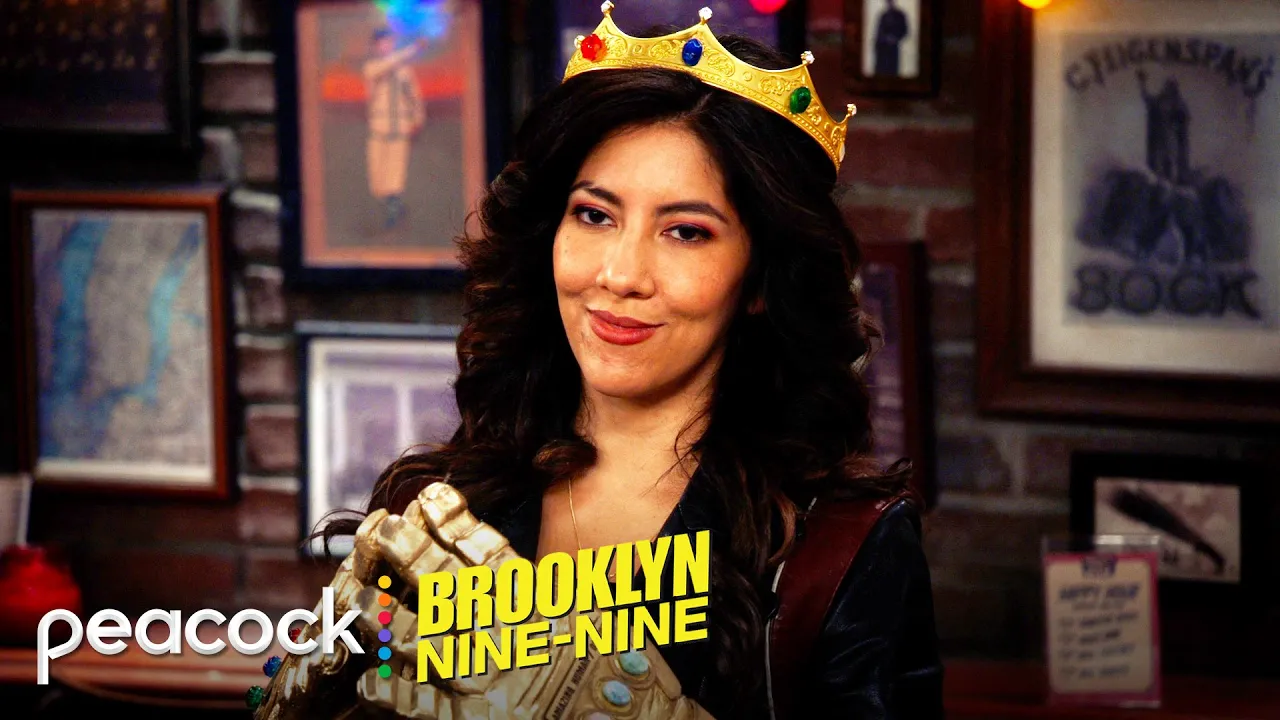
But with the context from earlier in the episode, it’s a beautiful moment about chosen family, acceptance, solidarity, and love.
In this video, I want to examine what makes this episode, and this scene in particular, work so well.
Because as we start to see more queer representation in mainstream media, we’re seeing more and more coming out stories, and some are definitely told better than others.
So I want to look at this storyline with Rosa Diaz from Brooklyn Nine-Nine, and talk about why I think it’s an amazing example of how to tell a coming out story.
So, first off, let’s look at Rosa’s coming out arc as a whole and see how it affects her character moving forward.
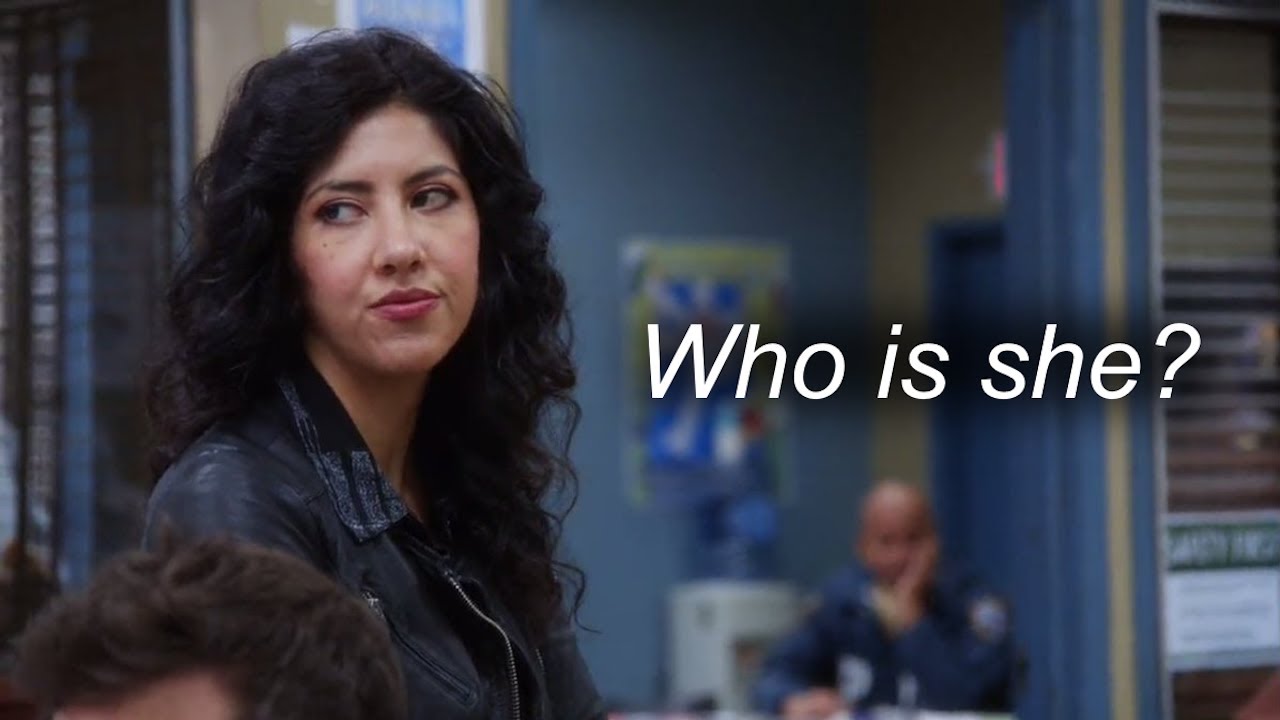
In Season 5 Episode 9, titled “99”, Rosa is dating someone and won’t tell Charles who it is, even though he’s determined to find out.
That’s pretty typical for her character, who is known for being quiet and secretive.
And Charles’s nosiness is also a well-established part of his character, since he always wants to be involved in everything that’s happening.
Part of the way through the episode, Charles brings Rosa a glass of water and overhears her talking on the phone to a woman who calls her “babe”.
So he asks her what’s going on, and she says: “I’m dating a woman.
I’m bi.” Charles starts to say something about how he supports her, but she cuts him off and leaves the room.
It’s a very Rosa-esque coming out, and that’s important for making it work well and seem natural.
Because you could just toss a generic coming out story onto any character, but the ones that work the best are the ones that make sense for that character.
Because no two coming out stories are the same.
People come out in different ways, and a lot of factors can play a role in that, like how comfortable they are communicating their feelings and what kind of relationship they have with their family.
So a coming out story has to be tailor-made to fit the character and can’t just be shoehorned in haphazardly.
Also, for this story, it makes sense that Charles would be the one to pry this information out of Rosa because that fits what we know about his character.
Telling a good coming out story means just telling a genuinely good story with the characters you have while also incorporating an authentic, relatable experience.
If the focus of your story is the drama and sensationalism of the coming out and not the characters themselves, it will fall flat.
Characters make the story, and their desires and motivations should drive it, even in the case of a coming out story.
Like, it wouldn’t make sense for Rosa’s character to open up to everyone emotionally without somehow being prompted to, because she almost never offers up information about her life until it’s relevant.
So I love that the writers chose to have Charles kind of get that information out of her.
I mean, he doesn’t out her, which would be very bad, he just kind of stumbles upon the information and puts Rosa in a situation where it makes more sense for her to tell him than to keep hiding it from him.
Having one character intentionally out another is extremely malicious and hurtful, and wouldn’t really fit Brooklyn Nine-Nine’s vibe, so I think the Charles-being-nosey plot that they came up with to have her come out worked really well for the tone of the show.
In the next episode, titled “Game Night”, the main plotline follows Rosa as she tries to come out to her parents with Jake’s help.
One thing I really like about this episode is that right off the bat it addresses coming out as not a singular moment.
It’s not like you “come out” and then you’re done.
You come out to different people at different times in different ways, and Brooklyn Nine-Nine doesn’t shy away from that.
There’s also this incredible bi joke where Charles is trying to say goodbye to Rosa and keeps getting tripped up.
“Bye, Rosa!
I mean, not ‘bi’, but ‘bye’!
I mean, see ya!
I mean, have fun only having sex with men, just banging dudes left and right.” Rosa comes out to her friends in a very Rosa way, making a quick announcement and then leaving.
It’s a very nonchalant coming out, and something that was really nice to see, since coming out can often be a negative experience.
In fact, another thing I like about this story is how it shows a wide range of reactions to Rosa’s coming out.
There’s Charles being awkward but supportive, her co-workers being pretty chill, and her parents being decidedly less chill.
It’s not all good and it’s not all bad.
It shows the complexities of coming out, and the mixed emotions that someone can have when coming out to some people goes well, while coming out to others doesn’t go as well.
So, later in the episode, we find out that Rosa’s parents would rather Jake be cheating on his fiancee with Rosa, than for Rosa to not be straight.
Later, she finds out that they’re not mad, and they invite her to game night.
So she attends with Jake, only to find out that the only reason they’re not mad is because they don’t actually believe she’s bi, and they think she’ll end up with a man anyway.
So, she storms off again.
When she sees her dad next, he apologizes to her and says he loves her no matter what, but he tells her that her mom needs some more time, and so they put game night on hold.
It’s a bittersweet ending that does really well to encapsulate the actual messiness of coming out.
Sometimes parents disagree.
Sometimes one might accept you while one won’t.
Sometimes your parents might take some time and get over their prejudices because they love you, and other times they’ll want to hold on to their prejudices.
It’s never as easy or as simple as we’d like it to be, and Brooklyn Nine-Nine puts that messiness on display with Rosa’s coming out story.
The other heartwarming part of this story is Jake and Rosa’s friendship, and the support that he gives her.
I love Jake and Rosa’s relationship.
I feel like there’s not enough examples of close platonic relationships between men and women in mainstream media.
But Jake and Rosa are so cute, and their dynamic is super funny.
So, at the start of this episode, I was happy to see that Jake was going to be there helping Rosa, and the episode did not disappoint.
They covered a lot of ground, and set a good example for what someone should do if they find themselves in a position where their friend has just come out.
Like, when they’re first talking, Jake asks Rosa how coming out to her parents went and she says that she hasn’t told them yet.
And Jake’s reply isn’t like “Well why not?” or “You need to tell them.” Instead, it’s very understanding.
“I haven’t told them yet.” “Really?
I mean, of course you don’t have to, but, I just thought you guys were getting closer since prison.” “No, I mean we are.
It’s just, I just don’t know how I would say something like that.” Eventually, Jake gets roped in to dinner with Rosa and her parents when she’s planning to come out, but when Rosa gets too nervous, Jake doesn’t pressure her to come out or anything.
In fact, he agrees to lie to her parents about the two of them being in a relationship together so that they can get through the night.
It’s important when you’re coming out to have a friend who’s understanding and will stick with you no matter what, and that’s exactly what Jake is to Rosa.
Later, after Jake has been to family game night with Rosa and her parents, and her parents have said some pretty hurtful stuff to her, Jake and Rosa meet on the roof to talk about it.
Rosa says she’s glad she told them, even if they didn’t take it well, and Jake says this.
“Yeah, still sucks though.” “Still sucks.” Now, that’s not a huge deep conversation, but it’s a meaningful few words.
As a friend to someone who’s just had a not-so-great coming out experience with their parents, you’re not gonna be able to fix everything.
And while sometimes it’s definitely helpful to tell people that things get better, sometimes you just need someone to recognize how bad your situation is and empathize with you.
That’s what Jake does.
He doesn’t try offering solutions.
He doesn’t try fixing everything.
He doesn’t reassure her that everything will be fine, because he doesn’t know that it will be.
Instead, he just acknowledges Rosa’s feelings, and is there for her.
Sometimes you just need someone to sit with you in the hurt.
And that’s not a thing that we get a lot of in TV shows, but it’s something that’s really important for life, in general.
And then, we get to the final scene in the episode.
Knowing that Rosa no longer has game night with her parents, Jake gathers together all their friends and brings them over to Rosa’s place for a game night.
And honestly, I cannot think of a better way, plot-wise, to so clearly draw out the concept of a chosen family.
A chosen family is the people you choose to surround yourself with, either in place of or in addition to your related-by-blood family.
It’s like a group of really close friends who you consider your family.
Anybody can have a chosen family, but it’s a big thing in queer communities because so many queer people have been tossed aside by their families.
Chosen family is the kind of thing that surface-level stories about queer people almost never mention.
So to see chosen family be such a large theme in this episode makes the story feel incredibly authentic.
In this episode, Rosa’s family is kind of represented by game night.
Game night is a recurring thing where the people that care about her take time out of their schedules to spend time with her because they love her.
At the beginning of the episode, that’s her mom and dad.
But when they no longer want to have game night, Rosa feels relatively cut off from her family, even if her dad otherwise said some nice things to her.
She relies on game night for that emotional connection, even if she’s too tough to admit it.
So with no game night, Rosa feels family-less.
That’s why when Jake and all of her friends rock up for game night, it’s such an emotional moment.
It’s not about the game.
It’s about the fact that Rosa still has a family, even without her parents.
Her chosen family will always be there for her, will always offer her that support and emotional connection.
She does have a family, just not the same one she thought she had at the beginning of the episode.
And so, I was already sobbing when everyone showed up at the door.
But then, Holt comes over and talks to Rosa, and my tear response went through the roof.
Queer characters are rare, and multiple queer characters in the same show are even more rare.
But in this episode of Brooklyn Nine-Nine, we have an older gay man who came out decades ago having a conversation with a young bisexual woman who just came out.
That warms my heart so much, simply because these two characters get to exist in the same show.
But then, because Holt has been through this, he’s able to say just the right things to Rosa.
“Diaz, you should be very proud of yourself.
I know things aren’t exactly where you want to be right now, but I promise you, they will improve.
Every time someone steps up and says who they are, the world becomes a better, more interesting place.
So, thank you.” Any character could have said this stuff to Rosa, but it’s powerful coming from Holt, because you know he wishes that’s what someone had said to him when he came out.
You can hear the emotion in his voice.
He wants to support her and reassure her without discounting how crappy it is to have her mom not accept her.
And when he says that things will get better, he’s not speaking out of idealistic hope, but from experience.
This is one generation of queer people welcoming in the next generation of queer people.
I honestly kinda want to cry just thinking about it.
It’s a beautiful moment, and I’m so proud of this show for giving these two incredible queer characters this moment.
And so that’s how the episode ends.
From then on, Rosa’s bisexuality, like most of the things in her personal life, isn’t mentioned much.
There are some really cute scenes in the final episode of season 5 where Terry is trying to be supportive.
“But you never know when you’re gonna find your dream person.
Anyone on the street could be, ‘they.’” “Alright, it feels like you Googled, ‘How to talk to your bisexual friends.’” “Yeah!” And then Terry encourages Rosa to ask out their cab driver, a girl who Rosa is clearly captivated by.
It was just very cute, and I love this little look that they share at the end -- it was everything.
Later, in season 6, we even get to meet Rosa’s girlfriend, Jocelyn, in episode 11, and then she comes back in episode 14 when Rosa has to make some important relationship decisions.
Rosa’s mom even makes a return for them to try and patch things up.
The great thing about how the show continues to handle her bisexuality is that it isn’t her whole character, but it also isn’t ignored.
It’s a part of who she is -- it affects her, and it comes up sometimes, but it’s not her only defining trait.
It’s a perfect balance, and one that I think other shows should aim to emulate with their queer characters.
So that’s how Brooklyn Nine-Nine pulled off, in my opinion, one of the best coming out stories on TV.
They worked it into the story in a believable way, spread it out over the course of a couple episodes, tied in important queer themes, showed positive and negative reactions, and then allowed it to be a normal part of Rosa’s life going forward.
That’s how you tell a coming out story.
Anyway, that’s all I had for you today.
If you’d like to support the production of more videos like this one, you can visit my Patreon, and if you want to see more videos like this, don’t forget to subscribe and ring that little bell.
Thanks so much for watching, and I’ll see you next time.
Up Next

22:23
Delhi HC Allows Use of Deceased Son's Sperm for IVF
@PuthiyaThalaimuraiTV
263.5K views•2024-11-08

26:22
Walking in the City: Urban Rituals and the Flâneur in Contemporary India
@PSBTIndia
1.9K views•2016-08-02

9:49
FastAPI vs Flask vs Django: Choosing the Right Python Web Framework
@TechWithTim
302.5K views•2024-05-26

1:42
Game of Thrones Opening Credits: A Cinematic Analysis
@gameofthrones
46.3M views•2011-04-18
Related Study Plans & Knowledge Roadmaps
Structured learning paths in General & Interdisciplinary Studies
general-studies
Artificial Light: History, Tech & Human Impact
01The Pre-Electric Era: Fire, Oil, and Gas Lighting
02The Incandescent Revolution and Grid Electrification
03Gas Discharge and Fluorescent Illumination
+ 3 more learning modules
14h6 modules
Explore Roadmap
general-studies
Elevator Engineering: History, Physics & Cities
01From Hoists to Safety Brakes: The Dawn of Vertical Lift
02Hydraulic vs. Traction: The Engineering Physics of Elevators
03Modern Speed, Safety, and Algorithms
+ 2 more learning modules
12h5 modules
Explore Roadmap
general-studies
Rubber: Material Science, History & Geopolitics
01Origins of Natural Rubber & Mesoamerican History
02The Chemistry of Natural Rubber & Vulcanization
03The Geopolitics of the Rubber Boom & Colonization
+ 2 more learning modules
12h5 modules
Explore Roadmap
general-studies
Containerization: Evolution, Logistics & Trade
01Ancient Trade & Bulk Cargo: Amphorae to Barrels
02The Industrial Revolution & Cardboard Packaging
03The Containerization Revolution: Malcom McLean
+ 2 more learning modules
12h5 modules
Explore Roadmap