The Delhi High Court issued a landmark judgment allowing sexagenarian parents to use their deceased son's frozen sperm sample for posthumous assisted reproduction, relying on international laws to grant them the right to preserve and utilize the sperm sample, which the parents had been denied by the hospital.
Delhi HC Allows Use of Deceased Son's Sperm for IVF
Added:Deep Dive
Fundamentals of Assisted Reproductive Technology (ART), specifically the clinical and biological procedures of In Vitro Fertilization (IVF).
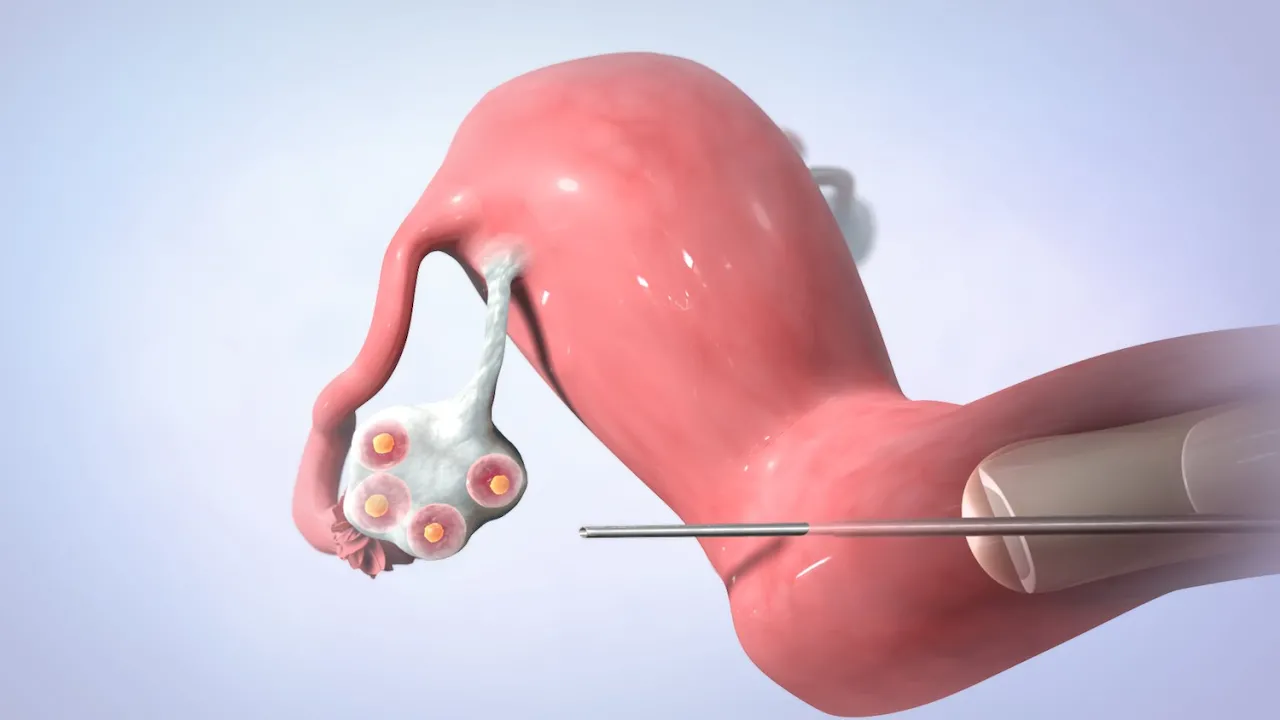
In Vitro Fertilization (IVF)
22.8M
In vitro fertilization (IVF) is a medical procedure where a woman's eggs are fertilized outside her body in a laboratory setting and then transferred back into her uterus to help her conceive. The process involves three main steps: first, follicle aspiration where eggs are harvested from the ovaries using ultrasound guidance and a thin needle; second, fertilization where the collected eggs are combined with sperm (either through insemination or intracytoplasmic sperm injection); and third, embryo transfer where the developed embryos are placed into the uterus 3-5 days after fertilization. IVF is commonly used to treat infertility or for women who want to have children without a male partner.
Click to watch →

FECUNDACIÓN IN VITRO
294.1K
In vitro fertilization (IVF) is an assisted reproductive technology that involves three fundamental steps: ovarian stimulation with hormones to produce multiple eggs, egg retrieval through transvaginal aspiration, and fertilization in a laboratory setting using either conventional insemination or ICSI (intracytoplasmic sperm injection) for male factor infertility, followed by embryo culture for 5 days and transfer to the uterus for implantation.
Click to watch →

Class 12 Biology Ch 4 | Assisted Reproductive Technologies (ART)- Reproductive Health NEET 2022-23
82.1K
Assisted Reproductive Technologies (ART) are medical procedures that assist the reproductive system when natural conception is not possible, including In Vitro Fertilization (IVF) where fertilization occurs outside the body in a laboratory, Intracytoplasmic Sperm Injection (ICSI) where a single sperm is directly injected into an egg, Gamete Intrafallopian Transfer (GIFT) where eggs and sperm are transferred to fallopian tubes for natural fertilization, Zygote Intrafallopian Transfer (ZIFT) where fertilized zygotes are transferred to fallopian tubes, and Intrauterine Transfer (IUI) where processed sperm is directly introduced into the uterus; these technologies help couples overcome various infertility causes such as fallopian tube damage, low sperm count, or uterine abnormalities.
Click to watch →
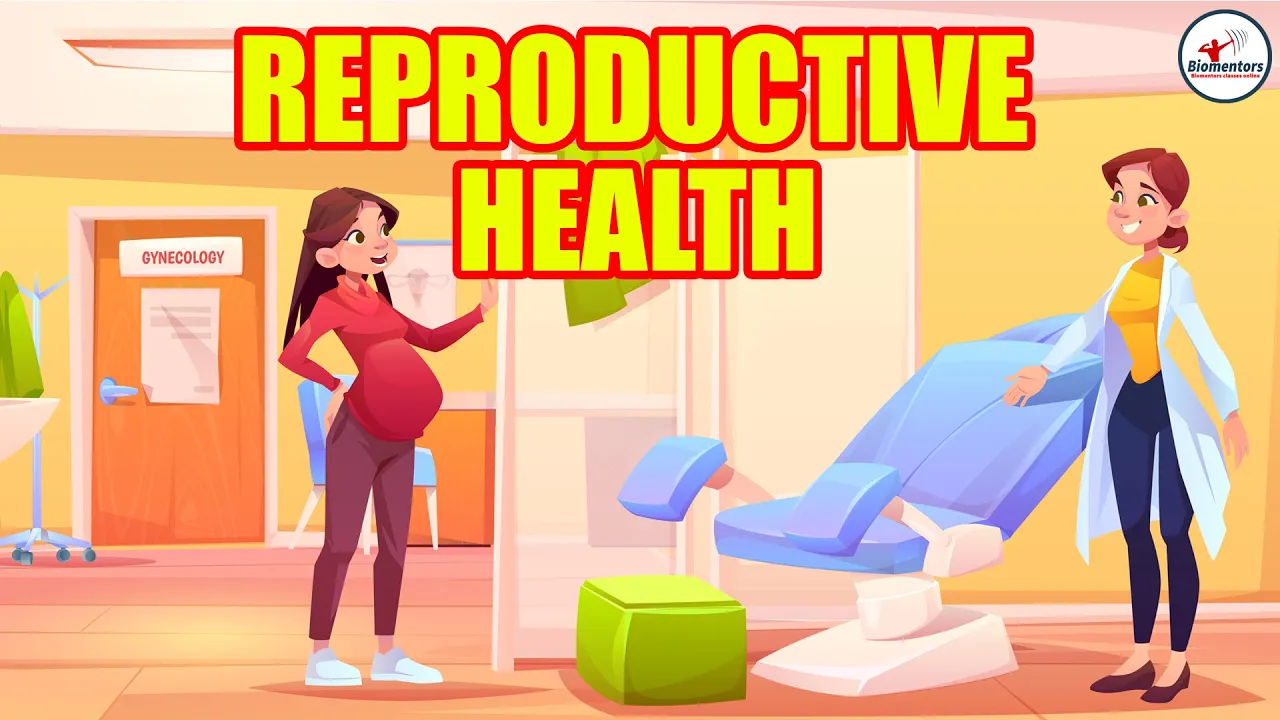
Reproductive Health l Lecture 6 l Biology l NEET
57.8K
Assisted Reproductive Technology (ART) refers to medical procedures that assist human reproduction, including IVF, embryo transfer, and surrogacy. In Vitro Fertilization (IVF) is a process where fertilization occurs outside the body in a laboratory setting. The process involves collecting eggs, fertilizing them with sperm in a laboratory dish, allowing the embryo to develop for a few days, and then transferring the embryo to the uterus. This technique is commonly known as the 'test tube baby' program.
Click to watch →

REPRODUCTIVE HEALTH in 1 Shot | जनन स्वास्थ्य | All Concepts & PYQs Covered | NEET Hindi
209K
IVF (In Vitro Fertilization), also called Test Tube Baby, is an assisted reproductive technology where eggs and sperm are combined in a laboratory setting to create embryos. The process involves: (1) collecting eggs from the female and sperm from the male; (2) fertilizing them in the lab (in vitro); (3) developing the embryo to the blastocyst stage (8 cells or more); (4) transferring the embryo to the uterus. The video emphasizes that IVF is the most common ART technique for treating infertility.
Click to watch →
Deep Dive
The medical science of cryopreservation and the technical feasibility of post-mortem sperm retrieval (PMSR).

Woman wants dead husband's sperm
39.8K
Sperm can remain viable for approximately 24 hours after death, with successful retrieval possible up to 48-72 hours post-mortem, and can be stored indefinitely through cryopreservation, enabling potential reproduction from deceased individuals.
Click to watch →

ختام الفصل الرابع ||منهج 2026
36.8K
Cryopreservation preserves biological materials using liquid nitrogen at -170°C. Embryo cryopreservation stores excess embryos after IVF selection for future use, valuable given IVF's economic cost and preparation requirements. Oocyte cryopreservation freezes immature eggs, useful for women facing radiation, chemotherapy, or diseases that could damage eggs, though success rates are lower than embryo cryopreservation due to potential chromosome damage. Sperm cryopreservation stores sperm in liquid nitrogen for men with cancer requiring chemotherapy, testicular diseases, or declining sperm count. Studies confirm sperm maintains fertility after thawing. These techniques preserve fertility for future use when current circumstances prevent conception.
Click to watch →

Cryogenics - Short Term Possibility or Pipe Dream?
151.2K
While whole-body cryonics remains unproven, cryopreservation has achieved remarkable success with individual cells. Sperm cryopreservation began in 1954 and enabled three successful pregnancies. Vitrification revolutionized egg freezing, with the first successful birth occurring in 1999. Vitrification proves four times more effective than slow freezing for clinical pregnancies. Eggs frozen by age 35 show higher pregnancy rates than later extraction. Men pay $1,000+ for sperm freezing, while women face $5,000-$17,000 for egg collection plus medications. Thousands of people exist today who would not have been born without cryopreservation technology, demonstrating its proven medical value despite whole-body revival remaining speculative.
Click to watch →

मरे हुए पार्टनर से बच्चा! जानिए ये विज्ञान है या चमत्कार? Truth Behind Postmortem Sperm Retrieval
528
Postmortem Sperm Retrieval (PSR) is a medical technique that allows sperm extraction from deceased males within 24-36 hours of death, as sperm viability decreases by approximately 2% per hour. The procedure uses epididymal aspiration or testicular biopsy to retrieve sperm, which is then cryopreserved for future IVF use. First documented in 1980 with the first successful birth in 1999, PSR is typically requested by families to continue shared dreams or legacies. The primary medical challenge is sperm quality, as postmortem oxygen deprivation significantly reduces motility and viability. This technology, while scientifically established, remains emotionally and ethically complex.
Click to watch →
![머지않은 미래 현실화를 앞두고 있는 냉동인간 부활 서비스 [미래]](https://i.ytimg.com/vi_webp/gD-Z9Z4PcDI/maxresdefault.webp)
머지않은 미래 현실화를 앞두고 있는 냉동인간 부활 서비스 [미래]
130.4K
Cryopreservation emerged from the hope that future science could cure fatal diseases. James Bedford became the first cryopreserved human in 1967, motivated by untreatable cancer. Robert Ettinger first proposed the concept in 'Prospects for Immortality,' though it was initially dismissed as pseudoscience. By 2021, over 180 humans were cryopreserved worldwide, with 1,300 waiting. The process involves rapid transport, artificial respiration, temperature reduction, blood removal, cryoprotectant injection, and storage at -196°C. Despite challenges like cellular damage and toxicity, the field has grown from fantasy to plausible science.
Click to watch →
Deep Dive
Basic principles of bioethics, particularly concerning bodily autonomy, informed consent, and the ownership of genetic material after a person's death.

Bioética: princípios básicos
98.3K
Autonomy, meaning the capacity to act freely, is the first fundamental principle of bioethics. A person is autonomous if they act intentionally, with knowledge of their actions, and free from external influences. Influenced by Kantian philosophy, autonomy holds that people possess inherent worth and should never be treated merely as means to ends. Healthcare professionals must respect patient autonomy through rules including respecting privacy, protecting confidential information, obtaining informed consent, and avoiding paternalism. Informed consent requires competence, effective revelation of relevant information, comprehension of diagnosis and prognosis, voluntariness, and explicit authorization.
Click to watch →
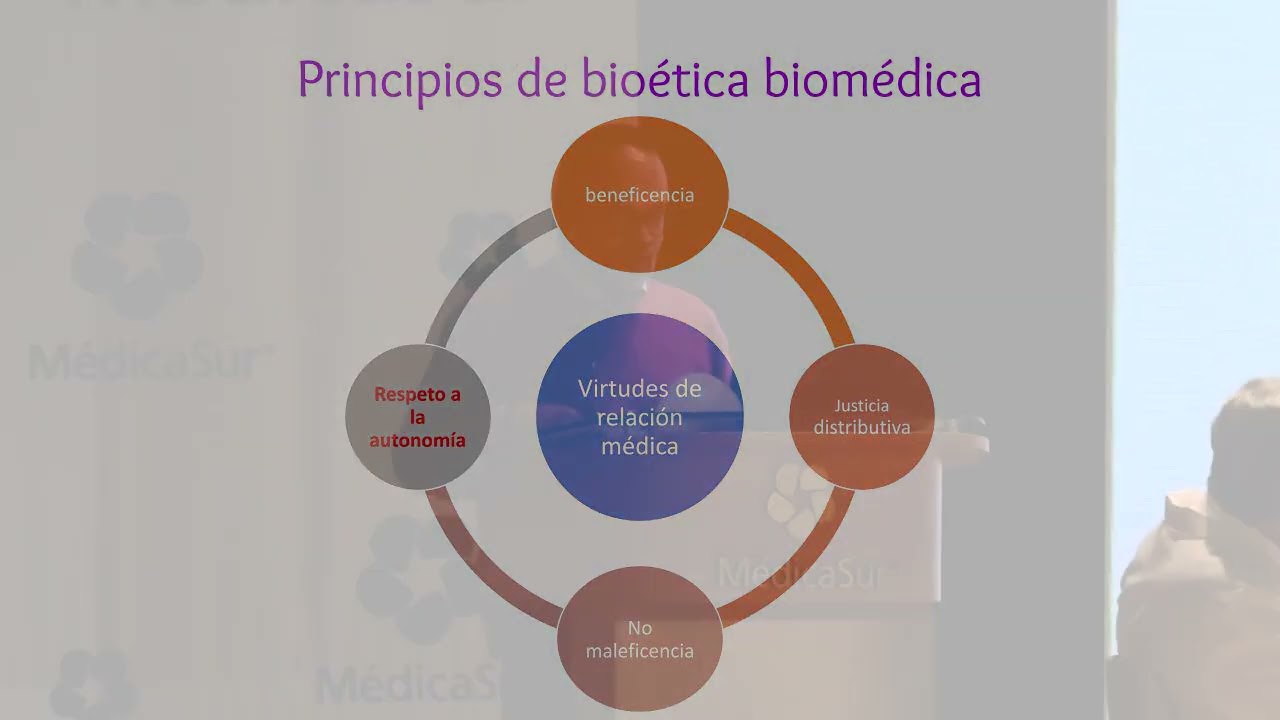
Autonomía, ética y bioética
667
Bioethics rests on four core principles: autonomy (capacity to decide for oneself), beneficence (obligation to do good), non-maleficence (obligation to not harm), and justice (particularly distributive justice). Personal autonomy is the neurocognitive capacity to decide, plan, and be responsible for one's life, expressed through freedom and self-determination. John Stuart Mill's 'On Liberty' addresses the tension between individual freedom and social pressure, arguing there is no objective reason to coerce adults with mental competence against their will. Autonomy involves bodily autonomy and decisional autonomy, growing with consciousness and cognitive capacity. Incapacity restricts autonomy at multiple levels: inability to express or communicate, comprehend situations, or give reasons for risk-benefit analysis. Informed consent is the process by which patients give autonomous authorization after receiving sufficient, comprehensible information, with three stages: validation of mental competence and voluntariness, the informative process, and the authorization decision. Mental competence involves consciousness and self-awareness - the basis of all freedom. Patients have the right to a second medical opinion and the absolute right to refuse treatment, even for serious incurable diseases.
Click to watch →

Princeton IV 2023 | Semifinal | Room 2
2.5K
This section establishes principles for determining ownership. For something to belong to you, you must be able to do what you want with it within societal constraints. If a house belongs to you, you can paint it, decide who lives there, expand it, or demolish it. If a child is your child, you decide how they are raised, schooled, what they eat, and how you teach them. The same applies to fetuses—if they belong to you, you may decide whether to keep them or not. The section argues that bodily autonomy is valued because the body is the most intimate aspect of oneself, literally defining who you are. Without your body, you would not be alive, on Earth, or able to experience anything.
Click to watch →

Black Women & Abortion: How We Should Be Talking About It
2K
The video argues that when a person consents to sex, they do not automatically consent to pregnancy, and this distinction is fundamental to bodily autonomy. The speaker criticizes conservatives who believe consenting to sex means automatically consenting to pregnancy. The video argues that after the Dobbs decision, a corpse has more rights than a live human woman, and the debate should focus on bodily integrity and autonomy rather than when life begins. The speaker emphasizes that no one has the right to compel another person to use their body to sustain another life, even if it's their own child.
Click to watch →

Suspend mRNA
157.3K
Two fundamental ethical principles were compromised during the pandemic response: informed consent and bodily autonomy. True informed consent requires that individuals receive complete information about what products contain and their potential effects. When healthcare providers lack information about vaccine components or when consent forms are provided only after vaccination, ethical standards are violated. Bodily autonomy—the principle that individuals retain sovereignty over their own bodies—was overridden by mandates that forced vaccination regardless of personal choice.
Click to watch →
Deep Dive
The structure of the Indian judicial system, specifically how High Court rulings establish legal precedents in the absence of codified statutory laws.

Indian Regulatory Framework | Part 1 | Business Laws | CA Foundation | Sept 2026 | GnG 2.O Series
101
The Constitution of India is the mother of all laws and the supreme law of India. Every person in India, including the President, Prime Minister, Parliament, and all courts, must follow the Constitution. If there is any conflict between a law and the Constitution, the Constitution always takes priority. Judicial precedents are also a source of law - when courts face cases with no existing law, judges can use discretionary powers to pass judgments (only in civil cases). Supreme Court decisions bind all courts in India, and High Court decisions bind lower courts. This creates a hierarchical legal system where higher court judgments become binding precedents.
Click to watch →

#LegitClass on Art of Judgment Reading & Legal Writing by Karan Kalia and Bharat Chugh | LegitQuest
2.8K
In India, as a common law country, judicial precedent is important. Article 141 of the Constitution makes Supreme Court judgments binding on all courts. High Court judgments have precedent value over lower courts due to Article 215 (High Court as court of record) and Article 227 (superintendence power). However, one High Court judgment is not binding on another High Court; it has only persuasive value.
Click to watch →

Constitution of India (COI) Unit :-3 One Shot Video Full Explanation AKTU BNC501/601 B.Tech 3rd Year
90.7K
Judicial precedent (stare decisis) means judges make decisions based on past cases and follow similar previous cases. This principle ensures decisions are fair and just, preventing bias in similar situations. Lower courts must follow decisions of higher courts, while higher courts generally follow their own past decisions. The Indian judicial system is unified and divided into two parts: (1) Superior Judiciary - includes the Supreme Court and High Courts, (2) Subordinate Judiciary - includes lower courts. The Supreme Court is led by the Chief Justice of India. There are 24 High Courts in India, each serving one state or multiple states and union territories. Each state is divided into districts with district courts.
Click to watch →

भारतीय न्यायव्यवस्था sarvochh nyayalay Supreme court High court @sidhu_sir_official
115
The Indian judicial system draws from multiple sources: Government of India Act 1935 (Federal Court), American concepts (independent judiciary, judicial review, due process, PIL), British Rule of Law, and Japanese Procedure Established by Law. India has an integrated judicial system with Supreme Court at the top, followed by High Courts and District Courts. Supreme Court decisions bind all courts in India. The Supreme Court was established on January 28, 1950, with its flag unveiled on September 1, 2024. The motto 'Dharmasthah Jitah' (Where there is dharma, there is victory) appears 13 times in the Mahabharata.
Click to watch →

सूर्य कांत के नए कदम ने सबको चौंका दिया!
524
The Indian court system operates on a strict hierarchy of binding precedents. Larger benches create binding judgments that smaller benches cannot contradict. A two-judge bench's judgment binds other two-judge benches, while a three-judge bench can take alternative views. High Court judges must cite and explain when taking different views, and cannot refuse to follow other High Court judgments based on Supreme Court precedents.
Click to watch →
Prerequisite Knowledge
- Concept 01Fundamentals of Assisted Reproductive Technology (ART), specifically the clinical and biological procedures of In Vitro Fertilization (IVF).
- Concept 02The medical science of cryopreservation and the technical feasibility of post-mortem sperm retrieval (PMSR).
- Concept 03Basic principles of bioethics, particularly concerning bodily autonomy, informed consent, and the ownership of genetic material after a person's death.
- Concept 04The structure of the Indian judicial system, specifically how High Court rulings establish legal precedents in the absence of codified statutory laws.
Subsequent Learning
- Step 01The legal status, legitimacy, and inheritance rights of posthumously conceived children under Indian family law (e.g., the Hindu Succession Act).
- Step 02Comparative jurisprudence exploring how other international legal systems (such as in the UK, USA, and Israel) regulate posthumous reproduction and consent.
- Step 03The gaps and limitations of the Assisted Reproductive Technology (Regulation) Act, 2021, and the Surrogacy (Regulation) Act, 2020, regarding posthumous cases.
- Step 04Societal, psychological, and ethical implications of grandparental rights and the welfare of children born to deceased biological parents.
Medical Team
Presentation Context
Diagnostic Use
Key Guardians
Screening Bans
Regulatory Act
Act Details
Couple Framework
Medical Team
2:28Playing Section
- 1
Introduces a multidisciplinary team for cancer care.
- 2
Lists specialists like oncologists, surgeons, and cardiologists.
- 3
Outlines treatment modalities including radiation and surgery.
Ethical and Legal Objections to Posthumous Reproduction
While court rulings permitting the posthumous use of gametes offer solace to grieving families, significant ethical and legal counterarguments exist. Critics and bioethicists primarily raise concerns regarding informed consent and bodily autonomy, arguing that extracting or using a deceased person's sperm without their explicit, prior written consent violates their reproductive rights. Furthermore, child welfare advocates emphasize the 'best interests of the child.' A child conceived posthumously is intentionally brought into the world without a living father and may be raised by aging grandparents, raising psychological and developmental concerns. Additionally, legal scholars point to unresolved complexities regarding inheritance, estate division, and lineage, warning that posthumous reproduction risks instrumentalizing a child to alleviate parental or familial grief rather than prioritizing the child's well-being.
Deep Dive
The legal status, legitimacy, and inheritance rights of posthumously conceived children under Indian family law (e.g., the Hindu Succession Act).

Hindu Succession Act 1956/2005 I Complete Lecture on Family Law I Hindu Law
109.8K
Section 20 of the Hindu Succession Act provides that any child in the womb at the time of the death of an intestate shall have the same rights to inherit as if the child had been born alive before the death. This ensures that unborn children are not deprived of their inheritance rights simply because they were not yet born when the parent died.
Click to watch →

SUPUESTOS DEL DERECHO HEREDITARIO
465
A conceived being has legal capacity to inherit if viable and conception date is anterior to death date. For posthumous children, legal presumptions apply: children of a married woman are presumed legitimate unless disproven. Children are presumed legitimate if born within 300 days following the husband's death. For non-descendant conceived beings, conception must be anterior to death and the being must be conceived under condition of viable birth. If not born viable, legal personality is destroyed retroactively. The judge must conditionally recognize the right, subject to viable birth within 300 days.
Click to watch →

Sucessões – Prof. Haroldo Nicácio
89.3K
In legitimate succession, only persons born or conceived at the time of death can inherit (Article 1798). In testamentary succession, posthumous children can be benefited if conception occurs within 2 years (Article 1799, Article 1800). Fideicomisso is a testamentary disposition where assets pass to a fiduciary with a resolutive condition, transferring to a fideicomissário (who must be not yet conceived). Acceptance of inheritance can be express or tacit (Article 111), with silence interpreted as acceptance when the law does not require express acceptance (Article 1807). Renunciation only admits express form through judicial term or public deed (Article 1812). Once inheritance is accepted or renounced, it is irrevocable.
Click to watch →

CERTAIN QUALIFICATIONS AND DISQUALIFICATIONS UNDER HINDU SUCCESSION ACT
110
Children born alive after the death of a parent acquire inheritance rights under the Hindu Succession Act. The Act ensures that posthumous children are not excluded from property inheritance. These children can claim their share of family property, and their rights are protected regardless of the circumstances of their birth. The provision reflects the legal principle that inheritance rights are based on birth and relationship, not on the timing of birth relative to the parent's death.
Click to watch →

بحوث الفقه الإستدلالي -1- حكم الصورة 14 في تلقيح الزوجة بويضتها بحيمن زوجها بعد موته -4-
564
When a man dies and his wife conceives a child using his sperm after his death, the child has a specific legal status. The child is attributed to the mother, and according to the general principle, also to the father without obstacle, except in cases of illegitimate children. For inheritance, the child inherits from the mother but not from the father because the necessary condition for inheritance is that the heir must exist at the time of the deceased's death, whether as a fetus, newborn, or born. Since the child was conceived after the father's death, this condition is missing, and thus the child does not inherit from the father.
Click to watch →
Deep Dive
Comparative jurisprudence exploring how other international legal systems (such as in the UK, USA, and Israel) regulate posthumous reproduction and consent.

Delhi High Court Landmark judgement on access to Dead person's Sperm #upscexam #science and tech
294
International practices vary significantly on posthumous reproduction. Uruguay allows it within one year of death with return consent. Belgium requires requests within two years and a six-month waiting period. Australia's Victoria permits it with written or oral consent witnessed by two witnesses, reviewed by a patient panel. Canada and the UK require deceased consent. The Delhi High Court ruled there is no legal prohibition on posthumous reproduction under Indian law, establishing that courts cannot impose restrictions where legislation does not provide for them. The court recognized gametes as biological property of the individual.
Click to watch →

The Halacha of Posthumous Parenthood | Rabbi Anthony Manning | October 29th 2025
271
Posthumous sperm retrieval has emerged as a major ethical and halakhic issue following tragic events like wars. In Israel, 240 procedures were performed between October 2023 and August 2025, with 78% requested by parents and 22% by partners. Israel maintains the world's most permissive legal framework, allowing retrieval without court orders for widows and partners, while other countries like France, Germany, Sweden, Norway, Italy, and some Australian states have banned it entirely. The UK and Spain require explicit written consent, with Spain limiting retrieval to 12 months post-death. The US lacks federal standards, creating a 'zip code lottery' where outcomes depend on location. This global variation reflects different cultural attitudes toward reproduction, family continuation, and the sanctity of the human body.
Click to watch →

Безумное ралли! Почему в мексиканском Лионе поят пивом не зрителей, а машины?
6.1K
Modern technology enables posthumous IVF, with the first successful case in 1999. While most European countries prohibit this, the UK allows it with the deceased's consent. Diana Blood spent two years in legal battles to use her deceased husband's sperm after he died of meningitis in 1995 without consent. She had to mortgage her home to pay legal fees but succeeded, giving birth to two sons. The first son was born with a blank space in the father's column on his birth certificate. Through legal battles, she obtained official recognition of her deceased husband as father, establishing a precedent that has helped thousands of women seeking posthumous paternity recognition.
Click to watch →

Reprodução Assistida Post Mortem e os Aspectos Sucessórios - Profa. Marianna Passos
1.4K
Article 1597 establishes paternity presumptions: homologous insemination children are presumed conceived during marriage even if the husband died, while heterologous insemination requires express husband authorization. Excess embryos can be used for reproduction at any time with prior husband authorization. Courts have ruled that general clinic consent forms are insufficient for posthumous reproduction; specific, express instruments with notarized signatures are required. Three doctrinal positions exist: (1) Excludent position denies inheritance rights entirely, arguing posthumous reproduction should be prohibited; (2) Partial recognition acknowledges filiation but denies inheritance rights; (3) Inclusive position grants full inheritance rights. The inclusive position is argued to be most consistent with Brazilian constitutional principles: equality among children, right to inheritance, and family planning autonomy. The 2018 Enunciado 2018 explicitly recognizes individuals' right to seek maternity or paternity through institutions with express consent for posthumous reproduction, reflecting evolving jurisprudence that now recognizes men's rights to access cryopreserved embryos.
Click to watch →

Что такое постмортальная репродукция | Подкаст «Человек имеет право»
2.6K
Postmortem reproduction involves using cryopreserved genetic material from deceased individuals to conceive children after their death. The first documented case occurred in the US in 1980. The Russian Constitutional Court ruled that children conceived after their father's death using assisted reproductive technologies have the right to receive a pension for loss of a breadwinner, acknowledging that postmortem reproduction raises complex social, economic, moral, ethical, and legal problems. International approaches vary significantly: most jurisdictions recognize posthumous children as legitimate but typically only if born within a specific time frame after the father's death. Russian law allows establishing parentage through court proceedings even without prior informed consent, unlike American and British laws which require written consent during the parent's lifetime. Some countries like Germany, Italy, and France prohibit postmortem reproduction entirely, while Israel permits it within one year of death even without consent. The Constitutional Court established that children conceived after their parent's death should not be discriminated against and should be treated equally with children conceived during the parent's lifetime.
Click to watch →
Deep Dive
The gaps and limitations of the Assisted Reproductive Technology (Regulation) Act, 2021, and the Surrogacy (Regulation) Act, 2020, regarding posthumous cases.

Current Affairs Today: The Analyst 23 December 2024 | Newspaper Analysis | Vajiram And Ravi
11.3K
Assisted Reproductive Technology (ART) involves techniques to obtain pregnancy by handling sperm and egg cells outside the body, forming a zygote that develops into an embryo before transfer. Four types exist: IVF, GIFT, ICSI, and ZIFT. The ART Act 2021 establishes ART clinics/banks with 5-year registration, sets donor age limits (men 21-55, women 23-35), requires marriage and existing children for women, and grants parental rights to commissioning couples. The Surrogacy Act 2021 banned commercial surrogacy after India became a surrogacy tourism destination, allowing only altruistic surrogacy. Eligibility requires 5-year marriage, infertility certification, and specific age ranges. Exclusionary measures prevent single men, homosexuals, and foreign nationals. A Delhi High Court judgment revealed loopholes regarding posthumous reproduction for unmarried deceased males, citing contradictory provisions. Ethical concerns include declining adoption of orphan children due to genetic lineage preservation desires, and legal issues in determining parentage when biological parents don't exist. Recommendations include following precedents like Duddy Ward versus Spence, mandatory surrogate counseling, and evolving laws with technology.
Click to watch →

Surrogacy (Regulation) Act 2021 - IN FOCUS | UPSC Current affairs | Drishti IAS
55.9K
This comprehensive segment covers the Surrogacy (Regulation) Act 2021 and Assisted Reproductive Technology (Regulation) Act 2021. Surrogacy is defined as a practice where a woman bears and gives birth to a child for an intending couple with the intention to hand over the child after birth. Before the Act, surrogacy in India was largely unregulated, attracting foreign individuals due to less restrictive laws. The Act prohibits commercial surrogacy, allowing only altruistic arrangements. Intending couples must be married Indian citizens with infertility issues, with age limits (male 26-55, female 23-50). Single women aged 35-45 are also eligible. Surrogate mothers must be married, aged 25-35, with at least one child, and can attempt surrogacy only once. The intending couple must be genetically related to the child and provide 36 months of health insurance. The ART Act regulates sperm/egg storage and techniques like IVF, with ART clinics required to register with the government.
Click to watch →
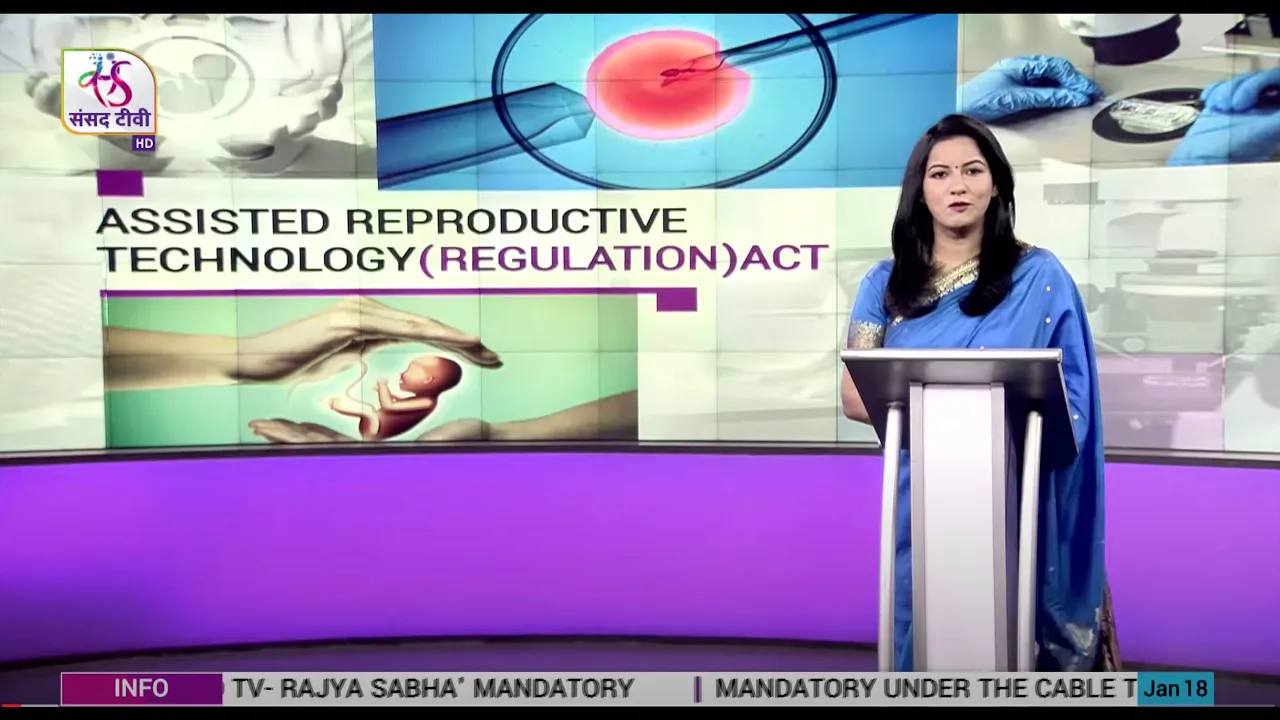
Bills: An Insight - The Assisted Reproductive Technology (Regulation) Act, 2021 | 18 January, 2022
10.8K
The Assisted Reproductive Technology (Regulation) Act, 2021, passed by Indian Parliament and assented to by President Ramnath Kovind, establishes a comprehensive regulatory framework for ART clinics and banks, creating a National Board to set minimum infrastructure standards, mandate registration of all clinics and medical professionals, prohibit sex selection and sale of human embryos, and ensure ethical practices; the Act distinguishes itself from the Surrogacy Act by enabling infertile couples to become parents without third-party involvement, though it currently excludes single men, cohabiting couples, and LGBTQ+ individuals while providing counseling requirements and legal protections for child rights.
Click to watch →

Complete Story of Surrogacy in India | UPSC Perspective | नैतिक मुद्दे | Dr S S Pandey Sir
15.2K
The Surrogacy (Regulation) Act, 2021, introduced comprehensive regulations: commercial surrogacy is completely banned; only altruistic surrogacy is permitted; only married Indian couples without children can avail surrogacy; single men, unmarried couples, same-sex couples, and foreign nationals are prohibited; surrogate mothers must be married, have at least one child, and be between 25-35 years old; surrogate mothers can serve only once; surrogate mothers' eggs cannot be used; comprehensive insurance coverage of 36 months is provided.
Click to watch →

The Hindu Analysis | 10th October 2025 | The Hindu News Paper Today With Practice Questions
45.8K
India's Surrogacy (Regulation) Act 2021 prohibits commercial surrogacy and allows only altruistic arrangements. The Act specifies age restrictions: women 23-50 years, men 26-55 years. Commercial surrogacy involves financial compensation and exploits vulnerable women, while altruistic surrogacy allows only close relatives to serve as surrogates. The Supreme Court ruled the Act cannot be applied retroactively to those who had already frozen gametes before implementation.
Click to watch →
Deep Dive
Societal, psychological, and ethical implications of grandparental rights and the welfare of children born to deceased biological parents.

Double Episode: Three Mothers with the Same Father | Paternity Court
1.7M
This segment examines grandparental rights and concerns about child welfare in paternity cases. Mrs. Thomas testified about wanting to meet her grandson Legend and being concerned about the example Miss Brown was setting. The court considered whether grandparents have legitimate interests in their grandchildren's lives and whether they should be permitted to participate in decisions affecting the child's upbringing. The case reflects the broader principle that children have rights to know their biological relatives and benefit from extended family connections. The court balanced these interests against the rights of the primary caregivers and the best interests of the child.
Click to watch →

Did Wendi Adelson Ask Her Boyfriend to Adopt Her Kids?
88.4K
When a child's parent is deceased or unavailable, grandparents may have legal rights to maintain contact with their grandchildren. However, if a parent attempts to adopt a new partner's children, this can sever the legal relationship between the biological father and his parents. The adoption process creates a new legal family structure where the adoptive parent becomes the legal parent and the biological grandparents become legal strangers to the children. Family courts aim to balance these competing interests while considering what serves the children's best interests.
Click to watch →

Brother & SIL Demand I Pay For The Hospital Bills For Not Letting Her Give Birth In My Jacuzzi. AITA
114K
Grandchildren have rights to care and support from their grandparents, even when their father has made poor life choices. When a grandfather has estranged himself from his son for many years, he may have lost the opportunity to support his grandchildren. However, grandparents should not abandon their grandchildren when they are in difficult situations, such as when the father has died and the mother is struggling. The grandchildren's welfare should be prioritized over personal grievances.
Click to watch →

Best Heroes Vs. Villains Moments! | Maury
1.1M
Grandparents may take on custody responsibilities when their adult children are unable or unwilling to care for their grandchildren. Connie took custody of her granddaughter Caleb after her daughter Taylor struggled with life choices including lack of confidence, self-esteem issues, and associating with inappropriate peers. This demonstrates how extended family members may step in to provide stability for children when biological parents are unable to fulfill their parenting responsibilities, highlighting the role of kinship care in child welfare systems.
Click to watch →

Billionaire Left EX for Model — She Came to His Dad’s Funeral in Limo with Triplets
61.9K
The video explores how legal systems protect children's interests when parents are absent or uninvolved. Charles Whitmore legally acknowledged his grandchildren two years before his death, establishing trust funds worth $25 million each that can only be accessed with both parents present. The court appoints mediators to oversee family meetings, ensuring proper consideration of children's welfare. This demonstrates how legal frameworks can balance parental rights with child protection.
Click to watch →
Medical Team
Presentation Context
Diagnostic Use
Key Guardians
Screening Bans
Regulatory Act
Act Details
Couple Framework
Medical Team
2:28- 1
Introduces a multidisciplinary team for cancer care.
- 2
Lists specialists like oncologists, surgeons, and cardiologists.
- 3
Outlines treatment modalities including radiation and surgery.
Ethical and Legal Objections to Posthumous Reproduction
While court rulings permitting the posthumous use of gametes offer solace to grieving families, significant ethical and legal counterarguments exist. Critics and bioethicists primarily raise concerns regarding informed consent and bodily autonomy, arguing that extracting or using a deceased person's sperm without their explicit, prior written consent violates their reproductive rights. Furthermore, child welfare advocates emphasize the 'best interests of the child.' A child conceived posthumously is intentionally brought into the world without a living father and may be raised by aging grandparents, raising psychological and developmental concerns. Additionally, legal scholars point to unresolved complexities regarding inheritance, estate division, and lineage, warning that posthumous reproduction risks instrumentalizing a child to alleviate parental or familial grief rather than prioritizing the child's well-being.
Fundamentals of Assisted Reproductive Technology (ART), specifically the clinical and biological procedures of In Vitro Fertilization (IVF).
The medical science of cryopreservation and the technical feasibility of post-mortem sperm retrieval (PMSR).
Basic principles of bioethics, particularly concerning bodily autonomy, informed consent, and the ownership of genetic material after a person's death.
The structure of the Indian judicial system, specifically how High Court rulings establish legal precedents in the absence of codified statutory laws.
The legal status, legitimacy, and inheritance rights of posthumously conceived children under Indian family law (e.g., the Hindu Succession Act).
Comparative jurisprudence exploring how other international legal systems (such as in the UK, USA, and Israel) regulate posthumous reproduction and consent.
The gaps and limitations of the Assisted Reproductive Technology (Regulation) Act, 2021, and the Surrogacy (Regulation) Act, 2020, regarding posthumous cases.
Societal, psychological, and ethical implications of grandparental rights and the welfare of children born to deceased biological parents.
263.5K views1.4Klikes22:23@PuthiyaThalaimuraiTVOriginal Release: 2024-11-08
wel now you for man proposes God disposes we [Music] [Music] Singh gind s for for s Singh har sing non Hotchkins Lymphoma non skymist uh diabetologist surgical oncologist uh hematologist anesthe olist uh cardiologist and EXP explain radiation therapy chemotherapy surgery post surgical procedure radiy chy body [Music] for for the pres social Pres 37° C liquid nitrogen activ nonkin lym sing for s for for so for examp are the guardian fre gen very very important screen for theal banned in India only treatment t concern commcial lock chares the assisted reproductive technology regulation Act [Music] for for so for assisted reproductive technology regulation Act assisted technology reproductive regulation commissioning couple husband wife recommendations amendments s for s [Music] I technology s [Music]
Up Next

22:30
US-Hamas Showdown: Trump's Ultimatum & Middle East Fallout Analysis
@CBNnewsonline
66.1K views•2025-03-07

12:54
Triumph of Orthodoxy Icon: Byzantine Art & History Explained
@BenCallan
2.1K views•2024-08-06

9:49
FastAPI vs Flask vs Django: Choosing the Right Python Web Framework
@TechWithTim
302.5K views•2024-05-26

1:42
Game of Thrones Opening Credits: A Cinematic Analysis
@gameofthrones
46.3M views•2011-04-18
Related Study Plans & Knowledge Roadmaps
Structured learning paths in General & Interdisciplinary Studies
general-studies
Elevator Engineering: History, Physics & Cities
01From Hoists to Safety Brakes: The Dawn of Vertical Lift
02Hydraulic vs. Traction: The Engineering Physics of Elevators
03Modern Speed, Safety, and Algorithms
+ 2 more learning modules
12h5 modules
Explore Roadmap
general-studies
Rubber: Material Science, History & Geopolitics
01Origins of Natural Rubber & Mesoamerican History
02The Chemistry of Natural Rubber & Vulcanization
03The Geopolitics of the Rubber Boom & Colonization
+ 2 more learning modules
12h5 modules
Explore Roadmap
general-studies
Containerization: Evolution, Logistics & Trade
01Ancient Trade & Bulk Cargo: Amphorae to Barrels
02The Industrial Revolution & Cardboard Packaging
03The Containerization Revolution: Malcom McLean
+ 2 more learning modules
12h5 modules
Explore Roadmap
general-studies
Textile Tech: Evolution, Labor & Global Impact
01Pre-Industrial Textiles: Handloom & Cottage Industry
02Mechanization: The Spinning Jenny to the Power Loom
03The Factory System & Global Labor Transformation
+ 2 more learning modules
10h5 modules
Explore Roadmap