






























Technological progress and automation have caused a phenomenon called 'job polarization' in industrialized economies, where middle-wage occupations that involve routine tasks (both cognitive and manual) are declining, while high-wage non-routine cognitive jobs and low-wage non-routine manual jobs are growing; this creates winners and losers in the labor market, with affected workers typically dropping out of the workforce or transitioning to lower-paying non-routine manual positions, and policymakers facing difficult trade-offs between retraining programs, redistribution policies like universal basic income, and addressing the long-term need to develop complementary skills such as social and analytical abilities.
Automation, Job Polarization, and the Disappearing Middle Class
Added:Understanding of basic labor market dynamics, specifically how supply and demand determine wages and employment levels.
Familiarity with the concept of Skill-Biased Technological Change (SBTC) and how technology historically impacts worker productivity.
The distinction between routine tasks (repetitive, rules-based tasks easily codified into software) and non-routine tasks (analytical, interpersonal, or manual tasks requiring adaptability).
Basic knowledge of income distribution and how the 'middle class' is economically defined in terms of income brackets and occupational categories.
Analysis of 'jobless recoveries,' specifically how recessions accelerate the permanent automation of middle-skill routine jobs.
Exploration of public policy interventions designed to mitigate inequality, such as Universal Basic Income (UBI), wage subsidies, and targeted retraining programs.
The transition from traditional automation to Generative AI, and how modern artificial intelligence threatens non-routine cognitive and creative occupations.
Macroeconomic consequences of a polarized labor market on consumer spending, social mobility, and political stability.
Geographic divergence and regional inequality, focusing on how economic polarization divides urban tech hubs from rural or industrial areas.
1.4K views21likes55:10Original Release: 2021-06-23
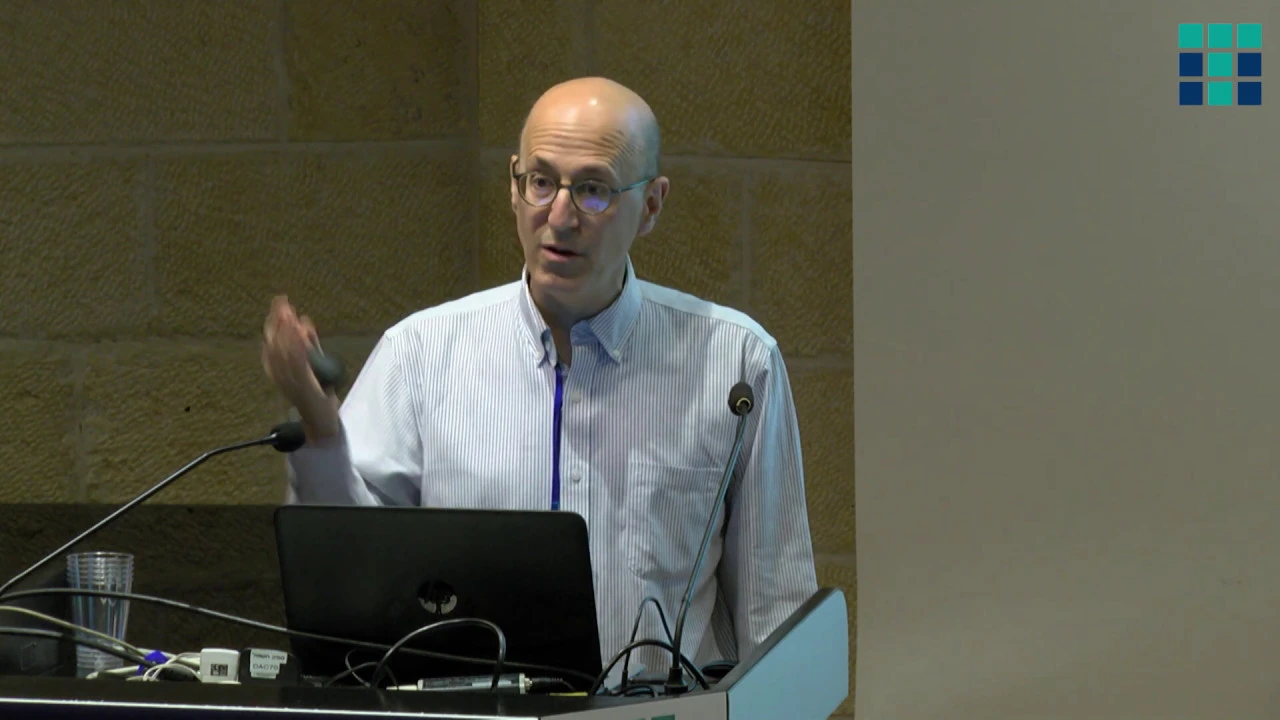
hello everybody i welcome you to today's webinar due to technological progress and the digitalization of ever more aspects of our lives the fear of job loss is being and being replaced by machines is on the rise and not just since corona it feels like progress is getting faster and faster many therefore ask will there still be enough work in the future today we will discuss the consequences of automation for the labor market my name is ernst fehr i'm a professor at the department of economics at the university of zurich and i am the director of the ubs center for economics in society the ubs center promotes world-class research in the field of economics and it fosters a continuous exchange between science politics and business during the corona pandemic we created the webinar series to address the most pressing questions of our time and to discuss them with people who are interested in finding answers today's speaker is my colleague nier jaimovic who is an expert on macroeconomic questions with a special emphasis on business cycles and labor markets he has published many scientific papers on the topic of how demographic composition and occupation structure of the economy shaped the dynamics of the business cycle nir has also summarized his work on automation and the disappearing middle class in a very nice non-academic paper this paper is by the way freely available in the public paper series on the ubs center web page we also make the slides of his presentation today available on the ubs center homepage so you can review everything again in the aftermath of the webinar i would like to express my sincere thanks to nir for sharing his knowledge with us before we start here is some information for you the audience during the presentation there are some interactive polls and you can also ask questions so take your mobile phone or open a new tab in your internet browser and go to mentee.com and dial in with the code 7697 i repeat 76979424 on this platform you can participate at the live polls and ask questions during our live q and a sessions at the end even if you don't have any questions you can still log in and see all the submitted questions and also vote for the best ones by giving them a thumbs up it's now near's turn to give his presentation i'm very much looking forward to it thank you ernest thanks for this lovely introduction it's great to be here and i want to welcome the audience and i hope you will be enjoying the next hour we're going to spend together it seems not a day goes by without us reading a new report about automation artificial intelligence robotics doing new things new gadget is coming new job is automated a new robotic dog now knows how to open doors etc etc and this type of technological revolution has transformed the nature of work this revolution is allowing me to be here in zurich and talking to all of you all of you all over the world so these changes have made us more productive and in essence technological progress does mean growth but at the same time these changes these automation changes induce large shifts in the types of jobs that are being performed and like every time when there are big changes they're going to be winners and losers this is not just an academic discussion for example if you go to your google search engine this was my google search engine and i started typing will r the first thing that came on my google search engine is will robots take my job this shows you what i'm interested in and perhaps my fears so at the end of the talk and i ask you please stay with us for an hour at the end of the talk perhaps do that and let's see what comes at your google search engine okay this is obviously not the first time we are facing an automation change this goes back you know a few uh 100 years ago it was the horse and the gentleman the horse and the gentleman driving the carriage and there are going to be two things that are gone in the next picture the horse and the human being okay more more seriously speaking obviously if you go back to the 18th century 1779 in england textile workers rebelled against the introduction of machinery which threatened their skilled craft if you're interested my colleagues bruno capertini and joachim both have a lovely paper about the relation in history between labor saving technology and social unrest okay so this is going to lead us to our first question is ernst mentioned they're going to be five questions during this talk that would be interactive okay we're going to start with an easy one in terms of the answer it's going to be a yes no so i suggest you go to mentee.com that will be eight digits called two four 7967-9424 and once you're there you should be seeing your first question and the first question is going to be are you worried about your job being automated and outsourced overseas and i can see already a result coming back and right now no is leading and it should be interesting race to see what happens with that over time okay so please go there i'll give you a few more seconds and then we'll see how things adjust okay again during the talk we're going to have four more of these kind of questions so be ready with the next few questions okay so let's let's proceed right now by the way it's interesting it's changing by the second the no is leading so far okay so what are we going to do this is the outline of today's talk let me step back a little bit and i'm going to think a little bit to show you some data about uh job opportunities that are affecting the middle class and especially zooming on the role of occupations okay that will be the first part of the talk then we're going to think about what happened to these affected workers these people in the middle class what's to blame i started with automation artificial intelligence et cetera but truly there are other forces so we're going to discuss those a little bit okay and then by the by towards the end we're going to think okay so what can we do by then hopefully we'll understand what are uh the forces that are shaping the economy will think about what policymakers can do and a little bit think about the future and do some prophecy okay by the way so far i see 37 13 i know okay so let me start with this slide which is taken from david otter from mit and my colleague david dorn a very influential paper one of the most influential paper in the last 10 years and let me just explain slowly what we're seeing here on the x axis horizontal one you see a wage basically an occupation where it is in the weight distribution so when it's to the 100 to the right hand side those are occupations that pay a high wage in the spirit of the euro cup today that would be ronaldo okay 100 there and as you go down towards the left you're basically occupations are paid lower and lower wage and what you see on the y-axis okay without getting too much to the numbers is that occupation that are highly paid highly skilled in that sense or low paid low skill in that sense are the ones that grew the most over the last three to four decades and rather occupations that are at the center of the weight distribution in the middle okay they actually saw a decline in their share okay so the first thing this slide is telling us occupations that are highly paid or low paid are the one that rose during the three to four decades and those in the middle shrink in the economy so that's about employment but we don't care only about employment we're about wages so let me show you the same slide same x axis as before but now what happened to wages okay so again x-axis the horizontal one is where are you in terms of your pay to the right towards the 100 highly paid to the left or zero low paid and what you see similar pattern in wages occupations that were highly paying saw an increased relative increase in the wage occupations perhaps surprisingly that were low pay towards the zero twenty if you want to think about that actually also saw a relative increase in the wages it's exactly those occupations that we just saw a slide ago that declined in their share that also saw a decline in the relative wage okay so occupations are at the middle of the skill distribution the middle of the main of the pay scale so it declined both in employment and in relative wages okay so how is this related to occupation so david daughter and co-author is one of the most influential papers in the last two decades basically the insight was let's sort occupation based on the task intensity and by task intensity to a first order you can think about a two by two matrix is an occupation cognitive versus manual brain versus broad or is it routine and non-routine so i think we all understand what is a cognitive versus manual let me just spend some time about what is routine versus non-routine routine the idea basically is that it's an occupation that involves a limited set of tasks that are performed following instructions rules a linear procedure and because of their nature this linearity they're susceptible to automation or being outsourced okay non-routine is the other way non-routine are occupations that perform a wider set of tasks and they require flexibility problem solving discretion human interaction and again because of the nature perhaps it's harder to automate or outsource them okay let me give you some examples because this might be a bit abstract this is what we call the routine matrix i have routine non-routine on the vertical axis and the x-axis i have cognitive manner so here's just some examples a routine cognitive okay we'll be for example secretaries and administrative support workers manual routine with the classic blue collar worker okay the machine operator and production workers non-routine cognitive will be again think about those managerial professional technical jobs and on routine manual will be janitors gardeners and home elevates and you can already see by this example where this will be heading in a few slides let me get ahead of myself these occupations think where do they belong in that weight distribution i was showing you before okay each of them belongs to a specific part and that's what we're going to see later so let me show you some visual uh inspection of the of the economy so this is for example a routine minor occupation back perhaps in the 70s or the 80s and this is how that place would be looking now okay and this is how a routine cognitive occupation would be remember this were the secretary's admin administrative people that we're talking about this is back then and now this would be the replacement and if you're like me and i like dilbert dilbert captures a lot of social trends you know this is kind of we're having one slide perhaps summary of this talk okay stick with me there are some things above this uh cartoon but basically it captures the idea that we have this tension in the labor market now okay so this is going to lead us to a second question just to get a sense what is the crowd that we have here i want you to go to the next question again in menti.com and please enter which of the categories your workfalls enter remember we had four occupations non-routine manual the janitorial example for example routine manual the production worker routine cognitive secretary administrative and non-routine cognitive perhaps more skilled uh in terms of education okay so i'll give you some time to input your um your occupation and we'll have three more questions uh following this one okay so let's go on and i will report to you as we go along i will see what is our audience what the composition of our audience occupation-wise okay don't be scared this is just just one graph well they're going to be two graphs online two graphs just to get a sense how economy think about what's happening here okay i want you to look at the left graph what you have on the y axis the vertical one is the routine wage think about this is the way your routine worker would be getting okay and on the x axis the horizontal one that'll be routine labor how much does a routine worker works and look at the one that is called labor supply again i'm looking at the one that is in the left of your screen labor supply upward sloping basically what this is telling you the more you pay me the more i'm willing to be working for example if at the end of this talk i'll be probably exhausted but if now suddenly somebody comes to me and say oh we'll pay you x amount of ranks do it again perhaps there is a situation i'll be doing that okay that's what it's capturing higher weight high winds to work the downward sloping that is called labor demand is capturing basically the firm's demand for work think about the following idea the higher is the wage that the worker demands the lower is the amount of employment that the firm is willing to demand from this worker okay by the way so far i see the results are coming we have a vast majority of non-routine cognitive uh today okay and then that point a is the invisible hand the amazing force of the market where basically demanding supply interact great if you look at the right one the right one what is changing suddenly you see that the labor demand is kind of shifting inward okay down into the left think about that for example there is a new factor of production and in the spirit of how we start before a new computer a new ai some new form of automation that is basically saying wait a second what your routine worker were able to do before now this machine can do instead of you what does this imply from the firm perspective the friends say well you know there is this new new sheriff in town i'm going to be demanding less of you relatively and think about the banana market if now there is less demand for banana the price of the bananas and the it's going to go down okay so that's what we're going to have we're going to go from move a to b and to relate it to the slide we started before but the beginning is exactly capturing where we're falling the wage of these routine workers and following the quantity in employment that's exactly what i showed you at the beginning with that spirit think about the other way around and that seems to be most of you will be in this category from what i'm seeing is well perhaps the same automation change uh is going to actually enhance the demand to some of the skills that you have for example again i'm here and having all this machinery around me is allowing me to communicate with all of you okay so that's increasing the demand for my services okay so i want you to have this framework the non-routine are benefiting from this new demand from their services while the routine are seeing a decline in the demand for their services okay perfect how is this routineization how is that related to what i started with about the opportunities of the middle class so let's put a beautiful bow on the relation on the on the lower uh panel i'm showing you again that picture from david older and david dorne's paper about changing employment how it relates to where you are in the occupational distribution and what i'm showing you a new slide now on the top again from the same paper is a measure of how routine is a specific occupation so let's think for example looking at the occupation is around the 40th percentile kind of in the middle you see in the bottom panel that that occupation saw a decline in employment and yet it's a very routine occupation think about the y-axis there where it says routine occupation basically it's how routine uh how how um how routine an occupation is okay the higher it is the more routine it is great so we see this what the eyes catching this inverse relationship those that fail tend to be very routine okay that's the main thing i want to take you those are falling are highly routine those are the details that sew and relatively increase are less routine okay so the first message to take from this is joe polarization this hauling out of the middle disappearing of the middle class these are all statements about role of occupations okay cool i've been software talking about the u.s party because this reflects my uh my research uh and mostly because also data availability is mainly about about the u.s but just to give you a sense that this is not just a phenomenon in the u.s here we have a bunch of countries and what you see that in each country is we'll tell you about the shares of basically the low paying the middle paying and the high paying and by now we understand that middle paying is kind of routine occupations and you see that in almost all these countries the middle paying the red one went down going to the left there is a full industrial okay again obviously details of the process are not identical everywhere et cetera et cetera but we see this general pattern in all countries okay one thing that is interesting is is this something that is happening gradually over time or is it bunch so let me show you this graph this will require some explanation but we'll get a sense of that this is for the u.s okay this regard there says something log value this is economist language okay what you see in those shaded areas those are recessionary periods periods where basically output there is a contraction in the economy output goes down and what i'm showing you here is basically uh employment of routine uh during this basically five last five decades and what you see is that periods of the recession of 1970 the one to the left 75 and basically 82 why we see the yoyo behavior every time we go into recession that shaded area routine employment goes down and then recovers 75 goes down recovers 82 goes down recovers and then we get to the 91 recession which is kind of you think about it the late 80s early 90s where all this process of automation digitization new technologies is kind of coinciding okay and we see the 91 recession columns routine employment falls but unlike the previous recession stays flat okay maybe it's a coincidence then we go to o1 the next recession declines stay flat and then the 08 recession the financial crisis comes big decline doesn't come back so in fact if you look from the late 80s to where we are now of this decline in routine employment basically about 90 of it takes place during recessionary periods okay so here's a quote how the new york times summarized this the middle class frog is not being gradually boiled it is being periodically grilled at a very high heat okay okay so let me just there's been a lot of stuff we covered so far let me take some stock we established the link between middle class and routine occupations that was those two graphs we were showing you before middle class disappearance and polarization and kind of established that routine occupations are primed for automation that's what is making that link okay it is an international phenomenon and at least in the u.s it happens in downturns okay okay so so far that's the first part so who is working in this occupation relatively it's lower levels of education i want to emphasize this is relative statements okay for men is do tend to work in routine manual these are basically people with high school diploma or less women who tend to work in routine cognitive is high high school diploma and sample secondary schooling and this is basically felt most by the young in their 20s and 30s so what happens to people who have these characteristics over time are they becoming non-routine cognitive again like the majority of you as i'm saying here are they stopping to work are they going down the ladder so let me show you this again i'll explain so let's look for example this is a men with relatively uh high school the degree or below and what i'm showing you in green is what basically think about 100 guys in 1989 what did they do so very few of them about you know 10 12 percent were no routine cognitive okay the majority of them almost 60 were routine okay about eight nine percent were no routine manual and basically about ten percent i hope everything added to a hundred i cannot do it in my head right now basically not in the labor first and the left means not in the labor force okay so that was 1980 now and now let's look at 2017 okay there are some data issues but you know you can do it to 2021.
what happened to 100 guys with the same kind of background again education et cetera et cetera and what you see where you see the big decline is in routine okay it's not that they became e-com professors okay they did not become known in cognitive basically you see the decline in routine and where it shows up mainly is a jumping not in the labor force dropping out completely from the labor force and which is accounting for about two-thirds of the fall in routine and about a third is going to no routine manual okay so summarize there's a lot of numbers and words here let me summarize this the declining routine for people with those characteristics that you tended to work in routine it's about the majority is dropping out of the labor force for men okay and a slight increase in non-routine manual okay so this will lead us to a third question okay this is not a fun question i want to give a heads notice but it's someone we have to think about so the third question is what would you do if your job were automated okay and again so menti.com please go there and answer and the first option is retire early the second question is retrain and by return i mean perhaps not going back to formal university that would be the third option perhaps retrain would be some short-term uh training option at the current firm option four is collect welfare which is in a way what we think about those noting the labor force there is some benefit that they are getting from the government and number five it's you know we don't want to think about this question okay so please fill those again retire early number one retrain three go formally back to the university obtain a degree for collect welfare from the from the government and number five is don't bother us near this is this is not fun to think about okay okay great so so far i say there is a race two type of training between the retraining and go back to the university this is great we're going to be talking about those issues in a little bit okay so what's behind this again i've been emphasizing technological progress robotics computing information communication technology there's obviously a feeling that some jobs are being lost overseas okay international trade and offshoring and at least my reading and i think here reasonable people can disagree so this is just representing my view i think there is mixed evidence about that it's unclear really how much that is playing a role i'm going to leave it at that i put some references for those of you are interested uh to dig in a little bit deeper there are other potential candidates and again i think this is we're still in the infant part of this research perhaps skills have changed perhaps the generosity of welfare is pushing people away again this is where i think we we know less than we would like to know but there is a general view about technology is playing a major role how much you know different people have different views but i think people would certainly agree that is a significant part of that okay so i say i'm running a bit late um so in the interest of time i'm going to show you this slide and then skip a few when we talk about robotics and we talk about automation there's a question okay so what is it okay so i want you to look at this slide which is taken from a lovely work by uh mayaden and paul goggle and basically what this is doing it's measuring the relative price of information communication technology capital and this is a long word for think about computing and robotics etc and what you see is basically that line that is going downwards okay that's the relative price of this type of capital okay what is interesting the other types of capital structures and equipment basically their price is not changing it's the price of this ict copy that the price that is exactly filling automation that is going down okay taking a nosedive i think about you some perhaps some of you are running a firm want to run a firm if the price of something that you can use is going down you're going to use more of it and this is where we go back to our framework if that price of that something that is substituting routine work is going to go down you're going to be using more of that and that's going to be putting the pressure on those uh fractions of production that can be substituted by ict okay and again just to give you a summary of the result before the majority of you would go to retrain or go back to the university okay great i'm going to skip this slide uh just to get a sense okay so so far what i kind of discussed with you is patterns that are in four empirical patterns okay we kind of understand what's going on but i think they're not answering about well what will happen if we do some type of a policy change okay what would be the adjustment of the economy for example if we introduce this new type of welfare program this new big uh program to help people well how how is that going to affect the economy okay how is that going to support or not the middle class opportunities okay to answer that questions this is where we have to turn to a bit more complex approach and turn to economic and quantitative modeling this is basically macroeconomics okay don't worry i'm not going to do a crash course in macroeconomics okay but i want you to basically understand why we need modeling because we need to understand these big changes it's not a small experiment okay we need we're going to be talking about big changes and it's nice that most of you thought about some form of retraining because i want to think about two types of programs okay i'm going to analyze the impact of retraining okay and i'm going to also analyze impact of redistribution our distribution is basically taken from the rich and giving to the poor basically robin hood style legal robin hood okay okay so those are two examples in the paper that ernst referred to the beginning we discussed way more options but today i thought these were the the most exciting ones okay so before we go there let me pull the first the fourth question there's going to be one more after that okay so again mentee.com and the question is do you think government and again i see the majority of you about two-thirds of you want to think about some form for training so this is a question who's going to pay for that retraining so do you think governments should pay for the retraining of workers who are affected by automation okay so they're going to be three options yes tax the rich to pay for it yes tax equally everyone equally to pay for it and the third one is no if people want to return maybe they make the wrong education career then the wrong choices when they were younger they should pay for it okay so three options if there is retraining as an option on the table do we do basically do we tax the reach number one we tax equally everyone number two number three let the markets work if people want to do it they should pay for it retraining is just a banana okay so i'll let you have some time fill those answer by the way so far tax the reach is uh leading okay great uh as we have about six minutes so let me discuss a little bit uh what is the impact of every training again within this economic modeling um and again i encourage you to read the paper and refer to to see a bit more details so let's think about the program that is investing let's think about the government uh doing that okay which seems to be your favorite answer so i like that we're in the same page think about uh uh the government producing a program is retraining those people i showed you before they were outside of the labor force let's say they're being retrained to go back into the labor force there are two things you need to think about well somebody has to pay for that retraining let me just give an example the trade adjustment assistant federal program in the u.s in a lovely paper by hyman in 2018 basically that kind of retraining costs about six thousand dollars to give you a sense at about 10 of gdp per capita in the u.s so somebody has to pay for that and if somebody has to pay for that retraining somebody needs to raise taxes okay so let's think about the world that it's exactly your answer it's like we were coordinating in advance what's your what's the answer you should be giving that this retraining program is funded by taxes levied on the high skill this non-routine cognitive analysing cognitive i'm going to do some hand waving i'm not going to do some equations in math although that's my favorite activity okay and what we're going to think about is what is the impact of such program and like most things in life they're going to be winners and losers okay so let me just give you a quick summary this program is successful in bringing back those people who were affected by automation because you retrain them for something that basically there is demand now for they're basically going to be retrained for non-routine manual in this example okay okay great they're also going to be other unexpected winners which is all these people who are paying taxes for this program but wait a second how can it be that people who are paying for the retraining are also benefiting from that because what happens is you are bringing people into work you have to support less of them on welfare turns out that actually that's a win-win situation for those people who are paying for taxes but they're going to be losers also and the losers are going to be those people who were already working in this type of occupation that the new guys who came in were trained for they're crowded out in economic language basically i'm here working and suddenly there's this whole new wave of trainees that are competing with me so they're going to be losers okay so one of the message here is going to be winners and losers okay overall the economy is better off but let me also tell you something there is a limited impact such a program can have okay if you take seriously the measurements we have from the labor literature about how much basically productivity increases for this type of free training it's not big it's not big so you can do a little bit you can move the needle a little bit in the short term but at the end of the day winners losers but we're not talking about a mega change in the economy okay so what about redistribution and there are many forms of distribution i wanted to concentrate in one is a hot topic not in only the discipline of the middle class in general in public uh circles universal basic income what i'm going to refer to as ubi some actually local trivia in 2016 switzerland held the vote i think it was actually the first country to hold a formal vote on the proposal to introduce universal basic income the supporters suggest a monthly income of basically what is equivalent to twenty five hundred dollars for adults okay and just to give you a sense uh gdp per capita in switzerland is about 85 000. okay so this was about 35 36 percent of gdp per capita and kind of one of the argument one among many argument was that since work was increasingly automated fewer jobs were available for workers so we have to help people okay this vote went into a formal voting and in the end about i think 75 percent or so of swiss voters rejected a proposal interestingly a recurrent argument uh against the initiative was that it did not include the means of financing it okay so just to get a sense 2500 swiss francs a month 30 000 a year about a bit more than a third of gdp per capita somebody has to pay for that okay so i want to show you what is the impact of this redistribution program okay before that this is going to be our fifth and last question okay again we start with the simple yes no we'll end with a yes no okay and is are you in favor of a universal basic income program a ubi program okay and yes or no okay so very simple again mentee.com this will be the last one and then i'll wait a few seconds for you to start answering okay again are you in favor of a ubi program i don't want to show you the results i don't want to affect your voting before you put you cast your vote okay so what we're going to show you as you're pulling this is we're going to think about an economy that there are reasons to think about the ubi program exactly because it basically provides people some type of insurance that if they lose their job or they have some bad shocks then we're going to kind of give them some insurance okay so that's kind of where we think this ubi program would be useful on the other hand there are two concerns with the ubi program is first and if you read actually some of the discussion of the swiss government uh in the proposal when the proposal was made in 2016 it was this is going to induce people just to stop working and somebody needs to pay for it and that's going to be increasing taxes um quite a lot so let me show you what the impact it's actually kind of interesting it's it's even maybe i should ask the question later on after what results i've shown you what do you think again okay so there are many things here but i just want to emphasize one thing what i have on the x-axis is the ubi is a percentage of gdp per capita okay basically think about what is the the amount of output we're producing and on the x-axis i'm showing you how uh the person the fraction of a ubi is the bet of of as a fraction of output and on the different axis and y-axis basically is the change relative to the word before uh the introduction of the ubi okay and i want basically to draw attention to three graph start with the one at the top left panel gdp per capita output per capita you can see it's crashing if you go for example to a word of about ubi 10 percent of gdp output falls by about 20 this is a massive fall okay what's happening here if you go to the one the top uh right one label first participation the one that we showed before the people all these routine guys were going to level for participation basically is is declining people are getting out of the labor force and to understand what's happening here there are two things basically and the one i want to emphasize is that to fund sat for example this example ten percent of ubi you need to increase taxes but increase amount in this example you have to increase taxes by about 30 percentage points so if taxes were just to give an example if taxes were 20 they have to jump to 50. okay and this is a massive change in the economy affecting uh incentives uh tremendously now you might say wait near okay fine whatever you know maybe the size of the pie is going down but you know we're better off in getting two interests of time i see i'm running a bit late uh i'm going to show i'm going to skip that but overall actually the economy is worse off even in terms of happiness if you want to think about it okay uh i'll take two more minutes of your time and just because i want to show you a little bit about this was short term analysis let's think a little bit about the long term i want to have a disclaimer uh one of my favorite quotes which is since the destruction of the temple prophecy was given over to children in demand i'm certainly not a kid some people would say i'm mad so this is obviously you know just be careful with this what do you think let me show you what is the future workplace where we think about obviously automation is accelerating more and more things are accelerating the crucial thing to have in mind is that technological progress creates new work opportunities and new occupational tasks and we have a lot of evidence basically occupation becoming more complex more analytical and more interactive i'm going to finish with one slide this is telling you for example what are the changes this goes back to the first slide what are the changes in the type of tasks that occupations are performing nowadays relative to the past and the x-axis again where is that occupation in terms of its wage and what you see is that occupations that are at the top the main thing that changing those occupation is not actually the demand of how cognitive they are relative to other occupations or routine or man is how social they are okay the importance of social skills that's for example something that the data is suggesting that where the future might be going at i want to conclude here middle class routine occupation polarization automation these are all synonymous of the process happening there is short-term cost benefit analysis of policy options that basically makers are facing in the face of structural changes long-term adjustment basically we need to these new required tasks thank you thanks nir for this nice presentation before we start the questions and answer session i would like to encourage you again to go for those who didn't already do this go to mendy.com and log in with the code 76979424 7 9 4 and 2 4 there you can ask questions and you can also see the types of questions that have been asked and which are the most popular questions so let me start with one question that was very popular uh among our audience and it was not surprisingly related to the corona crisis so the question is to what extent did the corona crisis accelerate the processes that you were describing perfect so it's a great question it's something obviously a lot of us have been thinking about let me go back a bit uh a year and a half or 18 months i guess ago when we had the first sign of the pandemic and a lot of us were thinking this is going to be a double whammy remember that graph i showed you before that the decline of routine happens in recession and here we are the mega recession and on top of that robots don't need social distancing there is no problem there right so we thought a lot of i thought this is going to be the destruction of routine and this is before in the quote prophecy was given to the children and the mad turns out and again this is in the ongoing process right now obviously we're seeing the middle of it and there's a lot of noise in the data but the current data while we're seeing this is not what's happening so we don't see a following routine during this this this last copy 19 recession and i think basically there are few hypotheses and i want to emphasize our policies that certainly we have to work more one this was not a regular recession in fact one of the key characteristics of this recession was the high female share of job losses that is why this has been also been called a female recession traditionally females don't experience as many job losses during downturns and actually the kobe 19 was one that was a heavily female biased and this is mainly due to the fact that the kind of industry and occupation that female working were relatively risky and thus when they were shutting down and social decency female were heavily affected so there are again some characteristic obviously of this recession that are not the traditional one right now in the data we don't see clear evidence of routine there is some ongoing debate perhaps for example that the uncertainty induced by copenhagen actually limited the willingness of firm to invest in a new technology but the kind of the conclusion is that the last recession and like many dimensions uh um seems to be not following the usual pattern we have seen perhaps we have to wait a few more months to see clear data about where things are heading so one other question that that people raised is the following to what extent is these are these processes that you described and that are particularly prevalent in the u.s to what extent are they also existing let's say in middle europe in austria switzerland germany where we have an apprenticeship system that puts particular emphasis on on on training so-called non-regime workers in a way that they don't lose their skills so easy that's right so i think it is a great question it goes in general to some of the discussions that are right now in academic work asking in policy market about how to adopt perhaps the apprentice or training system that we see in switzerland austria and germany to other countries so first the patterns i emphasize as i show you in one of the slides before are present in other countries as well i think this is process uh that is happening in all countries the degrees do differ but i think what is interesting in the context of switzerland austria and germany is there's been some discussions about borrowing this type of model and implementing it across the atlantic and across different countries this is a certainly hot topic and i think the current view is that this is not just a pick and choose this is not a lego oh let's take the retraining program and then stick it to another country and this will all work together it's a full integrated system okay it's like you cannot just take the lego and put it there it's a full construction i think this is why there is some skepticism about whether we can really just pick and choose what we like without overhauling the system which is probably a more problematic effect a problematic endeavor to carry out so overall the forces we have seen in the us are present in europe and details vary etc but i think to the first order we see them uh certainly the one of the arguments that they have been less prevalent in switzerland for example is because of this type of retraining system that we have here so uh one other question that i had when you were talking about the unconditional basic income initiative is the following you were saying that when you introduce a generous unconditional basic income a system then labor force participation will decline a lot now from my own knowledge i know that the labor force is not too elastic the labor supply doesn't seem to be too elastic that's right so how can it be that labor force participation declines so much when labor supply at least at the individual level is so inelastic so so i'm going to try and answer the question without the audience falling asleep but with your permission i will go back to the slide because this is an important point and let's just go to this slide what you have in mind is relatively small changes which is if you look at the right most right panel labor force around the diamond circles where we start small increments and indeed we show it are exactly capturing what you know that if we give you a little bit it's not going to be a mega change this is statement about the size of the program okay when you go into something that is 10 of gdp those are major major changes okay in that sense basically in our terminology the elasticity is really big okay so it's really important to understand what's the size of the program and the other thing to think about is because this is a macroeconomic framework is the taxes the taxes are actually the main part of the story it's not so much about this what we would call the wealth effect is you need to tax so much that this is doing two effects is reducing the desire to accumulate capital and that's having a secondary effect on the labor market so it's really about what's the size of the program you can see if you're looking a little bit around the diamond it's not a big deal right it's a question when you go to the levels think about the swiss program before 30 000 francs a year when gdp per capita eighty five thousand it's not even there i mean i cannot solve that they call me expo the computer goes in flames okay so the point is small change just sure and in fact you know small changes i skipped that smart changes doing this a bit welfare again i apologize to the audience if you look at the most right one this is what we economy think about happiness if you do a little bit of ubi actually you know overall the economy is happier maybe there is less bananas but we're happy that we have some insurance it's when you start really pushing that that's when the thing's kicking okay so it's a question of the size it's a question of decision exactly okay so then that's related to another question that was asked and that was a question that uh put forward the proposal what about wealth taxation i mean uh you were talking about your labor taxation that's right but that would be a completely different angle and would have completely different trade-offs so one some several people in the audience asked about this right so first for west accession i referred to previous webinar by my colleague florence sawyer uh really lovely webinar to think about that let me tell you i again i don't want to bother you too much with the details here in this example is about taxing labor you are going to get very similar thing if you tax capital because what matters here is just the magnitude of these programs the required taxation is so overwhelming that it basically distorts the economy details will defer how exactly you do it but at the end of the day it's the same message you're talking about the big changes somebody needs to pay them this is why small experiments with 800 people are not going to be informative about that because then we don't need to change tax one of the messages here is you can actually have in mind the word that i give you a bit nothing will happen that was exactly your intuition before it's when you have to do it at the macro level that's when when it happens and there unfortunately i want to emphasize we are limited by models we cannot do this at the country level you know we cannot run experience the country level at least not yet um so that's where you know we have to do a rely on our model and our quantitative analysis and get a sense about the impact there so one other popular question was will a robot tax help to fight the negative effect of automation even bill gates has proposed it that's right great question okay so obviously the robot tax so here first let me refer there are some lovely papers about robot taxes um let me just show you i mean this is easier i'm a boring economist it's always easier for me with a graph so let's go back to the pro to this example we're showing before okay and think about what's happening here is again the robot is coming in the right panel is reducing the demand for routine worker what can you do well remember i was showing you that the price of the robot and automation that ict capital is going down well if you tax it such that basically it is as expensive as it was before that graph where we made from a to b we're going to go back to a okay so basically it is doable there are a bunch of problems is it feasible we saw that that price is going down down down basic continues and it's going down further than ever so you will have to increase the tax again and again and again and again and again basically on stop okay so with question if we go to 700 percent taxes that even is unreasonable the other thing is to think about but that's just fighting at least right i mean if we didn't have this uh this studio here i could not be able to communicate with you so rather than basically taxing the robot where it's basically you're just not allowing the pie to go up is given that the pie is going up how we make sure that actually we these people are affected by this can climb the ladder and we spoke about retraining again there are some trade of there some part of the distribution etc etc okay so theoretically for the gentleman or the lady who asked that question it's doable i think it's impractical at the end of the day given that we see that basically prices of robotics declining forever so in the end it seems it seems it seems that uh i mean we can't do away with technological progress and it seems according to your story that this is driven by technological progress and if we tax roberts then we would basically have a competitive disadvantage probably relative to other countries so basically it seems that the strategy of reskilling the labor force or free training the labor force of making people more productive seems to be kind of the right way to go but here i have another question from a lot of labor market research we know that retraining people in particular retraining man beyond the age of 25 seems to be something very difficult i mean if i look at the evidence there that's right it's not too encouraging when we see whether this is feasible how large the training gains are and so on so uh i can certainly relate to that i'm way above 25 and it's really hard to retrain my brain um so that's right this is why when i was talking about that example before that related to the federal assistance trader program it's exactly this there is so much you can gain from that okay we know that these programs are not a silver magic bullet that will solve all problems they have a certain effect on productivity they increase wages by a certain amount uh and i think one of the messages is that in the short term there is so much we can do i think that's kind of the the sad message back to going back perhaps to the horse and the gentleman who was driving the carriage you know when the car came there was so much we can do and we have to be thinking about creative ways perhaps invest more in retraining perhaps during early on retraining et cetera et cetera perhaps going back to your system the discussion of the austrian swiss german system is a way to have a constant measure of what's happening on the labor market not just wake up when suddenly the change the change arrived at the same time i think one one thing we have to think is all the time about the long run all the time about what are we doing with the next generation what are we doing with these killings we emphasize for example you have social skills and one thing that i want to emphasize is perhaps there is a natural tendency to say okay this the solution is let's go to university get a degree and that would be it okay and there's actually an interesting word that shows by beaudry and and call source that basically shows that since at 2000 there's been a relatively decline or steady pace of demand for a high-skilled workers so just going that is not keeping up with the supply so just going to university is not the solution if you think about this framework that is now on your screen again the idea is what kind of task what kind of occupation what kind of skill you're going to have such that when the robots come i'm sorry i'm used to have a pointer there is no pointer here that when the robot come basically the demand for your service is going to go up okay the demand for your stuff is going to go up and those are things that i think knew we society policy maker what we have to think about so one other important question that came up was how much of these middle class job losses are due to globalization yes so uh again so i'm going to go back to this slide i think this is up to debate and very smart people way smarter than me are disagreeing on that um my reading and i want to say emphasize this is perhaps not a the view in the profession my reading that there is really mixed evidence of loss of employment uh due to globalization uh there is a lovely paper that i'm referring there by cortes and morris and basically looking at u.s mexico think about two countries that are quite different and basically showing that uh the kind of occupations uh within auto manufacturing are very similar so it's not the way of this changing shifting some type of work to mexico and from the us again i think this is still an infant industry uh and in a few years so hopefully faster we have a better sense my reading and i want to have again my reading and i don't want to implicate my co-authors on all the various projects i mentioned today is that technology seems to be at least i think people agree a key driving factor so one question that also came up is will the supply of non-cognitive tasks be sufficient given that not everyone will be trained to do ict in so you know the supply of non-connective tasks would be sufficient well in a way i hope not because then my wage will increase if there is less competition but i guess that's not the question um no there's again i think about if i understand the question is about a race between the demand for this kind of skill and how much people are retooling themselves in the face of that you know that's a question about what people are deciding to study and what kind of basically new tasks and skills this new technology are substituting so going against which are the complementing are they basically enhancing the demand for um and that's something you know i think we'll have to wait and see um it's not obvious at this point i guess so if it's the case that retraining has its limits then it seems that in the long run we need to change the way we train people from the very beginning so we need to change the school curriculum we need to change the apprenticeship programs and so on so do you have any suggestions how that could be accomplished so i'll answer this with an example from our own academic life for those of you who don't know economic phd takes about five to six years and we teach a lot of technical things we teach statistics we teach math and lots of computing et cetera et cetera that's kind of four or five years we emphasize technicalities and kind of technicalities a nurse as you know by the fifth six years the students are supposed to go and get a job and then we tell them communication communication communication it's all about personality how you come across are you clearing what you're saying and then we tell them forget about all this complication technique nobody cares about it how can you communicate and then fusion told me if this is so important why aren't we emphasizing this to begin with so first we have to see i think what we are doing in-house but certainly you know some of the results i was showing before is that uh analytical ability social skills are things seems to be tasks that are basically the return in the market is increasing that would be something that we could certainly emphasize for example there's a lot of teaching of coding and i'm a big fan of coding okay but perhaps at the same time when i'm explaining you to coding you want to also understand how you explain what coding is okay and that's about social skills of explaining what is a normal non-routine cognitive skill but i think being able to communicate that as a waiter for the future okay so there was one other question that is related to to severals that have already been asked why don't we simply combat the decrease in need for routine labor by working shorter working hours so that we like the french system where you have a limit of for example in the past 35 hours it's fine that's not dividing how to divide the pi so so if you think about okay again i'll go back just to this if you think about uh there is a demand that went from a to b that's a total demand for labor for routine labor let's call it there's 100 hours of labor how you divide that in the way it's immaterial the question is you can have two people working 50 hours you can have four people working 25 hours you can have 10 people working yeah at the end of the day the question is there is a total demand then how we split it that could be policy decisions about egalitarian thing for example in the example i told you before some routine workers lost their job or dropped out of the labor force so one thing we can say is look let's prevent that by shortening for example the work week that'll be fine at the end of the day there's still a reduction in the demand after that the question is how would you split the overall demand for routine services among workers okay thank you very much nir for these very interesting presentations and for your interesting answers i would also like to thank the audience for watching we hope that we have stimulated your interest also in our next event as i said at the beginning the presentation as well as nearest public paper disappearing middle class is available for free download on the ubs center webpage and after the summer break on september 8th at 6 00 pm central european time we have another exciting talk from esteban rossi hansberg from princeton university and this webinar will be about the economic geography of global warming we look forward to welcome you back at this occasion in the meantime i invite you to follow the discussions on social media twitter linkedin and youtube you can find all the information on the forum on the ubs center webpage at ubs center dot usaid h dot ch good bye you
Up Next

11:35
The Shrinking Middle Class: Causes and Economic Impact | AltSimplified
@AltSimplified
69K views•2021-03-07

5:07
Impact of Yuan in Indo-Russian Trade Amid Sanctions
@WION
261.9K views•2022-07-01
10:33
Behavioral Economics Explained: Rationality, Nudges, and Risk
@crashcourse
1.1M views•2016-03-12

113:18
The Age of Easy Money: Fed & Inflation | Full Documentary
@frontline
21.2M views•2023-03-15
Related Study Plans & Knowledge Roadmaps
Structured learning paths in Economics
economics
Sovereign Debt: Defaults, IMF & Restructuring
01Introduction to Sovereign Debt & Government Bonds
02Debt Sustainability & Credit Ratings
03Anatomy and History of Debt Crises
+ 2 more learning modules
12h5 modules
Explore Roadmap
economics
Market Design: Matching Theory & Gale-Shapley
01Introduction to Market Design and Price-Free Markets
02Two-Sided Matching & The Gale-Shapley Algorithm
03School Choice Systems and Mechanism Design
+ 2 more learning modules
10h5 modules
Explore Roadmap
economics
Impossible Trinity: Forex, Capital & Policy
01Introduction to Monetary Policy and Central Banking
02Exchange Rates and International Capital Flows
03The Mundell-Fleming Model
+ 2 more learning modules
8h5 modules
Explore Roadmap
economics
Healthcare Economics: Market Failures & Systems
01Introduction to Healthcare Markets and Market Failure
02Asymmetric Information and Adverse Selection
03Moral Hazard and Insurance Design
+ 2 more learning modules
12h5 modules
Explore Roadmap