




![재미있는 시장썰] 3/7 시장이 조정만 한다면 주식매수는 언제?](https://i.ytimg.com/vi/4BG00ejjFzs/sddefault.jpg)









![[주식]외국인 순매수 1 7조 조금더 기다리며 이렇게 매매하라(20210311목)주식 주식투자 주식강의 주식공부 주식초보 주식단타 주식고수 단타매매](https://i.ytimg.com/vi/9HjoKaUG4IU/sddefault.jpg)

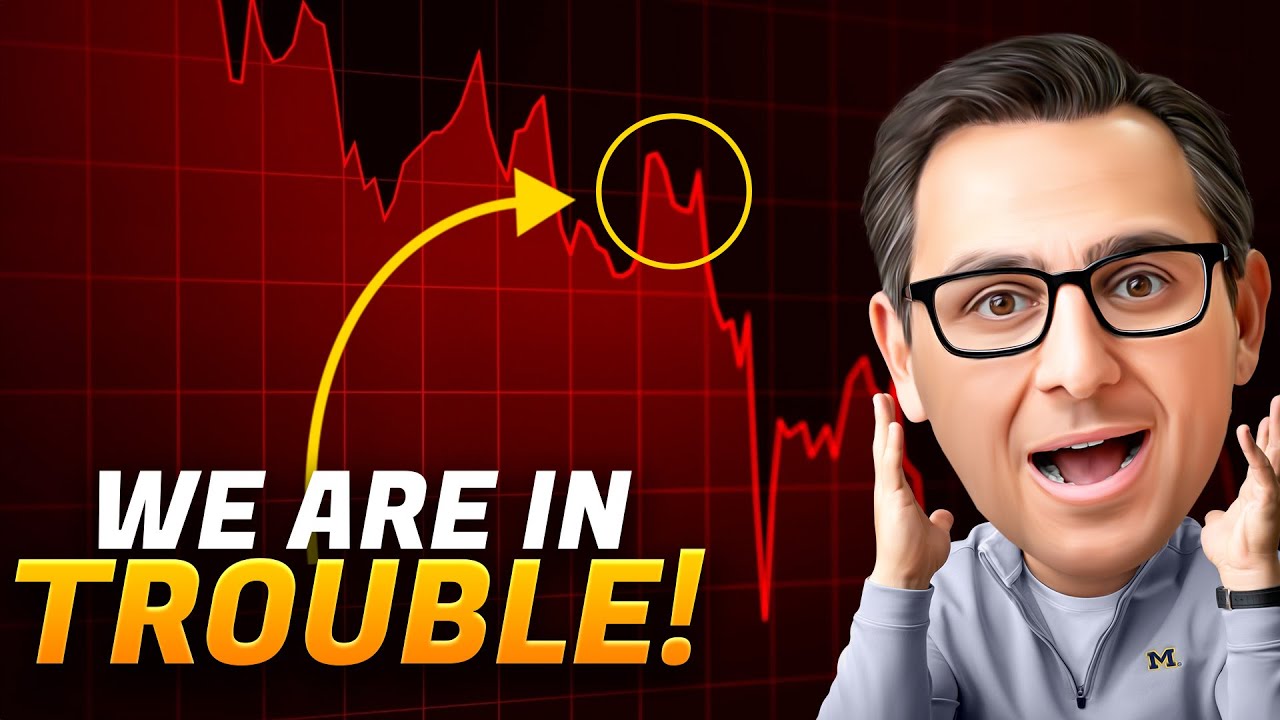
A financial bubble occurs when asset prices rise far beyond their actual intrinsic value due to speculative trading, driven by psychological factors like fear of missing out (FOMO) and herd behavior, where investors buy not for fundamental value but to sell to others at higher prices; leverage amplifies these effects by allowing investors to borrow capital, making bubbles grow faster and collapse more violently when the bubble eventually bursts as reality sets in and prices crash.
Financial Bubbles Explained: The Banana Economy and AI Hype
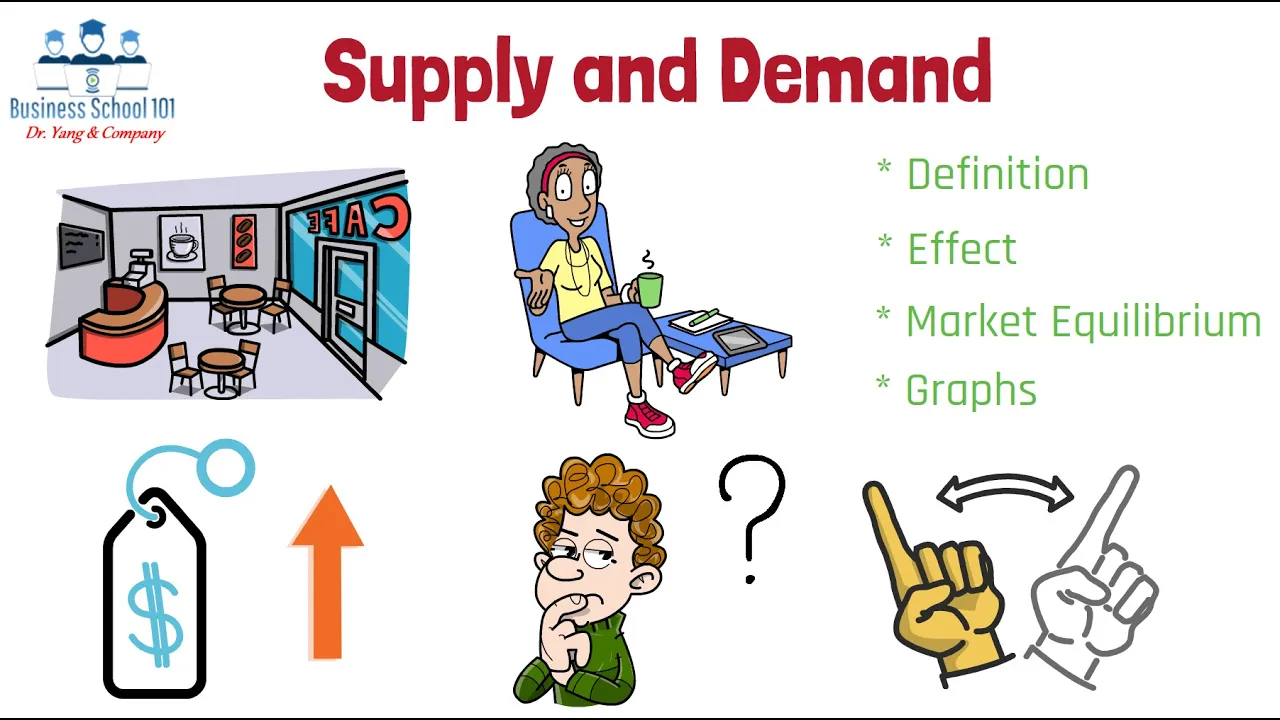
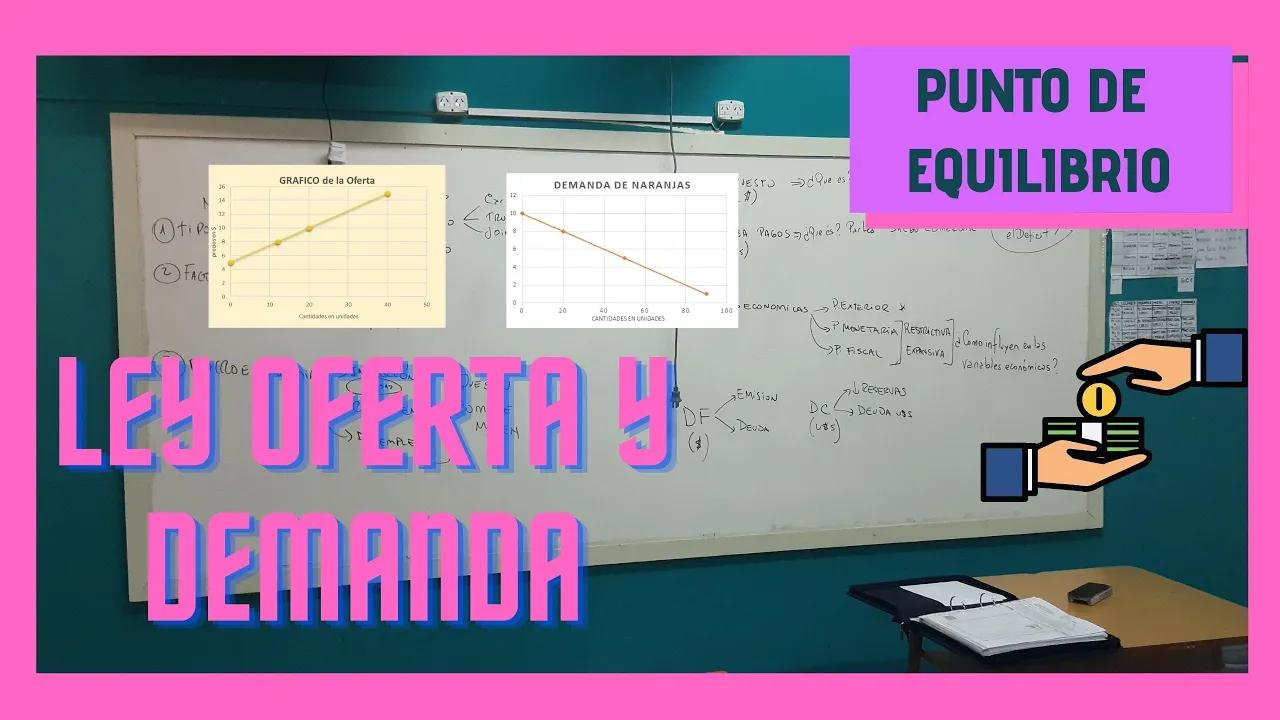
Added:The basic laws of supply and demand and how they determine market equilibrium prices.
The concept of intrinsic value versus market price of an asset.
An introduction to market speculation and the role of investor expectations in price movements.
Understanding basic market cycles, including economic expansion, peaks, and contractions.
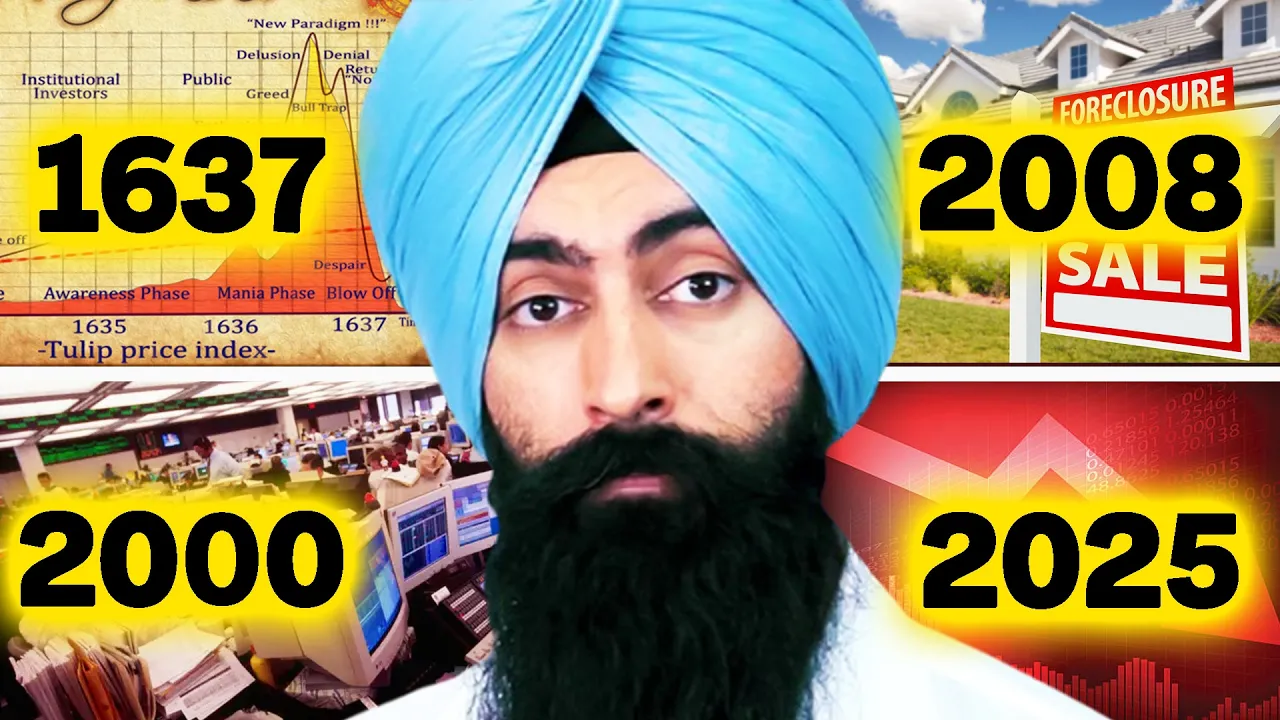
Analyzing historical financial bubbles, such as Tulip Mania, the Dot-Com Crash, and the 2008 Subprime Mortgage Crisis.
The study of behavioral finance, focusing on herd behavior, FOMO (fear of missing out), and cognitive biases in investing.
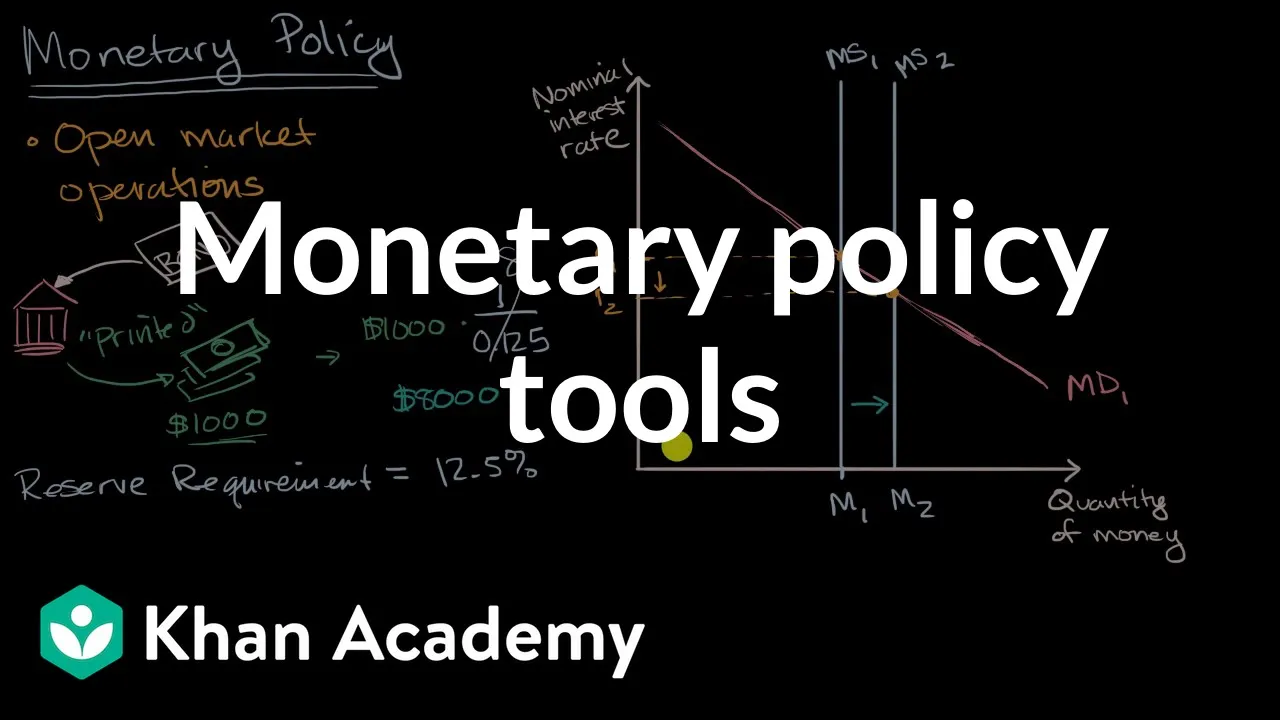
How central banks use monetary policy and interest rates to manage asset inflation and cool down overheating markets.
Methods of fundamental analysis and valuation metrics (e.g., Price-to-Earnings ratios) to identify overvalued technology stocks.
906.7K views45.4Klikes11:13Original Release: 2026-01-26
What is a bubble? Monkey buy banana.
Banana cost one leaf. Monkey eat banana.
Life good. One day banana stores say banana harder to find. Banana rare.
Banana valuable. Banana rare. Banana valuable. Monkey has idea. Monkey think if banana cost more tomorrow, monkey should buy more banana today. So monkey buy more banana to sell to other monkeys later for more leaves. Next day, banana now cost two leaves. Many monkeys start buying more bananas just to sell to other monkeys later for more leaves.
Banana now cost five leaves. Monkeys are buying and selling bananas fast. Banana now cost 10 leaves. Monkeys start hoarding lots of bananas. Not to eat, but to sell for more leaves. Banana now cost 20 leaves. Banana mania sets in.
Who wants bananas? I got bananas. I'll take one. No. Two. NO. NO. THREE. BYE.
BYE. BYE. BYE. GOOD. Now sell. Sell. So, you want a full banana in this economy?
I can only afford the peel. Look at that graph. It's all yellow. Buy bananas.
Nobody wants coconuts. Every monkey becomes banana investor. Monkey news give banana tips. This just in. Banana is rare. Banana is valuable. Monkey YouTubers make banana commentary videos.
Banana now cost 50 leaves. But why do prices keep going up? Monkeys have FOMO or fear of missing out. Monkeys worry if they don't buy bananas now, they will miss out on selling those bananas for more leaves later. Most monkeys don't understand why banana price going up.
But monkeys definitely don't want to be left behind.
Wow, how did you afford that? I bought bananas before everyone else. A man, I should have bought bananas. Why didn't I buy bananas?
>> Monkeys also have herd behavior. If lots of monkeys make same decision then it feels like the right decision even if it doesn't make sense. Basically monkeys see monkeys do. Every monkey also thinks the price can only go up which creates a loop. Monkeys buy banana which make banana price go up. So more monkeys buy banana which makes banana price go up.
So more monkeys buy banana which make banana price go up. So more monkeys buy banana which make banana price go up.
>> Why banks make bubble much bigger? When monkeys see banana price going up, some monkeys take out loans to invest even more. But this is risky. If banana price go up, monkey makes even more leaves.
But if price of banana go down, monkeys can lose everything and struggle to pay back leaves to monkey bank. Monkeys are buying more bananas than they can afford. This is called leverage. Monkey will now explain leverage. Okay, you monkeys ready? This is big brain time.
Time to use big monkey brain. Monkeyy's smart. I believe in you. [clears throat] Basically, monkey buys 100 bananas for 100 leaves. Banana price go up 10%.
Monkeykey's bananas now worth 110 leaves. Monkey put in 100 leaves and now has 110, which is a 10% gain. Banana price go down 10%. Monkeykey's bananas now worth 90 leaves. Monkey put in 100 leaves and now has 90, which is a 10% loss. Monkey gains or loses 10 leaves.
Leverage is when monkey buys 100 bananas for 100 leaves, but only uses 10 of his leaves and borrows the other 90 from Monkey Bank. Banana price go up 10%.
Banana's now worth 110 leaves. Monkey still owes Bank 90 leaves, but Monkey now has 20 leaves. Monkey only put in 10 leaves of his own and now has 20, which is a 100% gain on his leaves. But if banana price go down just 10%, Monkeykey's bananas are now worth 90 leaves. Monkey still owes Bank 90 leaves, but Monkey now has zero leaves.
Monkey put in 10 leaves and now has zero. and a debt to Monkey Bank. Do monkeys understand? Uh, leverage basically lets Monkey use the bank sleeves to make bigger investments, but it's dangerous. Banana market doesn't need to crash. It just has to wiggle.
And Monkey can gain or lose everything.
Monkeys get it. Yes. High five. But why does leverage make bubble bigger? Well, when banana price go up, leveraged monkey feels like investing genius. And if many leveraged monkeys invest, it creates another loop. Monkeys borrow from banks to buy bananas. Banana price rises a little. Monkeys bananas worth more leaves. So monkeys borrow from banks to buy more bananas. So banana price rises further. So monkeys bananas worth more leaves.
>> Basically, if banana hype is the bubble, cheap loans are King Kong with an air pump. After many monkeys do this, bananas now cost 100 leaves. This is a bubble. A bubble is when the price of something go up way beyond what that thing is actually worth. Monkeys are buying bananas only to sell to other monkeys, not to eat them. But remember, banana is meant to be eaten. How the bubble pops. Suddenly, monkeys get hungry. But monkeys can't eat all these bananas at once. Monkeys start to think bananas aren't worth 100 leaves. Bananas are everywhere. They grow on trees.
Monkeys start to realize banana is just banana. Monkeys panic. Many monkeys start to sell their bananas. Monkey news tells Monkey Nation, "This just in.
Banana not that rare. Banana not that valuable." Monkey YouTubers make banana commentary videos. Price of banana dips.
Monkeys who borrowed leaves are in trouble. Monkey banks force monkeys to sell their bananas to cover debts, which creates yet another loop. Banana price drops a little. Leveraged monkeys lose all leaves. Monkey banks demand their leaves back. Monkeys forced to sell bananas. Banana price falls further.
Leveraged monkeys lose more leaves.
Monkey banks demand more leaves back.
Monkeys forced to sell more bananas.
Price of banana drops from 100 to 50 leaves to 20 to 10 to 5 to 1 and eventually just half a leaf. Monkeys get desperate.
>> Please buy my banana. No, please buy my banana. WILL SOMEONE BUY MY BANANA? WHY DID I PUT MY LIFE savings into bananas?
They grow on trees. I got to get out.
Sell, sell, sell. Can I pay in bananas?
Don't be ridiculous. I can't believe I fell for it again. Every monkey tries to dump their bananas. And while some manage to sell, many monkeys are stuck holding too many bananas. But before Monkey explain the AI bubble, a quick word from today's sponsor, Cape. Cape is America's privacy first mobile carrier.
Monkey is sick of AT&T, Verizon, and T-Mobile leaking or selling Monkeyy's data like it's another banana.
>> No, no, no, no, no. A man. Cape is the only privacy focused carrier that runs its own mobile core, which gives more control over account authentication and how call logs are collected and stored.
Monkey doesn't want someone listening in on Monkeyy's banana investment strategy.
But Cape only takes the minimum possible amount to get you set up with [music] their service. They don't even ask for Monkeykey's name. They also don't ask for Monkeykey's address. [music] SSN, email, or any other personal information. So, they couldn't sell Monkeyy's personal data even if they wanted to because they don't collect it.
Cape defends against SIM swap attacks, [music] signaling hacks, voicemail theft. The works, even new features like identifier rotation, making it far more difficult for anyone to track Monkeyy's movements. Bubbles pop. Bananas lose value. But Monkey doesn't have to lose his data because Cape keeps hackers out.
And when Monkey travels to a different jungle, Cape doesn't hand his calls and texts to random local networks.
Everything routes back through Cape's secure core, keeping Monkeys data safe wherever he goes. You can learn more about Cape with the link in the description below and get 33% off your first 6 months with promo code primate 33. And thanks to Cape for sponsoring this video. These are the four stages of a bubble. Discovery. New thing comes out. Monkeys excited. Boom. Lots of monkeys buy new thing. Mania. Every monkey thinks new thing will make monkey rich. And of course, panic. Monkeys come back to reality. Monkeys that win and monkeys that lose. Some monkeys can make many leaves from banana bubble. Monkeys who bought bananas early and sold before banana bubble burst can make many leaves. Monkeys who bet on banana price crashing can also make many leaves. And monkeys who didn't buy banana still have their leaves.
Oh man, that was some nap. What' I miss?
OH MY GOD. BUT most monkeys don't know when bubble will burst or if bubble is even a bubble. But when bubble does burst and price crashes, most monkeys lose many leaves. Monkeys who bought bananas late paid too much and now bananas worthless. And monkeys who borrowed leaves from monkey banks now stuck in debt. How to spot a bubble.
Monkeys generally have trouble seeing a bubble before it's too late. Oh boy, WHAT A NICE VIEW. [screaming] But if monkeys look carefully, there are some red flags. Red flags like average monkeys making many leaves very easily.
Lots of monkeys borrowing leaves from monkey bank to invest in same thing.
Banana market going bananas. I'm so sorry. Please subscribe.
Or lots of monkeys saying banana can only go up. Bubble versus breakthrough.
Not all new things are a bubble waiting to pop. Some things are actually useful after all the hype. For example, monkey use candle but monkey cold. Monkey dark wind. not helping. Then monkey discover electricity. Monkey warm. Monkey has lights. Wind is good. But some new things are not so useful. The AI bubble explained with bananas. One day monkey discovers smart monkey. Smart monkey can write, can draw, can even do taxes. But when monkey looks closely, writing is incorrect, drawing is off, and tax is fraudulent. But many monkeys think smart monkey will be the next big thing. Even though smart monkey doesn't make any leaves. Every monkey thinks smart monkey is rich because he has many bananas. But actually big banana company just gives smart monkey leaves just so smart monkey can buy banana which makes smart monkey look like business genius. But he still doesn't make any leaves of his own or know how to draw. He also drinks way too much water. So remember monkeys, a bubble is when price of thing go way higher than what that thing is actually worth. Don't fall for the hype. Bananas are for eating. And as always, apes together strong.
>> [music]
Up Next
8:20
Understanding Economic Cycles: Ray Dalio's Machine in 8 Minutes
@formulainstitute
1.8K views•2024-03-01
5:07
Impact of Yuan in Indo-Russian Trade Amid Sanctions
@WION
261.9K views•2022-07-01
10:33
Behavioral Economics Explained: Rationality, Nudges, and Risk
@crashcourse
1.1M views•2016-03-12

113:18
The Age of Easy Money: Fed & Inflation | Full Documentary
@frontline
21.2M views•2023-03-15
Related Study Plans & Knowledge Roadmaps
Structured learning paths in Economics
economics
Sovereign Debt: Defaults, IMF & Restructuring
01Introduction to Sovereign Debt & Government Bonds
02Debt Sustainability & Credit Ratings
03Anatomy and History of Debt Crises
+ 2 more learning modules
12h5 modules
Explore Roadmap
economics
Market Design: Matching Theory & Gale-Shapley
01Introduction to Market Design and Price-Free Markets
02Two-Sided Matching & The Gale-Shapley Algorithm
03School Choice Systems and Mechanism Design
+ 2 more learning modules
10h5 modules
Explore Roadmap
economics
Impossible Trinity: Forex, Capital & Policy
01Introduction to Monetary Policy and Central Banking
02Exchange Rates and International Capital Flows
03The Mundell-Fleming Model
+ 2 more learning modules
8h5 modules
Explore Roadmap
economics
Healthcare Economics: Market Failures & Systems
01Introduction to Healthcare Markets and Market Failure
02Asymmetric Information and Adverse Selection
03Moral Hazard and Insurance Design
+ 2 more learning modules
12h5 modules
Explore Roadmap