




















Electromagnetic induction is the phenomenon where a changing magnetic flux through a coil induces an electromotive force (EMF), with Faraday's First Law stating that EMF is induced whenever there is a change in magnetic flux, and Faraday's Second Law stating that the magnitude of induced EMF is directly proportional to the rate of change of magnetic flux; Lenz's Law further explains that the direction of induced EMF always opposes the cause producing it, obeying Newton's third law and the law of conservation of energy.
Electromagnetic Induction: Faraday's Laws and Lenz's Law Explained
Added:The concept of magnetic fields, magnetic field lines, and the mathematical definition of magnetic flux.
Fundamental electrical concepts including electric current, potential difference (voltage), and Ohm's law.
Oersted's discovery that an electric current generates a surrounding magnetic field (the basis of electromagnetism).
The concept of work, energy conservation, and the Lorentz force acting on moving charges in a magnetic field.
The concepts of self-inductance and mutual inductance, leading to the study of inductors and transformers.
Practical engineering applications of induction, including AC generators, alternators, and electric motors.
The phenomenon of Eddy currents, including their minimization in transformer cores and utilization in magnetic braking.
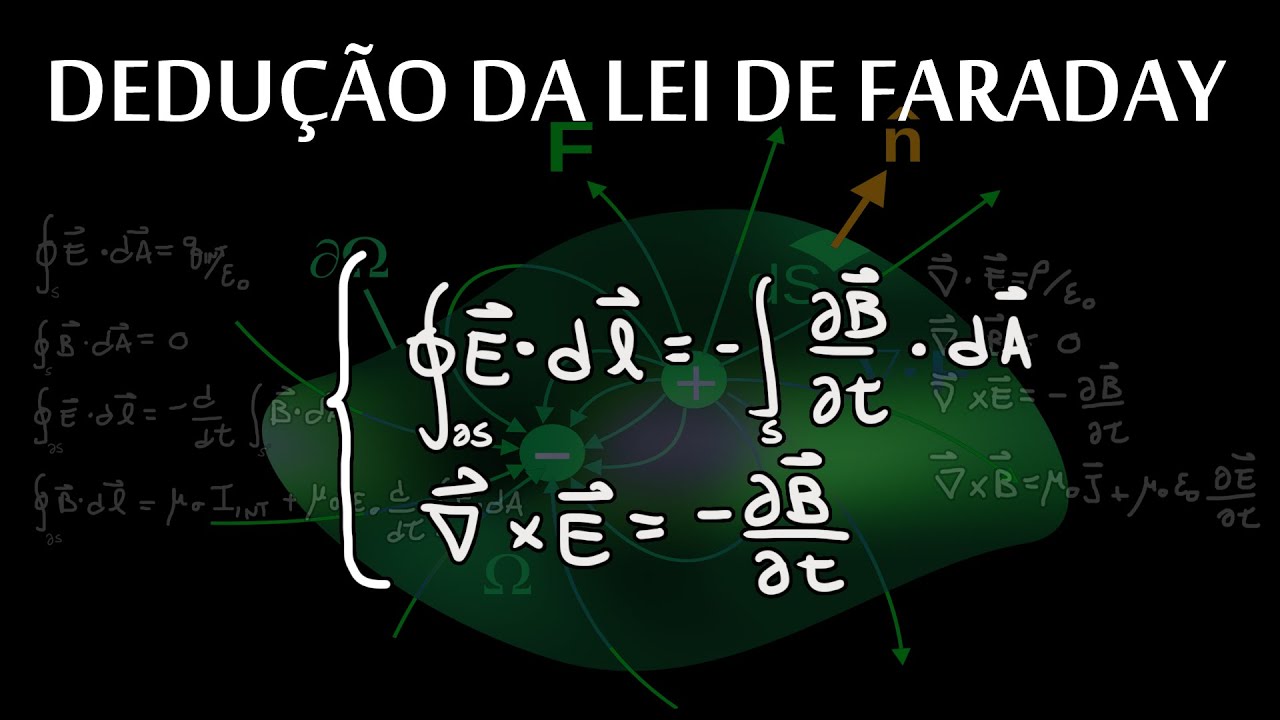
Maxwell's Equations, specifically how Faraday's Law is formulated mathematically to describe electromagnetic waves.
3.2M views32.9Klikes6:01Original Release: 2016-03-22
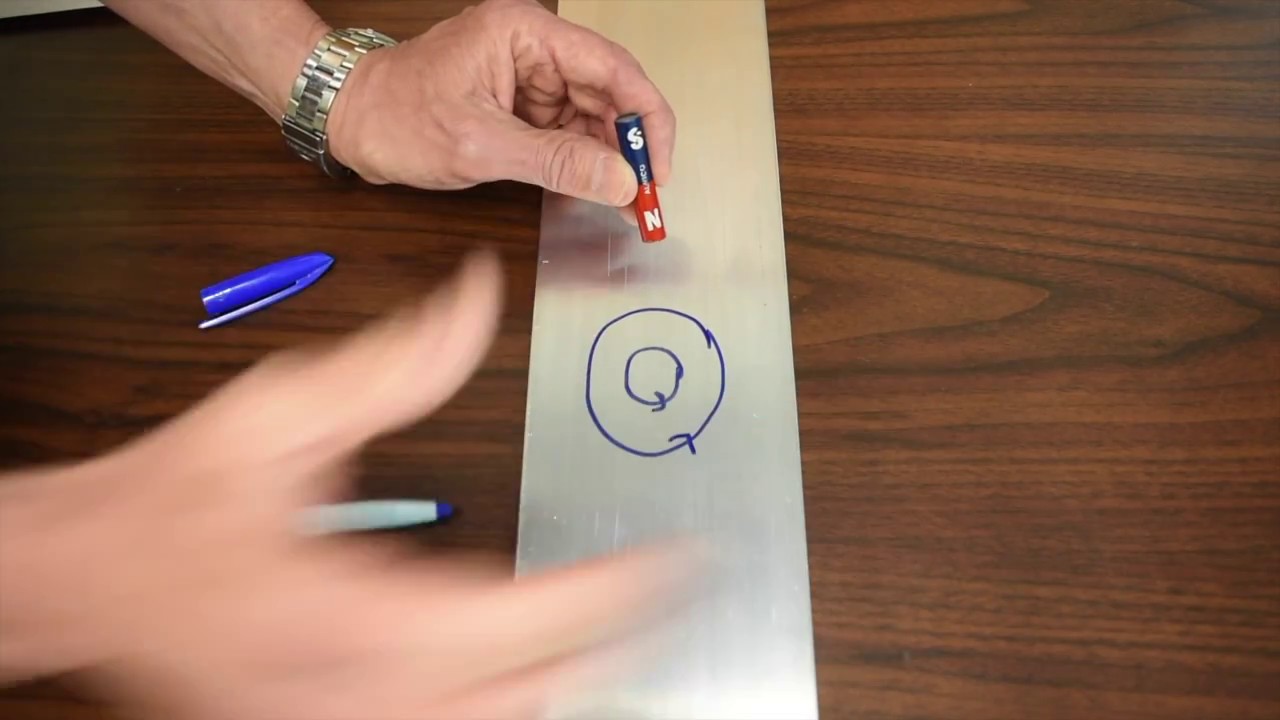
electromagnetic induction in this lesson we shall learn about electromagnetic induction the phenomenon of electromagnetic induction can be demonstrated by an experiment bind an insulated copper WI on a paper or wooden cylinder so as to form a coil in the form of a solenoid connect the two ends of the coil to a galvanometer and place a magnet close to it the reading of the galvanometer is zero when the magnet is stationary the pointer of the galvanometer deflects towards the right when the North Pole hole of the magnet is moved towards the solenoid the galvanometer shows zero reading when the motion of the magnet stops this proves that as long as the magnet keeps moving current flows in the solenoid if the magnet is moved away from the solenoid current flows in opposite direction in the solenoid thus the galvanometer deflects towards the left left the deflection increases if the magnet is moved away with greater velocity if the polarity of the magnet is reversed and the magnet is brought close to the solenoid then current flows in an opposite direction the galvanometer accordingly turns towards the left Faraday observed that current flows in the coil only only when there is a relative motion between the coil and the magnet the direction of deflection in the galvanometer is reversed if the direction of motion is reversed the current in the coil and the corresponding deflection of the galvanometer can be increased by using a strong magnet or by increasing the motion of the magnet increasing the area or the number of turns also creates a strong current in the coil according to Faraday when there is no relative motion between the magnet and the coil the magnetic flux within the coil remains constant so the galvanometer shows no deflection but when the magnet is moved towards the coil or vice versa the magnetic flux changes and an EMF is induced in the coil if the circuit is complete the EMF causes current to flow through it based on his experiment Faraday formulated two laws of electromagnetic induction Whenever there is a change in the magnetic flux linked with a coil an electromotive force is induced the magnitude of the induced EMF is directly proportional to the rate of change of the magnetic flux linked with the coil the direction of the induced EMF depends on whether there is an increase or decrease in the magnetic flux John Ambrose Fleming gave two rules to determine the direction of motion or the direction of induced current while the left hand rule is for electric motors the right hand rule is for generators according to Fleming's right hand rule the thumb four finger and middle finger of right hand are stretched perpendicular to each other and if thumb represents the direction of movement of the conductor four finger represents the direction of the magnetic field and the middle finger represents direction of the induced current lens's law states that the direction of the induced EMF is such that it always tends to oppose the cause which produces it lens's law obeys Newton's third law of motion which states that to every action there is always an equal and opposite reaction it also obeys the law of conservation of energy it states that energy can neither be created nor destroyed therefore the sum of all the energies in the system is a constant lens's law is based on farad's law of induction lens's law states that when an EMF is generated by a change in magnetic flux according to Paradise law the polarity of the induced EMF is such that it produces a current whose magnetic field opposes the change which produces it
Up Next
102:07
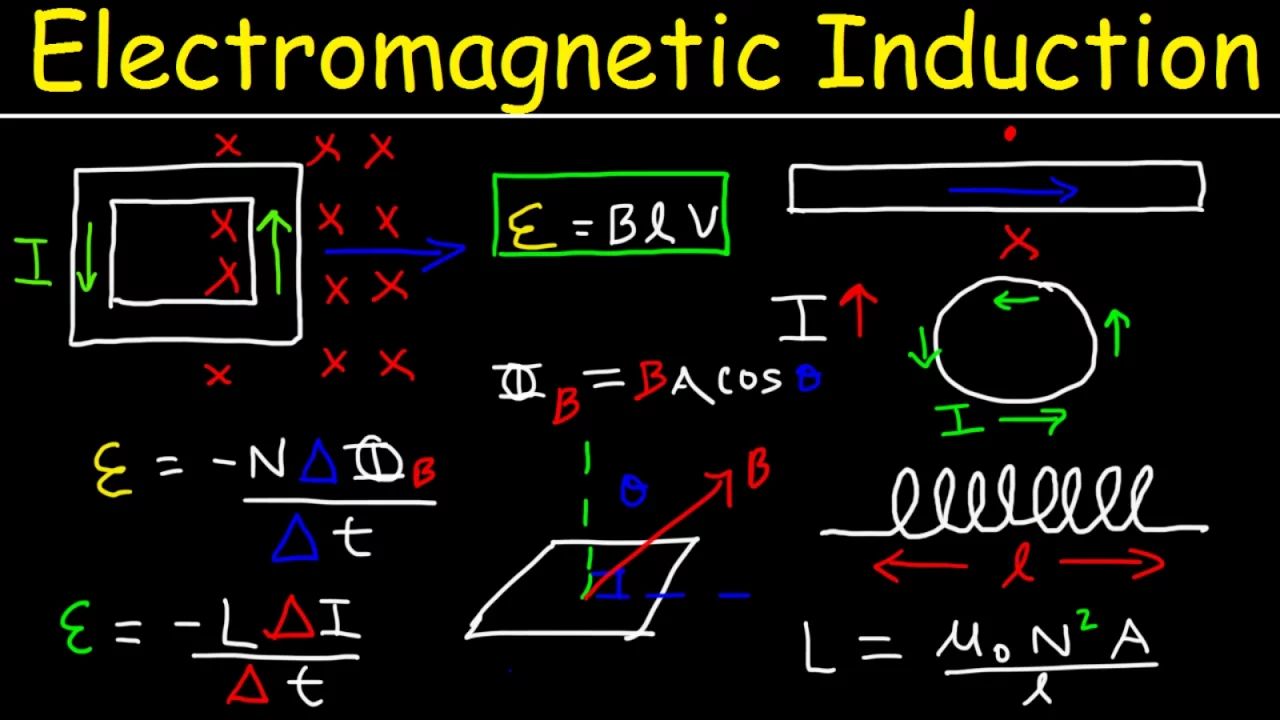
Faraday's & Lenz's Law: Electromagnetic Induction Explained
@TheOrganicChemistryTutor
1.1M views•2017-02-28

12:53
21cm Hyperfine Transition in Neutral Hydrogen: Radio Astronomy Basics
@AaronRobertParsons
12.4K views•2011-10-13

32:32
NMR Spin Physics I: Zeeman Effect, Resonance Condition & Larmor Frequency
@nptel-indianinstituteofsci8064
2.3K views•2024-01-17

27:14
Entropy and the Second Law of Thermodynamics Explained
@veritasium
27.5M views•2023-07-01
Related Study Plans & Knowledge Roadmaps
Structured learning paths in Physics
physics
Nuclear Physics (Decay, Fission & Reactors)
01Atomic Structure and the Binding Force
02Radioactive Decay and Half-Life
03Nuclear Fission Mechanics and Chain Reactions
+ 2 more learning modules
12h5 modules
Explore Roadmap
physics
Soft Matter (Polymers, Colloids & Rheology)
01Foundations of Soft Matter & Thermal Forces
02Polymer Physics and Macromolecules
03Colloids, Surfactants, and Self-Assembly
+ 2 more learning modules
38h5 modules
Explore Roadmap
physics
Analytical Mechanics: Lagrangian & Hamiltonian
01Mathematical Foundations: Calculus of Variations
02From Newtonian Mechanics to Constraint Dynamics
03The Principle of Least Action & Lagrangian Mechanics
+ 3 more learning modules
28h6 modules
Explore Roadmap
physics
General Relativity (Spacetime & Cosmology)
01Foundations of Relativity: Special Relativity
02The Geometry of Spacetime: Equivalence Principle & Curvature
03Einstein's Field Equations: The Mathematics of Gravity
+ 2 more learning modules
55h5 modules
Explore Roadmap