

![Struture of DNA & RNA [Nucleic acids] # Biochemistry Part -29 # csir net , gate , Iit jam](https://i.ytimg.com/vi_webp/ufvZ8bYtyO8/maxresdefault.webp)














![[Live] 크리스퍼 유전자 가위의 문제점 - 노벨화학상 받은 유전자 편집기술의 논란](https://i.ytimg.com/vi/6TFpqbedgv8/maxresdefault.jpg)


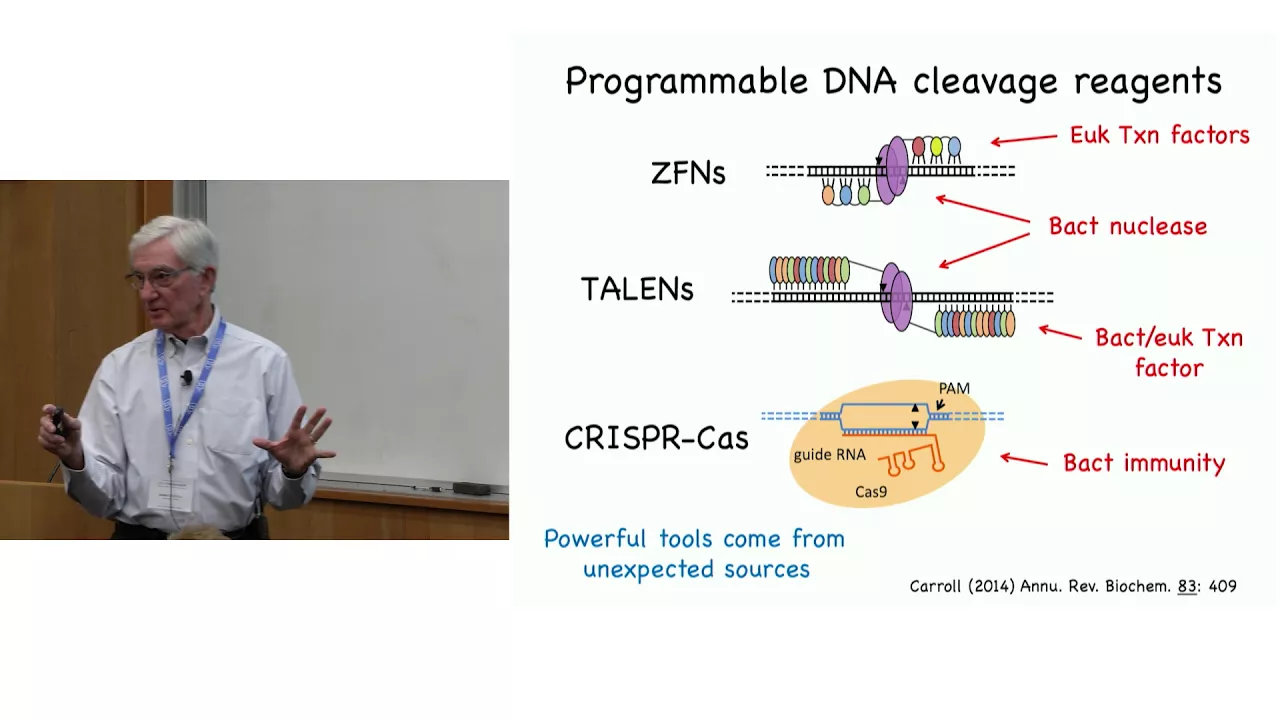
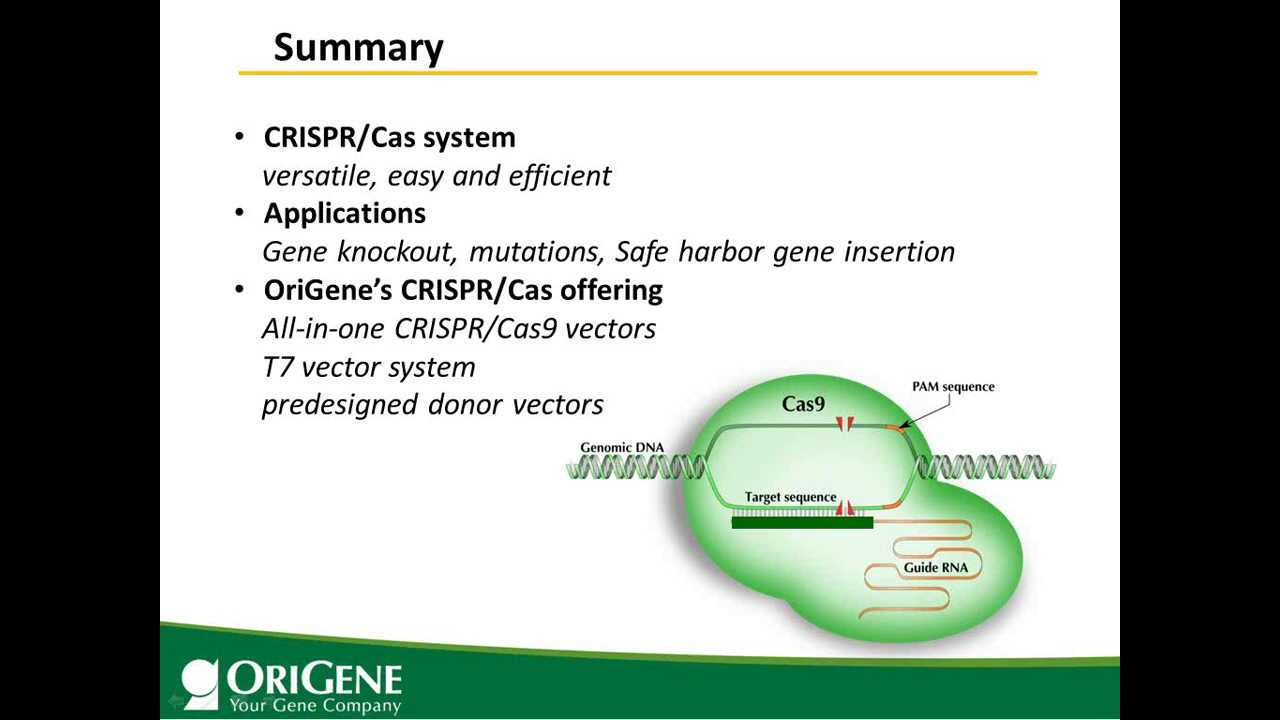
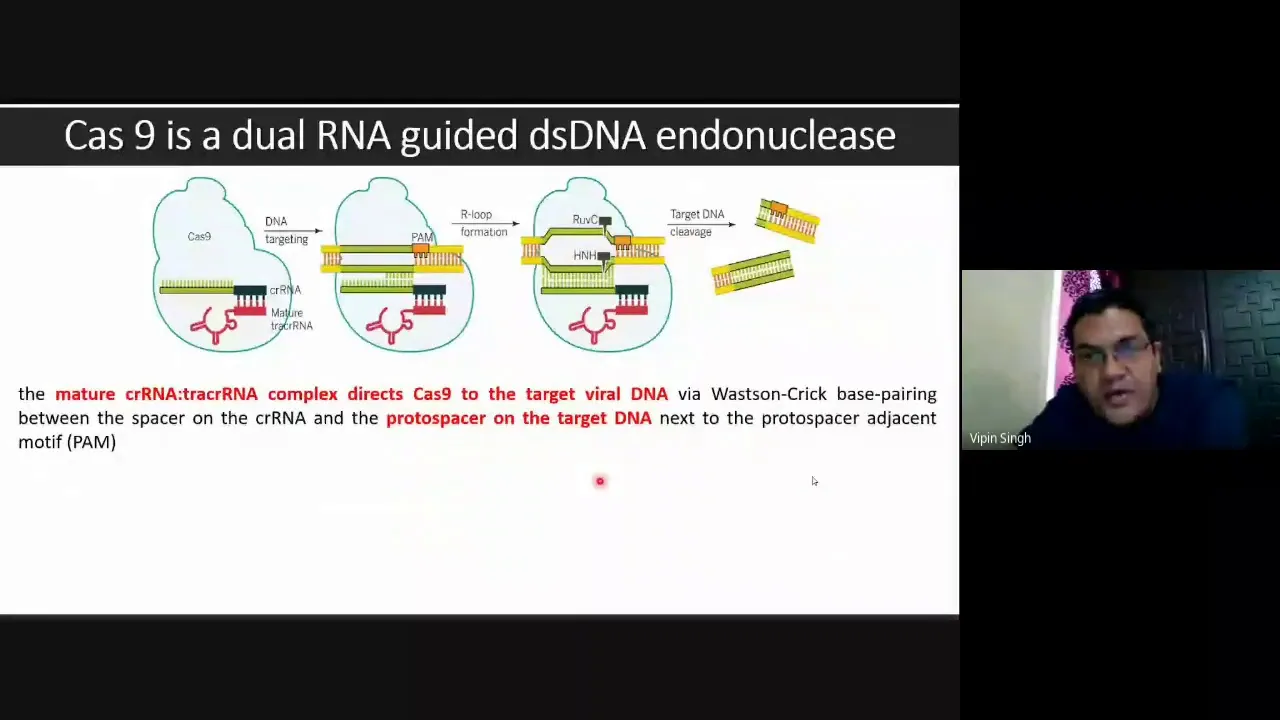
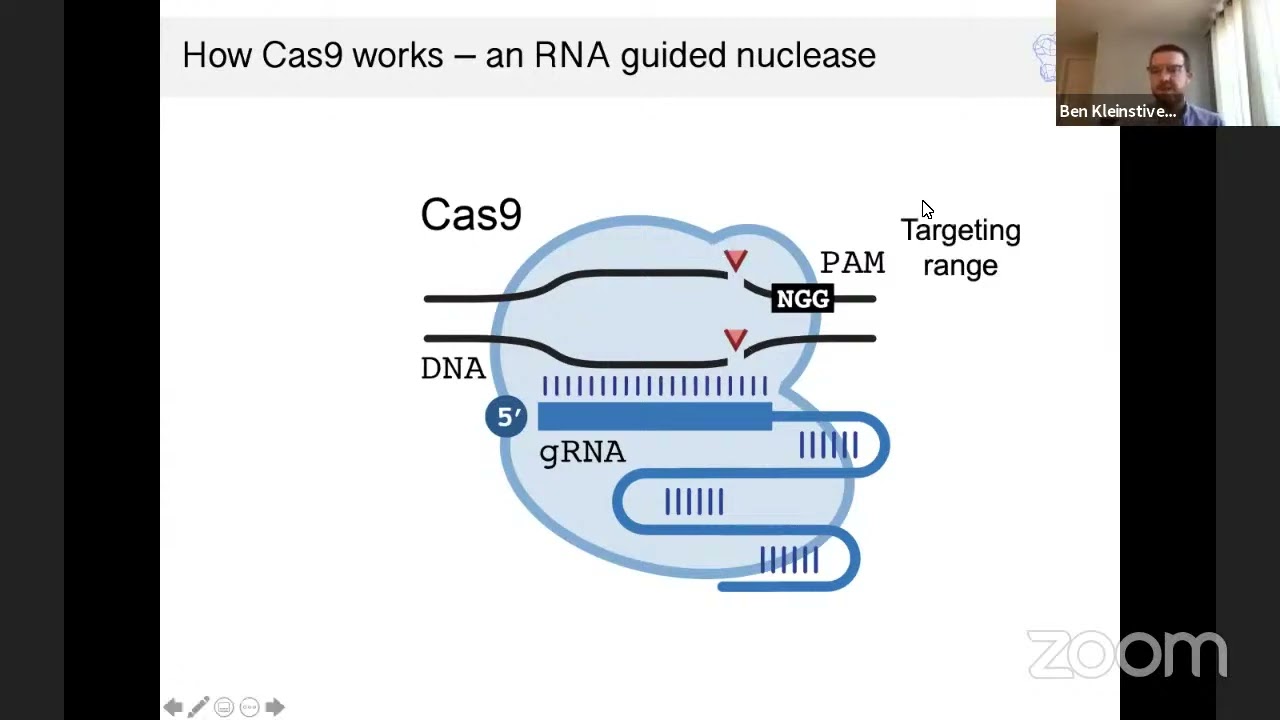
CRISPR-Cas9 is a revolutionary genome editing technology that enables precise modification of DNA sequences. It consists of a Cas9 protein (which acts like molecular scissors to cut DNA) and a guide RNA (which directs Cas9 to a specific location in the genome). The system was originally discovered as part of bacteria's natural immune defense mechanism against viral infections, where bacteria use CRISPR arrays to store genetic memories of past infections and Cas proteins to destroy invading viral DNA. Scientists adapted this system for genome editing by programming the guide RNA to target any desired DNA sequence, allowing researchers to delete, insert, or modify genes with unprecedented precision and efficiency. This technology has transformed genetic research across diverse organisms including human cells, plants, and animals, enabling applications in understanding disease mechanisms, developing new treatments, and advancing biotechnology.
Emmanuelle Charpentier Nobel Lecture: CRISPR-Cas9 Genome Editing
Added:was born in 1968 in chevy cesaros in france she obtained her phd in 1995 from institute pasteur in paris and for part of her career she worked at umeo university in sweden she is now director of the max planck unit for the science of pathogens in berlin germany i now welcome you onto the stage we are very much looking forward to hearing your lecture dear ladies and gentlemen i am delighted to welcome you to my nobel lecture it is the greatest honor to be awarded together with jennifer darner the nobel prize in chemistry for the year 2020 for the development of a method for genome editing i would like to warmly thank the members of the royal swedish academy of sciences the members of the nobel committee and all scientists who have supported our nomination i wish we'll be able to give the lecture live unfortunately it is a recorded lecture but i hope you will enjoy the recording i would like to start with explaining you the crispr cas9 technology that is this novel method for genome editing so over the years all biologists have been extremely interested in always using genetics to understand the functions of genes and we're always in need of precise genetics that allows to recognize sites specifically dna of genomes of cells and organisms and allows to modify genes and their expression and this is what the crispr cas9 technology does the particularity of this technology is that it's a sophisticated technology yet very simple versatile it works very efficiently and it is composed of an protein component called cas9 that is represented on this slide as scissors this protein casino has the ability to recognize such specifically a certain sequence on the dna certain sequence of interest has the ability to cleave the dna and this cas9 protein is programmed by the help of an rna component that allows to bring kas9 to the site of interest so this is a technology that has largely been adopted by the scientific community and has become very popular since the start of its discovery in 2012. so i would like to actually explain you also why this technology is transformative so the field of genetics started in the 19th century up to the mid-20th century whereby rules for fundamental genetics were established with the dna that was isolated the dna that was shown to be the carrier of information and then the genetic code that was deciphered over the last years in the 60s the last 50 years have witnessed the large development of of a number of technologies actually all originating from research done on bacteria and and viruses and this started in the 70s with different types of enzymes and technologies that would allow to recombine dna to clone dna to sequence dna amplified dna target genes and their expression the zinc finger and tannin nucleuses that were discovered over the last 20 years allowing precise genetics the same that what chris barcas9 does except that chris parkas9 brings a level of programmability and a level of of simplicity and versatility that is quite unique so we are all very happy because we can now study cells and organisms that were difficult to study prior to chris barcas9 the research on chris pakistan originates in in my love from our interest in understanding how streptococcus powderiness causes diseases in humans so streptococcus biogenes belongs to the class of gram-positive bacteria such as listeria and staphylococci this bacteria have been the main focus of my research during my career i have always been interested in understanding how bacteria interact with their environment so in principle the human host how they can cause diseases how they can adapt to their environment survive in the human host and also to a certain extent how the human host can defend itself against bacterial infections so the focus was always on regulatory mechanisms that use proteins and small rnas the family of small rnas it's an interesting family of regulatory elements which we started to work on at the beginning of 2000 so about 20 years ago and this research always was mixed with always a need to develop gene technologies along the way just to be able to study better those mechanisms in bacteria specifically in the context of their interactions with the human host and during my my years as a phds and postdocs i was certainly and decapped by the the the non-possibility to perform genetics in human cells which is really the are the hosts for this strict human pathogens so i have developed genetic tools in bacteria i have also worked on transgenic mice coming back to understanding the interaction between bacteria and the human host and understanding as well that there was a lack of tools that would allow to perform precise genetics in in human cells for example in this this is what chris park castleman can can do the the field of of small rnas has largely evolved the last 30 years and this was a discovery that rna molecules in addition to b messenger rna or transfer rna or ribosomal rnas and being involved in in the transcription of the dna into a translation into proteins that rnas had also regulatory functions and would be able to interact with messenger rna molecules and also with proteins and regulate the expression of genes what was not identified at the let's say about 10-15 years ago these were small rnas that would have the ability to to change gene expression by interacting directly with dna we were working on some small regulatory rnas we published some data showing that some of these small regulatory rnas had the ability to change the expression of virulence factors in bacteria so contributed a lot to the adaptation of bacteria to their environment and we decided in about 15 years ago to start a search for additional regulatory rnas we found a number of those rnas and we particularly picked an rna and that is known as tracer rna because this rna was very well expressed in in bacterial cells and you can see the gel that is a northern blood analysis showing the the expression of these rnas as different forms in in streptococcus biogenes we had found a target for this small regulatory rna so initially we thought that it would have a role in regulating the expression of the variance factor and we had difficulties to make sense of this interaction but what was clear is that at least this rna was encoded in the vicinity of a gene that was annotated to be a gene including a protein that is uh was crispr related protein containing two nucleus domains so a crispr protein that would have the ability to cleave nucleic acids so this was the start of none nevertheless continuing our research on tracer rna but also working on crispr so crispr is to be seen and and considered as part of of different systems which bacteria and archaea have evolved over millions of years so back then archaea can be infected by viruses as we can be infected by viruses and bacteria and have evolved diverse immune systems that allow them to cope with the invasion of genetic elements such as viral elements but also other elements such as plasmins and transposons and this really actually is important and to be seen in the context of of the fitness of the bacteria with their environment and the evolution of of the microorganisms so here on this slide you can see a phage that is infecting a bacterial cell with the genomic component of of the phage that is injected into the bacterial cell the genomes of of the virus that can replicate and then you have the formation of our particles that can uh lies back to our cells and propagate to lies further back to ourselves so here we deal with phages viruses that can kill bacterial cells and surely the the the need for bacteria to have evolved system that allow to uh to defend themselves against deaths so what is interesting is that some of these immune systems have been developed over the years as genetic tools so for example restriction enzymes are originally actually different systems existing in in bacteria crispr is is unique in the sense that it is an adaptive immune system there is a first step of of recognition that leads to the to the immunity and it is composed of protein components the cast proteins and rna components the crispr rna so i do not have the time to go very deeply into the history of of the chris parkas research however i would like to mention that uh this has involved a number of scientists who have really performed a pioneer work on chris barcas i have read all the the publications on chris parkas when we started to work on on the crisper cast 9 system in my lab and this has this is really by reading all those articles that that it allowed me to to really understand what would be different of the chris cas9 system compared to other krispaka systems that were studied by my colleagues but in brief the the crispr components are such that the first identification where the repeats of the crispr array so the crispr array is formed by very short sequences that are identical to one another that forms repeats and that are interspaced by sequences that have as origin mobile genetic elements this crispr array was shown to be able to be transcribed into rna molecules of different sizes so probably maturation events taking place to activate those crispr rna molecules in the vicinity of the crispr array you have the crispr associated genes that encode the crispr associated proteins and and very fast as well there was the observation that these crispr associated proteins contain domains that are homologous to domains contained in proteins that have the ability to target dna target rna and also cleave dna and cleave rna so all together the idea was that these crispr systems would be obviously adaptive immune systems in bacteria and archaea that was shown experimentally later on in streptococcustomophilus but that also those those systems were identified as prokaryotic rna interference systems by analogy to rna interference systems so when we started uh the research the dogma was that there would be a crisp complex of crispr associated proteins that will be formed and that will associate to the crispr rna to act as a machinery that would allow to target the dna or the rna so the way it works is as follows the system is adaptive in the sense that the bacteria are first to recognize the virus and will have the ability to memorize the infection by the virus and this is the way it is done so the virus will inject its its dna into the bacterial cell the chris parker system will be able to recognize the invading dna cleave a certain sequence of of the invading dna and insert this sequence into the crispr array and this is working as a kind of memorization of the virus and then you will have expression at the rna level of these memorized elements of viral infections the crispr rnas will associate with a complex of crispr associated proteins and those rnas allowing to guide the crispr associated proteins to the the invading dna of the virus upon a second infection and this is the way it works and there will be recognition of the virus and one protein of the chris barkas system will ultimately cleave the invading dna and the dna cannot replicate and this is a dead end for for the virus so this is globally uh how it works um in streptococcus pargenes we were lucky enough to uh have on on on the genome of streptococcus pyrogenes genes that were belonging to a certain type of chris parker system that was not studied yet at least at the molecular level what the the groups of of of the crisper casing system was really uh in streptococcus thermophilus uh implying uh involving one crispr associated protein cas9 that will be involved in in the recognition of the virus upon second infection but the molecular mechanism was not described and this is what we started in in our lab so we and decided to look at the the question whether tracer rna would actually have a regulatory role on the chris parker system and this is what we found what we found is that tracer rna contains an anti-repeat sequence that allows it to base pair with the repeats of the crispr rnas and this duplex of rna is actually stabilized by the protein cas9 then following this this is going to be maturated by enzymes and in the bacter specifically the the rnas three and further are rnases that will lead to the mature form of the duplex of rna still bound to the protein casino then this complex of cas9 guided by the duplex of rna will be able to recognize specifically the dna and cleave the dna using two nuclease domains and cleave the dna in a sequence specific manner so this is what we have shown uh seeing right away that the system from streptococcus biogenes was working very efficiently with cleavages that were as those we were expecting and now with regard to the programmability of of the system the idea was to simplify this duplex of rna and fuse those two rnas to have a single guard rna that would be the programmable element of the crispr casting system so bringing simplicity for the design of the technology one thing that is important to mention is that the the mechanism is very sophisticated in the sense that the ability to use two nucleus domains to cleave the dna and this programmability allowed to develop the cas9 technology further into a technology that can really perform multiple modifications on on the genome so it can correct mutations introduce new mutations on the dna it can allow to delete genes delete certain sequences of dna add new sequences of dna at the site of interest replace genes by other genes and over the last eight years a number of scientists and developers have really put forward the technology to really have the technology evolving in multiple versions that allow to do some multiplexing and that really allow to perform precise genetics in an unprecedented manner very fast actually scientists adopted this this technology and showed in a very very short amount of time that the technology was efficient to act on on the dna and modify genes and their expression in a variety of cells including human cells in organoids in modal organisms such as mice fish fly and also plants so a very transformative technology i do not have for sure the time to explain you all the details of the science beyond behind the crispr castline system but chris parkas is a largely evolving system all the chris barker systems including crisper cas9 and this is early on the diversity of this system that we understood what would be conserved and what will be the basis of the mechanism so release this cas9 protein guided by a duplex of rna and that could be among all the different crispr systems existing that will be the system minimal enough to harness as a powerful gene technology and this is quite amazing how the the systems have evolved they have evolved surely in multiple other systems than the crispr castline system now we have two classes identified and within each of the class multiple systems and subsystems so since chris parkas9 other minimal systems have been identified further developed also as chris parkas technologies so enlarging the chris podcast toolbox you have large applications for this genome editing technology so for sure for to understand better mechanisms of of life so it's very useful for fundamental research to unravel novel molecules novel pathways to be able to really work with the the cells and organisms that are of interest for clinical purposes the technology has been also uh very well developed with regard to the applications in understanding better the mechanisms of of life sciences in modern organisms such as mice drosophila and and fish it has also been a game changer for allowing precise genetics in plants and it has large applications in medicine either directly or indirectly by allowing to develop better models of diseases and also by allowing to develop the crispr cas9 technology as a direct tool for really to work as a gene medicine and use the technology directly to treat certain types of of diseases such as human genetic disorders or certain cancers by combining the crispr cas9 technology with immunotherapy it's also very transformative in the field of plant biology with the production of plant crops surely with ethical considerations that have to be taken into account what next so surely the crispr biologists continued to to work on this field continue to identify novel chris parker systems thanks to the sequencing of novel genomes of of bacterial species and rkr species recently novel defense systems in bacteria and archaea have been identified and and this will continue so we can expect from research on on microbes to have further genetic technologies to be identified in the future it is an exciting research for young scientists because now the the young scientists have have a really powerful tool to study their cells and organisms of interest and and do genetics in a way that was not possible 20 25 years ago what is very or also interesting with the timeline of all those technologies that the the impact of chris parkas makes even more sense with regard to all the technologies that have developed over the last 15 20 years such as high throughput technologies to sequence genomes high throughput technologies for screening for screening all the the technologies of imaging and and all the technologies that have largely evolved delivering technologies to deliver gene technologies such as crispr cas9 in cells and organisms and also new technologies that allow to culture cells and organisms that were not possible to culture 15 20 years ago so this makes global sense and that's why i think it's really an exciting time to be able to study the evolution and the diversity of the world another message that i would like to to provide as well is that as a matter of fact uh chris parkas9 originates from research done on bacteria and viruses and we do know in our days how important it is to really maintain the research in macrobiology to maintain the expertise and to study more bacteria and viruses not only because they can cause diseases and and and we need to find new treatments for those infectious diseases but also because the last 50 years have shown to which extent bacterium viruses are really a valuable source for the development of novel biotechnologies i would like to thank surely the people who have done the work this work would not have been possible without young scientists being extremely committed and extremely enthusiastic the work from my side started in vienna at the max birds labs at the university of vienna the main part was don when i was a principal investigator at the laboratory for molecular infection medicine in sweden at umeo university i would like to thank a number of people but i would like to mention maya eckert who was a postdoc in my lab in vienna identifying tracer rna christoph schielinski and eliza delcheva who have been key students driving the project forward i would like to thank my collaborators eugenie kunin makarova cynthia sharma jorg vogel martin inec and charlie jennifer donna my co-laureate this was a great time this research developed within five years of time at least from my lab and i really enjoy this exciting time working with wonderful collaborators i would like also to take the opportunity to thank all my former and lab members who have worked with me the last 18 years in australia sweden and germany it has always been a pleasure to work with young scientists and this is also the reason why i like to do science and last but not least i would like to thank my family my friends rodger novak and all my colleagues who have supported my work and who have helped me during my career and i would like to thank you for your attention you
Up Next
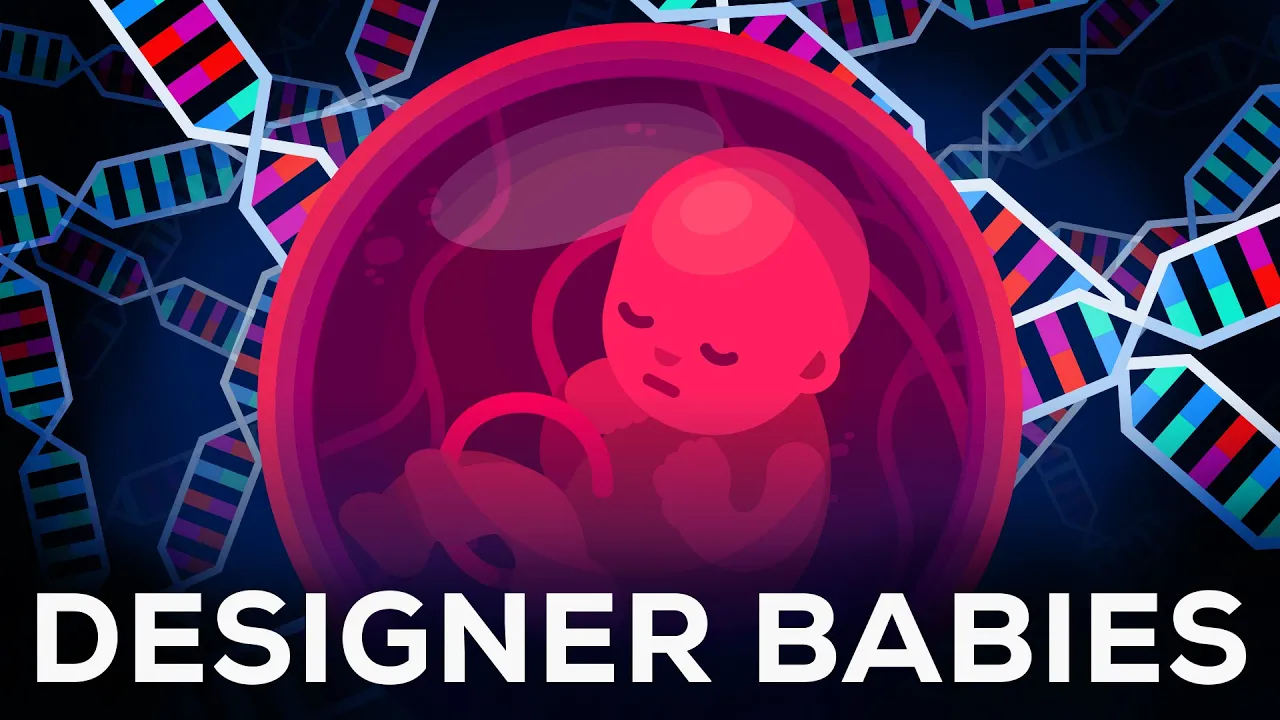
CRISPR and Genetic Engineering: How Gene Editing Works and Why It Matters
@kurzgesagt
30.5M views•2016-08-10
Quantitative Real-Time PCR (qPCR): Principle, Method & Data Analysis
@animatedbiologywitharpan
129.2K views•2023-09-06
iPS Cells: A New Era of Medicine by Nobel Laureate Shinya Yamanaka
@NobelPrizeII
126.7K views•2017-09-17
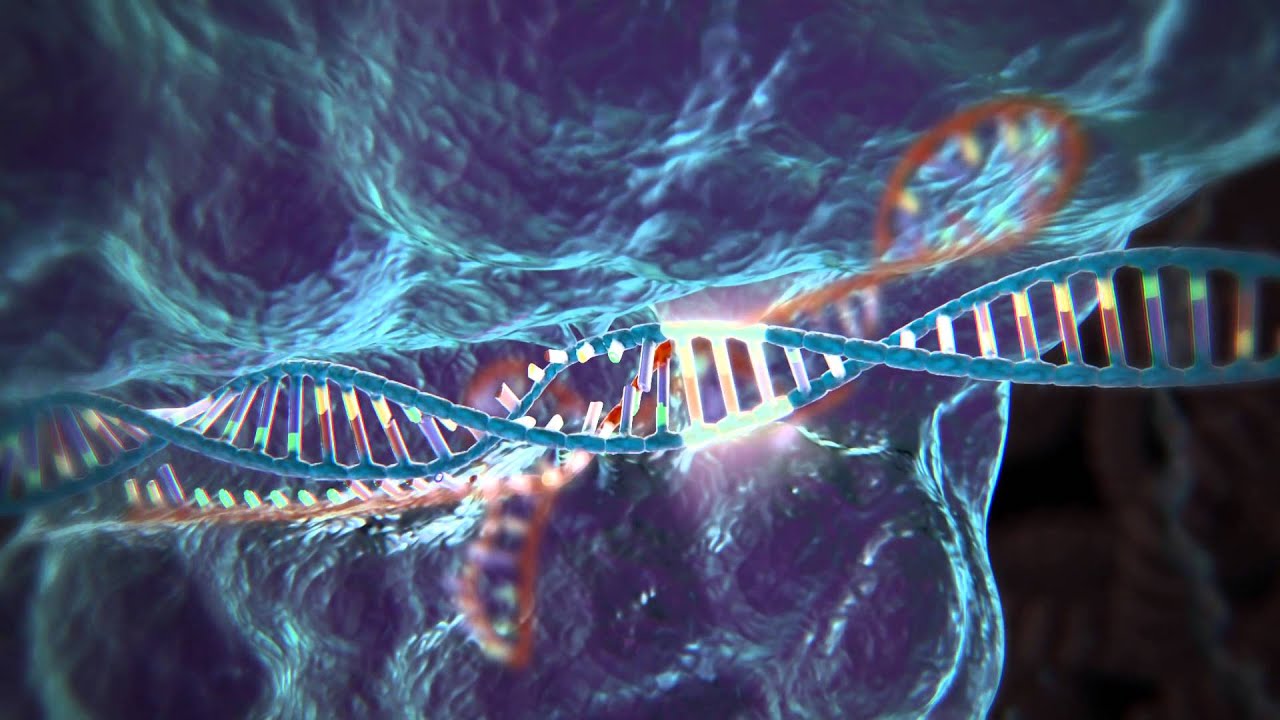
CRISPR-Cas9 Genome Editing: Mechanism & Applications
@McGovernInstitute
4.4M views•2014-11-05
Related Study Plans & Knowledge Roadmaps
Structured learning paths in Biotechnology