



















The EU Emissions Trading System (EU ETS), launched in 2005, is a cap-and-trade mechanism where the EU sets a maximum carbon emission cap, and companies must hold permits for each ton of CO2 emitted; companies with surplus permits can sell them to those exceeding their allocation, creating a market for carbon credits. The system covers energy generation, heavy industries, and aviation, and has evolved through four phases with increasing emission reduction targets, though its effectiveness remains debated with studies showing varying results from 3.8% to 43% reduction. Private investors can participate through ETFs like KRBN or ETNs like iPath Series B Carbon, while institutional investors trade directly on exchanges.
EU Emissions Trading System: Market Insights and Investment Guide
Added:Understanding the basic mechanism of Cap-and-Trade systems versus carbon taxation.
Familiarity with European Union Allowances (EUAs) and how they represent CO2 emissions.
Fundamental concepts of financial markets, including derivatives, futures contracts, and commodity trading.
Knowledge of the EU's climate policy goals, such as the European Green Deal and 'Fit for 55' package.
Analyzing the Carbon Border Adjustment Mechanism (CBAM) and its implications for international trade and carbon leakage.
Comparing compliance carbon markets (like EU ETS) with Voluntary Carbon Markets (VCMs) and Article 6 of the Paris Agreement.
Advanced portfolio management strategies incorporating carbon credits as an alternative asset class or inflation hedge.
Evaluating the impact of the Market Stability Reserve (MSR) and policy reforms on long-term carbon price volatility.
12.6K views321likes8:20Original Release: 2022-01-14
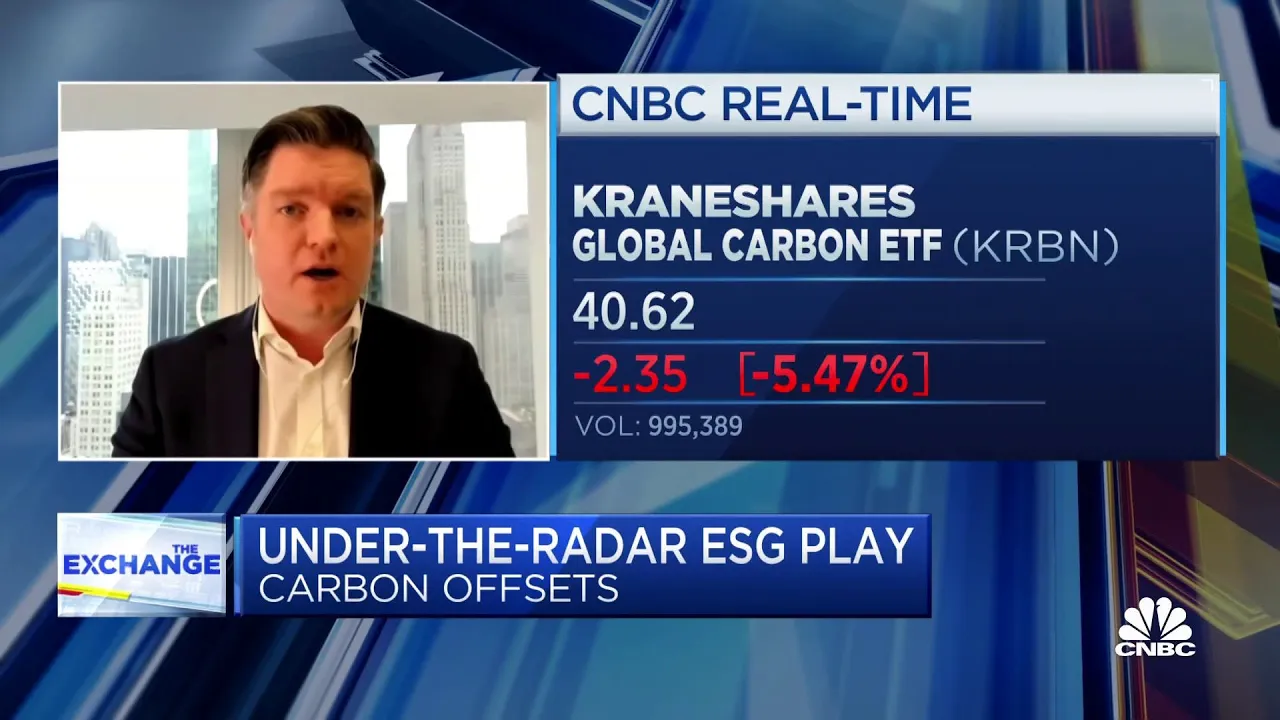
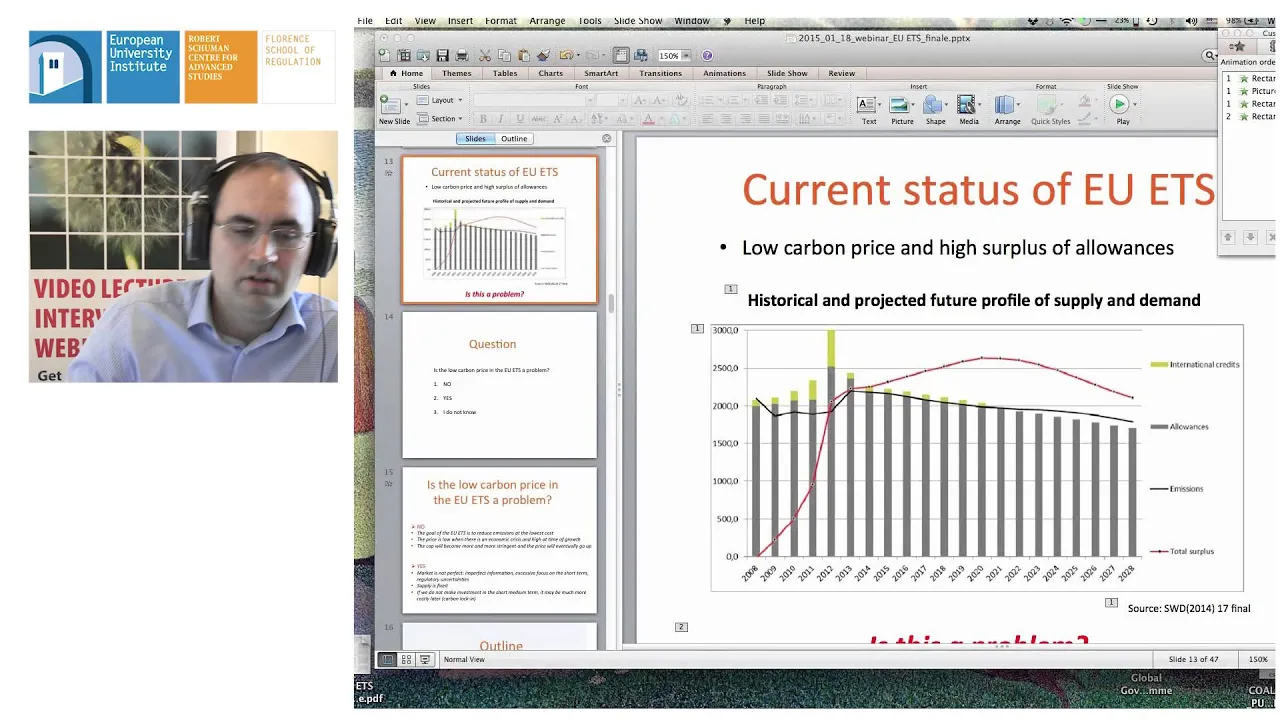
hello and welcome guys to another video where we talk about carbon markets carbon credits and how to make money with carbon if you enjoy content like this then please make sure to like this video and subscribe to the channel so you can stay up to date on this topic today we're going to talk about the european carbon market the eu ets so european emission trading system the eu ets is one of the major policy instruments that the european union uses to comply with its climate goals the ets was launched in 2005 and is designed as a cap and trade system that means that the regulator sets a maximum amount of what you can pollute a so-called cap the cap is a maximum amount of what factories and electrical installations and so on can produce in terms of carbon emissions and under the ets a company must show a permit for each ton of co2 that they emit so this means that companies that produce less than the cap than the maximum amount of allowed emissions get a surplus of permits and companies that produce more than that need to buy in permits and these companies can then trade with each other the eu ets covers a lot of sectors for example heat and energy generation but also heavy industries like cement lime steel and also paper production as well as floral gases and also the aviation sector inside of the european economic area in some sectors installation underneath a certain size are exempt from the eu ets and the aviation sector until 2024 only inside the economic area of europe the implementation of the eu ets consisted of four phases phase one was the pilot system to demonstrate the proof of concept it concentrated only on co2 power generation and energy intensive industries the cap was set at a national level and it was only eu emission allowances that were able to trade then was the phase 2 from 2008 to 2012.
this had a clear goal of 8 reduction of 1990 levels and included also norway iceland and liechtenstein focused on co2 but also nitrous oxide for voluntary member states and included also the aviation sector and the cap was decreased of 6.5 percent from phase one but you could also trade certified emission reductions and emission reduction units that means credits from outside the eu then we had the third phase from 2013 to 2020 21 emission reductions from 2005 also including the same countries now with the fluorocarbons and with aluminium production added and the cap was now set eu wide and now auction him as a mechanism everywhere and you could also trade the credits from outside the eu and since 2021 we entered in phase four phase four consists of a 43 reduction from the 2005 levels and now the cap will shrink even faster before it was 1.74 per year now it is 2.2 percent in the sectors that are critical that they think will move outside the eu there will still be 100 of the free allowances distributed sectors that are not in danger of moving outside the eu will be phased out after 2026 first 30 and then zero percent and with some part of the money they will set up an innovation fund and a modernization fund so does this actually reduce greenhouse gas emissions the official stance is that in the last 16 years the eu ets has reduced greenhouse gases by almost 43 percent a more conservative study said that it has only reduced by 3.8 percent compared to a world without a carbon market that is because the western world is reducing the carbon emissions anyway we are switching mostly towards climate-friendly solutions so the question is does this really serve a purpose however in 2020 and 2021 speculators have discovered the carbon markets for themselves the price of carbon has shut through the roof that is the european price of carbon in the crash of 2020 it was down to 15 euros now it's above 80 even 90. that's like a six-fold increase from the lowest low to the highest high so we could say that the markers have become very interesting for investors and speculators so what are some of the criticism so the eu ets has been criticized from several sites first of all the ngos and the climate organizations have criticized it for being not strict enough on polluters that it actually helps polluters to pollute more and so they can buy themselves out of that and also that they can use old and a bit shady allowances as well as that the money from the income of the carbon markets has been badly spent but there is another side to the criticism also we are now experiencing one of the record numbers of inflation and so with price increases of fuel and consumable goods there's even an additional price on top of that that is basically the carbon tax on top of the regular price so when prices already go up then they go up even more in europe because we cannot pollute we cannot use different methods of producing energy so this creates an additional problem what if there's a problem with the renewable energy or the energy system in general and we need to use other technologies at the moment then the price is very high for these technologies that are still a bit carbon intensive so we have to think about that so how can we invest in the eu ets so there are several ways to invest in the eu carbon markets i have covered them already in other videos but i will still repeat it here the first and easiest is probably to buy the krbn etf this etf consists of two-thirds european union allowances euas so it's not 100 european carbon market but most of it then there is the ipath series b carbon etn also known as grn this is to my knowledge 99 euas european union allowances but is an etn and then i found something interesting to my knowledge this is only available on german exchanges under the ticker cu3 rps you can find a unlimited tracker certificate of carbon futures so very interesting you can buy that on german exchanges this is basically the carbon emission future price and this certificate tracks the price of carbon emissions and is also quite liquid so very interesting these are to my knowledge the three ways how you can participate in the eu carbon market as a private investor but of course if you're an institutional investor that means a professional investor a company then you can go to the energy exchange or the intercontinental exchange and buy the carbon futures directly on the exchange and this is also where most of the trading is done most of the trading is done by institutional investors as always i want to know what you think of the eu ets do you think it is interesting to invest in the uets are you buying carbon futures from europe let me know in the comment section also check out the discord server and the facebook group in the description below and please give this video a like support this channel and i will see you in the next video
Up Next
48:19
Carbon Trading Outlook: Insights from Lawson Steele
@RealVisionPresents
3.6K views•2022-04-20
5:07
Impact of Yuan in Indo-Russian Trade Amid Sanctions
@WION
261.9K views•2022-07-01
10:33
Behavioral Economics Explained: Rationality, Nudges, and Risk
@crashcourse
1.1M views•2016-03-12

113:18
The Age of Easy Money: Fed & Inflation | Full Documentary
@frontline
21.2M views•2023-03-15
Related Study Plans & Knowledge Roadmaps
Structured learning paths in Economics
economics
Sovereign Debt: Defaults, IMF & Restructuring
01Introduction to Sovereign Debt & Government Bonds
02Debt Sustainability & Credit Ratings
03Anatomy and History of Debt Crises
+ 2 more learning modules
12h5 modules
Explore Roadmap
economics
Market Design: Matching Theory & Gale-Shapley
01Introduction to Market Design and Price-Free Markets
02Two-Sided Matching & The Gale-Shapley Algorithm
03School Choice Systems and Mechanism Design
+ 2 more learning modules
10h5 modules
Explore Roadmap
economics
Impossible Trinity: Forex, Capital & Policy
01Introduction to Monetary Policy and Central Banking
02Exchange Rates and International Capital Flows
03The Mundell-Fleming Model
+ 2 more learning modules
8h5 modules
Explore Roadmap
economics
Healthcare Economics: Market Failures & Systems
01Introduction to Healthcare Markets and Market Failure
02Asymmetric Information and Adverse Selection
03Moral Hazard and Insurance Design
+ 2 more learning modules
12h5 modules
Explore Roadmap