























The EU Emission Trading Scheme (EU ETS) operates on a 'bucket' mechanism where a finite number of carbon permits are allocated annually, creating a structural supply-demand imbalance that drives prices upward; with cumulative deficits approaching 100% by 2024 and major industries requiring carbon prices of €140-200 to trigger meaningful emission reductions, the market faces significant upside potential as political and corporate demand for carbon credits continues to grow.
Carbon Trading Outlook: Insights from Lawson Steele
Added:The fundamental mechanics of 'Cap-and-Trade' systems, specifically how emissions allowances are allocated, traded, and capped.
The basic structure and regulatory framework of the European Union Emissions Trading System (EU ETS), including its historical phases and key sectors covered.
Microeconomic principles of market supply and demand dynamics, particularly how policy-driven artificial scarcity influences commodity pricing.
An overview of EU climate policy targets, such as the 'Fit for 55' legislative package, which legally mandates aggressive emissions reductions.
Analyzing the economic impact of rising EU Allowance (EUA) prices on heavy industries (such as steel, cement, and power generation) and the associated risk of 'carbon leakage'.
Exploring the Carbon Border Adjustment Mechanism (CBAM) as a policy tool designed to prevent carbon leakage by taxing carbon-intensive imports.
The operational mechanics of carbon financial instruments, including EUA futures, options, and carbon-focused exchange-traded funds (ETFs) used for hedging or speculation.
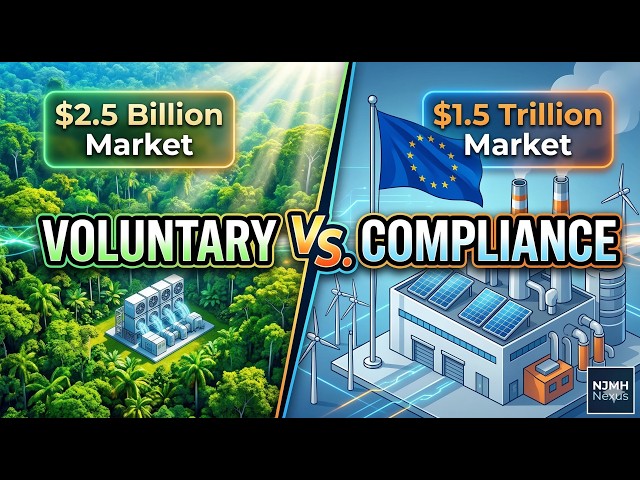
Comparing compliance carbon markets like the EU ETS with voluntary carbon markets (VCMs) in terms of liquidity, verification standards, and price volatility.
Conducting a retrospective empirical analysis of 2024 carbon price data to evaluate the accuracy of Lawson Steele's market forecasts and supply shortage predictions.
3.6K views98likes48:19Original Release: 2022-04-20
RAOUL PAL: When change comes, opportunity abounds. We're about to enter a period of the fastest pace of technological change in all human history, something we refer to as The Exponential Age. And Real Vision is going to be your guide to this incredible future. Lawson, good to see you, my friend. LAWSON STEELE: Hi, how are you doing? RAOUL PAL: Yeah, good. Listen, I want to catch up with you. You had an unbelievably good call last year. I think carbon was one of the best performing commodities in the world. LAWSON STEELE: It was. Yeah. RAOUL PAL: Yeah. And I spoke to you on Real Vision, Pierre Andurand on Real Vision and a few others about this a while ago, and we've gone a long way, come into a new year, so I just thought it'd be a great opportunity to get your thoughts. Where we are now, what lies ahead, and a bunch of other questions I've got. But first, actually before last, and just give people who didn't see the first one, a bit of your background, so they know why I'm talking to you, what you do, that kind of stuff. LAWSON STEELE: Yeah, sure. Well, I've covered the European carbon markets since before it started. It started in 2005. I began to look at it in 2004. I had a claim to fame, I guess, back in 2006 in January, I claimed by forecasting the prices fall to zero. It was trading at 13 at the time, and 11 months later, it literally went to zero. I've never had a better call in my life. Then I got-- RAOUL PAL: Sorry to interrupt. Have you seen the film about this, about the French carbon traders? LAWSON STEELE: Yeah, I did. Yeah. It's outrageous. I had to stop watching it because the main character really annoyed me. It was just like incessant talking. I've had enough of him. Anyone particularly blessed with intelligence, so anyway. Then for many years after, I got really, really dull. And then November 17, I twigged that the EU have finally come up with a new mechanism by which they're going to tighten the market and realize that it was absolutely huge. Then in January 2018, I published when it's at eight, it's not 80, just above, it's been a 10 bagger. But the big question for me is whether, just for the fact that it's a 10 bagger, is that the end of it? And I think the answer is no. It's got much more to come. That's my carbon bid and I've been a utilities analyst, would you believe, for 35 years, because somebody has to be. RAOUL PAL: This is perfect for you, because this is where carbon meets utilities. And it's exactly your sweet spot. Talk to us about what drove last year a little bit, just so people can get in the frame of what's going on here. LAWSON STEELE: There's always a lot of noise flying around. Ultimately, for me, it's simple. Supply is too low versus demand. And that creates the shortage. And we are now in a multiyear, actually a decade of deficits. And that's what really, really matters. Then you got all sorts of noise around that about, oh, the gas price has gone up and therefore, the carbon abatement prices. Coal is so much higher, so therefore, carbon needs to be higher, but I think that's just a mirage. And really, there's no sensible connection now with the gas price, and actually, if it were, carbon would be 350 euros or something at the moment, given where gas and coal prices are. There's endless political noise emanating from Poland and Czech and Greece, and so on, saying, oh, the carbon price is too high. I literally had a fight as it turned out with the Greek Prime Minister. And now I'm having with the Polish Prime Minister, because they both said energy prices are way too high, which is true, and it's because of carbon, which is absolute rubbish. And it's because speculators received more rubbish. I did do some calculations yesterday and I worked out that if you look at German power prices, which are up fourfold last year, from 50 to 200 euros per megawatt hour, 12% of that, just 12% is due to carbon, 80% is due to gas, and then there's the remaining 8% which is probably due to wider margins. So bottom line is that it's all down to gas. Carbon has done diddly squat really, 12% is no great shape. Particularly when you then take it on to the final consumer level, which means it's much more diluted, maybe a 2%, 3% impact. There are a lot of moving parts, a lot of noise. Of course, you have a 55 package with the EU saying we want to tighten our 2030 goals by having a 55% reduction in emissions from 1990 levels, versus 40% target before. Interestingly, they put most of the brunt or bigger part of the brunt on the EU ETS system, so the EU ETS system, the carbon system has the requirement to tighten its [?] by 61%, not the 55 that EU wants. The 55 as an average and therefore obviously for the non-industries which are outside the EU ETS scheme, which essentially are agriculture, transport and buildings, they don't have to reduce their emissions as much as the EU ETS. That's already interesting. But ultimately, that is an event which really comes in from 2024 onwards, in my numbers anyway. But it doesn't change the fact of the next three years, four years, we have a cumulative 100% shortfall in supply. RAOUL PAL: Talk people through a little bit about what the EU ETS system is quickly just so they're on the same page, and why there's a supply/demand issue, a structural massive supply and demand issue. LAWSON STEELE: Yeah. Basically, what it is, if you think of a bucket, you've got a bucket of permits of allowances, and each allowance allows you to pollute it. You can emit one tonne of carbon dioxide. The entities which are underneath this umbrella of the EU ETS, the EU emission trading scheme, have to comply. And therefore, they need to deliver the same number of allowances as they have emitted on the 30th of April each year. That is their Groundhog Day where everything has to be reconciled.
What it means is that if you take a permit or an allowance out of that bucket, you're reducing the size of the bucket for those entities, which is going to force them to reduce their emissions. This bucket shrinks every year anyway, because that's what the EU is trying to do. They're trying to go from here down to the 55% reduction, or in the case of the EU ETS scheme, 61% by 2030. That bucket shrink, shrink, shrinks, which puts pressure on these companies to essentially reduce their emissions, because otherwise they're going to have to pay a huge penalty price. And this is the thing is that on the 30th of April, when you go to your government and cap in hand, and you report your emissions, you either have to deliver the same amount of permits or allowances, so if you produced 10 million tons of carbon, you got to deliver 10 million carbon permits or allowances. If you're short, if you've only got six, because that's all you manage to buy, then on the other four, you will have to pay a penalty price and a penalty price this year is now 111 euros per permit. Okay. And it's actually worse than that, because-- maybe I'll just show this chart. What this is telling you is that for 2021, you are 24% short. That's a squeeze in the system and therefore, that means that when you go to the 30th of April, you find that you're 24% short of what you need, or the permits you need to deliver to your government. And consequently, you have two issues. First of all, you say, well hang on, I'm going to have to pay a penalty price now of 111 euros per allowance that I don't deliver. Now on top of that, the first thing you do is to try and buy the permits, the permits go up because there isn't enough supply, and it goes up to 111. When it gets to this 111 point, then you have a dawning realization that not only are you having to buy the permit for delivery as off site, not only are you having to pay a penalty price, but also, you are now having to buy those allowances because you've got to deliver them next year. You have two options. You can either deliver the allowances you need this year, or you can deliver them next year with a penalty price of 111 on top. That means that now you realize this. On the 30th of April, you don't have enough permits, you've got to pay that penalty price of 11. On top of that, you got to buy the permits for delivery the following year. You're never ever forgiven. Consequently, given that those permits are now trading at 111, your penalty price or your opportunity cost is 222. Therefore, knowing that in advance, you try and buy the permits. There weren't enough to go around. There was 24% squeeze, of course, you drive up to 222. And when it gets to 222, you think, oh, bloody hell, still haven't bought the bloody things. I've got a penalty price of 111. They're trading at 222, so actually, the opportunity cost is not as I first thought, 111, it's not 222, it's actually 333. And that just goes on to infinity. Now, you say, well, actually, if you had a surplus the following year, that wouldn't be a problem. Because you say, well, I'll sort that out by the next year, I'll be fine. But the problem is that next year is even worse. Next year, you have a 35% shortage, i.e., this year, in 2022. And on top of that, you're trying to buy the 24%, which you didn't deliver last year, so actually, your cumulative deficit is 59% this year, and it gets worse and worse and worse and worse. Breaking through 100% shortfall cumulative in 2024. And that's before the Green Deal kicks in. The Green Deal really, as I put down here, kicks in from 2024. Sop really, it really has little impact, if anything at all, on the next three, four years. And what may happen is that actually, the Green Deal may kick in in 2023, not 2024 as I've assumed, in which case, this 26% in 2023 might be more like 35% deficit, so it could get worse. RAOUL PAL: And currently, the EU have not actually reduced carbon as much as they need to. Is that right? LAWSON STEELE: No, absolutely not. Yeah, sure. What you've had really in the first instance, we've had the switch from coal to gas powered electricity. Coal produces twice as much carbon as gas. We've had that. And that's about as much as utilities can do today. Power, which is half of the emissions of the EU, this willingness scheme, has done what it can do so far with annual reductions in emissions due to renewables coming onstream and that sort of thing. That that will happen over time, but it'll be slowing gradually. We have had a setback with that power, because of course, Europe has run out of gas. With literally gas prices have gone through the roof, hence the 80% I was talking about earlier, they've gone through the roof, because we had a prolonged outage or winter, I should say last year, so storage levels were not replenished as much as it should have been. The way the gas market works in the summer, at least in Europe, you push gas into the storage levels underground, and then utilize that in the winter. The problem is that that reserve wasn't injected high enough because it started late. And then on top of that, you've had problems with delivery of gas from Russia, and you've had LNG problems with Asia sucking up LNG prepared to pay more than Europe and so on, so you've ended up with a bit of a mess. The consequence of that is that there actually has been a physical shortage of gas. And therefore, what was a coal to gas electricity switch over the last two years, which is exactly what I forecast back in 2018, has actually retrenched a bit. But that to me is a temporary issue. But the point is that power have done as much as they can if you normalize that issue, so now it's down to industry. And industry have done diddly squat since 2005. Why? Because they've been getting 90% free allowances ever since this thing started. Yes, they've tightened up a little bit this year, and they've reduced that to 85%. But the carbon price was low in the past. They only had to buy 10% of what they needed. Now they need to buy 15, so it's more that the carbon price is higher, but it's still not anywhere near high enough where it needs to be to get industry to do something. And the industry is not going to do anything until that carbon price is at that level, and they see it to stay at that level. And then they'll think, okay, now we'll do something. But it's going to take them three, four years to reinvent the engineering processes and cut their carbon emissions by 30%, 40%, 50%, whatever they need to do, RAOUL PAL: What are the industries we're talking about here who are the big polluters and need to change? LAWSON STEELE: Well, you've got power talking about it. You've got chemicals, oil and gas, you've got metals and mining. You've got ceramics, you've got pulp and paper. And there's 41 other [?] which is you want. RAOUL PAL: Those guys have been observing the market not really concerned about it, but they're going to have to become players. At what price do you think they will start getting forced in where the 15% is actually meaningful to them? LAWSON STEELE: I'll just rephrase I think something you said, or I don't think most of them are actually watching it because it's just been way below the CFO's parapet. It's just nonexistent. And it's only now the price is going up and that they're having to buy 15 instead of 10 that it may, in some cases, raise its nose above the parapet, but probably still not enough. But that's, yeah, in some companies, it is and others, it's not there yet. It is improving. The way I think about this is, if we think about the price of carbon itself, there are three ways to think about it. This is the forecast. As I said, back in January 2018, it was eight euros, that's when I turned a buyer. It hit my 65 target of Q3 last year, two days before it hit 66, something like that. And then it corrected, and then we're now roughly around 88 or 86 at the moment. I need to move on one quarter here, but anyway. For me, what happens is, first of all, because you don't have any liquidity in the market, because it's all tied up and hedging, because you have this multiyear deficit, which means that demand or supply just simply do not intersect, then unchecked, as we discussed, at 111, 222, 333 and so on, it will go to infinity, when stocks are going to infinity is that at some point, we'll have demand elasticity. If it's costing us 10,000 euros just to have this connection, let alone the hardware, then we probably wouldn't have it, or we probably would actually, call it 20. But then before that, you're probably going to get a political reaction. The question really is to understand what price is politically acceptable, what price is required by corporates to actually change their behavior. Now, when I look at the corporates, the first thing I have is, I've got BASF, who said that they won't do anything below 140. In other words, the carbon price has to be at or above, more to the point, 114 to get them to trigger or think about triggering changing their carbon emissions. And it needs to be there obviously for a sustained level. You got Heidelberg Cement talking about 120. And you got BP involved, about 100, you got Swiss Reed Insurance Company talking about 200. And you're going to have these new shipping coming into the scheme in 2024. But they're already thinking about what to do. And they are talking about 100 up to 150. Wherever you're looking at in that suggested price, they need to be north of where we are. But politically, what I think happens is the price goes up to a level, which we'll call 110 at the moment, which is sufficient to trigger the intensity of the political debate, which is a debate we've had ever since 2005 when the scheme started in Kyoto back in 1997, when it was discussed. We get to that intensity of that debate, the intensity of debate then that triggers the political process, which was very slow is going to be the European Commission recognizes that they need to do something, and then we'll come up with a proposal which in the case of the Green Deal, took nine months. The proposal then gets put in front of the European Council, they need 70% of their members to agree, then Parliament, it goes over to Parliament, they need 50% of their members. They want to pretend to do some work, so they'll change it a little bit and bat it back and forth maximum three times. And then it needs to be agreed between Council Parliament and Commission, the trilogue and when the trilogue agrees, then they will try and find a plenary session to put it in front of which of course is already a bag full of chocolate blocks id you recall it, and then it needs to be enacted, rolled out, this is a long period. That's not me barking, it's the dog. When we think about what that price could be, we've had the fact that France Timmermans, who's head of the EU Climate MEP number two, right hand man to Ursula von der Leyen, he has publicly stated that the carbon price needs to be way north of 50. And I'm pretty sure, given the murmurings I've been hearing from MEPs beforehand, that that means two to three times higher than 50, so 100, 150. You've got Germany, which is the industrial heartland of Europe, who is now putting in a carbon floor of 60 euros. They will effectively go in and buy allowances as and when the carbon price gets to that level, should it and this is the one country which in theory, stands most to lose given that this is the industrial heartland. You got the European greens talking about 150. You got the Bank of England talking about around 150. You got Norway talking about 200. But all these numbers are interesting, because he had when I started talking about this back in January 2018, they thought I was barking math when I was talking about 65 euros, and I got massive pushback, people saying, no way. When do you get 50? Well, here we are. And it's like carbon gets to the new level and you take your time, and you reset a bit of panic and everything else and then resets and everyone says, okay, this is okay. And then, all right, yeah, fine. Okay, now we can think about the next level. I think it goes up in something like ladder rungs if you like. That's where we are. And by the way, just to add one last thing, which is a split down here, I did a cross sector piece back in March last year. And what we did was to ask the 150 analysts that cover nine other companies that [?] saying, what happens to your earnings per share if carbon goes to 110? And what was astonishing was that of the 900 companies, less than 3%, 26 of them had a significant impact on carbon in 110. And even more so, if you then set a limit to-- sorry, just one last thing, if we then said, okay, we'll unleash the beast, what happens if you pass on that cost to consumers? What price increase do you need? The biggest increase was airlines who just needed eight, chemicals needed to five and cement needed two. So clearly, 110 is not going to do it. RAOUL PAL: That's why I'm just looking at this and listening to you. I'm just thinking that 110 number looks ridiculously low. I can't see a world where the industry itself is not buying this, and it doesn't really matter to them. The EU needs that to change. It has to change. It feels like the market is short the upside, and the more it goes up, they have to cover their positions because they're just waiting until it hits a level. It feels like you're going to have to go and flush all that out at some point. That's the market dynamics generally of a restricted supply, increasing demand, because the demand increases, the market goes up, right? LAWSON STEELE: Yeah, it does. And it's what I said back in Jan 18. Amazing things seem to have panned out. But I think there is more hoarding of permits, what I expected, because as the price goes up, you begin to do your homework. Well, first of all, you just panicked a little bit and think, why is it going up, why is it going up? Well, I'm not selling, I'm not selling. And then you do your homework and realize actually, you should be hanging on and buying as many as possible as a corporate, or anyone else for that matter, but certainly as a corporate. Actually, yeah, the supply is tightening. There's tightening, because the MSR mechanism and the liquidity is tightening, because we're realizing actually, I need to hang on to this stuff. And that's, everything I've shown you is pre-snowball, what I call the pre-snowball effect. The snowball effect is that everybody will be buying more permits. It'll be utility will be buying more permits because you will have customers asking for longer-dated contracts, four years instead of two you say. Which means that they will then say yes, of course, here, they're not going to immediately hedge their carbon position like buying more of it plus the gas. You're going to have industrials waking up or spending their coffee and realizing what they should be doing is exactly this. You're going to have financial investors obviously playing that and then you're going to have the net zero elements which is that both industrials and financials for that matter will be setting the net zero targets. It's not had 50 meetings on where corporates are over the last three months or so, and I actually thought stupid saying exactly the same thing, but I can sum it up. Actually, I was speaking to somebody just now and I've got next week after next when I come back from skiing, I've got the executive committee of a huge company. I've never seen such a turnout of top management who want to go through this. But they're all saying the same thing. Yeah, we're thinking about net zero targets. We haven't set them yet. We're trying to measure our scope one, scope two, scope three, but we haven't quite measured that yet. And we know that we can offset the residual balance once you produce your emissions as much as you can to that level, or you can't reduce them anymore. That residual balance, we know we can use voluntary carbon offsets. Would you know that you can use emission trading scheme like EU ETS? Oh, no, I didn't. I'm going to think through this. I think, oh, this is such a better vehicle than voluntary carbon offsets. Voluntary is people making a lot of money at the moment, because of the huge opaqueness of that market, but it's fundamentally flawed in my view, because let's say you're going to-- I'm going off on a tangent here, but I'm getting excited. RAOUL PAL: Now, this is important, because a lot of people, you and I see it on Twitter, everyone's like, well, what about all of these new crypto tokens or different offsets? And I'm like, why would you do that when we've got the perfect system here? But carry on, explain the difference on why it sounds so good. LAWSON STEELE: I'll say one thing. Let's first of all distinguish the two, the EU ETS scheme doesn't give [?] about voluntary carbon offsets. Okay, they both have the word carbon, but it's got nothing to do with EU ETS scheme, which is what we've been talking about and are talking about. Don't confuse the two, which many people do. The voluntary carbon market is like, for example, the most obvious is we're going to grow a forest, which is going to be great because it's going to take carbon out of the atmosphere. And that's about your carbon market offset. People think is great, because I can invest in that as a corporate, and then say, hey, look, we're doing this. We can offset that against what we emit, and therefore we're green. That's not true. If you think about planting a tree, if it's anything like my garden, you plant it, and a squirrel comes along and nibbles the bark, or the dog's going to do something against it, whatever. The chance of that tree looking beautiful when it grows up to maturity are low. But anyway, let's assume that it survives pests and survives fire, it survives hurricane, so you get a full maturity of the tree, which by the way, will take 15 years to mature. But let's assume that happens and that the forest or the other trees go together, and they have this forest which is out in the prospectus and that delivers that. So then, okay, good so far. Eventually, these trees will die, fall over and decompose. Clearly, you have to have a replanting shadow to maintain the forest size, which is what happens, it's what the prospectus generally say. What they don't say is that actually, what you need to do is not just replace the tree which has fallen over but also capture the carbon which had been released into the atmosphere. Really, your forest needs to grow infinitesimally. That's a crap system, it's not ESG compliance, it falls down on all sorts of metrics. It's not regulated, right. Whereas the carbon permit market, the EU ETS is fully regulated, fully compliant. Look, here's just one thing, which is worth talking about. You got the IGCC, which is a terrible acronym, you'd have thought 250 pension funds could have come up with something better. But anyway, the IGCC is 250 pension funds worldwide all linked under the same banner, and they got assets under management of $33 trillion. And these guys have said, we will not accept a voluntary carbon market permit as a way to achieve our net zero targets. But we will accept a regulated carbon permit market. In other words, the EU ETS is accepted by 250 pension funds with $33 trillion under management, and the voluntary carbon market is not. Anyway, going back to what I was saying in terms of net zero, you've got pension funds, you've got companies and as they begin to set their net zero targets, will realize that what they can do is to invest in EU ETS market which is much better, recognized by investors than the unregulated voluntary carbon market. RAOUL PAL: And again, I'm listening to you. Now, you've brought another source of demand into the equation and I'm just looking at that 110 number and think that looks ridiculous now. What is the number in your head that actually reaches, because I can tell, this bullish story continues to pick up the next few years. And it doesn't stop. And the more well-known it gets, and the more you go around speaking to all of these companies, telling the utilities they need to hoard stuff, and it starts going through the levels that forces the big polluting industries in, that all feels like that two- or three-year process. So, if you're wrong, you're probably wrong to the upside, right? I know you've got a gray area with an arrow suggesting that it's something different. What is that gray area and the arrow? What's in your head here? LAWSON STEELE: The first thing is that I'm not just speaking to utilities. Okay, I've been speaking to all sorts of including coke manufacturers and game companies and to a plethora of companies I've talked to, which is really interesting, because utilities, I know them backwards, and they know me and everything else. One of the Executive Committee I was talking about is actually a utility, the week after next. But it's funny, you can tell I've had this before. I'm digressing. But I've spoken to some investors where I've gone in, I've talked carbon back in 2018. Went back in 2019. Yeah, good idea. Talk me through that again. I'm going to talk through it again, after about the fourth meeting, says, oh, yeah, that's interesting, isn't it? What's the price? Whoa, it's going up 70%, 80% now. As you know, we've gone up five, six times by then. Oh, well, that's just, the price is too-- I'm too late. Alright, so some people will never ever invest it and people will look at this now and say, it's a 10 bagger from 2018, do I really want to invest in these levels? Forget the history. It's where it's going. Where are we going to? First of all, why have I got 110? I got 110 because I'm an analyst, and I got to sit in front of a fidelity of capital or whatever and I got to justify the price I'm doing. And if I say, well, it's just my gut feeling, I'll be shown the door. But if I say it's 110 or 100 which is the penalty price, then that pulls water. But no, this goes north. The question is a combination of speed and quantum. If this goes to 110 tomorrow morning, the EU will have to react. Well, at least if it goes to 110 and stays there, shall we say, that puts more pressure. But if it's going to 150 over the next six months or eight months, then that's more acceptable. How high could it go? I think it goes way to triple figures. Is it 200? Is it 170? Is it 300? I really don't know. I know fundamentally, it goes way up there, but then it's difficult to gauge that political response at what level does it come in and what does it do? RAOUL PAL: Why would pension funds, why would BlackRock not say with that group of pension funds that we're going to buy these credits because it will force ESG changes amongst the industry? Are they going to have a fight with the EU over this? Because they're highly motivated by this, right? LAWSON STEELE: Yeah. I can think of all sorts of different angles you will have depending on the person that whatever investment fund, whether it was BlackRock or another, some will say, well, it's not in my mandate. I'm not allowed to buy anything, buy equities. I can't buy commodities, gas, coal, let alone carbon. Mandates will have to change and that's generally a slow process. But to me, it's blindingly obvious. But it's down to what you're restricted to do and how big you [?] are. RAOUL PAL: Yeah. It's just because I look at the BASF. And if they're like, well, that's the biggest chemical company in Europe, if they're like, not interested, call me up when it gets to 140 or 150. Well, that tells me that the price is not high enough. If the EU really wants change, they have to go well through everybody's targets because what you're basically saying is, Lawson, give me a call when it gets to 140. But don't bother me before then. That's saying that there was no pain at 140 either. It's like, well, I'm interested. It tells you that it has to go to 200 plus for the EU to get their emissions goals. LAWSON STEELE: There isn't pain. There isn't pain today. We can come back to Poland and discuss that if you like. RAOUL PAL: If there's no pain now, it's just basically another system for governments to get better revenue. LAWSON STEELE: Yeah, well, the revenues are huge. Today's price, you're getting 50 billion euros per annum compared to the UK Brexit, which is 40 billion for one-off. And yeah, it's going to go up. And ironically for Poland, it's making a lot of noises. They are the biggest beneficiary. They're getting 9 billion euros per annum from the scheme. It's crazy. But yeah, the price is not high enough in absolute terms, and it's not high enough because they can pass it on. And what should happen is that they should reduce these free allowances. They're reducing the bid this year 5%, that's nothing. These things need to come down. RAOUL PAL: What's stopping them doing that? What's stopping them saying we're going to make a 40% reduction in free allowances, stop piggybacking? LAWSON STEELE: Because they cannot do anything fast. Okay. You have this legislation called legitimate expectation. And if you are relying on some legislation in order to make decisions, then you cannot change that legislation quickly because you can sue them under the legitimate expectations law. A, they know that. And B, actually, every single meeting I've had since 2000 for the EU, they've said, we want the market to set the price. And if they change the goalposts quickly, they'd kill the market. They'd kill the market and they get sued. And industry will be in absolute uproar. For example, talking about implementing this carbon border adjustment mechanism, CBAM for short. CBAM is basically saying, if you want to come and compete in Europe, you're welcome to under the usual restrictions, but you also must be on the same carbon footing as the European companies are, the domestic players. And therefore, we are going to charge you a national carbon permit based on your outputs and your carbon intensity, and so on, so on. That levels the playing field. That's fine and very sensible. And it's potentially coming in in 2024. But then you can't say we've leveled the playing field, but we're still giving our lot free allowances, because that's just protectionism. That's not a level playing field. Therefore, they are reducing or proposing to reduce the free allowances from 2026 by 10% per annum, which is bullshit, because it means not until 2030, 2040, 2045 will you have zero free allowances. If your sole goal, and it's not your sole goal, but if it is your sole goal to save the planet by 2030 in terms of emission reductions, then you should eliminate free allowances and let carbon go to the moon. What started doing all that is politics and at least a bit more softly. And yeah, sure. We got jobs to protect and look after people and everything else, but that's the difficulty. RAOUL PAL: Why do you have the drop off in price back down to 65? Because it doesn't feel like anything actually changes for a while. LAWSON STEELE: No, and I got-- coming back down 75 in 2023. But again, still with the gray shaded area above it. I think that whole curve is going to be higher. RAOUL PAL: Yeah, that's what's in my head, it's like, the curve is higher and it's probably longer. LAWSON STEELE: Well, I've done it to 2030. And yes, the scheme of-- RAOUL PAL: Because you've got the drop off afterwards, so it feels like there's an elevated plateau, probably, whether it's 110 or-- LAWSON STEELE: The plateau could be longer. It's difficult, isn't it? Because I think the actual political process will be longer, but then the market will anticipate that. What exactly happens to the price on the back of that and want to start discounting it. RAOUL PAL: Now, getting bit into the market dynamics bit nearer term now. April is the date that everyone needs to prove their carbon. How much do you think has been done? Is it done? Is the trade done for the time being so we can consolidate, you've said it should go a stair step level? Or is it still quite a bit of panic buying that needs to be done? What's your sense in this? LAWSON STEELE: I think we're in the final furlong for this year, which takes us through to April 30th. 7th of January, today. That means that most companies, if not all, have not yet had those audited results for 31st of December 2021. And therefore, do not know precisely what their emission levels are, because those are also audited. Once they have that in their hands, if they haven't done much, and a lot of them happened, they will realize what they need to buy and go out and buy it. There is a squeeze going into April the 30th. What companies ought to do is a steady buying throughout the year. RAOUL PAL: Yeah, but they still aren't used to this really, I guess. LAWSON STEELE: No. Most companies don't do that anyway. And even some utilities are not allowed to hedge, Polish utilities aren't allowed to hedge legally, and therefore they buy as they pollute. RAOUL PAL: And I'm looking at the price action the last couple of years, we tend to peak in June, then sideways consolidate for a lot. And then towards the end of the year, we start getting this need to buy more. Does that feel like it's the same pattern probably repeats itself? So we squeeze April, whether it goes on a bit further or not, who knows? LAWSON STEELE: Yes and no. RAOUL PAL: And again, we're not trading this for short term price gains. I'm just talking about [?] structure. LAWSON STEELE: Sure, I'm a long-term thinker anyway, although I've become bit more short-term of late. I think that's right, except that these step change in the auction level triggered by the MSR happens in September. Alright, so you've got really-- RAOUL PAL: Talk me through what you mean by that. LAWSON STEELE: April 30th, you got the compliance, the MSR is the market stability reserve. And that's the mechanism by which, under certain circumstances which are in place at the moment, it triggers a reduction in the pre-[?] auction level, which was set back in 2008, all the way to 2013. RAOUL PAL: I.e., it will increase supply a little bit. LAWSON STEELE: No, it reduces supply. RAOUL PAL: Reduces the supply. LAWSON STEELE: Dramatically. The whole market, the demand/supply imbalance, it's not a story about demand, okay. Demand is moving plus or minus a little bit, but nothing too exciting. It's supply. When you got demand of around 800 million, 900 million or so, you're getting supply reductions of 300 million to 350 million per annum for the next four years. It is huge. That's just the automatic trigger. And that's what this market is about. And that step change happens in September, and it looks back like a two-year average, give or take, and adjusts accordingly. So really, you've got the 30th of April compliance, and you've got September, which is your adjustment. But underneath all of that, you've just got this massive imbalance and the price going up, which is forcing people to wake up and understand what's going on. Now, that just increases and makes people behave logically by buying more permits. RAOUL PAL: The ways people play this, and we talked about this before, and I've been on Twitter talking about it because everybody always asks. There's the EU ETS futures that trade on ICE, very straightforward if you're able to do that. Then there's the KRBN that's in the US. That's not a perfect tool. Do you want to explain just why it's different? LAWSON STEELE: The KRBN is an exchange traded future. Essentially, it buys carbon permits around the world. If you think about what that means, today, you've got carbon schemes, you've got EU ETS, you've got UK, you've got Switzerland, you've got New Zealand, and you've got California, and RGGI on the East Coast, so select six, and China but China is virtually zero in terms of volume. You've got six different places to invest. What KRBN does is it's a global carbon portfolio. In actual terms, that means it's about-- depending on what it is on the day or week, whatever, it's about 60% to 70% exposed to the EU ETS scheme and has exposure to others, so it's not a pure play on the EU ETS but it does have exposure to other ones that you won't know. RAOUL PAL: And are those, without spending all the time going through all the global ones, are they generally similar schemes with similar limited supply dynamics? Is there a global squeeze going on? LAWSON STEELE: The prices have gone up, but California is interesting because it says we'll start off at this level, the level was quite low, and we will increase the price by 6% per annum, so quite active. Imagine a nice yielding bond or whatever. But the price has gone up beyond that, discounting an awful lot of that. And it's discounted that maybe one day, it'll become much more real about it. Because the price now is about where it was, $30, something like that. It's clearly not delivering what the EU ETS is at $80. And of course, as we know, $80 is way too low. But I'm not getting the sense that those markets are going to explode the way that EU ETS scheme as of then, because they haven't had the history of-- why are we here today in 2022 with EU ETS scheme here because from 2005 platform, brief part and the end of 2005, from there to 2018, 2019, the carbon price did diddly squat. And therefore, the EU basically spent years trying to come up with the right formula to get this thing going up. And they've finally done that. These other countries or schemes or whatever haven't had that yet. RAOUL PAL: Yeah, to me, it all clicks with me immediately. When I first heard the story, and then looks- - LAWSON STEELE: [?] cost, aren't you? I know you are. RAOUL PAL: It's a deflationary cryptocurrency going on demand. It's pretty bloody obvious to me how this works. And I saw that and it's like, okay, well, we know how this works out. And it's deflationary. We're seeing even in cryptocurrency world where Ethereum is this deflationary asset where you're buying back or removing supply. I'm like, it's the same as this carbon market. The other instrument is GRN, is it? LAWSON STEELE: Yeah, GRN is one that's quite illiquid. Then you got IG index, if you want to spread betting, if you're not in the US, you can do that in the UK and so on, or the Europe, whatever. It's pretty limited at the moment. Yeah, at some point, it is difficult for traditional retail investors, what you call the man on the street to invest in carbon today. ETF is like what? But at some point, a product will come out which allows retail to get involved. RAOUL PAL: KRBN is not the worst. You look at it and go, well, there's a bunch of cash just because they invest in futures contract just so everybody's aware. They don't need to put the cash in. But it's not a bad product. LAWSON STEELE: No, it's good. It's just delivered price performance. RAOUL PAL: Fascinating. Lawson, listen, thank you, my friend. That's just a good update to know where we are, what we got to see. Sounds like the year ahead is going to be another interesting year, right? LAWSON STEELE: Yeah, super exciting. Yeah. Sorry I'm going to put up with such bad weather, but yeah. RAOUL PAL: Brilliant, perfect. Okay. I'm sure we'll catch up with you again halfway through the year to figure out where we are then. LAWSON STEELE: All right, cool. Good to see you. Okay. RAOUL PAL: Take care. LAWSON STEELE: Bye. RAOUL PAL: When change comes, opportunity abounds. We're about to enter a period of the fastest pace of technological change in all human history, something we refer to as The Exponential Age. And Real Vision is going to be your guide to this incredible future.
Up Next
30:16
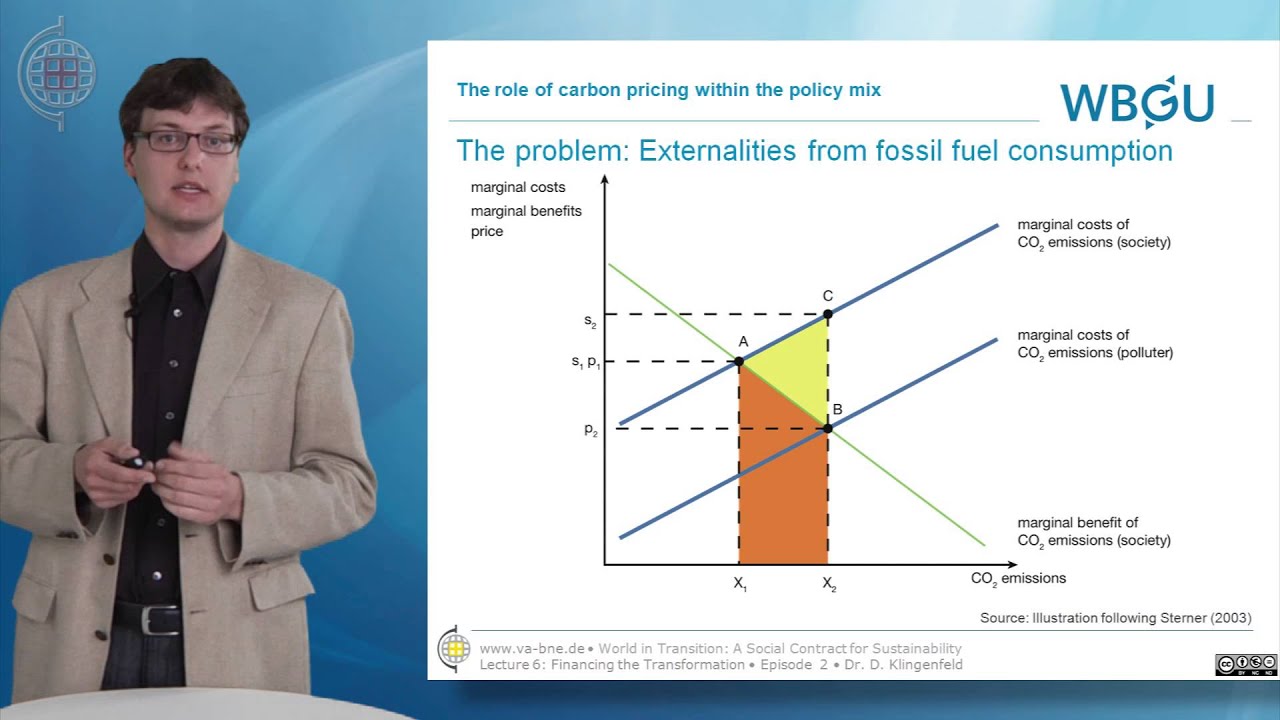
Carbon Markets & Policy Mixes for the Global Transformation to Sustainability
@VANachhaltigkeit
714 views•2013-01-25

5:07
Impact of Yuan in Indo-Russian Trade Amid Sanctions
@WION
261.9K views•2022-07-01
10:33
Behavioral Economics Explained: Rationality, Nudges, and Risk
@crashcourse
1.1M views•2016-03-12

113:18
The Age of Easy Money: Fed & Inflation | Full Documentary
@frontline
21.2M views•2023-03-15
Related Study Plans & Knowledge Roadmaps
Structured learning paths in Economics
economics
Sovereign Debt: Defaults, IMF & Restructuring
01Introduction to Sovereign Debt & Government Bonds
02Debt Sustainability & Credit Ratings
03Anatomy and History of Debt Crises
+ 2 more learning modules
12h5 modules
Explore Roadmap
economics
Market Design: Matching Theory & Gale-Shapley
01Introduction to Market Design and Price-Free Markets
02Two-Sided Matching & The Gale-Shapley Algorithm
03School Choice Systems and Mechanism Design
+ 2 more learning modules
10h5 modules
Explore Roadmap
economics
Impossible Trinity: Forex, Capital & Policy
01Introduction to Monetary Policy and Central Banking
02Exchange Rates and International Capital Flows
03The Mundell-Fleming Model
+ 2 more learning modules
8h5 modules
Explore Roadmap
economics
Healthcare Economics: Market Failures & Systems
01Introduction to Healthcare Markets and Market Failure
02Asymmetric Information and Adverse Selection
03Moral Hazard and Insurance Design
+ 2 more learning modules
12h5 modules
Explore Roadmap