




















Carbon pricing through cap-and-trade systems is a preferred policy instrument for addressing market failures in climate change, as it provides environmental certainty by setting emission limits while allowing market flexibility in how reductions are achieved; this approach should be complemented by other policy instruments like feed-in tariffs, grid regulation, and R&D investments to achieve a comprehensive global transformation toward sustainability.
Carbon Markets & Policy Mixes for the Global Transformation to Sustainability
Added:The economic concept of negative externalities, specifically how greenhouse gas emissions constitute a market failure that requires intervention.
The fundamental mechanics of carbon pricing instruments, particularly the operational differences between cap-and-trade systems (ETS) and carbon taxes.
The core objectives of global climate governance frameworks, including the United Nations Framework Convention on Climate Change (UNFCCC) and the Paris Agreement.
The basic definition of a 'policy mix' and how governments combine regulatory, economic, and voluntary tools to achieve environmental goals.
The design and implementation of Border Carbon Adjustment (BCA) mechanisms to prevent carbon leakage in international trade.
The role of Article 6 of the Paris Agreement in establishing a framework for highly integrated international carbon markets.
Methods for 'revenue recycling' from carbon pricing to offset social inequalities and build public support for climate policies.
Analyzing sector-specific policy integration strategies for hard-to-abate industries, such as aviation, heavy shipping, and steel production.
714 views3likes30:16Original Release: 2013-01-25
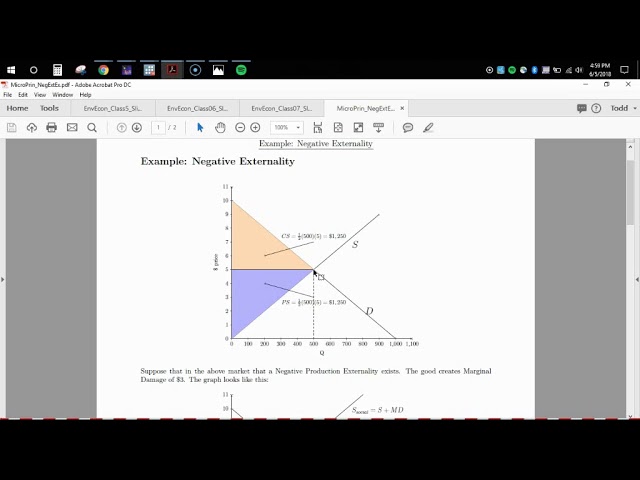
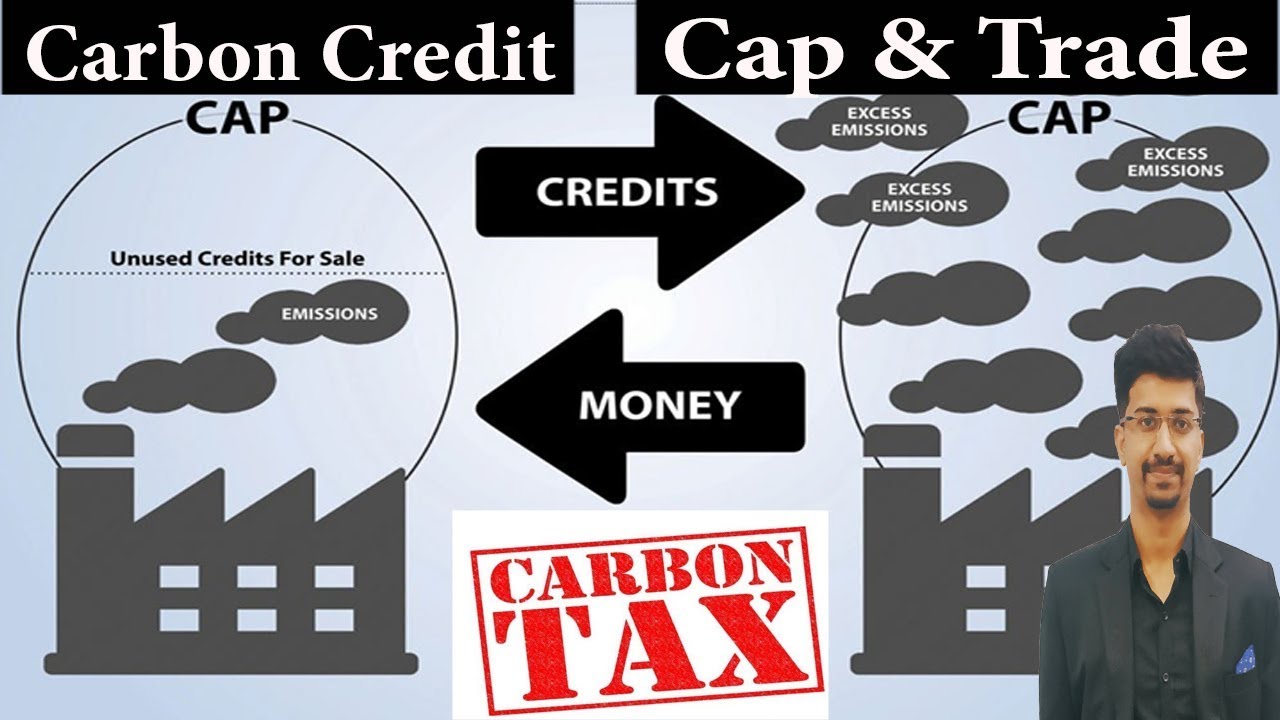
hello everyone my name is Daniel kenfeld and I work at the potam institute for climate impact research after we've learned in episode one about the possibilities and also challenges of financing a global transformation towards sustainability I will now take up in episode two the role of carbon markets specifically and expand on a couple of points that Professor Schubert has already alluded to after the end of my talk um in terms of learning outcomes you will be able to understand why a well-designed policy framework is needed for initiating the global transformation and for sustaining it more particularly you will know about the essential role of carbon pricing within an overall policy mix I will give you the arguments to be able to explain the difference between price-based and quantity-based Regulation and based on their relative advantages and disadvantages you will understand why carbon pricing by way of a carbon Market is a preferred option speaking more about the political landscape you will also learn how to expand carbon markets globally looking at different strategies on a stepwise approach and to a more Global approach and finally you will understand why additional policy instruments are needed to complement carbon pricing strategies in a broader policy mix the content of my presentation follows the learning outcomes and I would like first now to begin by talking about market failures as barriers to investment and in fact there are a number of market failures that hamper the global transformation process and that really require government intervention a number of government policies to address a whole set of market failures what's a market failure in fact a market failure precludes that markets operate efficiently and bring about a socially desirable outcome in the context of a global transformation probably the biggest market failure and the biggest challenge is the public goods character of the atmosphere and of providing a stable climate system to explain this in a way climate policies and climate mitigation um are being undertaken by some individual actors they bear the costs but the benefits of reducing emissions are really shared globally and as a result of this structure of costs that occur individually and Ben benefits that are being shared globally there's less mitigation undertaken than would be socially socially desirable so this explains or this is characterizes the big challenge of the atmosphere as a public good and a market failure to be addressed related to this point is the question of externalities I will come back to this point in more detail at a later slide um the point of exter externalities was already taken up by Professor schuber it characterizes a situation where the market prices that producers and consumers phase do not take into account damages that are being borne elsewhere by Society a further market failure related to the global transformation process are information asymmetries and more specifically there the information differences between borrowers and lenders of capital which make it difficult to allocate capital in a socially efficient way natural monopolies are a further challenge the electricity grid is an example of a natural Monopoly indeed once a grid is in place it is very hard if not impossible for new competitors to enter the market and to build a competing infrastructure because the capital requirements and the Investments are so large that it also would not make sense from a social uh socially optimal perspective to basically build two competing grids and then to let them basically appear on the market that's why regulation is important to regulate those natural monopolies and finally there's transaction costs also coming back to the the question of allocating Capital transaction costs to really match lenders and borrowers of capital to advance the global transformation process so taking all this together all these challenges uh they lead absent any government policies to an inefficient allocation of resources and that's where a balanced policy mix comes into play and I will come to this next talking about instruments for managing uh the global transformation process so what what options do governments have in order to to address market failures in order to enhance the operation of markets around the world related to This Global transformation process well in fact there are four different sets of political and economic instruments at the disposal of governments and I would like to highlight them to explain them now uh to you they are first regulatory instruments then incentive instruments information instruments and government investment so starting with the first one regulatory instrument this category is also known as mandates or command and control policies and these two names already indicate that we are talking here about rather prescriptive policy interventions that mandate very specific outcomes for companies and consumers as an example uh we can talk about for example efficiency standards for buildings so minimum building codes or also efficiency standards for cars that set minimum requirements industry performance standards that have to be met or exceeded so companies basically cannot um you know circumvent this regulation and they have to respond to it and so it's it's a fairly direct intervention in the market the second category of instruments incentive instruments give more flexibility for consumers and businesses on how to respond to regulation and also the question of carbon markets that I'll be talking about follows in the second category of incentive instruments so examples include here taxes subsidies or user charges by these measures basically governments try to change relative prices they tax a certain activity for example associated with CO2 emissions so as to increase the relative price of this activity Visa other activities that are not related to harmful external effects and uh by doing so governments set an incentive for changes in user and producer Behavior but they don't mandate a certain outcome so in the end consumers and producers are still free to choose how they desire how they want to invest what they want to purchase but the incentive structure certainly changes the third segment and the third category I would like to highlight here are information instruments um very wellknown uh strategy that I'm sure you're all aware is labeling of appliances I'm sure everyone has already seen like a sticker on a refrigerator or on a washing machine machine indicating a certain energy performance level normally it's done in letters from A to B or C or even a plus as we have in Europe at the at the moment as an information um um sticker that gives you a certain indication where this specific product basically fits into the overall efficiency level as compared to other products it gives you more information to orient your consumption decisions but it doesn't mandate anything it just gives you more information so that you can make informed choices and there are other ways of course to do so there can be information even on broader questions such as climate change on websites so on so forth in order to alert citizens in order to make them aware of certain trade-offs for them to make educated choices in their daily lives the final category here are government Investments this is a very direct basically government intervention by um for example investing directly in technology demonstration projects by advancing research and development by showing that a certain technology is viable allowing further studies on it so to to directly take government money and uh basically put it into a demonstration project but even beyond that very important um area for p government Investments are uh public infrastructure Investments for example if governments invest in um uh in High-Speed Rail systems or in public transport this can have a huge effect on advancing the transformation to sustainability so this is to show you the overall instrument mix available for governments and I would like now to talk more specifically about the role of carbon pricing within this policy mix and here I come back to the issue of externalities that was already mentioned by Professor Schubert and that I also took up when talking about market failures related to the global transformation process and I would like to illustrate the challenge here in a little bit more detail with this graph that you see here on this slide and talk about externalities from fossil fuel consumption so for a moment moment let's forget about externalities and just think about a normal market for a good let's say electricity that is being produced in association with CO2 emissions for example in a coal fired power plant coal is being burned electricity is produced on this graph here you have on the xaxis an amount of CO2 emissions increasing um from left to right and on the y axis you've got a different labels for marginal costs from a producers perspective so in this case the coal company marginal benefits from a societal perspective in this case electricity customers and then this is both expressed in terms of price so what we see here let's first start with this downward sloping green curve which is the marginal benefits curve from a societal perspective for CO2 emissions and we should say for using electricity produced with CO2 emissions it's according to standard economic theory downward sloping at a rather high price the quantity asked for on the market is rather small because only the most valuable uses for electricity are being undertaken by customers and as much as the price decreases the demand for CO2 increases for electricity as more and more users find it beneficial to use electricity for certain um services that they require at home and elsewhere conversely you've got uh the supply curve from from a company's perspective and that's the blue curve at the bottom the upward sloping curve and that's also according to standard economic theory the more you produce in terms of um in this case power with CO2 emissions the more expensive your marginal costs become because you may be you may be tapping more deeper cold seams so that's that's just standard economic theory that this is an upward sloping curve and at the intersection what you get is the market clearing price this is here the point given by X2 uh quantity X2 and the price P2 but isn't there something missing this is the big question that's where externalities come into play and indeed there's something big missing because all the negative effects that the CO2 emissions that are being released in gender for example in terms of accelerating climate change contributing to increased sea level rise in um increasing the likelihood of extreme events such as droughts and floods all these damages that result from overall CO2 emissions of course globally and over time they are not being paid for by the parties that do the transaction in this case so they're not being paid for by the producer of electricity nor by the consumer in this case and this is what we call a negative externality that we normally would have to take into account and we can do this or we can at least Express this externality by Shifting the supply curve of the producer upward uh and by this accounting for the costs the additional costs that every unit of CO2 released entails in in this in this case and so what we get here is a new market clearing price and a new a new quantity that is indicated by the point a so what we see here is that we have a lower quantity of emissions and the service provided the electricity comes at a higher price that really takes into account all the social costs so this is the concept of externalities and maybe a last point on this slide why is this socially beneficial I mean now we've got the Shaded uh figures here we could say of course we're losing out on some degree of social benefits of social welfare indicated by the dark orange shape and given by the end points a and X2 and X1 but keep in mind that producing this extra quantity as we had done in the initial case without the externality requires the overall inputs of the shape a c X2 X1 so that overall bigger shape and so the costs outweigh the benefits and that's why it's from a socially uh from a social perspective more beneficial to go back to the price and quantity point a moving on so what do we do then to in order to internalize the um the uh this externality and well the solution is in a way to put a price on co2 emissions in the proportions so that to exactly uh match the uh the external the social costs uh with with that additional price increase and the um the mechanism by which this works is that consumers see or first producers see a higher um a higher price for their for their output of electricity so they face higher costs which they have to pass through to consumers in order to stay in business and so consumers see a higher price they react to it they substitute for example they use they may use electricity from renewable sources not associated with CO2 emissions and so um in the end we come to this behavior that shifts back the quantity and raises up the price now the question is how do we come to this price on co2 emissions and various strategies are possible here and I'd like to talk about the two main strategies which are price regulation and quantity regulation now probably the most intuitive one is price regulation in the form of putting a price on CO2 in the form of a tax um in an Ideal World we would of course then know the um the two curves where they would sit exactly and we could measure basically the difference between a company level perspective and a society level perspective and really take this Delta and set this as the tax rate and by by by doing so we would then uh contribute to internalizing the social cost of emitting carbon dioxide so this would be the first case and probably the most intuitive one there's second option that we could choose and that I will elaborate on in even more detail and that's called quantity regulation what we could do conversely is not to look at the price but to look at the quantity that we would like to allow in terms of pollution in terms of emissions and establish something that is called a cap and trade system we set an overall limit and we divide this overall quantity that we still allow into very into smaller parts of allowances usually expressed by one ton emissions of one ton of CO2 which we then um in a in a textbook case we would sell this quantity to the producers of emissions they would have to purchase probably by by way of auction they would have to purchase these these certificates and so by setting the scarcity by limiting the overall amount we are actually creating a value of those permits so they get a price and it's only in an indirect way that we would be putting a price on co2 and it could lead to the same result as I will point out um in a moment those permits are then traded on a market where normally the U regulated companies participate but that's not exclusive it can really be opened to many um you know private and corporate entities trading on this Market in order to provide liquidity as is being done on the oil market and many other markets in the world where not only those who are really using the oil are are the Traders so this can be done on a wider level and the result of this operation can be much the same as in the case with the tax by creating um or by yeah inducing a price for emitting CO2 you're also having an effect on the uh uh producers cost for providing a certain product which will then be passed through to Consumers and lead to a certain change in behavior and a reduction in the consumption of these uh this product and the emissions associated with it now the tricky thing is that in both cases we don't know the exact shape of the first the uh company Supply curves but even more so the social the social marginal cost curves this is uncertain and so in the case of a cap cap setting a quantity regulation what we would need to do is to get as close as possible to the socially optimal point this is just here the illustration to indicate that we are moving from the point X2 to a point X1 that is lower in terms of CO2 emissions than the point X2 as closely as possible to the optimum point xstar that is given here on this graph where the marginal cost curve um on a societal basis intersects with the marginal benefits curve that I highlighted in the initial graph if we know the shape of the Curves in theory both instruments are equivalent and I would like already to highlight a groundbreaking study of Martin whitesman that is also given in the references that he published in 1974 that looks at this case but also extends the analysis to uncertainty and I will come to I will explain the differences as I go along but there's as I said there's important literature that you can look at if you're also interested in the mathematics behind the two different cases in this case on this slide where we know the shape of the curves the two instruments can indeed be equivalent the first case with a text I already pointed out how it works we select a text that is given here by the Greek letter Pi uh this green uh green area it shift it shifts the supply curve upwards and we correct the quantity from X2 to X1 and the price also moves up to the new market equilibrium given by the point B on the right hand side of this graph you see the solution with a quantity regulation where the regulator would not then set the price on the y-axis but would look at the quantity on the x-axis so it would only be that a total quantity of X1 uh emissions would be allowed and in our graph this would basically tilt the um supply curve inwards and it would become vertical at a point where we got the quantity X1 so at the maximum allowable quantity um no further quantities could be issued or could be could be sold on the market because the price would become infinite there are no permits for it and the end result would also be a resulting permit price which is just the same as in our taex case so in principle the two instruments could be equivalent you could pick one it wouldn't matter which one so while under conditions of perfect certainty both instruments are equivalent there are major differences in reality and I would like to explain now advantages and disadvantages of both instruments in a case where we don't know exactly the shape of the marginal cost curve from a societal perspective and that's the case we are facing when we talk about climate change and externalities in case of a CO2 tax the major advantage is certainly that consumers and producers have certainty on their cost exposure over the the time frame of of the tax so basically if you have your emissions quantity and you know the tax rate you know exactly your cost exposure at the end of the year at the end of the reporting period on the downside you have uncertainty from a societal persp perspective on the overall emissions outcome and this is because there are a few uncertainties that interact and one of for example would be the rate of economic growth that we cannot predict exactly and that would have consequences on the resulting emissions even if you have a set tax rate on your emissions related to this on a more Global level is also the evolution of the global population which certainly also has effects on E on economic growth in the end and the third Point very important one is also the rate of technological progress of substitute Technologies when I come back to the example of power production from coal a substitute would be to produce electricity from wind or solar so the evolution of costs of these Technologies has a major of course effect on the overall mitigation outcome on the overall reduction of emissions at a certain tax tax rate now if I come to the second instrument cap and trade system here really the advantages and disadvantages are reversed if we compare it to a tech solution you have certainty on the environmental outcome by setting a certain cap and if the system is well enforced of course you know exactly at the end of your trading period what emissions outcome what emissions result you will get and here the uncertainty lies on the price for those factors that are the same that I pointed out in the tax case so again the question of technological progress economic growth population growth they all give uncertainty on the price and lead to certain fluctuations in the market what we see for example now with the European Union's emissions trading system I'll come back to that point now the question is which uncertainty weighs more which uncertainty actually should be should be taken into account more seriously and the question is uh whether we actually favor then a price-based regulation in the form of a CO2 tax or a quantity-based regulation in the form of a c and trade system and we believe in our report that quantity-based regulation should be given preference especially in a Global Perspective now why is that I'm sure that in one of the first lectures you heard about the Global Environmental guard rail of keeping global average temperature increase below 2 degrees Celsius as compared to pre-industrial times and if we calculate back from this Global guard rail we can derive a fixed Global emissions budget that can then basically be implemented through a cap and trade system on the global level and be made tradable so the main argument here would really be to privilege the environmental uncertainty and to make sure not to cross certain thresholds and this you can only ensure with a with an appropriate quantity regulation the further Advantage would be more of political nature and that's that's an argument if we think about international relations and if we introduce also elements of equity in global burden sharing it could be argued that especially poorer countries in this world that don't have the also the um the GDP per capita or the financial means to introduce such systems because their population would not be able to to support price increases for fossil fuels in the proportions required maybe under such an approach that such countries would need to receive financial transfer payments and they could come from a global pool of tax collection from a a global tax on co2 or they could also come from the sale of allowances of CO2 emission certificates that these countries would be allocated now I would argue that the uncertainty over the long run for the stability of such a system is much greater if we think about CO2 to taxes in such case the giving countries would have to approve these transfers every year again and again which of course creates an uncertainty in political terms whereas if one set up a global trading system one can allocate allowances over the long run they could create property rights over decades and so the system would be more stable so it's in a political economy perspective it seems more appropriate as well as in a long-term environmental P perspective I would now like to turn to practical Strate strategies to advance carbon markets globally and would like to speak about three different options that we actually detail in our report in chapter 7 to be correct in chapter 732 if you want to have a a closer look at three different strategies and we Define in this chapter three different levels of ambition that are related to the political challenges of implementing these suggestions but also that are related to the to the eventual transformation outcome so the higher the level of ambition the higher probably the political requirements for implementing these strategies but the higher also the the uh contribution to advancing a global transformation process now let's start with the first recommendation on the more modest ambition level which is to enhance the European Union's emissions trading system the EU as it's called in short is the first emissions trading system for carbon dioxide emissions and it is the biggest emissions trading system of its kind in the world it's covering more than 10,000 different installations in Europe mostly from the power sector and heavy industry and covers about 45% of the total CO2 emissions of the Union so while the system is a pioneering and very important first step we see major areas for improvement that I would like now to highlight uh just uh to explain the bullet points here well the first observation is that currently prices are trading very low and that's not least a result of the economic recession that Europe is is facing in order to contribute to sending more credible price signals and to incentivize invest Ms in new technologies the price signal would need to be stronger in the European Union's emissions trading system that's why the cap so the the amount of allowances the amount of emission permits should be reduced uh over the next years so as to bolster prices and this can be done by reducing the amount of new permits that are being sold at auction in the years to come so that's a first proposal that we make the second proposal is to increase the emissions coverage of the system and to take the other 55% of the EU CO2 emissions into the system system notably the transport sector with cars and trucks as well as the home heating sector these types of fuels are so far not priced with their CO2 emissions and in order to do so one could shift the point of regulation of the system to the level of the fuel inputs into the economy economy so what could one could require importers of um oil or gas or coal mines to purchase certificates so as to cover all CO2 uses in the economy a second possibility for advancing carbon markets and now in a more Global Perspective would be to seek linking possibilities with other countries other blocks of countries in the world and there are different options for making progress when it comes to linking one would be to um advocate for sectoral or tier approaches that say for example a country like China makes an agreement with the European Union to establish a cap on its power sector and to make its certificates tradable with the ones of the European Union and depending on the allocation of permits between China and the European Union this could also become an attractive case for countries like China to join such a system there are other options for example specifying relative targets or efficiency targets that really give you more leway leway when it comes to economic growth that don't set an absolute Target so there are many ways of making progress here and we believe that options for linking with other partners with other systems should be sought But ultimately really when we are serious about the 2° Celsius guard rail we know that Global emissions should Peak should have their highest point before the end of this decade and that requires really a leap in global cooperation and a much stronger incentive setting not only in Europe but in countries of course like United States but especially also in big emerging economies like China India or Brazil and in that perspective what we Advocate is a is to negotiate a cap AS Global as possible with major partners and to bring them into the structure by offering them also an equitable distribution of allowances not just based on past emissions where we as Europeans have a rather still a rather high level compared to the world average but for example based on equal per capita allocation that would would give countries like India a real incentive to join in such a system so of course this strategy would be a huge leap forward it requires huge political Capital to be invested but in the end it may be the only one really commensurate with a 2° cels guardrail I now come to the final point of my presentation and the question what additional policy instruments should complement carbon pricing within a global carbon market and so on this last slide uh I would like to highlight and point out once again that we see carbon pricing through a cap and trade system with ambitious caps that extend as globally as possible as the core strategy for bringing about the global transformation process but there are other market failures and I talked about at the beginning of my presentation about other challenges that need to be addressed um by governments around the world in order to bring about a socially desirable outcome and to really make progress in the direction of a low carbon economy for example barriers to Market entry we see them in the electricity sector uh for example here feed and tffs and Professor schuba talked about it could really speed up the penetration of renewable energy sources in a much faster way and also contribute uh to advancing technologies that on a purely carbon pricing level would not be competitive today but are learning fast and are decreasing cost fast other options include include grid regulation for electricity grids which are natural monopolies I hinted to that and finally active government R&D programs in order to um take into account or account for knowledge spillovers which lead to underinvestment in research and development meaning that knowledge generated by companies is often appropriated by others without them getting compensation so an active government policy in a balanced policy mix is really the key so this brings me to an end um ' got here some questions for for selfstudy to you I won't Point them out all in detail I hope that I was able to show you that active government policies are required to scale up and to speed up the transformation process and that carbon pricing with a global carbon Market has a key role to play thank you very much and I'll see you in the interview
Up Next

54:36
Carbon Tax vs. Cap and Trade: Economic Debate Analysis
@UTMcCombsSchool
7.1K views•2011-05-23

5:07
Impact of Yuan in Indo-Russian Trade Amid Sanctions
@WION
261.9K views•2022-07-01
10:33
Behavioral Economics Explained: Rationality, Nudges, and Risk
@crashcourse
1.1M views•2016-03-12

113:18
The Age of Easy Money: Fed & Inflation | Full Documentary
@frontline
21.2M views•2023-03-15
Related Study Plans & Knowledge Roadmaps
Structured learning paths in Economics
economics
Sovereign Debt: Defaults, IMF & Restructuring
01Introduction to Sovereign Debt & Government Bonds
02Debt Sustainability & Credit Ratings
03Anatomy and History of Debt Crises
+ 2 more learning modules
12h5 modules
Explore Roadmap
economics
Market Design: Matching Theory & Gale-Shapley
01Introduction to Market Design and Price-Free Markets
02Two-Sided Matching & The Gale-Shapley Algorithm
03School Choice Systems and Mechanism Design
+ 2 more learning modules
10h5 modules
Explore Roadmap
economics
Impossible Trinity: Forex, Capital & Policy
01Introduction to Monetary Policy and Central Banking
02Exchange Rates and International Capital Flows
03The Mundell-Fleming Model
+ 2 more learning modules
8h5 modules
Explore Roadmap
economics
Healthcare Economics: Market Failures & Systems
01Introduction to Healthcare Markets and Market Failure
02Asymmetric Information and Adverse Selection
03Moral Hazard and Insurance Design
+ 2 more learning modules
12h5 modules
Explore Roadmap