
















The Paris Agreement (2015) represents a significant evolution from earlier climate frameworks, requiring all nations—both developed and developing—to set their own emission reduction targets (Nationally Determined Contributions) rather than imposing legally binding obligations only on developed countries as done in the Kyoto Protocol (1997), which covered only 18% of global emissions and failed to include major emerging economies like China; the Paris Agreement aims to limit global temperature rise to 2°C (with a 1.5°C aspirational goal) and achieve net-zero emissions by mid-century, using flexible, transparent processes and market mechanisms to encourage broader participation and more ambitious climate action.
Paris Agreement vs Kyoto Protocol vs UNFCCC Analysis
Added:Basic understanding of the greenhouse effect, global warming, and the primary anthropogenic sources of greenhouse gas emissions.
Foundational knowledge of international relations and how global treaties, protocols, and conventions are negotiated, signed, and ratified.
Familiarity with the core concept of 'Common but Differentiated Responsibilities' (CBDR) in international environmental law.
The role of the Intergovernmental Panel on Climate Change (IPCC) in providing the scientific consensus that drives political negotiations.
In-depth analysis of Nationally Determined Contributions (NDCs) and the efficacy of the 'ratchet mechanism' in raising climate ambition over time.
Exploration of carbon pricing mechanisms, specifically carbon taxation and emissions trading systems (ETS) under Article 6 of the Paris Agreement.
The study of global climate finance, including the funding commitments made by developed nations and the implementation of 'Loss and Damage' funds.
Comparative analysis of domestic climate policies (such as the European Green Deal or the US Inflation Reduction Act) and how they translate international treaty commitments into national law.
103.1K views3.4Klikes18:26Original Release: 2021-01-22
we are clearly convinced that this is very important not only uh for the planet it's very important for the future of our mankind nations of the world United in this common cause and the Paris agreement was born e Parliament has voted to ratify the Paris agreement on climate change Nigeria signed the Paris agreement on climate change U.S president Donald Trump withdraw the United States from the Paris climate change agreement so what is the Paris agreement on climate change and why it's so important or is it important at all [Music] formerly the Paris agreement was signed in 2015 but the story of it started long time ago back in the 1986 Swedish scientists suante erinos first published the idea that burning fossil fuels can pump CO2 levels so significantly that humans can cause global warming this was the very first time on the idea of human Coast climate change actually went to public but back then no one paid attention to his statement so time went by and in 1930s measurements show that average temperature of U.S and Northern Atlantic is increasing but no one actually knew what the reason for that maybe it's a natural cycle maybe it's some Regional climate event at the same time another scientist published his point of view proving that those measurements already mean that climate change is underway his name was Guy Stewart calendar he was an english team engineer and inventor who out of pure curiosity decided to dive into completely new topic climate science in the early 1930s calendar began collecting data on concentration and properties of the atmospheric gases on the rainfalls and temperatures across the globe on the role of the ocean currents and use of fossil fuels as well among many other factories as a result he produced the first ever draft of climate model the mathematical model simulating climate Behavior based on its core drivers even today scientists say that his calculations were surprisingly accurate but as you can imagine back then his research was not received too well members of methodological Society basically ignored his proofs and calculations saying that the person with no relevant PhD could not be right on such a complex issue but calendar never gave up on his theory and kept working on it till late 1960s publishing more and more proofs he became one of the most significant figures in discovery of climate change calendar study raised quite a lot of curiosity towards disability of climate change and scientific community and other scientists also continued to look into the topic and in the 1950s this was first time when more broad scientific Community went public saying that we think climate change is really happening we still don't know the reason humans might be a reason but we don't have proofs yet but guys something is definitely happening popularization and investigation of climate change continued on bigger scale now but no concrete actions to fight it were taken till one notable moment on June 23 1988 James Hansen one of the leading NASA scientists gave testimony to the U.S Senate committee on energy and natural resources this testimony is considered to be the first call for action on the highest level in his statement he not only confirmed that according to NASA computer simulations climate change is happening but he also highlighted that climate change is already really large enough to cause extreme weather events and with 99 certainty it is caused by human actions his statement made headlines around the world and for the first time have started the real discussion between public scientists and politicians as one of the measures United Nations established in the end of the same year organization called the intergovernmental panel on climate change that includes representatives from 195 countries whose goal is to have the most up-to-date information on the problem of climate change basically they review almost every scientific information that is being produced in a world and build comprehensive picture based on those tons of reports so what they do is actually tremendous work and this organization became let's say a huge level and pushing problem of climate change further because now at least governments have single source of truths someone they can rely on in terms of trying to get more information on what's going on the next important Milestone happened in June 1992 a video Earth's Summit it was Major International United Nations conference that brought together representative from 179 countries to discuss plan of actions to be taken globally to minimize negative human impact on the environment and for the first time in history climate change became one of the major problems on agenda of such an event at the result of the conference that was ironed a very important document that was basically a grand grandparent of the Paris agreement the document calls United Nation framework convention and climate change now let's check some key facts as I mentioned the document was signed in June 1992 it was ratified two years later which defied basically means that it entered into fours because after the country signed the document it has to approve it with the key government bodies of the country for example in case of us this would be US Senate in the end 197 countries redefined the convention the purpose of the document was to make sure that countries sign under the words that climate change is a problem that countries have to consider actions to many minimize their greenhouse gas emissions and make sure that the reduction of emissions will be enough to keep us at safe level but not all the countries necessarily had to take actions it was decided that so far only developed countries are under obligation to minimize their greenhouse gas emissions first of all because back then they were responsible for the much bigger share of emissions that are already accumulated in the atmosphere and secondly because they have more financial technological and human resources to actually affect the problem as for developing countries it was decided that they can participate voluntarily if they want to and if not well then they can do nothing so far the convention also suggested establishment of the financial mechanism to support developing countries in their fight with greenhouse gas emissions and with consequences of the climate change that they suffer from already for example most of African countries heavily rely on agriculture and climate change already shuffled the rainfall patterns this brought much more floods and rods into the regions to find this they need for example build much more resilient agricultural infrastructure they also need to support regions in hunger caused by poor harvest and to do this they need financial resources that those countries do not have the projects like that it was decided to launch a system of Grants and Loans through the fund that will be replenished every four years by almost 40 developed countries this approach represents one of the principles of climate Justice which states that those countries who have benefited from the emissions in the form of ongoing Economic Development and increased wealth have an ethical obligation to share these benefits with countries who are today suffering from the effect of those emissions to implement the convention every country now had to develop the plan of actions to reduce their emissions and they had to report on the results of those actions every year but it's also important to notice that the convention was not legally binding means that countries didn't have any legal obligation to actually deliver on their commitments but this was at least first attempt to align countries on something more concrete than just idea of climate change five years later after the Rio Summit in December 1997 countries signed the first extension to the convention it was called the Kyoto Protocol it was a little bit more concrete it finally had at least some numeric goals but probably exactly since the Kyoto Protocol was much more concrete it was much harder to make countries implemented and it took seven years to ratify the agreement and by the time when it actually got ratified it was already outdated but let's go step by step the protocol got rectified in February 2005. the first commitment period which is the period when countries had to work towards achieving the objectives of the protocol was from 2008 to 2012. this time protocol got ratified by 193 countries and unfortunately us didn't join and back at the time us was number one in greenhouse gas emitter in the world it was responsible for almost 25 percent of the old greenhouse gas emissions globally so what was the goal this time it was very concrete developed countries and the protocol had to reduce their greenhouse gas emissions by 5 versus the level of 1990. the protocol had similar approach to defining the country's under obligation it still binded on the developed countries with the commitment to decrease their emissions and developing countries again could join this effort but voluntarily and this approach became one of the reasons why some people say that Kyoto Protocol was not really successful first of all because by 2005 some developing countries became really big mirrors China surpassed U.S in this sense so without you as joining without developing countries like China and India having strong obligation to decrease their emissions the other protocol had quite little span of control it was responsible for only 18 of global emissions meaning that even if countries under obligation delivered on their commitments for 100 and other countries continue with no emissions reduction global temperatures would still continue to rise the second reason was that developed countries thought well okay they're gonna look at our emissions and they're not going to look for the emissions for example of Vietnam many of African countries so why not transfer our most polluting Industries most polluting factories there and that's exactly what started happening so yeah the approach didn't really pass the reality test on the financial support of developing countries I didn't really find any particular differences comparing to the convention but on implementation side there were quite a few of them actually since now countries had very specific numeric goals they had to establish credible National systems to track emissions and removals to help them and to make results of those systems comparable across the countries iapcc created a common methodology for greenhouse gas and injuries as previously countries had to report on the results once a year additional significant difference was in introduction of Market mechanisms to help countries meet the reduction goals so what is the market mechanism in this case when countries set a limit on emissions they create something of value the right to Emit and this is something that can be sold and bought Market mechanisms provide an opportunity to do this there were three of them the first one is international emissions Trading as you remember there were two groups of countries under Kyoto Protocol the first one is developed or industrialized who had Direct obligation to decrease their emissions and the second is developing countries and this mechanism is applicable only to the first group so how does it work let's imagine we have country a and Country B country a got the target to decrease their emissions but unfortunately they were not able to meet the Target by the amount highlighted with the set phase country B had the opposite situation they also got the target but they were able to surpass the target it means that now country B has some spare emission units by which it exceeded the Target and Country a if it wants to can buy those units to at least partially close its Gap the second one is clean development mechanism and to me it seems much more fun because it includes not only financial transactions of selling and buying emission units but it also includes some real project real physical projects this time cooperation of both groups of countries is required let's imagine again we have developed country a and developing country X in case developed country a is not meeting their goals they can say fine if I cannot reduce greenhouse gases by the required amount within my country then why not help other country decrease their greenhouse gas emissions and those reductions will be included into my greenhouse gas inventory and that's exactly what happens country a can invest in clean infrastructure project and Country X for example build the wind farm or install solar panels as a result country X will decrease its greenhouse gas emissions comparing to this scenario without the project and those emission units country a now can include in their greenhouse gas inventories and even though I really like the idea itself but there were quite a few arguments regarding this mechanism and the main argument was about the validity of the results emission unit is calculate for the project are theoretical ones and it's quite hard to say if this project will actually decrease greenhouse gas by promised amount which means it leaves some space for playing a numbers game The Last mechanism follows joint implementation it works quite similar to the previous one clean development mechanism but this time projects are done within the group of developed countries only another major difference was that in case of Kyoto Protocol cabinets to reduce emissions were legally binding countries had legal obligation to deliver the results and even though at first sight it sounds like a good idea if you want achieve Real Results but in reality back then climate change was still not the first priority Problem and having legal obligation could force countries to abandon any involvement at all and that's partially what happened Kyoto Protocol had two phases and the second phase was from 2013 to 2020 and second phase had to be much more aggressive now the goal was to reduce greenhouse gases by 18 versus 1990 level and partially exactly due to Legal binding obligations this time less countries got involved only 29 developed countries and European Union decided to continue participate in implementation of the protocol but despite all its shortcomings the Kyoto Protocol was a huge step forward in the field of international cooperation to combat climate change and Lessons Learned became the basis for a new upgraded improved agreement [Music] in 2015 happened the meeting in Paris and result of the meeting was the Paris agreement that this video actually dedicated to him the agreement was signed in December 2015 and ratified one year later the first commitment period started in 2020 and review of the results expected to be done every five years this time agreement got ratified by 190 countries later us withdrew from the agreement that is likely to rejoin soon enough so what's about the goal this time it said guys we have to make sure that Global temperature will not be increased by more than 2 degrees Celsius and better if we actually make an extra effort and keep it below 1.5 degrees Celsius and we have to achieve a point of net zero emissions by 2015 which means that amount of greenhouse gas emissions produced had to become equal the amount of greenhouse gases taken out of the atmosphere by natural means like trees or oceans or by human introduced Technologies lessons of the Kyoto Protocol were learned very well and now all parties were under obligation to decrease their emissions both developing and developed countries level of commitment will rise of course but nevertheless all countries now under commitment to decrease their emissions and financial support I didn't find major differences versus the Kyoto Protocol except that now there is a numeric goal and 100 billion dollars Investments a year and not only developed countries can become the donor but also others can join if they want to an implementation site things also changed quite dramatically instead of setting top-down legally binding goals as it was done within the Kyoto Protocol now the focus is on flexibility and National ownership now countries can set their own targets consistent with their level of development and technological advancement to make it work to allow countries be flexible on their targets and still at the same time to meet an overarching goal of the agreement it was the same to focus on processes and make them even more robust than before even more aligned than before even more transparent and even more comparable between the countries in this case countries cannot put absolutely random figures in their National plans because it's going to be obvious but except of just fact checks it gives much better mechanism for cooperation between the countries and sharing their learnings best practices technological and Business Solutions in case you guys for some reason need to know in more details how the implementation works and how those processes work I highly recommend to check the Paris rulebook this is exactly the set of guidelines on how implementation of the agreement is done additionally over 280 scientists from ipcc helped to prepare an updated methodology for a greenhouse gas inventories based on latest science and there are also improvements in Market mechanisms the thing is I haven't found like major methodological differences in mechanisms comparing to the Kyoto Protocol but from my understanding there is at least an effort to improve those mechanisms based on the loadings done and of course one more major your difference is that now commitments to reduce greenhouse gas emissions are not legally binding there are some legal obligations to establish emissions tracking systems and conduct regular reporting but to actually deliver on the results and comply with the targets that countries calculated for themselves there is no legal obligation so let's get back to the question is the Paris agreement important well no matter how scary it is to admit that climate change is happening and that this time it's not just natural cycle it's the direct result of our actions unfortunately scientists already proved this a century ago and from year to year they already confirmed initial conclusions to combat this Threat all nations will have to demonstrate the greatest integrity and cooperation ever shown and the Paris agreement so far is the only mechanism to achieve this and I'm talking not only about the paper itself but also about the effort it represents so it actually has an existential value of or millions of species including us so guys thanks for watching if you liked it don't forget to put your like and to subscribe and do whatever you do with the normal YouTube channel thanks guys and see you soon
Up Next
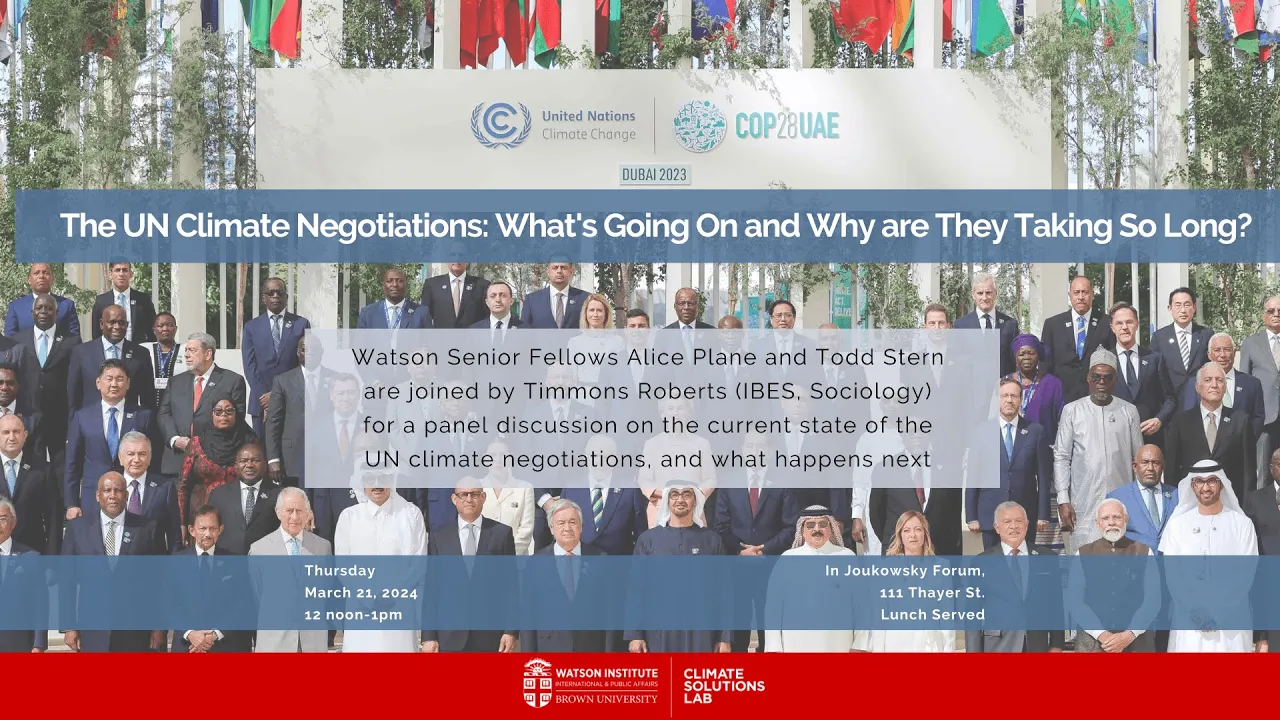
51:40
UN Climate Negotiations Explained: Why So Slow?
@WatsonSchoolBrown
473 views•2024-04-03

12:54
Triumph of Orthodoxy Icon: Byzantine Art & History Explained
@BenCallan
2.1K views•2024-08-06

9:49
FastAPI vs Flask vs Django: Choosing the Right Python Web Framework
@TechWithTim
302.5K views•2024-05-26

1:42
Game of Thrones Opening Credits: A Cinematic Analysis
@gameofthrones
46.3M views•2011-04-18
Related Study Plans & Knowledge Roadmaps
Structured learning paths in General & Interdisciplinary Studies
general-studies
Elevator Engineering: History, Physics & Cities
01From Hoists to Safety Brakes: The Dawn of Vertical Lift
02Hydraulic vs. Traction: The Engineering Physics of Elevators
03Modern Speed, Safety, and Algorithms
+ 2 more learning modules
12h5 modules
Explore Roadmap
general-studies
Rubber: Material Science, History & Geopolitics
01Origins of Natural Rubber & Mesoamerican History
02The Chemistry of Natural Rubber & Vulcanization
03The Geopolitics of the Rubber Boom & Colonization
+ 2 more learning modules
12h5 modules
Explore Roadmap
general-studies
Containerization: Evolution, Logistics & Trade
01Ancient Trade & Bulk Cargo: Amphorae to Barrels
02The Industrial Revolution & Cardboard Packaging
03The Containerization Revolution: Malcom McLean
+ 2 more learning modules
12h5 modules
Explore Roadmap
general-studies
Textile Tech: Evolution, Labor & Global Impact
01Pre-Industrial Textiles: Handloom & Cottage Industry
02Mechanization: The Spinning Jenny to the Power Loom
03The Factory System & Global Labor Transformation
+ 2 more learning modules
10h5 modules
Explore Roadmap