















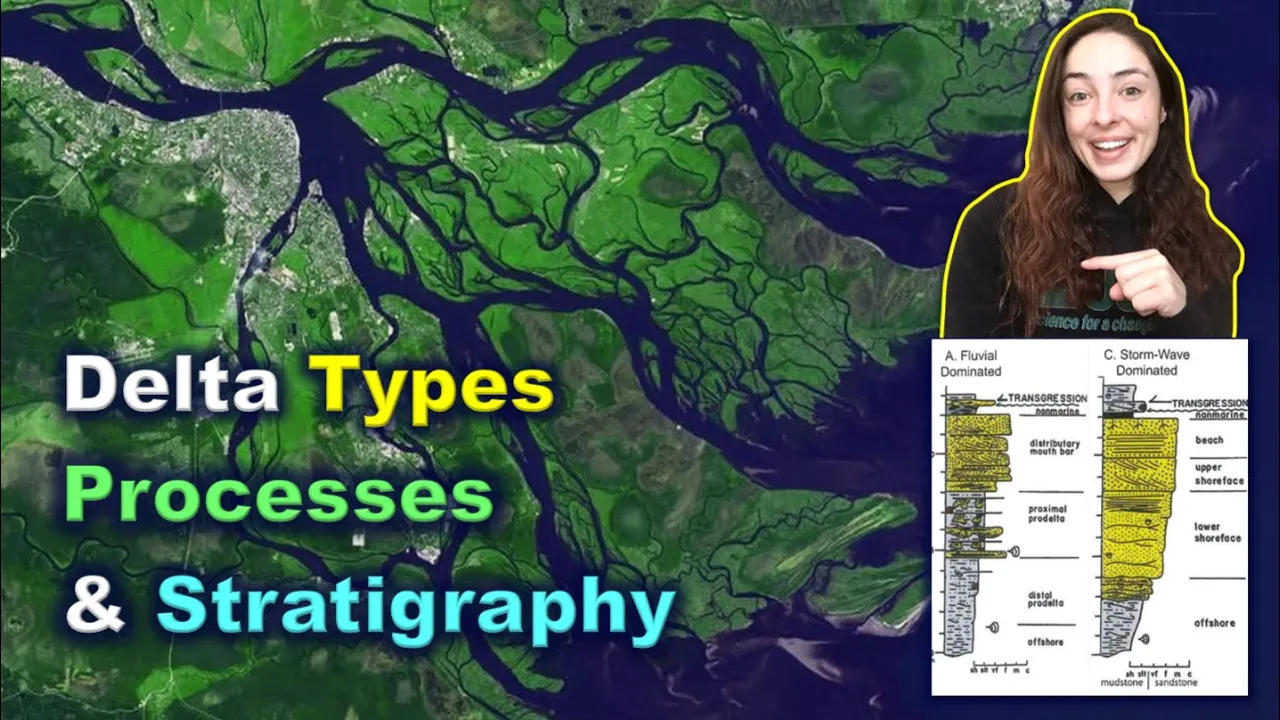


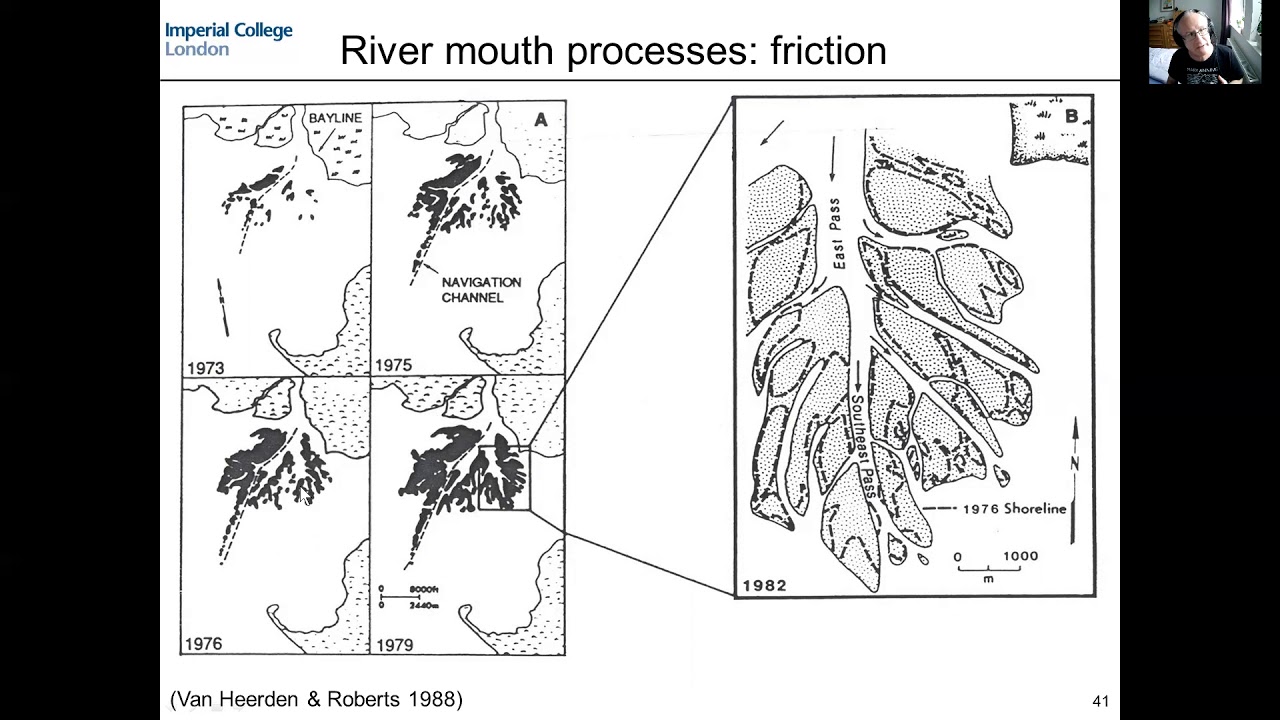




Rivers shape Earth's surface through erosion and deposition, with velocity determining sediment transport capacity—faster rivers carry larger sediments like cobble, while slower rivers deposit sorted sediments. Meanders create distinct erosion-deposition patterns where the inside of curves experiences deposition (slower water) and the outside experiences erosion (faster water). As rivers age, they transition from steep, narrow channels with minimal meandering to gradual, wide channels with pronounced meanders and extensive deposition. When rivers enter larger bodies of water, they slow down and deposit sediments in deltas, which undergo horizontal sorting (larger sediments deposited first) or vertical sorting (graded bedding) depending on deposition speed. Additionally, abrasion causes sediments to become rounded and smooth as they are transported by flowing water.
River Erosion and Deposition: How Rivers Shape the Earth
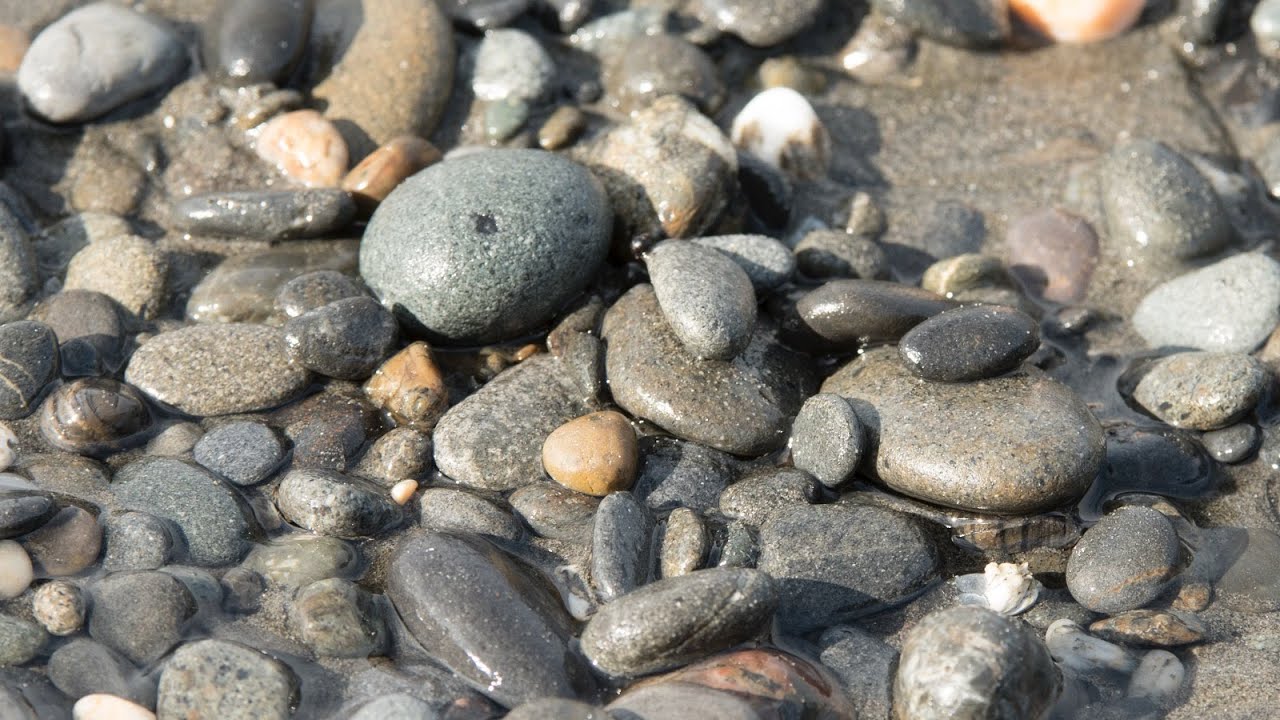
Added:in this video we're gonna continue our look at weathering in this video we're gonna continue our look at weathering erosion and deposition paying particular attention to rivers and how they erode and deposit sediment across the earth as always we have a quick handout to go along with this video which you can go and grab at the website so let's begin by reviewing these key terms so weathering is the breaking down and changing of rocks as a result of exposure to the environment so when rock and nature is exposed to the air and wind in water and ice those forces will eventually break rocks down from larger pieces into smaller pieces known as sediments in some cases those rocks might actually change composition as a result of these weathering interactions then we have erosion erosion is transportation so once my sediments have been broken down by weathering erosion is gonna move them from point A to point B so think about to give you an example from today's lesson sediments being transported by the movement of water within a river that's erosion finally at some point deposition is gonna occur and this is the dropping off of sediments that have already been weathered and eroded so once they've been broken down once they've been moved then they get dumped somewhere and that process is known as deposition so again today we're gonna focus on one particular agent of erosion and that's rivers or flowing water on the surface of the earth these have a huge impact on shaping our planet and so we're gonna look at all the details about what they do to the surface and how they affect the rock that they flow over so we'll begin with a simple question which is what is a river so if we had to actually define this term it's pretty simple it's simply water flowing downhill through a channel or some sort of defined pathway by the way you'll see I used the word stream in creeks and Brook we can use these essentially interchangeably oftentimes creeks and brook and stream' are used for smaller rivers whereas the term rivers used for a larger volume of water but for all purposes those can be synonyms so let's look at the anatomy of a river or or what some of the parts of rivers are and we'll begin with this little diagram right here of little section of a stream or a river and the first thing and this is going to become very important is is when we see these curves or bends in rivers and we have a name for that those are called meanders and that's very important because at a meander we see a lot of erosion and deposition happening in specific ways which we will look at along the edges of their stream or the river we call those the banks so the stream banks are the river banks and then along the bottom we call that the bed so the stream bed or the river bed so when we have a smaller stream that flows into and merges with a larger stream we call that a tributary and all together with all the tributaries and a main river we have a river system oftentimes a river system is part of what's called a watershed and so a watershed is an entire region of land it may be hundreds and hundreds of miles but it's an entire region of land where all of the tributaries the streams and the rivers and all the groundwater in that region merged together and flow into one central water body whether it's a river lake or the ocean so that whole area of land is called a watershed or a drainage basin so let's talk about the speed at which a river flows or velocity of a river so the velocity of a river tends to depend on three main things the first being the amount of water within the stream and that's called discharge so typically speaking the more discharge the more volume of water within a stream or river the faster that stream or river is going to flow next is slope so is this a steep stream bed or a fairly flat one so logic tells us that a steeper slope is going to make the river flow and a faster velocity and that's because gravity is going to pull that water hell faster finally the shape of the stream channel actually plays a pretty major impact so if you think about two streams so to think about a narrow kind of v-shaped stream channel which is you know pretty steep maybe a lot of water but but the channel itself is pretty narrow and v-shaped or almost even like a u-shape well that water's going to be able to flow faster then a stream that's gonna have a very wide and flat bottom to bed and the reason that is is because the more area where the water is flowing over the rocky stream bed the slower it's going to go because of all of that surface area so that water has to flow over all of those rocks and in and all out of all those nooks and crannies as opposed to if we have a V shape that water is going to have less friction with the ground then it's going to be able to go faster so typically a rounder deeper a more curved or v-shaped channel the faster the stream will flow versus a wide flat channel so if we look at a river channel which often does have this kind of V shape within the river itself the fastest velocity is going to be where we see this X right here so not along the beds where the water is kind of grinding against the ground but up away from the beds generally in the middle of the stream this does change if we're going around a meander in a stream a straight flowing stream will tend to see it where this X is so fastest in the center up away from the stream bed so now let's talk about the age of a river and yes rivers do have ages you can tell by looking at a river whether it's a young newly formed river or a more ancient river and so we'll start with looking at the characteristics of a young river system and so these are going to be generally speaking kind of more intense so they're going to be steeper they're gonna have deeper more narrow channels with a faster flow of water they're gonna have fewer curves or meanders and as a result of all that they're going to go faster and that means more sediment is going to be eroded and less will be deposited so all the rocks and the sand and the silt and clay are going to be right away not being dropped off and that's due to all of these characteristics together so if you see a river like the one in this picture right here you can conclude that this is a fairly newly formed River this has not been around for thousands and thousands of years on the other hand an older River is going to be exactly the opposite it's gonna have a gradual slope so more flat as far as the bed goes shallow wide channels which all result in a slower flow velocity will often see these big wide curving meanders and the result is that we had a lot of deposition so sediment is constantly being dropped off and you can actually see that in this example right here with all of these sandbars within the the river flow that's all deposited sediment because the water is constantly slowing down and dropping off whatever it's carrying so now we've talked a little bit about velocity it's important to point something out though it is pretty logical and that is the faster river is flowing the bigger the sediments that it can erode or transport which makes sense if I have a very fast flowing river it's going to be capable of transporting long larger sized sediments so sand and silt and clay but also in some cases it can even bounce along pebbles and in the fastest rivers possibly even cobble sized rocks this is very logical it's all summarized in this chart right here so if we look at this what we see along the bottom here is the velocity of the stream so as I go from left to right the stream is going faster and then on the vertical axis I see size of sediment being transported so what I'll notice here is that let's say I have a velocity of a stream that is about one centimeter per second so if I come up and I hit the curve here and I go over the sediment that stream is going to be able to transport is going to be classified as sand right so it's going to be somewhere between point zero zero six and point two centimeters in size so that's fairly small sediment that's what a river going that fast is able to transport but if I speed up to let's say 50 centimeter per second river so a much faster flowing river that's going to be able to carry pebbles and that is logical right because the faster the river is flowing the bigger the sediments it can carry only the fastest rivers on earth are able to carry big sediments so if I look you know maybe at a hundred or a little more than a hundred centimeters per second that kind of river is able to actually transport rocks that are six seven eight centimeters in diameter so those would be classified as cobbles so this chart shows us that the faster the stream velocity the larger the sediments it can carry so if we look at those sediments this is what they would look like as they're being eroded within a river so obviously the smaller sediments are going to be suspended so the silt and the clay that's going to be carried along up in the body of the water itself and that's going to be subject to the currents and the velocity of the flow sand might be hopping or bouncing along the bottom and then the bigger sediments that gravel the pebbles and possibly cobbles are gonna slide and roll and bounce along the stream bed so this is what it looks like and you can see massive amounts of sediment are eroded by rivers especially fast flowing younger rivers so when streams flow fast they're going to tend to erode sediments to pick it up and carry it away and when they flow slowly they're gonna deposit it they're going to drop it off so the logical question becomes okay well why do streams speed up why does stream slow down because if you can identify that then you can predict where more erosion will happen and we're more deposition will happen so if we look at our meander again what we're gonna know is that on the inside part of curves water is going to be forced to slow down and the reason that is is because when water is traveling around a sharp curve like this on the inside part it can't go as fast it's a sharper turn and physics tells us that that water gonna be forced to slow down as opposed on the outside of a curve it's got this big sweeping area to go and it's less sharp and therefore it can go faster I often think of this the same way I think of a racecar going around a curve on a racetrack you have a choice when you approach the curve do you slow down and hug the inside of the curve you have to slow down or else you'll flip or do you keep your speed and go on the outside of the curve where you can keep your speed up a little bit higher well it's the same in the river on the inside of a curve the water slows and on the outside of the curve the water speeds up and so of course there's a consequence of that and that is that on the inside where it slows down the deposit sediment that they're carrying and you can actually see this in the picture by looking at this whole area right here all of this sand and sediment that was deposited there because the river slowed down and when the river slows down it drops off whatever it's carrying whereas on the outside where it speeds up its going to erode additional sediment and you can tell because all the sediment has been worn away and you can see that with this steep riverbank so you can tell just by looking at a meander where the erosion and where the deposition has taken place similarly we have another diagram here showing meanders on this example one of the things to point out is that depending on the direction of the meander the shape of the channel is actually going to vary so if I look at this let's look at Point a here and point B here so a is the outside of a curve so that's erosion and B is the inside of the curve so that's deposition so where there zero j'en the rock and the sediments being worn away so we're gonna have a steep more jagged kind of slope so that means that that would look something like this so this would be point a here and then where B is that's where the stuff is being dropped off so we would have a more wide flat deposition driven area of the river so a and B match up like that and we should be able to do that if I look down here at C and D so C is on the inside of this meander so C is going to have the flat slope and D is on the outside where it's going fastest where we see erosion so that's going to be the steeper slope so let's look at some real-world examples here so here's a meander and a river and just by looking this right off the bat we can tell where there's deposition and where there's erosion so we should be able to label it with these terms right so inside of a curve is slow outside of a curve is fast so those words go there inside of a curve where it slows down we're going to get deposition and you can actually see the sediment deposited and the outside is going to be erosion so you can see pretty clearly what's going on let's look at another example this is another great example so I'm going to bring my terms in so inside is slow outside is fast okay inside is deposition outside is erosion and again you can actually see it if you look at the diagram here this steep slope right here it's all steep slope that's because all of that sediment is being carried away as opposed to this whole region right here where all this sand and sediment is that's your deposition because the water has slowed down so we see this all over the place and it becomes very very clear when we see stuff like this sediment right here this is the inside of a curve and that's there because the water has slowed and deposited what it was carrying and you can see this most rivers on earth it becomes very obvious what's happening here this is a great example because you can actually see within the water that all of this sediment you see how this water is cloudy the sediment is on the inside of the curve because that's where the deposition is taking place so if that erosion and deposition continues long enough then those meanders might get so wide that it actually alters the shape of the river and it may even cut off a portion of the river to form something called an oxbow lake so over here this is our oxbow lake okay so that used to be part of the river but due to extensive erosion and deposition that part of the river actually got cut off and that shape of the channel has changed leaving that lake behind with this telltale kind of horse to shape so if you look at this this is how that happens the erosion and deposition continue the meanders get wider and wider until the river actually meets itself in a location and then deposition takes over and cuts off that meander creating an oxbow lake so here's an example of an oxbow lake there are actually several in this picture and here's some more you can see them over here's an oxbow lake here's an oxbow lake here is an oxbow lake so those were all actually part of the meanders at some point in over time they've been cut off so let's finally shift our attention to focus specifically on the deposition that occurs within a river so streams slow down not only when they're on the inside of a curve but also when they enter a larger body of water like for example if a river or stream flows into a lake a larger River or or even in some cases the ocean that water's gonna slow down and we know from our previous conversation here that when water slows down it can't carry as much so it deposits it so whenever water slows down deposition occurs so here we have a cross-section of a river flowing down the side of a hill slope right fast fast fast fast fast but then it hits the lake and it slows down and because it slows down right there can't carry the sediment anymore so right in here we're gonna see lots of deposition I like to think about this the same way as I think about a water slide so if you've ever been on a water slide you know that as you're going down the slide you're going faster faster faster and then all of a sudden you hit the pool at the end and your body stops essentially and that's because you've entered this larger body of water and the velocity slows down and the same thing happens in a river and when that occurs the sediment that the river is carrying is dropped off and so the sediment that is deposited creates this kind of weird accumulation of sand and silt and clay and that accumulation is called the Delta in some cases that Delta can become a new landmass so here's an example of a delta so all of this kind of grayish muddy sediment has been deposited as this little stream enters this larger body of water all of these Delta's can actually they're massive you can see them from space on the Amazon River Delta it's huge amounts of sediment that have been deposited over time so the sediments that are deposited within a Delta are generally sorted out by size with the largest ones dropped off first and then smaller and smaller sediments as you get further and further out into the lake or the ocean so here's a diagram that kind of shows that because when the stream enters the body of water it slows off it slows down it's gonna drop the bigger stuff first and then as it slows more smaller stuff and then as it slows more smaller stuff and then eventually smaller and smaller until it has deposited everything that it's carrying so that sediment that sorting is called horizontal sorting because the size of the sediments is sorted out from big to small from side to side okay sometimes though we'll have sediments that deposited very quickly and that might result not in horizontal sorting but in vertical sorting so rapid deposition you know for example if I have a rock slide on a cliff where a bunch of sediment is dumped into a lake all at once then my biggest sediment is going to accumulate on the bottom and the smaller stuff is gonna settle a little bit slower and end up being on top and so we end up with this vertical sorting and we have a name for vertical sorting it's called graded bedding so that's when we have top to bottom small to large and this isn't what that actually looks like you can see on the bottom our larger size sediments and as you go up they're smaller and that would give us greeted bedding so horizontal sorting occurs when the sediment happens gradually whereas vertical sorting happens when it occurs quickly that's key now final thing is because of this abrasion so this is a word we've used in other videos abrasion is a type of weathering when Rock kind of grinds against rocks now in rivers sand is constantly bouncing against pebble and rock and it's wearing it down and so the rocks that have been weathered and eroded and deposited by streams and rivers tend to be generally rounded and smoothed out something like we see in this picture right here so if I were to just hand you one of these rocks even though you don't necessarily know where it came from you could interpret you could conclude that it's spent time in running water and that's how it got the smooth rounded shape that you see and so that's our look at rivers for today just to kind of sum up some of the key ideas meanders curves and rivers tell us about the age of the river and we can identify where erosion and deposition occurs we see sorting whether it's horizontal or vertical and we see rounding in these sediments and so those are some of our key ideas for River erosion and deposition rivers are an incredibly powerful force that has been shaping the earth for billions of years and rivers all have a story to tell by looking at them and examining their characteristics and the characteristics of the sediments within them we can actually learn a lot about their age and how they have impacted the earth in the past and how they're changing the surface in the future they're an amazing force that really leaves its imprint on our planet thanks for watching
Up Next
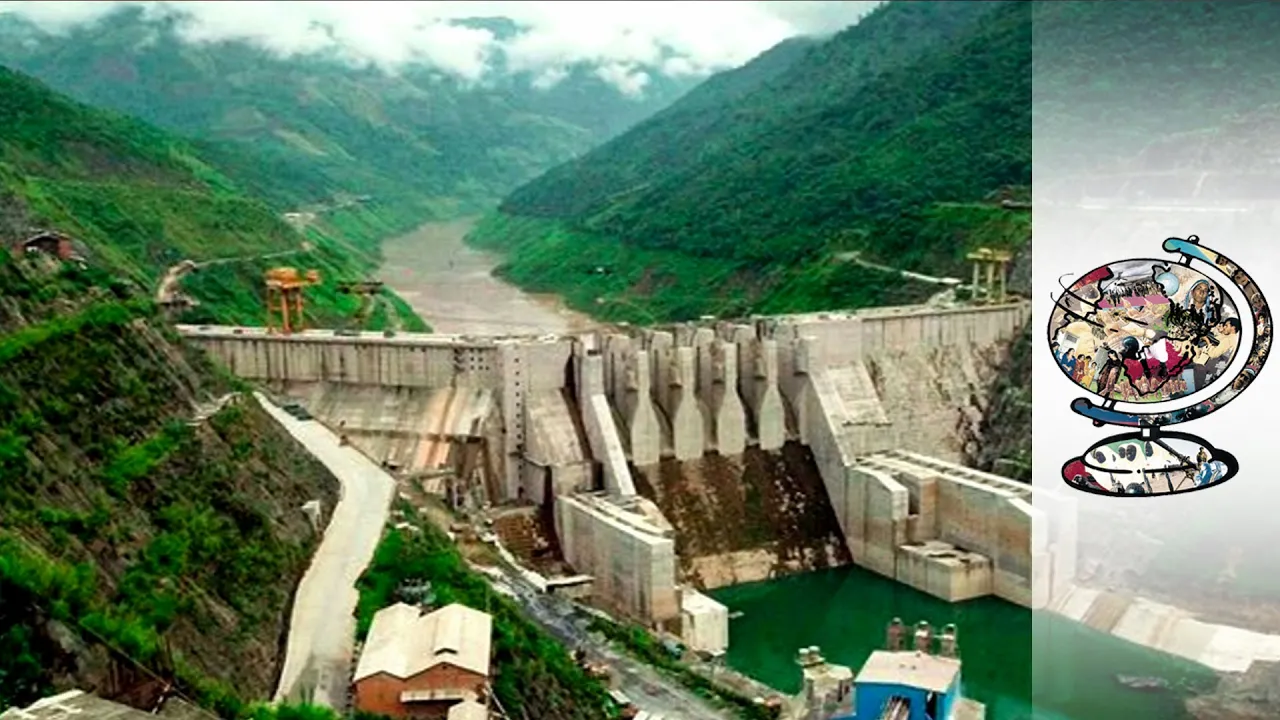
Mekong River Dams: Environmental Impacts and Devastating Effects
@journeyman
445.6K views•2016-08-26

Triumph of Orthodoxy Icon: Byzantine Art & History Explained
@BenCallan
2.1K views•2024-08-06

FastAPI vs Flask vs Django: Choosing the Right Python Web Framework
@TechWithTim
302.5K views•2024-05-26

Game of Thrones Opening Credits: A Cinematic Analysis
@gameofthrones
46.3M views•2011-04-18
Related Study Plans & Knowledge Roadmaps
Structured learning paths in General & Interdisciplinary Studies