




![Multimetr - [RS Elektronika] # 6](https://i.ytimg.com/vi_webp/3YdOdJMfkww/maxresdefault.webp)












![[TIBIA] - SHIELDING É MUITO MAIS RELEVANTE DO QUE VOCÊ PENSA - ANÁLISE DETALHADA](https://i.ytimg.com/vi_webp/R0k04qrDyQE/maxresdefault.webp)











To test a thermocouple's functionality and grounding status using a multimeter: First, set the multimeter to resistance mode and measure across the two wires; a functional thermocouple should show approximately 5 ohms of resistance, while open circuits or high megaohm readings indicate failure. Second, to check if the thermocouple is grounded or ungrounded, connect one lead to a wire and touch the probe sheath with the other lead; a grounded thermocouple will show continuity (low resistance), while an ungrounded one will read open circuit (OL). This method helps identify whether the thermocouple junction has separated from the sheath.
How to Test a Thermocouple with a Multimeter: Grounded vs Ungrounded
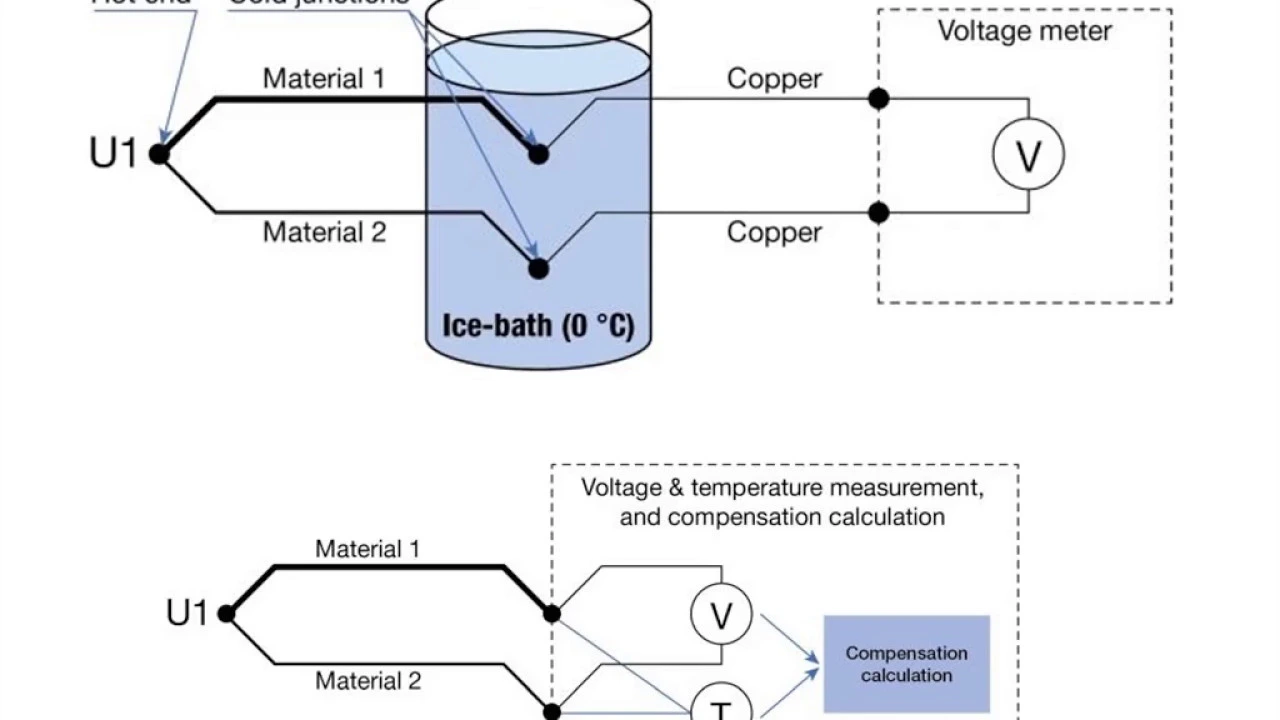
Added:Understanding the Seebeck Effect: How thermocouples generate a microvolt signal proportional to temperature differences between two dissimilar metals.
Basic Multimeter Operation: Knowing how to measure resistance, check electrical continuity, and interpret low-voltage DC readings.
The Concept of Electrical Grounding: Distinguishing between a closed circuit path and an earth or chassis ground connection.
Basic Thermocouple Construction: Familiarity with the basic differences between grounded, ungrounded, and exposed junction types.
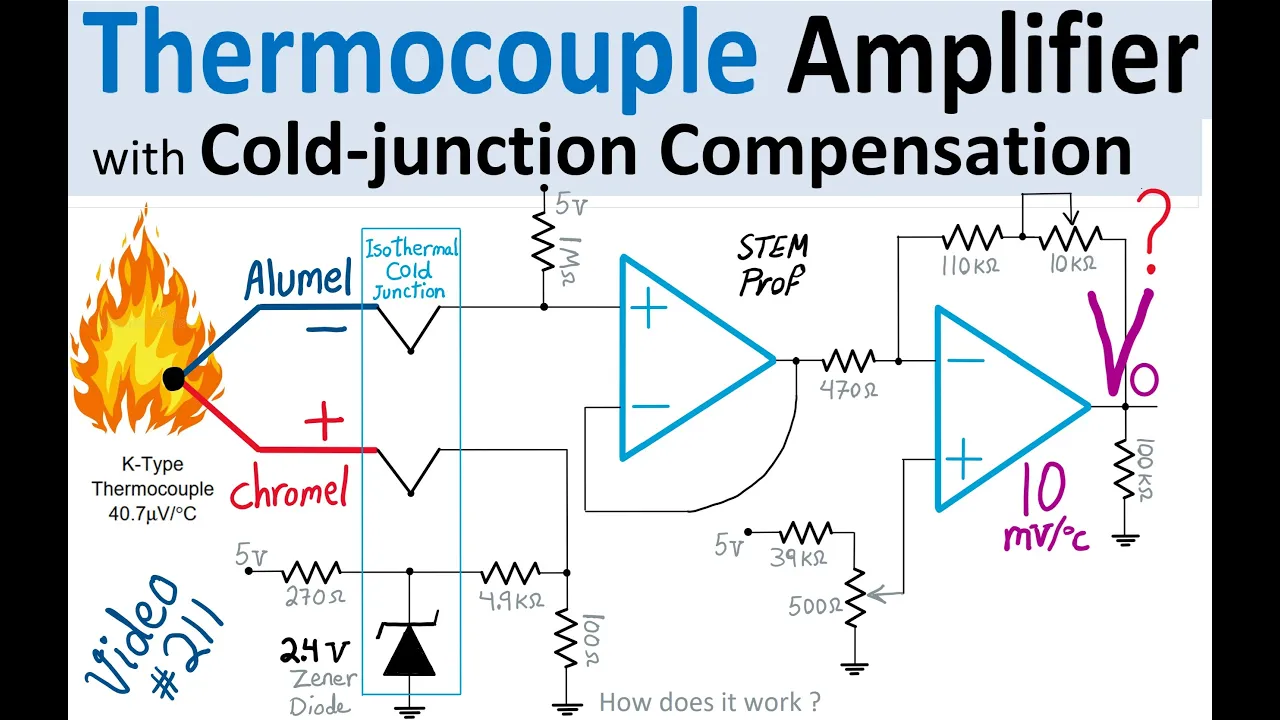
Cold Junction Compensation (CJC): Understanding how measuring instruments compensate for the reference junction temperature to ensure accurate readings.
Noise Mitigation and Shielding: Analyzing how grounded vs. ungrounded thermocouples perform in environments with high electromagnetic interference (EMI).
Instrumentation and Integration: Learning how to interface thermocouples with PLCs, PID controllers, and 4-20mA transmitters.
Advanced Troubleshooting: Utilizing ice-bath calibration and temperature simulation to diagnose sensor drift and calibration errors.
250.8K views1.4Klikes3:20Original Release: 2019-01-02
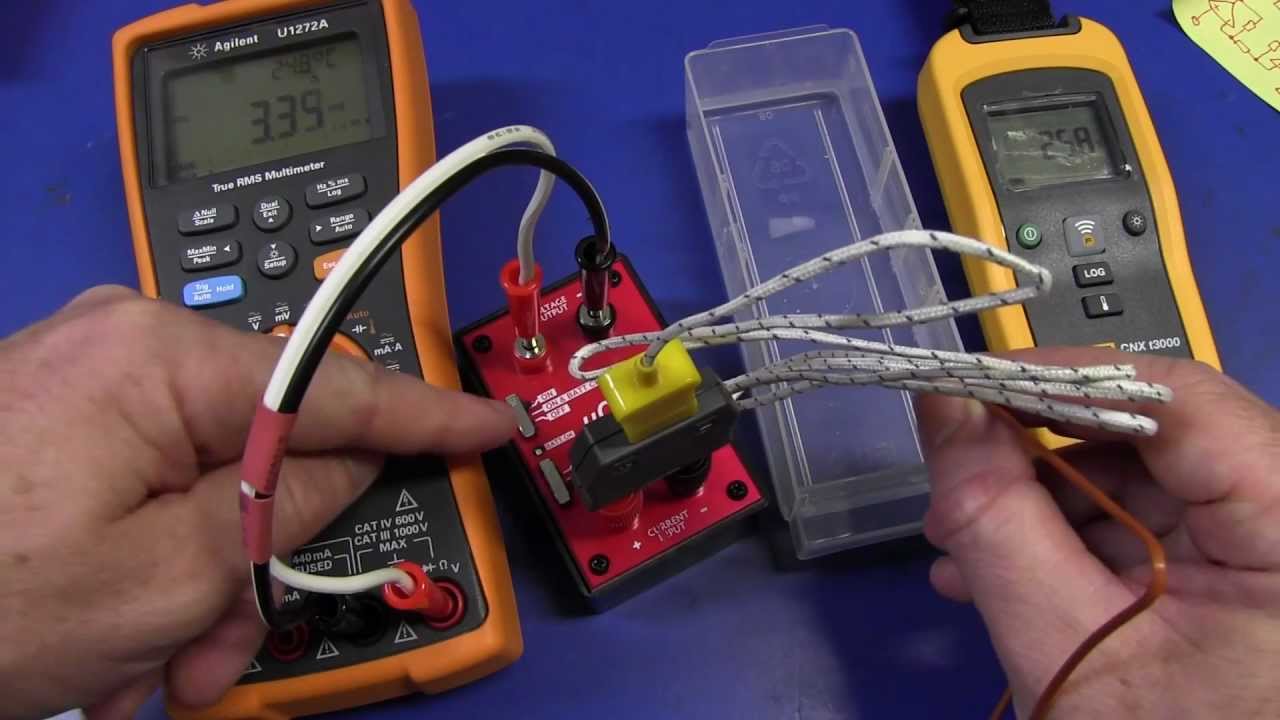
hi I'm chef Megha and I'm here I'm gonna show you guys how to test a thermocouple with a meter to see if it's functional and also how to see if it's grounded or ungrounded so to help us out today with this we have our multimeter here we also have our alligator clip test leads here we have one type K thermocouple thats ungrounded and we also have a grounded thermocouple which is a type T first thing that we're going to need is our multimeter and we're gonna put it on the own setting first thing we're gonna do is we're gonna test continuity across the thermocouple so I'm going to take my positive lead and is attach it to any wire because we're not worried about polarity we're testing for resistance and I'm gonna test this lead as well and put my negative here now I'm looking at my multimeter and as you can see I'm getting a resistance value I'm getting about five ohms which is what you want because thermocouple wire has very low resistance so that means that there is continuity and there's no break of long the thermocouple so thermocouple is still functional if for some reason I was reading either NOL which is an overload basically nothing is being connected or when I connected it I was reading a very high resistance like mega ohm then you know that your thermocouple is no good and it's time to replace it so this Tyco a thermocouple is functional now we're gonna take this type T thermocouple and do the same thing I clicked my negative lead to whatever wire and I take my other lead and I connect to the other wire and let's see what kind of resistance we get and as you can see here I'm reading about 5.4 ohms just a little bit more than the other one so I know that this time a couple is functional because I'm getting a very low resistance reading I'm not reading overload and I'm not reading a large mega ohm with a high resistance now we're gonna test to see whether a thermocouple is grounded or ungrounded I'm gonna take my negative lead here and attach it to one wire so we're gonna start with the type T thermocouple first since this is a grounded thermocouple I should get a continuity if I take my wire and attach it to anywhere along the sheets of the probe I attached to the sheath and I'm getting continuity this is a grounded thermocouple if this was an ungrounded thermocouple I would read oh well which basically there's no continuity now if your thermocouple was originally grounded and now you're getting a Noel that means that the junction has somewhat come apart from the sheath of the probe and it's no longer going to thermocouple and it's a group of place so now we're gonna test the type a thermocouple which is our on going to thermocouple to double-check on that as well so I'm gonna take one of my leads here and I'm gonna attach it to any wire whether it's the yellow or the red wire insulation and now I'm gonna take my other wire and I'm just gonna touch the sheath of the probe now this was a grounded thermocouple I'll be reading a connection right now are getting some kind of ohm reading but right now as you can see I'm getting oh well so basically no connection the only connection that you're going to see is when you go across the two wires so as we did before I attached it to the negative wire and now I have a connection now just a triple check I will check the first lead that I first attached take it off the positive wire and then touch that across the sheets of the probe that's all for today's video I hope you learned something new if you any more questions we'll be happy to help
Up Next
20:57
Thermal Paste Quantity: Benchmarking Application Methods on CPUs
@GamersNexus
3.3M views•2018-07-27

30:32
Ultrasonic Transducers: Resonant Frequency Measurement and Horn Design
@imajeenyus42
229.9K views•2017-02-22

54:16
Polymer Environmental Degradation: Mechanisms & Stabilization
@iit
1.8K views•2012-07-10

33:39
How a Student's Question Saved a NYC Skyscraper from Collapse
@veritasium
22.8M views•2025-04-26
Related Study Plans & Knowledge Roadmaps
Structured learning paths in Engineering
engineering
Building Acoustic Levitators: Physics & Arduino
01The Physics of Sound and Standing Waves
02Piezoelectric Transducers and H-Bridge Drivers
03Arduino Programming: Generating 40 kHz Signals
+ 2 more learning modules
14h5 modules
Explore Roadmap
engineering
Building Peltier Cloud Chambers: Particle Tracks
01Cosmic Rays & Cloud Chamber Physics
02Thermoelectric Cooling (TEC) Fundamentals
03Custom Liquid-Cooling Loop Design
+ 2 more learning modules
18h5 modules
Explore Roadmap
engineering
Yagi-Uda Antennas: Modeling, Build & VNA Test
01Introduction to RF and Antenna Fundamentals
02Yagi-Uda Antenna Design Principles
03Antenna Modeling and Simulation in 4NEC2
+ 2 more learning modules
18h5 modules
Explore Roadmap
engineering
ECG Monitor Design: Op-Amps, Filters & Noise
01Electronics & Breadboard Basics
02Op-Amps and Instrumentation Amplifiers
03Bioelectricity and ECG Fundamentals
+ 2 more learning modules
18h5 modules
Explore Roadmap