












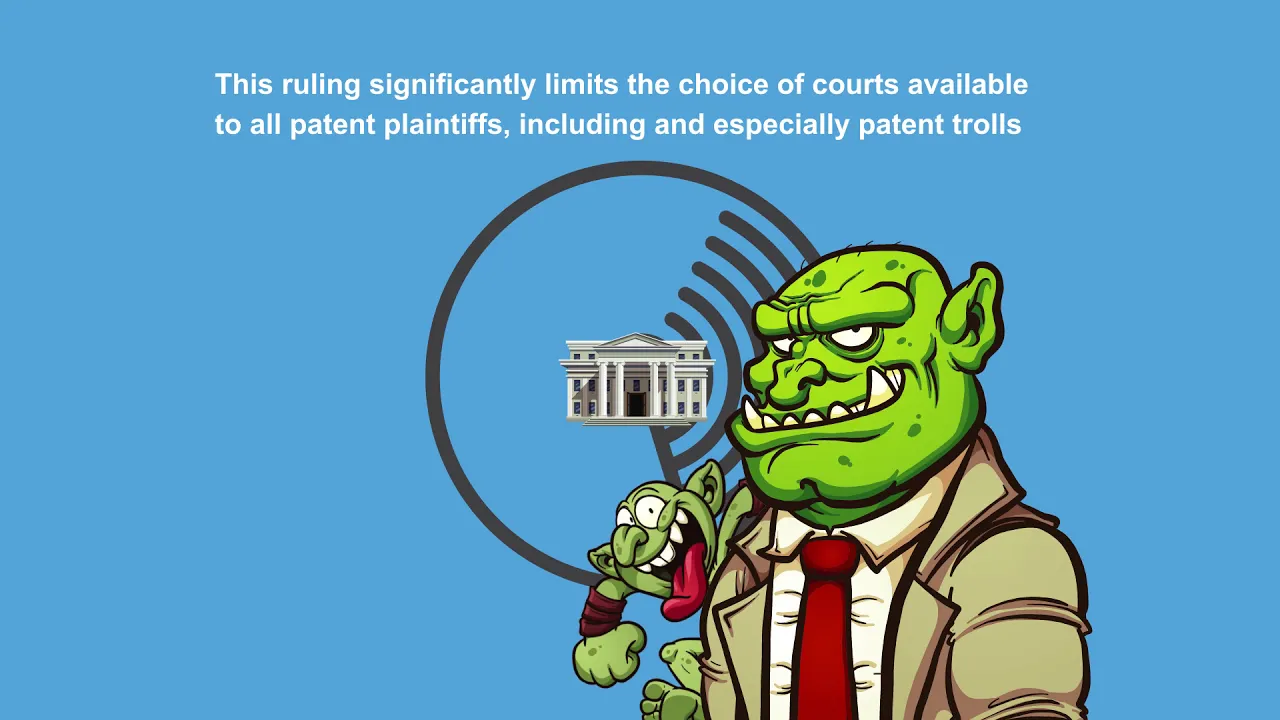








Patent trolls are companies that acquire patents not to produce goods but to threaten lawsuits against businesses using common technologies, exploiting vague software patents to extract settlements; this practice costs investors an estimated $500 billion since 1990, with nearly 90% of cases settling due to the $2-5 million defense costs versus $100,000 settlement demands, highlighting systemic flaws in the patent system that require reform.
Patent Trolls Explained: The Abuse of the US Patent System
Added:The fundamental concept of Intellectual Property (IP) law, specifically how patents grant temporary monopolies to inventors in exchange for public disclosure.
The primary, theoretical purpose of the US Patent and Trademark Office (USPTO) to incentivize innovation and economic growth.
The basic mechanics of civil litigation in the United States, including how lawsuits are filed, the high cost of discovery, and why parties choose to settle out of court.
The distinction between practicing entities (companies that research, design, and manufacture products) and Non-Practicing Entities (NPEs, which own patents but do not create products).
Legislative efforts to curb patent abuse, such as the Leahy-Smith America Invents Act (AIA) of 2011 and subsequent proposed reforms.
Key US Supreme Court precedents that limited patent trolls, such as Alice Corp. v. CLS Bank (restricting abstract software patents) and TC Heartland v. Kraft Foods (limiting venue-shopping).
Defensive industry strategies against trolls, including the formation of patent pools, defensive patent syndicates (like RPX), and open-source licensing agreements.
The macroeconomic impacts of patent trolling on venture capital investment, tech startup survival rates, and research & development allocation.
9.2M views85.3Klikes11:03Original Release: 2015-04-20
patents they're basically legally binding dibs and they're important if you invent something in America and you get it approved by the patent and trademark office the rights to that idea then belong to you they're absolutely essential to business as you would know if you've ever seen an episode of Shark Tank why aren't you telling me youve got something proprietary or a patent or a technology or software no one can emulate I hope you do get your patent and I wish you good luck without having it I feel that you're going to really have a struggle don't have a patent don't have a finished sample don't have experience unless you have a patent or some proprietary technology you're going to be in trouble I'm out I'm out I'm [Music] out exactly arriving on the set of shark tank without a patent is like turning up to America's Next Top Model without knowing how to smise or booty toou you take that to catalog you're not editorial you're not editorial I don't know what that means but the point is if you don't have a patent you don't have a prayer on Shark Tank unless you've got a once in a-lifetime investment opportunity like this [Music] guy you go to my site you describe a cat I draw it I mail it it's as easy as that I'd invest if I were you and I want to draw a cat for [Music] you by the way his business got funded presumably because he holds the patent on whatever the he's doing with his shoulders the problem is the patent system has increasingly been prone to abuse for instance a few years ago a man named Austin Meyer made a popular flight simulator app and then one day received a frightening letter it said that a company called Unilock was filing suit against me the company is suing Meer for patent infringements according to the lawsuits Unilock says it owns the idea of a computer program checking a central server for authorization it is the technology upon which all Android apps are based all Android app that I know of everyone I know of it's true this company Unilock is essentially claiming it's entitled to a piece of every Android app that technically means they could show up at the headquarters of Tinder and demand a cut of everything Tinder has created which I assume would be a pile of STDs sad orgasms and shards of human self-esteem that's that's the business model but this this situation has become so common there's even a name for companies that do this so-called patent trolls typically don't invent anything or sell anything they simply buy patents and make their money by threatening lawsuits yeah most of these companies don't produce anything they just shake down anyone who does so calling them trolls is a little misleading at least trolls actually do something they control Bridge access for goats and ask people fun riddles patent trolls just threaten to sue the living out of people and believe me those lawsuits add up in fact of the 4,700 patent lawsuits filed in 2012 3,000 were from the soall patent trolls the White House claims during the last two years the number of lawsuits brought by Patent trolls has nearly tripled research shows this type of litigation has cost investors an estimated half a trillion dollars since 1990 half a trillion let me put that in context to lose other people that amount of money Johnny Depp would have had to start in The Lone Ranger over a 100 times a year for 25 years that's a horrifying amount horrifying and Pat trolls Target everyone from big businesses like Apple and Samsung to tiny ones in fact you don't even need to make something to be targeted you just need to use something a business in all lime couldn't believe it when someone threatened to sue them for using their own copy machine we provide employment services for people with um barriers to employment mostly people with disabilities fuler LLC threatened to file unless Hurley forked over,000 for each employee who uses the scan to email function on this copier fuler says it's entitled to this licensing money because it owns the patents for that process wow when you are threatening to sue a company which helps people with disabilities find work for using their own photocopier you're not just on the road to hell you have your own parking spot right next to the devil so so how exactly did we get ourselves into this mess well in part it has to do with the types of patents that have been issued the patent office is supposed to certify inventions that are new useful and nonobvious incidentally all the adjectives that Tom Cruz would say he's seeking in an ideal mate but but during periods of big technological change they can get overwhelmed and certified patn that they shouldn't uh this happened in the 19th century with railroads and then again more recently with the development of software in the last decade the number of software patents has skyrocketed the issue here say experts is that while patents for machines tend to be fairly specific software patents can be so Broad and vague that they may give someone the ability to later claim ownership for inventions they never dreamed of at the time and that is the seed of our current problems because if a troll can get a vaguely defined software patent they can demand payment for anything that fits that description basically if they thought to patent computer thing that never works years ago they currently be getting rich off of FaceTime very very rich patent trolls have this process down to such a science uh for a start they have figured out a way to almost never go to trial one study found that almost 90% of cases are settled for a very practical reason it's an extortion gain because it costs between two and $5 million to defend a patent suit so the patent trol says we'll settle for 100,000 many decide to pay out settlements because it's cheaper than fighting the lawsuits so they work out the maximum amount of money you'd be willing to pay rather than go to court and negotiate for that they pick number the same way Airlines pick a cabin temperature perfectly calibrated to make you miserable but not so much that you'd actually do anything about it and the most frustrating thing is sometimes it's hard to know who's behind all of this they often have vague company names like IP nav Empire IP or pragmas and incidentally pragmas sounds like the most boring mythological Greek hero of all time I am pragmatis and I shall not battle the Hydra for is much larger than me so I shall go home via the farmers market for the bruised vegetables are cheaper at the end of the day pragmas bids you farewell patent trolls patent trolls have even managed to find the friendliest place to file their lawsuits almost a quarter of last year's US Patent cases were filed in this Eastern Texas Federal Court District Marshall Texas population 24,000 a quarter of all patent cases are filed in Marshall Texas and believe me it is not because people there are inventing like a methhead in a Home Depot aisle I combined a wheel with a nail it's a nail wheel new new invention patent here's fouret of PVC piping I can use for a big straw patent holy I'm a genius give me more meth P trolls have figured out that for whatever reason East Texas judges and juries are sympathetic to plaintiffs and it has been so effective that big companies are having to go to absurd lengths to Pander to the people of Marshall Texas Tech companies know the value of a good PR campaign here in Marshall where almost anyone can be on your next jury a city official tells us that Samsung sued here multiple times has spent almost a million dollars on community projects like this I skating rank right in front of the courthouse Samsung was so frightened of patent lawsuits they felt forced to build an outdoor ice rink in Texas do you know how hard that is to maintain it's like building a bowling alley in space this situation is insane now the good news is there is cross Party Support in Washington for fixing this problem in fact a bipartisan bill was introduced 2 years ago called The Innovation act with some decent ideas such as encouraging judges to make patent trolls pay court cost if if they lose uh and forcing patent trolls to be more transparent about their identities and I'm not saying that bill was perfect but it would have helped it's like when parents of teenagers lock The Liquor Cabinet look I know this isn't going to stop you rapidy but it will make it just a little harder for you to up the entire neighborhood unfortunately while the bill passed the house by an overwhelming majority it never even made it to a vote in the Senate I wonder why would that be what do you make of the this bill getting killed well I know this is news but trial lawyers uh influence in Washington is alive and well yes apparently lobbyists for groups including trial lawyers manag to prevent the bill from moving forward and you cannot let trial lawyers decide whether there should be more baseless lawsuits that's the equivalent of trusting raccoons to make laws about garbage can placement no uh they should be easy to reach and left slightly open all in favor [Applause] say that's a good impression as far as you know luckily there is actually a glimmer of hope here because that bill is making the rounds again and look even if it doesn't pass something has to we have to do something or the only viable business left in America is going to be one that relies on on no patents whatsoever and I can only think of one business that fits that description I'll draw you a cat whatever the vibe I draw the cat that you [Music] describe I guess all I'm saying is hit it let's reform our patterns quick or we will all be in the [Applause]
Up Next
81:33
Open Source Intelligence: CIA Veteran Robert Steele on Ethics & Governance
@SingularityFM
33K views•2016-02-05

105:00
The Internet's Own Boy: Aaron Swartz Documentary (2014) | Digital Rights & Activism
@moviemaniacs
2.4M views•2014-07-01

19:18
Stand Your Ground Laws: History, Disparities, and Impact on Violence
@LastWeekTonight
6.7M views•2021-05-17

1:42
Game of Thrones Opening Credits: A Cinematic Analysis
@gameofthrones
46.3M views•2011-04-18
Related Study Plans & Knowledge Roadmaps
Structured learning paths in General & Interdisciplinary Studies
general-studies
Elevator Engineering: History, Physics & Cities
01From Hoists to Safety Brakes: The Dawn of Vertical Lift
02Hydraulic vs. Traction: The Engineering Physics of Elevators
03Modern Speed, Safety, and Algorithms
+ 2 more learning modules
12h5 modules
Explore Roadmap
general-studies
Rubber: Material Science, History & Geopolitics
01Origins of Natural Rubber & Mesoamerican History
02The Chemistry of Natural Rubber & Vulcanization
03The Geopolitics of the Rubber Boom & Colonization
+ 2 more learning modules
12h5 modules
Explore Roadmap
general-studies
Containerization: Evolution, Logistics & Trade
01Ancient Trade & Bulk Cargo: Amphorae to Barrels
02The Industrial Revolution & Cardboard Packaging
03The Containerization Revolution: Malcom McLean
+ 2 more learning modules
12h5 modules
Explore Roadmap
general-studies
Textile Tech: Evolution, Labor & Global Impact
01Pre-Industrial Textiles: Handloom & Cottage Industry
02Mechanization: The Spinning Jenny to the Power Loom
03The Factory System & Global Labor Transformation
+ 2 more learning modules
10h5 modules
Explore Roadmap