





![7º Seminário Caminhos Contra a Corrupção [Dia 9]](https://i.ytimg.com/vi/5_G08Sh_Ohs/maxresdefault.jpg)







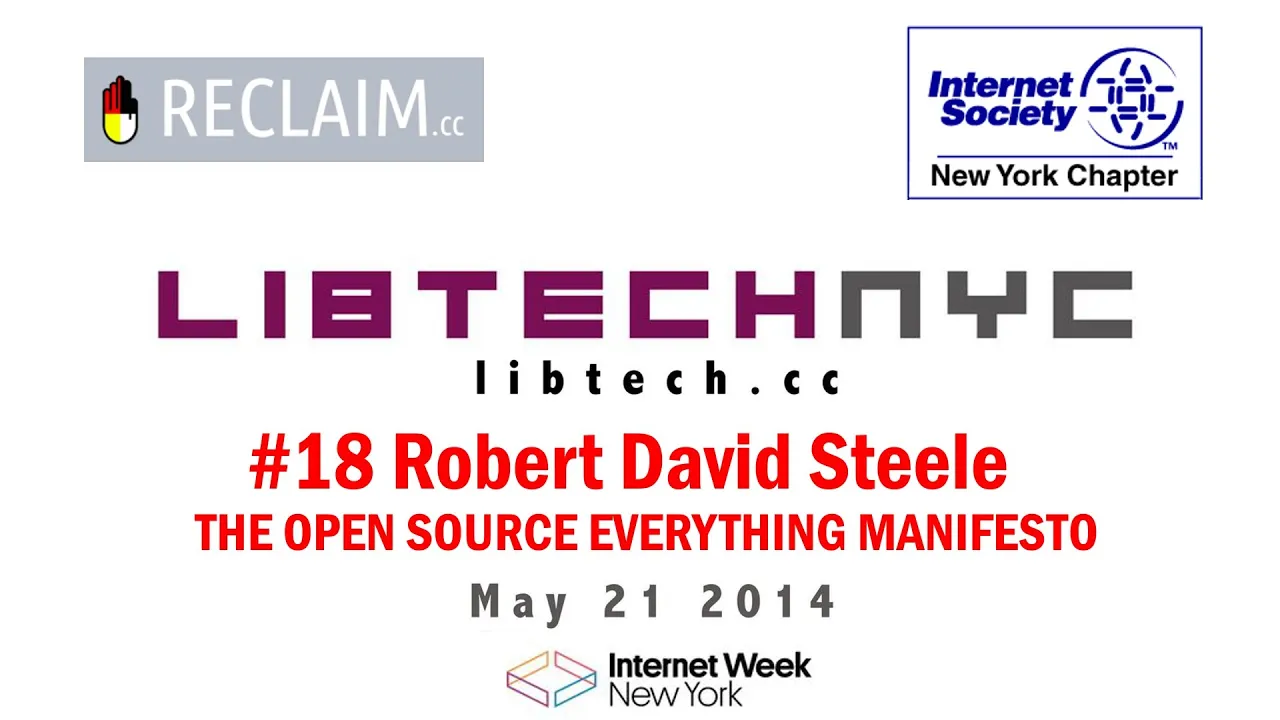




Open source everything represents a paradigm shift from secrecy-based to transparency-based systems, where openness serves as an operating system for civilization by enabling distributed intelligence, eliminating waste, fostering entrepreneurship, and creating smart cities that integrate nature's principles of no fraud, waste, or abuse; this approach requires open data, open software, open hardware, open energy, open food, and open water to unleash human potential and achieve true sustainability.
Open Source Intelligence: CIA Veteran Robert Steele on Ethics & Governance
Added:Fundamentals of Open Source Intelligence (OSINT), including its definition, common sources, and how it differs from classified or proprietary intelligence gathering.
Basic structure and historical context of national intelligence agencies, specifically the division between covert operations and open-source analysis.
Core principles of democratic governance, ethical public administration, and the importance of transparency in preventing corruption.
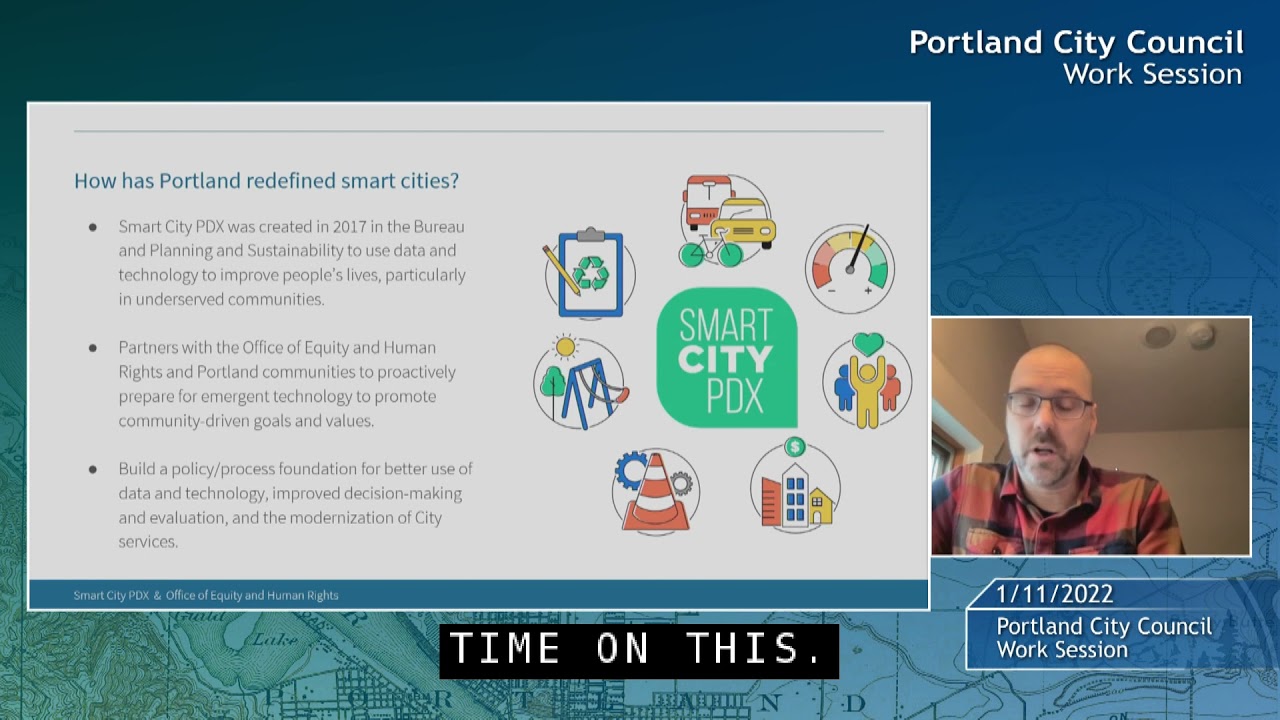
The concept of 'Smart Cities' and how modern urban planning relies on data, information systems, and Internet of Things (IoT) technologies.
Advanced OSINT techniques and digital forensics, including the validation, verification, and ethical analysis of publicly available data.
Robert Steele's 'Open Source Everything Engineering' (OSEE) framework and its application to sustainable, low-cost development and resource management.
Policy design and regulatory frameworks for smart city governance, specifically addressing data privacy, algorithmic bias, and citizen surveillance concerns.
The role of collective intelligence and crowdsourcing in public decision-making, conflict resolution, and 'information peacekeeping'.
33K views749likes1:21:33Original Release: 2016-02-05
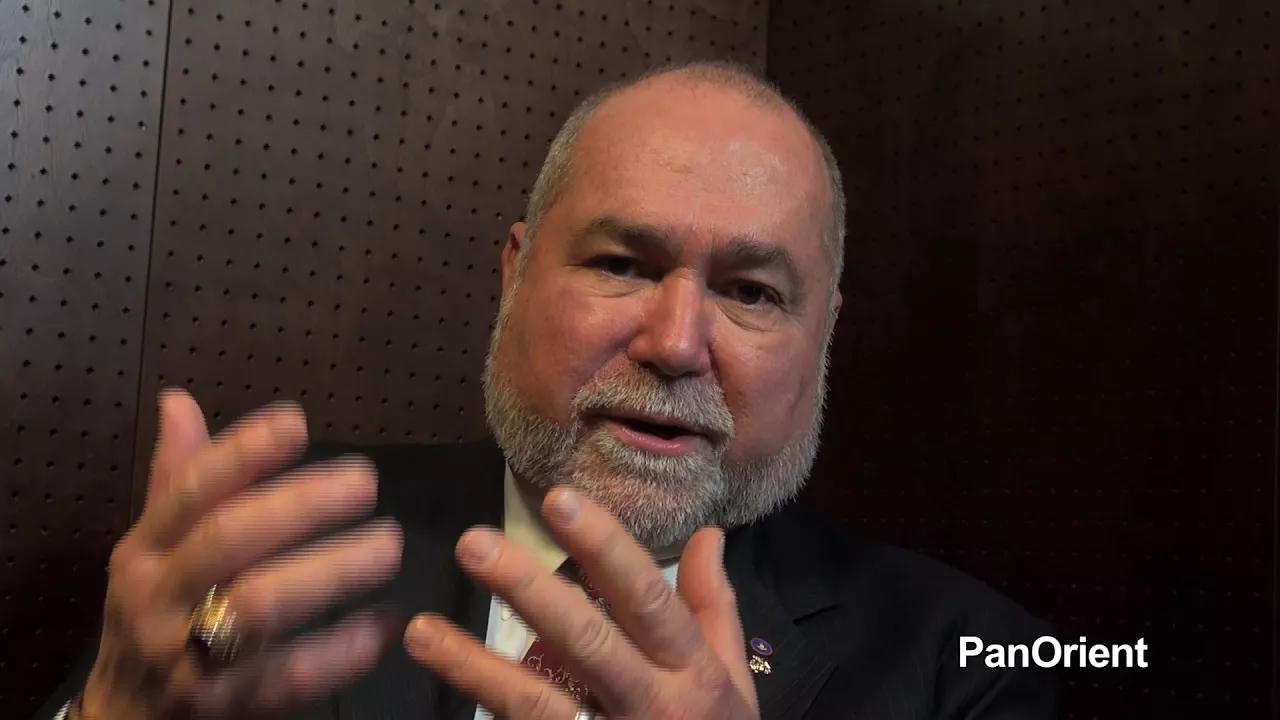
(music) My name is Nikola, a.k.a. Socrates and you are watching Singularity One On One If you guys enjoy this show you can help me make it better in two ways. Number one is you can write a review on ITunes. Or number two, you can simply make a donation. Today, my guest on the show is Robert Steele. Robert Steele is not only the author of Open Source Everything Manifesto, but he's also a former spy, and CIA intelligence professional, Marine Corps infantry officer, honorary hacker, past presidential candidate and a top Amazon reviewer devoted to non fiction in 98 categories, who has done more than 1700 book reviews.
So, Hi Robert. Thanks very much for joining us tonight.
Oh, it's a pleasure to be with you.
Fantastic. So Robert, I introduced you in kind of a very impressive paragraph but, if I were to ask you to put yourself in a sentence or two, how would you best do that yourself?
Lived all over the world, had a great many experiences and I am just stunned that as a human race, we are not doing better.
Ah, interesting. We are not doing better.
So, let me ask you then, would you say that in your view, we are making progress or are we making regress? Are we going forward or backwards?
You know, the answer is always some of each.
We have certainly made progress in poverty and infectious disease and a few other areas, but we have also managed to destroy the world in the last fifteen years. We've gone from 25 failed states to 175 failed states. The policies of the U.S. neo conservative government not just under the Bush/Cheney administration but, under Obama/Biden have essentially destabilized the world. Europe is suffering a two million illegal immigrants and I predicted this in my second book in 2002.
I basically said, if you don't take care of the poor, the poor will come to you.
This is fascinating, and there's so many things I want to grab, so, I don't even know which one to get first, but...Let me ask you this. You said, 175 failed states, can you please give us; elaborate on this more because... Well, I don't have the graphic in front of me, but if you look it up, just look up the number of failed states. My point is, that the United States government has chosen to be the best friend of dictators, rather than a champion of democracy. And, so for example, in Saudi Arabia, which has an unemployment rate of 29 percent among its young, we have chosen to allow Saudi Arabia to export terrorism in the form of wahabbism. We've asked Saudi Arabia to create ISIS as a way of bringing down Syria which is a totally unnecessary destabilization effort.
And, we are just generally allowing some very bad things to happen. For example in the Ukraine, we supported a neo Nazi fascist takeover.
And, the division of the country. We supported a number of color revolutions all inherently aimed at Russia, rather than at improving the lives of the people in those countries.
Wow, you are already blowing my mind here in the first couple of minutes, so let me grab just one point. You said, Saudi Arabia created ISIS. Can you elaborate on that?
If you look up online, who created ISIS, you'll find out that ISIS was in fact created out of the Libyan intervention, which was started by the French, but exaggerated by the Americans and CIA wanted to create a form of jihadist force such as they created for Afghanistan and their focus was on destabilizing and ultimately kicking Assad out of power Assad has long been a Soviet client.
Some people call him a Soviet agent.
I personally think he's simply the guy in charge of the country and we have no business trying to kick him out of office.
I am totally opposed to the American penchant for regime change. It should not be our business to change regimes. It should be our business to foster peace and prosperity.
So, okay, as a former political science student myself, those are all very interesting and very deep and profound and important, vitally important topics, but, I'm going to actually have to pass on on that and move on to the topic that I would like to focus on today, which is, kind of, in a way, maybe arguably more important than these particularities so, let me ask you this, what is the Open Source Everything Manifesto about?
Well, one of the things, I started the open source intelligence revolution in the 1980's and as a spy I realized one day how little we knew, because we were focusing only on stealing secrets and so, I did an inventory of what could be known using open. legal, ethical methods and it turned out that the U.S. government, because it relies only on secrets, is working with roughly 2 percent of the available information.
It hasn't put into place a vehicle for actually reaching out in 183 languages to collect local knowledge and expert wisdom in languages we don't speak from people we don't talk to.
And, so I created the open source intelligence revolution and my soundbite at the time was "Do not send a spy where a school boy can go."
Then I discovered the open source software and open source hardware revolutions led by among others The Free Software guy,...(Richard Stallman)... Yes, exactly, RMS, whom I admire very much. After looking at open source software and open source hardware I realized that they really weren't worth much unless they also had open access, open data and open spectrum and so then I started to create a typology of opens. And, in 2007 I was invited to be the key note speaker at Gnomedex in Seattle and so I did a briefing on open source everything and I identified about 30 opens. Then around 2011 I decided to write the book, The Open Source Everything Manifesto and I was able to list about 60 opens.
Then after I published the book and got some attention, the Guardian did a profile of me in 2014 by Nafeez Ahmed, then I realized that the opens were chaotic. They were an arhcipelago.
They were not talking to each other. They weren't collaborating with each other.
So, I worked with Michel Bauwens from the Peer to Peer (P2P) Foundation and Marcin Jacobowski from Open Source Ecology and we created a construct of 9 core opens and within those 9 core opens, we picked 3 sub-opens for each and our hope is that eventually we get all of the opens to work together and create smart cities that are not just on broadband but, smart cities that eliminate all waste.
Mellissa Sterry is one of the wonderful people that I listen to and pay attention to. She talks about a bionic city and what would a city look like if nature designed it? If nature designed a city, it would have no fraud, waste or abuse.
It would have no agricultural waste, it would have no energy waste. It would have no waste of materials, housing and office construction. It would have no wasted water.
We have systems, even if India builds smart cities, they are about to builds 20 smart cities and they are making a huge mistake, because they're defining their smart city as solely and exclusively centered on having broadband access. That's not a smart city. That's a dumb city with access.
I have to agree with that part on India and what smart city entails would be much broader and bigger and deeper and more profound then just broadband, but let me push a little bit back on what you said, "If nature designed a city, we'd have no fraud, waste or abuse." I mean when I look at nature, I see what Thomas Hobbs called life being nasty, brutish and short and often violent, so we have usually the stronger killing the weak and old being killed by the young, etc... etc... So, in a way, maybe you could say that there is no waste in nature because everything is being recycled and reused but, I certainly would say that it doesn't lack any abuse or suffering or violence, but actually all of those are abundant in my view.
Well, I take a more positive view and what I am really thinking about in relation to nature is energy and entropy. I'm not thinking about the violence. You are absolutely correct, but the bottom line for me, is that we design things that are very, very wasteful. For example, London right now, is trying to create a smart city and an internet of things and they're doing absolutely nothing to get rid of all those ugly highways. They are doing nothing to reduce their dependence on petrol driven vehicles. They are doing nothing to create bicycle and pedestrian access. So, that's not a smart city at all. That's a city, and this is IBM's problem, that's a city in which you are retro fitting gee-whiz technologies for communications to really absurd, wasteful, legacy, industrial era artifacts. A smart city would actually be a small city. It would be a city in which agriculture would be integrated into every neighborhood. it would be a city that you could walk to work. It would be a city in which all of the jobs were actually worth doing. It would be the city in which the arts and humanities would be present on every level and in every neighborhood. So, for me, we haven't had the conversation about what a smart city really is and this article that I have done for you on human intelligence and open source technologies is perhaps the beginning of that conversation.
I have to say that I really enjoyed your article and I'm just about to publish it so it should actually be published at the time we publish the final edit of this interview, so people will be able to check it out and I have to say, as a cyclist myself, and someone who is very concerned and interested in sustainability and not wasting things, I totally agree with you on the idea of a smart city. But you know what? Allow me to, please roll back the tape start at the beginning because there is a kind of a seeming paradox between your background and what you're saying, so I want you to lead us through the story of what led you to be where you are, because, basically, you, in your book even you say that in the 1980's you were a republican, Reaganite, believer in trickle down economics... I WAS WRONG! I have repented my sins.
(Both laugh) Okay but, but the question then is why and how?
Well, let me tell you the story.
That's a very, very big shift.
I grew up as the son of an oil man. I went into the marine corp as an infantry officer and then from the Marine Corp the CIA came in and pulled me out and I became a clandestine service case officer. Now the Marine Corp and the CIA are inherently conservative organizations that do not question authority. They basically obey orders and do what they're told to do.
In 1988 I was asked by the Marine Corp to leave the CIA and become the senior civilian responsible for creating the Marine Corps Intelligence Center, and I did that and I spent twenty million dollars on very secret equipment to access all secret information and in one little corner I had a PC connected to the internet and back in 1988 the internet was something called "the Source", that was the google of it's time. Well imagine my surprise when all of my analysts started lining up for the PC. And, I went to them and I said, I've just spent twenty million dollars so you can access everything that NSA and CIA knows and you're standing in line fora PC? And, they said, yes, because CIA and NSA don't know anything about Burundi, Haiti or Somalia, they only know things about the Soviet Union and China and North Korea and Iran. That was my awakening. That was when I realized that we had a cold war government with cold war institutions that were focused obsessively on a few heavy targets, like Russia and China and were ignoring the entire rest of the world. So, I started the Open Source Intelligence revolution and in fact, I testified to the Aspin-Brown Commission and they asked me to do a competition of me and my phone against a sixty billion dollar a year intelligence community, and I won.
They set the target as Burundi and they asked me to get whatever I could on Burundi over night, it was over a weekend actually and they asked the entire U.S. Intelligence community to provide everything they had on Burundi. They had nothing on Burundi.
Nobody cares about Burundi, but Burundi is where the Marine Corps goes. I was able to produce one to fifty thousand Russian combat charts, maps for Burundi, French imagery, spot imagery of Burundi, cloud free, less than four years old, in the archives at the 1 to 50 level. Jane's Information Group, my friend Alfred Rollington called in an analyst for the weekend and he created an order of battle for the tribes, not just the army the U.S. intelligence community only does armies that where uniforms they don't do tribal orders of battle. I was able to get from the Institute of Scientific Information that the top hundred academics writing on Burundi and Rwanda. From Lexis/Nexis I got the top journalist writing on Burundi and Rwanda, and I don't care what they've written I just want them for debriefing. And, from Oxford Analytica, I got the last twenty reports they had done on the geo-political implications of genocide in Burundi and Rwanda. With five or six phone calls in one day, I was able to put together more on Burundi then the entire U.S. secret intelligence community in the last ten years... Because I knew who knew and was able to reach out in the open source world and I was able to pull this together. Okay? So, that was my awakening. That's when I started to realize U.S. government was actually a military industrial complex that exists to spend money to enrich the few. It's not actually focused on furthering democracy or creating prosperity for the average American.
And, what year was that again, when you... 1988.
I see.
In 1989 I ghost wrote an article for Gen. Al Gray, in which I talked about emerging threats as being non state actors with off the shelf weapons, with no order of battle, with no rules of engagement, precisely what ISIS is today and the Marine Corps tried to get the U.S. government to invest money in preparing to go against ISIS like capabilities and everybody refused.
Today we spend one percent on the infantry.
The other ninety nine percent is spent on very heavy expensive things that don't do what they're suppose to do and it turns out that the U.S. government, U.S. military is in the business of building really, really expensive things that enrich a few corporations but don't actually do anything to reduce the number of amputees and dead, wounded and suicides that we have. We do not have a human centric military. We have a military that exists for Lockheed Martin's convenience.
Yeah, and the F35 is a good example.
Absolutely, in fact the F35 is killing pilots because nobody thought about the fact that the chemicals that are associated with the stealth covering would bleed into the cockpit and kill pilots.
Wow, I didn't even know that.
Yeah, we are creating a lot of garbage and oh, by the way, the Air Force doesn't know how to run secure satellites so now all of the Navy captains are learning celestial navigation, and the army officers are trying to figure out how they are going to know where they are when the GPS goes out.
You shut down the GPS and the U.S. military grinds to a halt. And, that's why I also started getting interested in redundancy and sustainability and survivor-ability.
I essentially realized that we have a government that is spending a lot of money creating things that don't actually produce peace or prosperity.
Wow, and again, very dense answer with lots of topics there, so let me see if I can sort of lead the way to sort of reveal your thesis and hopefully the most conducive way possible. So, tell us... Perhaps the next step will be best if we discuss sort of the dichotomy or the tension or the opposition, if you will, between secrecy on the one hand and open source on the other hand, because they do seem to be mutually exclusive.
So, we did already see your background sort of, your 'A Ha' moment, your amazing competition against the whole intelligence community gathering that much on Burundi over a weekend. So, now talk to us about the shift from secrecy into open source and how is that reasonable or the best way forward?
(pause) First, let's go back to the beginning of the U.S. Secret Intelligence community, people are only now starting to realize that Allen Dulles was a traitor.
Allen Dulles went against Eisenhower and against Kennedy and he single handedly rescued the Nazi regime and much of the wealth of the Nazi regime. Allen Dulles helped Nazi's escape justice. He imported thousands of Nazi's, not just scientists but leaders and people that had run death camps and so forth.
--- We also captured all of the gold in the Philippines, that the Japanese had taken from China and elsewhere and then they buried it in the Philippines when our submarines were interrupting the return of the gold to Japan. That gold, it's a story that's told in a book called "Gold Warriors" by Peggy and Sterling Seagraves, that gold became the Black Lilly covert action fund and Allen Dulles used that fund to restore fascists in Italy, Japan and Germany and it became.... what's that?
Guatemala perhaps?
Also. We love fascists. We love fascists in Indonesia as well. Essentially CIA became a, something that Harry Truman never, ever anticipated. And, Harry Truman himself wrote a letter in the Washington Post in 1968 that said that he had never intended for CIA to become a covert operations organization.
But, it was able to use secrecy under Allen Dulles to escape accountability.
I have testified to the Secrecy Commission of Senator Patrick Moynihan and I testified to the effect that secrecy nine times out of ten is not used for good reasons, it's used to avoid accountability and it's used to do evil in our name, without being discovered.
Now, openness is actually important because openness is subject to audit. One of the problems with the secret community is that it believes in what are called bi-lateral relations. So, for example Americans will meet with the Germans one on one and they will meet with the French one on one then they will meet with the Jordanians one on one and what happens is that two governments lie to each other...because there is no third party present, there is no real quality control. Now the neat thing about the openness environment is it's multi-national.
And not only is it multi-national, but you have eight tribes. I call these eight tribes of information. The academic tribe, the civil society tribe, which includes labor unions and religions, the commerce tribe, which is especially small business, governments, especially local, law enforcement, media, military, media, including bloggers like yourself. And then, military and non-governmental.
Now, I did my first graduate thesis on predicting revolution. My second graduate thesis was on strategic information management and what I discovered was that the government was essentially operating on two percent of the relevant information.
Most of the information that we need in order to make good decisions is known to people who haven't put it on-line, don't speak English, don't have security clearances and generally don't like the U.S. government, but because of the way in which we are structured...If you look at a typical embassy overseas, the diplomats are outnumbered, by all the other people from other agencies that don't trust the Department of State to do it right. The embassy officers don't have money with which to buy legal ethical information from private investigators, or investigative journalists or information brokers, or commercial intelligence companies, the only people with money are the spies and the spies insist that you commit treason before they'll listen to you.
This is a very perverted way of collecting information. So, what you end up with is a country team, that essentially collects twenty percent at best of what can be known and then, because they are supposed to coordinate anything that goes out electronically, instead of coordinating electronic messages that can be shared with everybody, they send what they collect back in the pouch, a physical pouch. And, what that means is we spill eighty percent of what we collect, because once it gets back in a hard copy volume to a desk officer that's overworked, that desk officer will either file it or throw it away. They will not exploit it.
And this comes to the whole big data issue.
Mary Meeker has said we process less than one percent of the big data that we collect.
While the intelligence community and the U.S. government are in the same position, we have spent the last fifty years developing collection systems. We haven't been developing processing and analytic systems.
I wrote a forward to a book on cyber hosting by Stephen Arnold and my forward outlines the failures of the intelligence, of the information technology community over the last fifty years. We focus on big, expensive ways of collecting and storing information, we have not focused on ways to help people share information and make sense of information across all boundaries.
Wow... (smiles) Okay... Fascinating. So, basically intelligence, as you describe it is in a big mess but, let's perhaps define.
What do you mean by the term "intelligence" when you speak of it? What is it that you are referring to?
I'm so glad you asked that because properly understood, intelligence means decision support. Data is a single element whether it's a signal or an image or a text document, that's data. Information is data that has been integrated and had value added and is then broadcast generically.
So, for example a newspaper is information, where all these journalists have taken all these sources of data, they've created these generic articles and then they broadcast them.
Intelligence is decision support that seeks to answer a very specific question by a very specific decider or decision group.
When I was lecturing in Spain, one of the things I found, was that, when I asked people who was the client, they would say, oh well IBM is the client or the trade ministry is the client, I would say, no. The client is the specific human being that is going to be making the decision. If you aren't focused on what that specific human being needs to know, wants to know and has to know than you are nothing more than a classified newspaper.
So, we've described how intelligence fails today. We've defined it. Now let's take the next step.
What is open source intelligence as being distinctive from secretive classic traditional intelligence?
Well, one of the dirty little secrets of the secret intelligence community is that it doesn't really produce a lot of useful information. It doesn't actually produce decision support. I wrote an article for Counterpunch called, "Intelligence for the President and Everybody Else", the CIA for example does not produce useful decision support for the Department of Agriculture, the Department of Energy, the Department of the Interior, the Department of Housing, Health and Human Welfare, it doesn't do decision support, for the rest of the government, and part of the problem, which is understandable, is that they think that they are in the business of secrets for the President, and they believe that open source intelligence should be done by the customers themselves.
And that's a mistake. Because the craft of intelligence, I've written ten books... One of my favorite books is my second book "The New Craft of Intelligence - Personal, Public and Political". More recently I've written a book called, "Intelligence for Earth - Clarity, Diversity, Integrity and Sustainability" and that's more or less my magnum opus.
It has over a thousand five hundred links in it, so, if you buy the kindle version, you can then link to all of my book reviews and all of the other documents that I support it with. Okay? The craft of intelligence is about having an objective, professional group that is able to craft a requirement and partnership with the person being supported. That's requirement's definition.
Then they do collection management, they know who knows, they go out and they pull in all these sources from many different places, and this can also be done discreetly whether you are doing it open source or closed source. Then they do processing, man machine processing and one of the problems that we have with machine processing is that I was ignored. In 1988 I told the General Defence Intelligence Program Committee that we had to have geo-spatial attributes on every datam or we would never be able to do machine speed visualization of all data all the time. We still don't have that.
Okay? So, machine processing is actually severely limited due to lack of the geospatial attributes on every datam. And then you do man processing, one of problems that we have in both the intelligence community and the customer base, is we have a mix of young people and political appointees, not subject matter experts. I wrote an article for the U.S. Institute for Peace in 1997 and we talked about the chasm, the gap between people with power and people with knowledge, that gap is now catastrophic. Decisions are made in Washington on the basis of who has paid for that decision, not on the basis of evidence or the public interest.
So, Open Source intelligence is the application of the craft of intelligence legally and ethically to create smart cities, smart nations, smart companies, smart citizens.
It's about not being a sheep.
--- Wow. Okay, not being a sheep.
Bahahahaha... --- I love that. I absolutely love that.
So, but you are going to be giving the tools for people not to be sheep any more, but then you have to really kind of presume or assume that they would care to do that, wouldn't you?
You know, one of the things I've decided that if I ever work for a President and I'm ever offered my dream job, I want to be Secretary of Education, Intelligence and Research, together.
One of the problems we have, is we have an educational system that trains sheep.
--- It basically requires kids to sit still for eighteen years. That's a crime against humanity. It beats the creativity out of children.
It tries to teach children to not question authority. It completely closes them off from the real world. I think we need to radically alter education, and we need to make education a life long endeavour, at the same time that we make meaningful work and creative artistic work, including the arts and music, and everything. I mean music helps your brain. The arts help your brain.
So, we have, we're at the end of the industrial era. The industrial era was about turning the population into obedient sheep and factory workers and now we're getting into an era, and part of the problem with the singularity approach is it doesn't understand the true costs. Okay? So, you're smart phone for example has at least 5 dead Chinese in it, because the Chinese are required to dip their hands into class A carcinogenic in order to build that smart phone and what that means is that the Chinese that have touched and built your smart phone have essentially come down with leukaemia and they are now in a leukaemia ward or they're dead and buried.
So, there is a human cost to the singularity that has not been properly evaluated.
That sounds a little bit too much to me, I mean in the sense that I totally agree on the, on the, sort of, carcinogenic things but, Apple has sold, on their own like hundreds of millions of phones, if we had five dead people for each phone, the whole Chinese population would disappear.
All right, you just killed my math, but, it's a very good idea, we need to run the number up to five. Look for an article... Nikoli: (inaudible)....if you were more specific. Roberts:...I have a link, I have a link I have a link in my article for you called, "The Human Cost of Computing" and so you'll see the data there on Chinese coming down with Leukaemia, you're probably right. You are probably talking one Chinese for every thousand phones, or something like that.
I don't know what the number is. The point is people do come down with leukaemia while building smart phones.
And I agree on that point, I just disagree it's going to be five because I actually think that that's actually...(inaudible) You've got me. I'm wrong. I confess my sins.
Yeah...okay... And one of the ones that I liked from those examples you have listed there is actually a very kind of obvious one, in a sense that, for example each plastic water bottle requires water equal to six or seven water bottles.
It's insane.
Right. To hold one water bottle worth of water.
Then now, what's interesting is in the last few years, several excellent processes have come up for recycling plastic, but we're still not doing it. There is just this attitude of waste. I think the day is going to come when trash dumps become gold mines.
That's part of the singularity crowd though.
I like that. I didn't know that.
Yeah...The sort of, the fact that there will be lots of treasure buried there for recycling and for future entrepreneurs, at least that's one of the ideas anyway.
It's a good one.
But, how and when it's about to be seen at least the the scale, to the exponential scale that we are hoping it will be.
But, I'm not seeing it yet and I'm on your side to the extent that waste and sort of negative actualities that we see in the exponential production of many of these things.
Well, let's talk exponential and scale.
One of the reasons open source engineering is so important a concept is because open source everything engineering is also distributed, no barrier to entry engineering.
So this means that anybody can recycle waste. Anybody can be an entrepreneur without having to get a lot of capital investment without having to create large organizations and fixed plans and things like that. So, the whole concept behind Open Source Everything is that you have open money, open politics, open standards, you have open energy, open food, open water.
All of this is way of unleashing entrepreneurial capabilities among humans.
Yeah, and I agree with you on that end and I have huge problems personally with the (inaudible) system as it is right now etc... But you know, the classic counter arguments to that is of course is the issue of innovation and, or the incentive to innovate, so, how do you address that? If we open source everything, people say, no one be innovating any more because people don't get any incentive... I, I, I, I don't think that's true. Now I will grant you there is still a lot of struggling about Open Source revenue models.
The way that... I'm a good example of that myself.
No, I understand and one of the discussions I've had with the Open Source software guys is that essentially the open source software that they create is in theory a calling card.
It's an example. It's a way of announcing themselves and then, in theory, they get paid for being part of a larger team that goes on to migrate and transform and so forth.
There's actually a number of open source revenue models and what they all seem to focus on is that the money is not made in the foundation, but in the finish.
It's made on the edges. I, myself have not been in a normal job since the first of January 2008. I have been working on the edges, on the margins. I mean, today I gave a briefing for a thousand dollars and, it's a very uncomfortable existence, it's a very.... unpredictable and (inaudible) Yes! Yes! Now part of this larger concept is a basic income for everybody.
In an open source world with an open government that is totally honest and transparent you would no longer have the concentration of wealth. You would no longer have the tax avoidance of the very rich. You would in fact have more then enough wealth for everybody. If we had... If we had gone into Afghanistan and Iraq with all the money that we spent destroying those two countries, and we had instead given everybody an annual salary and created two story houses with swimming pools with water and electricity and free internet for the kids, the middle east would be a better place today and we probably would only have spent half as much money and we would not have all these residual costs of the Falluja uranium babies, and the Iraqi military officers now running ISIS units in opposition. So, I talk about holistic analytics, true cost economics and open source engineering and all three need to be together. The problem that we have right now is that we are at the very end of the proprietary technology, scientific, financial paradigm. And that's the paradigm which says everybody is a slave and I own the intellectual property and I can sell it and profit from it and become a millionaire.
And do you think we are at the end of it because international treaties like for example, TPPA most recently... TPPA is a crime against humanity and anybody who voted for that should be impeached.
Well, the Canadian government believe it or not is kind of considering it now and I'm huge opponent of them doing it, but that was negotiated in secret by the previous government and I don't even know... It was negotiated in secret, it has secret clauses, it is essentially a fascist treaty.
It allows corporations to tell governments what to do.
And sue them and force them to do stuff in their own country.
Look, one of the cool things about the future is that absentee landlords have no standing. The day is going to come when all these big agricultural tracks are taken over by individual human beings. And, there is going to be nothing that the big agricultural landowning companies can do.
They are literally going to lose their land.
Because it's not their land. I believe in the French and the Mexican system with community land ownership. This is the original indigenous Native American concept so that a family can have a hundred year lease that is transmittable forever to other family members, but it cannot sell the community land, it can use the community land that is assigned to it to make a profit but it cannot do any harm to the land.
So, for example no Monsanto GMO seeds no pesticides. You know, we're... There's a book called "1491" that says that the average Mayan head of household had to work sixty days a year in order to support a family of five. The rest of the time they were doing arts and crafts and killing each other.
Okay, so again, many, many things there.
So, but, if TPPA is what it is, then it seems to me that that regime that you're saying is coming to an end, I think, the way I see it is pretty strong and powerful and perhaps ever present and overwhelmingly so... It's an illusion...It's an illusion that has been carefully crafted using movies and the media and the educational system. There is a wonderful cartoon of the ninety nine percent standing on a plank and the other end of the plank is out over the grand canyon and the one percent is standing on the end of the plank that is out over the grand canyon and on the ninety nine percent side, one of the 99%er's turns and says why are we standing on this plank?
That day is coming.. I sure hope so, but then the concern is, of course, how is that look like, because there's many ways, shapes and forms that can come of it and there's many alternative visions to the world that that can come... And I think the answer to that, I've read a number of books on self determination and secession, Quebec for example, I believe will be it's own country within the next five to ten years. Catalan will be it's own country within five to ten years. Scotland will be it's own country.
Hawaii will be it's own country within five to ten years. There are five thousand secessionist movement around the world. There are twenty seven secessionist movements in the United States.
Vermont, Alaska, Texas, Hawaii and a portion of California and also Oregon and Washington among others, Long Island, New York City has talked about leaving the state of New York, but my point is I think eventually we are going to get to a world in which diversity is appreciated again.
We have centralized too much.
I think we call that Canada, where I come from, but anyway, that's of course a partial point of view and I don't see the...I see what your saying and I agree with most of it, the Quebec example I kind of tend to disagree with because most of the young people that I talked to today from Quebec are not concerned with that issue as one of the major issues of our time.
They're more concerned with ecology, with the economy, with security, with their future job prospects, with things like that and, probably Quebec as a sovereign state is not probably even in the top ten, and certainly not in the top five, as far as I can tell. But, the other ones maybe I see that more in Catalonia for example, of what you're talking about and we see lots of recent signs of it. I don't see those signs in Canada per say.
Well, I guess what I want to say to you, there is an excellent book by a former Professor of mine, Charles Bednar, called, "Transforming the Dream", and what he talks about essentially is that the industrial era paradigm has now reached the end of it's supportable life. We're going to see increasing collapses. I'm looking for an economic collapse in the United States in the next year. I'm looking for a collapse in Europe. This whole... I mean, we've had two million illegal immigrants go to Europe in the last two years. Two million! Okay?
So, what's happening now is that governments are no longer legitimate in the eyes of a majority and you have concentrated wealth and I, I, I don't have it in my article for you but, I can certainly share it with you.
The most popular graph on my website is "The Preconditions of Revolution Graphic", because it outlines all the things that can go wrong in political, legal, socio- economic, ideal cultural, techno-demographic and natural geographic terms. And what's happening right now in the west is all of those conditions are present.
Do you think that the situation in Europe and the United States and Canada is all the same, because I see... No. They are all different.
Right. That's how I see it. I see that first coming to the United States if any where, and secondly is that necessarily a good thing or not?
Well, you know, going back to your comment about nature being nasty and brutish, if the United States government is so stupid as to not focus on the well being of its population, then all of the chaos that occurs in the United States has been brought on by the U.S. government and what's going to happen is the states are going to devolve. They are going to begin nullifying federal regulations. They're going to be ending federal ownership of land.
The federal government was intended to be a kind of administrative convenience.
It's the United States of America, not the united people of America. It was the states that created the federal government and I believe the future is going to eventually see the federal government forbidden from owning land or taxing citizens directly.
And the states will be providing a portion funding for services of common concern.
I expect the U.S. military to be cut back, not quite to Canada's scale, but I expect some major, major cuts in how we spend money. I expect an end to borrowing.
I expect a balanced budget. We're, I mean, we've literally been living a criminal dream.
Okay, but, to me, what you're saying sounds like, I mean, from a former political scientist, as I am, the definition of a state is "that body which has the monopoly over the organized means of violence."
In a certain graphical.. (inaudible) Well McIver wrote a wonderful book, "The Origin of the State" and he talks about a number of functions not just the ownership of violence. Chris Hedges wrote a book recently on wages of rebellion and, of course, Russell Brand has written a wonderful book on revolution. Revolutions happen when three things... The comedian Russell Brand?
What?
Yes. Yes. He wrote a book that I reviewed on revolution. I liked it very much. Three things are coming together. First is concentrated wealth together with unemployment which is no less then twenty three percent in the United States today. In some groups it's forty percent. Single Mom's with a kid, people of colour, young people with new college degrees and older guys like myself it's forty percent unemployment. Okay? So, concentrate... Why do official statistics are so different?
Because the government lies.
The government doesn't count everybody that's given up looking for work, doesn't count people are holding three part time jobs with no benefits. It's literally a theatre, I mean Chris Hedges wrote a wonderful book called "Empire of Illusion" The End of Literacy and the Triumph of Spectacle. More recently he's written a book called "Wages of Rebellion" which contains the third condition for revolutiion.
The first two are concentration of wealth and illegitimate government in the eyes of the people. The third is when the military and law enforcement stop enforcing the law and no longer support the elites in their control of the population, we are very close to that point.
But to me that sounds like a very concerning (inaudible) thing (inaudible)... you know, to me, that sounds like a civil war. I mean, one of the French revolutionaries, I can't remember who it was, but he said, "Revolution is a blood thirsty monster that once let out, you cannot easily put back in."
It's true but... all of them got guillotinized in the end.
Well, let me point out to you the difference between a civil war and a war of succession.
A civil war is one where you are trying to become the owner of the state and have a monopoly on violence and be in control of everything. A war of succession is much easier to win. A war of succession says do what you want, I'm out of here. You no longer have authority in my state.
Take the state of Texas for example, that is a state that could very, very easily kick the federal government out and there is absolutely nothing Washington can do about that.
Really, but Washington commandeers the army, Texas has just some militia.
Texas has the Texas National Guard and I think you will find that two out of three U.S. soldiers will not fire on U.S. citizens.
I hope so, but I'm not sure about that because if you look at the1960's, there was this famous case, I forget which University was it that...(inaudible) Kent State.
Right. And, people got killed and those were protesters and many of those... One person got killed and it created national outrage. Look, the times have changed. I mean the videotaping of Rodney King.
Look how many black people get shot all the time.
And what is happening now is that the police are now under scrutiny. I mean, we, the police killed 140 people in March of last year. What's happening is that the internet is making cell phone cameras a major resource for citizens and it is helping share outrage. Where I think we're going and I'm actually optimistic, because for example Lady Lynn Rothschild ran a conference on inclusive capitalism.
That's code for stop the pitchforks. There are silicone valley billionaires talking about redemptive capitalism. That's code for stop the pitchforks.
Tony Blair use to call that capitalism with a human face... Or compassionate capitalism. Frankly, I think capitalism is a bad term that should be ex-sponged, because laborism is the human side of it. I think we need to reorient our economies to people and communities and we need to get away from these, these, huge supply chains that have absolutely no respect for true costs.
If you look at a single...It took one of my guys a whole year to identify the true cost of a single cotton t-shirt. And, I include that in your article, in the article that I did for you.
Yes.
I mean, a single cotton t-shirt has x gallons of water and all this fuel and toxins and child labor.
We need to start doing more localized manufacturing. I mean Buckminster Fuller was the first person to say, that most people's jobs are not worth the petrol they use to get to and from work.
That's a very profound observation.
I would agree like with a couple of street blocks in New York City and here in Toronto we call it Bay Street by the way. We don't call it Wall Street we call it Bay Street.
I would agree with that mostly, but I don't know. Especially for the Texan example, going back again to it. I don't see Texas going to laborism any time soon, myself. I see Texas even if it succeeds, being very kind of laissez-faire, hard core Baptist, Presbyterian, Capit... Laissez-faire is the key term. Live and let live, But laissez-faire is kind of the libertarian pro-capitalist moniker isn't it?
Yeah, and one of the concerns, I was going to run as a Libertarian candidate for President but it became clear, they didn't want me.
One of the problems with Libertarians is that they don't understand communitarianism.
It sounds like communism to them.
Well, they're so individual that they think that an individual who is owning land for example at the beginning of a river has the right to crap in that river and never mind the people downstream.
So, you have to have a community spirit in which you have holistic analytics and true cost economics and everybody understands what the costs and the benefits are for having civilized codes of behavior.
Okay, let's move on our conversation here to a couple of examples and a couple of terms, terms that you use in your book that important, I believe. Let me just bring in a couple of criticisms or critical points of view. So if we are going Open Source Everything, for example, one of the things that we are open sourcing, engineering, software engineering, all of software, etc..etc... So, let me ask you first, Are you a Linux user yourself?
No, but my next computer is going to be an open source computer that only runs one program at a time. With no Microsoft.
I still have a computer that's seven years old. So I'm still using my company computer.
And, what OS is it running?
It's Microsoft.
It's Windows.
Yeah. Which is horrible. In fact, I just found out if I deleted all the Windows Live stuff, my computer runs better.
One of the shortfalls that we've had in recent years is, is we haven't had a proper open source laptop. Now there are a couple.
There's a company, a penguin company, that builds an open source laptop. There's another company that just came out and they build a laptop in which they advertise that every single software and hardware has no back doors.
Yeah, and those are all Linux based.
I mean, no, what I meant to say is they have no messaging, they have non of this unauthorized stuff that goes on in the background. One of the things that infuriates me about Microsoft is all of the processes are running without control when all I want to do is type a memo.
That's the only thing I want running, not all that other stuff, but no, I'm not a coder, I am more of a meta-guy.
Yes. Yes. Clearly. But, so anyway, so you're leaning toward Linux but you're not quite there yet. Because, the reason that I ask this or one of the reasons anyway was that I don't know. You've read a lot of books, a lot of books. Have you read Jaron Lanier's, "I Am Not a Gadget" and then I forget what his latest... I like him very much. He has a chapter in a book that I published called, "Collective Intelligence, Creating A Prosperous World at Peace". I know him and I like him.
He's a big opponent of open source software, he says in his book that all of the innovation, historically speaking, has happened in for-profit software and the open source community at best has always been just following behind and kind of implementing the innovation that has been done by (inaudible)... Well I would disagree with him and I'll tell you why. Time is the one strategic variable that cannot be bought and cannot be replaced. Time really matters.
And, right now all of the proprietary technology if we wanted to transfer it to the five billion poor, it's unaffordable, it's not interoperable, and it will not scale.
You think open source can do that?
Yeah. I do. Yes I do and in fact I proposed an Open Source Technology's Agency in a memorandum which I link in this artlicle that I've given you.
And, why would it be able to accomplish such scaling for five billion people whereas, the alternatives from be it Microsoft or be it Apple will not?
Because it's open. Because it's adaptable, cause it's transparent. Because it will essentially harness the distributed intelligence of the five billion poor. See part of the problem with proprietary technology is it's not teaching people how to fish. It's giving them a closed program. It's giving them a closed box. If you give them an open box then they will invent new things with it.
And I don't have all the answers, but what I do know with certainty is that what we are doing now is not working and it's not scalable. Now I wrote a white paper for the United Nations called, "Beyond Data Monitoring" and that's also linked in this article that I've done for you.
And, I make the point that the current plan to achieve the sustainability development goals is ridicules. Not only are the donor promises not going to materialize, but eighty to ninety percent of the money is then consumed by United Nations and intermediate organizations. Less than ten percent of the money gets to the village level. Now if you combine an open source everything approach together with what Ghani from Afghanistan has recommended, which is electronic bank accounts at the village level, then you can put one hundred percent of the money to the village level and bypass all these intermediaries that are buying themselves first class tickets around the world.
Yeah, that's a good point per say.
I think the whole idea of an open source world is you move away from the fenced commons.
I mean, proprietary technology is a way of fencing the commons and it is too restrictive for the kind of scale that we need to achieve in the next ten years.
You see, and I agree with you entirely on the theoretical end of things and I've been a, a strong sympathizer to open source software yet, I've been using Microsoft myself and the last time I did actually a deeper analysis on the potential for me migrating to Linux was maybe a couple of years ago and at the time there were all kinds of issues with drivers for video cards and you know, video codecs, which are of course proprietary and you know I am a blogger and a podcaster so I need to be able to edit my audio and or video for things like that... But, imagine if you had an open source alternative for every single one of those.
Yes, that would be fantastic, but there were problems because of course the companies are creating those motes, those barriers, those impediments.
In 1994 we talked about Microsoft and how it mutates and migrates it's application program interfaces. I mean Microsoft has done some great things, but it has set information technology back twenty years because it has retarded the ability to create sense making programs and data management programs and all these other things. Microsoft basically said, just, this is just like Facebook, Facebook is making the same mistake with facebook basic.
Microsoft is saying screw you, were gonna go five miles and hour and you better like it.
That's what Facebook is trying to do to India, okay? That's insane. We ought to put Facebook and Google and Microsoft out of business.
And, Cisco and Oracle.
But, the Indians turn them down I think.
Didn't they?
Yes, which is good. Which is very good.
Yeah, that was quite impressive and I think they are going, and even in places like certain municipal cities in Germany I noticed just in the last couple of years they did migrate from Microsoft administrative systems to Linux.
It's not just them, the Norwegians, the Chinese a whole bunch of people have said, we should not require our citizens to buy a proprietary product in order to read government information.
And that comes back to my vision for open access, open data requires open software and open hardware, it also requires open spectrum. WIFI should be free or this new thing LIFI with the light bulbs, it's wonderful.
Tell us a little bit about what you called the panarchy model. Can you unpack that for us?
The what?
Panarchy.
Oh panarchy. Well that's more Micheal Bowens's thing, but you know panarchy is essentially informed self governance. It's extreme democracy.
It's everybody working together and having voice and vote on any issue that they wish.
Let's us, pick up the pace then. Let's talk about the importance of what you call ethics and integrity.
Oh I love that question. There's a guy named Robert James Beckett in the United Kingdom and you can look him up on my website PhiBetaIota, but he talks about we're moving from the age of information into the age virtue. I agree with that.
In their book, "The Lessons of History", Will and Ariel Durant who wrote the eleven volume story of civilization say that morality is a strategic asset of incalculable value.
Ethics is about the truth and transperancy and trust. Ethics is how a civilization hands on the lessons of history from one generation to the next. Ethics is the cultural code for getting the most out of any group in any situation with the least amount of damage and the least amount of waste.
So, ethics is an operating system.
I love that actually. Ethics is an operating system.
Yes.
Hmmm. I like that very much. Interesting.
That, I would have to ponder on that and maybe I'll steal it from you.
You drew that out of me. That is the first time I have ever said that.
Awesome. Excellent. And, so perhaps I'm contributing a little bit which is... Ethics is an operating system. You have my permission to take it.
I'll steal it for sure but, you should... No, it's open source.
Exactly and because it's open source it wouldn't be a problem but, tell us a little bit about, since we are that topic, the importance of bloggers like me, because you see I'm a blogger and people have often a misconception that I blog about technology, but I actually do not blog about technology. Technology is just a context.
I actually blog about ethics.
Look, I was Ithe opening speaker at Hackers on Planet Earth in 1994 and in my speech I said that hackers were the only people who had the combination of intelligence and integrity to identify deficiencies in communications and computing systems that the companies themselves were either unaware of or trying to hide.
And, I said that hackers have a social responsibility to reveal those vulnerabilities and my proposed approach to them was report the vulnerabilities to the company and give them thirty days to fix it. And at the end of thirty days announce it publicly.
So, since you are mentioning social responsibility, that means that you actually would remain in support of people such as, for example, Julian Assange or even Edward Snowdon.
Yes and let me point out that I think Edward Snowden is a CIA operation.
Approved by the White House.
That kind of blows my mind now.
Well, we could talk about that.
Look, Snowden was a nobody. He went from being a security guard to being a CIA technical specialist and placed by Booz Allen in Hawaii as a contractor. Snowden, and I've met his parents. I like his parents very much.
They're loyal, patriotic Americans. Snowden has all the signs of being a classic operation and our state department is stupid, but they are not so stupid as to take Snowdens passport away so that he has to stay in Russia unless we want him to stay in Russia.
That's an interesting point.
Okay well, that's another point I need to Look, the bottom line is everyone has different motivations. I like to quote a CEO in New York Bob Seelert from Saatchi and Saatchi Worldwide.
He says until you get the truth on the table, no matter how ugly it is, you're not in a position to deal with it. And one of the problems that we with western governments and western banks and western corporations is that they lie. As a persistent characteristic of how they do business.
The war in Iraq was based on nine hundred and thirty five now documented lies. There's a book by that title, "935 Lies" and what it actually talks about is the loss of ethics in politics. In theory, and I wrote a wonderful post many years ago that was featured in a profile in which I talked about how politics and intelligence are in theory the highest forms of serving the public, but only when they are both ethical.
I agree with you completely on that point too.
Okay. So, what we have now, Matt Tabbi has written a book called "Griftopia", and on page 32 he has a quote and my summary of that book is on Amazon, in which he says that what we have now in the United States is a state of griftopia, in which political crime and financial crime have merged. The reason political crime and financial crime have merged is because the citizens have abdicated their responsibility for paying attention.
Now, when I spoke at Gnomedex in 2007.
Gnomedex is a conference of bloggers.
I suggested to them that they attach themselves like leeches to individual corporations and individual issues and that they become citizen intelligence minutemen, which is a phrase that Alisandro Politi coined in 1992 when he attended my first conference on open source solutions. So in the ideal, every citizen should be a citizen intelligence professional who is focused with laser like intensity so that they become the world's top expert on x, y or z and nothing escapes their notice. I want to do for open source what Linus Torvalds did for Linux.
In other words I want all the poverty authors and all the citizens observing poverty to be part of one massive global brain poverty slice. The same thing for infectious disease, the same thing for environmental degradation. The same thing for potholes.
I mean, there are now wonderful apps where a citizen can tap there phone and report a pothole. I want to create the world brain. And, in fact I have an essay on saving civilization.
Well, tell us a little more about the concept of that world brain looks like.
Well, I own three of the url's, worldbrain.net dot org and dot com. And I have a graphic on the world brain. Basically worldbrain.net should be permenent identities that also include anonymity and privacy and rights and security and worldbrain.org should be, like the global library. It's free to everybody. Worldbrain.edu should be global education one cell call at a time.
So, I don't care what it is that you want to know you should be able to get it in a five minute video that is directly related to the moment in time.
And then worldbrain.com would be a profit making activity in which communities would agree to crowd fund very specific developments.
Well, I want to tell your listeners, if they go to tinyurl.com/steele-future - and I think I have this link in the article that I wrote for you. but, steele-future as a tinyurl has all of my latest work, including the saving civilization essay and that calls for a school of future oriented hi-grade governance. It calls for a multi-national decision support center so that the U.N.
will stop making decisions based on American lies. It calls for an open source technologies agency. Let see, what else, oh, it calls for a United Nations Open Source Decision Support Information Network.
Eventually, we should be able to connect all information and all languages all the time.
But let me ask you, all of those things so far that you said like, open source intelligence world brain connecting everything, all the knowledge and all the languages all the time. All those things to me sound like Google. Google.
No, you know, I, I really like and admire Vint Cerf. He and I met in 1992 when I was attending The Annual Internet Society Conferences.
And, I bought Vint sushi before he went to the dark side. You know and I said, "Vint, for God sakes get Google to give us some tools for making sense." And I'm sorry to say that hasn't happened. Now you know, now are you aware Google started basically on the basis of three crimes. Google stole the yahoo search engine.
I don't know about that.
Yes. They have recently paid one billion dollars as a quitclaim, so Google stole the yahoo search engine and then modified it to become Google. They received funding from the CIA Office of Research and Development.
And they were able to pick up all of the AltaVista employees that Hewlitt Packard closed down. Those are the three things that created Google and my friend Stephen Arnold has written three books about Google. The Google Trilogy.
Google, in my view has done some really excellent things, but Google is also a fraud.
It hasn't actually made money. It's operating on shareholder cash, okay. Google is driven by search engine advertising revenue and that is collapsing. I think Google is gone.
And, frankly I think Facebook is gone at some point. If India really, really wanted to create a smart nation and smart cities they should be harnessing all their universities to create the anti-google and the anti-facebook and then on top of it put the tools that I've identified. Eighteen different tools.
Well, I can sympathize with sort of the desire to have alternatives to Google and Facebook and perhaps in sort of the open source realm of, but that's great, I just don't see the end of either Google nor Facebook any time soon.
Well, I see the end of IBM you know, I mean this is gonna happen inevitably. Google and Facebook serfed the wave perfectly. They are utterly brilliant and I don't begrudge them for a moment, their great success, but they're not good enough and that's my bottom line.
Okay. Let me ask you this then. First of all, it's just a curious question. How in the world have you managed to write seventeen hundred book reviews? Like, I read a lot of books myself, probably in the five to seven, eight hundred range maybe... Right. Let me say first off when Google, I mean when Amazon started the review system, I had already written two books and each of those two books had a hundred fifty annotated bibliographic entries. So I had a total of three hundred mini book reviews, one paragraph. I loaded all of those to Amazon on the fourth of April 2000 and I was instantly a top thousand five hundred reviewer, because it had just started.
So that's three hundred reviews right there.
Then I was invited to speak to a parliament in Europe. I can't remember, a French Parliament, a German parliament, whatever and I was very intimidated, so I read fifty books to get ready for this mission and I wrote short reviews of those fifty books and I loaded that and now we are at three hundred and fifty. Then I kind of got hooked and buying books is a business expense, so there was a time when I was spending five thousand dollars a year on books.
And it basically boiled down to my reading one or two books a week. Now I read books in three ways. I glance through them and if I don't like them at all I just set them aside and I don't review them.
Some books I will read the introduction, the conclusion and maybe one or two chapters and the table of contents and the index and then the... Some books I will start with the index and then read all of the end notes and then read the entire book word for word.
So out of the two thousand one hundred or so books reviews that I have now, I would say I have read every word in at least half of them. And the others are partial things because at my level with what I know you could pick up a book and you can see very quickly does this book make an original contribution or is this regurgitating stuff or whatever... and so my reviews do two things; they summarize the book and they provide ten links which is the maximum allowed by Amazon. So, I've actually created a collegy, a non fiction, a collegy of ninety eight linked categories of books and if you go to phibetaiota.net, at the top you'll see the review page and then within that review page I have a whole series of lists of book reviews, like I have a long list, list of lists of books about the future and lists of lists of books about the past.
I have one list of three hundred books on secret intelligence. I have another list of books on self determination and secession and so forth. So, I would certainly say take a look at the review page where I also have essays on leadership and education and democracy lost.
And, now give me your homepage, Robert, but unfortunately time is advancing here I'm going to have to bring our conversation to an end, but let me ask you what's the best place for our viewers and listeners to find more about you and your work.
Well, I would say the blog which has no advertising and offers a free subscription.
That has over nineteen thousand posts from over eight hundred contributors.
Eighty of which are active now and that is PhiBetaIota.net.
Very good, okay, now link to it. And, then the final question that I always have to ask my guests on my show is this, "How do we wrap up our conversation? We kind of jumped all over space and time and subject matters and went all kinds of... Well, you're going to be publishing an article that I have written for you especially and what I would say is let's keep the conversation going.
Let's keep the conversation going. Interesting.
Okay, I like that. All right and of course, by the time this interview gets published, I will already have published the article, so... Robert Steele thank you very much for being with us tonight.
It's an honour. Thank you.
(music) If you guys enjoyed this a show you can help me make it better in a couple of ways, you can go and write a review on Itunes or you can simply make a donation.
(music)
Up Next

105:00
The Internet's Own Boy: Aaron Swartz Documentary (2014) | Digital Rights & Activism
@moviemaniacs
2.4M views•2014-07-01

11:03
Patent Trolls Explained: The Abuse of the US Patent System
@LastWeekTonight
9.2M views•2015-04-20

9:49
FastAPI vs Flask vs Django: Choosing the Right Python Web Framework
@TechWithTim
302.5K views•2024-05-26

1:42
Game of Thrones Opening Credits: A Cinematic Analysis
@gameofthrones
46.3M views•2011-04-18
Related Study Plans & Knowledge Roadmaps
Structured learning paths in General & Interdisciplinary Studies
general-studies
Elevator Engineering: History, Physics & Cities
01From Hoists to Safety Brakes: The Dawn of Vertical Lift
02Hydraulic vs. Traction: The Engineering Physics of Elevators
03Modern Speed, Safety, and Algorithms
+ 2 more learning modules
12h5 modules
Explore Roadmap
general-studies
Rubber: Material Science, History & Geopolitics
01Origins of Natural Rubber & Mesoamerican History
02The Chemistry of Natural Rubber & Vulcanization
03The Geopolitics of the Rubber Boom & Colonization
+ 2 more learning modules
12h5 modules
Explore Roadmap
general-studies
Containerization: Evolution, Logistics & Trade
01Ancient Trade & Bulk Cargo: Amphorae to Barrels
02The Industrial Revolution & Cardboard Packaging
03The Containerization Revolution: Malcom McLean
+ 2 more learning modules
12h5 modules
Explore Roadmap
general-studies
Textile Tech: Evolution, Labor & Global Impact
01Pre-Industrial Textiles: Handloom & Cottage Industry
02Mechanization: The Spinning Jenny to the Power Loom
03The Factory System & Global Labor Transformation
+ 2 more learning modules
10h5 modules
Explore Roadmap