



![[민법] 기초이론 21강_계약 총설](https://i.ytimg.com/vi/qSuiVNIdQKU/maxresdefault.jpg)











Brand licensing is a business arrangement where brand owners (licensors) allow other companies (licensees) to use their brand equity on products, services, or experiences in exchange for royalty payments, creating additional revenue streams for brand owners and sales opportunities for manufacturers; this strategy can provide sustainable competitive advantage by leveraging established brand recognition, emotional connections, and consumer trust, as demonstrated by LEGO's turnaround from near-bankruptcy through Star Wars licensing in 1998, and works across various company sizes and industries including apparel, food, experiences, and digital products.
Understanding Intellectual Property and Trademark Licensing Strategies
Added:Basic definition and differentiation of core Intellectual Property (IP) types: patents, trademarks, copyrights, and trade secrets.
The purpose and function of a trademark in branding, consumer recognition, and business asset valuation.
Fundamentals of contract law, specifically how legally binding agreements, permissions, and rights transfers are structured.
Introduction to business growth strategies and the concept of brand equity.
Advanced contract negotiation, focusing on drafting specific licensing clauses such as royalty structures, territory limits, quality control, and exclusivity.
International IP licensing and compliance, including navigating global trademark frameworks like the Madrid System.
IP valuation methods and how licensing agreements impact corporate mergers, acquisitions, and franchising models.
Trademark enforcement strategies, dispute resolution, and litigation in cases of licensing breaches or infringement.
30.2K views64likes31:06Original Release: 2025-10-08
So today, meet Stu Seltzer. Stu is the author of Brand Licensing for Dummies, a new book that came out in May. Stu is a renowned NYU professor who's been teaching for more than two decades all about brand licensing. When fans love your brand, they will buy other products and services with that brand on it. And that's why if you love Mario Brothers and you're walking into that toy store, you'll be drawn to to pay a couple extra dollars for that Lego set instead of the basic generic brick set because you are a fan of Super Mario Brothers. He also runs his own global agency for over 25 years. It's called Celzer Licensing Group. The firm is renowned for its expertise in brand licensing, partnership marketing, and strategic alliances. excited to dive into all that and more today on the show. Check it out.
So, I'd love to kick it off with something to help the audience kind of come along on this story with us. Maybe talk a little bit about what is brand licensing generally and why does it matter?
>> Yeah, thank you. And uh great question.
And the thing about brand licensing is that it's all around you. You probably don't even know it. You've probably interacted with a lot of these licensed products. Whether it's a Lego with Star Wars on it, whether it's a popsicle with Spongebob on it, whether it's a C4 energy drink with Snickers on it, the there are so many licensed products around and I've been listening to your show and you're great at building these brands. And then brand licensing is a way to actually if you're a brand owner, it's a way for you to almost, you know, exploit your brand and create more value, actually create more revenue from your brand. And if you're just a small business or if you're a u manufacturer of any size business, it's a way to actually tap into somebody else's brand equity and boost your sales.
>> And you mentioned the the Legos example.
Maybe you could talk about that like who is licensing from a who? How does that work?
>> So there are two parties in a licensing deal. The lency the lensur the lensur is the brand owner and they are licensing out that their brand equity and and we'll take the case of Batman uh Warner Brothers and Warner Brothers owns Batman. They will license out the Batman Batman brand to the lency. In this case, the manufacturer is LEGO, and LEGO will license in that brand, put on the Batman, put the Batman onto their products, and again, hopefully see their sales spike. And I'll just add one more twist because LEGO is an amazing case study. There's actually a number of these Harvard case studies written about it because in the 1990s, late 1990s, LEGO was on the verge of bankruptcy. And what did they do in like 98 that transformed their entire company? They took the first license. They went out and licensed Star Wars. And that really changed their company because all of a sudden they went from having no licenses their entire 50 plus year history to in ' 98 took their first license with Star Wars and then then had such success that shortly after licensed in Batman and Jurassic World and and on and on where today if you were to look at their their collection it's you know about half their products are licensed from every big movie, every big kids brand and so forth. So, you don't even realize, but not only is it great for the consumer and great interaction and so forth, but it it almost saved LEGO, which is now the world's number one toy company, >> which it's astounding that something like that could happen. And to us, like now, it just seemed like that has always been the case. But I remember the the Lego toys back in the day, they weren't they weren't that exciting. It was, you know, besides just the blocks, they made some of them that you could look like animals or whatever, but >> it was so generic. And yeah, when when it became Star Wars, suddenly everyone was building these models that could be in their rooms and like be display items. And now it's gone. I mean, I have kids and they're playing with these Nintendo ones. They have like we have all the Marios and all these things are 70 $80 sets for these these Mario Lands that you build and they are games.
They're gified through iPad. So like talk about where this is where this is going and how much has changed.
>> Well, you know, in the toy business, if you were to walk around the toy convention, which one is going on today as we speak in Los Angeles, there's one in February in New York City. And if you were to walk around this toy industry, you will see the majority of manufacturers have embraced licensing because they know that their toys may sell better with that licensed brand on it. whether it's the Star Wars or the Disney Frozen or the Spider-Man, the power of those kids walking down the toy aisle to say, "Yeah, I want that. I want that Minions toy because I saw the movie or, you know, wrapped up in the hype and so forth." Those generic toys are really hard or a tougher cell these days.
>> Yeah, it's it's crazy. And I imagine it's not just one type of thing. So, maybe you can give us some of the the explanation here. quick uh legal rundown is that I am here to talk about trademark licensing and in the world of licensing there are patents which is more about the inventions there are copyrights which is more about the written word anybody can go online to the USPTO.gov of and see if your brand or if your idea is uh is worthy or maybe you want to go trademark it yourself, maybe you want to patent your invention and so forth. But it's all there. But what I wanted to share is that we're focused on the trademark and the trademark can include it could be a sound. A sound could be trademarked. It could be the character, the image of the character. It could be even in some cases a color could be trademarked. Reese's is using a certain variant of of orange that they've trademarked in some cases. The Tiffany blue is trademarked in some cases for certain uses and purposes and so forth.
Most of the work that we're doing is around the trademarked brand, the core brand name. And when I talk about that, we have a client Scots Miracle Grow Scots, which is the leader in lawn and garden and fertilizer. But we've taken that fertilizer brand and licensed it out to other products such as a garden hose and a lawn mower and another company's making our garden gloves and garden sheds. And you know, it's all about these other companies say see the value and the power of the brand because they see that Scots being the leader in in the lawn and garden space. They're advertising with 100 million plus in marketing every year and they do Super Bowl ads and a company like a Westchester glove can say listen I can tap into all that marketing power by just licensing in the brand and so that's in a nutshell what what we're here to talk about.
>> So when we're looking for someone to partner with what do you look for in that partner? So, if you're the lency and we'll just take a basic t-shirt company and you're looking to find a partner that would help spike your sales because that's the ultimate goal. It all depends on the demo you're looking at.
It depends on the retailer you're looking to target. You might want to go after the latest hot movie. If you want to appeal to the young kids, you want to you might want to go after the latest, you know, a trendy brand. You know, maybe even Army or or Harley-Davidson if it's an adult t-shirt. Um, if it's a women's t-shirt, it might be a, you know, one of the fashion brands you might want to go after because the fashion brands really, people might not re realize this, but having worked at Eve Solar as my first licensing job, Eve, who at the time was alive and well, was working on on making coutur dresses that sold for $5 to $10,000 each.
Everything else was licensed that you know I worked on licensing now his brand to eyewear to shoes to handbags and so forth. Uh the fashion business has really embraced the licensing model and it works for both parties. The lency of companies like the Lexotica that will have tremendous businesses. If you look at their roster of of making glasses for Georg Armani and Esarant and many many other designers as well as the licensors I mean Laurant had a tremendous business tremendous royalty revenue by licensing out their brand equity.
>> I imagine there's a scale to this for it to matter you have to have some skin in the game a certain amount of investment. So like what size companies are we talking about that this makes sense for?
>> Well that's a good question. We have seen this work on all size companies.
For our company today, we've been very fortunate to work with brands like Unilver, with the American Red Cross, NBCTV, UPS, Mac Trucks. We've been really fortunate to work with these big brands, and it works really well, and there's a lot of moving pieces, a lot to manage. But we have also worked with small companies. A couple years ago, we were working with a company called Sterling Sports, and they make inflatable products. and they made inflatable chairs and floats for the pool and things like that. But we had gotten them their first ever license with the NFL and they created this chair looks like a big recliner chair but it was a blowup chair and we had gotten them the brand the NFL teams and they were able to take it to QVC and had tremendous success and it really took over that company. That company almost 3xed the sales of that entire company by adding the licensed products to their to their mix. And this was a company that was under 25 million when we first started working with them.
>> I appreciate that because I think it helps people understand like is this even for me? Is am I this kind of company to to see >> the scale here? because they might think this is just for someone who's already, you know, mass across the globe that's just trying to invigorate. But it's good to see that there are companies that are that are still building and growing that could do this, too. What's kind of the range in terms of how do we pay for these kinds of things? Like what are the deals? Are they upfront fees? Are they percentages? Like how do those deals work? And what could be the range that they would find for something like that?
>> So, um there's two key numbers. You know, I go back to years ago when I worked at Warner Brothers. I worked in-house on the Batman brand and we were working with 450 different licensing partners at the time and and there was a lot of information, a lot of negotiation going on with all these partners. But it really came down to two key numbers.
Number one, what is the royalty rate that you you are going to propose? And number two, what is what we will call a guarantee? what is it's called the minimum royalty payment guarantee.
Minimum royalty payment guarantee will be the second most important number and I'll try to explain it really quickly and clearly here. And let's say for example you are a trading card company and you want the Batman license. Well, you will go and and uh come up with a proposal and it must include those two things. So you will come up with a royalty rate and we'll say 10% and that's based on wholesale sales and then you will also come up with a minimum royalty payment guarantee. Let's say you believe you could sell a million in year one. Million in year one at a 10% royalty rate means that you will expect to pay them $100,000. 10% times a million dollars. And then as a guarantee, this industry standard is that you will guarantee half of your projections. So now it's simple. Two key numbers in this case are a 10% royalty rate and a $50,000 minimum royalty payment guarantee for year one. If you were a basic t-shirt company, the royalty rates might range from 8% for a no-name brand to upwards of 15 16%. To get a sports license with the NBA, NFL, it might be upwards of 14 15%. We know the Olympics are getting around 16%.
Some of the hottest brands out there from Star Wars and Spider-Man and Batman, they may get in the 16% range.
Some of the designer brands might get in the 12% range. A lot of this, of course, is due to supply and demand. How many t-shirt companies are you going to be bidding against for this for this deal?
Um, the other thing to factor in there is the product. Now, I'm giving you the basics on a apparel product. Well, if it's a food product where the margins are slimmer, the royalty rates might be closer to 5% or 6%. If it's a paper product like trading cards, believe it or not, the royalty rates might be closer to 20%. Because those those margins are even higher. So that is a very basic understanding. And anybody who wants to learn more about that can actually reference the new book that we just published on licensing where there's a lot more details on that.
Yeah, there's so many good examples in the book about like the way that this works and then a real life example of, you know, how that came to be and then the structure, where to find the deals, how to go about setting this up, how to work with someone to do the because if you just heard through that math, you're like, uh, I don't I don't know, maybe you lost me. Well, that's why there are people that are experts in this. That's why you work with consultants. And if you want to learn more about it, yeah, start with the book to even understand the questions to ask when trying to hire someone. Good. So, >> hold it up.
>> Yeah. So, it's called Brand Licensing for Dummies. It just came out in May.
Uh, it's 2025.
>> He worked on it with uh co-author Steven Extract. And if you guys want to find that, the easiest way is to just go on Amazon and type in Brand Licensing for Dummies. It's the only book that'll pop up uh from there. And it's a great book.
I've I've been enjoying just the stories alone. and it's given me a lot of ideas for my business. Thanks for putting that out there. If people want to actually work with somebody, what do you guys do at Seltzer Licensing and what is that like? What's that experience like? So we are really here to really add value to the process and there are companies like Disney that will have 150 people in the licensing department and there's a team at Warner Brothers with 100 people and Universal with 50 plus people. But a lot of other companies cannot afford to have a licensing department and that's where we fit in. We will come in and have a great team of professionals. We're a global agency headquartered here in New York City also in an LA office and we're here to really look at your brand and understand where can we license this out and go through the process and act as your almost outsourced licensing department to really help you understand the first thing we do when we work with some of the clients especially the larger clients who are brand owners is we create what we call a licensing strategic plan and this strategic plan will answer two questions. Number one is where can you license your brand? What products, what categories and so forth?
And number two is how much revenue should you expect from each category that we license out just to set the right expectations because people in the paper might read that, oh my gosh, Star Wars generated $100 million in royalty income in one year and Spider-Man generated, you know, 100 million, 120 million in one year. Well, that is amazing and that's what these movie properties do. That might not be the case for you. A lot of the corporate brands we work with do under 10 million in royalty a year, but it's important to figure out, oh, can I get that 10 million? How do I get that 10 million?
And what's the uh the best way to do that? So, phase one is we'll go out and create this strategic licensing plan.
And phase two is once we're all aligned, we'll go execute it and deliver that revenue for our clients. And that's on the licensing outside. On the licensing inside, it's somewhat similar. A good example, I'll share one, is FTD Flowers.
FTD Flowers was a client and they came to us and they said, you know, we we're looking to spike our sales. We know that flowers there's a whole market that we're not really reaching the younger market the 20-year-olds and we want to license in a brand to reach that that demo. So we went through a whole process came up with a lot of brand ideas for them and then we had pitched the top of the list was Ver Wang. They loved it and then they engaged us to go license in and go secure that deal and we helped create this great alliance between FTD Flowers and Ver Wang and it was very exciting. In fact, when they announced this deal, just on the announcement, FTD Flowers at the time was a public company and their stock went up 8%. Just on announcing this amazing partnership to create Verang Flowers and Verang Roses and have Verwang as part of their whole offering on FTD Flowers.
I I think it's a great example. If you guys want that book, make sure to go to Amazon. Again, it's brand licensing for dummies. And Steu, I want to jump into some of the psychology of it a little bit. I'm going to read this quote from the book real quick. And here's what what what it says. The psychological draw to branded products often goes beyond just the functionality. It's fueled by perceptions of quality, status, and the aspirational values that a brand represents. Brands don't just sell products. They sell experiences, identities, and emotions that resonate with consumers on a deeper level, which I loved. I mean, the reason that I'd want to buy the Lego that we talked about is because of my love and connection to the Mario brand or the Star Wars brand. There's so much love for these these entertainment properties and these these things that we grew up with connected to these products. I'd like to talk a little bit about the psychology of that. Like for you, what drives that? What's creating the brand desire for that consumer?
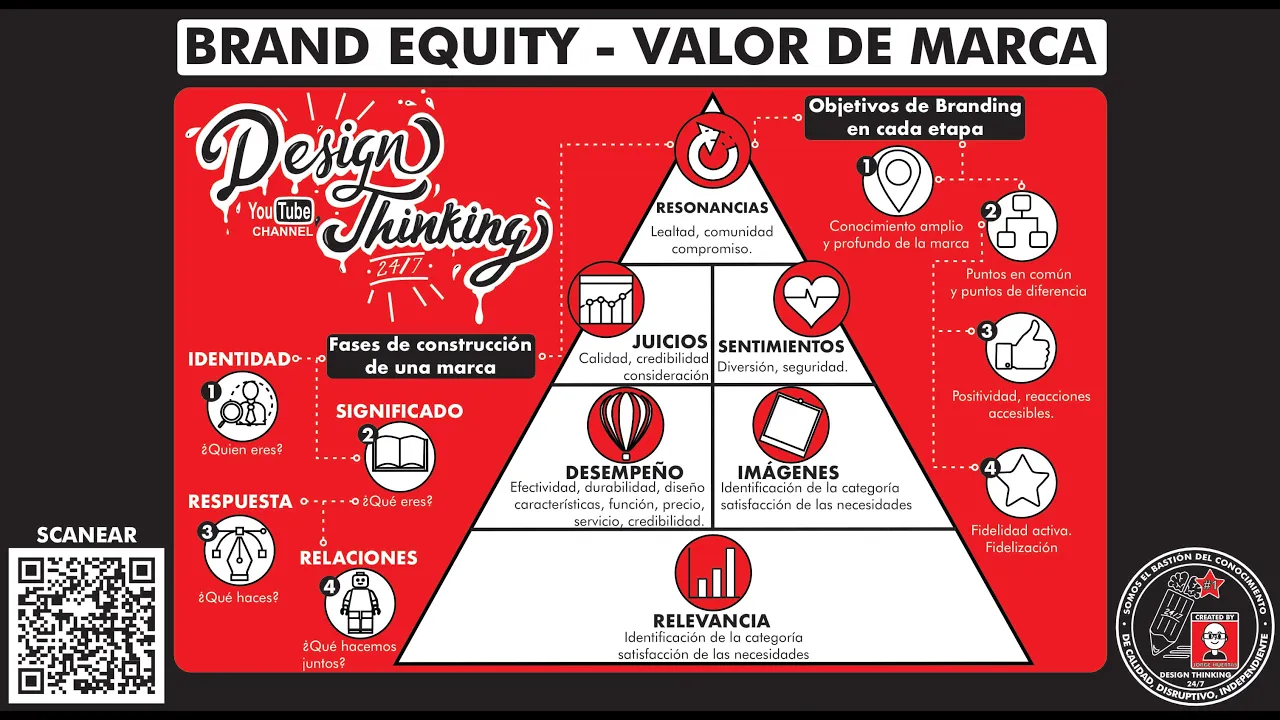
So the uh I have a chart like in the book we have a diagram and I'm going to explain it to you because you know I've been teaching at NYU for the past 22 years an undergrad class on brand licensing and it is primarily for marketing majors and we have a lot of sport management majors and sport marketing majors as well. But the first slide I show them on the first day of class is your basic marketing 101 pyramid. But as you move up the the pyramid, the the consumers are becoming more loyal to your product. And what I'm here to share is that they are not just becoming more loyal to your product.
They become quote fans. Fans of your brand. And once they are fans of your brand, they will buy other products and services with your brand on it. And that has been true forever. When fans love your brand, they will buy other products and services with that brand on it. No, >> I I think that rings true. What are some of the things, the tactics, if you're advising someone, how do I create that kind of love, that kind of interest in my business? What would you tell someone getting started to think about?
>> We go through an exercise and I did it at a seminar recently. It's on our YouTube channel where the title is, is your brand ready for licensing? because there are three different key questions we have and three constituents because it's got to appeal to not only the end consumer but it's also got to appeal to the retail buyer and also has to appeal to the potential lency the potential manufacturer. So you have three people you need your brand to appeal to. And so we have a a series of questions that we ask to find out all right, you know, what is the brand equity? How many people really know what your brand know your brand? And number two is do they not not only do they know the name but the do they know what it stands for? So if you were to say Oreo cookie, yeah, everybody knows and that's tremendous, you know, 99% awareness. And number two is do they know what it means? Yeah, everybody knows that Oreo is a cookie.
And number three is does your do the consumers give your brand to extend? And in that answer is yeah, people know Oreo can play in ice cream. It can play in in uh pudding. It can play in in in some in candy confection products and on and on.
So those are, you know, three of the key questions and we simplified it there.
There's more of a list of 10, but that's to simplify it to find out is your brand does it have what it takes to license out? Does it have the develop fan base ready to be licensed out?
>> Yeah. And I know we're talking a lot about products, but what I think was kind of minding for me was it's not just products that >> that that's hap that brand licensing is happening with. There's >> what you mentioned in here is there's experiences.
>> Uh there's >> I'll give you one digital product. Yeah.
what I've first it's we have products we have experiences we have >> digital products which I was like I had thought about that and then we're moving into like AI and whatnot so maybe yeah give us some examples of what like first experiences was like >> yeah so experiences the big example if you look at some of the theme parks like Batman the ride at Six Flags that is a licensed product a licensed brand on that we did one recently we were representing we we've been representing the American Ninja Warrior TV show it's an NBC TV show. And we took that brand and licensed it out to a gym operator to create the official American Ninja Warrior Adventure Park. And the first one opened in Santa Ana, California. And the set designers and the executives at NBC, American Ninja Warrior team, came in. They helped design the place. And it's got a lot of the same elements as the TV show. and it's the only has been the only officially licensed American Ninja Warrior park. But a lot of those theme parks are like that and and so forth. But that's almost a growing area because so many experiences out there.
Everything from the Disney on Ice shows that you've seen to we've done something with the Real Housewives and a experience with the restaurant. There's a lot of that going on. Now, where were they just throw glasses at the wall and break stuff or is that >> There is There was a table in there that you can flip. It was like a flipping tables area that you can sit in, order your burger, but you can actually sit and flip that table if you want. Go, which is funny.
>> The digital stuff was had its moment.
There's still a lot of that going on, but that was all the crazy NFT area that shot up. it it's cooled down a lot. But if you remember, even the big leagues, you know, NBA got into it with Topshop and was creating these NFTts that were selling for a lot of money if you buy a digital trading card and things like that. So there, you know, and the avatars are are popular. You're you're seeing a lot of that. Uh Fortnite have been licensing in some brands. They did stuff with some of the sport leagues as well and and celebrities and and so there's a lot in that space going on.
>> Yeah. I mean, it's such a much bigger world than I thought it was to be honest. And I think the experiences are are fun to talk about cuz I'm now seeing it everywhere. It's like I was I was on a trip to London and there was a Shrek experience. I'm like, well, I'm sure that that would they they had to pay for that. They couldn't just do that.
>> Uh Margaritavvilles. I was on a a swim trip for my my my daughter and we stopped at Margaritavville. I'm like, "This is this obviously is from, you know, Jimmy Buffet."
>> Yeah, that's licensed. Jimmy Buffett's done a tremendous job licensing. I I saw recently at a uh Berkshire Hathaway meeting, he had licensed his brand to a boat. And at this place, it was Margaritaville and a licensed boat selling for $330,000.
And it's branded Margaritaville. And I could tell you now, I doubt he's getting 10% royalty for that. But even if he's getting 1%, that's tremendous.
>> Yeah. Yeah. I just the it goes on and on. And the video game licensing, I feel like that's it's just a whole thing. My how much how many kids are playing Roblox and like the Minecrafts of the world and how many they're virtual worlds like the of course my kid's going to want to like if he can buy something that is connected that's like off like out of that world brought into it. of course like of course he's going to want to combine those things.
>> So very exciting.
It is booming. I mean I'll share a couple of key tips you know as as people are looking you know number one is that we have seen licensing can make a good product great and so there a lot of your listeners are sitting in their companies and have some really good products but by adding the license can really take it to the next level and we have seen that time and time again so many times. You know, I I think of you other clients we've worked with like Weston, the Weston Hotel. They had great hotel, of course, they had a great fitness product, beautiful gyms, but we ended up doing a partnership with Reebok and rebranded, licensed in in the Reebok brand to rebrand the Weston Hotel gyms.
And it was rebranded as the Weston workout powered by Reebok. All of a sudden, wow, it's not just a regular gym, hotel gym. It's a step up. it's actually got, you know, and and the equipment didn't change much, but it was that whole, as you say, the whole perception and trust in the brand and so forth and that really makes a difference. So, we have seen time and time again where licensing can take a good product and make it great.
>> And you've been doing this a really long time, obviously, and you teach it. So, it's nice to have an expert here to to get into it, but how did you get into this? What made you get into brand licensing? Why was that like the field?
>> Good question. And I actually started my career as a CPA at Arthur Anderson and left and ended up going back to business school. And right out of business school, I made the decision to take a job outside the the typical path. There were people of friends and offers from other big CPGs. But I took a job at Eve Saluron. That was my first job out of business school. And that's what really opened my eyes to this area. Never even really knew about it. And we had retail stores. We had a few deals in licensing and and that's where they said oh you know let's look to grow how can we grow and that's where I saw some of the other fashion houses were doing big business with this licensing and and the team's like yeah let's do it and the first deal I worked on was with Lotica Eyewear they own the sunglass huts and they own RayBan and and they make the Armani glasses and so many other fashion brands and of course ESON for many So, as we're as we're wrapping up today, first off, thank you for being here. Is there anything else you want to kind of leave people with a message today that might help them if they're thinking about this?
>> Um, one other key point I'll share is that, and I mentioned this in the book, and it's something I've talked about from day one, is that licensing can provide that sustainable competitive advantage. And I use those words because there was a book I remember from my business school days called competitive advantage written by Michael Porter who's a well-known marketing professor from Harvard Business School. And he basically says the goal of all business is to find your differentiation and hang on to it and and come up with your sustainable competitive advantage. And I'm here to say that brand licensing can be and can provide that sustainable competitive advantage, you know, and there's so many examples. you know, uh, Brier's Ice Cream has the license with Reese's uh, chocolate and they are the ones making this very popular Reese's ice cream and that's a competitive advantage because nobody else can make that Reese's ice cream except for Briers and the Briars family of which might includes Klondike and Good Humor, but the their competitors cannot use Reese's and that's a a real competitive advantage similar to the the examples I shared for you know the licences who are using the Scots brand that is a real competitor's advantage if you are selling that Scots branded tool which happens to be the best you know the biggest and best brand in the lawn and garden and your competitors cannot use that brand that's a real advantage that you have over the others and you can hang on to that >> yeah I mean in in a world where where we can comparison shop and we do comparison shop everything now it helps to have something you can trust because otherwise you're just chasing down price.
>> Yep.
>> So if you if you want to build a brand figure, you know, figuring out what you're associated with is huge.
>> Yep. And I'll leave you with one more thing, which is that as you everybody should know and should be aware that like everything, brand licensing does have risks and there are risks. If you are looking to do a deal and you know make sure you you either consult the book, consult us because there are financial risks, there's some inventory risk, some brand risk potentially if you're a brand owner and you just need to know and and uh really analyze and understand all those risks as you're entering the industry. Uh that's a that's a huge call out because same thing with like contracts like you know the lawyer like the having trusted part I think in anything you're doing if you're not the expert it's good to have an expert with you when you're doing something that's completely foreign to you. Absolutely.
>> Yeah.
>> Well Sue, thank you so much for coming on and talking about the book today.
Again, it's brand licensing for dummies.
Check it out. Even if you're not a dummy, the book will be helpful to you.
I promise. Uh check it out. And if you want to get to know Stu more, you can find him on LinkedIn, just steeltzer.
And thank you again for being here today.
>> All right. Great to talk to you. Thank you.
>> All right. And thank you all for listening and we'll catch you next time.
Up Next
8:50
Understanding Royalty Rates in Licensing Deals
@inventRight
79.4K views•2016-01-26
46:36
Retention Habits of Top DTC Ecommerce Brands Revealed
@SendItPodcast
44K views•2026-03-03

15:23
Decoy Effect: How Pricing Psychology Influences Consumer Spending
@bobinvestsUS
90K views•2026-01-05

17:30
The Planned Obsolescence of Light Bulbs and Tech
@veritasium
25.3M views•2021-03-26
Related Study Plans & Knowledge Roadmaps
Structured learning paths in Business
business
Pop-Up Retail: Strategy, Design & Execution
01Introduction to Pop-Up Retail & Strategic Goal Setting
02Budgeting, Site Selection, and Legal Essentials
03Experiential Retail Design & Visual Merchandising
+ 2 more learning modules
15h5 modules
Explore Roadmap
business
Reg CF: Startup Funding, Marketing & Launch
01Introduction to Equity Crowdfunding & Reg CF
02Platform Selection & Legal Preparation
03Crafting High-Converting Campaign Assets
+ 2 more learning modules
14h5 modules
Explore Roadmap
business
Productized Services: Scaling Solo Freelance
01Foundations of Productized Services
02Packaging and Scope Definition
03Pricing and Subscription Models
+ 2 more learning modules
15h5 modules
Explore Roadmap
business
Gov Procurement: Find, Bid & Win Contracts
01Introduction to Government Procurement & Business Setup
02Small Business Certifications & Set-Asides
03Finding and Analyzing Contract Opportunities
+ 2 more learning modules
14h5 modules
Explore Roadmap