Systemic racism in the U.S. healthcare system causes Black Americans to die prematurely from all types of diseases at significantly higher rates than white Americans, including being 250% more likely to have newborn deaths, twice as likely to die from heart disease, 50% more likely to get prostate cancer, and 200% more likely to die from it, due to factors like limited access to care, economic disparities, and physician biases about patient compliance.
Systemic Racism in American Health Care: An ER Doctor's Perspective
Added:Deep Dive
Understanding the distinction between individual prejudice and systemic or structural racism.

Racism vs Sexism
143
Racism differs fundamentally from individual prejudice because it involves systemic power structures that oppress entire groups, whereas individual prejudice can exist without the ability to oppress. This distinction is crucial for understanding why systemic racism persists even when individual attitudes change, and why historical context matters in defining racist actions.
Click to watch →

White man gives a BONE CHILLING Revelation about the treatment of Blacks in Jails.Must watch.
51K
Systemic racism refers to institutional and structural patterns of discrimination embedded within societal systems, while individual prejudice refers to personal biases. Black communities experience systemic racism not only within prison systems but also in everyday life, including fair housing, healthcare, and employment opportunities. These experiences occur even among law-abiding citizens who have not broken any laws.
Click to watch →

Episode 175: King of Entertainment
101
Racism is a systematic form of oppression built into the structure of society, while individual prejudice or discrimination may not constitute racism. Racism involves institutional and structural elements that perpetuate inequality. Understanding the distinction between individual prejudice and systemic racism is important for recognizing and addressing racial injustice.
Click to watch →

Britain Is a Colonial, Wicked Nation – Why I Refuse to Call Myself British!
114.2K
There is an important distinction between individual prejudice and structural racism. Individual racism involves personal biases and discriminatory attitudes, while structural racism refers to systemic policies and practices that disadvantage certain racial groups regardless of individual intentions. Focusing on individual prejudice diverts attention from the fundamental structural issues that require systemic solutions.
Click to watch →

We have to accept that we are all racist - Dr. Robin DiAngelo
981
Many people are socialized to view racism as individual acts of discrimination, believing that if they are good people, they cannot be racist. This individualistic framework prevents recognition of systemic racism. Racism is actually a deeply embedded system founded on the country's origins, with all institutions reinforcing it. The key difference between individual prejudice and systemic racism is institutional power—groups without institutional power cannot systematically deny rights to others, even if individuals can discriminate. After the Civil Rights Movement, racism became socially unacceptable, which paradoxically made it impossible for white people to examine racism because they would have to admit they were bad people, transforming racism from a structural issue into a moral issue.
Click to watch →
Deep Dive
The concept of Social Determinants of Health (SDOH) and how non-medical factors influence health outcomes.

DataLab Nigeria: Introduction to Health Data Analytics
141
Social Determinants of Health (SDOH) are non-medical factors significantly impacting health outcomes. According to WHO, medical care accounts for only 10-20% of health outcomes, while physical environment, social factors, and behavioral factors account for 80-90%. SDOH includes economic stability (income, employment, housing, food security), education access and quality, healthcare access and quality, neighborhood and built environment (air quality, crime rates, access to healthy food), and social and community context (relationships, discrimination, abuse). These factors affect how patients recover and their overall health outcomes beyond medical treatment alone.
Click to watch →

Considering the Future of Rural Health Funding and Policy with Dr. Mark Holmes
1.1K
Social determinants of health refer to the conditions in which people are born, grow, live, work, and age, including factors like housing stability, food security, transportation access, and neighborhood environment. Research indicates that these non-medical factors significantly influence health outcomes, sometimes more than medical care itself. A compelling example involves a graduate student who was losing weight and experiencing health deterioration until her attending physician discovered she was homeless and sleeping in friends' couches; once connected to housing resources, her health improved dramatically. Healthcare professionals historically lack training to recognize and address these social needs, and addressing them often falls outside traditional clinical scope and payment structures.
Click to watch →

Exploring the Social Determinants of Health, Health Equity, and the Law: Part 2
507
Social determinants of health are the non-medical factors that influence health outcomes. They encompass the conditions in which people are born, grow, work, live, and age, along with the wider set of forces and systems shaping daily life. These include economic policies, social norms, racism, climate change, and political systems. Examples of SDOH include safe housing, transportation, neighborhood conditions, discrimination, violence, education, job opportunities, income, access to nutritious foods, physical activity opportunities, polluted air and water, language skills, and literacy. According to CDC, SDOH account for approximately 50% of a person's health outcomes.
Click to watch →

Center for Admixture Science and Technology (CAST)
4.8K
Social Determinants of Health (SDOH) refer to non-medical factors that influence health outcomes, including the conditions in which people are born, grow, live, work, and age. SDOH is estimated to account for 30-55% of health outcomes. To include social determinants of health in quantitative analysis of phenotype-genotype association studies, researchers need to formally represent SDOH factors and standardize their values. CAST is developing ontologies to formally represent SDOH information.
Click to watch →

DEI Basics for SLPs and Therapists in Early Intervention and Pediatrics | Laura Mize | teachmetotalk
8.5K
Social determinants of health (SDOH) are non-medical factors and forces in someone's daily life that impact their health outcomes. According to the World Health Organization, these include where someone was born, where they live, where they work, where they play, and where they worship. These factors contribute to health risk and health outcomes by influencing physical environment, socioeconomic factors, and access to and quality of healthcare available to individuals.
Click to watch →
Deep Dive
An introductory awareness of implicit bias and how unconscious stereotypes affect professional decision-making in clinical settings.
E7 - Dr. Denise Davis - Personal narratives break open implicit bias
271
Implicit bias is a normal feature of the human brain, not a moral failing—it represents the broad brush strokes we use to categorize people and situations. While implicit patterns can sometimes help clinical reasoning (such as recognizing classic presentations of acute coronary syndrome), they can also lead to diagnostic errors and suboptimal care. Clinicians must recognize that implicit bias based on identity operates frequently, if not always, in clinical settings and requires active countermeasures.
Click to watch →

Avoiding Errors in the Emergency Department | The Advanced EM Boot Camp
23.5K
Harvard University offers implicit bias tests at implicit.harvard.edu that reveal unconscious biases individuals may not be aware of. These tests measure implicit associations related to race, gender, weight, and other characteristics. Even well-intentioned clinicians often discover biases they did not consciously hold. Recognizing these implicit biases is the first step toward mitigating their impact on clinical decision-making.
Click to watch →

Inclusive Leadership, Stereotyping and the Brain: Stereotypes Panel
2.4K
Human judgment is bounded by cognitive limitations, leading us to use stereotypes for efficient decision-making. Even highly trained professionals like physicians, who are explicitly trained to be egalitarian, are not immune to implicit racial biases. Research with 302 physicians showed that implicit racial bias predicted treatment decisions for coronary artery disease vignettes, while explicit bias did not. Higher implicit bias correlated with greater likelihood of treating white patients and lower likelihood of treating black patients. Interestingly, physicians who were aware of the study's purpose showed overcorrection effects—those with higher implicit bias were more likely to treat black patients, suggesting awareness can lead to adaptive correction. This research demonstrates that implicit biases exist below conscious awareness and can influence important professional decisions despite training and good intentions.
Click to watch →
Latinx Community: Improving Accessibility of Behavioral Health Services - CRA
151
All practitioners possess biases shaped by cultural backgrounds and life experiences, which is normal and acceptable. Two types exist: explicit biases are conscious and overt, potentially expressed through discriminatory behaviors; implicit biases are unconscious and outside awareness, contradicting stated values, and can interfere with clinical judgment. A personal example illustrates how implicit bias against teenagers—formed from childhood beliefs that adolescents lie—can unconsciously affect clinical work until acknowledged and managed. Awareness allows practitioners to consciously counteract biases through deliberate reflection, supervision consultation, and intentional behavioral adjustments.
Click to watch →

Clinician Insider: #Bias
382
Implicit bias significantly affects clinical judgment and behaviors, as healthcare providers often make assumptions about patients based on superficial characteristics like weight or appearance rather than comprehensive medical evaluation, leading to potential undertreatment of patients with significant medical conditions who don't fit stereotypical profiles.
Click to watch →
Deep Dive
Basic knowledge of public health metrics, such as morbidity, mortality rates, and life expectancy disparities across different demographic groups.
INDICADORES DE SALUD| SALUD PÚBLICA Y EPIDEMIOLOGÍA
619
Health indicators are summary measures capturing information about health status and system performance. The five basic indicators are: (1) Natality - number of live births per pregnant women; (2) Morbidity - number of disease cases in a population; (3) Mortality - number of deaths in a population; (4) Life Expectancy - years a person can live under optimal conditions; (5) Healthy Life Years Lost - years lost due to premature death. Mexico's natality declined from 2.79 million (2000) to 2.16 million (2018), while mortality increased from 437,667 (2000) to 722,611 (2018), indicating demographic shifts.
Click to watch →
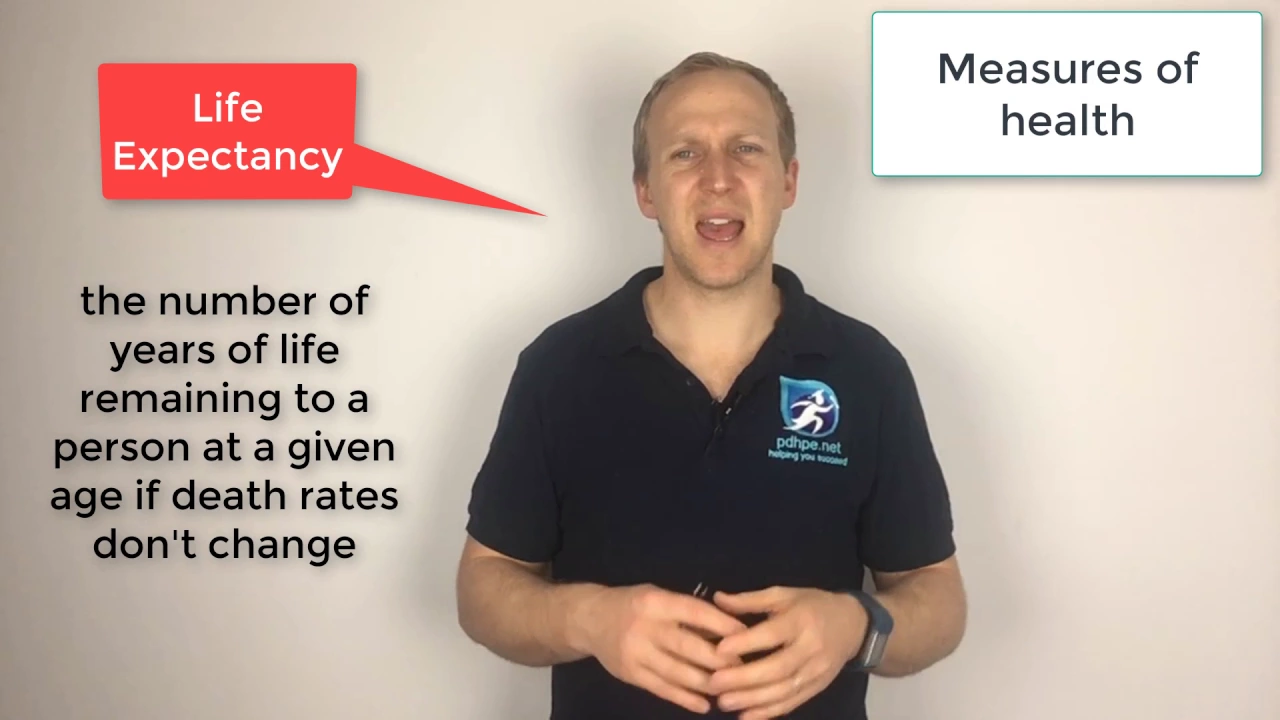
Measuring health status
35.2K
Three fundamental measures define population health status: mortality (death counts within populations), morbidity (illness prevalence in individuals and groups), and life expectancy (projected years remaining at a given age). Mortality statistics track total deaths and cause-specific fatalities, including infant mortality rates per 1,000 live births. Morbidity measures assess illness levels across populations, revealing disease distribution patterns. Life expectancy provides age-dependent projections of remaining years, showing significant gender disparities where females consistently outlive males by approximately four years. Together, these metrics enable systematic analysis of population health trends and inform public health interventions targeting major health challenges.
Click to watch →

Health, INTRO, DE 2021
2.2K
Health is defined by WHO as complete physical, mental, and social well-being. Epidemiology studies health and disease across populations. Morbidity refers to disease incidence, while mortality refers to death rates. Life expectancy in the US increased from 46-48 years in 1900 to 76.3-81.4 years in 2019, reflecting reduced infant mortality. However, disparities persist: non-whites die earlier than whites, and poor people die earlier than rich people. A child in Mississippi can expect to live five fewer years than one in California. Gender also creates disparities, with men being more disadvantaged health-wise despite often being better off financially.
Click to watch →

Public Health for HEO Exam Anthropology Complete Syllabus uppsc.
600
Mortality indicators measure death rates: Infant Mortality Rate (IMR) counts deaths under 1 year per 1000 live births; Maternal Mortality Ratio (MMR) counts maternal deaths per 100,000 live births; Life Expectancy measures average years lived; Child Mortality Rate measures deaths under 5 years per 1000 live births. Morbidity indicators measure disease patterns: Incidence Rate tracks new disease cases in a time period; Prevalence Rate measures total existing cases; Hospital Admission Rate shows percentage requiring hospitalization. These indicators help identify disease trends and assess healthcare system demands.
Click to watch →

PSM 023 Health Indicators Core 100 index SPECIAL INDICATORS SERIES Compare Health Communities
9.1K
Mortality indicators measure death rates including crude death rate, infant mortality rate, child mortality rate, maternal mortality rate, disease-specific mortality, proportional mortality, case fatality rate, years of potential life lost, and life expectancy. Morbidity indicators measure illness burden through incidence, prevalence, notification rates, outpatient attendance, inpatient admissions, readmissions, discharge rates, hospital stay duration, and work absence. Disability indicators include event type measures (days of restricted activity, bed disability days, work loss days) and person type measures (mobility limitation, activity limitation). Advanced disability measures include Health-adjusted life expectancy, Quality-adjusted life years, Disability-free life expectancy, and Disability-adjusted life years.
Click to watch →
Prerequisite Knowledge
- Concept 01Understanding the distinction between individual prejudice and systemic or structural racism.
- Concept 02The concept of Social Determinants of Health (SDOH) and how non-medical factors influence health outcomes.
- Concept 03An introductory awareness of implicit bias and how unconscious stereotypes affect professional decision-making in clinical settings.
- Concept 04Basic knowledge of public health metrics, such as morbidity, mortality rates, and life expectancy disparities across different demographic groups.
Subsequent Learning
- Step 01Exploring the history of redlining and its modern-day connection to environmental racism and localized pollution exposure.
- Step 02Analyzing policy interventions and legislative efforts, such as the Black Maternal Health Momnibus Act, aimed at reducing systemic disparities.
- Step 03Investigating methods for implementing anti-racist practices and cultural humility training in medical education and hospital administration.
- Step 04Studying Community-Based Participatory Research (CBPR) as a methodology to address and mitigate local health inequities.
Health Gap
Pandemic Impact
Health Gap
0:00Playing Section
- 1
Black Americans face higher premature death rates from all major diseases.
- 2
Systemic biases in care and diagnosis worsen health outcomes significantly.
- 3
Disparities persist across income, age, and location, affecting minority groups.
Socioeconomic and Class-Based Explanations for Health Disparities
An alternative perspective argues that socioeconomic status (SES), geographic location, and class-based factors are the primary drivers of health disparities, rather than systemic racism. Proponents of this view suggest that unequal health outcomes—such as differing mortality rates and access to quality care—are more directly linked to income inequality, education levels, insurance status, and local infrastructure. From this viewpoint, framing healthcare disparities primarily through the lens of systemic racism may oversimplify complex issues and overlook impoverished populations of other racial backgrounds. This perspective emphasizes that policy solutions should focus on universal economic reforms, expanding insurance coverage, and improving healthcare infrastructure in low-income areas, arguing that addressing poverty and class-based barriers is the most direct and effective way to eliminate health disparities.
Deep Dive
Exploring the history of redlining and its modern-day connection to environmental racism and localized pollution exposure.

Redlining
3.2K
Research shows that race continues to affect insurance industry policies and practices. Workers in American inner cities have more difficulty finding jobs than suburban workers. Lending institutions like Wells Fargo treat black mortgage applicants differently based on neighborhood racial composition. Reverse redlining occurs when lenders target minority consumers to charge them more than similarly situated majority consumers, specifically marketing expensive loan products. In the 2000s, some financial institutions considered black communities suitable for subprime mortgages. Wells Fargo partnered with churches in Black communities where pastors delivered wealth-building seminars and the bank donated in return for mortgage applications. A survey found bank branches in black communities offered largely subprime loans and almost no prime loans. High-income blacks were almost twice as likely to receive subprime mortgages as low-income whites. Redlining extends beyond housing to property types, retail services, and credit cards. Lenders cite sponsor concentration as excuses to redline property types like co-ops and condos. Retail redlining involves spatially discriminatory practices where services may not serve certain areas based on ethnic minority composition. Insurance racial profiling has a long history, with agents assessing customer ethnicity by telephone. Environmental racism policies related to redlining impact public health, with minority communities facing smaller, less accessible parks. The over-representation of minorities in various disease categories including AIDS is partially related to environmental racism.
Click to watch →

"Does Your Zip Code Impact Your Whole Life? Redlining and Environmental Justice"
126
Redlining, a discriminatory federal practice from the 1930s-1970s that prevented banks from lending to residents of predominantly Black neighborhoods, created lasting geographic inequalities that continue to influence environmental exposure today; communities historically subjected to redlining show disproportionately higher rates of pollution, asthma, and environmental hazards, demonstrating how housing discrimination policies have generated persistent environmental injustices that affect health outcomes across generations.
Click to watch →

Environmental Justice Today - Robert D. Bullard, PhD
1.1K
Environmental threats track closely with historical racial redlining, creating persistent geographic patterns of injustice. In the South, pollution correlates most strongly with race as the primary factor. Zip code determines health outcomes more potently than many other factors—research shows darker brown economically depressed zip codes correlate with significantly lower life expectancy compared to prosperous blue zip codes. Communities redlined in the past remain more likely to host industrial facilities and toxic waste sites. These communities are often zoned as compatible with poison, receiving harmful facilities while lacking political power to resist. The pattern persists because historical discrimination embedded in housing policies continues shaping neighborhood conditions decades later, demonstrating how structural racism creates lasting environmental inequities.
Click to watch →

Housing as a determinant of health equity
805
Redlining was a practice where government agencies deemed certain neighborhoods unworthy of credit and investment, explicitly considering residents' race and ethnicity. Color-coded maps ranked neighborhoods from best (green) to hazardous (red), with presence of people of color, immigrants, or Jewish residents considered detrimental. Recent research shows clear associations between historical redlining grades and present-day environmental characteristics, including nitrogen dioxide pollution levels showing a striking gradient from A to D grades. This demonstrates how spatial racism created long-standing environmental health inequities that persist today.
Click to watch →

Can Trees Really Improve our Neighborhoods? | Earth Focus | Season 6, Episode 4 | PBS SoCal
61.3K
A history of redlining, where banks and governments denied loans to neighborhoods depending on their racial makeup, led to current inequities in developing natural areas. The lack of trees and green space is not random but represents a systematic injustice. Areas historically disadvantaged have less urban greening because people living there are often African American, Black, Latino, or immigrant populations.
Click to watch →
Deep Dive
Analyzing policy interventions and legislative efforts, such as the Black Maternal Health Momnibus Act, aimed at reducing systemic disparities.

Rep. Lauren Underwood & Christy Turlington Burns On Why Maternal Health Matters
253
The Black Maternal Health Momnibus Act is comprehensive legislation consisting of 12 bills addressing every clinical and non-clinical driver of maternal death. Key provisions include growing and diversifying the perinatal workforce (midwives, nurse midwives, lactation consultants, doulas), addressing social determinants of health (housing, nutrition, transportation, environmental conditions), and expanding postpartum Medicaid coverage. The legislation requires an estimated $3 billion investment. The Protecting Moms Who Served Act was signed into law in November 2021, addressing disparities in the VA health system. The Build Back Better Act included most of the Omnibus but did not pass the Senate. The caucus is working to reintroduce legislation and build bipartisan support.
Click to watch →

Better Starts for All Launch
812
The Black Maternal Health Momnibus Act of 2021 represents a comprehensive legislative approach to addressing maternal mortality and morbidity in the United States. The act includes 12 bills calling for urgent investment to address maternal health disparities, allocate funding for community organizations and state governments, create training programs to address bias and racism in maternity care, grow the perinatal workforce, and increase investment in social determinants of health like housing, transportation, and nutrition. This legislation reflects the broader recognition that addressing maternal health requires coordinated action across medical, political, and public health sectors.
Click to watch →

Rep. Lauren Underwood on fighting healthcare disparities for Black mothers with the Momnibus Act
164.7K
In the United States, Black women are three to four times more likely to die from pregnancy-related complications than White women, representing a significant healthcare disparity that Rep. Lauren Underwood and Senator Kamala Harris addressed through the Momnibus Act, a comprehensive legislative effort designed to address both clinical and non-clinical factors contributing to preventable maternal deaths.
Click to watch →

BMHW25: Virtual Pep Rally—Black Maternal Health in Your Neighborhood
153
Congressional advocacy is essential for addressing Black maternal health disparities through comprehensive policy solutions. The Black Maternal Health Momnibus Act is a sweeping package of 13 bills addressing every driver of maternal morbidity, mortality, and disparities. This legislation has secured over $200 million in federal funding, establishing maternal centers of excellence, supporting community-based organizations, funding midwifery education, and establishing a maternal mental health hotline. Congresswomen Alma Adams and Lauren Underwood co-chair the Congressional Black Maternal Health Caucus, fighting to pass this legislation amid threats to Medicaid and public health programs. Medicaid funding is critical for prenatal care, doula services, and midwifery care, with Black women and brown women being two to three times as likely to experience uncertain births compared to other races.
Click to watch →

Why Black Moms Need the Momnibus and Postpartum Medicaid Coverage Now
145
Black mothers in the U.S. face a severe maternal health crisis, dying at three to four times the rate of white mothers due to pregnancy-related complications. Native Americans face similar disparities at two to three times higher rates. Hispanic and Asian American populations also experience significantly elevated maternal mortality rates. Congresswoman Lauren Underwood introduced the Black Maternal Health Momnibus Act, a comprehensive legislative package containing 12 bills designed to address every driver of maternal mortality and morbidity through investments in culturally appropriate care, workforce diversification, implicit bias training, and addressing social determinants of health including housing, nutrition, and environmental conditions.
Click to watch →
Deep Dive
Investigating methods for implementing anti-racist practices and cultural humility training in medical education and hospital administration.

May 20 Webinar: Language access in U.S. Latino communities during COVID-19
722
Medical schools also need to recognize the importance of integrating this cultural training into their curriculum for their med students. Surprisingly, this kind of training is not typically offered from the experience with medical schools in the area. Finally, and this is really important, the medical establishment, the hospitals need to constantly facilitate training in their continuing education classes, not only for their doctors and nurses but also for their staff. Every person that the patient comes into contact with from the minute they walk into the hospital or the clinic till they need to leave, because hospitals should be modeling these principles at the organizational level.
Click to watch →

DocTalks vodcast: How doctors can support equity, diversity, & inclusion & anti-racism in healthcare
212
An anti-racist stance requires not centering whiteness, such as asking what Indigenous medical students need rather than assuming the current curriculum serves them. Cultural humility differs from cultural competency - it involves ongoing self-reflection about one's biases and how they impact clinical care. Cultural competency has fallen out of favor because it implies a binary state, while cultural humility recognizes this as an evolving journey. Healthcare systems must acknowledge hardships faced by people of color, women, and Indigenous people entering workplaces and healthcare systems, which can be harmful spaces requiring additional resilience.
Click to watch →
Global launch of The Lancet Child & Adolescent Health Series on racism and child health in the USA
100
Minimum requirements for medical education and training in health equity and anti-racism should include: (1) Mandated education rather than optional opportunities, as allowing educational opportunities to be sought voluntarily won't reach providers who need it most; (2) Training on implicit and explicit biases, but going beyond to interrogate personal makeup and experiences leading to biases; (3) Creating safe spaces for providers to share and work through biases; (4) Understanding literature linking biases to different treatment choices; (5) Understanding how health inequities are rooted in structural racism, going beyond social determinants of health to examine their foundations; (6) Teaching about historical and present-day traumas embedded within the medical system; (7) Training trainees about their own experiences of racism and discrimination; (8) Teaching about reporting tools and operationalizing responses to discrimination; (9) Educating about policing within hospital systems and how security systems add layers of trauma.
Click to watch →
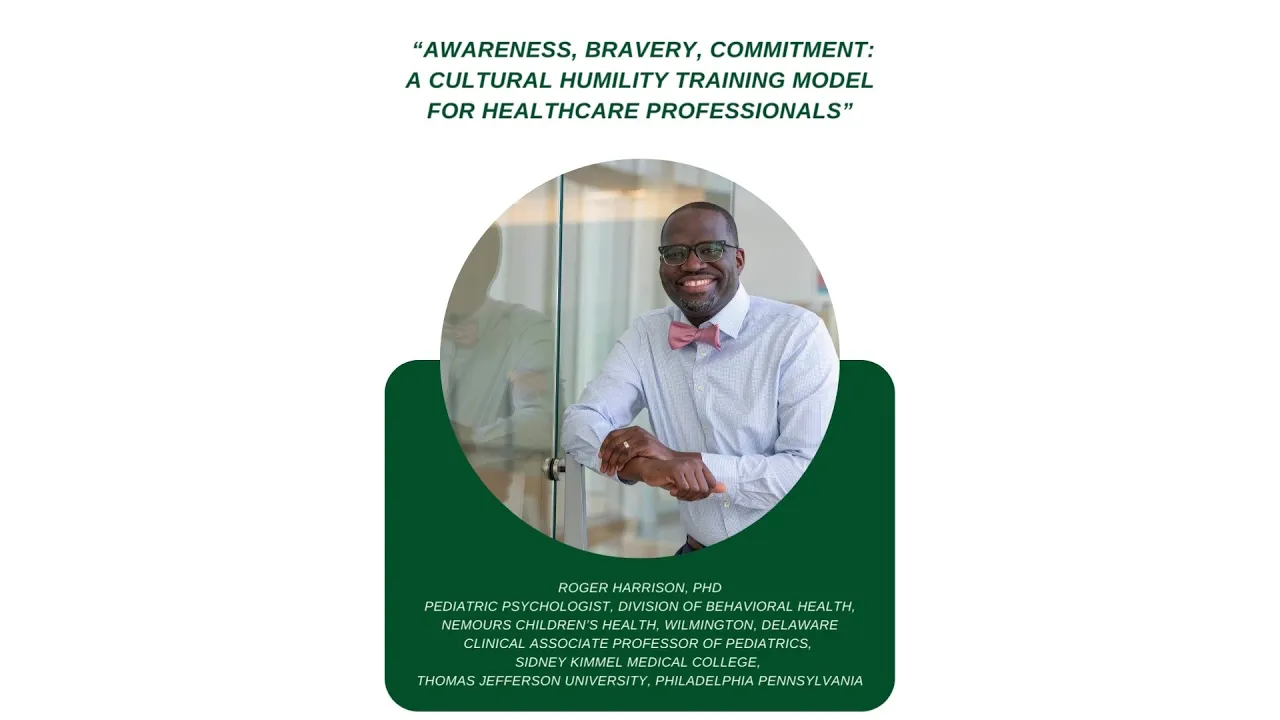
Awareness, Bravery, Commitment: A Cultural Humility Training Model for Healthcare Professionals
151
Cultural humility is an anti-racist, lifelong process of self-reflection, self-critique, and examining power imbalances to build mutually respectful relationships with patients, rather than simply learning about other cultures; this approach recognizes that healthcare disparities persist despite decades of awareness efforts, requiring healthcare professionals to critically examine their own identities, use intentional language to reduce barriers, and ask patients about their healthcare experiences to provide equitable care.
Click to watch →

Anti-Racism in Medical Education
1.7K
Anti-racism in medical education requires recognizing that racism is a system of structuring opportunity based on race, where racist policies and practices perpetuate inequities regardless of intent; effective anti-racist work involves intentional actions that disrupt white supremacy cultural norms (such as power hoarding, worship of the written word, and either/or thinking) through concrete changes in program structure, curriculum, relationships, and faculty development, with the goal of shifting power toward patients and communities rather than maintaining hierarchical structures.
Click to watch →
Deep Dive
Studying Community-Based Participatory Research (CBPR) as a methodology to address and mitigate local health inequities.
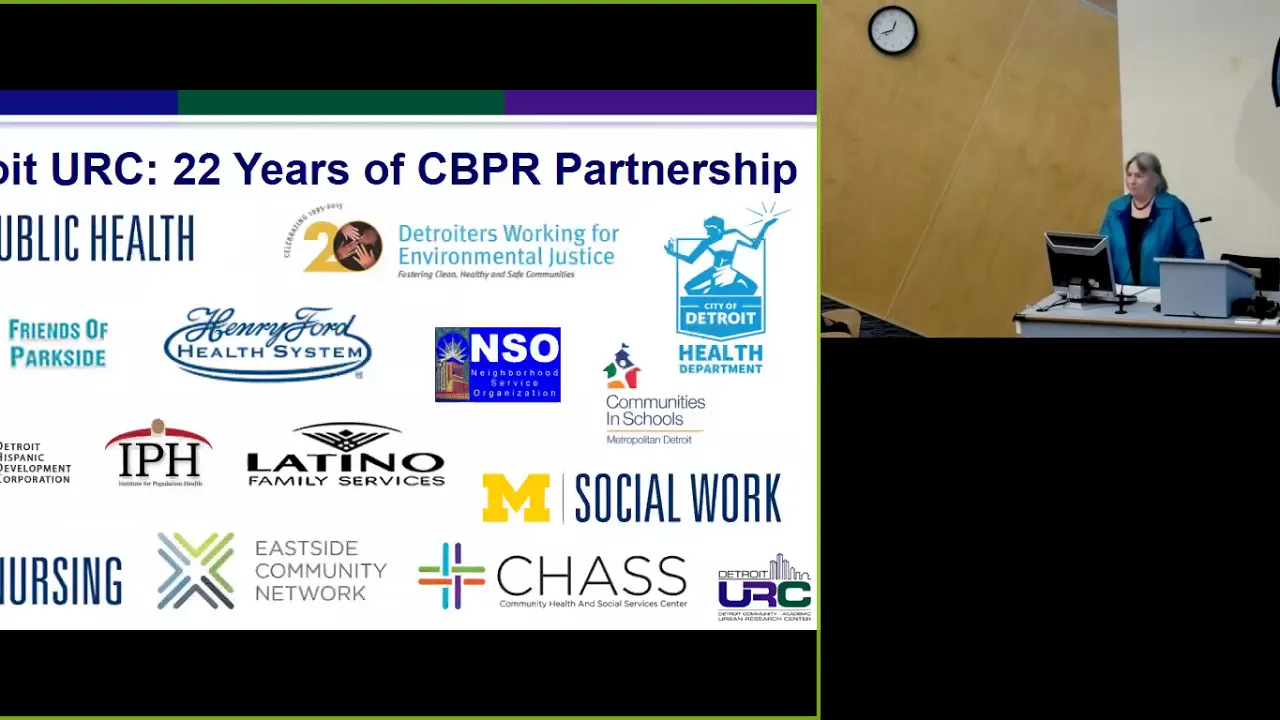
Community-Based Participatory Research in Detroit, Michigan - Professor Barbara Israel
1.6K
Community-Based Participatory Research (CBPR) is an equitable partnership approach that involves all stakeholders in all aspects of the research process, from design to dissemination, to address health inequities by integrating community knowledge with academic expertise; the Detroit Community-Academic Urban Research Center demonstrates this through the Healthy Environments Partnership, which successfully reduced cardiovascular risk factors through multi-level interventions that combined walking programs, environmental modifications, and policy advocacy, showing that sustained community-academic partnerships can achieve meaningful health improvements while building local capacity and trust.
Click to watch →
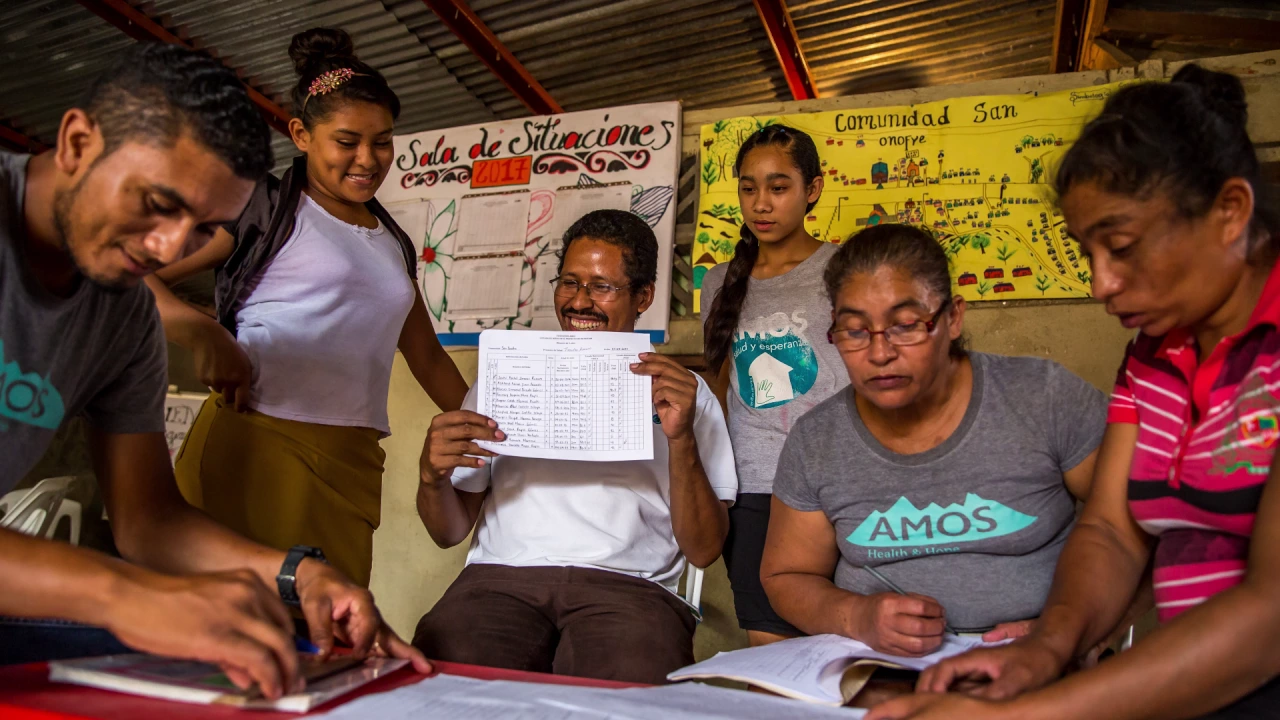
Community-Based Participatory Research: AMOS Health and Hope
32.8K
Community-Based Participatory Research (CBPR) is a collaborative approach to addressing health inequities that involves communities in all stages of research and intervention, using a four-component framework: Context (identifying community problems and strengths), Partnerships (building equitable relationships between communities, governments, and outside organizations), Programs/Interventions (developing locally-driven solutions based on community data), and Outcomes (achieving measurable health improvements through sustainable, empowering initiatives).
Click to watch →

An Introduction to Community Based Participatory Research (CBPR)
12.9K
Community-Based Participatory Research (CBPR) is a collaborative research approach that equitably involves academic and community partners across all research phases—from identifying research questions to disseminating findings—with the goal of combining knowledge with action to achieve social change, distinguishing itself from other participatory approaches by being community-driven rather than merely community-placed, and drawing from both pragmatic problem-solving traditions and Paulo Freire's emancipatory education philosophy that positions oppressed communities as agents of change.
Click to watch →
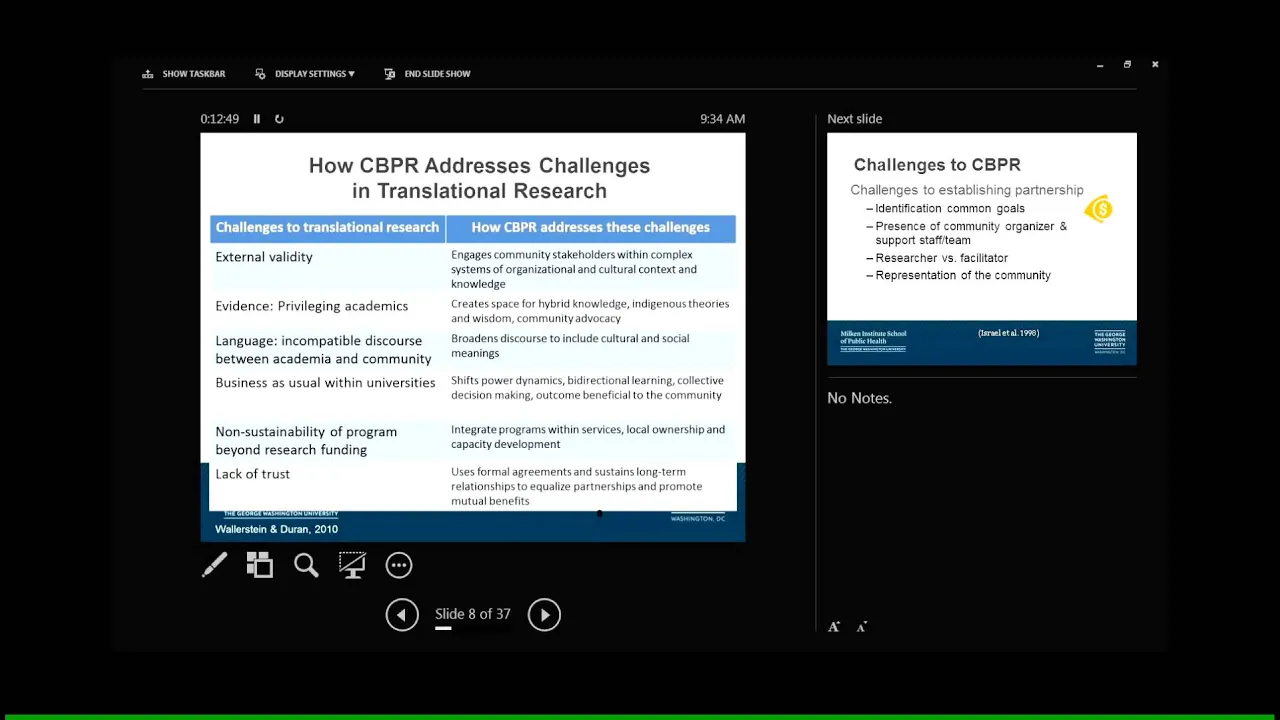
Addressing Health Disparities in Vulnerable Populations Part 1
176
Community-Based Participatory Research (CBPR) is a collaborative research methodology that equitably involves community members, organizational representatives, and researchers in all aspects of health research—from problem definition to dissemination—addressing health disparities by building trust, leveraging community strengths, and ensuring sustainable solutions that respect community voices and needs.
Click to watch →

Module 1: Engaging with Your Community
181
Community-Based Participatory Research (CBPR) is an approach that incorporates non-academic community members in all stages of research to improve health and promote change. It recognizes the limitations of traditional research methods and values the social and experiential knowledge of community members. True CBPR partnerships share characteristics: building collaborative partnerships with power-sharing processes, recognizing community as a unit of identity, building on community strengths and resources, facilitating co-learning and capacity building, utilizing ecological approaches focusing on social determinants of health, seeking mutual benefit to all partners, disseminating findings to the wider community with all partners involved, and maintaining long-term commitment to sustainability beyond single projects. Benefits include all members feeling comfortable speaking openly, commitment to partnership sustainability, greater potential for research translation into relevant actions, and trust-building between academics and communities. Challenges include limited grant time for relationship-building, sustainability challenges maintaining resources and fairness, and community members having competing priorities requiring flexibility.
Click to watch →
Health Gap
Pandemic Impact
Health Gap
0:00- 1
Black Americans face higher premature death rates from all major diseases.
- 2
Systemic biases in care and diagnosis worsen health outcomes significantly.
- 3
Disparities persist across income, age, and location, affecting minority groups.
Socioeconomic and Class-Based Explanations for Health Disparities
An alternative perspective argues that socioeconomic status (SES), geographic location, and class-based factors are the primary drivers of health disparities, rather than systemic racism. Proponents of this view suggest that unequal health outcomes—such as differing mortality rates and access to quality care—are more directly linked to income inequality, education levels, insurance status, and local infrastructure. From this viewpoint, framing healthcare disparities primarily through the lens of systemic racism may oversimplify complex issues and overlook impoverished populations of other racial backgrounds. This perspective emphasizes that policy solutions should focus on universal economic reforms, expanding insurance coverage, and improving healthcare infrastructure in low-income areas, arguing that addressing poverty and class-based barriers is the most direct and effective way to eliminate health disparities.
Understanding the distinction between individual prejudice and systemic or structural racism.
The concept of Social Determinants of Health (SDOH) and how non-medical factors influence health outcomes.
An introductory awareness of implicit bias and how unconscious stereotypes affect professional decision-making in clinical settings.
Basic knowledge of public health metrics, such as morbidity, mortality rates, and life expectancy disparities across different demographic groups.
Exploring the history of redlining and its modern-day connection to environmental racism and localized pollution exposure.
Analyzing policy interventions and legislative efforts, such as the Black Maternal Health Momnibus Act, aimed at reducing systemic disparities.
Investigating methods for implementing anti-racist practices and cultural humility training in medical education and hospital administration.
Studying Community-Based Participatory Research (CBPR) as a methodology to address and mitigate local health inequities.
23.2K views503likes3:08@nowthisimpactOriginal Release: 2020-06-17
compared to white Americans black Americans die prematurely from all types of diseases George Floyd Trayvon Martin Ahmad are very these have all become household names but for all of the wrong reasons hearing about in black man being shot by law enforcement in the United States has unfortunately become the norm what cell phone cameras and surveillance footage fail to capture are they injustice is spread up across all the various sectors of our society as an emergency medicine physician I practice in fact and the fact is that compared to white Americans black Americans die prematurely from all types of diseases including diabetes hypertension strokes and of course Kogan 19 a recent study by Cigna found higher rates of childhood obesity cancer diabetes and heart disease amongst blacks linked to the lack of economic resources limited access to care delay and treatment and Laura health literacy rates even when all the variables like location age and economic status are counted for black Americans die at a quicker and faster rate in our health care systems compared to white Americans black newborns died 250% more often than white Americans in our country black Americans between the ages of 18 and 49 are twice as likely to die from heart disease than whites you have chest pain you show up to the emergency department well if you're black you're going to be waiting longer for that life-saving initial EKG black men are 50% more likely to get prostate cancer and 200 percent more likely to die from that prostate cancer these trans folk true for diabetes hypertension strokes and so many other diseases across the spectrum many physicians have preconceived notions leading them to believe Noorie patients won't comply with medical recommendations such as incorporating exercise and the biases extend to other minority groups like Asians and Hispanic Americans [Music] Senator Cory Booker recently highlighted that black mothers are three times as likely to die from complications related to pregnancy compared to white mothers recently dr. Anthony Falchi was quoted as saying the Cova 19 pandemic has shined a bright light on how unacceptable the healthcare disparities are in our country conditions such as diabetes hypertension and asthma that tend to plague minority groups at a higher rate than other groups likely contribute to the higher Kogan 19 death rate nationally African American Dutch from Koga 19 or nearly two times greater than what would be expected based on their share of the population from physicians to police officers and politicians we need to stop and reassess who we are as a country and who we want to be [Music]
Up Next

48:32
PSW Module 1 Foundations Summary for NACC Exam Prep
@winniewinz
28.9K views•2023-03-10

12:54
Triumph of Orthodoxy Icon: Byzantine Art & History Explained
@BenCallan
2.1K views•2024-08-06

9:49
FastAPI vs Flask vs Django: Choosing the Right Python Web Framework
@TechWithTim
302.5K views•2024-05-26

1:42
Game of Thrones Opening Credits: A Cinematic Analysis
@gameofthrones
46.3M views•2011-04-18
Related Study Plans & Knowledge Roadmaps
Structured learning paths in General & Interdisciplinary Studies
general-studies
Elevator Engineering: History, Physics & Cities
01From Hoists to Safety Brakes: The Dawn of Vertical Lift
02Hydraulic vs. Traction: The Engineering Physics of Elevators
03Modern Speed, Safety, and Algorithms
+ 2 more learning modules
12h5 modules
Explore Roadmap
general-studies
Rubber: Material Science, History & Geopolitics
01Origins of Natural Rubber & Mesoamerican History
02The Chemistry of Natural Rubber & Vulcanization
03The Geopolitics of the Rubber Boom & Colonization
+ 2 more learning modules
12h5 modules
Explore Roadmap
general-studies
Containerization: Evolution, Logistics & Trade
01Ancient Trade & Bulk Cargo: Amphorae to Barrels
02The Industrial Revolution & Cardboard Packaging
03The Containerization Revolution: Malcom McLean
+ 2 more learning modules
12h5 modules
Explore Roadmap
general-studies
Textile Tech: Evolution, Labor & Global Impact
01Pre-Industrial Textiles: Handloom & Cottage Industry
02Mechanization: The Spinning Jenny to the Power Loom
03The Factory System & Global Labor Transformation
+ 2 more learning modules
10h5 modules
Explore Roadmap