






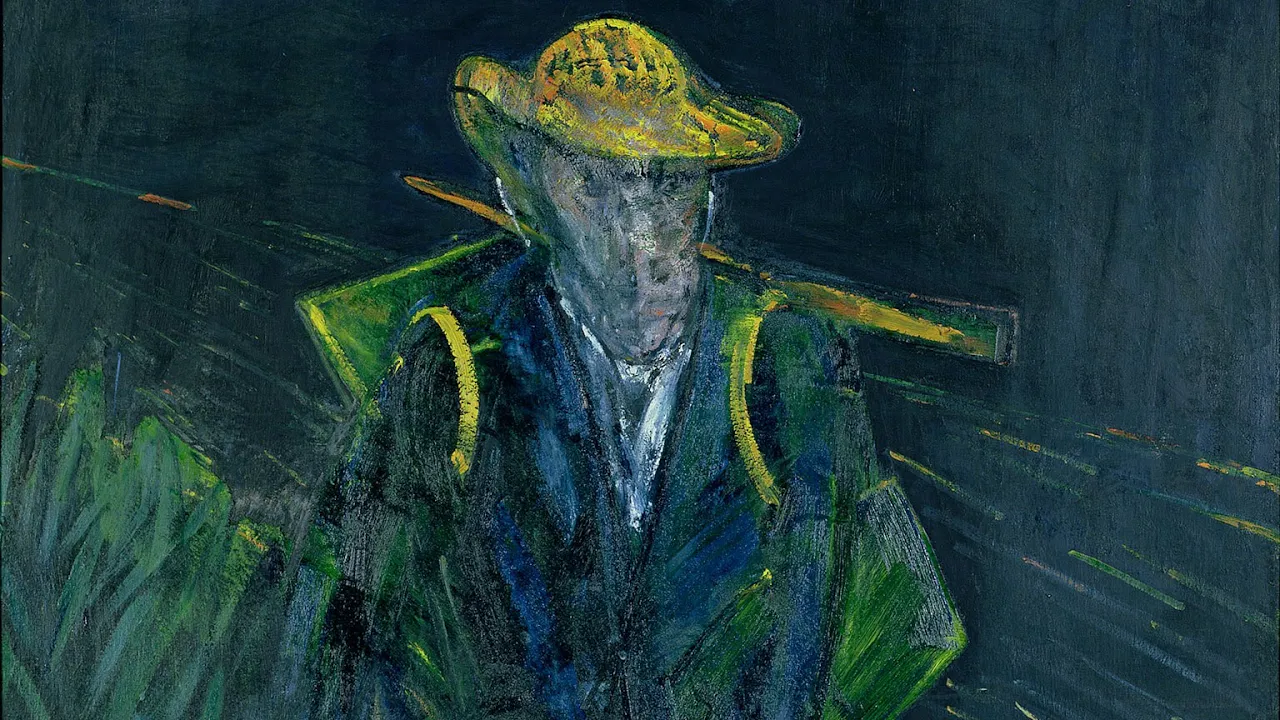









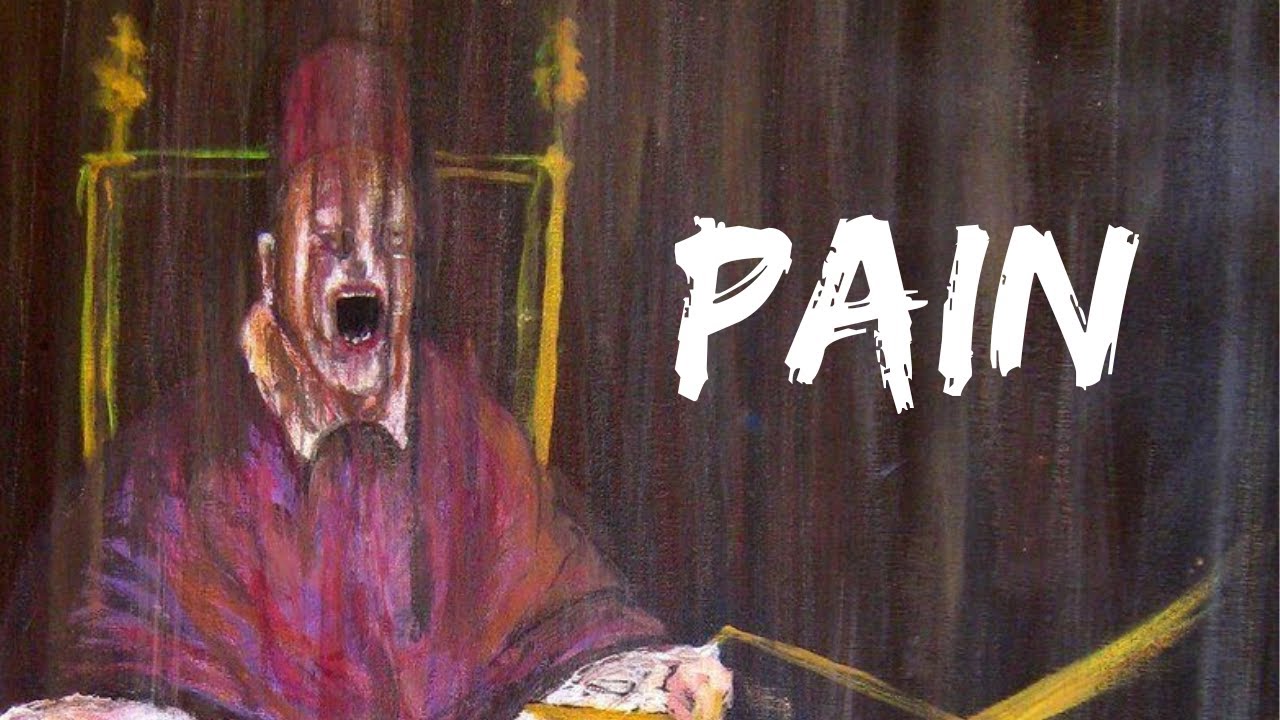







The Lewis Collection demonstrates how 20th-century artists used portraiture and figuration not merely to depict physical likeness but to explore profound psychological questions about human identity, vulnerability, desire, and mortality. Artists like Lucian Freud, Francis Bacon, Gustav Klimt, Egon Schiele, Amedeo Modigliani, and Pablo Picasso each approached the human figure with uncompromising intensity, stripping away idealization to reveal raw human experience. This collection unites works across generations and movements through their shared commitment to psychological truth, showing how the human figure serves as a vessel for exploring memory, identity, intimacy, fear, and power—ultimately revealing that great art fundamentally alters how we see ourselves and others.
The Lewis Collection: Modern Masters of the Human Figure
Added:When great collections come to market, they often tell us as much about a collector as they do about art history itself. The Lewis collection is extraordinary because it does both.
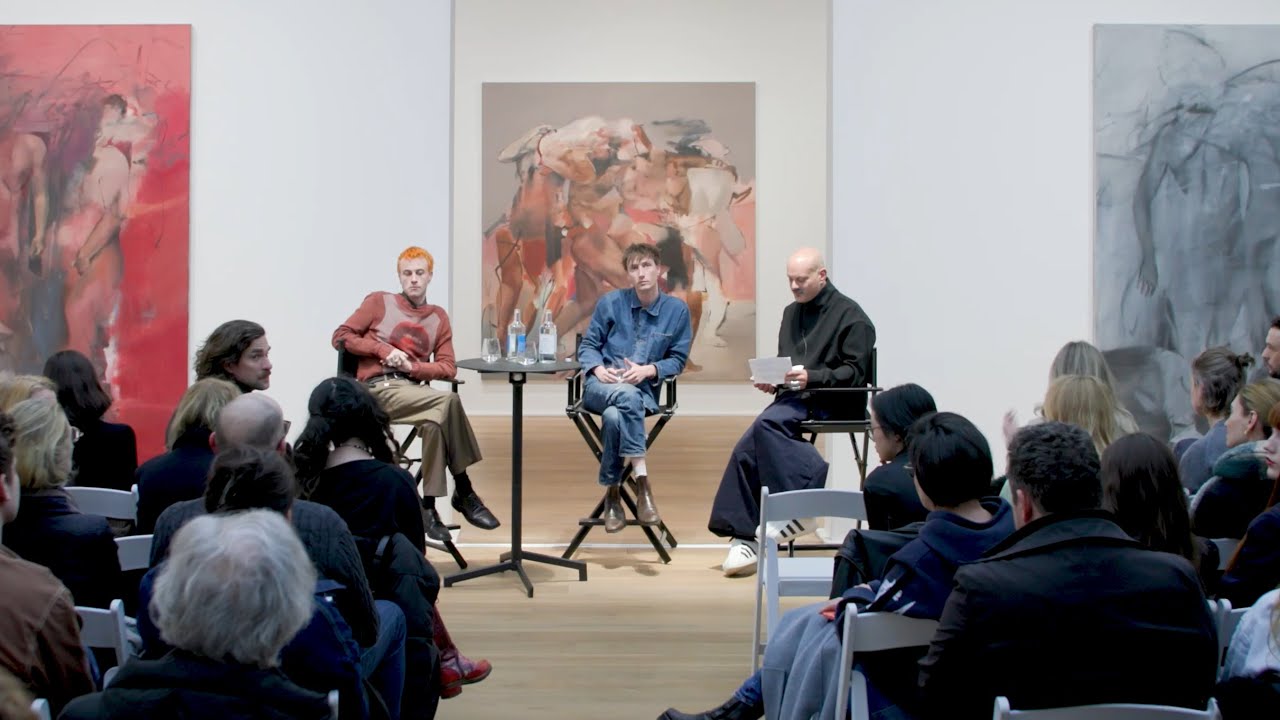
Across decades, Joe Lewis assembled a group of works that charts some of the most significant and important artistic movements of the 20th century, but always through one enduring obsession, that of the human figure. And what makes this moment so remarkable is that many of these works had not been seen publicly or available on the open market for decades.
This is really a chance to encounter works that have shaped the language of modern and contemporary art brought together in a single and deeply personal vision. What makes the collection feel so coherent is that it was never built around a trend or a category or even a chronology. It was built around intensity. And you feel that immediately. These artists are asking timeless questions of us. How do we see ourselves? How do we confront vulnerability, power, or isolation, desire, mortality? And each chapter of the collection answers one of these questions differently. The story really begins in London.
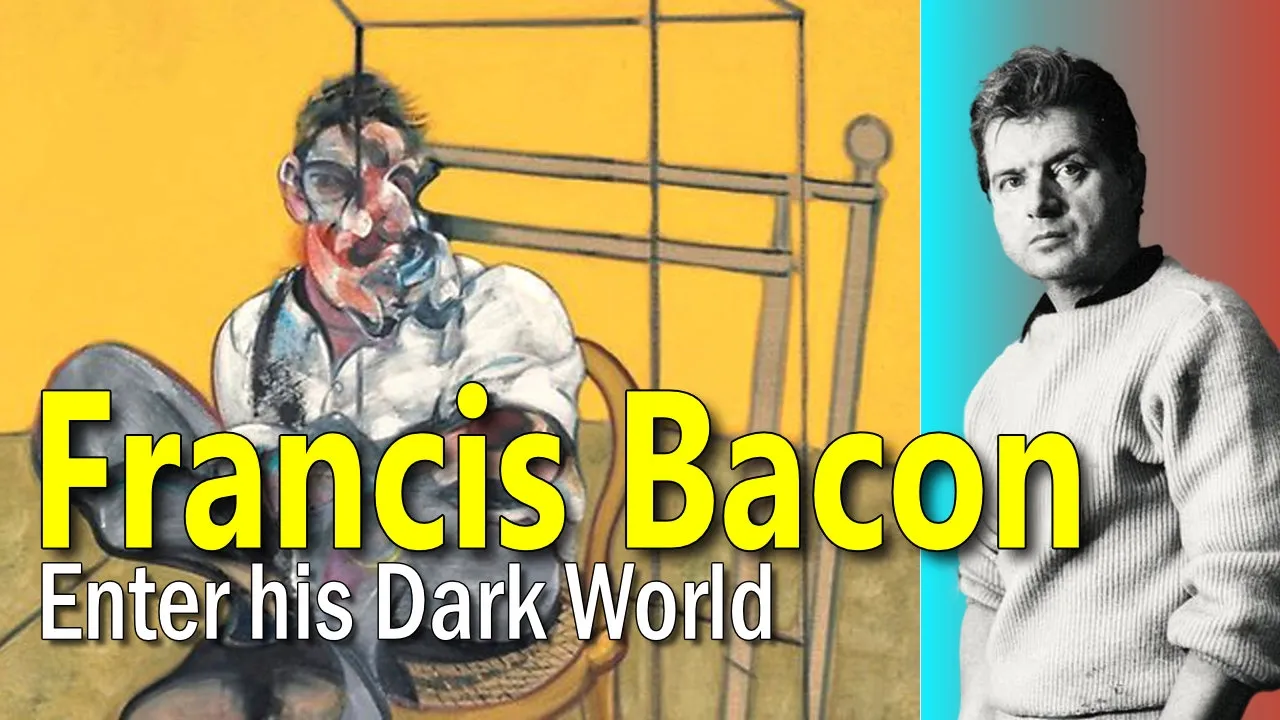
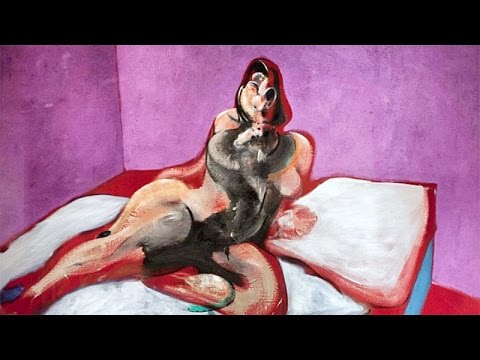
Joe Lewis developed an early and profound affinity for the artists of the school of London. Painters like Francis Bacon and Lucen Freud. Artists who approached the human condition without sentimentality and without compromise.
There is nowhere to hide in these pictures. And that uncompromising psychological gaze became the heartbeat of the entire collection.
Few artists in history have confronted human existence with this degree of honesty. Freud gives us scrutiny. Bacon gives us sensation. Together, they fundamentally change the possibilities of figurative painting. In Sleeping by the Line Carpet, Floyd becomes something like an architect of flesh. One that doesn't merely inherit the vast edition of the nude, but reconstructs it, reshaping its very foundation. Painted over 9 months between 1995 and 1996, this extraordinary vast canvas depicts Sue Tilly, the so-called benefit supervisor. It is the final and most ambitious work in the celebrated quartet of paintings of her that can rightly be described as Freud's magnumopus.
Tilly fills this 8-ft high canvas. At first glance, she appears vulnerable, slumped, asleep, unguarded. Her body yields, spilling, settling, surrendering into the chair. There's no resistance.
The structures of consciousness seem to soften and dissolve. But that vulnerability quickly shifts. And as in all of Freud's greatest works, a quiet drama begins to emerge. The body feels suspended, held in a kind of charged stillness that sleep intensifies. The composition brings us almost uncomfortably close. The floor tilts upward. Space collapses. The body presses forward. We are drawn into an intimacy that borders on intrusion. And yet, this painting never feels exploitative.
Rarely has a state of slumber, the surrender of will been conveyed with such force. She is at once passive and heroic.
Freud draws on the great tradition of the reclining nude from Tishon to Reuben's but strips away any idealization. Like Corb before him, he is concerned with sheer presence, weight, volume, reality. Freud was introduced to Tilly by Lee Barry, whose portraits had already pushed his work towards greater physical mass. And with Tilly, that impulse reaches its extreme.
Her body offers an unprecedented painterly scope, what has been described as a cathedral of flesh. Beauty here is not perfection, it is truth. Behind her, the lion carpet reinforces that tension.
A lioness stands over a resting lion. In the studio, the roles seem almost reversed. Freud becomes the observer while Tilly, though asleep, holds a latent, almost regal power. The carpet itself, bought specifically for this painting, anchors the entire composition. Freud described painting it like a landscape, waiting until the very end to add the vivid blue sky, knowing it would make a whole image start singing. And in many ways, Freud saw the body in exactly those terms, as a landscape. From the beginning, Till's form seems conceived this way. Her flesh becomes terrain, an extraordinary expanse of pinks alive with oranges, purples, and grays. The paint is laid on thick, layered, almost sculptural. Up close, the body dissolves into marks and color. But from a distance, it cers into something startlingly alive. Every fold, every contour is minutely observed, then magnified into something monumental.
Flesh is not merely depicted. It is built. In Freo's hands, the body is never just surface. Each sitter becomes a vessel of psychology, of experience, of potential. He looks with something like astonishment, stripping away centuries of idolization to rediscover the human form in all its raw immediacy.
And in doing so, Sleeping by the Lion Carpet secures its place among the great nudes of art history. Not by refining or perfecting the body, but allowing it to exist in all its extraordinary reality.
At the turn of the 20th century, Vienna became one of the great laboratories of modern art. And in cafes, salons, and studios, artists, writers, and thinkers were searching for entirely new ways of seeing the world. Two artists came to define that transformation more than any other. Gustaf Climpmp and Egon Sheila.
In these works, the human figure becomes fragile, intense, and symbolic. And suddenly you understand that this collection is not simply about beauty.
It's about truth.
At the turn of the 20th century, the Vienna Secession emerged as one of the most important artistic movements in Europe. Founded in 1897 by artists including Gustaf Climpmpt, it was a deliberate break from academic tradition in an effort to create a new modern visual language that united fine art, architecture, and design. One of the most profound shifts it introduced was in the treatment of the human figure.
Portraiture was no longer simply about likeness or status. It became a space for mood, psychology, and even allegory.
You can see that transformation clearly in Climp's portrait of Gertrude Lurv.
Gertrude Lurv herself came from Vienna's cultured progressive bourgeois. This is a commissioned portrait but it resists convention at every turn. The narrow format elongates the figure giving her an almost ethereal presence. The pale restrained palette softens the image while the gauy diaphos seems to dissolve the boundary between a figure and space.
What emerges is less a fixed identity than a presence. In that sense, Climpmp is using portraiture as a form of allegory where the sitter becomes part of a broader meditation on femininity, beauty, and interiority.
Climp's influence on younger vianese artists was profound, particularly of course on Aegon Sheila. But where Climpmp refined and embellished the figure, Sheila pushed it into something far more raw and immediate. By the time Sheila emerged, Vienna was a city of intense creative and intellectual energy shaped not only by the secession, but by developments in psychology, literature, philosophy, and music. Sheila absorbed Climp's lessons but also reacted against them. His Danai painted when he was still a teenager in 1909 reveals that tension. The subject comes from classical mythology familiar territory but Sheila's interpretation is entirely his own. The figure is compressed into the frame, the body angular and tightly coiled, the space ambiguous and unsettled.
You can still sense Climp's influence in the ornamental qualities, the sensuous subject matter, but Sheila strips away Climp's decorative elegance. What remains is something far more direct, even confrontational in its treatment of the body. Seen side by side, these two works offer two distinct approaches within the same cultural moment.
Clint's vision is one of refinement, idealization, and surface beauty, where the figure dissolves into atmosphere and pattern. Sheila, by contrast, brings the body sharply into focus, exposed and expressive and psychologically charged.
We see this with Midlani's work where his vision emerged in defiance of its time while still drawing on the cannon of art history. And whilst war engulfed Europe and many avongan artists deconstructed the human medigani reaffirmed it with energy.
This painting new or kier sits precisely at that moment of rupture. On one hand it's deeply rooted in tradition. The female nude had been central to European painting for centuries. Think of Tishan an weaver man. And Modilani is clearly drawing on that lineage. You see it in the pose which recalls the Venus Pudika, that gesture of modesty where the hand both conceals and reveals. There's also something of Bauticelli's Venus in the downcast glaze, a sense of quiet introspection.
Even the coral necklace carries a kind of symbolic ambiguity. It might suggest a dormant intimacy or even something devotional, almost like a rosary. And yet, despite these classical references, the effect is entirely modern. and at the time deeply unsettling. When these works were first exhibited in Paris in 1917, the reaction was immediate. The gallery window display caused such offense that the police intervened and the show was closed within hours. What shocked audiences wasn't simply nudity.
It was the way the body was presented.
Because Modilani removes everything that traditionally mediates or softens the nude. There's no mythology, no narrative, no allegory. She isn't Venus or an odelisk or part of a story. She is simply and directly present. That directness is intensified by the strippedback setting. The background is reduced to deep resonant tones with just the faintest architectural suggestion.
It pushes the figure forward making her presence almost confrontational in its immediiacy. His handling of paint plays a crucial role here as well. The skin is warm, luminous, almost tactile, while the brush work is remarkably economical.
Just a few assured lines define the body and face. It gives the figure a sense of both stylization and vitality.
Compared to other avanguard artists working in Paris at the time, Picasso for instance, Modilani's approach is less fragmented, less aggressive. His figures remain continuous, sensuous, and profoundly human. But they're also completely unguarded. So perhaps the shock lay not in the fact of nudity, but in its total openness. There's no coininess, no performance, no attempt to engage the viewer in a game of looking.
The body is simply there without shame or mediation. In that sense, this work perfectly embodies Modilani's broad border ambition to unite truth, life, beauty, and art. It feels timeless in its references, yet radically modern in its clarity and directness.
These are works about presence and about spectacle, about what people reveal and what they conceal.
And then Picasso bursts into the story almost like a rupture.
He dismantles the figure and rebuilds it entirely on his own terms, unlocking the idea that portraiture could become emotional, psychological, and even unstable.
The group of Picassos from the Lewis collection offer an extraordinary insight into Picasso's life and art.
From the earliest days of his first marriage with Olga to the tumultuous years where he was between Marrizz and Dora, they show an extraordinary range both in Picasso's medium, technique, the way in which he represents the human form, but most critically how he reveals the emotional state that he was in at the time he was painting them. Picasso once said, "If all the ways I have been along were marked on a map, it might represent a minotaur."
Part man, part bull, the minotaur symbolizes the destructive nature of desire. Picasso recognized in the mythical beast the innate contradiction of its nature, violent and destructive, but also a figure of vulnerability made so by the uncontrollable nature of his desires. The minotaur was Picasso's alter ego. Bier's siren feeu a minotaur is one of the finest examples of these works where we see the lines between mythology and autobiography blur.
This ancient figure becomes an allegory for Picasso's emotional state, his shifting desires, his guilt, and his entanglements. He also reimagined the identities of the women in his life on canvas, reflecting the twist, turns and turmoil of the relationships in his past and present.
We see this as early as the 1920s when Picasso was married to his first wife, Olga Kaklova. We see her transformed into the classical ideal. Tetapam depicts Olga as monumental and timeless, shaped by the influence of Renaissance painting and ancient Roman and Greek sculpture.
As one of five portrait heads executed in 1921, this work relates directly to one of Picasso's most iconic neocclassical paintings of the period, Dwafam Alfontine.
However, by March 1937, when Baner's Siren Famuin was created, Picasso's affections had moved on. The Minotaur carries a woman bearing the unmistakable features of Maritz Walter, Picasso's current lover, whilst turning its head towards a siren in the sea, who takes the form of Dora, meeting his gaze from the waters below.
This exquisitly rendered work registers the turmoil in Picasso's personal life at a moment of pivotal change.
We see this here in the arresting pencil and ink portrait to Dora, one of Picasso's earliest and most lovingly naturalistic depictions of Dora. Her presence is direct and self-contained, a gaze unfaltering, her expression controlled, even enigmatic. As their relationship deepened, Picasso obsessively painted Mah in a multitude of ways, captivated by her keen intelligence and regal beauty, she inspired an extraordinary stream of imagery, which took his art in new directions. Bustfam is one of the artists most reverent, straightforward, and affectionate portrayals of her, captured at their relationship's highest peak in May 1938.
Nothing had a more profound effect on Picasso's life and art than the women he loved. They came to represent the entirety of his lived experience. In his world, they could be a monument, a mystery, or a mirror. But the artist, he is the minator.
>> Ultimately, portraiture and figuration becomes the collection's thesis statement. Because by this point, you realize that artists are not simply depicting people. They're using the figure to explore memory, identity, psychology, intimacy, fear, power, everything that defines human experience. That is what unites this collection across generations and movements. The works are unflinching and intense, offering psychological insight rather than passive observation. And perhaps that is why these works feel especially urgent today at a moment when so much of contemporary life feels accelerated, mediated, and increasingly virtual. These paintings insist on physical presence. They ask us to slow down, to look harder, to confront ourselves. And that is what museum caliber truly means. Not simply rarity or value, though these works possess both in abundance, but the ability of art to fundamentally alter the way that we see. And when the collections of this caliber finally come to market, they become part of a larger cultural movement. Not just an auction, an immersive and emotionally charged rediscovery.
>> Efiguration and the human figure lies at the very core of the Lewis collection.
It speaks to a collector deeply attuned to that tension between tradition and innovation. Drawn to works that are both grounded in art history and quietly transformative. They reflect a collector tuned not just to great names but to pivotal moments of transition, moments where artistic language itself is being redefined.
My hope is that when people leave this exhibition, not only have they witnessed great works of art that they have experienced, but at the same time, they've witnessed objects and figuration and portraits that have seen them in return.
Up Next
Klimt, Schiele, and Kokoschka: Portrayals of Women
@belvederemuseum
25.3K views•2015-11-17

Egon Schiele's The Hermits, 1912: Expressionism & Inner Vision
@smarthistory-art-history
25.6K views•2012-04-02

Sotheby's Modern & Contemporary Evening Auction Highlights
@sothebys
85.6K views•2025-03-05

Earliest Depictions of Jesus in Art: 10 Ancient Images Explained
@UsefulCharts
5.9M views•2022-06-03
Related Study Plans & Knowledge Roadmaps
Structured learning paths in Art History