Gustav Klimt, Egon Schiele, and Oskar Kokoschka each used portrait painting to explore gender dynamics in unique ways: Klimt depicted women as beautiful but passive figures trapped in golden cages, Schiele created psychologically intense portraits where women actively reclaimed control of the viewer's gaze, and Kokoschka transformed women into spiritual art objects; all three artists shared a belief in romantic love as a sacred union sealed by erotic passion, though their private works on paper revealed far more explicit erotic content than their public paintings.
Klimt, Schiele, and Kokoschka: Portrayals of Women
Added:Deep Dive
The cultural and political climate of Fin-de-Siècle Vienna (late 19th and early 20th century), which served as a crucible for radical intellectual and artistic experimentation.

"Fin-de-Siècle Vienna" By Carl E. Schorske
135
Carl E. Schorske's 'Fin-de-Siècle Vienna' argues that Vienna's unique political instability and social tensions at the turn of the 20th century created a crucible for modernist thought, where Freud's psychoanalysis, Klimt's Secessionist art, Schnitzler's literature, and architectural innovations converged to generate radical ideas that profoundly shaped Western modernism; this period exemplifies how urban environments facing cultural transition can produce transformative intellectual movements that challenge traditional norms and redefine artistic and philosophical paradigms.
Click to watch →

⚫La Oscura Tragedia de Egon Schiele: ARRESTADO por Pornografía y MUERTO en 3 Días.
448
Vienna at the turn of the 20th century was a city of contrasts—simultaneously a golden ballroom and a laboratory of nightmares. While the Danube carried imperial barges, revolutionary ideas gestated in cafes. Freud was uncovering the subconscious, Wittgenstein was deconstructing language, and artists were breaking with the past. The Vienna Secession emerged as artists declared war on academic art, with their motto 'To each time its art, to each art its freedom.' Gustav Klimt scandalized Vienna with gold-covered eroticism but remained an accepted rebel. His protegé Egon Schiele would take this further, stripping away allegory to reveal raw human desire and existential anguish.
Click to watch →
SIGMUND FREUD: El Padre del PSICOANÁLISIS 👨⚕️📖(AUDIOLIBRO COMPLETO EN ESPAÑOL) PARTE 1
451
The Viennese fin-de-siècle represented the deep feeling of the decline of the bourgeois classical world. This era saw the questioning or direct undermining of artistic, musical, literary, and philosophical traditions to be replaced by something different and innovative. The purpose was to lay the foundations for a new world and order because the old bourgeois regime had failed. In architecture, Otto Wagner broke with historicism to become a precursor of rationalism, while his disciple Adolf Loos went further by condemning all ornamentation as a crime. In literature, Carl Kraus used his newspaper Die Fackel to incinerate the hypocritical and corrupt society of the Habsburg Empire, while writers like Joseph Roth, Stefan Zweig, and Robert Musil breathed new life into Viennese literature.
Click to watch →
The Language Of The New Music - Documentary about Wittgenstein and Schoenberg, 1985
235.8K
At the close of the 19th century, Vienna presented a picture of ordered elegance and dignified gayety, but beneath the surface, the corruption and holes of the late Habsburg Empire produced widespread confusion. This social and cultural turmoil set the stage for profound meditations on human experience. Vienna became the intellectual and artistic battleground for seminal minds of the 20th century, including writers Carl Krauss and Robert Musil, poet Georg Trakl, architects Otto Wagner and Adolf Loos, painters Gustav Klimt, Egon Schiele, and Oscar Kokoschka, psychoanalyst Sigmund Freud, musicians Gustav Mahler and Arnold Schoenberg, and philosopher Ludwig Wittgenstein.
Click to watch →
MEGA EPISODE: 1900–1914: The Age of Innovation and Expansion | FULL DOCUMENTARY
52.3K
Vienna in the early 20th century represented Europe's most intense cultural and political crisis. As the capital of the Austro-Hungarian Dual Monarchy, it housed Germanspeaking Austrians, Hungarians, Czechs, Poles, Jews, Italians, Slovenes, Bosnians, Romanians, and other minorities living against one another under the Habsburg emperor. The city became a battleground for competing nationalisms. Freud developed psychoanalysis to analyze these tensions, publishing 'The Interpretation of Dreams' in 1900. Meanwhile, Adolf Loos declared ornament a crime, advocating functional architecture that scandalized Vienna's historicist traditions. The city embodied both Europe's cultural richness and its structural fragility.
Click to watch →
Deep Dive
The traditional, highly idealized conventions of academic portraiture and female representation in 19th-century European art.

Barocci Group Sep 23 - Salome Dancing before Herod - Gustave Moreau
727
Cabanel's 'The Birth of Venus' (1863) exemplifies academic art ideals: mythological subject, grace for modeling, silky brushwork, and a perfected female form. This represents the mythologizing of the female nude, which was considered unreal and therefore socially acceptable—a highly problematic and hypocritical approach. Jean-Léon Gérôme's 'The Reveal of the Phrygian Maid' (1863) caused quite a stir because he painted the courtesan in full-blown nudity, whereas literature only revealed her breasts to the judges. This reflects 19th century French men's attitudes toward women's bodies and how the sin of lust had snuck into the art world.
Click to watch →
HISTORIA DEL ARTE Summa Pictorica Capitulo 9 La época de las revoluciones
2.7K
The nude was approached from multiple perspectives in 19th-century art. Ingres's 'Grande Odalisque' (1814), exhibited in the 1819 Salon, represents the traditional approach, continuing the tradition from Giorgione and Titian. Ingres attempted to establish an ideal beauty canon with sinuous lines and extremely careful modeling. Manet's 'Olympia' (1863) modernized this tradition, depicting a woman with vulgar Parisian features rather than a goddess.
Click to watch →
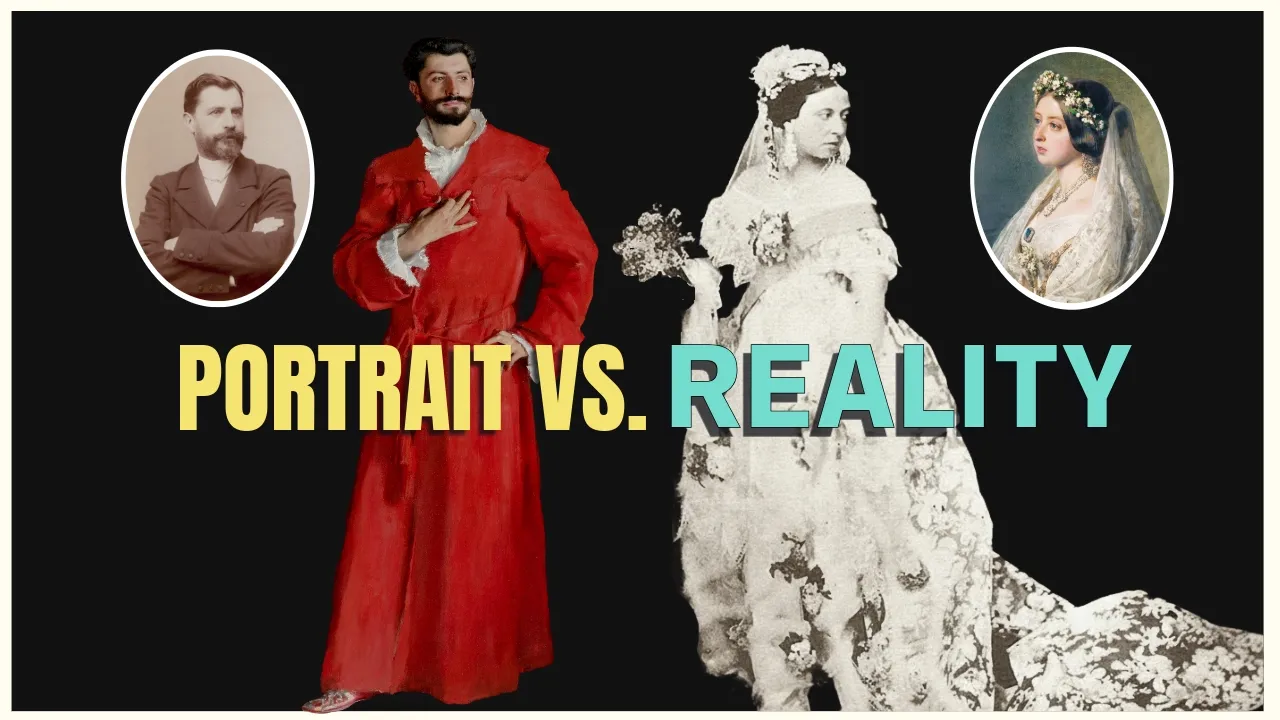
Why 19th-Century Portraits Lied About Reality
412
The tradition of artistic idealization evolved through mentorship between painters. Joseph Stieler pioneered idealized portraiture in Munich with his Gallery of Beauties, creating what functioned as a 19th-century Instagram wall of beautiful women. His student Franz Xaver Winterhalter then exported these techniques across Europe, applying them to queens, empresses, and celebrities. This transmission of artistic techniques demonstrates how visual standards for representing beauty were systematically developed and disseminated across different cultural contexts.
Click to watch →

WAYS OF SEEING (episode two - female nude) 2/4
93.8K
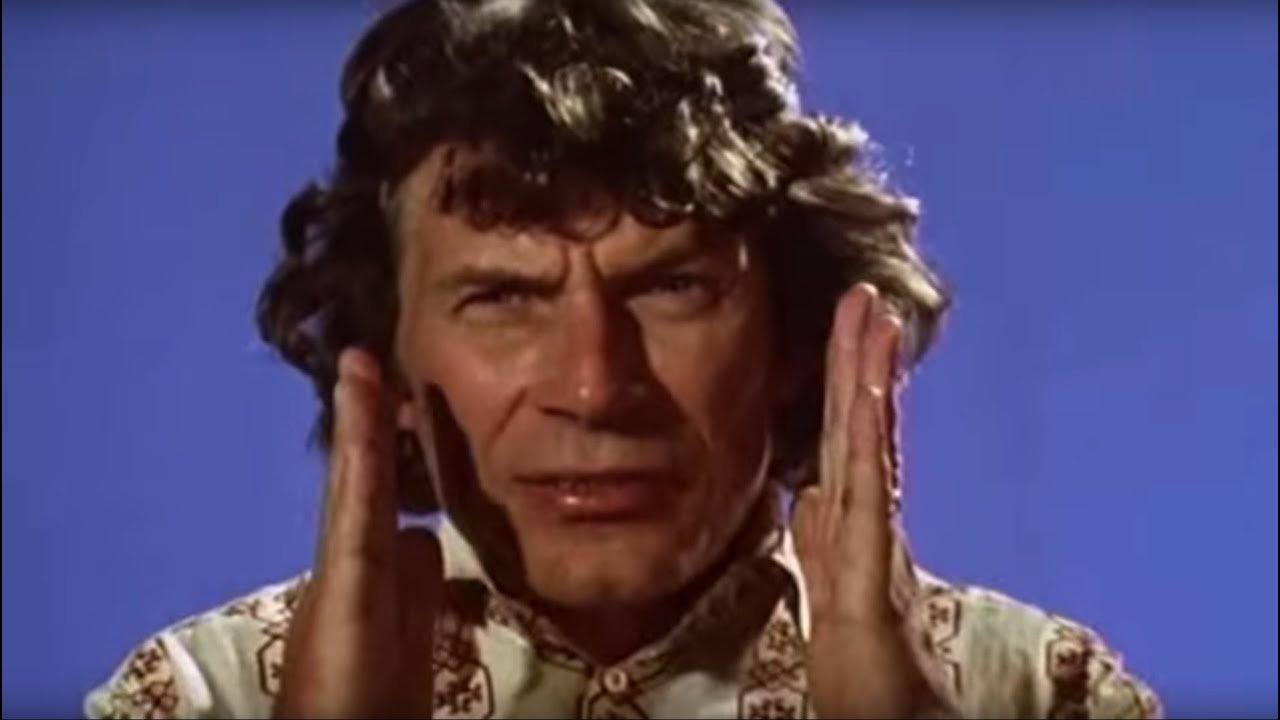
European nude painting employed systematic conventions to minimize female sexual power: women rarely danced or showed energy, their hair was omitted (associated with passion), and they looked away from male lovers toward the true spectator. The only rival to the male viewer was Cupid—a child figure. These conventions ensured women fed male appetite without expressing their own vitality. Even when male lovers appeared, women's attention remained directed outward, reinforcing their role as objects rather than subjects.
Click to watch →
Ways of Seeing with John Berger (1972) Episode 2: Nude or Naked
2.1K
The absurdity of male flattery reached its peak in 19th-century academic art. The nude in European oil painting is usually presented as an ideal subject, said to express the European humanist spirit. However, this idealism may result from indifference to who any one person really is. Do these paintings celebrate women within them or the male voyeur? Is there sexuality within the frame or in front of it?
Click to watch →
Deep Dive
The origins and artistic philosophy of the Vienna Secession, led by Gustav Klimt, which sought to break free from conservative academic constraints.

클림트는 빡쳐서 "000"를 그렸다🐟 | 클림트 2부 | 이세라의 예술러닝
70.4K
Gustav Klimt's artistic philosophy centered on revealing raw human truth rather than presenting idealized beauty. While Viennese aristocratic society practiced hypocrisy, Klimt exposed uncomfortable truths about human nature. His early training at the Vienna Applied Arts School (age 14) shaped his decorative style. In 1897, at age 17, he co-founded the Art Company with his brother Ernst, responding to Vienna's urban renewal demands. The company's first major commission was the Burgtheater ceiling painting. Vienna's conservative cultural context, resistant to modernist movements, created unique challenges. Between 1890 and 1892, personal tragedy (death of brother and father) caused him to temporarily abandon art, leading to his connection with Emilie Flöge. The Vienna Secession was formed in 1897 when young artists led by Klimt broke away from the conservative Vienna Artists' Association, which controlled all exhibitions and resisted new movements.
Click to watch →

Gustav Klimt and the Nazis: Great Art Cities: Vienna
327.2K
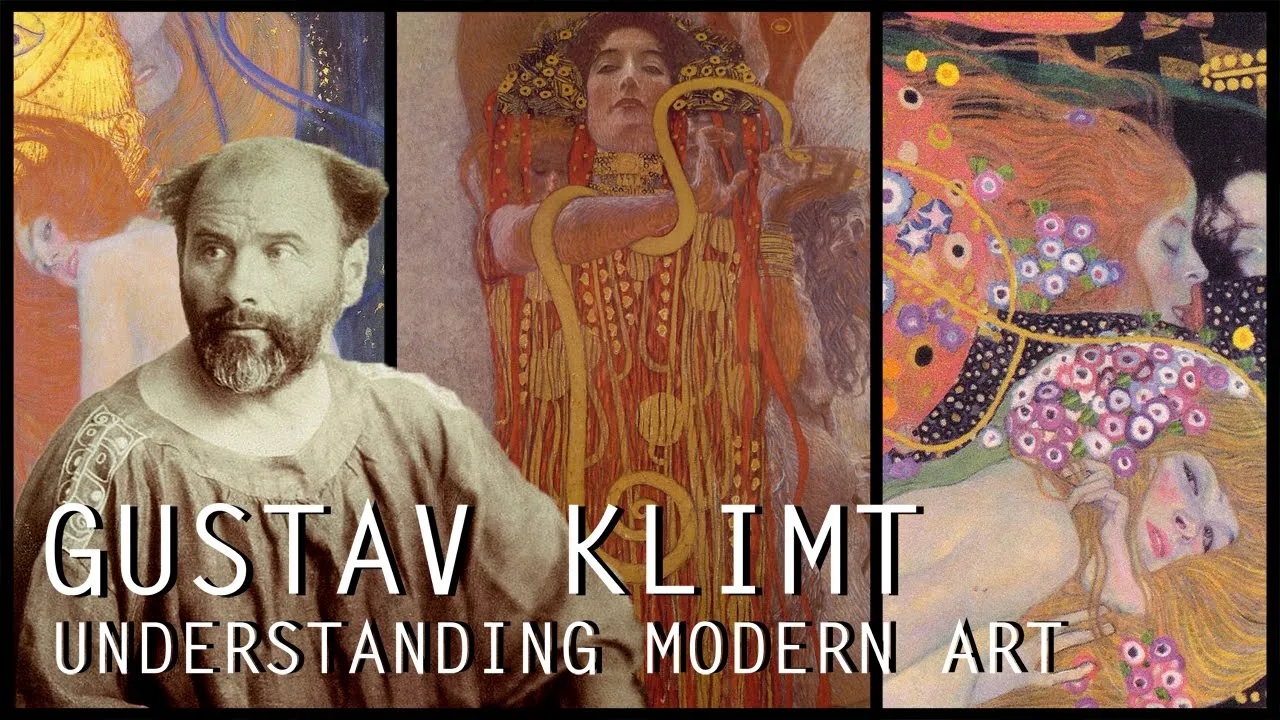
In 1897, Klimt led 19 avant-garde artists to form the Vienna Secession, breaking from conservative academies and embracing Symbolism's mystical ideas, dreams, and erotic themes. This marked modernism's dawn. The movement built an extraordinary exhibition hall. Klimt's 34-meter Beethoven Frieze celebrated idealism over materialism, later co-opted by Nazis who saw its central knight as a proto-führer. The University of Vienna then commissioned five ceiling paintings, but Klimt's radical style—deeply influenced by Nietzsche and Schopenhauer—clashed with academic expectations, leading to rejection.
Click to watch →
Gustav Klimt- Understanding Modern Art
87.6K
In 1897, Klimt led artists in seceding from Vienna's academic establishment, forming the Vienna Secession—the first major formalized break from academic systems. They published Ver Sacrum and built the Secession Hall, pursuing the Gesamtkunstwerk (total work of art) concept combining architecture, painting, and design. Their motto 'To every age its art, to every art its freedom' rejected historicism. Works like the Beethoven Frieze and Athena Parthenon demonstrated this philosophy, using allegory, decorative patterns, and dreamlike qualities influenced by Freudian psychology to challenge traditional artistic conventions.
Click to watch →

The Kiss by Gustav Klimt: Great Art Explained
1.6M
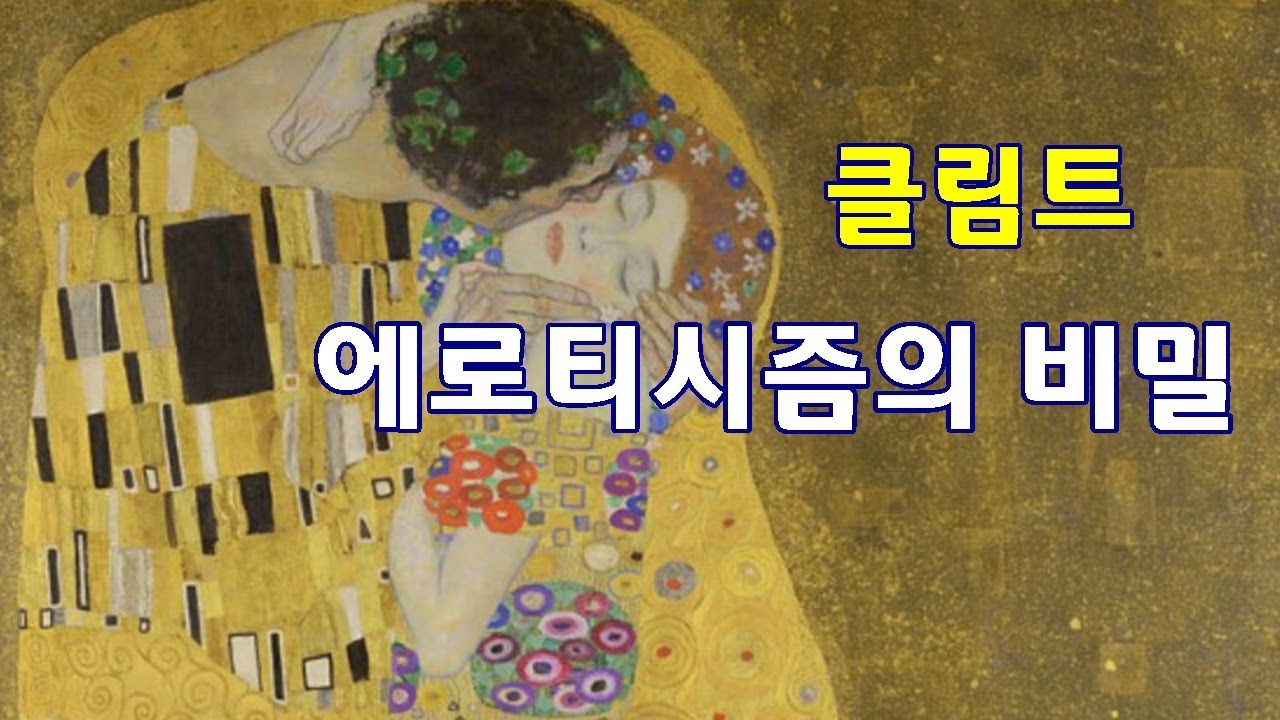
Gustav Klimt (1862-1918) emerged from Vienna's conservative 19th-century academic tradition to become a pioneer of modern art. Born to a goldsmith father, he attended an arts and crafts school rather than fine arts, developing a philosophy that rejected distinctions between fine art and craft. His early career involved decorating Ringstrasse mansions, but his radical turn came after his father and brother died, leading to scandalous university commissions rejected as pornography. Founding the Vienna Secession in 1897, he united art, craft, architecture, and design—a formal beginning of modern art in Austria. The Kiss (1907-1908), his masterpiece, combines gold leaf technique, symbolic costume design, and ambiguous eroticism to bridge academic realism and abstraction, embodying Vienna's golden age before the empire's collapse in 1918.
Click to watch →
클림트의 에로티시즘의 비밀 - 노마드의 미술사 이야기 96
13.8K
Following the deaths of his father and brother, Klimt underwent a profound transformation. In 1897, he founded the Vienna Secession movement, breaking away from conservative, historically-oriented Viennese art. The Secession challenged the regressive atmosphere dominated by historical revivalism, which contrasted sharply with modernist movements in Paris and New York. Klimt's new artistic direction embraced eroticism and nudity as deliberate challenges to conservative conventions, representing a complete departure from his earlier academic success.
Click to watch →
Deep Dive
The core concepts of Symbolism and early Expressionism, particularly how they prioritized subjective, psychological states over objective realism.

7 3 Arts & Culture
529
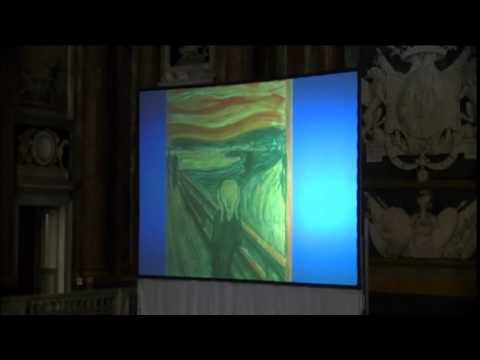
Symbolism emphasized emotions, feelings, ideas, and subjectivity rather than realism, often combining religious mysticism with themes of melancholy, evil, or death. Edvard Munch's The Scream (1893) represents universal anxiety of modern man. German Expressionism emerged around the turn of the century as a response to widespread anxiety about humanity's relationship with the world, influenced by World War I. It is called Expressionism because art comes from within the artist, expressing what is inside rather than depicting the external world. Key artists included Vasily Kandinsky (completely abstract paintings designed to evoke sound like music).
Click to watch →

Symbolika i ekspresja. Kluczowe dzieła malarskie Młodej Polski / Dr Agnieszka Bagińska
717
This lecture introduces the concept of symbolism and early expressionism in Polish art of the late 19th century. The term 'Młoda Polska' (Young Poland) was coined in 1897 by Artur Gruszecki to describe this cultural formation encompassing visual arts, literature, and theater. Symbolism involved using symbols to communicate hidden meanings, emotions, and psychological states, representing a departure from traditional artistic conventions. Early expressionism emphasized the artist's subjective vision and psychological depth over objective representation. The lecture establishes that this period represents a break from realism, where artists sought to express inner experiences, dreams, fears, and subconscious thoughts rather than merely depicting external reality.
Click to watch →

“Lovecraft”, Horror Cósmico, Arte Moderna e Expressionismo
6.1K
Expressionism emerged in Europe, particularly Germany, sharing modernist ideals of breaking with naturalistic traditions. The core principle is that when representing something, the most important thing is not to follow naturalistic logic but to represent the sensation or feeling one has when encountering that thing. If a painter wants to represent a place they feel nostalgic about, they should paint it to convey those feelings. The function of art in expressionism is to share sensations, feelings, and experiences that are subjective and cannot be easily explained to others. Expressionism is not inferior art but a different approach with its own rules.
Click to watch →

11. SINIF TÜRK DİLİ VE EDEBİYATI / 1. ÜNİTE / EDEBİ AKIMLAR
35K
Symbolism (Sembolizm) literally means 'symbolism' or 'symbolic representation.' It emerged in the 19th century in France, with Ahmet Haşim as its first major representative. Its fundamental principle is expressing emotions through symbols in a closed manner. Symbolism emerged as a reaction against Parnassianism, Realism, and Naturalism, representing an idealist revolt against these materialist movements. Key representatives include Ahmet Haşim, Cahit Sıtkı Tarancı, and Ahmet Hamdi Tanpınar. Symbolism emerged from rapid scientific developments and industrialization that caused people to become isolated and depressed. After France's defeat by Germany, people became more introspective. German philosopher Schopenhauer's philosophy that the world is an illusion gained prominence. In literature, decadence (isyan against all rules) contributed to Symbolism's emergence. Symbolists argue that reality cannot be described as it is because sensory organs may deceive us. Since each person's perceptions differ, Symbolists use symbols to express their individual impressions in a closed manner, allowing readers to interpret as they wish. The movement uses metaphorical language, similes, and dreams extensively. Common symbols include yellowing leaves, red sunset, still lakes, and faintly scented flowers. Music holds immense importance in Symbolism, described as the harmony between form and content. A good Symbolist poem is one that can be interpreted differently by different readers. Symbolists abandoned classical poetic forms like sonnets and tercets. The movement was primarily a poetry and theater movement, with no narrative in Symbolist novels or stories. Existentialism (Egzistansiyalizm) literally means 'being' or 'existence.' It emerged in the mid-19th century in France, with Jean-Paul Sartre as its founder and Martin Heidegger as the philosophical foundation. Its fundamental principle is that existence precedes essence, meaning humans create their own essence through their actions and choices. This contradicts all previous philosophical systems that assumed essence precedes existence. Existentialism emerged as a reaction against Realism, Surrealism, and Naturalism. Key representatives include Jean-Paul Sartre and Simone de Beauvoir. Existentialism emerged from people who had lost faith in history, felt alienated from their society, and experienced misery and restlessness. It is characterized as 'bunality literature.' According to existentialism, humans cannot be inherently good or evil; they become what they do through their actions. A person who steals is a bad person, and a person who abuses others is a bad person. Unlike other philosophical movements, Existentialism focuses on the individual rather than society, making it a 'society for art' approach. It was primarily effective in novels and theater. Expressionism (Ekspresyonizm) literally means 'expressionism' or 'outward expression.' It emerged in 1910 in Germany, with Franz Kafka and William Waringer as its founders. Its fundamental principle is expressing the inner world of humans against the meaninglessness and restlessness of the external world, using screams as the primary expression. Expressionism emerged as a reaction against Realism, Naturalism, and Parnassianism. Key representatives include Franz Kafka, Joyce, and Eliot. Expressionism emerged in the early 20th century as a reaction to technological modernization that caused isolation and restlessness in enlightened individuals. It represents a rebellion of the human spirit. Expressionism is characterized by individualism, with each artist having a unique style. Artists possess rich vocabulary and use screams as symbols of the spirit's rebellion. Impressionism (Empresyonizm) literally means 'impressionism' or 'capturing impressions.' It emerged in the late 19th century in France, with the principle of describing things as perceived. According to Mallarmé, words in Impressionist poetry should reach new meanings and be washed in phosphorescent light. Impressionism differs from Symbolism in that it does not prioritize formal elements. The movement adopted 'art for art's sake' and shares some characteristics with Symbolism. Key vocabulary includes 'symbolism,' 'individual impressions,' 'idealist philosophy,' 'music,' 'sonnet and tercet,' 'metaphorical language,' 'existence precedes essence,' 'bunality literature,' 'society for art,' 'expressionism,' 'inner world,' 'screams,' 'reaction against materialism,' 'individualism,' 'rich vocabulary,' 'impressionism,' 'capturing impressions,' 'phosphorescent light,' 'art for art's sake,' and 'subjective experience.' Mnemonic devices include 'bodies' for Symbolism, 'madness' for Symbolism, 'limit' for Symbolism, 'help' for Symbolism, 'ezyk' for Existentialism, 'dance' for Existentialism, 'ezyk dansı' for Existentialism, 'MP3' for Impressionism, connecting 'music' and 'painting.'
Click to watch →

EDEBİ AKIMLAR SORU ÇÖZÜMÜ | 6.Konu | 📌 2026 AYT Edebiyat Soru Bankası Meşakkat
1.6K
Expressionism emerged as a reaction against Impressionism, focusing on the artist's inner world including anxiety, fear, and alienation from modern society, distorting reality to express subjective experience. Symbolism emphasizes individual emotions, dreams, and imagination, using symbols and musicality to convey meaning while leaving interpretation open. Both movements prioritize subjective experience over objective representation.
Click to watch →
Prerequisite Knowledge
- Concept 01The cultural and political climate of Fin-de-Siècle Vienna (late 19th and early 20th century), which served as a crucible for radical intellectual and artistic experimentation.
- Concept 02The traditional, highly idealized conventions of academic portraiture and female representation in 19th-century European art.
- Concept 03The origins and artistic philosophy of the Vienna Secession, led by Gustav Klimt, which sought to break free from conservative academic constraints.
- Concept 04The core concepts of Symbolism and early Expressionism, particularly how they prioritized subjective, psychological states over objective realism.
Subsequent Learning
- Step 01The intersection of early psychoanalysis (specifically Sigmund Freud's theories emerging in Vienna) and its direct influence on the depiction of the subconscious and sexuality in modern art.
- Step 02Feminist art-historical critiques of Klimt, Schiele, and Kokoschka, exploring the fine line between artistic liberation and the objectifying 'male gaze'.
- Step 03A comparative study of Viennese Expressionism with German Expressionist groups, such as Die Brücke and Der Blaue Reiter, to understand regional stylistic differences.
- Step 04The legacy of Viennese Modernism on contemporary figurative art and how modern artists continue to challenge or redefine the boundaries of portraiture.
Portrait Revolution
Love's Taboo
Gender Dynamics
Portrait Revolution
0:07Playing Section
- 1
Klimt's wealthy female portraits lack personality, resembling gilded birds.
- 2
Schiele and Kokoschka adopt raw expressionism, facing limited success.
- 3
Schiele's introspective style contrasts sharply with Klimt's decorative art.
Feminist Critiques of Viennese Modernism and the Male Gaze
While traditional art history often celebrates Klimt, Schiele, and Kokoschka for revolutionizing female portraiture, feminist art historians offer a critical counterpoint. Critics argue that instead of liberating women, these artists often subjected them to a pathologizing and objectifying 'male gaze.' Scholars point out that Klimt’s decorative eroticism, Schiele’s raw, distorted nudes, and Kokoschka’s volatile depictions often reduce female subjects to passive sexual objects or vessels for male psychological anxiety. Furthermore, this perspective highlights the stark power imbalances between the influential male artists and their frequently young, economically vulnerable models. Rather than granting women true agency, the Viennese avant-garde is seen as projecting male fantasies and existential dread onto the female body, thereby reinforcing patriarchal control under the banner of artistic rebellion.
Deep Dive
The intersection of early psychoanalysis (specifically Sigmund Freud's theories emerging in Vienna) and its direct influence on the depiction of the subconscious and sexuality in modern art.
Gustav Klimt- Understanding Modern Art
87.6K
Turn-of-the-century Vienna was a paradoxical city—conservative yet intellectually explosive. Home to Freud's psychoanalysis, emerging fascism, and revolutionary ideas, it produced figures including Hitler, Stalin, Trotsky, and Freud within miles of each other. Freud's study of the unconscious inspired artists to explore inner psychological states rather than mere realism. Meanwhile, Art Nouveau emerged from England's Arts and Crafts movement, breaking down barriers between high and low arts through flowing lines and natural motifs applied across all mediums. These converging influences created fertile ground for artistic revolution.
Click to watch →
![논란 많은 예술가가 오스트리아 빈에 많은 이유 [아트 앤 더 시티_빈 2부] f.세종사이버대학교 전원경 교수](https://i.ytimg.com/vi_webp/Q46BpR0l71g/maxresdefault.webp)
논란 많은 예술가가 오스트리아 빈에 많은 이유 [아트 앤 더 시티_빈 2부] f.세종사이버대학교 전원경 교수
286K
The Vienna Secession (1897) represented a radical break from academic art traditions, founded by artists including Gustav Klimt. The group's manifesto declared their intention to separate from older generations, symbolized by their famous poster depicting Theseus slaying the Minotaur—a statement of artistic independence. Influenced by Freud's psychoanalytic theories published in 1899, which proposed that unconscious desires drive human behavior, the Secessionists explored themes of sexuality, identity, and the human psyche. Klimt's visit to the sixth-century San Vitale Basilica in Ravenna in 1902 proved transformative—he recognized that Byzantine mosaic techniques, developed over 1,400 years ago, possessed an eternal quality that modern naturalism lacked. Unlike Renaissance artists who developed linear perspective, Byzantine artists used gold leaf to create spiritual illumination. Klimt synthesized these ancient techniques with modern psychological themes, creating works like 'The Kiss' (1908) where lovers appear almost fossilized or mummified against a golden background. This fusion of ancient and modern explains why his work appears simultaneously ancient and contemporary, representing a unique artistic achievement.
Click to watch →
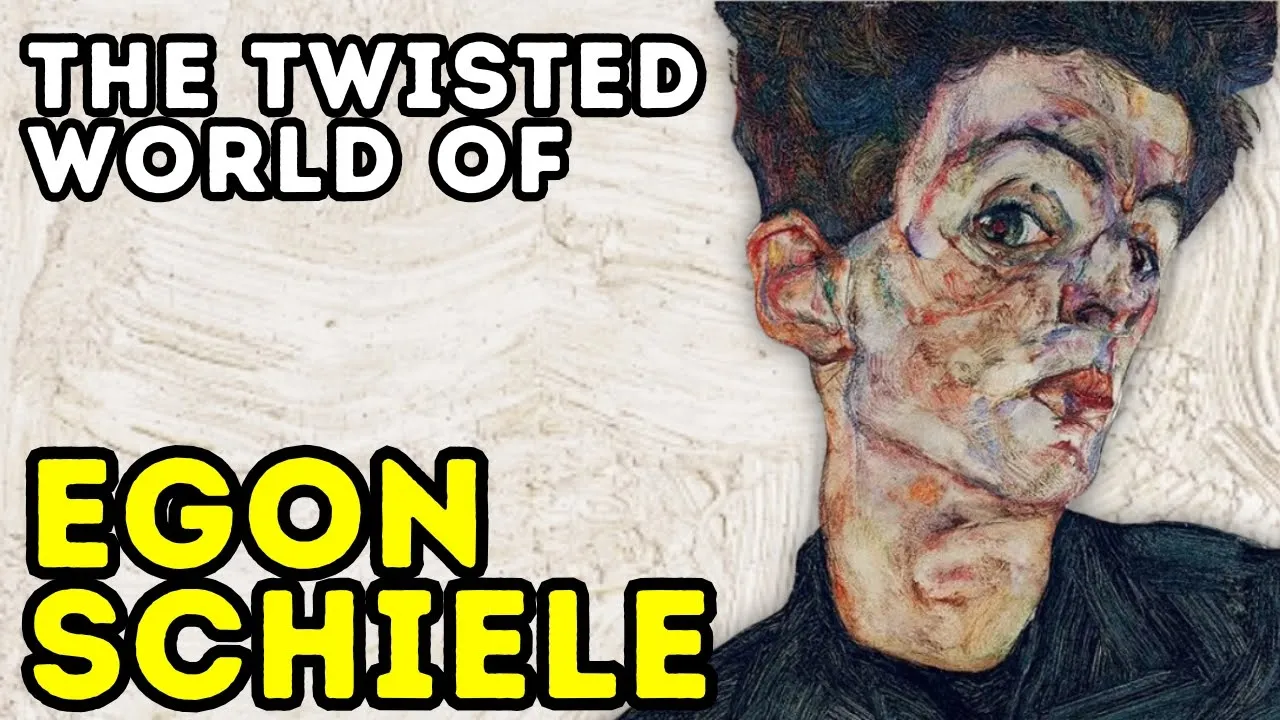
The Tormented Life of Egon Schiele | Biographical Documentary
126.3K
Around the time Schiele was developing his style, Sigmund Freud was living just miles away and gaining fame for radical theories about the human mind. Freud's controversial ideas about sexuality and psychology stimulated heated debate among artists and intellectuals while provoking outrage among conservative elements of society. This intellectual climate influenced artists like Schiele to explore themes of human desire and psychological complexity in their work.
Click to watch →
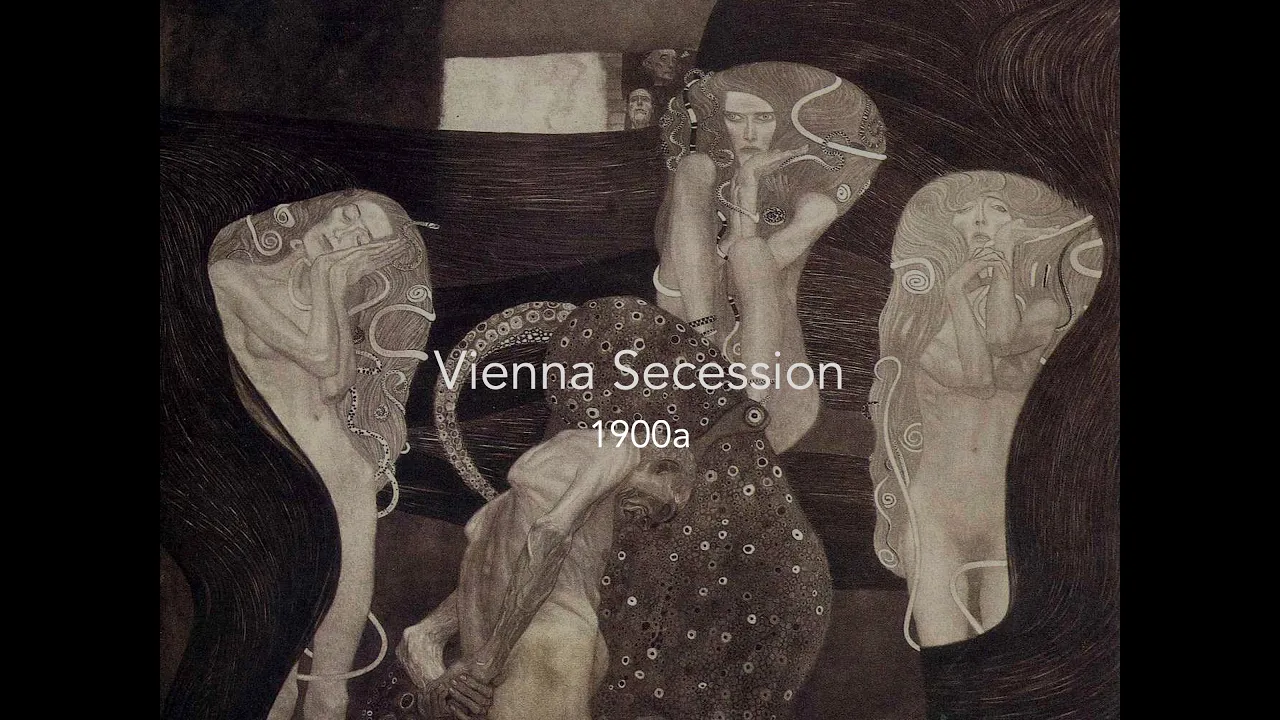
Vienna Secession
5.3K
The Vienna Secession (late 19th to early 20th century), led by artists Gustav Klimt, Egon Schiele, and Oskar Kokoschka, represents a pivotal moment in art history where artists deliberately transgressed bourgeois societal norms by moving away from naturalistic representation (mimesis) toward works that emphasized materiality and called attention to their own artistic medium. This movement coincided with Freud's development of psychoanalytic theory, which posited that human beings are fundamentally split between conscious awareness and unconscious drives and desires. The Secessionists used this psychoanalytic framework to explore themes of aggression, violence, and the darker aspects of human psychology that were normally repressed in civilized society, creating artworks that functioned almost like psychological case studies revealing the hidden tensions beneath social appearances.
Click to watch →

Sigmund Freud: The Father of Psychoanalysis
739.8K
Sigmund Freud (1856-1939), born in Příbor (then part of the Austrian Empire), revolutionized psychology by developing psychoanalysis, introducing concepts like the Id, Superego, transference, and the Oedipus Complex; despite facing persecution as a Jewish intellectual in Vienna and dying in exile after Nazi persecution, his theories fundamentally transformed our understanding of the human mind and influenced art, literature, and culture worldwide.
Click to watch →
Deep Dive
Feminist art-historical critiques of Klimt, Schiele, and Kokoschka, exploring the fine line between artistic liberation and the objectifying 'male gaze'.
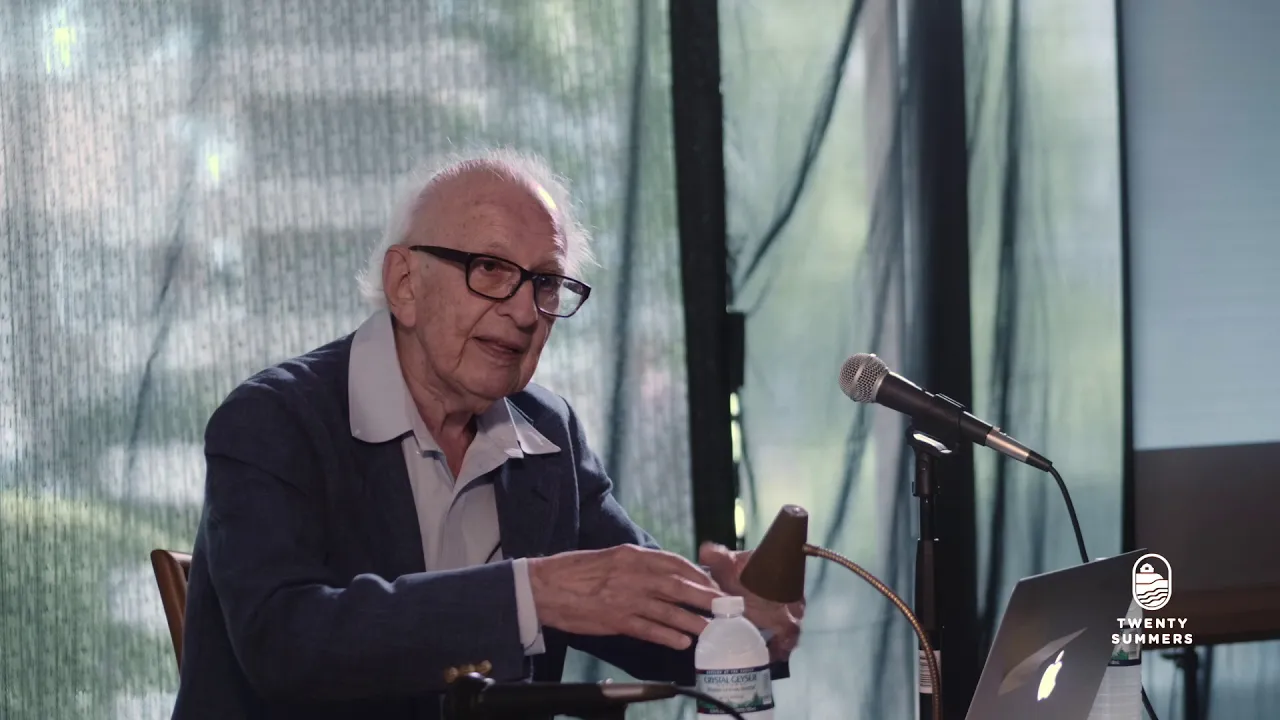
Eric Kandel & Emily Braun
754
Gustav Klimt and Oskar Kokoschka achieved artistic breakthroughs liberating human nature from traditional constraints. Klimt liberated female sexuality by depicting women pleasuring themselves rather than serving male gaze, challenging centuries of Western nude art where women looked outward to satisfy viewers. In Judith and Holofernes, he fused aggression with sexuality, showing Judith deriving sensual pleasure from decapitating her enemy—revealing how women, like men, confuse aggressive and erotic instincts. Kokoschka developed Expressionism through arbitrary color conveying emotion, created self-portraits for self-analysis, and demonstrated remarkable psychological insight by predicting strokes through observing hand movements. Together, they revealed that even children exhibit erotic curiosity and aggressive interactions, challenging notions of childhood innocence.
Click to watch →

Europe-Klimt, Schiele, Kokoschka et les femmes
728
The Belvedere Museum in Vienna presents an exhibition featuring works by Gustav Klimt, Egon Schiele, and Oskar Kokoschka, three renowned Viennese painters from the early 20th century, exploring how these artists depicted women during a transformative period when women's social status was evolving and the beginnings of gender equality and sexual liberation were emerging; unlike 19th-century French art that idealized women as goddesses, these Austrian artists offered authentic, sometimes provocative representations of women as they truly were, with Klimt providing a sensuous and romantic vision, Schiele offering a cerebral approach, and Kokoschka presenting a highly personal expressionist perspective.
Click to watch →

Lucia Aranda- Activismo feminista del siglo XX
167
Griselda Pollock developed influential feminist art theory in the 1980s that combines Marxist analysis of power structures with psychoanalytic theory. Her book 'Vision and Difference' examines how images produce meaning based on ideology rather than neutrality. She analyzes how the 'male gaze' shapes artistic representation, revealing how seemingly neutral images encode gendered power relations. The male gaze results in art that objectifies women and reinforces patriarchal power structures. There is a paradox in feminist art history: while we need to recover women artists, doing so often treats them as exceptions rather than integral participants. The solution involves humanizing women artists while still recognizing systemic barriers.
Click to watch →

Frangetta, sottomissione e Manon Garcia
11.1K
The Male Gaze reduces women to objects who exist to be looked at. Women are told to smile, be pleasant, and make themselves available for male visual pleasure. When women do not conform to this expectation (by cutting their fringe, coloring their hair, or not depilating), they are seen as rebels who must be 'put back in their place.' This objectification means that women's thoughts, intentions, and autonomy are irrelevant; they exist only to provide visual pleasure to men. The system requires women to constantly remind each other that there is always a hierarchy, always someone better and someone worse.
Click to watch →
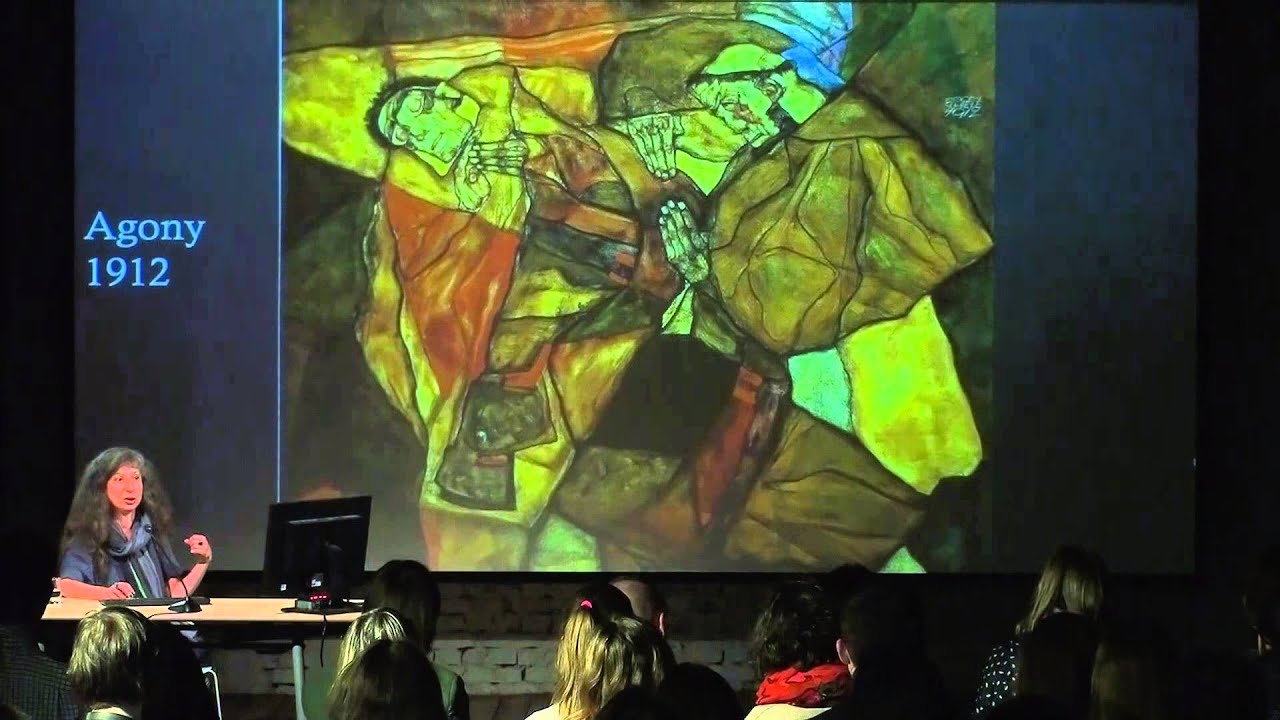
Лекция Ирины Кулик «Эгон Шиле — Ханс Беллмер»
53K
Schiele's most famous work is his nude women, which changed the representation of nudity in art. Unlike academic nudes presenting women as objects of erotic contemplation, Schiele's women look back at the viewer with intense, almost hostile expressions. His work was influenced by his doctor who worked in a gynecological hospital, allowing him to make clinical drawings of bodies that did not need to be beautiful. Schiele is considered by some to be the first feminist artist because he represented women as subjects rather than objects. His act of painting was not about representing how others look but about understanding what it means to be in that body.
Click to watch →
Deep Dive
A comparative study of Viennese Expressionism with German Expressionist groups, such as Die Brücke and Der Blaue Reiter, to understand regional stylistic differences.

Libros recomendados: ojo con el arte. (1268) Norbert Lynton: el expresionismo.
663
Expressionism is associated with two informal groups: Die Brücke (The Bridge, 1905-1913, formed in Dresden) and Der Blaue Reiter (The Blue Rider, Munich, 1912). Die Brücke artists (Kitchner, Heckel, Schmitt, Rotluf) had no theories, offering only youth and impatience. Their 1906 manifesto stated anyone expressing directly what drives them to create is with them. By 1913, conservatives attacked expressionist works as dangerous to German youth. Herwarth Walden's Der Sturm journal and publishing house began in 1910, becoming a pillar for German and Central European avant-garde trends. Der Blaue Reiter almanac (May 1912) was directed by Kandinsky and Marc, who organized exhibitions in December 1911 and February 1912. Artists included August Macke, Gabriele Münter, and Marianne von Werefkin.
Click to watch →
“Lovecraft”, Horror Cósmico, Arte Moderna e Expressionismo
6.1K
Die Brücke (The Bridge), formed in Dresden in 1905, believed their function was to completely destroy naturalistic and classical art values to propose a new path for future artists. They focused on representing moments of emotional intensity, using distorted forms and colors that did not exist in reality. Der Blaue Reiter (The Blue Rider), organized in Munich in 1911, differed in approach: they focused more on representing states of inner peace that artists could achieve through meditation. They drew inspiration from drawings by children and people with mental illnesses, who they believed could reach states of spiritual peace that mentally healthy adults could not.
Click to watch →
Espressionismo ed espressionismi. Da Van Gogh e Munch alle avanguardie tedesche
27K
Vasily Kandinsky founded the Blue Rider (Der Blaue Reiter) group in Munich, including artists like Franz Marc and August Macke. This group was characterized by staccato brushstrokes, diagonal perspectives, and unnatural colors with preference for primary colors. The Brücke (Bridge) was the first organized group of Expressionist artists, founded by four young architecture students in Dresden between 1905-1907. Unlike individual Expressionists, the Brücke represented a collective of friends sharing a common vision. The group's name derives from their desire to create a bridge between the past and present, not rejecting art history but seeking to transfer the tradition of great German artists onto contemporary reality. Ernst Ludwig Kirchner formulated the group's brief manifesto including 'Gemeinschaft' (community), 'Jugend' (youth), and 'Freiheit' (freedom).
Click to watch →
Lecture 03 Early Modernism, Abstraction and Surrealism before World War II
25.4K
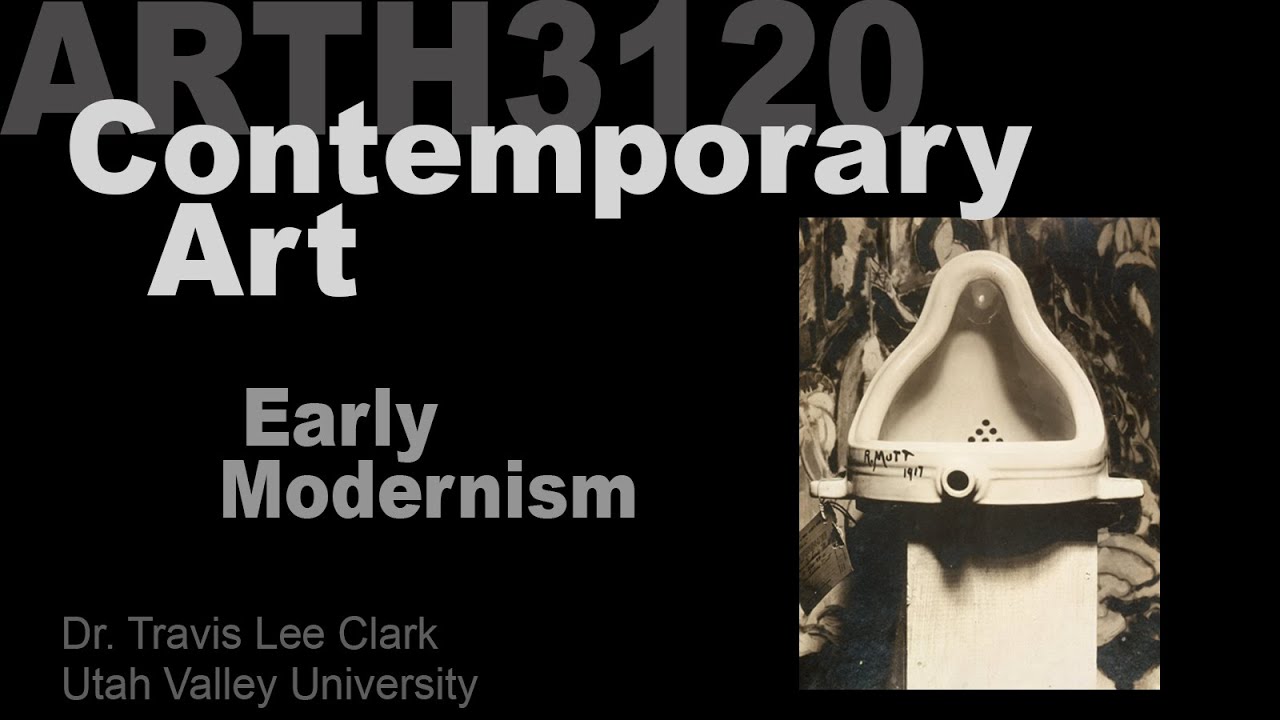
German Expressionism split into two camps: Die Brücke (The Bridge) and Der Blaue Reiter (The Blue Rider). Die Brücke took their name from Nietzsche's concept that mankind is a bridge to the future—constantly changing and becoming something better. They embraced a primitive aesthetic by reviving woodcut printing, which was cheap and allowed mass production of books and pamphlets to spread their revolutionary ideas. Artists like Ernst Ludwig Kirchner created street scenes with angular lines and lurid colors. This movement influenced later Abstract Expressionists like Willem de Kooning through its expressive brushwork and emotional intensity.
Click to watch →

Expressionism | ArtBlock
22.5K
German Expressionism emerged in 1905 in Dresden as a rejection of Impressionism, responding to industrialization and urbanization that created feelings of isolation. Four architecture students—Ernst Ludwig Kirchner, Carl Schmid, Fritz Bleyl, and Arthur Heckel—formed Die Brücke (The Bridge), seeking authentic art expressing inner feelings. Influenced by psychoanalysis from Nietzsche and Freud, they used distorted shapes and unnatural colors. The term 'Expressionism' was coined in 1910. Two major groups defined the movement: Die Brücke and Der Blaue Reiter (founded by Kandinsky and Marc in 1911). Austrian Expressionists like Egon Schiele pushed boundaries with controversial imagery. Following WWI, new groups emerged including the November Group and De Stijl. The Nazi rise to power in 1933 ended Expressionism, labeling it 'degenerate art' and seizing works. Despite suppression, Expressionist ideas persisted through Abstract Expressionism in America and Neo-Expressionism in Germany. The movement's legacy extends to literature, architecture, music, theater, and film, with techniques like the Dutch angle continuing to influence contemporary cinema.
Click to watch →
Deep Dive
The legacy of Viennese Modernism on contemporary figurative art and how modern artists continue to challenge or redefine the boundaries of portraiture.

History of Portraiture in Art Part II
974
The modernist movement in full swing includes portraits from different time periods but both in the 20th century. Anders Zorn painted a portrait of President Grover Cleveland around 1906. Pablo Picasso painted Gertrude Stein around 1906, and when she first received the painting, she said it doesn't look like me, and he said someday you'll grow to look like the painting. Francis Bacon painted portraits in the 1950s. Pietro Anagnos painted Queen Elizabeth II in the 1950s. Contemporary painters include Jeremy Lipking from California, David Gray from Seattle, Katherine Stone from British Columbia, and Richard Whitney from New Hampshire. Whitney was a student of Ives Gamel, who studied with Paxton, and worked for Paxton's wife. These painters show portraiture has not been killed by modernism. The artist has been working on a portrait of Walt Whitman in Camden for almost two years, recreating the front room of his home. It's almost a double portrait with his father Walt Whitman Senior peering down scornfully. Whitman was friends with Mark Twain, Bram Stoker, Oscar Wilde, Emerson, Thoreau, and Longfellow. The artist wanted viewers to feel like they were sitting with Whitman having conversations with his friends.
Click to watch →
A history of modern art in 73 lectures: lecture 73 (conceptual art plus figurative art)
536
Figurative art in the 20th and 21st centuries is often a response to modernistic tendencies, maintaining dialogue with modernism rather than avoiding it. Like Chinese ink painting that is aware of other options and chooses ink painting as one possibility, figurative art today is often aware of modernism's experiments while still wanting to work in figurative idioms. German artists like Georg Baselitz and Anselm Kiefer felt they had to deal with history, particularly the terrible story of Nazism and the Holocaust. Baselitz always paints his figures upside down, making images more abstract and helping artists break from habitual ways of working. Kiefer's 'Operation Sea Lion' (1975) references the Nazi plan for invading Britain. This need to confront what went wrong in art and society led many German artists to return to figurative styles as a way of exploring what was possible in earlier 20th century modernism and addressing art's potential complicity in historical events.
Click to watch →
Viennese Modernism (Part1) | VIENNA/NOW
245.4K
Viennese Modernism (around 1900) was a revolutionary artistic movement in Vienna that synthesized multiple disciplines through the concept of 'Gesamtkunstwerk' (total work of art), led by artists like Gustav Klimt, Egon Schiele, Otto Wagner, and Koloman Moser; this movement rejected conservative historicism, embraced artistic freedom, and integrated art into everyday life through architecture, painting, design, and decorative arts, leaving a lasting legacy on Vienna's cultural identity.
Click to watch →

Josef Hoffmann: Pioneer of Modern Design & Wiener Werkstätte
45.8K
Vienna's progressive movements contained incompatible tendencies causing disputes. Hoffmann's masterpieces sparked new developments, later influencing colleagues at the Wiener Werkstätte. Cultural overturn in the early 20th century occurred at breathtaking speed, with art history progressing through overlapping, complementary, or contradictory stages rather than linear progression. The new objectivity of Hoffmann's early designs paralleled Edward Vimm's surface art. Style orientation cannot be confined to specific years, and each cultural epoch possesses avant-garde currents recognized only retroactively. Hoffmann, one of Austria's greatest artists and most influential 20th-century architects, died at 86. As Secession initiator, he influenced contemporary drawings and paintings; as Wiener Werkstätte founder, he revolutionized arts and crafts; as eternal avant-garde, he remains a revered Austrian artistic example.
Click to watch →

Gothic Modern or How to Understand Generation Z.
3.2K
The exhibition examines how modernists approached portraiture. Helen Scherf's The Seamstress (1905) explores formal language, light, and space rather than the model's soul, with extreme economy of means. Marianne Stokes' Candelmas (1901) creates a meditation on light, faith, and domestic piety. Hans Holbein the Younger's portrait of Simon George of Cornwall (1535) captures not only appearance but intention, using the modern profile form. Otto Dix's self-portrait (1912) foreshadows New Objectivity, with the 21-year-old artist declaring himself heir to the northern Renaissance tradition through medieval hairstyle and rigid profile.
Click to watch →
Portrait Revolution
Love's Taboo
Gender Dynamics
Portrait Revolution
0:07- 1
Klimt's wealthy female portraits lack personality, resembling gilded birds.
- 2
Schiele and Kokoschka adopt raw expressionism, facing limited success.
- 3
Schiele's introspective style contrasts sharply with Klimt's decorative art.
Feminist Critiques of Viennese Modernism and the Male Gaze
While traditional art history often celebrates Klimt, Schiele, and Kokoschka for revolutionizing female portraiture, feminist art historians offer a critical counterpoint. Critics argue that instead of liberating women, these artists often subjected them to a pathologizing and objectifying 'male gaze.' Scholars point out that Klimt’s decorative eroticism, Schiele’s raw, distorted nudes, and Kokoschka’s volatile depictions often reduce female subjects to passive sexual objects or vessels for male psychological anxiety. Furthermore, this perspective highlights the stark power imbalances between the influential male artists and their frequently young, economically vulnerable models. Rather than granting women true agency, the Viennese avant-garde is seen as projecting male fantasies and existential dread onto the female body, thereby reinforcing patriarchal control under the banner of artistic rebellion.
The cultural and political climate of Fin-de-Siècle Vienna (late 19th and early 20th century), which served as a crucible for radical intellectual and artistic experimentation.
The traditional, highly idealized conventions of academic portraiture and female representation in 19th-century European art.
The origins and artistic philosophy of the Vienna Secession, led by Gustav Klimt, which sought to break free from conservative academic constraints.
The core concepts of Symbolism and early Expressionism, particularly how they prioritized subjective, psychological states over objective realism.
The intersection of early psychoanalysis (specifically Sigmund Freud's theories emerging in Vienna) and its direct influence on the depiction of the subconscious and sexuality in modern art.
Feminist art-historical critiques of Klimt, Schiele, and Kokoschka, exploring the fine line between artistic liberation and the objectifying 'male gaze'.
A comparative study of Viennese Expressionism with German Expressionist groups, such as Die Brücke and Der Blaue Reiter, to understand regional stylistic differences.
The legacy of Viennese Modernism on contemporary figurative art and how modern artists continue to challenge or redefine the boundaries of portraiture.
25.3K views330likes5:03@belvederemuseumOriginal Release: 2015-11-17
Gustav Klimt, Egon Schiele and Oskar Kokoschka returned to the classic pictorial genres of the portrait but used them in a completely new and unprecedented fashion to explore these pressing issues of gender.
Gustav Klimt was probably the preeminent portraitist of the time and after 1900 all of his portraits depicted women. He's women are like birds in golden cages.
They are beautiful, but at the same time one has very very little sense of personality.
Because of Klimts great success as a portraitist, young artists like Schiele and Kokoschka also tried to establish themselves as portaitists. But they're expressionistic style was so far less flattering than Klimt's style that they had much much less success particularly with female subjects. Schiele developed a deep understanding of the female psyche and was able to create very very insideful paintings and drawings of women. His portraits could be compared to an inside-out Klimt. Instead of the patterning in the background you see the rich patterning only in Edith's dress and the background is completely blank.
Oscar Kokoschka was less interested in the individual personalities of his sitter. He was looking to project a kind of spiritual commonality to transform her into the status of an art object. You can see that Klimt, Schiele and Kokoschka shared a belief in romantic love as a spiritual union between two people sealed by erotic passion. Their paintings present a relatively sanitized and idealized view of love, whereas in their works on paper, which were at the time much more private than their paintings, they are far more erotically explicit.
The mother and child is a pictorial genre that has a long history in Western art dating back to the Christian image of the Madonna. But even in secular versions of the subject the mother has a presumed aura of virginity and chastity. Association of procreation, maternity and sexuality was very much an artistic taboo at the turn of the century. It was a cause for enormous outrage.
For man at the turn of the 20th century relationships with women involved a combination of fear and attraction that could only be resolved through an assertion of dominance. If you look at Klimts drawings of the nude, his female nudes are often so passive that they appear nearly catatonic. Schieles women, however, are much more aggressive. They confront the viewer very often. They stare directly at him or her reclaiming control of the gaze. Kokoschka of the three artists had the most trouble asserting his dominance over women. You find this reflected in his nudes which for the most part have none of the erotic prison that you see in the nudes of Klimt and Schiele and then sometimes really are downright ugly.
Up Next

18:06
The Lewis Collection: Modern Masters of the Human Figure
@sothebys
417 views•2026-06-10

3:55
Egon Schiele's The Hermits, 1912: Expressionism & Inner Vision
@smarthistory-art-history
25.6K views•2012-04-02
7:48
Ukiyo-e Art: History, Woodblock Printing & Influence
@japanathand
6.3K views•2023-06-08

16:34
Earliest Depictions of Jesus in Art: 10 Ancient Images Explained
@UsefulCharts
5.9M views•2022-06-03
Related Study Plans & Knowledge Roadmaps
Structured learning paths in Art History
art-history
Vienna Secession: Rebellion, Klimt & Schiele
01Fin-de-Siècle Vienna & Academic Historicism
02The Secession Movement & Klimt's Decorative Symbolism
03Gesamtkunstwerk & the Wiener Werkstätte
+ 2 more learning modules
9h5 modules
Explore Roadmap
art-history
Gothic Cathedrals: Engineering, Light & Society
01The Birth of the Gothic: Romanesque to Suger's Vision
02The Structural Triad: Pointed Arches, Ribbed Vaults, and Flying Buttresses
03Theology of Light: Lux Nova and Sacred Geometry
+ 2 more learning modules
14h5 modules
Explore Roadmap
art-history
Pre-Raphaelites: Realism, Symbolism & Critique
01The Victorian Art Establishment and Academic Formula
02The Founding of the PRB and Radical Realism
03Medieval Revivalism and Literary Symbolism
+ 1 more learning modules
8h4 modules
Explore Roadmap
art-history
Street Art: From Subways to Art Market
01Subcultural Origins in Philadelphia and New York (1970s)
02The Subway Era and Style Wars (Late 1970s - 1980s)
03The East Village Scene and Early Gallery Crossover
+ 2 more learning modules
10h5 modules
Explore Roadmap