

























The United Kingdom's National Health Service (NHS), established after World War II, is a government-run healthcare system funded entirely through taxation where citizens pay nothing out-of-pocket when accessing care; despite spending only 9.8% of GDP on healthcare compared to the US's 16.9%, the UK achieves better health outcomes including 2.7 years higher life expectancy and lower infant mortality rates, though the system faces ongoing challenges including long waiting times, private sector growth, and concerns about NHS sustainability following Brexit.
UK National Health Service: Structure, Reforms & Comparison to US
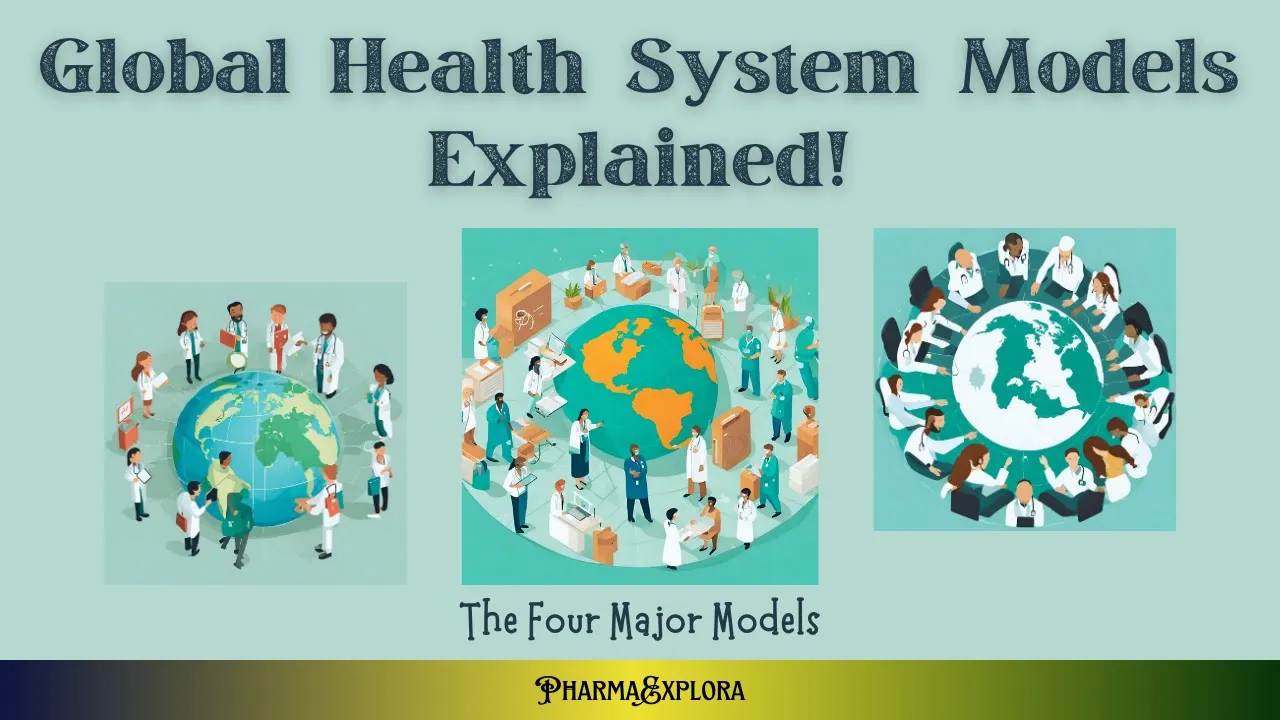
Added:Understanding of the basic models of global healthcare systems, specifically the Beveridge Model (tax-funded, government-run) versus the Bismarck Model (social health insurance).
Basic knowledge of the United States healthcare system's structure, including private health insurance, Medicare, Medicaid, and employer-sponsored coverage.
Fundamental concepts of public finance, such as how government programs are funded through progressive taxation and the basics of national budgeting.
A general understanding of Brexit and the political-economic shifts it introduced to the United Kingdom's public sector.
In-depth exploration of health economics, specifically how clinical efficacy and cost-effectiveness are evaluated by bodies like the UK's National Institute for Health and Care Excellence (NICE).
Comparative policy analysis of other highly-regarded international healthcare models, such as those in Singapore, Germany, and Switzerland.
Investigation into the long-term sustainability challenges of public healthcare, including demographic aging, workforce shortages, and medical technology inflation.
Analysis of the ethical and economic debates surrounding public-private partnerships (PPPs) and the introduction of market mechanisms into publicly funded systems.
1.1M views14.7Klikes13:06Original Release: 2020-03-06
Super Tuesday came and went and the Democratic presidential race is narrowing to two very different candidates, far left Bernie Sanders and the more moderate Joe Biden.
Biden and Sanders have clashed on the best approach to reforming U.S. health care.
Sanders wants to get rid of private insurance altogether.
While Biden proposes building on the framework left over from Barack Obama's Affordable Care Act.
Bernie says that you have to bring people together and we have to have Medicare for all.
But Bernie says and he says he wrote the damn thing, but he's unwilling to sell with the damn thing's gonna cost.
The idea middle class taxes aren't going to go up is just crazy.
What Medicare, after all, will do is save the average American substantial sums of money.
The U.S. already spends more money on health care than any other developed country.
There's one country that spends less than half what the U.S. does on health care.
And people generally don't pay anything out of pocket when they go to the doctor.
The United Kingdom and out of all the health care systems we've looked at, the U.K. appears the most socialist.
The government effectively runs the whole thing.
Right now, the U.K. is having its own debate over how to reform the National Health Service.
So how does the U.K. system compare to the U.S. and what reforms may be coming?
In 2018, the United States spent around ten thousand five hundred U.S. dollars on health care for each of its residents.
The United Kingdom spent around 4000 U.S. dollars.
That means the United Kingdom spends 9.8 percent of its GDP on health care, while the U.S.
spends 16.9 percent.
Despite spending less, the United Kingdom manages to have healthier citizens who live longer and are less likely to die in childbirth.
In 2017, life expectancy in the U.K. was 2.7 years higher than in the U.S., and the U.K.
has roughly 1.5 times fewer deaths that could have been avoided by access to better health care.
The infant mortality rate is lower in the United Kingdom, with 3.9 deaths per 1000 live births as opposed to 5.8 in the United States.
And the maternal mortality rate in the U.S. is nearly 1.5 times higher than in the United Kingdom.
So how is the U.K. system structured so that it gets these results while spending significantly less than the United States system?
The National Health Service is a case where the British decided right after World War 2 that health care should be government's job, like paving the streets, putting out fires, running a library, running the parks.
That's T.R. Reid, author of the book The Healing of America.
He traveled the world exploring different countries' health care systems.
It's a service you get when you need it and you never get a bill.
It's like going to the library.
They don't charge you to check out a book.
He's saying that the NHS is it's a risk sharing system, so everyone pays into it through their tax.
If you need to use it, you don't have to pay anything else.
So in a sense, it's not free because is paid as of taxation.
Dr. John Puntis is a pediatrician who recently retired from the NHS.
He is also co-chair of an organization called Keep Our NHS Public.
All of his comments are reflective of the organization and not his personal views.
It's a fair system in that the more money you earn, the more tax you pay, the more you contribute.
But there has been discussion about whether tax should be increased to pay for sorting the NHS out in terms of the current deficiencies and problems, and that that is controversial.
I think a lot of people favor some tax increase, but then there are other people who say, well, maybe the focus should be on companies that don't pay tax and people who don't pay tax as the first step.
I would call that socialized medicine.
Government provides that care.
Government pays for the care it's paid for through taxes.
Everybody's covered the same.
To me that sounds like socialized medicine.
The term socialized medicine has become a political football, especially in the United States.
The NHS is socialized medicine.
It's great.
And we hear this term mainly coming from the US where it's used as a as scaremongering.
I would say if the NHS is socialized medicine, we like it and most people are still very, very supportive of the concept of of of a national health service.
Each of the u.k.'s four constituent countries have their own branch of the NHS, so rules differ slightly between them.
But all of the branches operate under the purview of the U.K. parliament.
There are some services that require patients to pay something out of pocket, such as dental, eye care and certain prescription drugs.
But those fees are low compared to the U.S. and vary by NHS branch.
By one estimate from a data analytics firm, prescription drugs cost 57 percent less in the U.K. than they do in the U.S. Unlike with other universal health care systems that are only publicly funded, the government also runs the NHS.
That means doctors that work in public NHS facilities are employees of the government.
Most Britons receive their primary care through general practitioners who are frequently referred to as GPs.
They typically act as gatekeepers for secondary care.
The problem is that people are experiencing the moment as is taking longer to see your general practitioner.
If you want to see them.
Most GPs are private contractors with the NHS.
They don't charge patients for care.
Instead, they earn money directly from the National Health Service.
Many GPs negotiate contracts with the NHS to determine how much they can charge the government for their services.
GPs may fund their own general practice facilities or they can rent them from the NHS or private companies.
One paper from the Journal of the Royal Society of Medicine found that GPs faced many issues because of how general practices are funded in the U.K.
Some GPs, I think increasingly don't want to take on the running of business aspects of general practice, and so there are lots of GPs who are salaried partners, so they are paid by the practice to come in and work as a GP, but they don't do any of the business side of this stuff.
There's also a private sector in the u.k.'s health care system.
It's funded from a combination of out-of-pocket payments, private health insurance and the NHS itself.
The private sector is growing because is being consciously promoted by government and the boundaries being blurred.
But I think the private health care has been growing at a very rapid, steady pace in the United Kingdom for the course of several decades.
That's going to continue.
That's Nile Gardiner.
He's the director of the Thatcher Center for Freedom at the Heritage Foundation.
With regard to the National Health Service, I mean, there's no there's no sign at this stage that the U.K. will be moving to a different system to the National Health Service.
All British parties all committed to the National Health Service.
I think that's more or more Britons will be opting for private healthcare in the coming years and decades, not least because there are long waiting lists with regard to the National Health Service.
And analysis from the London School of Economics found that in the 2018 to 2019 fiscal year, NHS England spent around 18 percent of its total expenditure on the independent sector.
There's been a blurring of the boundaries, if you like.
For example, cataract surgery is the most common operation done under the NHS.
Increasingly, it's being provided in the independent sector and the NHS, as has contracts with the independent sector to do that work.
There are implications in terms of staffing.
Private sector doesn't train its own staff, it takes it from the NHS.
It cherry picks, takes the low risk patients, not the high risk patients.
It has an impact on training NHS staff and this is one of the problems with cataract surgery.
If they're all going to the private sector, hospitals and the NHS staff don't become experienced in doing cataract surgery.
And then along the line you find it's more difficult to staff your NHS unit.
So it's not without negative consequence.
And we are paying private companies increasingly to do work for the NHS, including American companies.
And they're very well established now, particularly in the back office functions and providing advice on commissioning support, this kind of thing.
They're very involved and unfortunately that's likely to increase and something which campaigners are extremely worried about.
I don't think anyone really believed that U.K. voters would decide to Brexit.
The news that the United Kingdom voted to leave the European Union shocked the world.
The NHS was a big part of the Brexit media discourse, with the Leave campaign famously claiming that the U.K. would take back 350 million pounds a week that could then be funneled into the NHS.
The U.K. Statistics Authority has since said that the claim is a quote, clear misuse of official statistics.
My name is Holly Jarman.
I'm an assistant professor in the Department of Health Management and Policy at the University of Michigan.
Those promises really did hit home for a lot of people.
The idea that money would come back from Europe to the U.K. was a very powerful symbol.
It's not actually true.
That wasn't really how EU financing works, but we still saw that that was a big part of the media discourse and most likely part of people's judgment when they were casting their vote.
The U.K. officially left the EU three years after the original Brexit vote.
Entering a transitory period through the end of 2020, while the U.K. government negotiates international trade deals, the concerns about private American corporations engaging more with the NHS came up during the discussion of the post-Brexit trade talks with the United States.
When you're dealing in trade, everything's on the table, so NHS or anything else are a lot a lot more than that.
Backlash to President Trump's comments on the NHS led to many British politicians assuring their constituents that the NHS was not going to be a part of the trade talks.
The NHS is in no way on the table.
President Trump and backtracked on his comments, saying he wouldn't consider the NHS as part of the trade deal.
A lot of trade negotiations are actually quite secretive by nature.
The two sides don't really want to reveal a lot about what they're looking for in a deal.
Our concern really as health researchers is that the NHS really won't be accounted for in that deal, that the U.K. government's preferences have been shown to be largely economic and not so much on the focusing on the health of people in Britain.
The problem is that the NHS is is already on the table.
It has been for a while.
The politicians who are now going to be negotiating the trade deals, you know, it's going to be across many fronts.
Campaigners were saying, okay, put your money where your mouth is.
If if you're saying the NHS won't be in a trade deal, then let's see legislation that sets that out says cast in stone.
And they haven't rushed to do that.
Trade negotiations, cover everything at once.
And it's difficult to tell how they are going to be pushing for the liberalisation of drug regulations and to what extent the Johnson cabinet would actually agree with any changes that would be proposed to the way the U.K. regulates pharmaceuticals.
It's really a central government led process.
That's not that democratic and does represent big business.
And I think that's why a lot of people get very concerned and anxious around trade agreements.
There are some who say the NHS won't be harmed by Brexit, even in the event a trade deal with the EU isn't reached by the end of the year.
I don't expect that we're going to see huge changes actually in the Brexit era with regard to the to the National Health Service.
And so I think with with regard to the NHS, we're not likely to see a significant impact as a result of of Brexit.
I think the free trade deal will be largely focused upon the service industry, which of course is now the largest part of both the US and British economies.
Whatever effect the trade deals end up having on the U.K., reforming the NHS will continue to be a big part of the country's political conversation.
People's support for the NHS in the U.K. is very strong.
There's no other country that when we hosted the Olympics in London, we had nurses jumping on beds and the NHS was actually a part of that ceremony and a part of that national celebration.
The U.K.'s NHS is very important in British politics.
It's an important symbol of Britishness in that context.
Up Next
7:24
Canada's Single-Payer Healthcare System: An Analysis
@healthcaretriage
753.1K views•2014-02-23

21:53
Tiebout Model & Club Theory: Local Public Goods | Public Finance
@Vidyamitra
12.6K views•2016-04-14

14:50
Digital Yuan vs US Dollar: CBDC Impact on Global Finance
@CNBC
386.5K views•2021-07-25

113:18
The Age of Easy Money: Fed & Inflation | Full Documentary
@frontline
21.2M views•2023-03-15
Related Study Plans & Knowledge Roadmaps
Structured learning paths in Economics
economics
Intellectual Property: Innovation vs Monopoly
01Foundations of Market Power: Monopolies & Deadweight Loss
02The Economic Trade-Off of Intellectual Property
03Patents: R&D Incentives vs. Market Monopolization
+ 3 more learning modules
12h6 modules
Explore Roadmap
economics
Sovereign Debt: Defaults, IMF & Restructuring
01Introduction to Sovereign Debt & Government Bonds
02Debt Sustainability & Credit Ratings
03Anatomy and History of Debt Crises
+ 2 more learning modules
12h5 modules
Explore Roadmap
economics
Market Design: Matching Theory & Gale-Shapley
01Introduction to Market Design and Price-Free Markets
02Two-Sided Matching & The Gale-Shapley Algorithm
03School Choice Systems and Mechanism Design
+ 2 more learning modules
10h5 modules
Explore Roadmap
economics
Impossible Trinity: Forex, Capital & Policy
01Introduction to Monetary Policy and Central Banking
02Exchange Rates and International Capital Flows
03The Mundell-Fleming Model
+ 2 more learning modules
8h5 modules
Explore Roadmap