































Central Bank Digital Currencies (CBDCs), such as China's digital yuan, represent a new form of government-backed digital money that combines elements of traditional currency with blockchain technology, potentially challenging the US dollar's position as the world's primary reserve currency; while CBDCs offer benefits like faster cross-border payments, financial inclusion for the unbanked, and reduced energy consumption compared to proof-of-work cryptocurrencies, they also raise significant concerns about privacy, trust, and potential stalling of FinTech innovation, requiring careful consideration of how different national contexts shape their implementation and impact on global financial systems.
Digital Yuan vs US Dollar: CBDC Impact on Global Finance
Added:The definition and role of a global reserve currency, particularly how the US Dollar achieved and maintains this status.
The fundamental differences between fiat money, decentralized cryptocurrencies, and Central Bank Digital Currencies (CBDCs).
The mechanics of the global financial architecture, including the SWIFT payment system and its geopolitical utility.
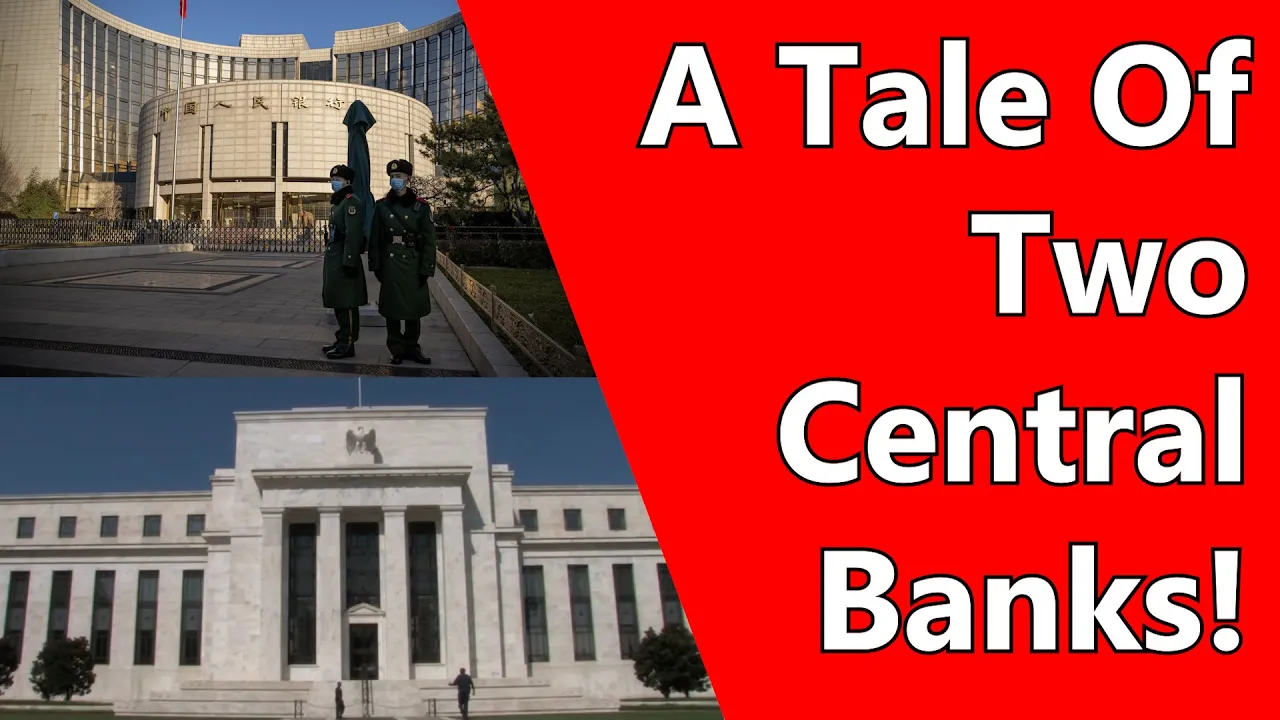
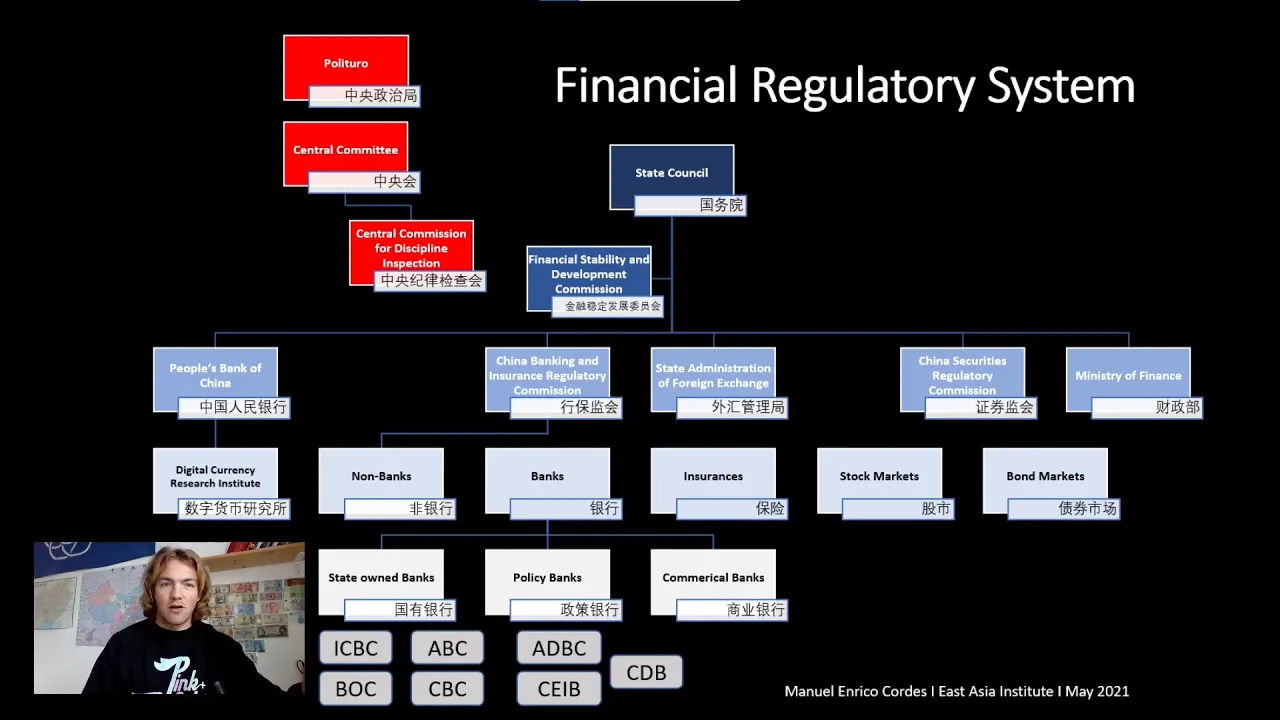
Basic monetary policy concepts, specifically the roles of central banks like the Federal Reserve and the People's Bank of China (PBOC).
The rise of bilateral trade agreements and alternative cross-border payment systems (e.g., China's CIPS) aimed at de-dollarization.
The privacy, security, and surveillance implications of programmable government currency on individual financial autonomy.
The Federal Reserve's policy responses, including the FedNow service and the technical/regulatory debates surrounding a digital greenback.
Multi-CBDC bridge arrangements (such as Project mBridge) and their potential to bypass traditional correspondent banking networks.
386.5K views6.5Klikes14:50Original Release: 2021-07-25
The first known examples of paper money were developed in China over 1000 years ago. And today China is disrupting money again by being the first major economy to develop and deploy its own digital currency. And the world seems ready for it, as services like Venmo, Apple Pay, and cryptocurrencies, like Bitcoin have prepped us for virtual transactions. But the digital yuan is different. It doesn't rely on physical money.
It's just computer code.
The digital you want has rolled up quite fast. In some cases, like in Shanghai, for example, there's a shopping mall and there are a couple of locations like a shopping mall or the subway where the digital yuan will be used.
It's called a central bank digital currency, or CBDC, and China is not alone in its ambitions to digitize money.
Over 80% of the world's central banks are now exploring this and very few have made the decision to go ahead.
A CBDC is almost an amalgamation of a cryptocurrency and a standard currency. It's all digital, but it is created and controlled by a government and/or a central bank.
CBDC is fundamentally pretty simple. It's another form of money, like the money we have today. But there still is a lot to figure out about exactly how it should work. First of all, we're not exactly sure how it's going to be distributed, how people will hold it, whether it will require them to have a bank account, for example. And we're still figuring out things like how we can make a CBDC work offline, and how we can protect people's privacy to make sure that we aren't keeping a record of everyone's transaction somewhere.
The US dollar remains the world's de facto monetary reserve. But with so many countries like China going full speed ahead to develop CBDCs for themselves, the US dollar faces a challenge: either follow the trend, find a better solution, or risk losing its place in the world economy.
This is the single most important move on the global chessboard in the last 20 years is how the United States and its allies, interfaces or doesn't interface with the Chinese central bank digital currency.
Today, when you want to send money to someone, it's actually pretty clunky. You've got Venmo cash app and Zell which are all improvements over the days of wire transfers. But there are limits to what you can send and it can still take days to process. Enter Bitcoin. Bitcoin was built on and originated blockchain technology, which speeds up this whole process.
Without going too deep into it, Bitcoin and other cryptocurrencies transfer money using a decentralized distributed ledger. There is no central company, government or entity controlling these transactions. To keep things accurate and secure. The system compares all of the ledgers to make sure that it stays up to date and contains the same information.
A central bank digital currency is governed, there's an organization that can mint more of it or take it away, that's usually represented by the government of a country. So that's in contrast to cryptocurrencies which do not represent nation state fiat currencies.
A CBDC would offer some similarities of both a cryptocurrency and a traditional currency. It'd be digital and could even be built using blockchain technology, but it would be centralized and controlled by the government and banks.
The idea with CBDC is that it might be the case that you can make payments without going through a financial institution just the way you do so with cash today.
So what would be giving this digital dollar any value? Well, what gives a physical dollar any value, among other things, it's trust.
If people trust money they'll use it. It doesn't really matter if it has a physical backing, it's still worth $1 because you can turn it in for $1 worth of something else, and everybody accepts it.
Right now, 67 countries are researching, developing or have a pilot program for a CBDC. Among them are China and the US.
So there have been these experiments. And they're, I mean, relatively small scale for China has its 1.2 million people – sounds like a lot, but in the Chinese context, not really.
China launched its digital yuan in parts of the country and it's incentivizing people to use it.
You sign up with your bank, and the bank will then give you a digital wallet and in that digital wallet, you'll have this red packet of money and then you could spend it either online for example, like a JD store, or you can go to these shopping malls or other locations depending on where you are in the country.
But the US is taking a smart-over-speed approach.
The chairman of the Federal Reserve, Powell, said we'd much rather get it right then to be first.
Some people are speculating that the US dollar could lose its supremacy in the world economy because of China and the digital Yuan.
I believe the digital one is the largest threat to the west that we faced in thelast 30, 40 years.
Currently 62% of the world's currency reserves are held in US dollars.
What that means is that if people are trading, for example, between, you know, the Japanese yen and the Indian rupee, it might be the case more often than not that they actually do that deal in dollars.
But Goldman Sachs predicts that the digital Yuan could have 1 billion users by 2030. That's triple the entire population of the United States.
So it certainly might be the case that if there's a digital currency and another currency, not the dollar, and people really like using it, they might start using that currency more, and they might decide to keep some of their holdings in that currency. But that's just one pillar on what makes the dollar the world's reserve currency. So there's, there's still a lot of other factors in that.
But it's still not really known whether a CBDC is the right thing for the United States. So let's take a look at some pros and cons.
We'll start with some of the benefits that a cbdc could offer the United States; sustainability, speed, convenience, and access. Concerns over Bitcoin and its power consumption have put cryptocurrencies, even the ones with less power requirements, in a bad light.
The reason that Bitcoin uses so much energy is because it is trying to operate in a very specific kind of environment where there's no one in charge. A central bank, digital currency does not need to operate in that exact environment. There is an organization in charge; the central bank.
And it's fast. Other countries who have tested cbdcs have seen real time payments, which means you send the money and it is instantly someone else's. And that includes sending money to people in other countries.
Remittances are money that's sent from one country to another country, and usually involves an exchange of currency as well.
And traditionally, these have been extremely expensive.
Say you want to send $100 to someone in the Philippines via Western Union, a popular international money transferring company. You pay a fee as high as $7.50, and the cash would be converted at a lower rate, meaning that person would get less than what you sent after conversion. It can also take up to four business days to get there. With a CBDC these transactions would be instant, and possibly fee free.
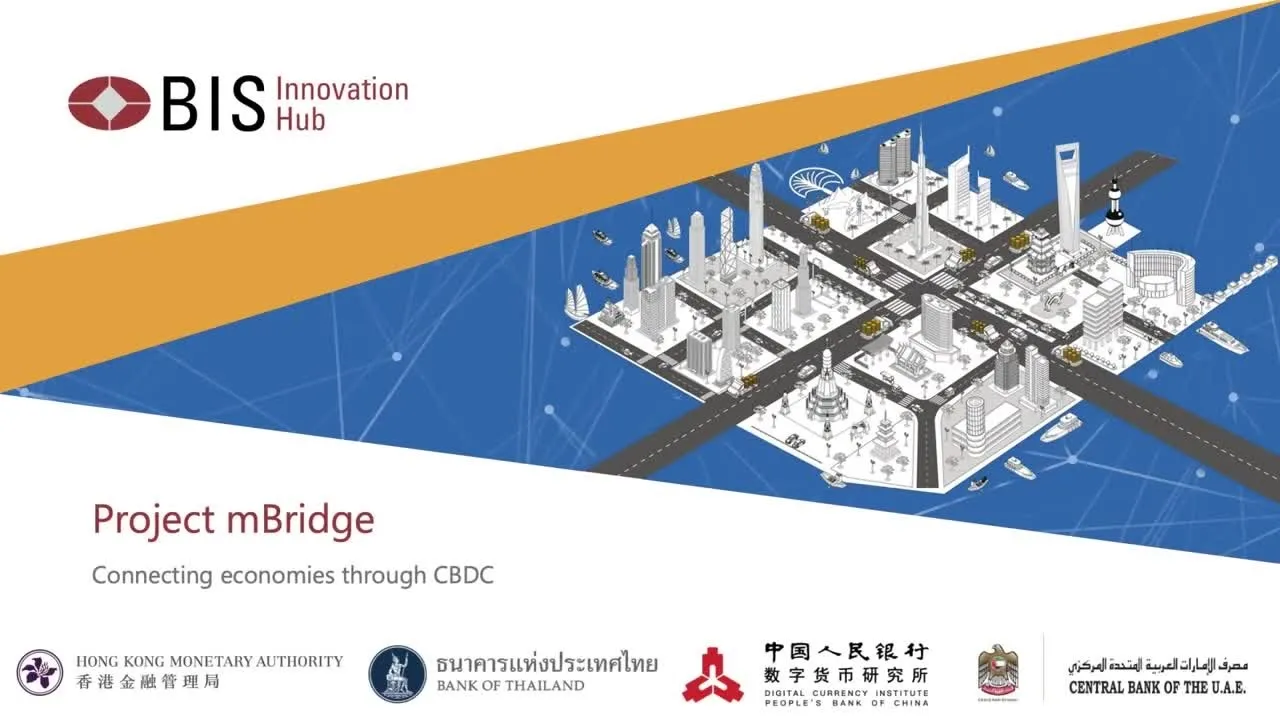
There will be tests in a CBDC Bridge project involving Hong Kong, Thailand, China and the United Arab Emirates. They're building a bridge that would allow these cross border payments to occur through CBDCs in a very slick way.
Another benefit could come to the 7.1 million Americans who don't have a bank account. 13.8% of black households were unbanked and 12.2% of Hispanic households were unbanked in 2019, while white households were only 2.5% unbanked. The most cited reason for not having a bank account was not having enough money to meet the minimum balance required.
And that has repercussions. It means that it might be harder for them to make payments, it might be more expensive for them to get loans. And it's certainly the case that people are looking at central bank digital currency as potentially a mechanism to help with financial inclusion. Now, whether or not that's actually going to work remains to be seen.
Then there are the concerns to consider. We have trust, privacy, innovation, and again access.
The second most cited reason for 7.1 million Americans not having bank accounts comes down to trust. More than a third of those unbanked Americans don't trust banks. For the folks developing a CBDC in the United States, that's a key driver behind the project.
A different type of architecture that didn't sort of charge these appearingly random fees would certainly be more compelling to people and would help to establish deeper trust.
Americans are distrustful of centralizing their data, and it's ironic that they are in many cases happy to give their data to the phone company or to the bank or to Google but they wouldn't be happy to give it to a central bank or government agency that's there to protect their data. Other countries don't seem to have as much concern about that.
It sounds kind of surprising, I think, from a Western perspective, or from a US perspective, that people here would feel more comfortable with the government managing their money or have being responsible for the digital yuan as opposed to having their money in a private entity such as WeChat or Alibaba. A lot of people are much more comfortable and also just used to the idea that the government is tracking what they're doing.
If there is a digital dollar, privacy is going to be a very, very important part of that. First step is to be very careful about what data is collected in the first place. The second is to think very carefully about rules and laws and regulations around that data that is collected. The third step is to investigate cryptographic tools that can help us store data in an encrypted way, while still making that data useful to people in aggregate.
CBDCs could also pose a threat to the $1.3 trillion cryptocurrency market. While the whole lot of people in the world today see cryptocurrencies as an investment, the real goal of cryptocurrencies like Bitcoin, at least, were to be spent easily and internationally. And that might not be necessary anymore if we have CBDCs.
Our opinion is that CBDCs and cryptocurrencies are going to coexist, and they're probably going to reinforce and help each other. This is all about the upgrade of money, and it's happening in multiple different ways. So people who are interested in buying holding and using cryptocurrency, a good number of them do so because it's not a central bank backed currency.
And a CBDC in the US has potential to stifle FinTech innovation. Right now, there are a lot of things happening in the world of digital currencies and financial technology.
I don't think the US should build its own digital currency, if it stifles innovation, like Diem or like certain kinds of FinTech firms. It needs to leave space for innovation for entrepreneurship and not say, you know, we are the solution for everything.
And while a cbdc could help those Americans without a bank account, it could also expand the technology gap. 7% of Americans say they don't use the internet. For black Americans that rises to 9%, and for folks over 65, that rises to 25%. Only 85% of Americans say they have a smartphone. That's even less 83% for black Americans. And Americans with a disability are three times as likely as those without a disability to say they never go online. So switching our financial system to an entirely digital one could have some negative impacts for already underserved communities.
A central bank digital currency would likely have the effect of reducing the use of paper money, and the unbanked, of course, are relying heavily on paper money. If you make paper money so unpopular that it starts to be difficult to spend, then that could actually harm the situation of some unbanked people unless you have a solution that reaches well into that 7.1 million household group of people that are currently unbanked.
A system where we don't use physical money anymore is not hard to imagine, and might be in our near future. But the route we take to get to that future is likely to look very different from China.
There are some estimates that China could be completely digitized within the next five years. So that is really quick.
Most of the work that we're doing assumes that CBDC will coexist with physical cash, and that users will still be able to use physical cash if they want to. Now, the fact of the matter is that a lot of the world is moving into the digital realm, and it's probably the case that the use of physical cash is going to decline in the future if more and more moves online.
A CBDC does not get a unanimous vote of confidence in the United States. There are other options. Stablecoins, for instance, like Tether, USDC, and the upcoming Diem are cryptocurrencies linked to the price of $1.
In general, the US payment system is behind – whether you use a new central bank digital currency, whether you use a private stablecoin, whether you allow FinTech firms to play a bigger role. So there are different approaches. And the United States is going to, I hope, going to develop a clear strategy for improving its payment system because that just adds to the strength of the US economy and it helps individual people in the US. It all comes down to helping people.
Regardless of the solution, the US will have to keep up with an increasingly digital world, especially when it comes to money, where competition between China's digital yuan is heating up.
China has certain reasons why they are probably launching a digital currency. And it's not clear that China's reasons map on to the United States, which is a very different environment.
So I think it makes a lot of sense to go slowly, to do very, very thorough research and to try to find out exactly how this technology might work and exactly what problems it might help with.
Up Next
5:38
Understanding the WTO: Functions, Rules, and Impact Explained
@WTO
69.2K views•2024-09-27

5:07
Impact of Yuan in Indo-Russian Trade Amid Sanctions
@WION
261.9K views•2022-07-01

13:06
UK National Health Service: Structure, Reforms & Comparison to US
@CNBC
1.1M views•2020-03-06

113:18
The Age of Easy Money: Fed & Inflation | Full Documentary
@frontline
21.2M views•2023-03-15
Related Study Plans & Knowledge Roadmaps
Structured learning paths in Economics
economics
Sovereign Debt: Defaults, IMF & Restructuring
01Introduction to Sovereign Debt & Government Bonds
02Debt Sustainability & Credit Ratings
03Anatomy and History of Debt Crises
+ 2 more learning modules
12h5 modules
Explore Roadmap
economics
Market Design: Matching Theory & Gale-Shapley
01Introduction to Market Design and Price-Free Markets
02Two-Sided Matching & The Gale-Shapley Algorithm
03School Choice Systems and Mechanism Design
+ 2 more learning modules
10h5 modules
Explore Roadmap
economics
Impossible Trinity: Forex, Capital & Policy
01Introduction to Monetary Policy and Central Banking
02Exchange Rates and International Capital Flows
03The Mundell-Fleming Model
+ 2 more learning modules
8h5 modules
Explore Roadmap
economics
Healthcare Economics: Market Failures & Systems
01Introduction to Healthcare Markets and Market Failure
02Asymmetric Information and Adverse Selection
03Moral Hazard and Insurance Design
+ 2 more learning modules
12h5 modules
Explore Roadmap