






![12.1 Describe the Electromagnetic Spectrum (E=hf) [HL IB Chemistry]](https://i.ytimg.com/vi/ge6D7vT1fjo/maxresdefault.jpg)










![X-ray Interactions Photoelectric and Compton Scattering for Radiologic Technologists [Rad Physics]](https://i.ytimg.com/vi_webp/OaQHP4jD_hE/maxresdefault.webp)



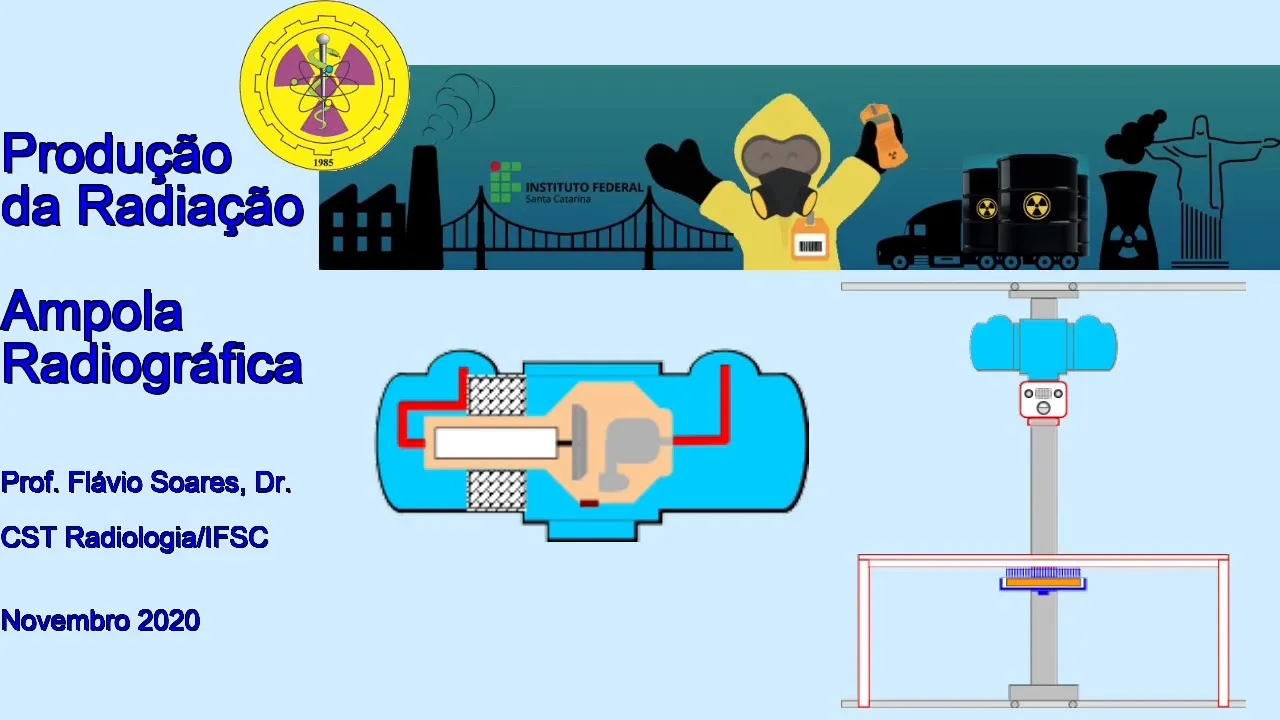




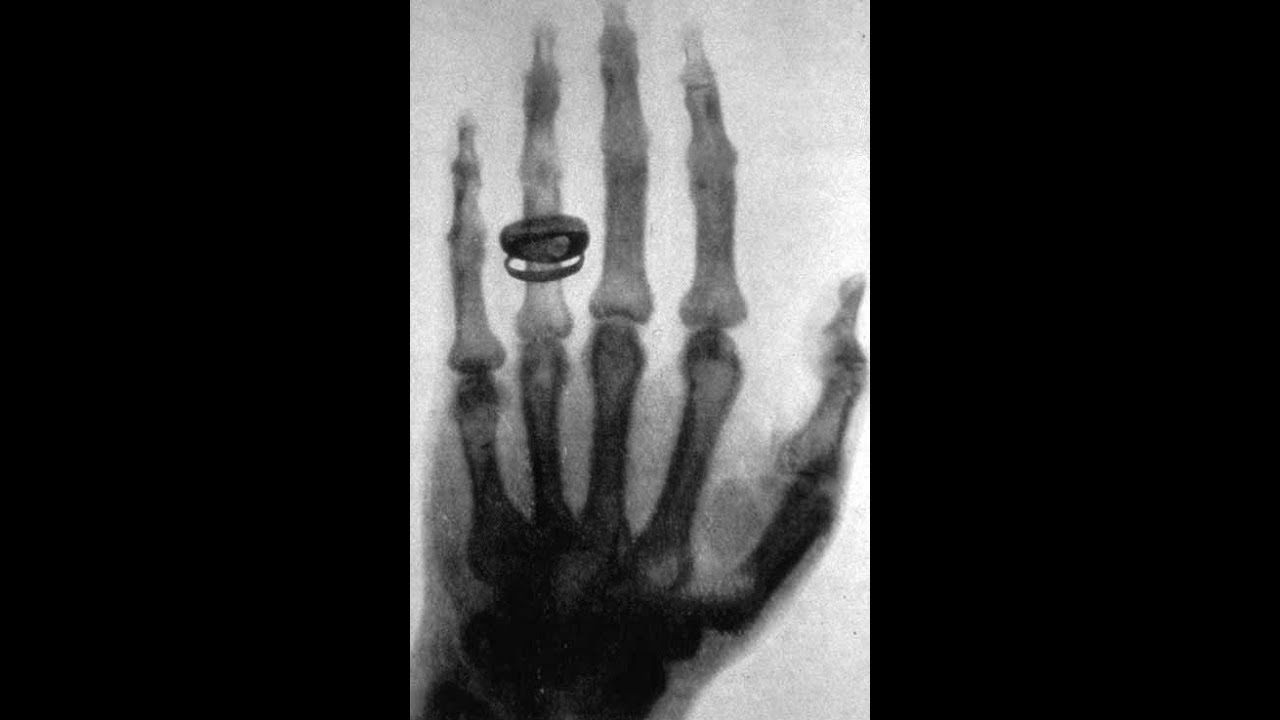

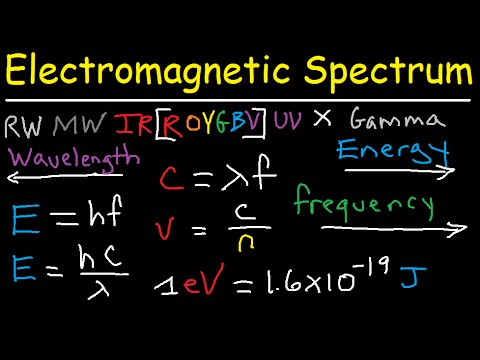
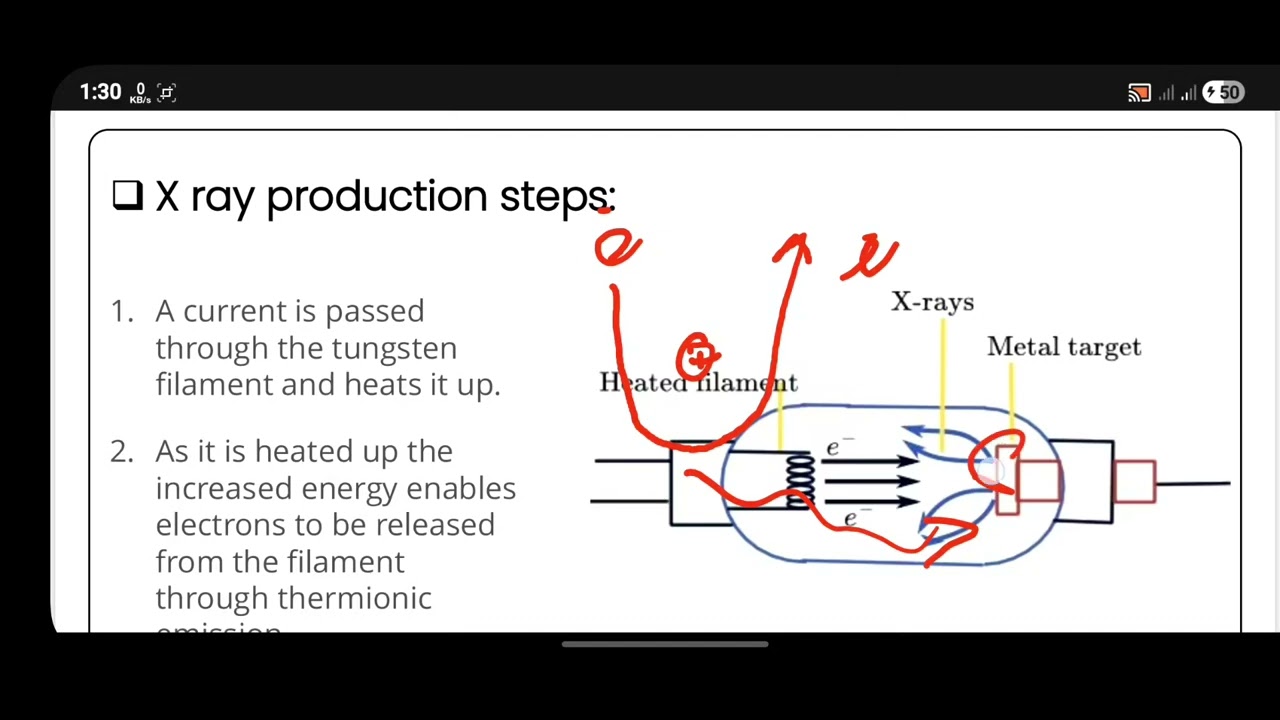
X-rays are produced in X-ray tubes through two mechanisms: (1) Characteristic X-rays occur when incoming electrons knock out inner-shell electrons, causing higher-energy electrons to drop to fill the vacancy and emit X-rays with energies equal to the difference between specific energy levels; (2) Bremsstrahlung (breaking radiation) occurs when incoming electrons are slowed down by the positive charge of atomic nuclei, converting their kinetic energy into X-rays with a continuous range of energies. The maximum X-ray energy equals the initial kinetic energy of the incoming electron, following the relationship E = hf = hc/λ, where higher kinetic energy produces shorter wavelengths and higher frequencies.
X-Ray Production: Characteristic and Bremsstrahlung Radiation
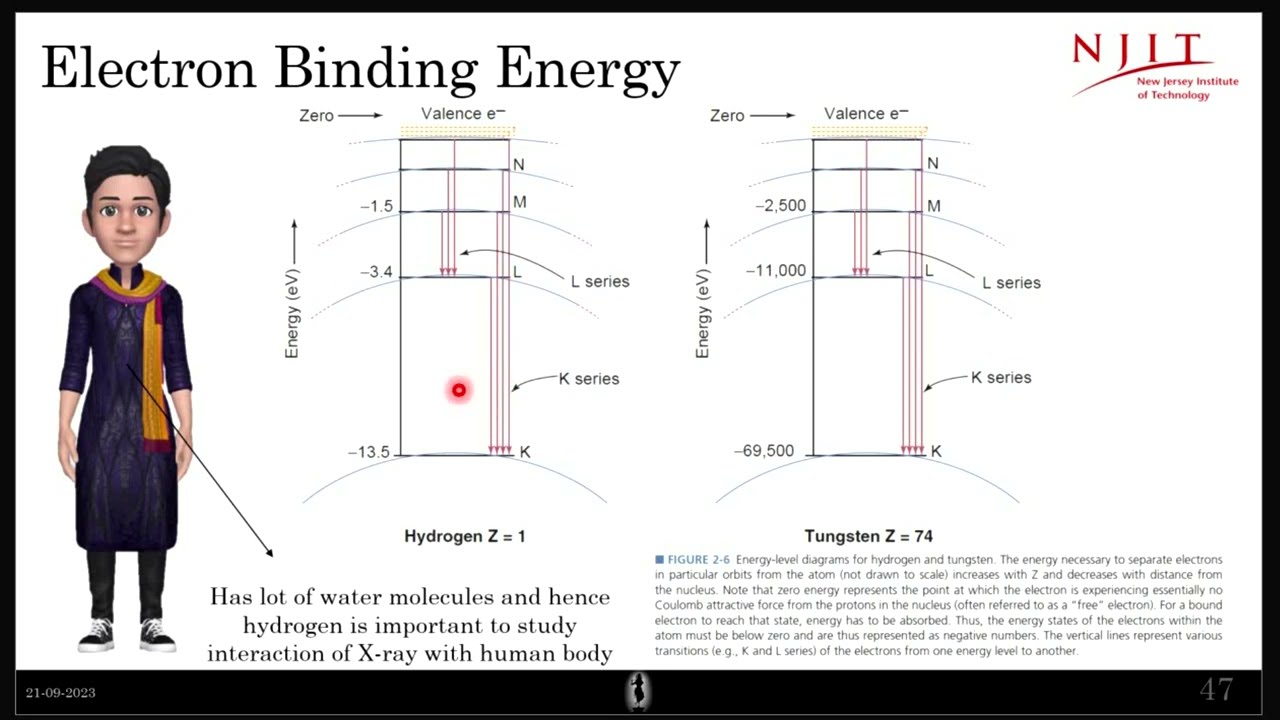
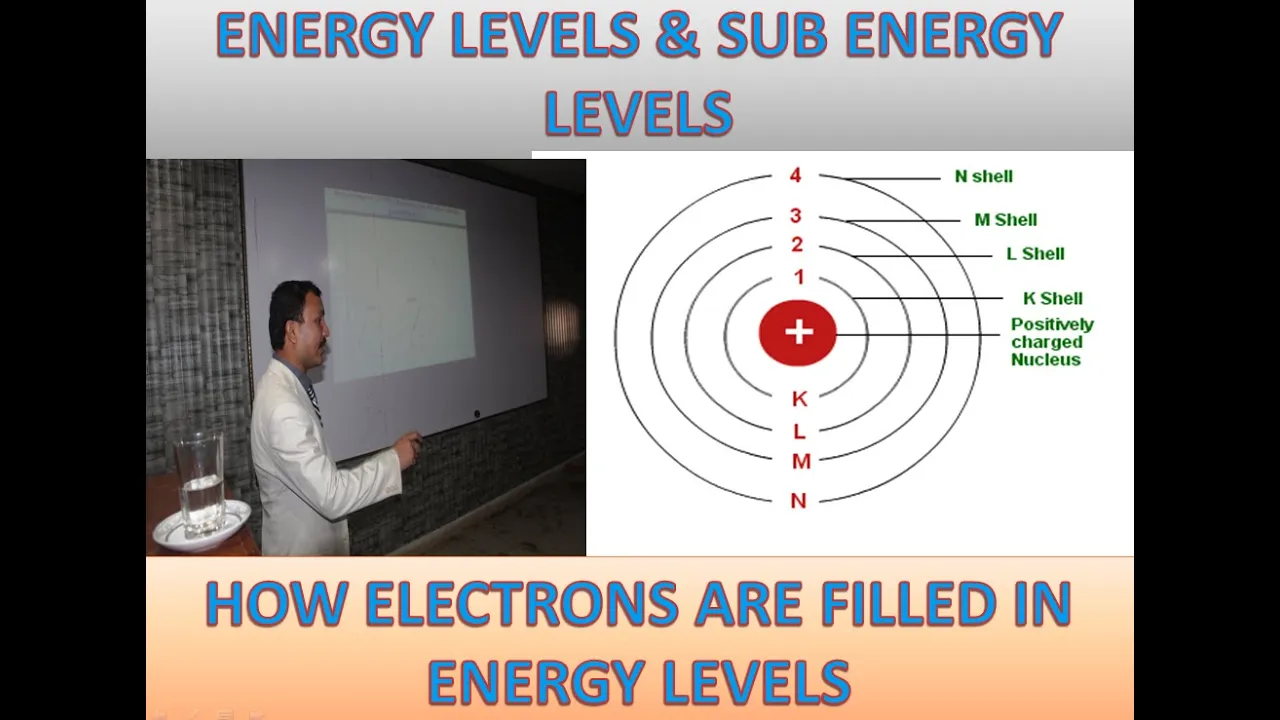
Added:Basic atomic structure, including electron shells (K, L, M), energy levels, and electron binding energies.
The concept of kinetic energy and the behavior of charged particles in electric fields (Coulomb's Law).
The electromagnetic spectrum, specifically the relationship between frequency, wavelength, and photon energy (E=hf).
The principle of conservation of energy, particularly how kinetic energy can be converted into electromagnetic radiation.
The engineering and components of medical X-ray tubes, including the anode, cathode, and filtration mechanisms.
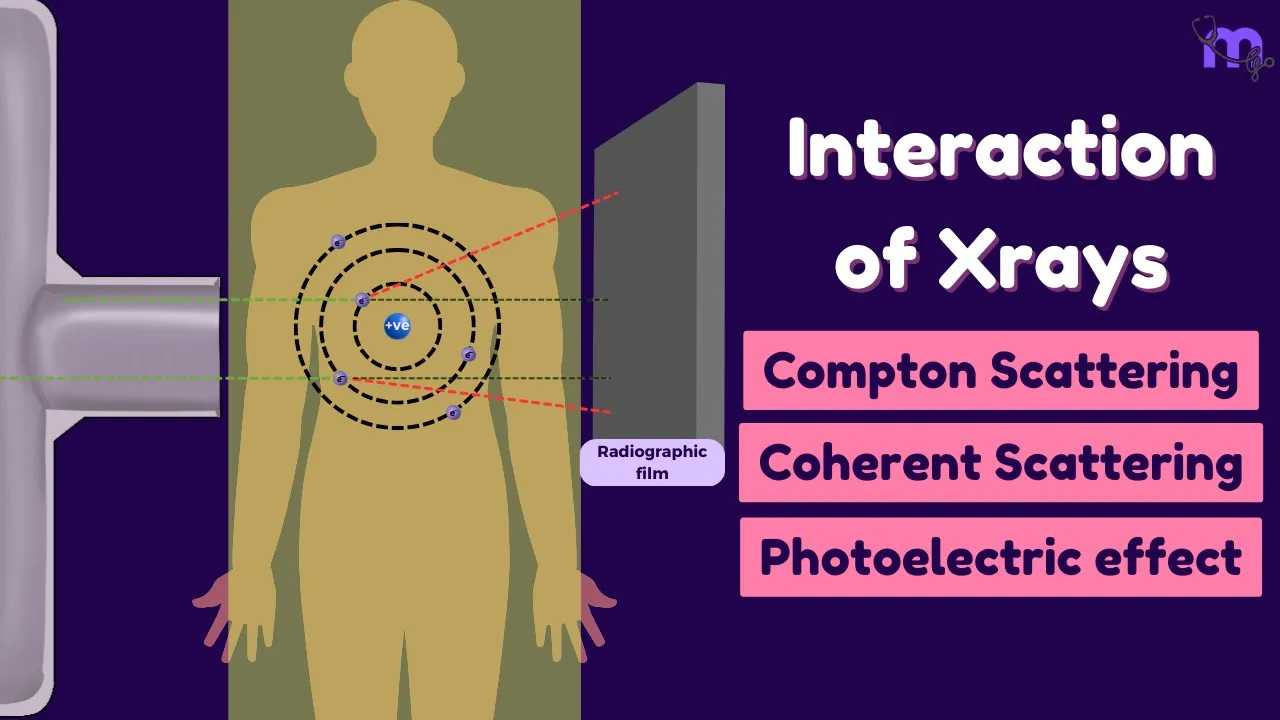
How X-rays interact with matter, specifically looking at the Photoelectric Effect, Compton Scattering, and Coherent Scattering.
Analysis of the X-ray emission spectrum, including how changes in tube voltage (kVp) and current (mA) affect the output.
Clinical and industrial applications of X-rays, such as diagnostic radiography, Computed Tomography (CT), and X-ray crystallography.
157.9K views0likes14:03Original Release: 2012-08-27
today we're going to talk about x-ray production x-ray radiation is produced in an x-ray emission tubes uh by colliding electrons with the atoms in a metal there are two types of x-rays that can be created through this method the first are characteristic X-rays and those x-rays are created by knocking electrons out of the shells of the atom so here we've got the uh atoms in the Target metal so here the atom with the electrons orbiting in shells it's not what it looks like really but um this is good a good enough approximation to demonstrate ex how this how this these x-rays are emitted so an incoming electron electrons that are fired at the atoms in the metal the electron comes in and it knocks out an electron in one of the lower shells in a shell that's low down a lower energy level at a lower Quantum state it comes in and it knocks it out so here we've got the electron has knocked out the initial electron here has knocked out the other electron leaving a blank space in the quantum state that needs to be filled by uh electrons of a high energy level and to fill that that void to fill that Gap one of the electrons in a higher energy level drops down to the lower energy level and to conserve that energy to conserve the energy it loses it gives off energy in the form of an x-ray so once again the stages the electron comes in knocks out an electron in a lower shell a higher electron level a higher um an electron with a higher energy level at a higher energy level in a higher Quantum State drops down to fill the void and in that process that energy level change that change in vibration that change in that Quantum State emits an x-ray and it's the the actual difference in the energy level is the amount of is the the energy that the X-ray will have in order to satisfy uh conservation of energy the second type of X-ray that we can have that have uh that can be produced is called brm stong balong is a German word it means breaking radiation breaking as in slowing breaking as in slowing down so in this scenario the electron isn't stopped necessarily the electron isn't knocked out it doesn't interfere with any part of the of the atom in the metal the way this works is that the negative charge of the electron that is incoming that is being fired towards the atom in the metal is slowed down it moves in a curve around the positive charge that is the nucleus of the atom so the electron slows down and moves around okay and during this point um it's it's being accelerated it's being accelerated it might not change its its speed but it's velocity changes because its direction is being changed and therefore it's being its velocity is changing its velocity is changing because it is being accelerated by this positive charge it's having its direction direction changeed because its velocity is changing because its velocity is changing that means its energy might change its energy if it does slow if it changes its kinetic energy at all there needs to be some balance out balancing out of that energy it can't the energy doesn't just evaporate or go go nowhere the energy uh the leftover energy from slowing it down is converted to an x-ray um and as you can see depending on how close the the electron goes how much it's slowed down by the nucleus how much it's slowed down will depend um will change the energy that the X-ray will have if it's not slowed down very much a very then then a very low energy x-ray is is um emitted and if it stops the electron completely if the electron is completely stopped at the absolute Other Extreme end then the X-ray will have a very high energy so you can see there are two very different different ways where x-rays can be produced uh when you when you are firing electrons at very very high velocity towards a metal so how how are those electrons uh how are those electrons affecting how do they affect the actual energy of the of the of the x-rays that are being given off well if we're looking at just the characteristic x-rays the frequency of the characteristic x-ray is determined by the change in the quantum State the change in the energy level uh and it depends on the target metal often as to uh the difference between the energy levels and what the amount of energy that's given off it'll be a a very defined amount though because of the change in Quantum State the change in energy level is a is a is a Quantified amount it's a a single amount if we have a look at this diagram this diagram shows exactly where these characteristic x-rays the intensity of them you can see that they're um there's a spike a spike at the these two characteristic x-rays being given off it's because these points are these two uh defined energy levels at this amount of energy this amount of energy um x-ray being given off and this particular amount of energy x-ray being given off if we're looking at brim stong however uh it's determined by the changing kinetic energy of the electron so the energy in needs to equal the energy out the energy before any sort of interaction with the electron and the and the metal needs to be the same as the energy after so at the if the if the um metal is at rest the metal is at rest related with relation to the electron then the only initial energy that that is in the system is is the uh kinetic energy of the electron so this is the kinetic energy of the electron is equal to the initial sorry kinetic energy of the electron is equal to the the final kinetic energy of the electron plus any leftover energy is emitted as the X-ray so this is the additional um x-ray energy that's left over from the slowing down of our uh our electron the absolute maximum energy that we can get out is if this value becomes zero so if the kinetic energy of the uh electron becomes zero it is stopped it has no energy uh left all of the energy that it once had is converted to an x-ray so all of that energy that initial kinetic energy becomes the energy of the X-ray and it's helpful to remember that this means that for the maximum kinetic energy the maximum um the maximum kinetic energy transfer this would be the maximum amount of energy it'll also be the highest frequency the maximum frequency and it'll be the lowest wavelength because the lowest wavelength corresponds to the largest uh largest energy so in here all the kinetic energy is converted to x-ray energy so here on the graph this is the brem staling and it's a Continuum it's not in the distinct Peaks like the characteristic x-rays are it is spread over a much larger range of wavelength here this being the minimum wavelength the absolute smallest wavelength that'll be the highest energy the absolute highest energy that we can that we can get from our collision with the electrons uh with the electrons uh and the metal so this is going to be the maximum energy it's the minimum wavelength the smallest wavelength and this the Continuum will will slow uh uh will will gradually decrease as we as we go further and further as as less and less um energy is uh is is transferred to uh to the metal from the electron so this corresponds to the electron being slowed down less and less you can see that the intensity of these spikes the characteristic x-ray spikes is much much larger out of the brim staling sort of Continuum uh all that is indicating is that these particular frequency these particular um frequencies of X-ray are given off much more often than than all of these other brim um brim Str frequencies individual brm staling frequencies that is not to say that is not to say that these the characteristic x-rays will be will occur more often than brim stalon you can see here that the area under the curve there's a much larger area under the curve for brim string than there is for the characteristic x-rays there's much more energy is going to be given off uh as part of the uh as part of brim stong radiation and the reason for that is it's very it's very It's relatively uncommon for the electrons to to actually strike um another electron it's more common that they'll be slowed down the reason that the we've got these particular spikes is because they're a particularly um they're a Quantified amount whereas here we've got a continuous amount of brim brim stying radiation so here we've got three examples I'm not going to read them to you uh but we can go through the actual uh answers for them so for the first one we've got an energy coming in of 75,000 electron volts uh so we can convert um the energy for our xrate is equal to HF and this is going to be the maximum frequency the maximum amount of energy we we'll have uh the maximum frequency so frequency the maximum frequency will be the kinetic energy that the electron has divided by Plank's constant and I've used Plank's constant that is in the units of electron volts per second because that's the energy the value that our energy is in and finding that we find that the maximum frequency that uh that an x-ray could have emitted from uh an electron with this amount of energy is 1.8 * 10 19 Hertz this is at the upper range of the uh of the of the X-ray um of X-ray production uh the the xon there will often be time it will be time 10 to the between * 10 16 and * 10 19 so that's to the upper upper end uh the higher energy end of the uh uh of the X-ray band here if we have a look at substituting in HC on Lambda for HF okay so f is going to be C on Lambda once again I said that there's well there is an inverse relationship between fre frequency and wavelength so the maximum frequency will be the minimum wavelength so here HC on Lambda minimum is going to be equal to the kinetic energy of our electron um so we can rearrange that here and substituting in uh the electron Vol seconds value for planks constant multipli by the speed of light 3 * 10 8 / by the 500 volt potential that we're accelerating our electron to so therefore this is the energy the kinetic energy that the electron going to have his 500 electron volts because it's being accelerated it's an electron and it's being accelerated across a potential of 500 Vol plugging that in we get uh that there is the wavelength of it is 2.5 * 109 M so that's 2.5 nanom uh in for wavelength now for this last question it's uh it's probably useful to have a look at this energy level diagram uh the different energy levels here n = 1 2 and three these are the different levels that the electrons can jump between they can jump from uh n = 2 to Nal 1 and they'll give off some energy they can jump from Nal 3 to Nal 2 they'll give off some energy they can jump from Nal 3 to Nal 1 and give off some energy uh and so if we if we knocked out an electron in Nal 1 uh then an electron from Nal 3 would drop down to fill that energy void so uh we've got here that the the the lowest energy level is at -20 kilo electon volts um the highest is 0.5 kilon volts the greatest amount of energy that's going to be emitted um the greatest amount of energy from an electron that's going to be emitted is going to be the biggest jumper it can do the the biggest the jump between the furthest jump between the energy levels so the greatest energy is going to be from Nal 3 here to Nal 1 and the difference between those energy levels is 19.5 Kil electron volts that's the difference between the energy levels so we know e equal HF the frequency of this of this um is going to be e on on H so the E the energy we're looking at is 19.5 * 10 3 that's kilo kilo kilo electron volts kilo electron volts um divided by the uh value for planks constant in electron volt seconds 4.14 * 1015 um and that yields a frequency of 4 * 4.7 * 10 18 Hertz
Up Next

8:54
Atoms Proven: X-Ray Crystallography in Science
@SciShow
236.2K views•2026-03-13

12:53
21cm Hyperfine Transition in Neutral Hydrogen: Radio Astronomy Basics
@AaronRobertParsons
12.4K views•2011-10-13

32:32
NMR Spin Physics I: Zeeman Effect, Resonance Condition & Larmor Frequency
@nptel-indianinstituteofsci8064
2.3K views•2024-01-17

27:14
Entropy and the Second Law of Thermodynamics Explained
@veritasium
27.5M views•2023-07-01
Related Study Plans & Knowledge Roadmaps
Structured learning paths in Physics
physics
Nuclear Physics (Decay, Fission & Reactors)
01Atomic Structure and the Binding Force
02Radioactive Decay and Half-Life
03Nuclear Fission Mechanics and Chain Reactions
+ 2 more learning modules
12h5 modules
Explore Roadmap
physics
Soft Matter (Polymers, Colloids & Rheology)
01Foundations of Soft Matter & Thermal Forces
02Polymer Physics and Macromolecules
03Colloids, Surfactants, and Self-Assembly
+ 2 more learning modules
38h5 modules
Explore Roadmap
physics
Analytical Mechanics: Lagrangian & Hamiltonian
01Mathematical Foundations: Calculus of Variations
02From Newtonian Mechanics to Constraint Dynamics
03The Principle of Least Action & Lagrangian Mechanics
+ 3 more learning modules
28h6 modules
Explore Roadmap
physics
General Relativity (Spacetime & Cosmology)
01Foundations of Relativity: Special Relativity
02The Geometry of Spacetime: Equivalence Principle & Curvature
03Einstein's Field Equations: The Mathematics of Gravity
+ 2 more learning modules
55h5 modules
Explore Roadmap