



![ROBERTA DUARTE [+ SERGIO SACANI] - Flow #144](https://i.ytimg.com/vi/j6ddt36GEXc/maxresdefault.jpg)
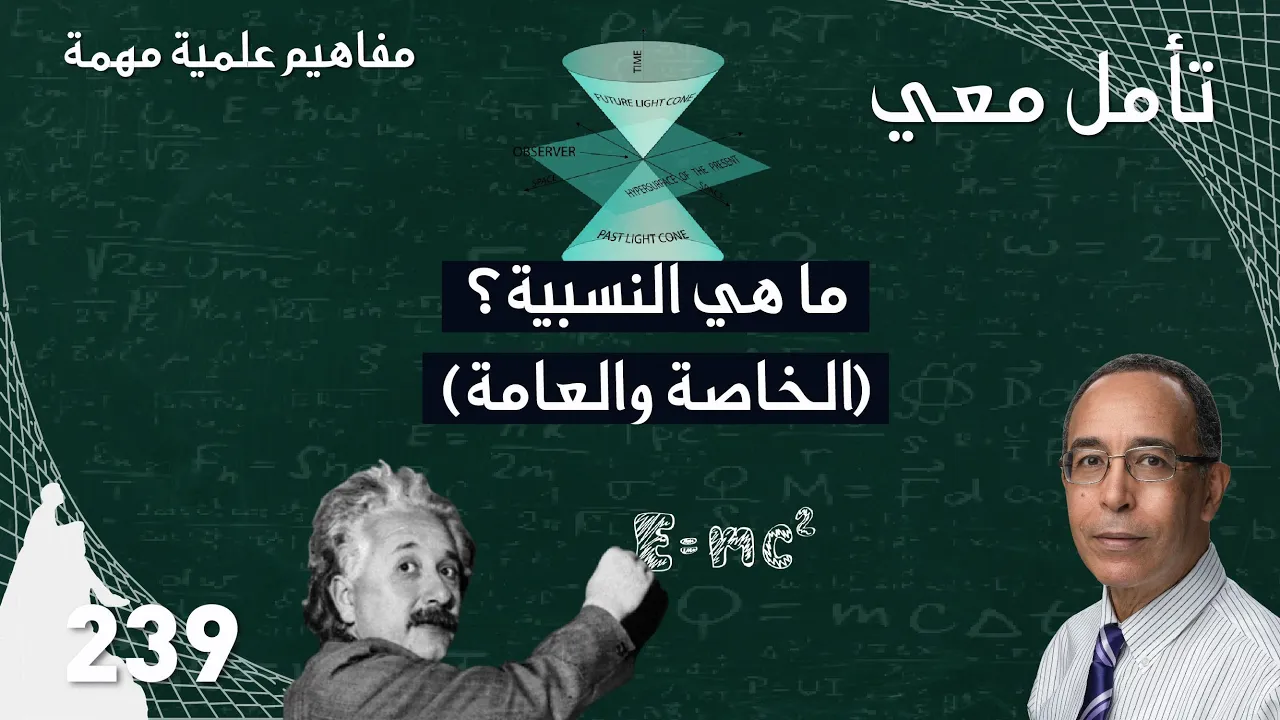














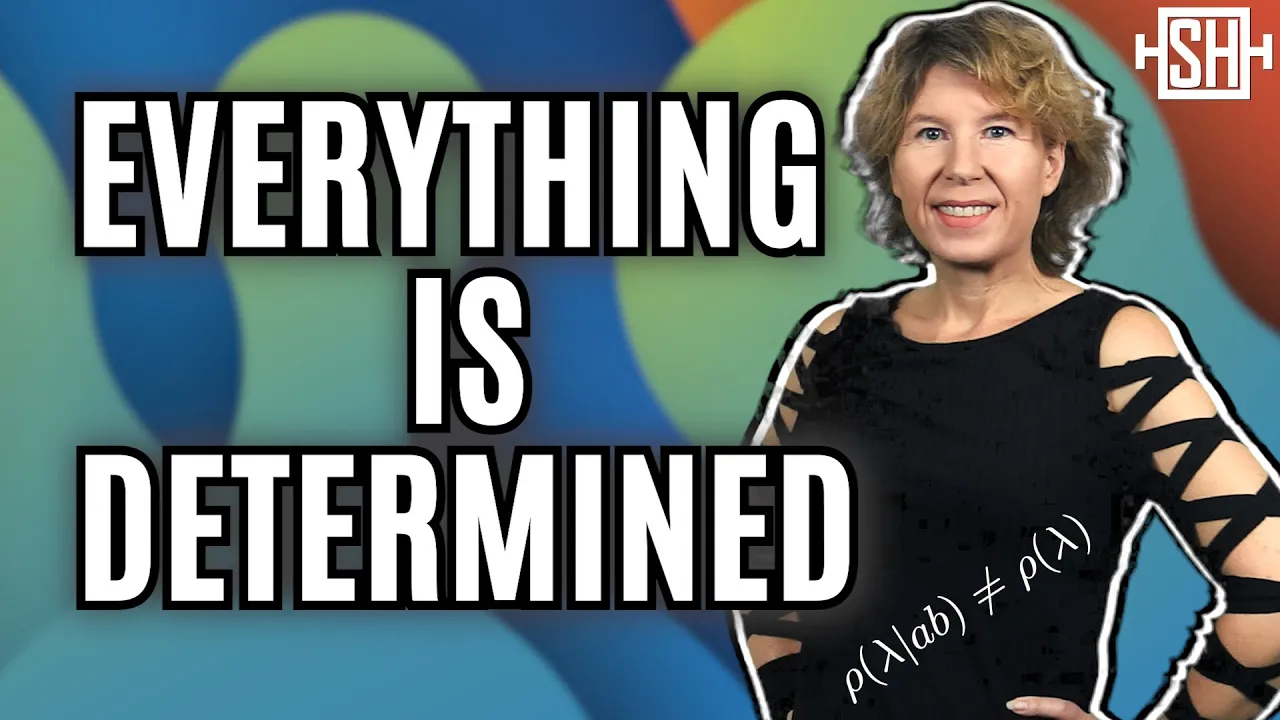
According to Einstein's theory of relativity, the past still exists because the block universe model shows that all moments in time exist simultaneously, with no privileged 'now' that distinguishes past from future. Additionally, fundamental physical laws are time-reversible, meaning information cannot be destroyed but only reconfigured, except in two cases: quantum measurements (where wave function collapse appears irreversible) and black hole evaporation (where Hawking radiation seems to destroy information, creating the black hole information loss paradox).
Existential Physics: Big Questions About the Universe | Sabine Hossenfelder
Added:The distinction between Classical Determinism (Newtonian physics) and Quantum Indeterminism.
Einstein's Special and General Relativity, particularly the concept of spacetime as a four-dimensional fabric.
The Second Law of Thermodynamics and how entropy defines the thermodynamic 'arrow of time'.
Basic cosmological models of the universe's origin, such as the Big Bang theory and cosmic inflation.
Advanced interpretations of Quantum Mechanics (e.g., Copenhagen, Many-Worlds, and De Broglie-Bohm) and their metaphysical implications.
The physics of Time Symmetry and Closed Timelike Curves (theoretical time travel in General Relativity).
Theories of Quantum Gravity, such as Loop Quantum Gravity and String Theory, which attempt to reconcile relativity with quantum mechanics at the universe's origin.
The concept of Emergence and Reductionism, exploring how complex macroscopic systems (like consciousness) arise from fundamental physical particles.
10.9K views339likes54:11Original Release: 2023-08-18
this podcast is brought to you by LMU Munich [Applause] thank you for the introduction and thank you everybody for being here on such a wonderful summer evening to listen to a lecture on existential physics what is existential physics you may Wonder I gave a talk about existential physics at the literature Festival last year or at least this was the title that I sent them so when I arrived they gave me a booklet with all the talks from the speakers and of course first thing I did was look up my own talk and I saw that I'd be speaking about the meaning of life I regret to inform you that I don't know the meaning of life but I'll do my best to try and explain what I mean by existential physics I have to admit that when I began learning physics in middle school I thought it was pretty boring it was about how pendula swing about ideal gases something with atoms useful no doubt but it was not particularly inspiring so when I graduated and went to the university I didn't go to study Physics I went to study mathematics for the rather boring reason that I was always good at mathematics and what intrigued me about mathematics is that it's a very rigorous way of reasoning it requires very careful definition of the terms and then you do a logical deduction from your assumptions this has allowed us to infer a lot of remarkable properties about nature after a couple of years of studying mathematics I had to pick a specialization a particular topic and it could have been higher algebra or differential differential geometry Lee algebra's or number Theory whatever I couldn't decide what to pick I thought it was all great and after a lot of time of thinking about it I decided I would focus on that part of mathematics that describes nature which naturally brought me back right to physics so that's kind of the official story that I tell journalists the in official part of the story is that the Department of Mathematics was broke and they couldn't offer me a job so they said go and talk to the physicists and once I was there they also gave me a topic for a diploma thesis one way or the other I went back to physics and I realized that what we learned about physics in school isn't the whole story we get to know physics as something that describes the behavior of matter in space and time we get to know it as something that applies to inanimate matter it's about how lights work atoms Decay rocks for but we don't think that it applies to ourselves unless possibly you know you fall off a roof or something and then the law of gravity does its job but physics is so much more than this physics also tells us something about our own existence how we fit into this universe indeed I originally wanted to name my new book more than this but my editor didn't like it he wanted to have the word word physics in the title and this is how the book came to be called existential physics and when he came up with this with this title I thought that's great when I grow up I want to become a professor of existential physics the the growing up part didn't work out but um the the title stuck so what is existential physics what what do I mean by that um it it's physics about those aspects that concern human existence what changes where do we come from what are we made of what can we do what can we know so it's very Broad spectrum of questions so that was one part of the reason why I wanted to write this book the other part is that if you've read anything that I've said or written it's probably that I've criticized something whenever there's a headline saying physicists have created negative mass or we can do faster than light travel wormholes parallel universes whatever then I'm the person who has to say no they didn't do that know that you can't do this no they haven't done this and I I think it's kind of important that someone does it but it's a little bit depressing and it paints a picture of me that I'm not very comfortable with you know I'm always the person who says no doesn't work so I wanted to write a book about what we have learned from physics all the fascinating things that we have already figured out so the the subject I wrote the book about is about the somewhat blurry intersection between science philosophy and religion which is where I think the foundations of physics reside before I talk about some specific topics that I cover in my book in more detail I want to put ahead that everything I'm about to say is for all we currently know so this is according to our best current knowledge about the laws of nature but maybe I don't know next year or in a decade or in a century those things will change and then the books will have to be Rewritten I put this ahead because when I wrote the book I noticed that I was constantly writing for all we currently know blah blah blah for we currently know and in the end I decided I just put it in the preface and be done with it so I'm doing the same thing here today I'll start with the question does the past still exist so this is all about Einstein's theories of space and time about which I could give several hour lectures but we don't have that amount of time so today you get the briefest of our brief introductions to Einstein's special relativity it's basically built on three principles the speed of light is finite it's very large but it's finite it's the same for all observers no matter where they are and how they move and nothing goes faster than the speed of light in vacuum speed of light in a medium can depend on the Observer now that sounds rather innocent but if you take the mathematics seriously you can arrive biological deduction at some very astonishing conclusions okay so the speed of light is fine now it sounds a little bit boring but think about this for a moment when you see and hear me speak you see and hear what happened a fraction of a second in the past you never see me the way that I am right now you can't because it takes a tiny tiny amount of time for the signal to arrive Where You Are and you may say well come on you know that fraction of a second who who really cares you know if I ask am I here now what do we even mean by this what do we mean by now why are you asking this question so it becomes very difficult if you try to figure out what we even mean by now once you take into account that the speed of light is finite and you might say well that's kind of boring while we're even talking about this but let's think about the consequences for a little longer so this is a thought experiment that goes back to Einstein already so he said um suppose you're standing on a railway track and there's some car cart going by from the left to the right as you see in this image and your friend Alice or whoever is is on the train now the moment she is directly in front of you like you you're looking directly at her like you see in this image there's some kind of trigger mechanism where you see the red arrows that'll flash a light now the question is do you see those light flashes at the same time yes or no well for what you're concerned that's pretty obvious forget about the whole train who cares about the train it's just about the light so by the way that you have arranged this whole setup both of those light flushes happen at the exact same distance from you and the speed of light is always the same so you have two sources of light at the exact same distance from you of course they arrive at you at the same time so you would say well they were simultaneous they happened at the same time but how does this look for your friend on the train well so the light flashes but the train goes a little bit to the side why the light travels so there's one of those flashes that arrives where she is earlier than the other one and she would say Well they're not simultaneous so did they or did they not happen at the same time well it turns out that the answer depends on the Observer it depends on how they move observers who move at different velocities see different things happening at the same time now normally this is a an extremely small effect so you wouldn't notice that if you walk through the room but in principle mathematically if you walk through the room you have a different notion of simultaneity than when you stand this is one of the consequences of Einstein's theory of special relativity and it's not it's nothing to do with trains in particular the other examples that you can look up where you arrive at the same conclusion so what's it mean it means that you can talk about your notion of now like what is happening now for you but the notion of what happens now elsewhere depends on the Observer depends on how they move one of the consequences is this that your past might be somebody else's present or the other way around your present might be somebody else's future depending on how they move and if you ask the question for all possible observers in space-time you realize that there is no possibility to Define one moment as now every moment in time could be now for someone the consequence of all this is that once you accept that something like now can happen elsewhere and not just where you are you have to accept that all moments in time exist in the same way like your present moment so Einstein's theory of relativity does not allow you to distinguish between the past and the future and the present the only other logical possibility to get around this conclusion is to just deny that you can talk about what happens now elsewhere so you have the super localized notion of now that only applies for yourself and then you have to ask like which now is it which of the synopsis in my brain determines the now so it's it's not just a quirk of perception there is just no way to decide what now elsewhere even means without some ambiguous choice of the Observer it doesn't fundamentally make any sense to talk about this now and this is what we call in physics the block Universe the blocky universe doesn't come into being it doesn't have a notion of now that that goes forward it just sits there like a block it's everything is in place already and that's a consequence of Einstein's um theories now they asked the question why do we perceive one moment as now as a special moment well I don't know I think that's not a question for physics really that becomes very difficult to explain what happens in the human brain why do we only remember the past and not the future yeah I think I leave this to a neurologist but at least fundamentally according to what our theories of nature are concerned all moments exist in the same way now Einstein when he wrote down his theory didn't take into account quantum mechanics because that hadn't been established at the time so when you take into account quantum mechanics it becomes a little bit more difficult to talk about the future and I'll have a little bit more to say about this in in a later section but at least for what the past is concerned for all we currently know based on the established theories that describe the universe the past still exists there is another way to look at the same question which is to look at the question whether information can be destroyed so maybe I should first explain what we mean by information so information has very different meanings in different areas of Science in physics what we mean by information is just everything all the details that you need to describe what's going on so in the simplest case when you're talking about shooting an arrow or something that would be the initial position and the velocity of the arrow as you learned in kindergarten I suppose so that allows you to calculate what happens at any later time so the information that describes the arrow would be the position and the velocity the same could be the case for for any kind of particle quantum mechanics becomes a little bit more difficult that you have a wave function but it's the same idea what we call information is everything you need to describe the wave function so that's it it's I admit it's kind of a little bit vague what we mean by information it seems to imply more than um then we really imply when we use the word but that's basically it's it's all this data for the state of the system whatever that system is that you want to describe could be you or your error or you know a bunch of particles whatever now there's a funny thing about um the way that we understand the laws of nature we have this state of the system at one time which could be the positions and momento or the wave function or something else entirely and then we have an equation that we use to calculate how this state changes in time we call this an evolution law and then we calculate what happens at later time but all the laws that we currently have on the foundations of physics they work forwards and backwards we can we it's not just that we can take an initial State like for your error and calculate what happens later where this Arrow lands we could also measure where the arrow lands and just in which angle it hit the ground and with what momentum and we could use this to calculate where it came from it works forwards and backwards um we we call this time reversibility so all the laws that we have in the foundations of physics are time reversible doesn't mean they work the same way forwards and backwards most most of the time that's actually not the case that would be time reversal symmetry but they are time reversible so we can run them forwards and backwards we actually do this in cosmology if we want to figure out what happened in the early Universe what we do is we take the observations from today look at how the universe looks with all the galaxies and stuff you know stars and nebula and gauss's and whatever and we use those equations to calculate what must have happened in the early universe and because we can infer from the data that the universe is currently expanding we can deduce that in the early Universe meta must have been very dense and this is where the conclusion about the Big Bang comes from that I'll talk about a little bit in a moment so so we do actually in practice use those Evolution laws forwards and backwards what this means philosophically speaking is that information can never be destroyed it's just reconfigured because whatever the final state of your Evolution law is you could if you had the computational capacity measure exactly what the state is and calculate where it came from for practical purposes this is often not possible of course if you burn a book you know it's a theoretical physicists can say well technically it's theoretically all the information is in the ashes and in the dust and whatnot but for practical purposes that's not particularly helpful but if you if you're worried about what happens with all the information that makes you you at least for all what we currently know about those fundamental laws of nature it can't be destroyed except for two things so there are two exceptions to this in the foundations of physics one is a measurement in quantum mechanics and then there's black hole evaporation so let's look at those in a little bit more detail so in quantum mechanics we'll describe everything by a wave function you don't really need to know exactly what a wave function is the only thing you need to know is that from the wave function we calculate the probabilities of measurement outcomes we can and quantum mechanics not calculate exactly what's going to happen so if we take for example a laser and we direct this at a beam splitter the beam splitter as the name says splits a beam so if you look at a single particle in that laser beam a photon that's a Quantum of light it has a 50 50 chance of either going through the beam splitter or being reflected quantum mechanics cannot tell us which is going to happen it just tells us well there's a 50 chance it goes through into 50 chance it goes it's reflected and we calculate this from the wave function that's the role of the wave function now the issue is that the moment we actually measure the particle it's either left or right now we have to update the wave function to reflect this change in probability so previously it might have been 50 50. but once you've measured the particle you know it's on the left side with 100 probability this is often called the collapse of the wave function or the update or the reduction of the wave function is all the same thing and this is what this sketch is supposed to say so you had some kind of probability distribution of different positions of your particle then you make a measurement you know where it is now the thing is the following this measurement update is irreversible because you cut you cannot from the 100 percent inference of the position after the measurement figure out what the wave function was before you made the measurement it could have been 50 50 or could have been 60 40 or it could have been 90 10 and you just got lucky and measured it where it was only a 10.
so the measurement update is irreversible so um if the if that is actually how nature works then in a measurement update information actually gets destroyed so measurements in quantum mechanics do destroy information but the question is do they really describe what happens so this is like the big open controversy in the foundations of quantum mechanics is the collapse of the wave function a physical process or is it just a statement about the update of your knowledge uh well we still don't know physicists have been discussing this back and forth for uh 100 years George wrote a great book about this so um we still don't have an answer I hope we'll find one in my lifetime so if I don't give public lectures this is what I'm trying to think about personally I think the collapse of the wave function is just a placeholder for a more fundamental underlying process which eventually will actually be time reversible but this is very speculative if you take the measurement process as a fundamental as a fundamental property of nature then you run in all kinds of problems for example it brings up the question who measures the universe so you can always ask well if if I look at the universe as a whole there's a wave function for the entire universe does it ever collapse and if so who's doing the measurement so that doesn't really seem to make a lot of sense so there are several other problems that are related to the measurement update for example if you think about what I told you earlier about the photon going through the beam splitter 50 50 left or right the moment you make a measurement you know that you have to update the wave function on the other side this is non-local this is what Einstein referred to as spooky action at the distance and he didn't like that at all because it happens faster than the speed of light the reason it's not outright in conflict with Einstein's theories of special general relativity is that you can't observe it so in the end by observations you can't really figure out what's actually going on but it certainly gives you kind of an icky feeling like what's going on with this faster than light thing so those are all reasons why I think that the measurement process is probably not fundamental but yeah other physicists will probably disagree okay so now let's talk a little bit about black holes Stephen Hawking taught us that black holes don't last what's happening at black hole Horizon is that the vacuum becomes unstable and it it tears space-time apart into particles and anti-particles and one of them falls into the black hole and the other one escapes so the energy for this pair of particles is taken from the background from the gravitational field so the energy of the gravitational field decays into a pair one of which goes into the black hole the other one escapes to Infinity far far away so the the net result is that the black hole loses Mass and eventually it's entirely gone now that in and by itself wouldn't be a problem but the thing is that this radiation that comes out of the black hole which is now called Hawking radiation after Stephen Hawking is completely random the only information that's in this radiation is the temperature at the temperature itself depends on the mass and the angular momentum and the charge of the black hole so those three quantities about the black hole that are encoded in the radiation that comes out but that's it so if you have a black hole and you throw something in a stack of books a turkey apples whatever you make a bigger black hole the black hole evaporates and all you're left with is this random radiation and doesn't matter exactly what the black hole was formed from you cannot infer what went into the black hole from the radiation alone so that process too seems to be irreversible and this is actually what leads to what's known as the black hole information loss Paradox which Hawking worried about 40 years after he had created the Paradox and eventually it it outlived him so we still have the black hole information lost paradox the issue is that this black hole evaporation is inconsistent with quantum mechanics because you have this irreversibility already without making a measurement even if you don't look at the radiation it's already not time reversible whereas in quantum mechanics so long as you don't make a measurement it should be it should still be reversible so mathematically the two things just don't fit together black hole evaporation and quantum mechanics they don't cooperate it's just a mathematical contradiction so this is what we call the black hole information loss Paradox and again when I talk about information as I warned you earlier in physics at least in those parts of physics we use the word very very Loosely it just means that we cannot infer the initial state from the final State that's it so the word is kind of misleading now what's going on you know this is like a mathematical inconsistency there's this is not how nature works there's got to be some solution to this where most physicists believe and and I'm one of them that there's something missing in Hawking's calculation and that the process is actually reversible the good reasons to to think this um the best reason is probably that we don't actually know what's going on inside a black hole the reason is that if you look at the mathematics then inside black hole there's a singularity that's where the curvature of space-time becomes infinitely large now whenever something becomes infinitely large in physics that's kind of fishy physically real things shouldn't go to infinity and indeed if we have Singularity something going to Infinity in other areas of science it's a sign that the mathematics breaks down we have this for example in hydrodynamics when we're when we're describing fluids like think for example of a drop of water pinching off the tap so it it folds down slowly and at the point where it pinches off there's a very sharp Peak now technically this peak is a singularity in the curvature of the surface of the droplet comes from the surface tension but we know that if you were to zoom into this pinch Point onto the singularity what would happen it's not that you'd find something actually going to Infinity but eventually you'd start resolving the molecules and then the atoms and then the tinier particles that the atoms are made of so the only thing that this tells us is that this approximation that we use in hydrodynamics to describe a fluid breaks down and most physicists think that this is the same reason why we have those singularities inside black holes and we also have a singularity uh at the Big Bang they probably come about for the same reason the theory that we use to describe those situations general relativity actually breaks down we need a better Theory we need a theory that takes into account the quantum properties of space and time that's called Quantum prop quantum gravity but we don't have this Theory string theory is one of the candidates for this Theory there are others they all have in common that they resolve the singularities and replace them with something else and then all those approaches black hole evaporation should eventually be reversible again unfortunately we can't experimentally test it the issue is that the black holes that we know exist out there in the course more supermassive black holes solar mass black holes that we have experimental evidence for they're very large and the larger the black hole the smaller the temperature and those black holes are actually there so large that at the moment they don't even evaporate because their temperature is lower than that of the cosmic microwave background radiation so they would actually gain photons from the cosmic microwave background except that this is a very small contribution normally they gain more Mass from gas and other stuff that falls into the black hole so really we don't know so can information get destroyed depends on what you believe happens in a measurement in black hole evaporation I think the answer is no I think eventually those two processes will turn out to be time reversible as well okay then let's move on this already came up a few times how did the universe begin was with the big bang and all that so this is how modern cosmology Works basically uh in a nutshell it's based on Einstein's theory of general relativity it's one of the theories of the type that I talked about earlier we we use an initial State and then we have an evolution law in this case the evolution law is what's called Einstein's field equations the uh tend not done in a couple of differential equations it's very complicated but luckily I don't have to explain them today so what we do is we put in sources of matter and energy into that space time and then we can calculate what's going to happen and what we find is that if you you put the stuff that we see around us into the universe it expands okay so the universe expands is one of the consequences of Einstein's theory the rate of expansion is determined by the amount of metal and energy in the universe this is how we can infer stuff like that there is there's got to be something like dark matter in the universe there's got to be something like dark energy but this would be another talk entirely it does make a lot of predictions uh the formation of structures um like how fast do Galactic filaments and and Galaxy clusters and so on form and how are they distributed how much do they Clump does the cosmic microwave background that's leftover radiation from the early Universe um there's the abundance of light atoms in the universe those are our predictions from this standard model of cosmology how it's sometimes called it's also known as the concordance model or Lambda CDM if you've heard of this is all the same thing so this is the the normal generally accepted description of the universe as a whole at the moment now what you can do is you can take those equations and just run them backwards in time and run them backwards and what eventually happens is that you find a singularity the curvature goes to infinity and this doesn't happen at an infinite duration but it happens at a finite time about 13.7 billion years in the past we run into this Singularity this Singularity is what we call the big bang so um so what's it mean so we have a singularity but most physicists actually don't think that this is what happened for the same reason that I just explained we don't actually believe there's a singularity inside black holes it probably just means that those equations break down it indeed normally um there's somewhat unfortunately some physicists use the word big bang with many different meanings but most of the time what we mean is whatever's going to replace the singularity in the to be found underlying Theory so it's kind of a sliver around this Singularity once you've taken it out this is what we mean by Big Bang okay so so that's just what we get out um of the equations and um it brings up the question like how does this even make sense like how how can we how can we do this like remember so we have the present state of the universe which for cosmology is actually the final State we have this Evolution law and this gives us an initial state but we could take any Evolution law and calculate what happened earlier and that would just give us an initial state there's always one so how do we know which one is the right initial State and which one is the right Evolution law if I could just use any so suddenly it looks like we can't possibly say anything about the beginning of the universe so what are physicists doing well it's a little bit more complicated than that so what we actually do is we look for an evolution law that makes the initial State as simple as possible and for most Evolution laws what happens is you take the present State you take all this data you you calculate what happened earlier in the universe you get something very very complicated to make it work out what's so special about Einstein's theory and his his Evolution law and the initial state that we currently use with this hot Plasma in the early universe is that it explains very simply why we have those observations that fit together in a particular way it gives you the formations of structure and it gives you the cosmic microwave background and it gives you the right abundance of atoms if you were to take a different Evolution law you would have to put all this data by hand into the initial state so you wouldn't predict anything you would just put it in and I say oh look I got it out because I put it in so you wouldn't learn anything so this is how we select an evolution law together with an initial state it has to explain something it has to simplify something an Einstein's theory is really really good at this now but this brings up the following possibilities as I just told you I can't take any Evolution law and just run it backward in time so if I don't like to have this Singularity there because that gives me a big bang and I don't want anything like that I can just change the evolution law if I go backwards so I use Einstein's theories backwards in time until somewhere when we don't have any data anymore and then I tag on a different Evolution law you can do this mathematically you can certainly do this and people have tried all kinds of different things you can for example replace the big bang with a big bounce in a big bound scenario there would be there would have been an earlier universe that collapsed but it didn't collapse to your Singularity just to a very small thing and then it expands again and gives rise to the universe that we see around us now these bounces could also repeat this gives rise to what's known as the cyclic universe there are other ideas for example it could be that if you go back in time you don't get a big bang Singularity but you get a very very very slow phase where everything just becomes slower and slower and slower slower slower and basically runs to a halt but not at a finite time but at an infinite amount of time this is known as asymptotic silence then there's something that's called No boundary proposal where space where time turns into space so um it at the so this is kind of weird because there isn't really a beginning if you don't have time right so um originally you only have space and then at some particular position in that space time starts to emerge so this is another possibility you could have five dimensional black holes or string gases or what else collisions of higher dimensional membranes I seem to have forgotten about those so there are lots of those and they're all fine for what the data is concerned because that early in the universe we don't have any data so you can just take your Evolution law and change it to whatever you want so I think that all those theories are basically modernized modern Tales of creation you know we we like to tell stories about how the universe might have begun and with experimental data with our observations we can't tell them apart the problem with all those ideas is that there are necessarily complicated as LaPlace already said you shouldn't add any parts of your hypotheses that you don't know that you don't need you should only use the parts that you need and the only thing we need to describe our observations are Einstein's field equations that we use in this standard model of cosmology which is the one that runs into the Big Bang but we don't have any data there anyway so this is why I'm absolutely not convinced by any of those theories for the early Universe they're all unnecessarily complicated they're just contrived they're stories that in written in mathematics that physicists make up that doesn't mean they're wrong for the most part they're actually not wrong because physicists are all smart people and they go to Great pains to make sure that their their new theories for the beginning of the universe are compatible with all the observations but we can't tell them apart either so where where do we put them is it signs is it pseudoscience is it just wrong well my friend Tim Palmer introduced for situations like this the word a scientific and I thought this is completely brilliant I'm going to steal this word and put it into my book and now a lot of people think that it was my coinage but it wasn't so those those ideas are not wrong they're just not within the realm of science because there's no observation that we can make to tell them apart we can't rule them out we can confirm them it's just not possible so I think you can believe whichever one you like they're all scientifically equally right or wrong so that the Universe began we don't know and we may never know and the reason I I say we may never know is that um as already said the way that our theories work the only thing we ever do is we push back this initial state so we look back in time we choose a different initial State we look a little bit further back in time we have some more data we can push back this initial State a little bit further but the further back in time we look the simpler the initial State become and the fewer data we have and I think eventually we'll just run into a situation where the state is as simple as they can possibly be and that's where our model of cosmology will end and it might then perfectly well be that there was an earlier face of the universe that was more complicated like there might have been you know a universe that actually collapsed and then gave rise to ours but since this would be a more complicated story then this simple intermediate idiot phase we'd have no rationale to say it's correct it wouldn't be compatible with the way that we currently use the scientific method okay now let's talk about something a little more fun do copies of also exist so I think at this point I think everyone has heard about the Multiverse that's the idea that our universe isn't the only one but there are other universes out there um they might be very similar to our own or they might be completely uh different uh you know it's become very popular with Hollywood lots of books have been written about it and it's certainly very entertaining um but what does science say about it but that's the reason that those ideas have become so popular it's that scientists actually talk about them and you know not a lot but sometimes and there are different kinds of multiverses that have popped up in the scientific literature the probably least controversial of them is what's called internal Eternal inflation so what we mean by inflation in the context of the entire universe is that in in the very beginning of the universe it expanded very rapidly exponentially and this phase of Rapid expansion is called inflation now so far so good you might say now the thing is that the current theory for how this phase of inflation began has it that the Universe was filled with a Quantum field that's called the inflaton and this Quantum field made a lot of fluctuations one of those fluctuations began to expand exponentially and that eventually gave rise to our universe but there wasn't just one fluctuation in this Quantum field there are actually infinitely many and any one of those fluctuations can give rise to its own universe so the argument goes well once you believe this thing with the quantum fluctuations in the inflaton field for which we don't really have any evidence but it's there under mathematics then you also have to believe that these infinitely many other universes exist and they could possibly have different constants of nature this is sometimes called the landscape this is an idea which comes from string theory so different consonants nature could be you know the masses of Elementary particles like the electron or it could be the strength of the electromagnetic interaction or the strength of gravity the speed of light stuff like this so all those constants could be different in those other universes problem is there's no observation that can refute or confirm that these copies exist because we're completely coarsely disconnected from all of those other universes there's no way we can interact with them and we can never figure out what's going on this isn't the only type of Multiverse um they're actually you can say a somewhat more innocent version of the Multiverse is if you believe that our universe is infinitely large and all our planet and solar system and all other solar systems grew out of fluctuations In This Very dense Plasma in the early Universe then all those fluctuations should repeat in other places in this infinitely large space because if you have an infinitely large space anything that can happen will eventually happen somewhere and actually it'll happen infinitely often in all possible tiny modifications that you can think of so there are infinitely many copies of the solar system out there with infinitely many copies of all of us with possibly small modifications in on some of those planets there's a copy of you which won a Nobel Prize in another copy your you're a ballet dancer or maybe you're a singer a rock star everything you ever wanted to be there is a copy somewhere in this infinitely large Universe where you did it well the problem is there's no observation that can refute or confirm that these copies exist it's all well and fine to say well technically mathematically you know I can write it down and it should exist but there's no way that we can ever get there add one final version of the modules though there are more of those but um you know I don't want to talk forever so um it's probably one of the best known ones is the many words interpretation and quantum mechanics so as I said earlier in quantum mechanics we have this problem with the measurement process but when we make a measurement the wave function changes instantaneously everywhere so this is the collapse of the wave function it's non-local Einstein didn't like its spooky action at the distance blah blah blah blah so now one way to solve this problem is to say well maybe the collapse never happens instead what happens is that the Universe splits so instead of saying well the Virgin went through the beam splitter 50 left 50 right and then I make a measurement and now it's 100 on the one side you can say well in one Universe it was 100 on the left side in the other Universe it was 100 on the other side now you have two universes one for each possible measurement outcome and the same thing happens every time there is a Quantum measurement now what we mean by Quantum measurement actually doesn't necessarily have something to do with an apparatus you know Quantum measurement happens each time a photon hits a wall so there are lots of those measurements and there are infinitely many of those splits have already happened they're constantly happening all the time everywhere so that's a really really big Multiverse now you saw it coming the problem is that there are no observations that can refuta confirm that these copies exist because for what our observations are concerned we only ever see one outcome of the measurement it's all well and fine to say well there's you know there's a parallel universe in which the other outcome happened but what's it mean if you can't observe it so I think what's going on there is the physicists got a little bit confused about the reality that they assigned to their equations just because there's Maths for it doesn't mean it's real you can assume that it's real but if you do this that's an unnecessary hypothesis so you shouldn't do it it wouldn't be science so science can't tell you that those other universes with those copies of us are real but it can also not tell you that they're not real because you know there are no observations you can make so what does it mean what I mean it's an a scientific idea you can believe it if you want to nothing speaks against it but nothing speaks for it either okay so uh one final question I have for today can particles think this is a question I had to debate with several philosophers over the course of years it usually did not go particularly well but I learned a lot along the way so this is an idea which goes under the name pan psychism so the idea is that everything is a little bit conscious like everything like Elementary particles tables uh you know wood what have you carrots everything has a little bit of Consciousness but normally it's so small amounts of Consciousness you don't notice that's why carrots don't talk to you but this proto-consciousness as they call it can combine two larger amounts of Consciousness and at some point there emerges something that can walk and talk and give semi-coherent talks so this is the idea how in a pan psychic universe conscious beings come about it's just because they collect this proto-consciousness now there are two versions of this pan psychism in the one this proto-consciousness is a physical stuff and in the other one It Isn't So In the case when it isn't physically real then this is just dualism okay you say well there's some thing that I call Consciousness it doesn't have any physical reality but I just choose to believe in it and I I think that this explains something this is all well and fine you know if if you like that idea feel free to believe it but it doesn't really explain anything because now you've you've put it out of the physical Universe you can't use it to actually explain something in the physical universe okay so I would say this is an a scientific idea it is fine believe it if you want then there is the other option that the Consciousness stuff is physically real now the issue is once you make this proto-consciousness physical real then it has to agree with what we actually know about physics and this turns out to be surprisingly difficult to make work so here's the standard model of particle physics contains 25 particles you don't have to count them I counted them for you some of them are good old friends like the electron and the muon probably have heard of those there's the Higgs Bose on the Higgs boson was the last one to be discovered at CERN in 2012 and all these particles are classified by what we call quantum numbers quantum numbers are just what the name says they're numbers like they're values like one half three five over two something like this so it's just a bunch of numbers for things like the electric charge the weak hypercharge the spin and the there's a whole set of those numbers now the point is that if I give you this set of quantum numbers you know exactly what the particle is and that's basically what what the certain amount of particles is the collection of those numbers that quantify the properties of those particles now why do those numbers uh matter is because if you have the quantum numbers you can calculate what the particles do for example when they Collide so this is why we build particle colliders because we want to slam those things into each other and see how they Decay so what you see in this fancy image there this is a collision recorded at the atlas experiment at CERN so the the two beams that are that Collide there go into this the slight Direction and then those beams run into each other so that protons in the beams and they create all kinds of new particles which are those black tracks that you see in this figure and then um on the outside you see detector where you have all those Peaks and you're trying to reconstruct exactly what went on in this Collision now we use the mathematics of the standard model to make predictions for what happens in those collisions for example we calculate something that's called the multiplicity that tells you basically the amount of certain types of particles that are created in this Collision it's like the most obvious thing that you can calculate the more complicated things than you can calculate and the point is they all depend on those quantum numbers so the only thing you need are the quantum numbers and that'll give you a result now the thing is if you add any other properties to those particles doesn't matter how you call it could be Consciousness you know you could you could call it apple sauce it doesn't really matter you quantify it if you change something about the standard model you'll change the number of particles that are created in this Collision this is how we know that Elementary particles electrons mules Hicks and so on they cannot have any other properties than the ones that are in the standard model it's not compatible with the data so it doesn't really matter what exactly you think it means for an electron to have Consciousness we know that it can't have any physically real consequences because we would have seen that already in those particles collisions at the Large Hadron Collider so so this is an example where it's actually possible to rule something out which I find pretty exciting do particles think no they don't think yeah so in my book I have several other questions that I think are pretty exciting why doesn't anyone ever get younger this is all about entropy how will the universe and was the universe made especially for us this is this question of fine-tuning um what do we mean by explaining something that I just jumped over today so you you can find all this in my book under skips it or in Deutsch and in Chinese which I think is very interesting and probably soon in several other languages thank you for your attention [Applause] foreign
Up Next

50:16
Time Travel, Determinism, and Relativity: Jim Al-Khalili (2011)
@qedcon
234.7K views•2013-02-26

12:53
21cm Hyperfine Transition in Neutral Hydrogen: Radio Astronomy Basics
@AaronRobertParsons
12.4K views•2011-10-13

32:32
NMR Spin Physics I: Zeeman Effect, Resonance Condition & Larmor Frequency
@nptel-indianinstituteofsci8064
2.3K views•2024-01-17

27:14
Entropy and the Second Law of Thermodynamics Explained
@veritasium
27.5M views•2023-07-01
Related Study Plans & Knowledge Roadmaps
Structured learning paths in Physics
physics
Nuclear Physics (Decay, Fission & Reactors)
01Atomic Structure and the Binding Force
02Radioactive Decay and Half-Life
03Nuclear Fission Mechanics and Chain Reactions
+ 2 more learning modules
12h5 modules
Explore Roadmap
physics
Soft Matter (Polymers, Colloids & Rheology)
01Foundations of Soft Matter & Thermal Forces
02Polymer Physics and Macromolecules
03Colloids, Surfactants, and Self-Assembly
+ 2 more learning modules
38h5 modules
Explore Roadmap
physics
Analytical Mechanics: Lagrangian & Hamiltonian
01Mathematical Foundations: Calculus of Variations
02From Newtonian Mechanics to Constraint Dynamics
03The Principle of Least Action & Lagrangian Mechanics
+ 3 more learning modules
28h6 modules
Explore Roadmap
physics
General Relativity (Spacetime & Cosmology)
01Foundations of Relativity: Special Relativity
02The Geometry of Spacetime: Equivalence Principle & Curvature
03Einstein's Field Equations: The Mathematics of Gravity
+ 2 more learning modules
55h5 modules
Explore Roadmap