
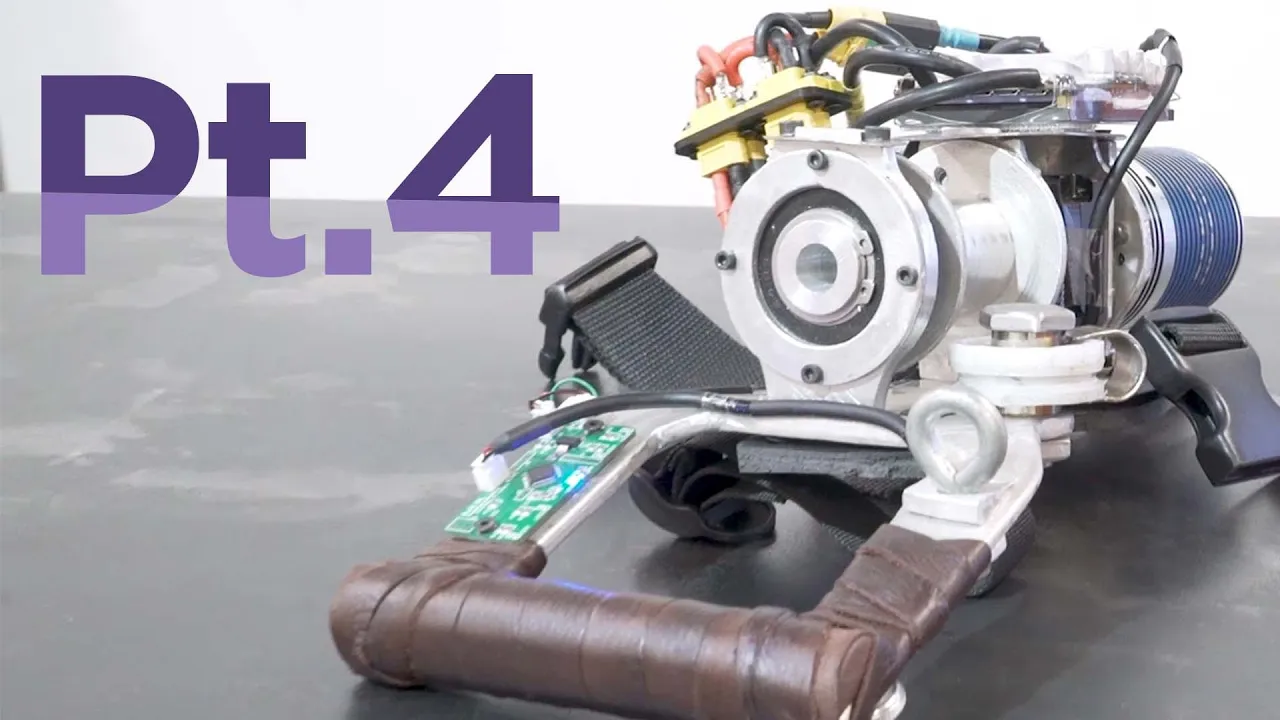

![Tipps & Tricks: Der Regler [deutsch/ german]](https://i.ytimg.com/vi_webp/YJ-2tS_cjyo/maxresdefault.webp)











![LAZO ABIERTO y LAZO CERRADO ✅ [Sistemas de CONTROL] #009](https://i.ytimg.com/vi_webp/CxGFoeJ7SD8/maxresdefault.webp)




This video demonstrates the complete process of building an underwater scooter using a waterproof brushless DC motor (Flip Sky 3542, 230W/48V), a 36V battery pack (3S10P configuration), and a mini ESC controller, highlighting key engineering challenges such as preventing propeller slippage by using stainless steel nuts as spacers, eliminating tapered exhaust sections to correct water flow direction, and modifying controller inputs from PPM to ADC with increased ramp-up time to achieve maximum power output of 750W; the project also illustrates the importance of waterproofing components and the gap between laboratory testing and real-world performance in aquatic environments.
DIY Underwater Scooter Thruster with Waterproof Brushless Motor
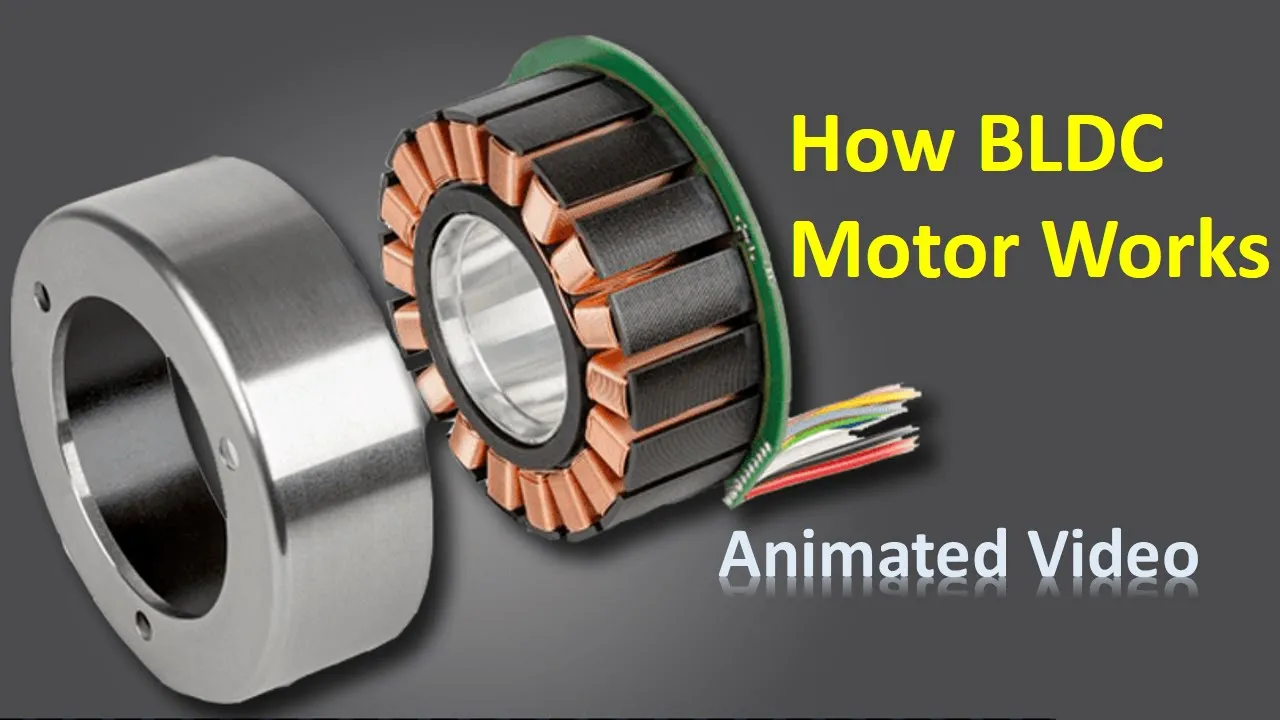
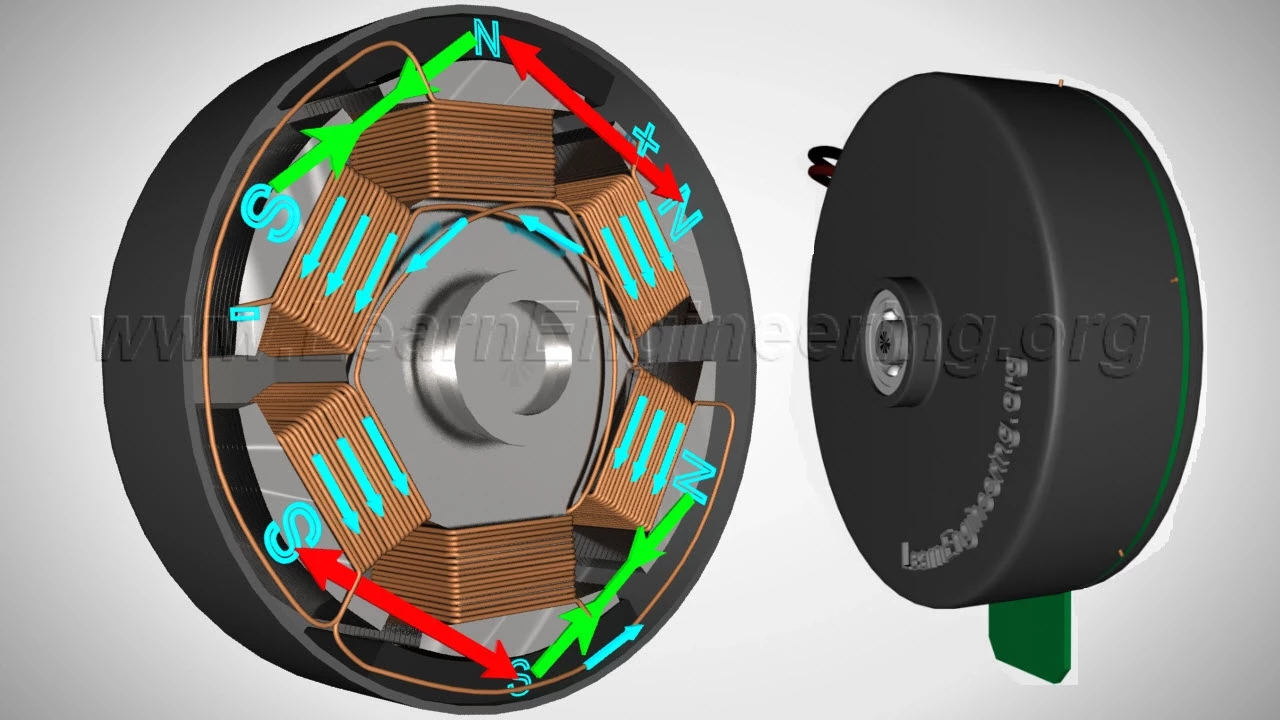
Added:Principles of Brushless DC (BLDC) Motors: Understanding how three-phase BLDC motors operate, including electronic commutation, sensorless operation, and the role of permanent magnets.
Function and Operation of Electronic Speed Controllers (ESCs): Comprehending how an ESC regulates motor speed using Pulse Width Modulation (PWM) and manages high-current DC power.
Waterproofing and Hydrostatic Pressure: Basic concepts of static and dynamic sealing (such as O-rings, lip seals, and potting compounds) to withstand water ingress under pressure.
Basic DC Circuits and Battery Safety: Familiarity with voltage, current draw, wire gauging, and safety protocols for high-discharge lithium-polymer (LiPo) or lithium-ion batteries.
Hydrodynamics and Propeller Optimization: Analyzing thrust, torque, pitch, and blade geometry to maximize propulsive efficiency and prevent cavitation in underwater vehicles.
Advanced Marine Sealing Techniques: Exploring oil-filled chambers, magnetic couplings (magnetic drives), and double-seal designs for deeper diving capabilities.
Closed-Loop Control Systems: Implementing PID (Proportional-Integral-Derivative) controllers using microcontrollers (like Arduino or ESP32) to regulate thrust based on feedback from depth or speed sensors.
Autonomous Underwater Vehicle (AUV) Architecture: Integrating multiple thrusters with navigation systems (IMUs, compasses) to build fully functional ROVs (Remotely Operated Vehicles) or DPVs (Diver Propulsion Vehicles).
5.8K views137likes21:21Original Release: 2025-02-07
the main material for this project will be this 82 mm by 2.5 mm PVC pipe this piece of paper will be used to Mark out the guides I cut small notches to taper the end of the pipe apply heat to the PVC pipe to make it pliable for molding okay so we just finished the back and we attach the rear hatch but the cool thing is by cutting this small piece of pipe I can reduce its size and fit it inside the other PVC pipe the PVC pipe can be also flattened by heating it and then pressing it on the flat surface the motor that we are going to use is this flip Sky waterproof 3542 brushless DC motor this motor is rated at 230 W and up to 48 volts [Music] for after we build the Thruster part we will do the first test I'm using here is a 36 volts battery pack and flip Sky FS eec mini for the controller the test failed unexpectedly as you can see although the propeller is rotating correctly the water flow is in the wrong direction here is the problem I encountered first the propeller was sleeping due to being secured by only a small screw to prevent the propeller from sleeping I added stainless steel nuts as spacer and secured them with a shaft nut due to the tapered exhaust water flows backward at higher RPMs the solution is to remove the tapered section this is the second test I removed the tapered exhaust and the Thruster now operates at it would be and I surprise how powerful [Applause] she the maximum power I get from the Thruster is 750 W for 1 horsepower [Music] for the battery pack build I'm using an old battery cells so I'm not getting get worried about water damage or disposal I'm building a 36 volts 7.5 ah battery pack three cells in parallel and 10 in series [Music] for [Music] I'm using the flip Sky FSC mini as the motor controller it is the most compact controller I have but it is still powerful enough to drive the motor effectively a cheaper ESC is available but it is less power my test with an 6s 60 amp ESC showed only 250 wat to 300 W of power output [Music] the controller housing cont change the ESC Bluetooth module and Servo tester [Music] the hand is still PVC pipe but it is reinforced with multiple layers to withstand the applied [Music] force for [Music] this car bumper clip serve as passenger for the project components I asked my son for the color advice on this project and this is what he suggested oh [Music] I also attach an arm strap using velcro for fening and EVA foam for cushioning as a bumper for [Music] [Applause] after completing the initial water test we headed to this beautiful River resort to put the underwater scooter through its spaces in a more open environment as soon as I submer the scooter I realized it was not performed as it should be while it was still usable the power output was significantly lower than intended the BC app indicates a power output of only 250 W to 300 W and because of this limited power we managed to use the scooter for almost 2 hours of frun time [Music] I [Music] know [Music] [Applause] when I got home I look at the scooter and I saw that the water had gotten into controller through the potentiometer I was fortunate that the controller was not damaged however the servo tester is not functioning normally even after reprogramming the BSC the scotter is still not reaching its maximum power output I decided to modify the controller inputs replacing the ESC pulse positioning modulation or PPM with an analog to digital converter or ADC controller and also I increased the ramp up time to 14 seconds delaying the controller power delivery from zero to full power this time the power difference is noticeable it just looks lower in the video but when you're in the water it feels like you're flying and I can't even swim that fast without the water scoter in my 10 minutes of using it I noticed the battery part getting warm it likely means the battery gets struggling to supply power to the motor but besides that I'm happy to my underwater scooter and also my son he looks really enjoy it spe okay guys that's all for now thank you for watching see you on my next project God bless all peace [Music]
Up Next
7:29
O-Ring Seal Design: Selection, Groove, and Installation Guide
@tarkka
1.6M views•2019-03-24

30:32
Ultrasonic Transducers: Resonant Frequency Measurement and Horn Design
@imajeenyus42
229.9K views•2017-02-22

54:16
Polymer Environmental Degradation: Mechanisms & Stabilization
@iit
1.8K views•2012-07-10
33:39
How a Student's Question Saved a NYC Skyscraper from Collapse
@veritasium
22.8M views•2025-04-26
Related Study Plans & Knowledge Roadmaps
Structured learning paths in Engineering
engineering
Building Acoustic Levitators: Physics & Arduino
01The Physics of Sound and Standing Waves
02Piezoelectric Transducers and H-Bridge Drivers
03Arduino Programming: Generating 40 kHz Signals
+ 2 more learning modules
14h5 modules
Explore Roadmap
engineering
Building Peltier Cloud Chambers: Particle Tracks
01Cosmic Rays & Cloud Chamber Physics
02Thermoelectric Cooling (TEC) Fundamentals
03Custom Liquid-Cooling Loop Design
+ 2 more learning modules
18h5 modules
Explore Roadmap
engineering
Yagi-Uda Antennas: Modeling, Build & VNA Test
01Introduction to RF and Antenna Fundamentals
02Yagi-Uda Antenna Design Principles
03Antenna Modeling and Simulation in 4NEC2
+ 2 more learning modules
18h5 modules
Explore Roadmap
engineering
ECG Monitor Design: Op-Amps, Filters & Noise
01Electronics & Breadboard Basics
02Op-Amps and Instrumentation Amplifiers
03Bioelectricity and ECG Fundamentals
+ 2 more learning modules
18h5 modules
Explore Roadmap