
![Phonetics: Intro to linguistics [Video 2]](https://i.ytimg.com/vi_webp/GLBsvdaR_ow/maxresdefault.webp)



![Phonology: Intro to linguistics [Video 3]](https://i.ytimg.com/vi_webp/1JYahvKUvPU/maxresdefault.webp)








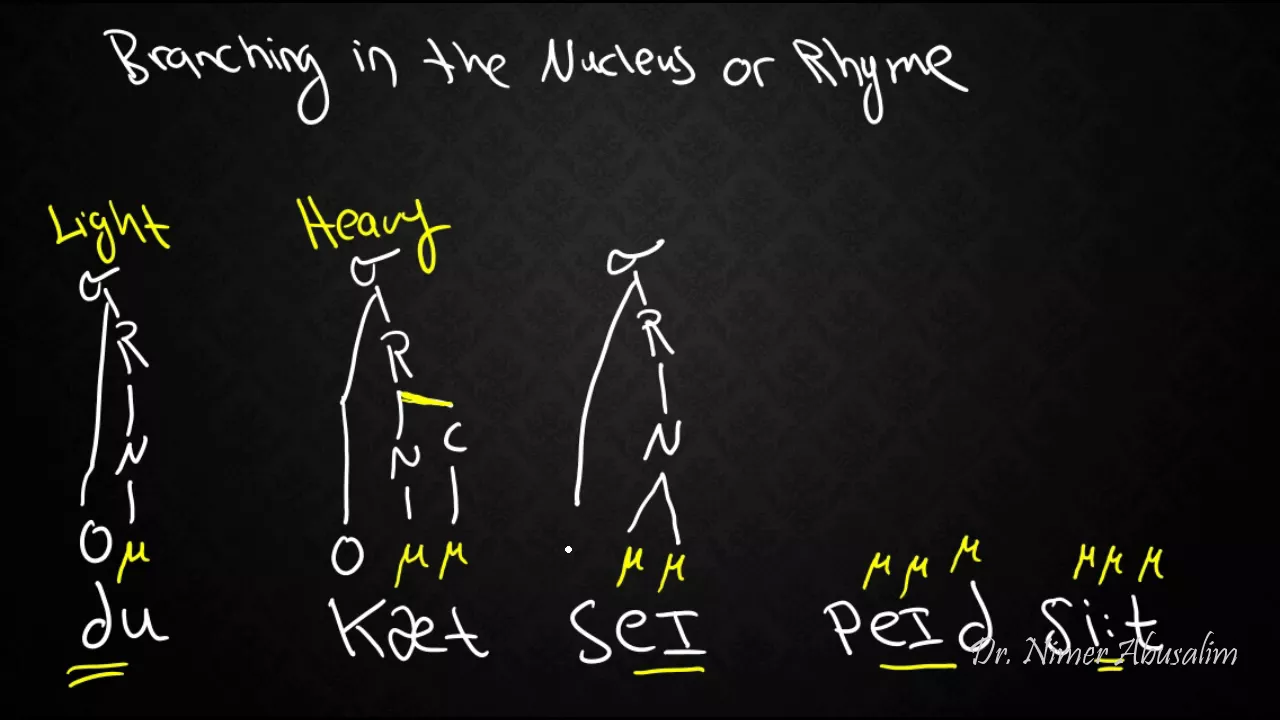
A syllable consists of three structural components: the onset (one or more consonants at the beginning, optional), the nucleus (exactly one vowel sound in the middle, mandatory), and the coda (one or more consonants at the end, optional). The nucleus can be a monophthong, diphthong, triphthong, or syllabic consonant. Syllables with codas are called closed syllables, while those without are called open syllables. Each syllable must contain exactly one nucleus, but onsets and codas are optional.
Syllable Structure Explained: Onset, Nucleus & Coda in Phonology
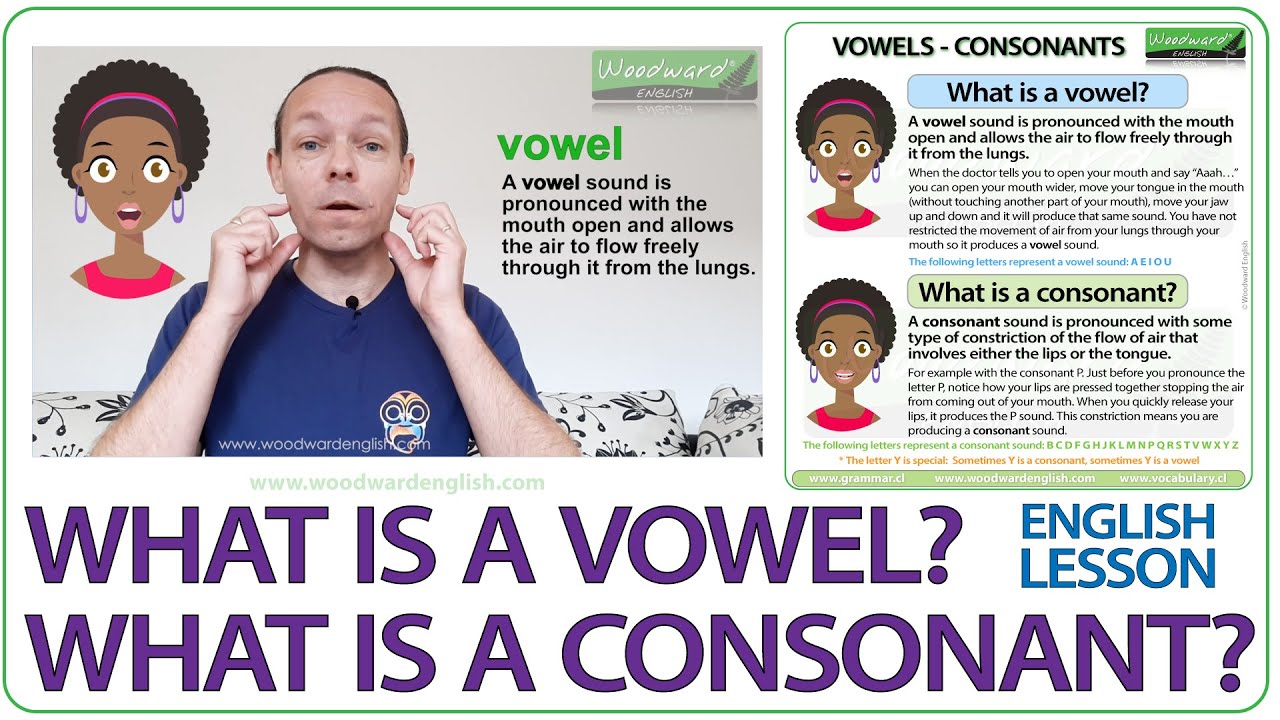
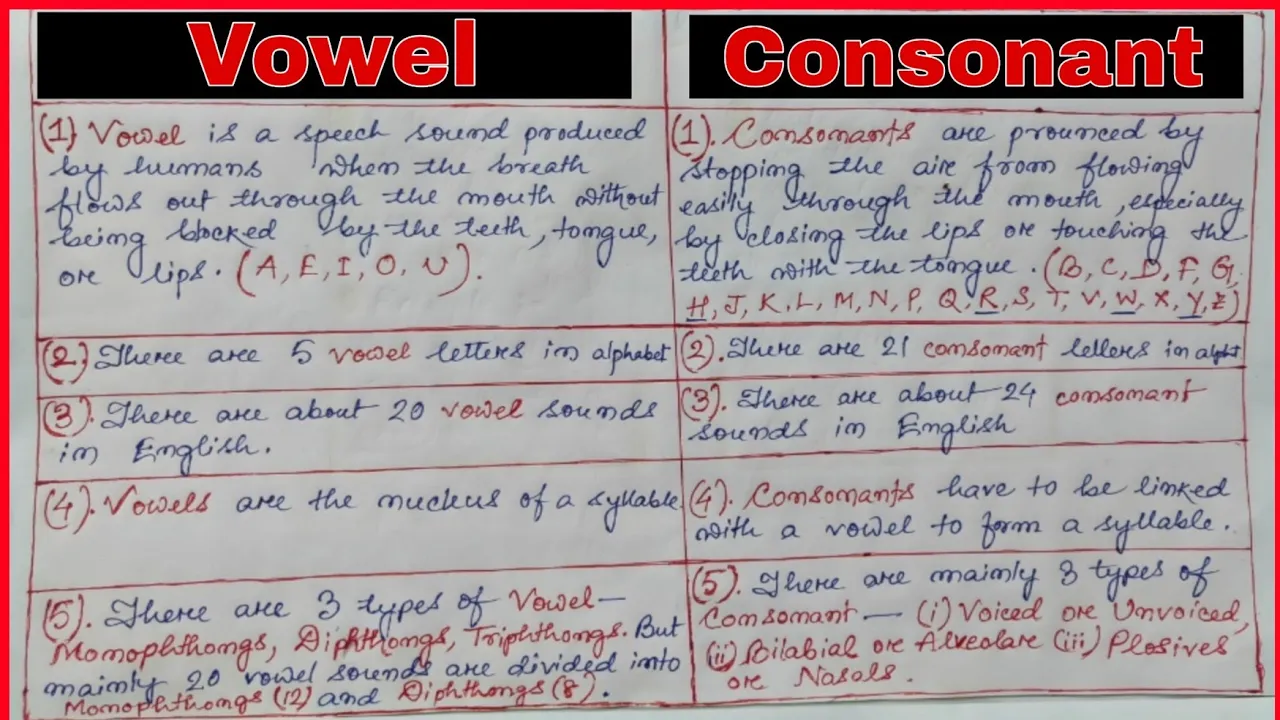
Added:Understanding the distinction between vowels and consonants, specifically their articulatory and acoustic differences.
Basic familiarity with the International Phonetic Alphabet (IPA) for representing individual speech sounds.
The concept of a phoneme as the fundamental contrastive unit of sound in phonology.
A general intuitive understanding of syllables (e.g., identifying the 'beats' in a word) before analyzing their internal anatomy.
The Sonority Sequencing Principle (SSP) and how the relative loudness of speech sounds dictates their arrangement within a syllable.
Phonotactics, which are the language-specific rules governing permissible consonant clusters and syllable shapes.
Syllabification principles, such as the Maximal Onset Principle, used to determine boundary divisions in multi-syllabic words.
Syllable weight (light vs. heavy syllables) and its role in determining word stress and meter in Moraic Theory.
103.2K views3.2Klikes14:20Original Release: 2023-05-26
hi everybody today we're going to have a look at syllables what is the structure of a syllable we can see here we have an onset nucleus encoder every syllable must have a nucleus the nucleus is sometimes called the peak not every syllable has an onset or coder the C here stands for consonant and the V for vowel the nucleus is the vowel sound in the middle of a syllable the C here is the onset and that could be mon or more consonant sounds and the coda is also one or more consonant sound the onset is the sound at the beginning of the syllable it comes before the nucleus the onset can be one two or three consonants so it could be a consonant cluster for example the in by here we have one consonant in plan this is a consonant cluster in strong also a consonant cluster but some consonant combinations are not allowed in English so for example are not allowed as onsened consonant clusters most syllables have an onset but some syllables don't have an onset and this is called empty or zero onset here are some examples for mto0 onset for example eat all up egg now these all forms words on their own but obviously they don't have to form words they could also just be syllables but what you can see is they all start with a vowel sound now let's have a look at the nucleus next every syllable requires a nucleus the nucleus consists of only one vowel sound if there's a second that's another syllable so this vowel sound in the nucleus can be a monophthong a single vowel sound a diphthong a double vowel sound or even a tripathon and if you don't know what these are have a look at my other videos where I explain them separately here are some examples this is an example of a syllable which is also a word with a nucleus of only a single vowel sound a monophthong speak so we have e in the middle here's an example of a diphthong cake a forms the nucleus and again I give you examples that are not just syllables but these syllables also form words however you need to understand that they don't always form full words sometimes it's just a syllable here we have a diphthong and then here we have an example with a trip on our now there are some syllables that consists only of a nucleus they don't have an onset and a coder for example I or air again these two examples are also full words but they could also be just syllables forming part of a word the nucleus vowel can be a monophone a diphthong or a triphthong or there's one other option it could also sometimes be a syllabic consonant now what is a syllabic consonant let's look at an example here is a word button so this word consists of two syllables but and then um and the second syllable really is a syllabic consonant so the main sound here is the um a nasal and you can see a little elevated schwa and that indicates that this consonant is syllabic it forms the core of the syllable in fact there's no other sound really so this on its own is the syllable and we call it a syllabic consonant button just say it out loud a couple of times to yourself button and it is a consonant but it definitely has the quality a bit of a vowel Stevie could you explain but I think when you say it you can hear that there is almost the quality of a schwa written here's another example of a syllabic consonant in the word rhythm again we have two syllables here we have red and then um and again the second syllable here the um forms a syllabic consonant here is one more example in the word bottle so we have bot and then oh bottle bottle that is also a syllabic consonant and the most common syllabic consonants are um and I've given you three examples already maybe you can think of some more on your own now let's look at the coda next the coda is the consonant after the nucleus it can be one two three or four consonants here are some examples for example stop the per is the coda is just one consonant here fast so here we have two consonants or in the word Commons so this is the plural so we added an S here and so we have um three consonants and so forth syllable with a coda is called a closed syllable or sometimes also a checked syllable so for example work the K is the coder so this is a closed syllable if a syllable has no coder we call it an open syllable or a free syllable it's the same open or free syllable for example try so those syllables and here again this is a full word in its own right and in a vowel sound I hear it's a death thumb I try here's another example free so here we end with e that's the nucleus and so this is an open syllable now in English all unset consonants are allowed as syllable coders part from her let's look now at some examples so we start with a syllable that is also a word that is only that only has a nucleus and it's the pronoun I and I've given you the spelling as well as the phonemic transcript now here we have an example of a syllable with onset and nucleus and I together form my possessive adjective or we could have nucleus encoder only so I with forms ice or of course we can have a full syllable onset nucleus encoder um forming the word mice the plural of mouse here is another example that kind of works in the same way if you have a look on the left hand side we have the words so we have ear fear ears fears I've given you the transcript and the structure so ear just a nucleus it's a diphthong then fear we have onset a nucleus is nucleus and coda and fears is again the full syllable really onset nucleus encoded together and I've also written down the syllable types I remember if we don't have a coder an example for ear and fear we call it an open syllable but if the syllable has a coda in ears and fears we have this at the end those are closed syllables and then some extra information if there is no onset um for example an ear where we only have a nucleus it's zero onset it's called empty as well and ears of course as well and here's another example again I thought of four words that are all just one syllable lung and they work in a similar way to the two examples we had earlier um so let's have a look at those on the left hand side we have r and come so the first one ah look at the transcript as well makes it clearer just a monophthong a long vowel sound it's only a nucleus it's an open syllable with zero onset or we can call it empty and then we have car so we have onset nucleus this is an open syllable and then we have um just nucleus encoder a closed syllable with zero onset and then last but not least calm the full syllable onset nucleus Coda and it's called a close syllable now can you think of some more examples and maybe even examples like mine where the syllables are actually words in their own right in English and you can kind of play around you can think of one way you start with a nucleus and think can I add a consonant or more than one consonant sound to the star to form another word and then to the end and every time they form a full word in their own right it's quite difficult to find I mean of course you can find many many examples of syllables that have these structures but can you find some that was a full full words like I did if you do write them in the comments below and here are some fun facts about syllables and their structure first of all we say if we say two words rhyme that really means that nucleus and Coda of the last syllable are the same so for example here I try to buy a pie so we have try buy and pi all of these words I didn't transcribe them but they end an i they actually open syllables they don't have a coder and so they rhyme although the spelling looks very different and one other fun fact Stardust is the only word in English that has the same consonant cluster in the onset and Coda although of course it consists of two syllables so it's not one syllable with the same onset encoder I don't think there's any syllable where that is the case all right I hope um this video has been helpful if you have any questions or comments please leave them in the section below and I'd be very happy to answer
Up Next
19:00
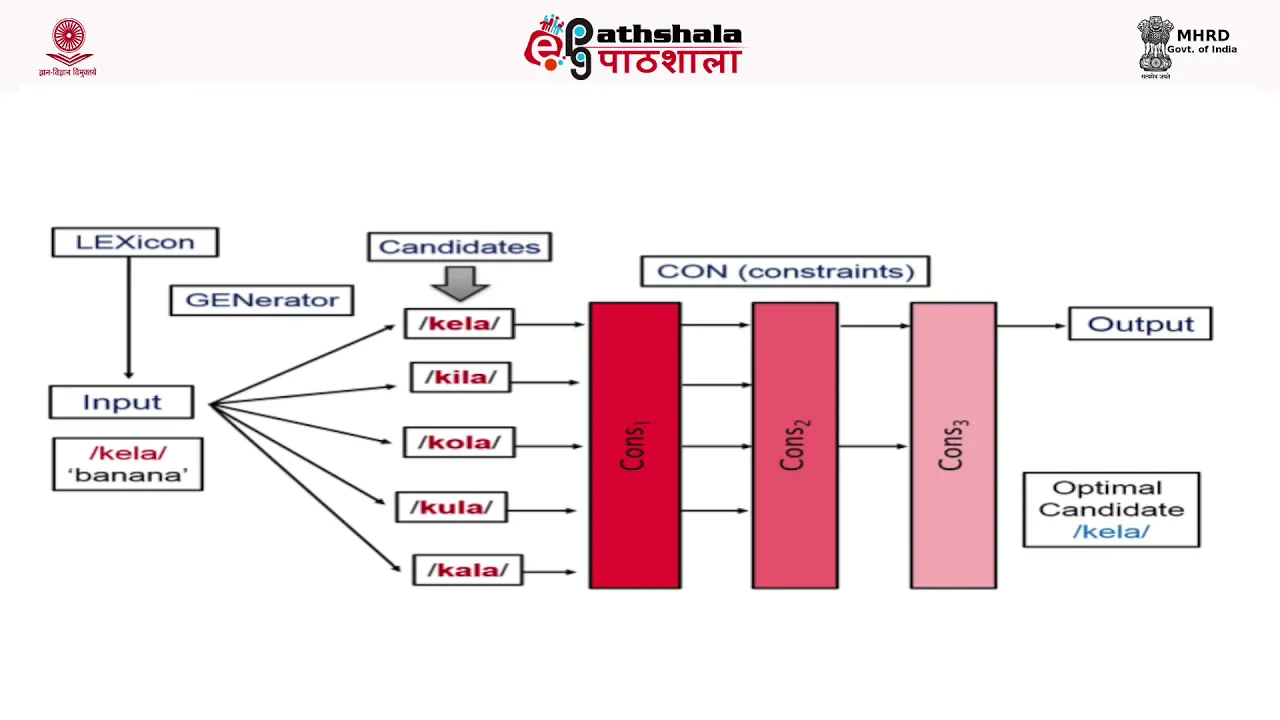
Optimality Theory in Linguistics: Key Concepts & Architecture Explained
@Vidyamitra
14.1K views•2018-08-20
36:52
Constraint Interaction in Optimality Theory: Epenthesis & Deletion
@Vidyamitra
180 views•2018-08-20

15:14
IPA Transcription Tutorial: Weak Forms & Word Stress
@BillieEnglish
202.9K views•2022-03-10

21:32
Accent Expert Explains U.S. Regional Dialects | Part 1
@WIRED
9.3M views•2021-01-21
Related Study Plans & Knowledge Roadmaps
Structured learning paths in Linguistics
linguistics
Optimality Theory: Tableaux & Constraints
01Phonological Basics: Sounds, Syllables & Rules
02Foundations of Optimality Theory: GEN, CON, and EVAL
03The Constraint Inventory: Markedness vs. Faithfulness
+ 2 more learning modules
15h5 modules
Explore Roadmap
linguistics
Morphosyntactic Alignment: S, A & P Systems
01Foundations of Syntax: Transitivity and Arguments
02The Linguistic Variables: Mapping S, A, and P
03Nominative-Accusative Alignment
+ 3 more learning modules
12h6 modules
Explore Roadmap
linguistics
Analyzing Sign Language: Phonology & Syntax
01Foundations of Sign Language Linguistics
02Phonology: The Five Parameters of a Sign
03Morphology: Word Formation and Classifiers
+ 2 more learning modules
14h5 modules
Explore Roadmap
linguistics
Pragmatics: Speech Acts, Grice & Politeness
01Introduction to Pragmatics: Meaning in Context
02Grice’s Cooperative Principle & Implicature
03Speech Act Theory
+ 2 more learning modules
14h5 modules
Explore Roadmap